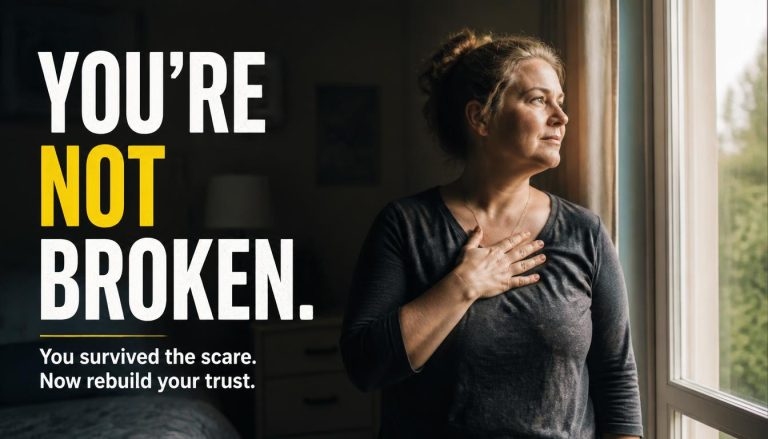
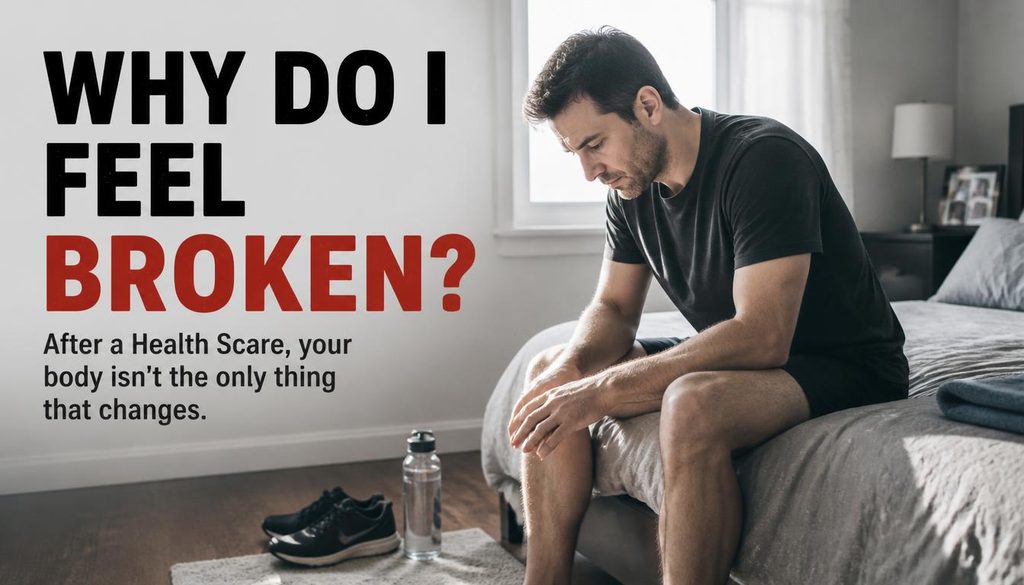
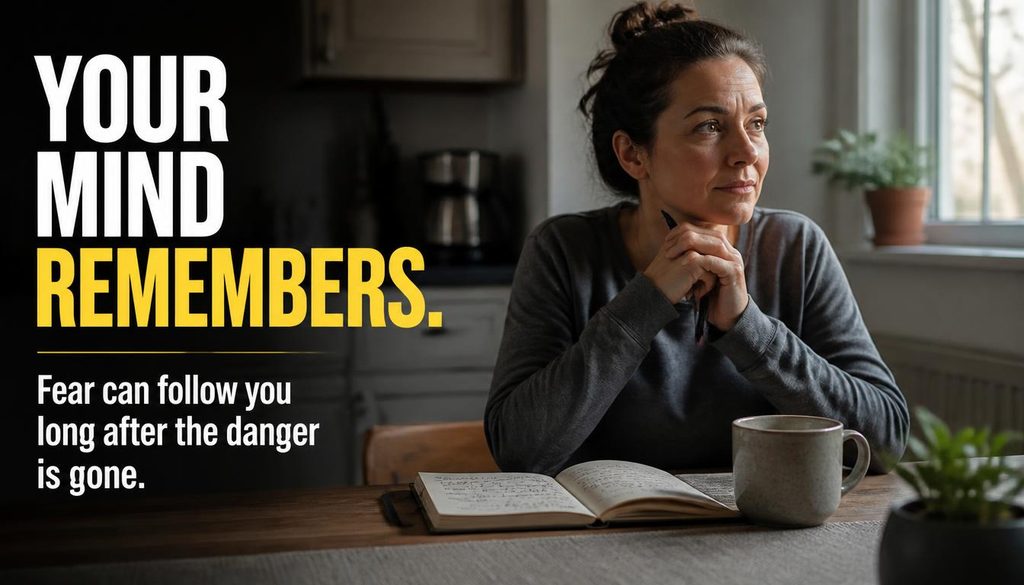
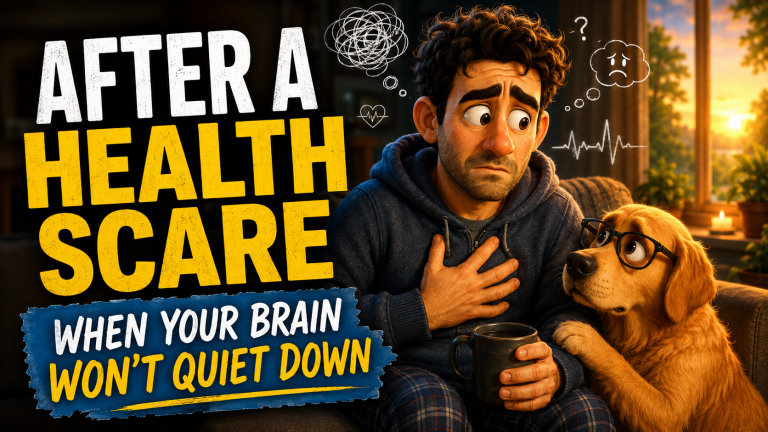
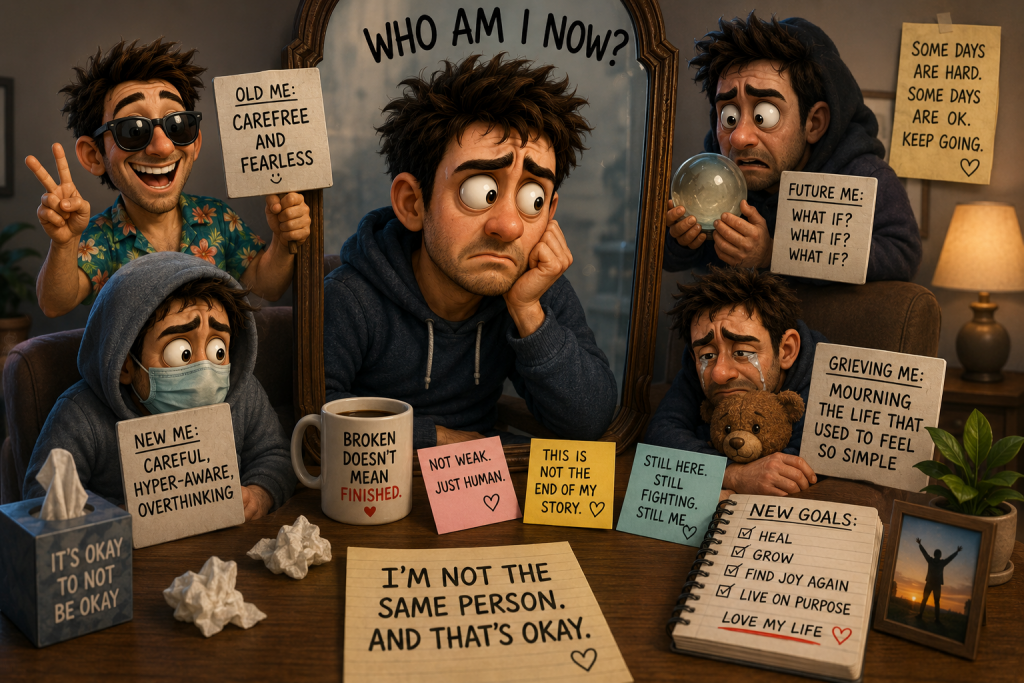
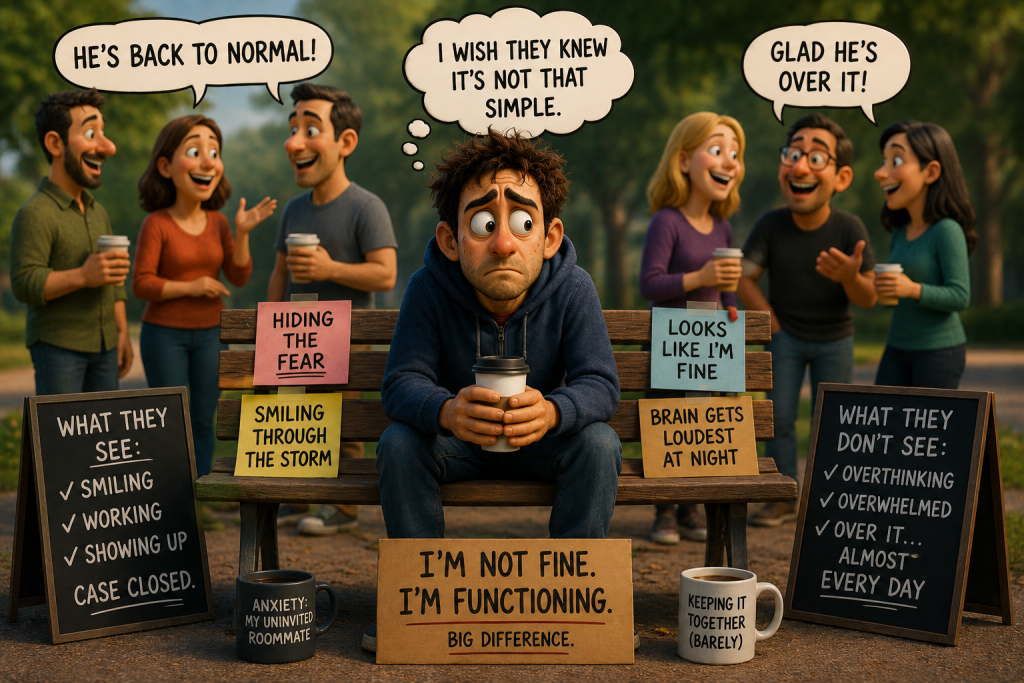
A Health Scare can change the way you see your body. Before the Health Scare, you may have moved through your day without thinking much about your heart, back, legs, breathing, balance, strength, or energy. Then something happens. You get sick. You are injured. A test comes back with a result you did not expect. You need surgery. You spend time in the hospital. Or you live through a long period of pain, stress, or fear.
After that Health Scare, normal things can feel different.
You may notice every ache. You may stop trusting a tired feeling. A strange sensation that you once would have ignored can suddenly feel like a warning. You may wonder if your body is still strong enough to do what it used to do.
That does not mean you are weak.
It also does not mean every new feeling is dangerous. Your body may truly have changed after a Health Scare, and those changes deserve proper medical care. At the same time, the experience of being sick or hurt can change your thoughts, habits, confidence, and sense of safety.
This is one reason recovery can feel harder than expected.
A Health Scare can leave you caught between two thoughts:
“I know I need to move forward.”
and
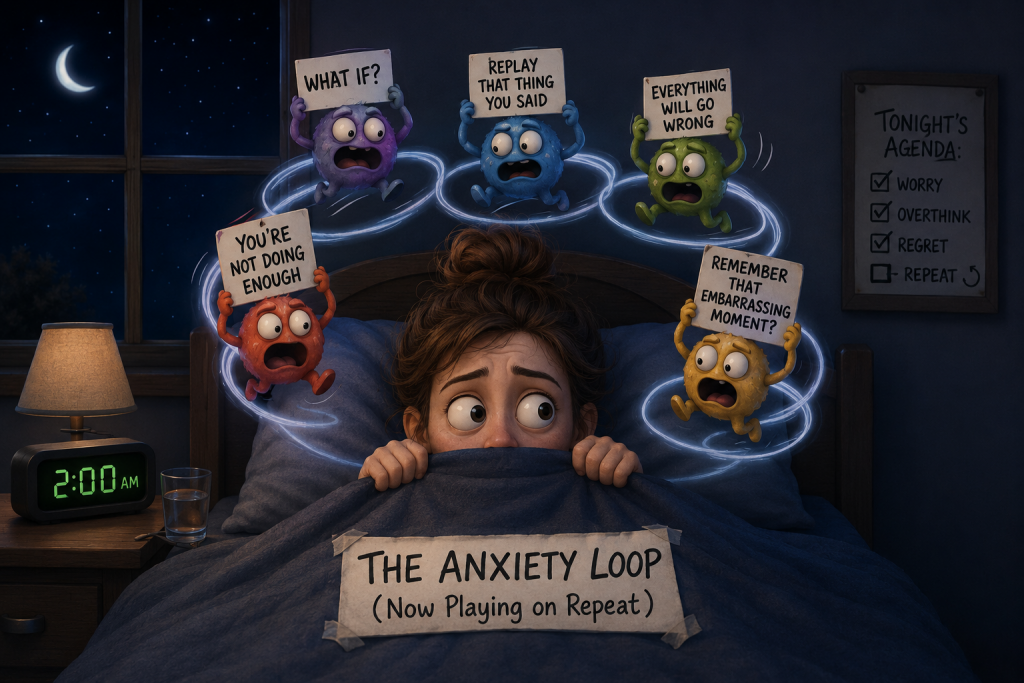
“What if something happens again?”
Both thoughts can exist at the same time.
Research on injury recovery has found that anxiety connected directly to recovery can be common after injury. One study of adults with mild to moderate upper-limb injuries found that recovery-related anxiety was more strongly linked with disability than general anxiety symptoms in that group.
That does not mean fear causes every recovery problem. It means the emotional side of recovery deserves attention, too.
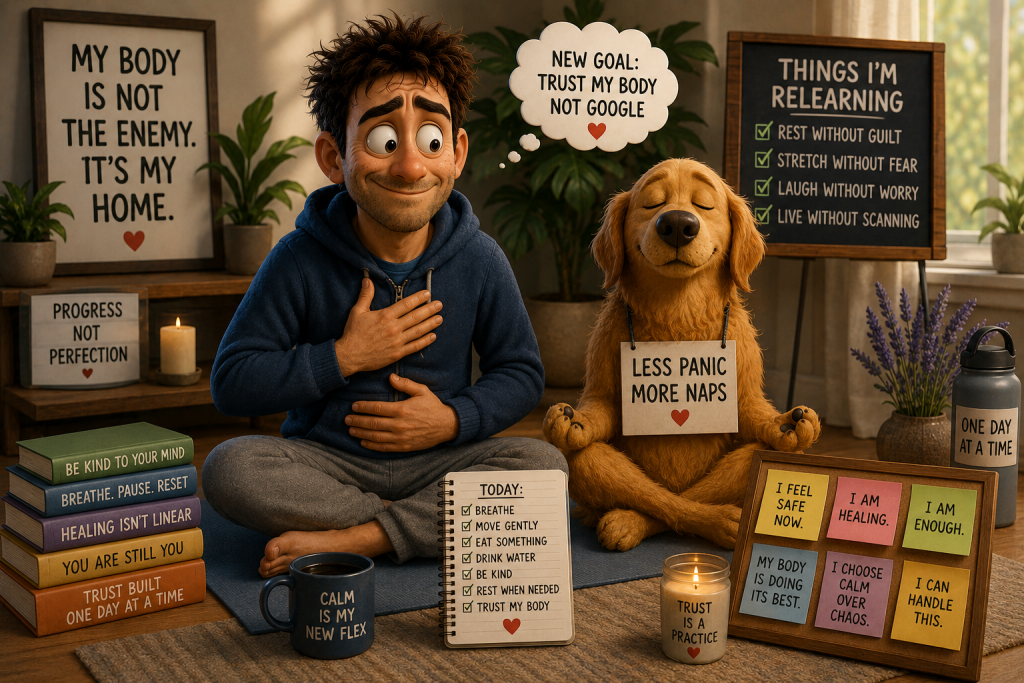
The goal after a Health Scare is not to pretend nothing happened. The goal is to learn what your body can do now, follow appropriate medical guidance, and slowly rebuild trust.
That is the idea behind STRONG AGAIN – Your Body Is Not Broken. The book is built around the idea that rebuilding strength is not only about muscles. It is also about rebuilding confidence in the body you have today.
You do not have to become the person you were before the Health Scare overnight.
You can start where you are.
Physical Changes vs. Perceived Damage
One of the hardest parts of a Health Scare is figuring out the difference between a real physical change and the fear that something is wrong.
Sometimes the answer is simple. An injury can reduce strength. Surgery can limit movement for a period of time. An illness can leave you tired. Long periods of inactivity can make everyday activities feel harder. Your doctor or physical therapist may give you clear limits while your body heals.
Those changes are real.
But the story your mind tells you about those changes can become much bigger.
You might think:
“I will never be strong again.”
“My body cannot handle anything.”
“If I feel pain, I must be hurting myself.”
“I was better before this happened.”
“I have to be careful about everything now.”
“One bad day means I am getting worse.”
After a Health Scare, those thoughts can feel like facts. They are not always facts.
This does not mean you should ignore pain or other symptoms. It means you should learn to separate a medical warning from a fearful prediction. If something is new, severe, worsening, or concerning, talk with your healthcare professional rather than trying to diagnose yourself.
The National Institute of Neurological Disorders and Stroke explains that fear and avoidance can sometimes protect us from danger, but they can also interfere with recovery when they continue after the body is ready for appropriate activity.
That difference matters.
Imagine someone injures a knee. At first, avoiding certain movements may be exactly what the medical team recommends. Later, after healing and proper clearance, the person may still feel afraid to use the knee. That fear can lead to less movement, which can make daily life harder.
This is why recovery after a Health Scare should not be based on fear alone.
It should be based on information.
Your healthcare team can help you understand what is safe. A physical therapist can help you rebuild movement and strength when therapy is appropriate. A mental health professional can help when fear, anxiety, or stress becomes difficult to manage. The National Institute of Arthritis and Musculoskeletal and Skin Diseases notes that rehabilitation may be used after an injury to rebuild strength and range of motion and help people return to activity.
The important point is this: needing recovery does not mean your body has failed.
A Health Scare may change what “strong” looks like for a while. That is different from saying you cannot become strong again.
You may need to walk for five minutes instead of thirty. You may need to use a chair during an activity. You may need more rest. You may need to rebuild one movement at a time.
That still counts.
Strength is not only measured by how much weight you can lift or how far you can walk.
Sometimes strength is getting up and trying again.
Sometimes it is following the doctor’s instructions.
Sometimes it is admitting that you need help.
And sometimes, after a Health Scare, strength means learning to stop treating every sensation as proof that your body is falling apart.
Fear, Uncertainty, and Loss of Trust
A Health Scare can take away something that is easy to overlook: trust.
Before the Health Scare, you may have trusted your body without thinking about it. You woke up, stood up, walked across the room, climbed stairs, carried groceries, worked, played with your family, or went to bed.
Then something happened that made your body feel unpredictable.
Now you may watch it closely.
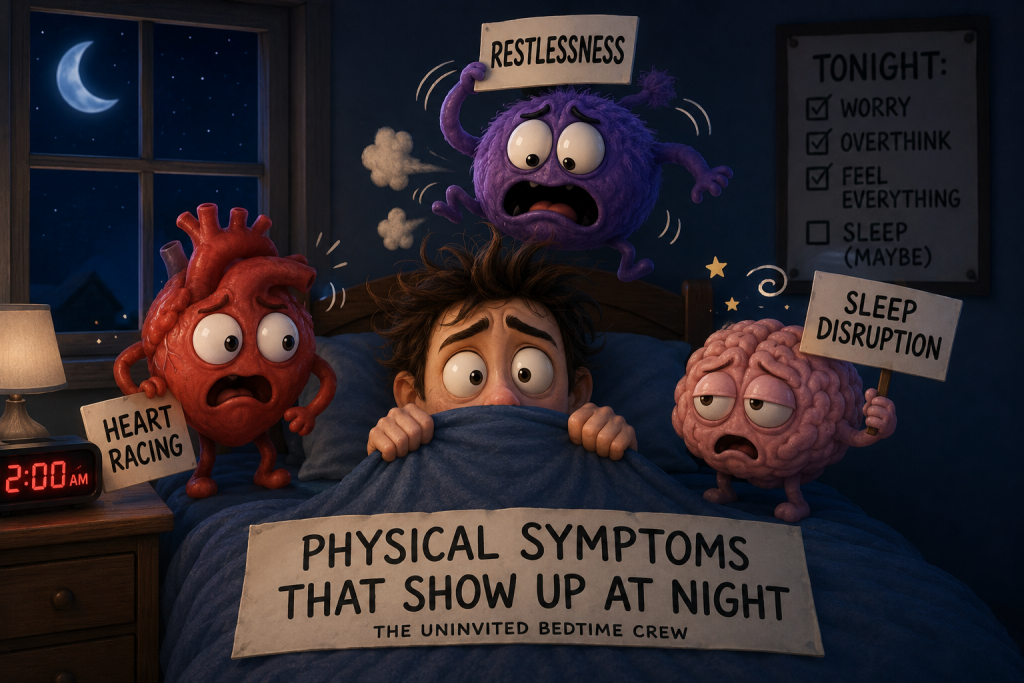
You may check your pulse. You may notice every muscle twitch. You may worry about dizziness. You may wonder whether a sore spot is normal. You may think about what happened the last time you felt something similar.
That can become exhausting.
A Health Scare can also create uncertainty because recovery rarely moves in a straight line. You can have a good day followed by a difficult day. You can feel stronger one morning and tired that evening. You can make progress for several weeks and then need to slow down.
That does not automatically mean you are back at the beginning.
Real recovery can have ups and downs.
Stress can make this even harder. The American Psychological Association explains that long-term stress affects many body systems, and ongoing stress can keep muscles tense and contribute to physical symptoms.
That creates a difficult cycle after a Health Scare.
You feel something.
You worry about it.
Your body becomes more tense.
You notice the sensation even more.
You become more worried.
Then you may avoid activity because you are afraid of making things worse.
This does not mean the symptoms are imaginary. The sensations can be real. The fear can be real. The physical condition can also be real. The point is that the body and mind do not operate as two completely separate machines.
A Health Scare can affect both.
Recent research involving people recovering from cardiac events also found that health anxiety, mental defeat, and fear of illness recurrence or progression were important parts of the adjustment process. The researchers also found that these factors did not show a simple relationship with rehabilitation adherence or outcomes, which is a good reminder that recovery is complicated and cannot be reduced to one mental factor.
That matters because you do not need to blame yourself for having fear.
Fear after a Health Scare is understandable.
The goal is not to yell at yourself for being afraid. The goal is to learn how to respond to fear without allowing it to make every decision.
Try asking a different question.
Instead of:
“What if something goes wrong?”
ask:
“What do I actually know right now?”
Then separate the facts from the fear.
For example:
What I Know
What I Fear
My doctor cleared me for certain activity.
I might hurt myself anyway.
I walked for five minutes without a problem.
Maybe tomorrow I will suddenly get worse.
I am tired today.
Maybe I will never feel better.
I have a follow-up appointment scheduled.
Maybe the results will be terrible.
I need more time to recover.
Maybe I will never recover.
This simple difference can help you see what is known and what is being predicted.
A Health Scare can make the future feel certain when it is not.
You do not need to know exactly how you will feel six months from now.
You only need to know the next safe step.
That is where rebuilding body trust begins.
Rebuilding Trust in the Body
After a Health Scare, rebuilding trust does not mean pretending your body is exactly the same as it was before.
Your body may have scars.
It may have less strength.
It may have a medical condition that needs ongoing care.
It may need medication, therapy, rehabilitation, rest, or changes to your normal routine.
You can accept those facts without deciding that your body is broken.
The difference is important.
Your body is not required to return to an old version of itself before you are allowed to feel strong.
A Health Scare may force you to redefine strength.
Before the Health Scare, strength might have meant lifting heavy things, working long hours, running, exercising hard, or never needing help.
After the Health Scare, strength may mean following your treatment plan. It may mean walking when you would rather stay on the couch. It may mean doing a small exercise that your healthcare professional has approved. It may mean resting instead of pushing through warning signs. It may mean asking someone to help you.
None of those things are failures.
They are choices.
And repeated choices can rebuild confidence.
The book STRONG AGAIN – Your Body Is Not Broken focuses on that process: moving away from the idea that one health event defines your entire body and your entire future.
The first goal after a Health Scare does not have to be becoming “strong again” in the old sense.
The first goal can simply be becoming comfortable with your body again.
That might start with one small action.
Sit up.
Stand up.
Walk across the room.
Stretch gently if you have been cleared to do so.
Take a few slow breaths.
Complete the movement your healthcare professional gave you.
Write down one thing your body did today that it could not do before.
Then stop.
You do not have to turn one small win into a huge workout.
Small wins matter because they give you real information.
“I did this.”
“My body handled this.”
“I followed my plan.”
“I rested when I needed to.”
“I noticed a problem and called my doctor.”
Those statements are much more useful than telling yourself, “I should be back to normal by now.”
A Health Scare can make you look backward all the time.
Recovery asks you to look at today.
The body you have today is the body you are learning to trust.
And that trust is not built in one dramatic moment.
It is built through hundreds of small experiences.
One safe choice.
One honest check-in.
One day at a time.
That is how you begin to feel strong again without pretending the Health Scare never happened.
The Mind-Body Connection in Recovery
Recovery after a Health Scare is not only about what happens to your body. It is also about what happens in your thoughts, emotions, habits, and daily choices.
That can be easy to miss.
When something serious happens to your health, the first concern is usually the physical problem. You want to know what happened, what treatment you need, how long recovery will take, and what you can safely do. Those questions matter. Medical care should come first when a medical problem needs attention.
But there is another part of recovery that deserves a place at the table.
It is the way the Health Scare changes how you think about your body.
Before a Health Scare, you may not have spent much time thinking about your heartbeat, breathing, balance, strength, pain, energy, or movement. Afterward, you may notice all of it.
A small ache can feel important.
A tired day can feel like a warning.
A difficult movement can make you wonder if you have damaged yourself.
You may even begin to think of your body as something that cannot be trusted.
That reaction is understandable. It does not mean the physical problem is imaginary. It means the experience of a Health Scare can affect both your physical life and your emotional life.
The National Institute of Neurological Disorders and Stroke describes pain as a biopsychosocial experience. In simple terms, biological factors, psychological factors, and social factors can all affect the experience of pain, and those factors can affect one another.
That is why rebuilding after a Health Scare may require more than simply waiting for an injury or illness to improve.
You may also need to rebuild confidence.
You may need to change the way you talk to yourself.
You may need to learn when caution protects you and when fear is keeping you from doing something you have already been cleared to do.
And you may need to give yourself permission to recover at a slower pace than you expected.
This is not about pretending everything is fine.
It is about seeing the whole picture.
How Stress and Fear Affect Healing
Stress is a normal response to a difficult situation. Your body has systems designed to respond when you believe there is danger. The National Center for Complementary and Integrative Health explains that the stress response can increase heart rate, breathing rate, blood pressure, muscle tension, and sweating.
That response can be useful when you need to react to an immediate threat.
A Health Scare can create a different problem.
The danger may have passed, but your mind may still be watching for it.
You may keep asking:
“What if it happens again?”
That question can become part of everyday life.
You might avoid stairs because you are afraid of falling. You might stop exercising because you are afraid of getting hurt. You might avoid a movement that reminds you of an old injury. You might stay in bed because you are afraid that being active will make your symptoms worse.
Sometimes caution is exactly what you need.
If your doctor tells you not to lift, you should not lift.
If your surgeon gives you movement restrictions, follow them.
If your physical therapist gives you a specific rehabilitation plan, that plan matters.
But there can come a point when fear continues even after you have been medically cleared for appropriate activity.
The National Institute of Neurological Disorders and Stroke gives an example of this fear-avoidance cycle. A person may be told to avoid heavy lifting while an injury heals, but continue avoiding activity after being cleared. That avoidance can interfere with daily life and may contribute to weakness and other problems.
That is an important difference.
Protection and avoidance are not always the same thing.
Protection says:
“My body needs time to heal, so I will follow the plan.”
Avoidance says:
“I am afraid something might happen, so I will never try.”
After a Health Scare, it can be hard to tell which one is driving your choices.
One useful question is:
“Is this something my healthcare team told me to avoid, or is this something I am avoiding because I am afraid?”
That question does not tell you what you should do physically. Your medical team needs to answer that part.
It simply helps you notice the difference between medical guidance and fear.
Stress can also affect how you experience symptoms. Research on chronic stress and pain has described connections between stress responses, fear, and pain.
Again, this does not mean pain is “all in your head.”
Pain is real.
Fatigue is real.
Weakness is real.
Anxiety is real.
The point is that the brain and body communicate constantly.
That is why recovery after a Health Scare should make room for both.
A practical recovery plan may include medical treatment, physical rehabilitation, sleep, appropriate activity, social support, and attention to stress and emotional health.
You do not have to pick body or mind.
Recovery can involve both.
What You Notice
A Helpful Question
Pain or discomfort
What has my healthcare provider told me about this symptom?
Fear of movement
Am I medically restricted, or am I afraid to move?
Low energy
What level of activity is appropriate for me right now?
Worry about relapse
What do I actually know today?
Frustration
What is one thing I can still do?
A bad recovery day
What changed, and what can I learn from it?
The goal is not to force yourself through fear.
The goal is to understand it.
The Role of Identity: “Sick” vs. “Recovering”
A Health Scare can also change the way you see yourself.
You may go from thinking:
“I am healthy.”
to:
“I am sick.”
That change can happen quickly.
Maybe you start using medical words to describe yourself. Maybe every conversation becomes about symptoms, appointments, tests, medication, or restrictions. Maybe your family starts treating you differently because they are worried.
Sometimes that is necessary.
When you are dealing with a serious medical problem, your health deserves attention.
But there is a difference between having a health problem and making the health problem your entire identity.
You can be recovering and still be you.
You can have an injury and still be a parent, spouse, worker, friend, creator, student, or whatever other roles matter in your life.
You can have a chronic condition and still have goals.
You can have limitations and still make progress.
You can need help and still be strong.
That change in thinking matters because recovery is not always a straight line.
The National Institute of Diabetes and Digestive and Kidney Diseases explains that behavior change happens in stages. People can move through thinking about change, preparing, taking action, and maintaining a new routine. It also notes that roadblocks and setbacks can happen along the way.
That gives us a better way to think about recovery.
You do not have to wake up one morning and suddenly become a completely different person.
You can move through stages.
At first, you may simply become aware of what happened.
Then you may start thinking about what you can safely change.
Then you may try one small action.
Eventually, that action may become part of your routine.
This is why the word recovering can be useful.
“Recovering” does not mean you are pretending to be healthy.
It means you are in a process.
You are learning.
You are adjusting.
You are rebuilding.
You are following medical advice while also looking for the things you can control.
A Health Scare may have changed your body, but it does not have to write the rest of your story.
That does not mean you should deny limitations. In fact, honest acceptance can be part of rebuilding.
Maybe you cannot do what you did five years ago.
Maybe you cannot do what you did five months ago.
Maybe you cannot do what you did before the Health Scare.
That hurts.
It is okay to admit that.
But the next question is not:
“How do I become my old self again?”
A better question may be:
“What can I build from where I am now?”
That question leaves room for reality.
It also leaves room for hope.
Why Small Wins Matter More Than Big Leaps
After a Health Scare, many people want a big sign that they are getting better.
They want to walk farther.
Lift more.
Work longer.
Exercise harder.
Return to everything they used to do.
That desire makes sense.
But a big jump is not always the best way to rebuild confidence.
Sometimes the most important progress is almost boring.
You walk a little.
You complete a rehabilitation exercise.
You get through a normal morning.
You take a shower without needing to stop.
You prepare a meal.
You sit outside.
You stretch within the limits you have been given.
You go to an appointment.
You sleep a little better.
You notice that something which frightened you last month does not frighten you quite as much today.
Those things may not look impressive from the outside.
They can still matter.
The NIDDK recommends starting with small changes when building healthier habits and gives a short walking goal as an example. It also explains that setbacks happen and that people can regroup and return to their goals.
That is useful after a Health Scare because small actions are easier to repeat.
And repetition matters.
Imagine two recovery plans.
Plan A: “I am going to become strong again immediately.”
Plan B: “I am going to do one safe thing today that supports my recovery.”
Plan A sounds powerful.
Plan B is easier to live with.
If Plan A becomes too difficult, you may feel like you failed.
If Plan B becomes difficult, you can adjust it.
That difference can change how you see yourself.
A small win gives you evidence.
I did something.
I handled it.
I followed my plan.
I learned something.
I can try again.
Over time, those experiences can help rebuild confidence.
That does not mean every small action will produce a dramatic physical improvement. It does not mean you should ignore symptoms or push through medical restrictions.
It means you can measure recovery by more than one giant milestone.
Try looking for these smaller signs:
You understand your limits better.
You know which activities are safe for you.
You are following your treatment plan.
You are less afraid to ask questions.
You recover more calmly after a difficult day.
You notice what your body can do instead of only what it cannot do.
You are making choices based on information instead of fear.
You are building routines that you can actually maintain.
Those are not imaginary victories.
They are part of learning how to live in your body again.
The National Institute of Mental Health also recommends realistic goals and focusing on what you can manage when coping with difficult experiences.
That idea fits recovery well.
Do not make today’s goal something that belongs six months from now.
Make today’s goal belong to today.
Maybe your goal is five minutes.
Maybe it is one exercise.
Maybe it is making the phone call you have been putting off.
Maybe it is resting without feeling guilty.
Maybe it is writing down what you noticed.
Maybe it is simply getting out of bed and beginning the day.
Your small win does not have to impress anybody else.
It only has to be real.
Rebuilding the Mind and Body Together
The mind-body connection is not a reason to blame yourself for symptoms after a Health Scare.
It is a reason to give the whole recovery process more attention.
Your medical care matters.
Your physical condition matters.
Your emotional health matters.
Your habits matter.
Your support system matters.
And your sense of confidence matters.
These pieces can affect one another.
The National Center for Complementary and Integrative Health notes that practices such as relaxation techniques, mindfulness, yoga, and tai chi have been studied for stress and other health concerns, although safety and usefulness can vary by person and condition. Such approaches should not be treated as replacements for needed medical care.
The safest approach is simple:
Use what is appropriate for you.
If you have a medical condition, injury, or recent procedure, ask your healthcare professional what activity is appropriate before starting something new.
Recovery is not a contest.
You do not have to prove that you are tough.
You do not have to punish yourself for needing time.
And you do not have to wait until you feel completely fearless before you begin rebuilding your confidence.
The purpose of STRONG AGAIN – Your Body Is Not Broken is to go deeper into that process of rebuilding strength, confidence, and trust after life has knocked you off course.
The message is simple:
Your Health Scare is something that happened to you.
It does not have to become everything you are.
You can learn.
You can adjust.
You can rebuild.
You can have a hard day without calling your entire recovery a failure.
And sometimes the road back starts with something so small that nobody else would notice.
But you notice.
You did it.
And tomorrow, you can build from there.
6 Steps to Rebuild Strength and Trust After a Health Scare
A Health Scare can leave you wondering what to do next.
You may know that you want to get stronger. You may even know what you used to do to stay active. But after an illness, injury, surgery, long period of stress, or other health problem, the old plan may not fit anymore.
That can be frustrating.
You may try to do too much because you want your old life back. Then you may feel exhausted or sore and decide you cannot do anything at all. Neither extreme has to be your answer.
Rebuilding after a Health Scare is often about finding the middle ground.
You learn what is safe for your situation. You start small. You pay attention to what happens. You adjust when something does not work. You keep going when you can. You ask for help when you need it.
The Centers for Disease Control and Prevention recommends starting slowly when becoming more physically active and notes that people with chronic health conditions should talk with a healthcare professional about the types and amounts of activity that are right for them.
That is an important point for anyone coming back from a Health Scare.
The goal is not to prove how much you can handle.
The goal is to build a routine you can safely repeat.
Here are six practical steps that can help you think about that process.
Step 1: Redefine “Strong” for Your Current Season
Before a Health Scare, you may have had your own definition of strong.
Maybe strong meant lifting heavy weights.
Maybe it meant working ten hours without slowing down.
Maybe it meant running, playing sports, hiking, doing yard work, or keeping up with everyone else.
Maybe it simply meant never needing help.
Then the Health Scare happened.
Suddenly, those old measurements may not make sense.
That can create a painful thought:
“If I cannot do what I used to do, I am not strong anymore.”
That thought can make recovery harder than it needs to be.
Strength is not one fixed number.
Your body changes with age, illness, injury, training, rest, stress, and many other factors. What you can safely do today may be different from what you could do before your Health Scare.
That does not erase the strength you had before.
It means you are measuring something different now.
Try replacing the question “How strong was I?” with “What does strength look like today?”
Today, strength might mean following your treatment plan.
It might mean taking a short walk because your healthcare professional has cleared you for that activity.
It might mean doing your physical therapy exercises.
It might mean getting enough rest instead of trying to prove something.
It might mean saying, “I need help with that.”
It might mean showing up for an appointment you would rather avoid.
It might mean starting over.
That last one matters.
Starting over can feel embarrassing, especially if you remember how much you used to be able to do. But there is no prize for pretending you are farther along than you really are.
After a Health Scare, honesty is useful.
Ask yourself:
What can I safely do now?
What has my healthcare provider told me to avoid?
What activities have I been cleared to do?
What feels difficult because of my physical condition?
What feels difficult because I am afraid?
What is one reasonable thing I can work on?
Those questions can help you build a new definition of strong.
And that definition can change again later.
You do not have to decide what “strong” means for the rest of your life.
You only need a definition that fits the season you are in.
Step 2: Start With Safe, Tiny Movements
After a Health Scare, movement can feel like a trap.
You may think you need to exercise to get stronger, but you may also be afraid that exercise will make something worse.
That is where medical guidance matters.
If you have a recent injury, surgery, heart condition, chronic illness, significant pain, or another medical concern, do not use a general exercise plan as a substitute for advice from your healthcare professional.
Your safe starting point depends on your health.
For some people, a short walk may be reasonable. For another person, the right starting point may be a supervised rehabilitation exercise. Someone else may need to begin with very limited movement.
The CDC says people with chronic health conditions should consult a healthcare professional about the appropriate types and amounts of physical activity.
Once you know what is appropriate for you, think smaller than your mind may be telling you to think.
Do not worry about a perfect workout.
Think about a safe movement you can repeat.
That might be:
Standing up and sitting down as instructed.
Taking a short walk.
Moving your arms through an approved range.
Completing a physical therapy exercise.
Stretching in a way your healthcare professional has approved.
Walking around your home for a short period.
Doing another movement that fits your personal medical plan.
The point is not that these activities are right for everyone.
The point is that tiny can be useful.
The CDC specifically advises people who are becoming more active to start slowly and build up over time.
That approach can be especially helpful after a Health Scare because your confidence may need rebuilding along with your physical ability.
A tiny movement gives you information.
You tried it.
You noticed how you felt.
You recorded what happened if tracking is useful for you.
Then you decide what comes next based on your medical guidance and your response.
That is very different from saying, “I need to get back in shape this week.”
There is another benefit to starting small.
You remove some of the pressure.
If your goal is “be as strong as I was before,” almost every day can feel like failure.
If your goal is “complete today’s safe activity,” success becomes much easier to recognize.
That does not make the goal meaningless.
It makes it measurable.
And measurable progress can help rebuild trust.
Step 3: Track Progress Without Fixation
Tracking can be useful after a Health Scare.
It can also become another source of stress.
There is a difference between noticing progress and watching your body every minute.
A simple record may help you remember what you did and how you responded. It can also give you something useful to discuss with your healthcare provider.
You might record:
What to Track
Simple Example
Activity
5-minute walk
Energy
Low / okay / good
Symptoms
Mild soreness
Recovery
Felt better after resting
Mood
Nervous before, calmer afterward
Notes
Stopped when tired
You do not need a complicated spreadsheet.
You do not need to measure everything.
You do not need to turn recovery into a competition with yourself.
The goal is to notice patterns.
Maybe you discover that you do better earlier in the day.
Maybe you notice that you need more recovery time after certain activities.
Maybe you find that you become more anxious when you constantly check every sensation.
Maybe you see that your walking distance has slowly increased over several weeks.
Those are useful observations.
But remember that one difficult day does not erase several good days.
A Health Scare can make people look at one bad day and decide that everything is getting worse.
That is not always what the evidence shows.
Recovery can move up and down.
Instead of asking, “Am I better today?”, sometimes ask:
“What have I learned over the last two weeks?”
That wider view can be much more useful.
Step 4: Reframe Setbacks as Data, Not Failure
A setback after a Health Scare can hit hard.
You may have a good week and then have a bad day.
You may think you are finally getting somewhere and then discover that an activity was too much.
You may become tired.
You may have pain.
You may need to cancel plans.
You may need another appointment.
It is easy to say:
“I failed.”
Try a different approach.
Ask:
“What does this tell me?”
Maybe you increased your activity too quickly.
Maybe you did not rest enough.
Maybe something unrelated affected your energy.
Maybe your symptoms need medical attention.
Maybe the plan needs to change.
A setback does not automatically tell you why it happened. It gives you something to investigate.
Do not guess about serious symptoms. If something concerns you, contact your healthcare professional.
But for ordinary changes in a recovery routine, looking at the situation as information can keep one difficult day from becoming an attack on your confidence.
The NIDDK notes that setbacks can happen when people are changing habits and encourages people to regroup and return to their goals rather than treating the setback as the end of the process.
That idea works well here.
A Health Scare may already have taken enough confidence from you.
You do not need to take more away by calling every setback a failure.
Instead, try:
“That did not work today. What can I learn from it?”
Then make the next reasonable choice.
Sometimes the answer is to slow down.
Sometimes it is to ask a professional.
Sometimes it is to rest.
Sometimes it is simply to try again tomorrow.
Step 5: Rebuild Confidence Through Daily Choices
Confidence after a Health Scare is not always something you think your way into.
Sometimes you build it by collecting evidence.
Every day gives you opportunities to make small choices.
You take the medication you were prescribed.
You attend your appointment.
You follow the activity limits you were given.
You make time for sleep.
You eat in a way that fits your medical needs.
You move when you are able.
You rest when rest is needed.
You ask questions when you are unsure.
You tell someone when you are struggling.
None of these choices may feel dramatic.
Together, they can change how you see yourself.
Instead of seeing yourself only as someone who became sick or injured, you begin seeing yourself as someone actively taking part in recovery.
That shift matters.
You are not simply waiting for your body to decide what happens next.
You are making choices within the limits of your condition and medical advice.
That is not the same thing as controlling everything.
You cannot control every symptom.
You cannot control every test result.
You cannot control every part of a chronic condition.
But you may have control over some daily choices.
Focus there.
A simple question can help:
“What is one thing I can do today that supports the person I want to become?”
The answer may be physical.
It may be emotional.
It may be practical.
It may even be asking for help.
The important part is that it is something you can actually do.
Step 6: Know When to Get Medical or Therapeutic Support
One of the strongest things you can do after a Health Scare is recognize when you need professional help.
There is no shame in that.
Medical support is not a sign that you failed at recovery. It is part of recovery.
If you develop a new or worsening physical symptom, follow the instructions from your healthcare team and seek appropriate medical attention.
Mental health deserves the same respect.
After a Health Scare, you may experience fear, worry, sadness, anger, frustration, or trouble adjusting. Those feelings can happen without meaning that you have a mental health disorder.
But if fear or anxiety starts controlling your life, it is worth talking with a professional.
The National Institute of Mental Health says anxiety becomes a concern when it does not go away and begins interfering with daily activities.
NIMH also explains that psychotherapy can help people deal with troubling emotions, thoughts, and behaviors and can be used alongside medication and other treatment when appropriate.
Consider talking with a healthcare or mental health professional if you are:
Avoiding normal activities because of fear.
Constantly worrying about your health.
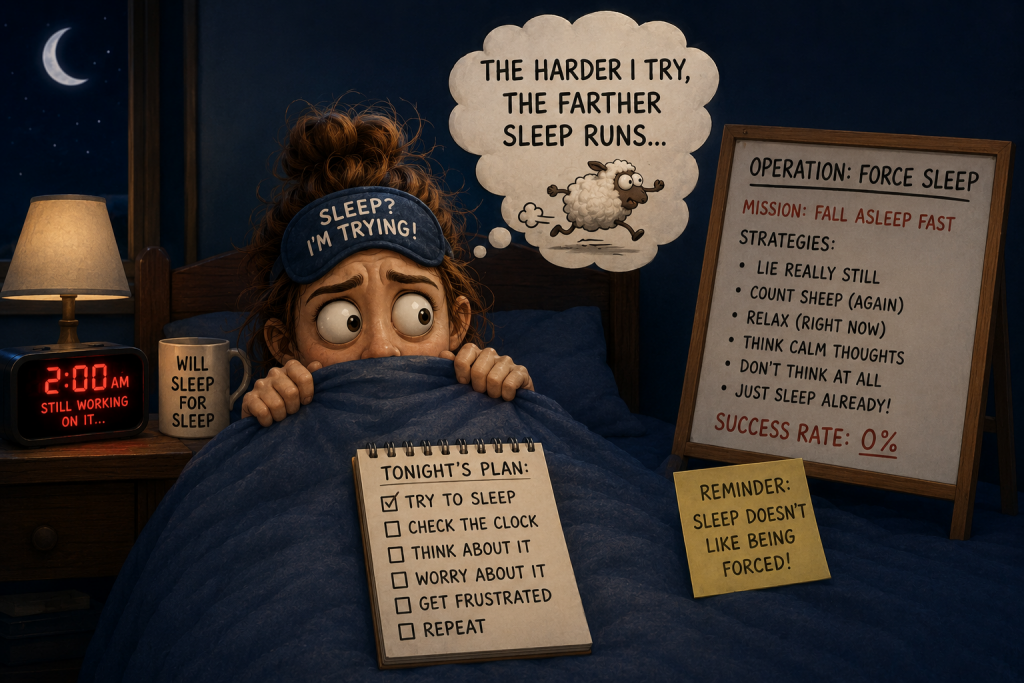
Having trouble sleeping because of health fears.
Struggling to complete normal daily tasks.
Feeling persistently hopeless or overwhelmed.
Having anxiety that interferes with work, family, or relationships.
Finding that fear of another illness or injury is controlling your choices.
You do not need to wait until everything falls apart.
As NIMH explains, professional help can be appropriate when symptoms are severe, distressing, or interfering with daily life.
Putting the Six Steps Together
A Health Scare can make recovery seem like one enormous task.
You do not have to handle it that way.
Break it down.
Step
What It Means
Redefine strength
Measure yourself by what is appropriate now
Start small
Begin with safe activity approved for your condition
Track wisely
Notice patterns without obsessing over every detail
Learn from setbacks
Ask what happened instead of calling yourself a failure
Make daily choices
Build confidence through actions you can control
Get support
Use medical and mental health professionals when needed
These steps are not a promise that recovery will be fast.
You do not have to become who you were before the Health Scare before you can feel proud of who you are becoming.
You can start with one safe choice.
Then another.
Then another.
That is how strength gets rebuilt.
Not all at once.
One decision at a time.
Real Stories of Rebuilding After Health Crises
A Health Scare does not always end when the test is over, the cast comes off, the surgery is finished, or the illness is gone.
Sometimes that is when a different part of recovery begins.
You may look better to everyone else, but you may not feel like yourself. You may be stronger than you were a few weeks ago and still wonder if your body can be trusted. You may have returned to work but still feel tired. You may be walking again but still think about the injury every time you take a step.
That part of recovery can be hard to explain.
It is also why real recovery stories matter.
The examples in this section are composite examples, not claims about one named person’s private medical history. They combine common recovery problems discussed in medical research and patient care so the lessons can be understood without pretending that a fictional story is a documented personal account.
Every Health Scare is different. A person recovering from an infection may face a very different problem from someone recovering from a broken bone. Someone living with a chronic condition may never have a simple “before and after” point. Someone recovering from surgery may have a clear physical goal but still struggle with fear.
There is no single recovery story.
There are patterns.
One of those patterns is that physical healing and confidence do not always move at the same speed.
Research on injury recovery has found that fear of reinjury can affect rehabilitation and physical activity. A clinical review published in Sports Health found that fear of reinjury can have physical and psychological effects and may interfere with rehabilitation outcomes in injured athletes.
That finding is important even if you are not an athlete.
A person does not have to play sports to fear getting hurt again.
You can fear falling again.
You can fear another surgery.
You can fear another bad test.
You can fear becoming sick again.
You can fear feeling the same symptom that started your Health Scare in the first place.
The body may be healing while the mind is still waiting for the next problem.
That is where rebuilding trust becomes part of recovery.
Example: Post-Illness Fatigue and Fear
Imagine a person we will call Mark.
Before his illness, Mark was used to being busy. He worked, handled things around the house, ran errands, and rarely thought twice about whether he had enough energy to get through the day.
Then he became seriously ill.
The illness passed, but his energy did not come back as quickly as he expected.
At first, Mark assumed he simply needed a little time.
Then weeks went by.
Some mornings were better. Other days were rough.
He would wake up feeling almost normal and decide to catch up on everything he had missed. He would clean the house, run several errands, and stay busy for hours.
Then he would pay for it later.
The next day, he felt exhausted.
That made Mark nervous.
He began thinking, “Something must still be wrong.”
He started checking every feeling.
Was he tired because he had done too much?
Was he getting sick again?
Was the illness coming back?
Should he stop exercising?
Should he stay home?
The more frightened he became, the harder it was to tell what was normal recovery and what needed medical attention.
This is where a real medical evaluation matters. Fatigue after illness can have many causes, and no general recovery plan can tell one person what their symptoms mean.
For example, the CDC explains that people with Long COVID can experience fatigue and post-exertional malaise, in which symptoms may worsen after physical or mental activity. The CDC says post-exertional malaise can begin 12 to 48 hours after activity and may last for days or weeks.
That is one reason a person should not assume that simply “pushing through” fatigue is always the right answer.
Mark eventually stopped trying to win back his old routine in one week.
Instead, he began keeping a simple record of his activity and symptoms. He talked with his healthcare provider about what he was experiencing. He learned which activities were appropriate for his situation and which signs meant he should stop and seek advice.
The biggest change was not that he suddenly became energetic.
It was that he stopped treating every difficult day as proof that he was broken.
His new questions were more practical:
What did I do today?
How did I feel afterward?
Did my symptoms change later?
What does my healthcare provider recommend?
What can I safely do tomorrow?
What do I need to change?
That gave him something he had lost during the Health Scare: a sense of direction.
His recovery was no longer based on guessing.
It was based on observation, medical guidance, and small adjustments.
That is an important lesson.
A Health Scare can make you want certainty immediately. Recovery may not give you that.
Sometimes the better goal is to build a process for dealing with uncertainty.
What Mark’s story teaches
Before
After the Shift
“I need to get back to normal.”
“I need to understand what my body can handle now.”
“A bad day means I am getting worse.”
“A bad day gives me something to examine.”
“I should push harder.”
“I should follow appropriate guidance.”
“I cannot trust my body.”
“I can learn more about my body’s limits.”
“I have to fix everything.”
“I can work on one thing at a time.”
The CDC’s guidance for Long COVID also points to comprehensive rehabilitation, symptom management, and patient diaries or calendars as tools that can help document changes.
That does not mean everyone with post-illness fatigue needs the same plan.
It means recovery can become easier to understand when you stop treating every symptom as a mystery and start gathering useful information with the help of the right professionals.
Example: Injury Recovery and Self-Doubt
Now imagine Lisa.
Lisa injured her knee.
The physical injury was only part of the problem.
The first few weeks were clear. She followed her treatment plan. She went through rehabilitation. She slowly regained movement.
Then something unexpected happened.
Her knee began working better, but Lisa became more afraid of using it.
The injury had taught her that one wrong movement could cause real pain.
So every time she walked down the stairs, she thought about it.
When she stepped outside, she watched the ground.
When she exercised, she held back.
When someone told her, “You look fine,” she did not feel fine.
That was frustrating because she knew she had made progress.
Her doctor and rehabilitation team had given her a plan, but her confidence had not caught up with her physical progress.
Lisa was not lazy.
She was afraid.
Research has found that fear of reinjury can be a meaningful part of rehabilitation. A review of sports injury research found that fear can affect physical function, rehabilitation, and return to activity.
A more recent study of people recovering from Achilles tendon rupture also found a relationship between reported fear of reinjury and poorer self-reported recovery and lower physical activity after the injury.
Those studies do not prove that fear causes poor recovery in every person.
They do show why fear should not simply be dismissed.
Lisa’s turning point came when she stopped asking herself whether she was “over” the injury.
Instead, she asked:
“What part of recovery am I struggling with right now?”
The answer was confidence.
Her physical rehabilitation had one job.
She also needed to work on trusting herself again.
That did not mean ignoring her knee.
It meant following the plan instead of adding extra restrictions because of fear.
She began noticing small things.
She could stand longer.
She could walk farther.
She could complete exercises that once seemed impossible.
She still had nervous moments.
But the nervous moments were no longer the only thing she noticed.
Her attention slowly moved from “What if I get hurt?” to “What does my rehabilitation plan say I can do?”
That is a major difference.
The first question is built around a future nobody can fully predict.
The second question is built around information she could actually use.
What Shifted Their Mindset and Routine
Mark and Lisa had different problems.
One struggled with fatigue after illness.
The other struggled with fear after injury.
Neither needed the same recovery plan.
But both needed something beyond the idea of simply “trying harder.”
They needed a way to understand what was happening.
They also needed to stop measuring every day against their old selves.
That may be one of the hardest lessons after a Health Scare.
Your old body becomes the measuring stick.
You remember how far you could walk.
How much you could lift.
How quickly you recovered.
How much energy you had.
How little you worried.
Then you compare that person with yourself today.
The comparison can feel brutal.
A better comparison may be:
Where was I two weeks ago?
Or:
What can I do now that I could not do after the Health Scare?
That does not mean you must be satisfied with every limitation forever.
It simply gives you a fairer way to notice change.
Research involving people recovering from ACL reconstruction has found that some patients experience uncertainty about recovery and lack confidence about returning to previous activity, with psychological barriers sometimes feeling greater than physical barriers.
That helps explain something many people discover:
Healing is not only about fixing tissue.
It is also about learning how to use the body again.
For one person, that may mean learning to walk without fear.
For another, it may mean learning how much activity they can handle.
For another, it may mean accepting that a chronic condition requires a different routine.
For another, it may mean getting mental health support after a frightening medical event.
The shift usually starts with a few practical changes.
Stop treating every setback as a verdict
A difficult day does not automatically mean your recovery has failed.
Stop demanding your old body back immediately
Your body may need time.
Stop guessing when professional advice is available
Ask questions.
Stop confusing caution with permanent avoidance
Follow your medical restrictions, but do not create extra rules based only on fear.
Start noticing evidence
Look for what you can do.
Start building routines you can repeat
A plan that you can follow is often more useful than a perfect plan that you abandon.
Start talking about the emotional part
Fear, frustration, sadness, and uncertainty are not signs that you are weak.
They are part of the experience for some people after a major health event.
That does not mean everyone needs therapy.
It does mean mental health should not be treated as irrelevant.
The National Institute of Mental Health notes that mental health symptoms deserve attention when they become severe, distressing, or interfere with daily life.
If that happens, professional support can be part of a complete recovery plan.
The Common Thread After a Health Scare
The stories are different, but the lesson is simple.
A Health Scare can change how you see your body.
It can make you afraid of movement.
It can make you question normal sensations.
It can make you compare every day with the person you were before.
It can make one setback feel like the end.
But recovery can also become a process of learning.
You learn your limits.
You learn your warning signs.
You learn what your medical team wants you to do.
You learn what activities are appropriate.
You learn when rest is useful.
You learn when fear is making the decision for you.
And, slowly, you learn that your body is not something you have to fight.
The book is about rebuilding strength and confidence after life changes the way you see yourself. It is not a promise that every condition can be fixed or that every person will return to their old level of ability.
It is about something more practical.
You can begin again from where you are.
You can make today’s choices based on today’s reality.
You can take small steps.
You can ask for help.
You can learn from setbacks.
And you can build a new relationship with the body you have now.
It may include a chronic condition that requires ongoing care.
That does not make your story less important.
A Health Scare can become a dividing line in your life: before it happened and after it happened.
But “after” does not have to mean “finished.”
Sometimes it means you are learning a different way forward.
And sometimes rebuilding starts when you finally stop asking, “Why can’t I be who I was?”
and start asking:
“What can I build from here?”
Mistakes That Slow Recovery After a Health Scare
A Health Scare can make you want to get your life back as fast as possible.
That feeling is understandable.
You may be tired of appointments. You may be tired of thinking about symptoms. You may be tired of asking whether something is safe. You may simply want to wake up one morning and feel like yourself again.
So you push.
You do more than you were doing yesterday. You try to catch up on everything you missed. You decide that being tired means you need to work harder. You tell yourself that pain is something you just have to get through.
Then your body says, “Not so fast.”
You feel worse.
Now you are frustrated.
Maybe you stop completely.
That cycle can make recovery harder.
The same thing can happen in the opposite direction. After a Health Scare, you may become so afraid of another problem that you stop moving altogether. You avoid activities that have already been approved. You compare every feeling with the worst thing that happened before. You spend so much time watching your body that you no longer know what normal feels like.
Neither extreme is helpful.
The goal is not to rush recovery.
The goal is not to hide from recovery.
The goal is to learn how to move forward in a way that fits your health, your medical advice, and your actual life.
The CDC advises people who are starting physical activity to begin slowly and build up over time. It also recommends that people with chronic health conditions talk with a healthcare professional about the types and amounts of activity that are right for them. (cdc.gov)
That advice is especially important after a Health Scare.
Your recovery is not a race against the calendar.
Pushing Too Hard, Too Soon
One of the easiest mistakes after a Health Scare is doing too much because you finally feel a little better.
You have a good day.
Your energy is up.
Your pain is lower.
You think, “Maybe I am finally back.”
So you go for the long walk.
You clean the whole house.
You exercise harder.
You lift something heavy.
You spend the entire day catching up.
Then the next day arrives.
You are exhausted.
Something hurts.
Your energy crashes.
Now you are wondering whether you have gone backward.
The problem is not that wanting to do more is bad.
The problem is assuming that one good day means your body is ready for everything you used to do.
A Health Scare can change your starting point.
That starting point may be temporary. It may last a few weeks. It may last longer. If you have a chronic condition, there may not be a simple return to the old baseline at all.
That is why your healthcare team matters.
For people recovering from an injury, the National Institute of Arthritis and Musculoskeletal and Skin Diseases explains that rehabilitation may be needed to rebuild strength and range of motion and help a person return to activity. It also recommends gradually increasing activity and choosing activity appropriate to your fitness level. (niams.nih.gov)
The word gradually is important.
Recovery often works better when you give your body time to adjust.
That does not mean doing nothing.
It means not turning one good day into a test of everything you can possibly do.
The “I feel good, so I can do everything” trap
Thought
Better Question
“I feel great today.”
“What activity fits my current plan?”
“I need to catch up.”
“What actually needs to be done today?”
“I can handle more.”
“Have I been cleared for more?”
“I should push through.”
“What does my healthcare team recommend?”
“I was fine yesterday.”
“Does one good day change my recovery plan?”
This matters because a Health Scare can create impatience.
You remember your old routine.
You want it back.
But your body does not care about your old schedule.
It responds to what is happening now.
If your doctor, physical therapist, or other healthcare professional has given you activity limits, those limits should guide your recovery. General advice from a blog cannot replace that plan.
There is another reason to avoid the push-too-hard cycle.
When you repeatedly overdo things, you may become afraid to try again.
You think:
“Last time I tried, I felt terrible.”
So you stop.
That is how pushing too hard can lead to avoiding activity altogether.
A better approach is to find a level that is appropriate for your condition and that you can repeat.
Small does not mean useless.
Small can be the beginning.
The CDC specifically encourages people who are getting more active to start slowly and work up over time. (cdc.gov)
That gives you room to learn.
You can find out what your body tolerates.
You can notice patterns.
You can make changes with professional guidance.
You can build confidence without making every activity a test.
After a Health Scare, that can be a much better way to rebuild.
Comparing Your Body to Your “Old Self”
Another mistake is constantly comparing yourself with the person you were before the Health Scare.
This one can hurt in a different way.
Maybe you used to walk five miles.
Now you can walk half a mile.
Maybe you used to lift heavy boxes.
Now you need help.
Maybe you could work all day without thinking about your energy.
Now you need breaks.
Maybe you never thought about your body.
Now you notice everything.
The comparison can make every improvement look small.
That is a problem.
Suppose you could walk for five minutes after your Health Scare, and now you can walk for fifteen.
That is progress.
But if you only think about the five miles you used to walk, fifteen minutes may feel like failure.
The numbers have not changed.
The meaning has.
This is why your “old self” can become an unfair measuring stick.
Your old body had a different starting point.
Your current body has a different starting point.
That does not mean you have to give up on improvement. It means you need a better way to measure it.
Try comparing:
Today with last week.
Instead of:
Today with five years ago.
Ask questions such as:
Can I do something now that I could not do a month ago?
Do I understand my limits better?
Am I following my treatment plan more consistently?
Do I recover more easily from normal activity?
Am I less afraid of movement?
Have I learned something useful about my symptoms?
Am I asking for help sooner when I need it?
Those questions can show progress that a simple strength or distance number cannot.
A Health Scare can also change your definition of success.
Before, success may have meant doing more.
Now, success may mean doing the right amount.
That is not weakness.
It is judgment.
Someone recovering from an injury may need rehabilitation before returning to the activity that caused the injury. NIAMS explains that rehabilitation can help rebuild strength and range of motion and may help reduce the chance of reinjury. (niams.nih.gov)
The point is not to become obsessed with avoiding every possible injury.
The point is to respect the process.
Your body may need a different path back.
Sometimes there is no path back to exactly what you did before.
That can be painful to accept.
It can also be freeing.
If you stop demanding that your current body behave exactly like your old body, you have room to discover what your current body can do.
That is where confidence can start growing again.
A better way to compare progress
Instead of asking…
Try asking…
“Why can’t I do what I used to?”
“What can I do now?”
“Why am I still limited?”
“What has improved?”
“Why is recovery taking so long?”
“What does my care plan say about my timeline?”
“Why am I not back to normal?”
“What does my current normal look like?”
“What did I lose?”
“What am I rebuilding?”
You do not have to pretend that you are happy about every change.
You are allowed to miss your old abilities.
You are allowed to be angry.
You are allowed to wish the Health Scare had never happened.
But you do not have to use those feelings as proof that your future is already decided.
Ignoring Emotional and Mental Health
A Health Scare can leave a physical mark.
It can also leave an emotional one.
That part is sometimes ignored.
People may ask:
“Are you healed?”
They may mean your injury.
They may mean your test results.
They may mean whether you are back at work.
But they may not ask:
“Are you scared?”
“Are you sleeping?”
“Are you still thinking about what happened?”
“Do you feel like yourself?”
Those questions matter.
NIMH explains that mental health symptoms deserve attention when they are severe or distressing, last for a significant period, or interfere with normal activities. It also notes that talking with a healthcare provider can be a useful first step when you are concerned about your mental health. (nimh.nih.gov)
A Health Scare does not automatically mean you will develop a mental health disorder.
But it can be a difficult experience.
You may feel:
Afraid something will happen again.
Angry about losing abilities.
Sad about changes in your routine.
Frustrated by slow progress.
Embarrassed about needing help.
Worried about medical appointments.
Nervous about returning to normal activities.
Tired of talking about your health.
Isolated because other people do not understand.
Those feelings deserve attention.
You do not have to diagnose yourself.
You do not have to decide that every emotional reaction means something is seriously wrong.
But you should not automatically ignore emotional distress either.
NIMH notes that stress and anxiety can affect both mind and body and can interfere with everyday life when they become persistent or difficult to manage. (nimh.nih.gov)
That gives you a useful test:
Is this affecting my life?
Are you avoiding normal activities because of fear?
Are you unable to sleep?
Are you struggling to work?
Are you pulling away from family and friends?
Are you having trouble caring for yourself?
Are you constantly worrying about your health?
Those are reasons to talk with a healthcare professional.
Psychotherapy can also be used alongside other treatment when appropriate. NIMH explains that psychotherapy can help with difficult emotions, thoughts, fears, and problems coping with situations in daily life. (nimh.nih.gov)
Getting help does not mean your recovery is failing.
It means you are treating the whole problem.
The Three Mistakes Often Work Together
The biggest problem is that these mistakes do not always happen alone.
They can form a cycle.
You have a Health Scare.
You want your old life back.
You push too hard.
You feel worse.
You become frightened.
You stop doing things.
You lose confidence.
You compare yourself with your old body.
You feel like you are failing.
You become discouraged.
You ignore the emotional part.
Then you try to push hard again because you are tired of feeling stuck.
And the cycle starts over.
Breaking that cycle does not require one giant decision.
It can start with noticing what is happening.
The Cycle
A Different Response
Push too hard
Follow your appropriate activity plan
Feel worse
Pay attention and seek advice when needed
Become afraid
Separate medical guidance from fear
Stop everything
Ask what activity is actually safe
Compare with your old self
Compare current progress with recent progress
Feel like a failure
Treat setbacks as information
Ignore emotional distress
Talk with a healthcare or mental health professional
This is not about making recovery perfect.
There will still be difficult days.
There may be symptoms.
There may be appointments you do not want.
There may be things you cannot do.
The point is to stop adding unnecessary pressure to an already difficult situation.
Recovery Does Not Have to Be a Fight
A Health Scare can make you feel as if your body has become your enemy.
Every ache becomes a question.
Every tired day becomes a worry.
Every setback becomes evidence.
Every limitation becomes a reminder of what you lost.
But recovery does not have to be a fight between you and your body.
You can listen to it.
You can work with your medical team.
You can make changes.
You can rest.
You can move when appropriate.
You can ask questions.
You can learn.
And you can build strength without demanding that your body prove something every day.
You do not need to rush back to the person you were.
You do not need to punish yourself for needing time.
You do not need to compare every day with your old life.
And you do not need to ignore the emotional side of recovery.
Instead, start with the next reasonable step.
Then another.
Recovery may not happen as quickly as you want.
But slow does not automatically mean stuck.
Sometimes the strongest thing you can do after a Health Scare is stop fighting the process long enough to learn how to work with it.
Simple Tools and Routines for Rebuilding After a Health Scare
After a Health Scare, it is easy to make recovery more complicated than it needs to be.
You may have a list of appointments, medications, exercises, restrictions, questions, symptoms, and things you are supposed to remember. Then someone tells you to “take care of yourself,” as if that is one simple thing.
It is not.
When your body has been through something difficult, even basic routines can feel like work.
That is why simple tools can help.
The goal is not to create another full-time job out of recovery. The goal is to have a few easy ways to notice what your body is doing, follow the plan you have been given, and slowly rebuild confidence after a Health Scare.
These tools are not medical treatment. They are not meant to replace your doctor, physical therapist, or other healthcare professional. Your personal medical condition should always determine what activity is safe for you.
Think of these ideas as a framework.
You decide what fits.
A Gentle Daily Movement Checklist
Movement after a Health Scare needs to be personal.
There is no single exercise that is safe for every person. Someone recovering from surgery may have different limits from someone recovering from an illness. Someone with a chronic condition may need a very different routine from someone recovering from an injury.
The CDC recommends that adults with chronic health conditions talk with a healthcare professional about the types and amounts of physical activity that are appropriate for them. It also recommends starting slowly and building up over time.
So before using a movement checklist, start with one question:
“What has my healthcare team said is safe for me?”
That answer comes first.
Once you know your limits, your checklist can stay very simple.
Before You Move
Check how you feel today.
Remember any movement restrictions you have been given.
Choose an activity that fits your current medical plan.
Do not use yesterday’s good day as permission to ignore today’s limits.
Have water or other needed supplies available.
Give yourself enough time so you do not feel rushed.
Then choose the movement that fits your plan.
That could be a short walk.
It could be a rehabilitation exercise.
It could be gentle movement while sitting.
It could be another activity recommended by your healthcare professional.
The checklist is not telling you which movement to choose.
It is helping you approach the movement you have already been told is appropriate in a calmer way.
During Movement
Pay attention without becoming obsessed.
There is a difference between awareness and constant checking.
Awareness sounds like:
“I notice how I feel.”
Constant checking sounds like:
“Is that feeling dangerous? What about that one? What about that?”
After a Health Scare, the second pattern can become exhausting.
You want enough awareness to follow your medical plan and recognize when something is wrong. You do not need to spend every second analyzing your body.
If your healthcare professional has given you specific warning signs or instructions for stopping activity, follow those instructions.
Otherwise, keep the goal simple:
Do what is appropriate. Notice how you respond. Stop when your plan says to stop.
After Movement
Give yourself a few minutes to notice what happened.
You might ask:
How did the activity feel?
Did anything unusual happen?
How was my energy afterward?
Did I need more rest?
Did I feel calmer?
Is there anything I should tell my healthcare provider?
You do not need to write a novel.
A few words are enough.
For example:
“Walked for 5 minutes. Felt okay. Needed a short rest afterward.”
That is useful information.
Another day might say:
“Same activity. More tired afterward.”
That is also information.
If you notice a concerning or worsening symptom, do not use a journal to diagnose yourself. Contact the appropriate healthcare professional.
The purpose of the checklist is not to turn you into your own doctor.
It is to help you become a better observer of your own recovery.
Part of the Day
Simple Question
Before
What is appropriate for me today?
During
Am I following my activity plan?
After
How did I respond?
Later
Is there anything important to report?
That is enough.
You do not need a perfect routine.
You need a routine you can actually use.
A Three-Line Body-Trust Journaling Prompt
One of the hardest things after a Health Scare can be trusting your body again.
You may remember the moment everything changed.
You may remember the symptom.
You may remember the diagnosis.
You may remember the emergency room, hospital, surgery, injury, test, or frightening phone call.
Your mind can keep returning to that moment.
A short journal can give your attention somewhere else to go.
This is not about writing pages every night.
It is three lines.
Line One: What Did My Body Do Today?
Write one thing your body did.
It can be very small.
Examples:
“I walked to the mailbox.”
“I got dressed without stopping.”
“I completed my approved exercise.”
“I made dinner.”
“I rested when I needed to.”
“I went to my appointment.”
The point is to notice action.
After a Health Scare, your brain may spend a lot of time listing what your body cannot do.
This line asks you to notice what it did.
Line Two: What Did I Learn?
This is where you record information.
Maybe you learned that a certain activity was harder than expected.
Maybe you learned that you need more rest.
Maybe you learned that you are less afraid of a movement than you were last week.
Maybe you learned that you need to ask your doctor a question.
There is no requirement for the answer to be positive.
A useful lesson can be uncomfortable.
For example:
“I learned that doing too much in one day leaves me exhausted.”
That is useful.
You can take that information into the next day.
Line Three: What Is One Reasonable Choice for Tomorrow?
This is the most important line.
Keep it small.
Do not write:
“Tomorrow I will get my old life back.”
Write:
“Tomorrow I will follow my activity plan.”
Or:
“Tomorrow I will ask about this symptom.”
Or:
“Tomorrow I will take a short walk if it is within my medical plan.”
Or:
“Tomorrow I will rest instead of feeling guilty about resting.”
That gives you something you can actually do.
A three-line journal can look like this:
Prompt
Example
What did my body do today?
I walked around the house for a few minutes.
What did I learn?
I felt better when I moved slowly.
What is one reasonable choice tomorrow?
I will follow the activity plan I was given.
This kind of journal should not become another way to obsess over symptoms.
If writing about your body makes your anxiety worse, stop using the exercise and discuss your concerns with a healthcare or mental health professional.
The goal is body trust.
Not body surveillance.
That distinction matters.
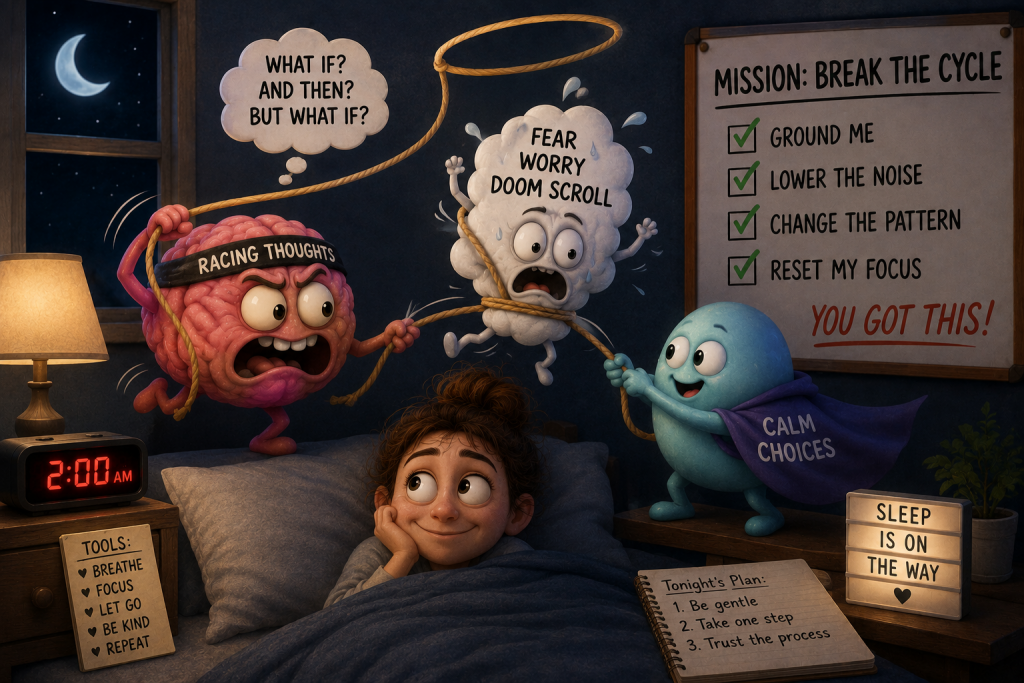
A Simple Stress Reset
A Health Scare can leave your body feeling tense even after the immediate crisis has passed.
Stress is a physical and emotional response. The National Center for Complementary and Integrative Health explains that stress can cause changes such as increased heart rate, faster breathing, higher blood pressure, muscle tension, and sweating.
That does not mean every symptom you experience is caused by stress.
It means stress is real and can affect the body.
A simple relaxation practice may be useful for some people.
NCCIH describes relaxation techniques such as slow breathing, progressive muscle relaxation, guided imagery, and biofeedback. It notes that these approaches are generally safe for healthy people but can have unwanted effects for some people, and they should not replace conventional medical care.
So keep this simple, too.
If slow breathing is appropriate for you, sit comfortably.
Relax your shoulders if you can.
Take a slow breath.
Then breathe out slowly.
Do not force your breathing.
Do not hold your breath if doing so makes you uncomfortable.
Do it for a short period.
Then stop.
You are not trying to “fix” your health with breathing.
You are giving yourself a quiet moment.
Some people may prefer another relaxation method. NCCIH lists meditation, mindfulness, yoga, tai chi, and other mind-body practices, while also noting that safety depends on the person and the specific practice.
After a Health Scare, that matters.
A practice that feels calming for one person may not feel right for another.
There is no prize for forcing yourself to meditate, stretch, breathe, or exercise in a way that does not fit your situation.
Choose what is appropriate.
How the Book Goes Deeper on Each Step
The simple tools above are meant to give you something practical to use.
But rebuilding after a Health Scare is bigger than a checklist.
The book is centered on the idea of rebuilding strength and confidence after your relationship with your body has changed.
That does not mean pretending that illness or injury did not happen.
It does not mean telling yourself that everything is fine.
It does not mean ignoring symptoms.
It does not mean replacing medical care with positive thinking.
Instead, the focus is on the process of rebuilding.
That process can include questions like:
What does strong mean now?
How do I start again without trying to do everything at once?
How do I stop treating every setback like failure?
How do I build confidence when my body feels different?
How do I move forward without pretending the Health Scare never happened?
Those questions matter because physical recovery and confidence can move at different speeds.
You may be physically able to do something but afraid to do it.
You may feel mentally ready but still have physical limits.
You may have a chronic condition that means “recovery” does not mean returning to your old body.
You may simply need time.
There is no single answer for everyone.
The National Center for Complementary and Integrative Health says mind-body approaches may be useful for some people as part of care, but also stresses that they should not be used to delay needed medical treatment.
That fits the larger idea behind this book.
Use the tools that help.
Keep the tools that fit.
Change the ones that do not.
And keep appropriate medical care at the center when you need it.
The best routine is not necessarily the longest one.
After a Health Scare, you may already have enough on your plate.
You may have appointments.
You may have treatment.
You may have work.
You may have family responsibilities.
You may have pain, fatigue, fear, or other changes to deal with.
You do not need to add a complicated recovery system on top of everything else.
Start with three things:
Move appropriately.
Notice honestly.
Choose the next reasonable step.
That can be enough for today.
Tomorrow, you can do it again.
Over time, those small actions can become part of a larger process.
Your body may not return to exactly what it was before the Health Scare.
Your life may not look exactly the same.
But that does not mean you have nothing left to build.
You can build a new routine.
You can build better awareness.
You can build confidence.
You can learn your limits.
You can learn when to ask for help.
And you can start seeing your body as something you are working with rather than something you are constantly fighting.
Sometimes rebuilding begins with something very small.
A short walk.
A few approved movements.
Three lines in a notebook.
A question for your doctor.
A few quiet minutes.
One choice that says:
“I am still here, and I am still moving forward.”
FAQ: Health Scare — How to Rebuild Strength and Trust Your Body
A Health Scare can leave you with more questions than answers.
Even after the immediate problem has passed, you may still wonder what your body can handle. You may worry about another injury, another illness, or another trip to the hospital. You may wonder if you will ever feel normal again.
Those questions are common parts of rebuilding.
The important thing is not to expect one simple answer to fit every Health Scare. Recovery depends on the illness, injury, treatment, age, health history, and many other factors.
The questions below are meant to give you a starting point.
They are not a replacement for medical care. If you have questions about your own condition, treatment, symptoms, or activity level, talk with your healthcare professional.
What If My Condition Is Chronic or Ongoing?
A Health Scare does not always have a clear ending.
Some people recover from an illness or injury and eventually return to their normal routine. Others learn that they are dealing with a chronic condition that needs ongoing care.
That can change what the word “recovery” means.
If your condition is ongoing, recovery may not mean getting back to exactly where you were before the Health Scare.
It may mean learning how to live well with your current condition.
It may mean becoming stronger within your limits.
It may mean finding ways to manage symptoms.
It may mean getting better at recognizing what your body needs.
It may mean having a treatment plan and learning how to follow it.
The CDC says people living with chronic conditions should follow their treatment plans, stay active when able, and work with their healthcare team to set activity goals that match their abilities. The CDC also notes that some activity is better than none for people who cannot meet standard activity targets.
That is an important point after a Health Scare.
You do not have to compare yourself with someone who has a different body, condition, or recovery path.
Your starting point is your starting point.
Instead of thinking…
Try asking…
“Why can’t I do what I used to do?”
“What can I safely work toward now?”
“When will I be normal again?”
“What does a better day look like for me?”
“Why is this taking so long?”
“What can I learn from where I am today?”
“My body has failed me.”
“What does my body need from me now?”
Living with an ongoing condition does not mean giving up on strength or confidence.
It may simply mean defining both in a different way.
Can These Ideas Work Alongside Medical Treatment?
Yes. The ideas in this article are meant to support healthy habits and a better relationship with your body. They are not meant to replace medical treatment.
That difference matters.
After a Health Scare, it can be tempting to search for one perfect exercise, supplement, diet, breathing method, or mindset trick.
Real recovery is usually more complicated.
Your healthcare team may recommend medication, physical therapy, surgery, rehabilitation, counseling, lifestyle changes, monitoring, or a combination of treatments.
Your job is not to replace those recommendations with something you read online.
Your job is to understand your treatment and take an active role in your recovery.
The CDC recommends that people with chronic health conditions talk with a healthcare professional about the types and amounts of physical activity that are right for them.
That means a simple walk may be appropriate for one person but not for another.
A strength exercise may be useful for one person but need to be changed for someone recovering from surgery.
Even a movement that looks easy may not be right for every Health Scare.
This is where patience matters.
Ask questions.
Write down instructions.
Bring a list of concerns to your appointments.
If you are unsure whether something is safe, ask before doing it.
And remember that getting professional help is not a sign that you failed.
It is part of rebuilding.
How Do I Handle Fear of Re-Injury or Relapse?
Fear can hang around long after the physical problem improves.
You may hesitate before doing something that once felt completely normal.
You may remember the moment you were hurt.
You may notice a small ache and immediately wonder if the original problem is coming back.
You may avoid an activity because you are afraid of what could happen.
After a Health Scare, that fear deserves attention.
It should not simply be ignored.
But fear also does not have to make every decision for you.
One useful approach is to separate a real warning from a fearful prediction.
For example:
“My doctor told me not to lift more than a certain amount.”
That is a medical restriction.
Compare that with:
“I lifted something small, and now I am afraid I will permanently damage myself.”
That is a fear that may need to be discussed, checked, and put into context.
The two are not automatically the same thing.
For injury recovery, rehabilitation can help rebuild strength and range of motion. The National Institute of Arthritis and Musculoskeletal and Skin Diseases notes that rehabilitation can also help people return to activity and reduce the chance of reinjury. It recommends gradually increasing activity rather than rushing back.
So instead of demanding that yourself to “stop being afraid,” try asking:
What has my healthcare professional cleared me to do?
What activity am I actually afraid of?
What part of that activity concerns me?
Can the activity be modified?
What would a small, safe step look like?
Do I need to ask my healthcare team about this fear?
Confidence often grows from experience.
You do something appropriate.
You get through it.
You learn from it.
Then you take the next step.
That is different from forcing yourself to prove that you are no longer afraid.
What If Progress Is Very Slow?
This may be one of the hardest questions after a Health Scare.
What if you are doing everything you can and still feel like you are barely moving?
First, slow progress is still information.
Recovery is not a race.
Some conditions take longer than others. Some people have setbacks. Some people improve in ways that are difficult to notice from one day to the next.
Think about learning to walk a long distance.
If you measure only the distance between Monday and Tuesday, you may see almost no difference.
Look back over several weeks, however, and the picture may be different.
That is why it can help to track useful changes without turning tracking into an obsession.
You might notice:
You need fewer breaks.
A normal task feels easier.
You recover faster after activity.
You are less afraid of movement.
You understand your limits better.
You are sleeping better.
You are asking for help sooner.
You are following your treatment plan more consistently.
Not every improvement will show up on a scale or stopwatch.
Sometimes the biggest change is confidence.
And sometimes there really is no improvement, or symptoms are getting worse.
That is different.
If something is not improving, is worsening, or is interfering with normal life, bring it to your healthcare professional.
Do not assume that every setback is simply part of recovery.
A Health Scare can make people afraid to complain because they think they should be grateful that things are not worse.
You are allowed to ask questions.
You are allowed to say something does not feel right.
You are allowed to need more help.
Is This Suitable for All Ages and Conditions?
The general ideas in this article—patience, realistic goals, self-awareness, appropriate movement, emotional support, and asking for help—can be useful concepts for many people.
But the actual exercises, activity levels, recovery goals, and treatment decisions are not one-size-fits-all.
That is especially important after a Health Scare.
Children and teenagers have different needs from adults.
Older adults may have different balance, strength, medication, or mobility concerns.
Someone recovering from surgery may have restrictions that another person does not.
Someone with heart disease, diabetes, arthritis, a neurological condition, an injury, or another chronic condition may need a personalized activity plan.
The CDC specifically advises people with chronic health conditions or disabilities to talk with a healthcare professional or physical activity specialist about appropriate types and amounts of activity.
So do not copy someone else’s recovery routine simply because it worked for them.
Borrow the idea, not the prescription.
Your body is yours.
Your medical history is yours.
Your recovery is yours.
There is also an emotional side to this.
A Health Scare can affect your mood, sleep, concentration, confidence, and interest in normal activities. Those changes deserve attention just like physical changes do.
The National Institute of Mental Health says people should consider professional help when severe or distressing mental health symptoms last two weeks or more or interfere with normal activities.
That does not mean every worried person needs therapy.
It means you do not have to wait until you are completely overwhelmed before asking for help.
When a Health Scare Changes More Than Your Body
Sometimes the hardest part of a Health Scare is what happens in your head afterward.
You may start thinking of yourself as fragile.
You may stop trusting your body.
You may avoid things you used to enjoy.
You may constantly wait for something else to go wrong.
That is why rebuilding should include more than physical strength.
It should include confidence, patience, and a willingness to see yourself as a person who is still moving forward.
The goal is not to pretend the Health Scare never happened.
The goal is to stop letting that experience become the only story you tell about your body.
You may have limits.
You may need treatment.
You may need rest.
You may need help.
You may need to start very small.
None of those things mean you cannot rebuild.
They simply mean your next step needs to fit the body and life you have today.
And sometimes that is where real strength begins.
4-Week Body-Trust Rebuild Plan After a Health Scare
A Health Scare can change the way you look at your body.
Before the scare, you may not have thought much about simple things like walking across the room, climbing stairs, getting out of a chair, carrying groceries, or taking a shower. Afterward, those same things can suddenly feel like tests.
You may wonder:
“Can I do this?”
“What if something happens again?”
“Am I pushing too hard?”
“Will I ever feel like myself again?”
Those questions can make recovery feel much bigger than it needs to be.
A four-week plan can help give you some structure without turning recovery into another source of stress. The goal is not to “fix” your body in 28 days. That would be unrealistic for many people after a Health Scare.
The goal is much simpler:
Notice where you are. Learn what works. Take small steps. Review what you learn. Then decide what comes next.
Your plan should always fit your medical situation. If you have an injury, chronic condition, recent surgery, or other health concern, ask your healthcare professional what types and amounts of activity are appropriate for you. The CDC specifically recommends that people with chronic health conditions talk with a healthcare professional about physical activity that fits their needs. It also recommends starting slowly and building up over time.
This plan is about rebuilding trust, not proving how strong you are.
Week One: Awareness and Redefinition
The first week is not about doing more.
It is about seeing where you are now.
After a Health Scare, people often compare their current body with the body they remember from before the problem. That comparison can make every limitation feel like failure.
Instead, start with a clean page.
Ask yourself:
“What can my body do today?”
Not six months ago.
Not five years ago.
Not before the injury.
Today.
That does not mean giving up on improvement. It means starting from reality instead of memory.
Make a Simple Baseline
At the beginning of the week, write down a few things.
Area
What to Notice
Movement
What movements are comfortable and approved for you?
Energy
When do you usually have the most energy?
Confidence
What activities make you nervous?
Daily life
What normal tasks feel harder now?
Support
Who can help when you need it?
Questions
What do you need to ask your healthcare team?
Do not turn this into a test.
There is no score.
You are simply collecting information.
You might discover that one part of your day is easier than another. You might notice that you feel better after rest. You might find that fear is stopping you from doing something you have already been cleared to do.
That information matters.
The CDC also recommends setting aside specific times for physical activity and starting slowly rather than trying to jump into a demanding routine.
During Week One, redefine what strong means.
Strong might mean asking for help.
Strong might mean following your treatment plan.
Strong might mean resting when you need rest.
Strong might mean taking a few approved steps instead of forcing yourself to take a hundred.
Strong might mean admitting that you are scared.
A Health Scare can make strength seem like something you either have or do not have.
Real life is usually not that simple.
Strength can be rebuilt.
Weeks Two and Three: Small Movements and Tracking
Once you understand your starting point, Weeks Two and Three are about gentle progress.
The key word is small.
Do not decide that you are going to make up for lost time.
Do not turn one good day into a reason to double your workload the next day.
And do not copy somebody else’s exercise routine just because it worked for them.
Your activity needs to match your health and abilities.
The CDC notes that adults with chronic health conditions or disabilities can benefit from physical activity, while also advising them to work with a healthcare professional or physical activity specialist to determine the appropriate type and amount.
Pick One Area to Work On
Choose one area.
For example:
Walking
Approved rehabilitation exercises
Gentle mobility
Getting up and moving more often
Completing a normal household task
Improving your confidence with an activity you have already been cleared to do
Do not try to rebuild everything at once.
You are building trust.
Trust grows when your actions match your abilities.
Use a Simple Tracking Method
You do not need a complicated app or spreadsheet.
A notebook can work.
Write down:
What I did: A short description.
How I felt: A few words.
What I learned: One useful observation.
For example:
What I did: Took my approved short walk. How I felt: A little tired afterward. What I learned: I may need more rest before doing another activity.
Another day might look like:
What I did: Completed my approved exercise routine. How I felt: More comfortable than last week. What I learned: The movement does not feel as frightening now.
That last line is important.
Sometimes progress is physical.
Sometimes progress is emotional.
After a Health Scare, being less afraid can be a major change even when the activity itself has not changed much.
Look for Patterns, Not Perfection
At the end of each week, look back.
Ask:
What became easier?
What stayed the same?
What became harder?
What made me feel more confident?
What caused extra fatigue or discomfort?
What questions should I ask my healthcare professional?
What is one thing I should keep doing?
You are not trying to create a perfect chart.
You are looking for patterns.
And if you have a setback, write it down without turning it into a personal judgment.
“That was harder than expected” is information.
“I failed” is a judgment.
Those are not the same thing.
Week Four: Review, Adjust, and Plan the Next Month
By Week Four, stop and look at the bigger picture.
A Health Scare can make you focus so closely on today’s symptoms that you miss the changes happening over several weeks.
This is your chance to step back.
Look at your notes.
Look at your activity.
Look at your confidence.
Look at the things that worried you four weeks ago.
Then ask:
“What is different now?”
The answer does not have to be dramatic.
Maybe you are moving a little more.
Maybe you are less afraid.
Maybe you have learned what your limits are.
Maybe you discovered that mornings are easier than evenings.
Maybe you learned that trying to do too much leaves you exhausted.
Maybe you learned that you need more professional support.
All of those are useful discoveries.
Use a Four-Question Review
Question
Your Answer
What improved?
What remained difficult?
What did I learn about my body?
What is my next reasonable goal?
Then make your next month’s plan smaller than your ego wants and realistic enough that you can actually follow it.
That may mean continuing the same routine.
It may mean slowly increasing activity if your healthcare professional agrees.
It may mean changing the type of activity.
It may mean adding rehabilitation or professional support.
It may mean taking a step back.
There is no rule saying every month has to show a bigger number.
Know When the Plan Needs to Change
A body-trust plan should never become a reason to ignore problems.
If symptoms are worsening, interfering with normal activities, or causing serious concern, contact an appropriate healthcare professional.
The same is true for emotional health.
After a Health Scare, fear, sadness, stress, and frustration can become part of the recovery process. But if distressing symptoms last two weeks or more or begin interfering with normal activities, the National Institute of Mental Health recommends seeking professional help.
That is not failure.
It is another form of taking care of yourself.
NIMH also notes that stress and anxiety can affect both the mind and body, and that professional help can be useful when symptoms do not go away or begin interfering with everyday life.
Your Next Month Does Not Need to Look Like Your Last Month
The biggest mistake you can make after a Health Scare is believing that progress has to look a certain way.
Maybe your old goal was running.
Your new goal might be walking.
Maybe your old goal was lifting heavy weights.
Your new goal might be rebuilding basic strength.
Maybe your old goal was doing everything yourself.
Your new goal might be learning when to accept help.
Maybe your old goal was never thinking about your body.
Your new goal might be listening to it without being afraid of every sensation.
That is still progress.
The purpose of this four-week plan is not to promise that a Health Scare will be behind you after four weeks.
The book goes beyond a four-week checklist and looks at the bigger process of rebuilding strength, confidence, and trust when your relationship with your body has changed.
You only need to know what the next reasonable step is.
Then take that step.
Next Step and Resources After a Health Scare
After a Health Scare, it is easy to think about recovery as one huge job.
You want your strength back.
You want your confidence back.
You want to stop worrying.
You want to trust your body again.
You want life to feel normal.
That is a lot to carry at once.
So instead of asking, “How do I fix everything?”, ask a smaller question:
“What is one healthy, reasonable thing I can do today?”
That question changes the way you look at recovery.
A Health Scare can make the future feel uncertain. A small next step gives you something real to work with right now.
Your next step does not need to be impressive.
It does not need to make a dramatic difference.
It does not need to prove that you are strong.
It simply needs to move you in a helpful direction.
One Tiny Movement or Choice to Make Today
Start by choosing something that fits your current situation.
If you have been given activity restrictions, follow them. If you are unsure what movement is safe, ask your healthcare professional before starting something new.
For one person, the next step might be a short walk that has already been approved.
For another person, it might be completing a rehabilitation exercise.
For someone else, the right choice might be rest.
Yes, rest can be a choice.
After a Health Scare, people sometimes feel guilty when they are not doing something physical. But recovery is not about staying busy every minute of the day.
The right action depends on the person.
The CDC recommends that adults with chronic health conditions talk with a healthcare professional about appropriate physical activity. It also recommends starting slowly and increasing activity over time rather than trying to do too much at once. (cdc.gov)
So make today’s goal small enough that you can understand it.
Try one of these questions:
What is one movement I have already been told is safe?
What is one daily task I can complete without rushing?
What is one question I need to ask my doctor?
What is one healthy habit I can repeat today?
What is one thing I can stop doing because it makes recovery harder?
What is one way I can give myself permission to rest?
What is one fear I can write down instead of carrying it around all day?
Then choose one.
Not ten.
One.
That may sound too simple.
It is not.
After a Health Scare, simple is often useful because you are already dealing with enough uncertainty.
A Tiny-Step Example
Imagine someone who used to walk several miles but now feels nervous after an illness.
Their first goal does not have to be several miles.
Their goal might be:
“I will follow the walking plan my healthcare professional gave me today and pay attention to how I respond.”
That is a complete goal.
It has a clear action.
It respects medical guidance.
It does not demand a perfect outcome.
And it gives the person something they can repeat.
The next day may go differently.
That is okay.
Recovery is not a straight line for everyone.
Some days will feel easier.
Some days may feel harder.
A Health Scare can make a hard day feel like proof that nothing is working. Instead, look at the bigger picture.
Ask:
“What can I learn from today?”
That question leaves room for progress without pretending setbacks do not happen.
How STRONG AGAIN Fits Into the Process
A Health Scare can change more than your physical ability.
It can change the way you see yourself.
You may start thinking of yourself as weak.
You may feel fragile.
You may stop doing things because you are afraid.
You may constantly compare your current body with the person you were before the Health Scare.
That is where rebuilding trust becomes important.
STRONG AGAIN – Your Body Is Not Broken was written around that larger idea.
The goal is not to pretend that illness, injury, pain, aging, or physical limitations do not exist.
The goal is to look at what happens after your confidence has taken a hit and begin working forward from there.
For the emotional side of a Health Scare, the National Institute of Mental Health offers information about mental health and when professional help may be useful.
You do not have to read everything.
You do not have to become an expert in your own condition.
Use information to help you ask better questions and make informed choices with the professionals caring for you.
And be careful with online advice.
A story about someone else’s recovery is not automatically a treatment plan for you.
A workout that helped one person may be wrong for another.
A supplement someone praises online may not be appropriate for you.
A symptom discussed in a social media post may have many possible causes.
Your own healthcare team knows details that a general article does not.
Stay Connected for More Support
Sometimes rebuilding is easier when you do not feel like you are doing it alone.
If you want more articles, book updates, practical ideas, and new content from Ray McNally, you can visit the official Ray McNally website and explore the latest posts.
There is a part of adult life that rarely shows up on a to-do list.
You can see the bills. You can see the laundry. You can see the dishes in the sink, the work schedule, the doctor’s appointment, and the pile of things that need to be handled before Friday.
What you cannot always see is the mental weight behind all of it.
That weight is often called the emotional load.
It is the constant thinking, remembering, worrying, planning, deciding, and managing that happens quietly in the background of daily life. It is remembering that a bill is due next week. It is wondering whether your child is doing okay. It is thinking about what will happen if your car breaks down. It is trying to figure out how to afford something before you even know the final cost.
It is also carrying your own feelings while trying to deal with everyone else’s.
This hidden load helps explain why so many people reach the end of the day and think, “I didn’t even do that much. Why am I so tired?”
Because doing is only part of the work.
Thinking about everything you have to do is work, too.
What “Emotional Load” Really Means
The emotional load of adult life is not one single problem. It is the pile of invisible mental and emotional jobs that follow you throughout the day.
You may be physically sitting on the couch, but your brain is still working.
You might be thinking:
Did I forget to answer that email?
What are we going to do about that bill?
I need to make that appointment.
Why hasn’t my friend answered me?
Did I say something wrong?
What should I make for dinner?
I really need to start exercising.
I should call my family.
I need to figure out what I am doing with my life.
Am I falling behind everyone else?
None of those thoughts may seem huge by themselves.
That is part of the problem.
The emotional load often builds through small things that never fully leave your mind.
One worry leads to another. One responsibility creates three more decisions. Something that takes five minutes to do may take hours of mental space before you finally do it.
For example, making a doctor’s appointment may sound simple. But the full mental process can look more like this:
The Visible Task
The Hidden Emotional Load
Make the appointment
Remember you need one
Find the phone number
Check your schedule
Think about insurance
Decide which day works
Hope the problem is nothing serious
Remember to arrange transportation or time off
Keep thinking about it until it is done
The phone call may only take ten minutes.
The mental space it takes up can last for days.
That is emotional load.
It also includes the pressure adults place on themselves. Many people believe they should know what they are doing by a certain age. They think they should be better with money, more successful at work, happier in their relationships, more organized at home, and somehow still have time to relax.
The word should can become surprisingly heavy.
You should have more money by now.
You should know your career path.
You should have your life together.
You should be a better parent, partner, friend, worker, or adult.
The problem is that there is no single point where a person suddenly graduates from being confused. Getting older does not automatically make every decision easier.
In many ways, adulthood gives you more freedom while also giving you more things to manage.
You decide what to eat, but now you have to buy the food.
You want independence, but now you are responsible when something goes wrong.
You build a career, but you may also worry about whether you chose the right one.
You have relationships, but relationships require time, communication, and emotional energy.
You finally get some quiet time, and your brain starts reminding you of everything you forgot.
That is why adult exhaustion is not always about working too many hours.
Sometimes you are exhausted because nothing in your mind feels finished.
Stress can also affect concentration, sleep, energy, and the ability to make decisions. The more pressure that stays active for long periods, the harder it may become to feel like you have truly had a break. The CDC’s guidance on managing stress notes that stress can affect emotions, sleep, energy, concentration, and decision-making.
This does not mean every tired person has a mental health condition. It means the human mind is not a machine that can carry an endless number of open tabs without feeling the weight.
Think about your emotional load like a backpack.
At first, you put one thing inside.
Then another.
Then another.
A bill.
A family problem.
A work deadline.
A health concern.
A decision you have been avoiding.
A friendship that feels different.
A future you are not sure how to reach.
Eventually, the backpack becomes heavy enough that even standing still feels tiring.
The strange part is that other people may not see it.
They may see someone who is functioning.
Someone who goes to work.
Someone who pays their bills.
Someone who answers texts.
Someone who shows up.
They may not see the person quietly thinking, “I don’t know how much longer I can keep carrying all of this.”
That is one of the hidden parts of adult life.
You can be doing okay on the outside while feeling overloaded on the inside.
And recognizing that difference matters.
You do not have to wait until you completely fall apart before admitting that something feels heavy.
Sometimes the first step toward lightening the load is simply being honest about the fact that you are carrying one.
Why It’s Invisible but Exhausting
Some kinds of work leave proof behind.
You clean the kitchen, and the kitchen looks clean.
You finish a report, and there is a completed report.
You mow the lawn, and everyone can see the result.
Emotional work is different.
You can spend an entire day worrying, planning, remembering, calming yourself down, supporting another person, making decisions, and trying to keep everything together—and at the end of the day, there may be nothing you can point to and say, “There. That proves how hard today was.”
That is one reason the emotional load is so easy to dismiss.
People often judge exhaustion by visible activity.
If you did not run a marathon, work twelve hours, or spend the day doing physical labor, you may tell yourself you have no reason to be tired.
But your mind may have been busy from the moment you woke up.
You may have spent the morning making choices.
Then worrying about those choices.
Then solving problems.
Then preparing for problems that have not happened yet.
Then trying to hide your stress so nobody else worries.
That takes energy.
Decision-making alone can become draining when life keeps demanding one choice after another. What should you do first? What can wait? Should you spend the money? Should you say yes? Should you say no? Should you quit? Should you stay? Should you bring it up? Should you let it go?
At some point, even a small question like “What do you want for dinner?” can feel like too much.
This is one reason people sometimes become irritated by tiny things after a long day.
The tiny thing is not always the real problem.
It may simply be the last thing added to an already full mental backpack.
The American Psychological Association has also discussed how high stress can make everyday choices feel harder and how repeated choices can leave people more likely to take the easiest option rather than carefully think through later decisions. That does not mean every choice literally drains a fixed amount of brain power. It does mean that stress and a constant stream of demands can make clear decision-making more difficult. You can read more about this in the APA’s discussion of stress and decision-making.
Another reason emotional load stays invisible is that adults often become good at hiding it.
Someone may say, “I’m fine,” because explaining everything feels like more work.
Someone may laugh while feeling lonely.
Someone may keep helping everyone else because they do not know how to ask for help themselves.
Someone may stay busy because slowing down would mean finally noticing how overwhelmed they feel.
This is especially common when a person becomes known as the reliable one.
The reliable one gets the call.
The reliable one figures it out.
The reliable one remembers the important dates.
The reliable one keeps things moving.
The reliable one may also hear, “You handle things so well.”
What people may not realize is that handling things well does not mean handling them is easy.
A person can be capable and overwhelmed at the same time.
A person can love their family and still feel tired from being needed.
A person can be grateful for their job and still feel burned out by constant pressure.
A person can have friends and still feel lonely.
These things can exist together.
That matters because adults often talk themselves out of their own feelings.
“I have no right to complain.”
“Other people have it worse.”
“I should be grateful.”
“I just need to push harder.”
Gratitude is valuable. Perspective is valuable. But neither one magically removes a heavy load.
You can appreciate what you have and still admit that life feels difficult.
The CDC recommends healthy ways of coping with stress, including taking time to unwind, connecting with others, moving your body, and finding ways to manage daily stress before it builds further. The CDC’s emotional well-being guidance also points to communication and asking for support as useful parts of coping.
The goal is not to create a life with zero stress.
That is not realistic.
The goal is to stop treating every responsibility as if you must carry it alone, carry it perfectly, and carry it forever.
Sometimes emotional exhaustion comes from the fact that you are still mentally holding things that could be handled differently.
Maybe a decision does not need to be made today.
Maybe somebody else’s emergency is not yours to solve.
Maybe the message can wait until tomorrow.
Maybe you do not need to explain every “no.”
Maybe “good enough” is actually enough.
Maybe rest does not need to be earned by reaching total exhaustion first.
The hidden emotional load becomes dangerous when we never stop to ask what is actually inside the backpack.
Instead, we just keep adding things.
Then we blame ourselves when it becomes too heavy.
A better question is not always, “Why can’t I handle more?”
Sometimes the better question is, “Why am I carrying all of this in the first place?”
How This Ties to Nobody Told Me About This Part of Adult Life
The emotional load is at the center of what makes adulthood feel so different from what many people expected.
As children and teenagers, adulthood can look simple from far away.
You imagine freedom.
Your own home.
Your own money.
Your own choices.
Nobody really explains the other side in full.
The choices keep coming.
The responsibilities do not always clock out.
Friendships change.
Family roles change.
Money problems can appear without warning.
Work can take more than just your time.
You can reach a goal you wanted for years and still wonder why you do not feel the way you expected.
You may spend years waiting to finally feel like a “real adult,” only to discover that many adults are quietly making things up as they go.
The book focuses on the parts of adulthood people often experience privately: loneliness, burnout, fading friendships, constant pressure, decision fatigue, and the strange feeling that life can look stable while something inside still feels unsettled.
It is not about pretending adulthood is terrible.
It is about being honest about the fact that adulthood can be emotionally demanding in ways nobody clearly explains.
There is a difference between saying, “Adult life is hard sometimes,” and actually looking at why it feels hard.
The emotional load gives us part of that answer.
Consider a normal week.
You work.
You take care of the house.
You answer messages.
You make decisions.
You worry about money.
You try to spend time with people you care about.
You think about the future.
You remember things that other people forget.
You deal with problems as they happen.
You try not to make mistakes.
You compare where you are with where you thought you would be.
You wonder whether everyone else has somehow figured out a secret that you missed.
Then somebody asks how you are doing.
You say, “Good. Just tired.”
That one sentence can hide an entire week.
Nobody Told Me About This Part of Adult Life was built around the idea that many of these experiences are common but rarely discussed honestly. Feeling tired, uncertain, disconnected, or emotionally overloaded does not automatically mean you are failing.
It may mean you are carrying more than you have named.
That distinction is important.
If you believe the problem is that you are broken, your answer may be to push yourself harder.
If you realize the problem may be that your load has become too heavy, you can start looking for ways to change how you carry it.
You may not be able to remove every responsibility.
Bills still exist.
Work still needs to be done.
Children still need care.
Problems still happen.
But not every solution requires becoming more productive.
Sometimes the answer is reducing unnecessary decisions.
Sometimes it is setting a boundary.
Sometimes it is telling somebody, “I can’t take this on right now.”
Sometimes it is admitting that you need support before you reach a breaking point.
Sometimes it is simply stopping the fight against yourself.
The book’s larger message is simple: you are not failing just because adulthood feels harder than you expected.
You are experiencing the part people often leave out.
There is no universal age when you are supposed to have every answer. There is no point where all uncertainty disappears. Being responsible does not mean never needing help. Being strong does not mean never getting tired.
And getting better at adult life does not mean performing adulthood perfectly for other people.
It can mean learning what drains you.
Learning what you can control.
Learning what you need to let go of.
Learning when to rest.
Learning when to ask for help.
Learning that your worth is not measured by how much pressure you can survive without saying anything.
That is where the next step begins.
Before you can lighten the emotional load, you need to see it.
Not the version other people see.
The real version.
The thoughts.
The pressure.
The open loops.
The worries.
The expectations.
The responsibilities you accepted because you thought you had to.
Once those things have a name, they become easier to examine.
And once you begin examining them, you may discover something important:
You were never weak because the backpack felt heavy.
You may simply have been carrying far more than anyone knew.
Why Adulting Feels Heavier Than Expected
There is a funny thing about becoming an adult.
When you are younger, adulthood often looks like freedom.
You imagine having your own money, making your own choices, living wherever you want, buying whatever you want, and finally being able to do things without someone telling you what to do.
Then you get there.
And nobody tells you that freedom comes with a mountain of decisions.
You can choose what job you want, but you also have to worry about paying the bills.
You can choose where you live, but now you have rent or a mortgage, repairs, insurance, utilities, and groceries.
You can choose who you spend time with, but friendships take work.
You can choose whether you want children, but raising children comes with an enormous amount of responsibility.
You can change careers, but changing careers can mean starting over.
You can stay home on a Friday night, but then you might wonder whether everyone else is out having fun without you.
You can work harder, but then you may have less time for everything else.
You can slow down, but then the little voice in your head may tell you that you are falling behind.
This is one reason adulting feels heavier than expected.
It is not simply that adulthood contains more work. It contains more things that matter.
When you are responsible for yourself, your choices have consequences. When other people depend on you, those choices can affect them too. Even ordinary days can contain dozens of small decisions that nobody notices.
What makes it harder is that there is no universal adult handbook.
There is no age when someone hands you a certificate and says, “Congratulations. You now understand money, relationships, careers, family, health, stress, and what you are supposed to do with the next 40 years.”
Most people learn as they go.
Some learn through experience.
Some learn because they make expensive mistakes.
Some learn because someone finally gives them good advice.
And some spend years believing they are the only person who has no idea what they are doing.
That last group is much larger than it looks.
Decision Fatigue and Constant Responsibility
One of the biggest reasons adult life can feel exhausting is the sheer number of decisions packed into an ordinary day.
Some decisions are important.
Some are completely unimportant.
Your brain does not always get a clean break between them.
You wake up and decide whether to get out of bed now or hit snooze.
Then you decide what to wear.
What to eat.
Whether you have time for breakfast.
Whether you need gas.
Whether you should answer that message.
Whether you should call your doctor.
Whether you can afford something.
Whether you should accept an invitation.
Whether you should take on another project.
Whether you should speak up at work.
Whether you should let something go.
Whether you should call your parents.
Whether you should check your bank account.
Whether you should start exercising again.
Whether you should finally clean the garage.
None of these choices necessarily feels enormous.
Together, they can create a very crowded day.
The term decision fatigue is commonly used to describe the feeling of being worn down by repeated choices. There is good reason people recognize the experience. Research and discussion from the American Psychological Association have found that stress and a large number of choices can make everyday decisions harder, particularly when people are already dealing with uncertainty and pressure. (American Psychological Association)
That does not mean your brain has a little meter that reaches zero after exactly 47 decisions.
Real life is more complicated than that.
Stress, sleep, time pressure, the importance of the decision, and your emotional state all matter.
But the basic experience is easy to recognize.
After a long day of making decisions, you may not want another one.
That is why someone can spend eight hours making important choices at work and then stare at the refrigerator at 7:30 p.m. thinking:
“I don’t care. You pick.”
It is not always laziness.
Sometimes you simply do not want to make one more decision.
The problem becomes even bigger when responsibility follows you everywhere.
Work may end at five, but your responsibilities do not necessarily end with your workday.
There may be children to pick up.
Food to prepare.
Laundry to fold.
Bills to pay.
Messages to answer.
Appointments to schedule.
A house to maintain.
A partner who needs your attention.
Parents who need help.
A friend who is going through something.
A problem with the car.
A problem with the internet.
A problem with the house.
A problem that you do not even know how to solve yet.
The list never seems completely finished.
That creates a strange feature of adult life:
There is always something else you could be doing.
You could clean something.
Save more money.
Work on your career.
Read a book.
Exercise.
Call someone.
Organize your house.
Learn something.
Fix something.
Plan something.
Improve something.
The list has no natural ending.
That can make rest feel uncomfortable.
You sit down, and instead of relaxing, your brain starts producing reminders.
“You should really…”
That sentence may be one of the most exhausting sentences in adult life.
You should really clean that.
You should really answer them.
You should really get more exercise.
You should really save more money.
You should really get ahead at work.
You should really spend more time with your family.
You should really call your friend.
You should really figure out what you want to do with your life.
The problem is not that any one of these suggestions is terrible.
The problem is when they all arrive at once.
A person can become so focused on everything that still needs to be done that they stop noticing everything they have already accomplished.
That creates a permanent feeling of being behind.
And being behind is one of the most powerful forms of emotional pressure because there is no finish line.
If you finish today’s work, tomorrow has more.
If you clean the house, it eventually gets dirty again.
If you pay the bills, new bills arrive.
If you answer your email, more email appears.
If you reach one career goal, another one may replace it.
If you finally get your life organized, life may immediately throw something new at you.
This does not mean adult life is hopeless.
It means adulthood requires a different definition of success.
If your definition of success is “everything is finished,” you are going to lose.
Everything is never finished.
A healthier goal is something closer to:
“I handled what mattered most today.”
That is a very different standard.
It leaves room for reality.
It also leaves room for being human.
The person who learns to separate urgent, important, optional, and not mine to handle can often reduce some of the pressure without changing their entire life.
Consider this simple approach:
Question
What It Helps You Decide
Does this need to happen today?
Separates urgency from noise
Does this actually matter?
Protects your attention
Can someone else handle it?
Reduces unnecessary responsibility
Can it wait?
Prevents everything from becoming an emergency
Am I doing this because I want to or because I think I should?
Exposes outside pressure
What happens if I do nothing?
Gives the decision some perspective
That last question can be surprisingly useful.
Sometimes the answer is, “Something important will happen.”
Sometimes the answer is, “Someone might be disappointed.”
And sometimes the answer is, “Absolutely nothing.”
Those three answers are very different.
Adult life becomes heavier when we treat all three as emergencies.
The goal is not to stop caring.
It is to become more selective about what deserves your limited attention.
Loneliness, Comparison, and the Feeling That You’re Behind
There is another part of adulting that people do not always expect.
You can be surrounded by people and still feel alone.
You can have coworkers.
Family.
Friends.
Followers.
Neighbors.
A partner.
Children.
People who text you.
People who like your posts.
And still have moments when you think:
“Does anybody actually understand what is going on inside my head?”
Adult loneliness can be strange because it is not always about having nobody around.
Sometimes it is about not feeling understood.
Sometimes it is about losing the friendships you once assumed would last forever.
Sometimes it is about moving to a new place.
Sometimes everyone gets busy.
Sometimes people marry, have children, change jobs, move away, or simply become different people.
There may be no dramatic argument.
No big ending.
The friendship just becomes quieter.
One person stops calling.
Then the other stops calling.
Months pass.
Nobody is angry.
Nobody did anything terrible.
But something that once felt permanent is suddenly part of the past.
That can be difficult to explain to someone who thinks loneliness means sitting alone in an empty room.
It does not always look that way.
Sometimes loneliness looks like having nobody you feel comfortable calling when something important happens.
Sometimes it looks like having a great day and realizing you do not know who you want to tell.
Sometimes it looks like being with your family while feeling emotionally somewhere else.
Sometimes it looks like scrolling through social media at midnight and wondering why everyone else’s life appears to be moving forward.
That last one can make the feeling of being behind much worse.
Social media gives us a strange window into other people’s lives.
You see the vacation.
The new house.
The wedding.
The promotion.
The engagement.
The new car.
The family photo.
The business launch.
The before-and-after transformation.
The person who apparently wakes up at 5 a.m., works out, drinks a green smoothie, runs a successful company, raises three children, travels twice a month, and somehow still has time to make a motivational video about discipline.
Then you look at your own life.
Maybe your laundry is sitting on the floor.
Maybe your bank account is not where you want it.
Maybe your career has stalled.
Maybe your relationship is complicated.
Maybe you have no idea what your next move should be.
Maybe you are doing fine but still feel like you should be doing better.
That comparison can create a painful question:
“What is wrong with me?”
Often, nothing is wrong with you.
You are comparing your entire life to carefully selected pieces of someone else’s.
You see their announcement.
You do not see their arguments.
You see the new house.
You do not see the financial stress.
You see the promotion.
You do not see the years of uncertainty that came before it.
You see the happy family picture.
You do not see what happened ten minutes before the camera came out.
You see the result.
You do not see the full story.
This is especially difficult because adulthood does not follow one clean timeline.
There is no rule that says everyone should own a home at 30.
There is no universal age for marriage.
There is no deadline for finding your career.
There is no required schedule for becoming financially comfortable.
There is no age at which you are supposed to stop changing your mind.
Yet people often carry imaginary deadlines anyway.
By 25, I should…
By 30, I should…
By 40, I should…
By 50, I should…
The list changes, but the pressure stays.
You may reach one goal only to discover that your brain has already created another.
That is why “behind” can become a moving target.
Suppose you spend years working toward a promotion.
You finally get it.
You should be happy.
But now you think you should be earning more.
Then you think you should have a better title.
Then you think you should be managing a bigger team.
Then you see someone younger than you doing something impressive.
Suddenly your accomplishment feels smaller.
Nothing changed about what you achieved.
The measuring stick changed.
This is where comparison can quietly steal satisfaction.
It can also make ordinary life feel like failure.
A quiet weekend becomes “I have no social life.”
A normal job becomes “I’m not successful.”
A small apartment becomes “I’m behind.”
Being single becomes “Something must be wrong with me.”
Having a family becomes “Everyone else has more freedom.”
There is almost always another version of life that looks better from the outside.
The trick is remembering that better-looking is not the same thing as better for you.
Your life has different circumstances.
Different responsibilities.
Different resources.
Different values.
Different history.
Different goals.
You do not need to win someone else’s race.
And there is something else worth remembering: feeling behind does not necessarily mean you are behind.
Sometimes it means your expectations have become unrealistic.
Sometimes it means you are tired.
Sometimes it means you have been comparing too much.
Sometimes it means you are judging your current chapter against someone else’s highlight reel.
And sometimes it means something really does need to change.
The important thing is figuring out which one it is.
That takes honesty.
Not self-criticism.
If you feel behind, ask:
Behind according to whom?
What exactly do I believe I should have accomplished?
Did I choose that goal, or did someone else teach me to want it?
Would reaching it actually make my life better?
What have I already survived or accomplished that I rarely give myself credit for?
What part of my life genuinely needs attention right now?
Those questions can turn a vague feeling into something you can actually work with.
Instead of saying, “My whole life is a mess,” you might discover:
“I am unhappy with my job.”
That’s a problem you can examine.
Or:
“I miss having close friends.”
That’s something you can work on.
Or:
“I’m worried about money.”
Now you can look at the numbers.
Or:
“I don’t actually want the life I thought I was supposed to want.”
That may be uncomfortable.
But it is useful information.
The goal is not to convince yourself that everything is wonderful.
The goal is to stop turning every difficult feeling into evidence that you are failing.
The Myth of “Having It All Together”
One of the biggest lies adults tell themselves is that everyone else knows what they are doing.
Look around a room full of adults and you may see people who appear completely capable.
Someone knows how to buy a house.
Someone knows how to invest.
Someone knows how to raise children.
Someone knows how to fix a toilet.
Someone knows how to manage employees.
Someone knows how to cook.
Someone knows how to negotiate.
Someone knows how to make a budget.
Someone knows how to handle family conflict.
Someone knows exactly what career they want.
It is easy to assume they have figured adulthood out.
But capability in one area does not mean certainty in every area.
The person who is excellent at work may have no idea how to deal with loneliness.
The person who manages money well may struggle with relationships.
The person who seems confident may spend hours second-guessing themselves.
The parent who looks completely organized may have spent the morning trying not to lose their mind.
The successful business owner may be terrified about the future.
The calm person at the table may be carrying a problem nobody knows about.
Everyone has areas where they feel competent and areas where they feel lost.
That is normal.
The myth comes from believing adulthood should eventually produce complete certainty.
It does not.
Life keeps changing.
You solve one problem and another appears.
You learn something new and discover something else you do not understand.
You become comfortable with one stage of life and then circumstances change.
That does not mean you failed.
It means you are alive in a world that keeps moving.
The phrase “having it all together” is also dangerous because it sounds like a permanent condition.
As though one day you will reach a magical level of adulthood where your house is clean, your finances are perfect, your relationships are healthy, your career is exactly where you want it, your schedule is under control, your body feels great, and you never forget why you walked into a room.
Then you will finally be a proper adult.
That day is probably not coming.
And honestly, that may be good news.
Because if perfection is the goal, almost every ordinary day becomes evidence that you failed.
If competence is the goal, however, the standard changes.
You do not have to know everything.
You need to know how to learn.
You do not have to solve every problem alone.
You need to know when to ask for help.
You do not have to make perfect decisions.
You need to learn from the ones that do not work.
You do not have to feel confident all the time.
You need to keep moving even when confidence is missing.
You do not have to have your entire future planned.
You need to figure out what deserves your attention now.
That is a much more realistic definition of being an adult.
It also fits the reality described in Nobody Told Me About This Part of Adult Life. The book openly focuses on the less polished side of adulthood, including loneliness, burnout, fading friendships, responsibility, decision fatigue, and the feeling that something is wrong simply because life does not feel as settled as expected. (Ray McNally)
The book’s message is not that adults should stop trying.
It is almost the opposite.
Trying becomes easier when you stop wasting so much energy pretending.
You can say:
“I don’t know.”
“I need help.”
“I’m tired.”
“I changed my mind.”
“I don’t want that.”
“I made a mistake.”
“I thought I would be further along by now.”
“I need some time.”
Those are not signs of failure.
They are honest statements.
And honesty gives you something perfection never can: a place to start.
A person who admits they are overwhelmed can change something.
A person who insists they are perfectly fine while quietly falling apart has a much harder problem.
This is why the goal should not be having it all together.
The goal should be knowing what matters and dealing with life one piece at a time.
Some days you will handle everything beautifully.
Other days you will forget something obvious, eat whatever is easiest, leave the laundry unfolded, answer an email three days late, and wonder what happened to your motivation.
That does not erase the good days.
It is simply part of being a person.
Adulting feels heavy because it is real responsibility combined with uncertainty.
It feels heavy because there are so many choices.
It feels heavy because people compare their private struggles with other people’s public successes.
It feels heavy because many adults believe they are supposed to have answers that nobody actually has.
And it feels especially heavy when every difficult day becomes a judgment about who you are.
Maybe the better question is not:
“Why can’t I handle adult life better?”
Maybe it is:
“What part of adult life is asking too much of me right now?”
That question changes the conversation.
It moves you away from shame and toward problem-solving.
Maybe the answer is work.
Maybe it is money.
Maybe it is loneliness.
Maybe it is family.
Maybe it is too many commitments.
Maybe it is unrealistic expectations.
Maybe it is the constant pressure to be productive.
Maybe it is simply that you have not had a real chance to recover.
Whatever the answer is, you cannot change what you refuse to notice.
And you do not have to fix your entire life tonight.
Start with one thing.
One decision you can remove.
One responsibility you can share.
One expectation you can question.
One boundary you can set.
One hour when you stop trying to prove that you have everything under control.
Because perhaps being a better adult is not about carrying a bigger backpack.
Perhaps it is about learning what does not belong inside it in the first place.
6 Ways to Lighten the Emotional Load
Knowing that adult life feels heavy is useful.
Knowing what to do about it is better.
The answer does not have to be a complete life makeover. In fact, trying to completely rebuild your life when you are already exhausted can become another source of stress.
You do not need another giant project called Fix Myself.
You need a few practical ways to make the load lighter.
That may mean removing something.
It may mean changing how you handle something.
It may mean asking someone else to help.
It may even mean deciding that something you have been treating as important really is not that important anymore.
The goal is not to create a perfect stress-free life. That is not realistic. Bills will still show up. People will still need things. Work will still be work. Your phone will still find a way to make noise when you are trying to relax.
The goal is to stop making every responsibility heavier than it needs to be.
Here are six places to start.
Strategy #1: Name and Map Your Load
The first step is simple, but many people skip it.
Write down what is actually bothering you.
Not what you think should be bothering you.
Not what you believe sounds important.
What is actually taking up space in your head?
This can be surprisingly difficult because an emotional load is often messy.
You may have ten small things bothering you instead of one giant problem.
Maybe you need to schedule an appointment.
Maybe your car needs work.
Maybe you are worried about money.
Maybe someone at work is getting on your nerves.
Maybe you have not talked to a friend in months.
Maybe your house feels out of control.
Maybe you are tired of being the person everyone calls when something needs fixing.
Maybe you are worried about where your life is going.
Put all of it down.
Do not organize it yet.
Do not judge it.
Just get it out of your head.
A simple load map can look like this:
What is on my mind?
Is it mine to handle?
Can it wait?
What is the next step?
Work project
Yes
No
Finish first section
Family problem
Partly
Maybe
Have a conversation
House cleaning
Yes
Yes
Do one room
Friend’s problem
No
Yes
Let them know I care
Money worries
Yes
No
Review budget
Old obligation
Maybe
Yes
Decide whether to continue
The important part is the last column.
What is the next step?
Not the entire solution.
Just the next step.
If your finances are worrying you, the next step might be opening your bank account and looking at the numbers.
If your house is overwhelming you, the next step might be clearing one surface.
If you need a medical appointment, the next step might be finding the phone number.
If you are avoiding a conversation, the next step might be writing down what you actually want to say.
This matters because vague problems tend to feel bigger.
“I have to fix my life” is enormous.
“I need to call the dentist” is manageable.
“I need to get healthier” is enormous.
“I will take a 15-minute walk today” is manageable.
“I need to repair my relationship with my family” is enormous.
“I need to have one honest conversation” is manageable.
The brain handles concrete actions better than giant clouds of worry.
Mapping your emotional load also helps you notice something else: not every item belongs to you.
That can be a shock.
Adults often pick up responsibilities simply because they are capable of handling them.
You become the person who remembers.
You become the person who organizes.
You become the person who fixes.
You become the person who listens.
Eventually, everyone starts assuming you will do it.
That does not automatically make it your responsibility.
Ask yourself:
Is this actually my problem?
Did I agree to handle it?
Is someone else capable of handling it?
Am I helping because I want to, or because I am afraid of disappointing someone?
What would happen if I stopped doing it?
Those questions are not selfish.
They are a way to understand the difference between responsibility and automatic responsibility.
The book Nobody Told Me About This Part of Adult Life explores this larger problem of carrying invisible pressure while trying to function normally. One of the practical ideas behind dealing with that pressure is learning to recognize what is actually happening instead of simply telling yourself to work harder.
You cannot lighten a load you refuse to look at.
Start there.
Write it down.
Strategy #2: Set Micro-Boundaries at Work and Home
When people hear the word boundary, they sometimes imagine something dramatic.
They imagine cutting someone out of their life.
They imagine a huge confrontation.
They imagine saying, “I will never do that again.”
Most boundaries do not need to be that dramatic.
A micro-boundary is a small limit that protects your time, attention, energy, or personal space.
It can be as simple as:
“I can’t talk right now. Can we talk tonight?”
Or:
“I can help with that tomorrow, but I can’t do it today.”
Or:
“I’m going to finish this before I take on something else.”
Or:
“I’m not checking work email after dinner.”
Or:
“I need 30 minutes to myself when I get home.”
These small choices can make a major difference because they stop every request from becoming an automatic yes.
Work is an obvious place to start.
If you are constantly checking messages, answering emails late at night, jumping between tasks, and accepting every new request, your workday does not really end.
You may physically leave the building.
Your brain does not.
A small boundary might be deciding that you will check email at specific times rather than every few minutes.
Another might be keeping a short list of your top priorities so that every new request does not automatically become your new priority.
At home, boundaries can be just as important.
Home is supposed to be a place where you recover.
But many people walk through the front door and immediately switch into another work shift.
Dinner.
Laundry.
Homework.
Cleaning.
Messages.
Family problems.
Planning tomorrow.
There is nothing wrong with caring for your family.
The problem is when you never get a transition between one responsibility and the next.
Try creating one.
Maybe you sit in your car for five minutes before walking inside.
Maybe you take a short walk.
Maybe you change clothes and drink something before starting the evening routine.
Maybe the household agrees that everyone gets a quiet period after work or school.
The exact boundary does not matter as much as the principle.
You are allowed to have transitions.
You are allowed to stop being “on” for a few minutes.
You are also allowed to say no without writing a three-page explanation.
A boundary is not an argument.
It is information.
“I can’t.”
“I don’t have the time.”
“That doesn’t work for me.”
“I can do this, but not that.”
“I need more notice.”
“I’ll get back to you tomorrow.”
These sentences may feel uncomfortable at first.
Especially if you are used to being helpful.
But discomfort does not mean you are doing something wrong.
Sometimes it simply means you are doing something new.
Strategy #3: Reduce the “Shoulds” and External Expectations
One of the heaviest things many adults carry is a backpack full of shoulds.
You should make more money.
You should exercise.
You should have a better career.
You should own a house.
You should travel more.
You should call your family more.
You should have more friends.
You should be more organized.
You should be further ahead.
You should know what you want.
You should be happier.
You should have figured this out by now.
Some of these goals may be good.
That does not mean every “should” deserves your attention.
A useful trick is to replace should with choose.
“I should exercise.”
becomes:
“I choose to exercise because I want more energy.”
“I should call my family.”
becomes:
“I want to stay connected with my family.”
“I should make more money.”
becomes:
“I want to improve my financial situation.”
That small change can reveal whether the goal is actually yours.
Sometimes you discover that it is.
Great.
Now you have a reason.
Other times, you discover that you are chasing something because you think you are supposed to want it.
That is worth knowing too.
External expectations can come from parents, friends, coworkers, social media, culture, advertising, and even your own past.
Maybe you always assumed you would own a house.
Maybe you thought you would have children by a certain age.
Maybe you believed you would have a high-paying career.
Maybe you thought you would be married.
Maybe you thought adulthood would feel more exciting.
There is nothing wrong with wanting those things.
The problem begins when you treat them as requirements for being successful.
Your life does not have to look like someone else’s checklist.
Try sorting your goals into three categories:
Category
Question
Mine
Do I genuinely want this?
Maybe
Am I unsure whether this still matters to me?
Not Mine
Am I doing this mainly to satisfy someone else’s expectations?
You may find that the third category is larger than expected.
That can be freeing.
It can also be uncomfortable.
Because sometimes the life you are trying to build is not actually the life you want.
That does not mean you have to throw everything away.
It means you get to reconsider.
Strategy #4: Build Small Recovery Rituals
Recovery does not have to mean a two-week vacation.
Most people cannot take one every time life becomes stressful.
Instead, build tiny moments of recovery into ordinary days.
A recovery ritual might be ten minutes with coffee before everyone else wakes up.
It might be taking a shower without bringing your phone into the bathroom.
It might be sitting outside.
It might be reading five pages.
It might be listening to music while doing absolutely nothing else.
It might be taking the dog for a walk without turning it into another productivity task.
It might be sitting in your car after work and letting your brain become quiet.
The important thing is that the activity actually feels restorative.
Do not turn recovery into another assignment.
If your “relaxation routine” contains twelve steps, three apps, a journal, a workout, a meditation timer, a special drink, and a detailed scoring system, you may have accidentally created another job.
Keep it simple.
The CDC’s guidance on stress and emotional well-being includes practical approaches such as connecting with others, taking care of your body, making time to unwind, and finding ways to manage stress.
Small recovery matters because exhaustion can make everything else harder.
When you are already drained, ordinary problems feel bigger.
A small disagreement can feel enormous.
A minor inconvenience can make you angry.
A simple decision can feel impossible.
A task you normally handle easily can suddenly feel like climbing a mountain.
Recovery does not remove every problem.
It gives you more room to deal with them.
Strategy #5: Reframe “Adulting” as Practice, Not Performance
You do not have to perform adulthood.
You have to live it.
That sounds like a small difference, but it changes a lot.
Performing adulthood means trying to look like you have everything under control.
Living adulthood means admitting that sometimes you do not.
Performance asks:
“How does this look?”
Practice asks:
“What am I learning?”
That shift can make mistakes less threatening.
You missed an appointment?
What system could prevent that next time?
You spent too much money?
What can you change?
You handled an argument badly?
What would you do differently?
You picked the wrong job?
What did you learn about what you actually need?
A mistake becomes information instead of a verdict.
You are not being graded on adulthood.
There is no final exam.
You are practicing.
That is a much more forgiving way to live.
Strategy #6: Know When and How to Ask for Support
There is a difference between independence and isolation.
Being independent means you can handle many things yourself.
Isolation means you believe you have to handle everything yourself.
Those are not the same.
Sometimes support is practical.
“Can you watch the kids for an hour?”
“Can you help me move this?”
“Can you show me how to do this?”
“Can you look over my budget?”
Sometimes support is emotional.
“I’ve had a rough week.”
“I don’t need you to fix it. I just need someone to listen.”
Sometimes professional support is the right choice.
If stress, sadness, anxiety, or other emotional difficulties are interfering with your daily life, relationships, sleep, work, or ability to function, talking with a qualified mental health professional can be an important step.
Asking for support does not mean you failed at adulting.
Sometimes it means you are finally doing adulting correctly.
The goal is not to become someone who never needs help.
The goal is to become someone who knows when carrying everything alone has stopped working.
And that may be the most practical lesson of all:
You do not have to remove every responsibility from your life to feel better. You may only need to stop treating every responsibility as something you must carry alone.
Real Stories: What This Looks Like in Real Life
Sometimes the idea of an emotional load sounds good until you try to connect it to an actual Tuesday.
That is where things get interesting.
Most people do not wake up thinking, Today I am going to experience emotional labor, decision fatigue, social comparison, and mental overload.
They wake up thinking about getting to work.
They think about breakfast.
They think about traffic.
They think about an email they forgot to answer.
They think about money.
They think about dinner.
They think about the argument they had last night.
They think about whether they are doing enough.
The emotional load hides inside ordinary life.
The following examples are composite examples, created from common adult-life situations. They are not presented as interviews or as real people quoted from private conversations. Their purpose is to show how the same basic problem can look completely different depending on a person’s life.
The Overwhelmed Young Professional
Imagine someone named Alex.
Alex is 27 and has been working full-time for several years.
From the outside, things look pretty good.
Alex has a decent apartment, a steady job, friends, a car that works most of the time, and enough money to get by. There is nothing obviously falling apart.
But Alex is exhausted.
The problem is difficult to explain.
Alex is not working 80 hours a week.
There is no major crisis.
There is no single disaster that can be blamed.
Instead, there are dozens of small pressures.
The job has become demanding.
There are constant messages.
Meetings move around.
Projects overlap.
Someone always needs something.
Alex starts checking work email before getting out of bed.
Then comes the commute.
At lunch, Alex thinks about money.
Rent went up.
Groceries cost more than they used to.
There is a credit card balance that needs attention.
Alex wants to save more but also wants to enjoy life.
That creates another decision.
Should the money go toward savings?
Debt?
A vacation?
Something fun?
Every answer feels like the wrong answer.
After work, Alex wants to see friends.
But socializing takes energy.
Sometimes Alex cancels plans and stays home.
Then comes the loneliness.
The next day, Alex sees pictures of friends going out.
Now the thought becomes:
“I never do anything anymore.”
That creates another problem.
Alex starts comparing life with other people.
Someone from high school just bought a house.
Another friend got engaged.
Someone else started a business.
A former classmate is posting pictures from Europe.
Alex is sitting on the couch wondering whether adulthood is supposed to look different.
This is how the emotional load can sneak up on someone.
Nothing is individually enormous.
But the pile becomes enormous.
A useful way to understand Alex’s situation is to separate the visible workload from the invisible workload.
Visible
Invisible
Going to work
Worrying about career progress
Paying rent
Worrying about future financial security
Answering emails
Thinking about unanswered emails after work
Meeting friends
Wondering whether friendships are changing
Going grocery shopping
Comparing prices and worrying about money
Going home
Feeling guilty for not being more productive
Using social media
Comparing personal progress with others
Going to bed
Thinking about everything that needs to happen tomorrow
The obvious solution might be to tell Alex to “get organized.”
But Alex is already organized enough to keep functioning.
The deeper issue is that there are too many open mental loops.
Everything feels unfinished.
So Alex tries productivity.
A new planner.
A new phone app.
A morning routine.
A workout schedule.
A budget spreadsheet.
A goal tracker.
A list of books to read.
A list of podcasts to listen to.
A list of habits to build.
For a week, things feel better.
Then the system becomes another responsibility.
That is an important lesson.
Sometimes an overloaded person does not need another productivity system.
They need fewer things demanding attention.
Alex starts making smaller changes.
The first is simple: work email stays off until the workday begins.
That does not solve everything.
But it stops the workday from starting before breakfast.
The second change is a weekly money check.
Instead of worrying about money every day, Alex chooses one time each week to look at the numbers.
Again, not a miracle.
Just less constant thinking.
The third change is limiting social media when comparison starts becoming toxic.
Alex does not delete every account.
There is no dramatic announcement.
The phone simply becomes less involved in the evening.
The fourth change is learning to say:
“I can’t tonight, but I’d love to see you this weekend.”
That is different from disappearing.
Alex is still social.
There is simply less pressure to be available every time someone asks.
After a few weeks, life has not become perfect.
The job still has stressful days.
Bills still exist.
Alex still worries.
But something important has changed.
The problems are no longer all shouting at once.
That is what reducing emotional load often looks like.
It is not a movie moment where everything suddenly becomes easy.
It is quieter.
One less notification.
One less unnecessary commitment.
One decision made ahead of time.
One boundary.
One honest conversation.
One evening where nothing needs to be accomplished.
That is enough to begin.
The Parent Juggling Work and Family
Now consider a completely different situation.
Imagine Jamie.
Jamie is a parent with a full-time job.
The pressure here is different because other people depend on Jamie.
There are school schedules.
Meals.
Laundry.
Work deadlines.
Appointments.
Household expenses.
Family activities.
Messages from teachers.
Messages from work.
Messages from relatives.
And the endless question:
“What’s for dinner?”
Jamie loves the family.
That is not the issue.
In fact, love can make the emotional load heavier because Jamie cares deeply about getting things right.
Jamie wants the children to be happy.
Jamie wants to be a good partner.
Jamie wants to perform well at work.
Jamie wants the house to be reasonably clean.
Jamie wants everyone to eat decent food.
Jamie wants to save money.
Jamie wants to have time for the family.
Jamie also wants five minutes alone.
The problem is that all of those wants compete for the same limited supply of time and energy.
A normal weekday might look something like this:
6:00 a.m.
Wake up.
Think about the day.
Check the weather.
Check school messages.
Think about what needs to happen after work.
7:00 a.m.
Get everyone moving.
Someone cannot find a shoe.
Someone needs help with homework.
Someone suddenly remembers an assignment.
8:00 a.m.
Work begins.
10:30 a.m.
A message arrives from school.
Now Jamie’s attention is split.
12:00 p.m.
Lunch happens while checking work messages.
3:00 p.m.
Jamie is already thinking about the evening.
5:30 p.m.
Work ends.
Family responsibilities begin again.
6:30 p.m.
Dinner.
7:30 p.m.
Homework.
8:30 p.m.
Clean up.
9:00 p.m.
Finally quiet.
Except the laundry needs to be moved.
And tomorrow’s schedule needs to be checked.
And there is an email that should probably be answered.
By 10:30, Jamie is exhausted.
But instead of going to bed, Jamie scrolls through a phone for an hour.
Why?
Because it is the first time all day that nobody needs anything.
That hour may look like wasted time.
It may actually be the only part of the day that feels like it belongs to Jamie.
This is where judging yourself can make the situation worse.
Jamie thinks:
“I should have gone to bed earlier.”
Maybe.
But simply telling yourself to be more disciplined does not address the reason the late-night scrolling happened.
The person needed a break.
The better question is:
“How can I create a little recovery time before I am completely exhausted?”
That leads to a different solution.
Instead of trying to squeeze an hour of personal time into the end of an already overloaded day, Jamie creates a 20-minute transition period.
Sometimes it is a shower.
Sometimes it is sitting outside.
Sometimes it is watching something funny.
Sometimes it is simply sitting in silence.
The activity does not have to be impressive.
It just needs to provide a small break from responsibility.
Jamie also begins using a family calendar.
Not because a calendar fixes emotional exhaustion.
It does not.
But putting schedules in one visible place reduces the number of things Jamie has to keep inside their head.
That is an important distinction.
Organization is useful when it reduces mental work.
Organization is not useful when it becomes another project to maintain.
Jamie also starts asking for help.
Instead of automatically handling every family task, some responsibilities are shared.
The goal is not to make everyone else do everything.
It is to stop one person from becoming the household’s permanent memory system.
That change may create some uncomfortable conversations.
Maybe someone says:
“I thought you were already handling that.”
Jamie can answer honestly:
“I have been handling it, but it is becoming too much. I need us to split some of this.”
That is not a failure.
That is information.
And this is where emotional load becomes easier to understand.
Sometimes the problem is not that one person is weak.
The problem is that the system depends too heavily on one person.
What Changed When They Shifted Their Approach
Alex and Jamie have very different lives.
One is a young professional trying to manage work, money, friendships, and the pressure of becoming an adult.
The other is a parent balancing work, family, household responsibilities, and the emotional needs of other people.
Yet their solutions have something in common.
Neither one tried to become superhuman.
They did not decide to wake up at 4:30 every morning and squeeze another two hours of productivity into the day.
They did not create a 37-step morning routine.
They did not decide they needed to become perfect.
They started by asking a different question.
“What can I stop carrying the way I am carrying it now?”
That question is powerful because there are several ways to make a load lighter.
You can remove something.
You can delay something.
You can share something.
You can simplify something.
You can stop doing something.
You can change your expectations.
You can create a boundary around something.
You can ask for help.
And sometimes you can simply stop treating something as an emergency.
Here is what that looked like for the two examples:
Problem
Old Approach
New Approach
Work messages
Always available
Specific times for checking
Money worries
Thinking about money every day
Scheduled money review
Social comparison
Constant scrolling
More intentional use of social media
Social plans
Automatic yes or complete cancellation
Honest, flexible scheduling
Family responsibilities
One person remembers everything
Shared responsibilities
Household planning
Kept in one person’s head
Shared calendar
Recovery
Wait until completely exhausted
Small breaks built into the day
Mistakes
“I should have done better”
“What can I learn from this?”
The changes are not dramatic.
That is exactly why they are realistic.
There is a temptation in self-help to make change sound exciting.
Wake up earlier.
Transform your mindset.
Build incredible habits.
Become your best self.
Crush your goals.
Those ideas can sound great when you have plenty of energy.
They are much less useful when you are already running on empty.
A person carrying a heavy emotional load may need less, not more.
Less pressure.
Less comparison.
Less unnecessary decision-making.
Less guilt.
Less pretending.
Less responsibility that does not actually belong to them.
That does not mean becoming careless.
It means becoming selective.
The same idea runs through Nobody Told Me About This Part of Adult Life, which focuses on the parts of adulthood that can be difficult to explain from the outside: loneliness, burnout, fading friendships, responsibility, decision fatigue, emotional exhaustion, and the pressure to keep functioning even when life feels heavy.
The point is not that every adult has the same problems.
They do not.
The point is that many adults have the same experience of carrying things nobody else can easily see.
That is why one person’s emotional load may look like a stressful job while another person’s looks like family responsibilities.
For someone else, it might be debt.
For another person, it may be loneliness.
It may be grief.
A difficult relationship.
A career change.
A major move.
A growing list of obligations.
Or simply the feeling that life has become one long series of things to manage.
The answer will not be identical for everyone.
But the starting point can be.
Look at the load.
Name what is there.
Separate what matters from what does not.
Notice what belongs to you.
Notice what does not.
Then change one thing.
Not twenty things.
One.
Maybe you stop checking work messages after dinner.
Maybe you ask someone to take over one household responsibility.
Maybe you stop agreeing to plans you do not have the energy for.
Maybe you give yourself permission to have a weekend that is not productive.
Maybe you finally tell someone you trust:
“I’m having a harder time than I have been letting on.”
That one sentence can change a lot.
There is also something important about what didn’t change for Alex and Jamie.
Their lives did not suddenly become easy.
Their responsibilities did not disappear.
They still had difficult days.
They still made mistakes.
They still got tired.
They still had problems.
The difference was that they stopped measuring success by whether they could carry everything without complaint.
Instead, they started paying attention to whether the way they were living was sustainable.
That is a much healthier question.
Because adulthood is not a test of how much pressure you can survive.
It is a long process of learning how to live with responsibility without allowing responsibility to consume your entire identity.
You will have busy seasons.
You will have stressful weeks.
You will have moments when everything seems to happen at once.
That is normal.
The goal is not to eliminate those moments.
The goal is to recognize when a temporary heavy season has quietly become your normal life.
When that happens, something needs to change.
And it may not need to be your entire life.
Sometimes it is one boundary.
One conversation.
One responsibility handed to someone else.
One expectation released.
One hour of actual recovery.
One reminder that being an adult does not mean having everything figured out.
It means learning what to do when you don’t.
Mistakes That Make the Load Heavier
Sometimes adult life is hard because life is hard.
Other times, we accidentally make it harder.
That does not mean we are foolish or doing something wrong. Most of these habits start for perfectly understandable reasons. We want to help people. We want to do a good job. We want to be dependable. We want to keep things moving. We want to avoid disappointing anyone.
The trouble starts when those good intentions become patterns that leave us with no room to breathe.
A person can become so used to carrying extra weight that they stop noticing it.
They say yes before thinking.
They keep working after they are tired.
They avoid difficult feelings by staying busy.
They take care of everyone else and call it being responsible.
They ignore the little warning signs because nothing seems bad enough to justify stopping.
Then one day they wonder why they are exhausted.
The answer may not be that they need more motivation.
They may need to stop adding weight to an already heavy load.
There are three common mistakes worth looking at closely: saying yes to everything, ignoring early signs of burnout, and using productivity as a way to avoid what we do not want to feel.
Saying Yes to Everything
There is a particular kind of person everyone loves having around.
They are helpful.
Reliable.
Flexible.
They show up.
They answer the phone.
They volunteer.
They cover shifts.
They help friends move.
They listen when someone has a problem.
They take on another task at work.
They agree to the family event.
They say, “Sure, I can do that.”
And then they go home completely exhausted.
Being helpful is not the problem.
The problem is automatic yes.
An automatic yes happens before you have asked yourself whether you actually have the time, energy, or desire to do something.
Someone asks for help.
“Sure.”
Someone asks you to stay late.
“Okay.”
Someone needs a favor.
“Of course.”
Someone wants you to attend an event.
“I’ll be there.”
Before long, your calendar belongs to everybody except you.
This can happen at work, at home, with friends, and even online.
A person might agree to manage a project because they do not want coworkers to think they are difficult.
A parent might take every household task because it seems faster than explaining how to do it.
A friend might become everyone’s unpaid counselor because people know they will always answer.
None of those choices is automatically bad.
But when they happen repeatedly, they create a problem.
You have committed your future time before you know what your future energy will look like.
That is an easy trap.
Monday-you says yes to Saturday-you.
Monday-you feels energetic.
Saturday-you is tired.
Saturday-you now has to live with Monday-you’s decisions.
One simple way to interrupt this habit is to stop answering immediately.
You do not have to say no.
You can say:
“Let me check my schedule.”
Or:
“I need to think about that before I commit.”
That tiny pause can change everything.
It gives you time to ask better questions:
Do I actually have time for this?
Do I want to do it?
Is this my responsibility?
What will I have to give up if I say yes?
Am I agreeing because I want to help or because I feel guilty?
Will I resent this later?
That last question is particularly useful.
If saying yes now almost guarantees that you will be angry, exhausted, or resentful later, the answer deserves more thought.
There is also a difference between helping when you can and being permanently available.
You can care about people without being available every minute.
You can be a good employee without answering every message immediately.
You can love your family without solving every problem yourself.
You can be a good friend without becoming someone’s emergency service.
A healthy boundary may sound uncomfortable at first.
“I can’t take that on right now.”
“I don’t have the time this week.”
“I can help for an hour, but I can’t stay all afternoon.”
“I won’t be able to do that.”
Those statements do not require a long defense.
You are allowed to have limits.
And when you start saying no to things that do not fit, you create room for the things that actually matter.
Ignoring the Early Signs of Burnout
Burnout usually does not arrive with a marching band.
Most people do not wake up one morning and suddenly become completely exhausted.
Often, the warning signs are much quieter.
You are more irritated than usual.
Things that normally would not bother you suddenly make you angry.
You start procrastinating.
You have trouble concentrating.
You stop enjoying things you normally enjoy.
You feel tired even after sleeping.
You begin avoiding people.
You feel like everything is a chore.
You start thinking about work when you are supposed to be relaxing.
You dread Monday before the weekend has even started.
You tell yourself:
“I just need to get through this week.”
Then another week comes.
Then another.
Eventually, the temporary period becomes your normal.
That is when problems can become much harder to deal with.
Burnout is often discussed as though it is simply “being really tired.”
It is more complicated than that. The World Health Organization describes burnout in the context of chronic workplace stress that has not been successfully managed, with three main features: exhaustion, increased mental distance or negative feelings related to one’s job, and reduced professional effectiveness. It is classified as an occupational phenomenon rather than a medical condition.
That distinction matters.
Feeling tired after a difficult week does not automatically mean you are burned out.
But repeated exhaustion, growing negativity toward work, and feeling less effective are worth paying attention to.
The mistake is waiting until everything becomes unbearable before admitting something needs to change.
People often negotiate with themselves.
“I’ll rest after this project.”
“I’ll take a break next month.”
“Things will calm down after the holidays.”
“I just have to make it through this deadline.”
Sometimes that is necessary.
Life has busy seasons.
But if every season is busy, you no longer have a busy season.
You have built a lifestyle that requires constant recovery but never provides enough time to recover.
That is a problem.
Pay attention to patterns instead of isolated bad days.
One terrible Monday is one thing.
Feeling like you cannot face another Monday for six months is something else.
One sleepless night happens.
Constantly struggling to sleep because your mind will not shut off deserves attention.
Getting annoyed with someone once is normal.
Feeling angry at nearly everyone around you is information.
The goal is not to diagnose yourself.
The goal is to notice when your normal has changed.
A simple weekly check-in can help:
Question
What to Notice
How is my energy?
Better, the same, or steadily worse?
How is my mood?
Calm, irritated, numb, anxious, or low?
Am I enjoying anything?
Do enjoyable activities still feel enjoyable?
How is my concentration?
Can I focus on normal tasks?
Am I avoiding people?
Am I withdrawing more than usual?
Am I recovering?
Do weekends or evenings actually help?
What keeps draining me?
Is there a repeated source of pressure?
This is not a medical test.
It is a reality check.
If you notice serious or persistent symptoms that interfere with daily life, relationships, work, or your ability to function, it is worth talking with a qualified health professional rather than trying to solve everything with a productivity trick.
You do not get extra points for waiting until you are completely exhausted.
Using Productivity as Avoidance
This one can be sneaky.
Very sneaky.
Because productivity is normally considered a good thing.
Getting things done feels useful.
Finishing a project feels good.
Cleaning the house feels productive.
Organizing your files feels productive.
Making lists feels productive.
Planning your next six months feels productive.
Sometimes we genuinely need to do those things.
But productivity can also become a way to avoid sitting still long enough to notice what is going on inside us.
You feel anxious.
So you clean.
You feel lonely.
So you work.
You feel uncertain about your career.
So you reorganize your desk.
You are unhappy in a relationship.
So you start another project.
You are worried about money.
So you spend three hours building the perfect spreadsheet without actually looking at your spending.
You feel emotionally exhausted.
So you decide you need a better morning routine.
That is when productivity stops being a tool and starts becoming an escape.
The danger is that it can look incredibly responsible from the outside.
People may even praise you.
“You’re always so busy.”
“You get so much done.”
“I don’t know how you manage everything.”
Meanwhile, you may be using activity to avoid a question you do not want to answer.
“Am I actually okay?”
Sometimes the hardest thing to do is nothing.
Not because doing nothing is inherently better.
Because when you stop moving, your thoughts have room to catch up.
That can feel uncomfortable.
So you pick up your phone.
Check email.
Start cleaning.
Make a list.
Research something.
Open another project.
Find another problem to solve.
The activity gives you a temporary sense of control.
And sometimes that is exactly what you need.
But if you never stop long enough to deal with the underlying issue, the activity becomes a loop.
The answer is not to become unproductive.
Productivity is useful.
The answer is to ask yourself what you are trying to accomplish.
Before starting another task, try asking:
“Am I doing this because it matters, or because I don’t want to think about something else?”
That question can be uncomfortable.
It can also be revealing.
If you are cleaning because the kitchen needs cleaning, clean the kitchen.
If you are cleaning the kitchen for the third time because you are avoiding a difficult conversation, that is different.
If you are working late because an important deadline requires it, finish the work.
If you are working late because being busy feels easier than thinking about how unhappy you are with your career, the work may be serving another purpose.
If you are planning your future because you want direction, make a plan.
If you are endlessly planning because taking the first real step scares you, planning has become avoidance.
There is nothing wrong with productivity.
There is something wrong with believing constant productivity is proof that everything is okay.
When Good Habits Become Too Much
There is another trap hiding underneath all three mistakes.
Sometimes a useful habit becomes harmful when taken too far.
Helping people is good.
Helping everyone all the time can become exhausting.
Working hard is good.
Working constantly can become destructive.
Being organized is useful.
Trying to control every detail can create more stress.
Having goals is healthy.
Believing you are worthless unless you reach those goals is not.
Even self-care can become another pressure.
You can turn relaxation into something you are “supposed” to be doing correctly.
You can start judging yourself because you missed meditation.
Then feel guilty because you did not journal.
Then feel bad because you did not exercise.
Then decide you need a better sleep routine.
Congratulations.
Your relaxing evening has become another performance review.
That misses the point.
The goal of reducing emotional load is not to become perfect at managing your emotional load.
It is to make life more livable.
One useful test is to ask whether a habit leaves you with more room or less room.
Does this boundary give me breathing room?
Does this routine make life easier?
Does this commitment add meaning or merely obligation?
Does this productivity system save time or consume time?
Does this relationship support me, drain me, or do both?
Does this goal still matter to me?
These questions do not produce perfect answers.
They produce useful information.
And information gives you choices.
The Biggest Mistake: Turning Every Problem Into a Personal Failure
Perhaps the most damaging habit underneath all of these is self-blame.
You say yes too much.
Then blame yourself for being exhausted.
You ignore your limits.
Then blame yourself for having limits.
You become burned out.
Then blame yourself for not being stronger.
You stay busy to avoid difficult feelings.
Then blame yourself for never having enough time.
That cycle adds another layer to the emotional load.
Instead of asking:
“What’s wrong with me?”
try asking:
“What pattern am I stuck in?”
Patterns can change.
Maybe you have spent years saying yes because you were taught that being helpful makes you a good person.
Maybe you learned to work through exhaustion because that was how your family handled stress.
Maybe being busy feels safer than being alone with your thoughts.
Maybe you never learned how to set boundaries.
Maybe you genuinely have too much responsibility and need practical support.
Those are different problems.
They deserve different answers.
The point of recognizing these mistakes is not to give yourself another reason to feel guilty.
That would defeat the entire purpose.
It is to notice the extra weight you may be adding without realizing it.
Adult life already comes with enough unavoidable responsibilities.
You do not need to volunteer for every additional one.
You do not need to prove your worth by being endlessly available.
You do not need to wait for complete burnout before admitting you need a change.
And you do not need to stay busy every minute to prove that you are making progress.
Sometimes the strongest thing you can do is pause.
Look at the load.
Put something down.
And admit:
“I don’t actually have to carry this one.”
Simple Tools and Templates
Knowing that your emotional load is too heavy is one thing.
Doing something about it is another.
This is where simple tools can help.
Not complicated systems. Not a 90-day transformation plan. Not another app that sends you notifications reminding you to relax.
The best tools for emotional overload are often the ones you will actually use when you are tired.
That matters.
When someone is already overwhelmed, giving them a 14-step system can make the problem worse. The tool itself becomes another responsibility.
The purpose of the tools in this section is different. They are meant to help you see what is taking up space in your head, create a little distance from it, and decide what deserves your attention next.
You can use a piece of paper.
You can use a notebook.
You can type the answers into your phone.
You can print the worksheet and keep it beside your desk.
There is no special equipment required.
The important part is doing the thinking somewhere other than inside your head.
That may sound almost too simple.
It is not.
When everything stays in your head, every problem can feel connected to every other problem. A work issue reminds you about money. Money reminds you about the car. The car reminds you about the appointment you forgot to make. The appointment reminds you that you need to call someone. Then you remember the message you never answered.
Suddenly you are thinking about six things when you were originally worried about one.
Writing things down creates separation.
That separation can make a problem easier to understand.
It also lets you ask a very important question:
What actually needs my attention?
Not everything that enters your mind deserves immediate action.
The One-Page Emotional Load Map
The emotional load map is designed for one purpose: getting the invisible stuff out of your head and onto paper.
You do not need to make it pretty.
You do not need color coding.
You do not need a special planner.
Grab a sheet of paper and divide it into four sections.
What Is Taking Up Space in My Head?
Is It Mine to Handle?
Does It Need Action Now?
What Is the Smallest Next Step?
Start by filling in the first column.
Write everything.
Do not try to sound reasonable.
If you are worried about money, write it down.
If you are annoyed with someone, write it down.
If you are worried about work, write it down.
If you need to clean the kitchen, write it down.
If you are thinking about a conversation you have been avoiding, write it down.
If you feel lonely, write that down too.
If you are worried that you are not where you thought you would be at this point in your life, put that on the page.
This is not the place to judge yourself.
It is a dump zone.
You are simply answering:
“What keeps coming back into my thoughts?”
Once the list is there, move to the second column.
Ask:
“Is this actually mine to handle?”
This is where things can get interesting.
Some responsibilities clearly belong to you.
Paying your bill?
Probably yours.
Going to your appointment?
Yours.
Doing your work?
Yours.
But other things may not be so clear.
Your friend is upset.
You can care.
You can listen.
You can offer support.
But you may not be able to fix their entire situation.
Your coworker has a problem.
You may be able to help.
But you may not need to take ownership of the whole problem.
A family member is making a decision you disagree with.
You can express your concern.
You cannot live their life for them.
This distinction is important because emotional load often grows when concern becomes responsibility.
You care about something, so your brain decides you must solve it.
Those are not the same thing.
The third column asks:
“Does this need action now?”
Use simple answers:
Yes
No
Maybe
Not mine
A surprising number of things will probably move into the “No” column.
That does not mean they do not matter.
It means they do not require your attention right now.
That difference can give your brain a break.
The final column is where you turn a large problem into a small action.
Do not write:
“Fix my finances.”
Write:
“Open my bank account tonight.”
Do not write:
“Get my life organized.”
Write:
“Clean the desk.”
Do not write:
“Fix my relationship.”
Write:
“Ask if we can talk tomorrow.”
Do not write:
“Figure out my career.”
Write:
“Update my résumé for 20 minutes.”
The next step should be small enough that you do not need to psych yourself up for an hour before starting it.
This worksheet can also be used when you are feeling emotionally overloaded but cannot explain why.
Sometimes seeing the list is enough to reveal the problem.
You may discover that you are not upset about one giant thing.
You are carrying fifteen small things.
That is useful information.
You can then sort them.
A Simple Emotional Load Sorting System
After completing the map, place each item into one of these groups:
Category
Meaning
Example
Do
Needs action soon
Pay a bill
Schedule
Important but can wait
Make an appointment
Share
Someone else can help
Household responsibility
Release
Not yours to carry
Someone else’s reaction
Decide Later
Needs thought, not immediate action
Career decision
Ignore for Now
Low-value mental noise
Minor annoyance
That last category is important.
Adults often treat every thought as a task.
It is not.
A thought can simply be a thought.
You can think, “I should probably clean the garage,” without cleaning the garage that minute.
You can remember something and write it down instead of mentally repeating it twenty times so you will not forget.
You can notice that you are worried without immediately trying to solve the worry.
This is one of the simplest ways to reduce mental clutter.
Capture it. Sort it. Then stop carrying it in your head.
The worksheet is especially useful at the beginning of the week.
Sunday evening can work well.
So can Monday morning.
But you can also use it whenever life starts feeling like too much.
If the list becomes enormous, do not panic.
That is not evidence that the worksheet failed.
It may be the first honest picture of how much you have been carrying.
Once you can see it, you can start making choices.
The Five-Minute Nightly Decompress Routine
The second tool is even smaller.
Five minutes.
That is it.
The purpose is not to create a perfect bedtime routine.
It is to give your brain a place to put the day’s unfinished business.
Many people climb into bed physically tired but mentally wide awake.
The body is ready to stop.
The brain is not.
It starts replaying conversations.
It remembers tomorrow’s tasks.
It worries about money.
It thinks about work.
It remembers something embarrassing from five years ago for absolutely no useful reason.
Then you try to force yourself to stop thinking.
That usually does not work very well.
Instead, give your thoughts somewhere to go.
Use five minutes.
Minute One: Empty Your Head
Write down whatever is still bouncing around in your mind.
No organization.
No grammar.
No judgment.
Just write.
“Need to call dentist.”
“Work meeting tomorrow.”
“Need groceries.”
“Still annoyed about argument.”
“Worried about money.”
“Need to email John.”
“I don’t know what I’m doing with my career.”
Whatever is there goes onto the page.
Minute Two: Separate Tomorrow From Tonight
Look at the list.
Ask:
“Does this require action tonight?”
Most things will not.
Move tomorrow’s tasks into a short list.
Then give yourself permission to stop working on them.
There is a big difference between:
“I must remember this.”
and
“I have written this down and will deal with it tomorrow.”
The second statement gives your brain something concrete.
You do not have to trust your memory anymore.
The notebook has the job.
Minute Three: Name the Hardest Part of the Day
Write one sentence:
“The hardest part of today was…”
Maybe the answer is work.
Maybe it was a fight.
Maybe it was loneliness.
Maybe you were simply exhausted.
Do not try to solve it.
Name it.
That is all.
Then write:
“What I needed was…”
Maybe you needed rest.
Maybe you needed help.
Maybe you needed reassurance.
Maybe you needed five minutes alone.
Maybe you needed someone to listen.
This tiny exercise can teach you something about your patterns.
If you repeatedly write “I needed rest,” but you never rest, there is a problem worth addressing.
If you repeatedly write “I needed help,” but you never ask for help, there is another problem.
The pattern matters more than any one night’s answer.
Minute Four: Give Yourself Credit
Write down one thing you handled today.
It can be tiny.
You went to work.
You made dinner.
You answered a difficult message.
You got through a rough meeting.
You helped someone.
You took a walk.
You made it through a difficult day without giving up.
This is not about fake positivity.
It is about correcting a common mental habit.
Many people remember what they failed to do and forget what they actually did.
You are allowed to notice your effort.
Minute Five: Choose Tomorrow’s One Priority
Pick one thing that matters tomorrow.
Not ten.
One.
It could be:
Make the phone call.
Finish the report.
Take a walk.
Have the conversation.
Pay the bill.
Spend 20 minutes on the project.
Ask for help.
You may do more tomorrow.
That is fine.
But choosing one priority prevents tomorrow from becoming another giant cloud of unfinished business.
Then stop.
The five-minute routine is complete.
You do not need to turn it into an hour.
The Rule That Makes the Routine Work
There is one important rule:
Do not use the nightly routine to beat yourself up.
This is not a nightly performance review.
Do not write:
“I failed because I only got three things done.”
Do not write:
“I should have worked harder.”
Do not use the page to create a new list of reasons you are disappointed in yourself.
The purpose is to unload.
If you had a terrible day, you can write:
“Today was terrible. I am tired. Tomorrow I will handle one thing.”
That is enough.
Some nights will be productive.
Some will not.
The routine still works.
How the Book Expands These Strategies
The tools above are useful because they give you something to do.
But a worksheet cannot answer every question.
It cannot tell you why you keep saying yes.
It cannot explain why a friendship suddenly feels different.
It cannot tell you whether the career you built is still the career you want.
It cannot solve loneliness.
It cannot make adult responsibility disappear.
That is where Nobody Told Me About This Part of Adult Life goes deeper.
The book looks at the larger emotional reality behind the daily problems.
The book takes that idea further by looking at the things adults often experience but rarely say out loud: feeling lonely while surrounded by people, wondering why friendships fade, carrying constant responsibility, feeling emotionally exhausted without understanding why, and questioning whether you are somehow doing adulthood wrong.
The second strategy is about boundaries.
The book examines the pressure that comes from being responsible, dependable, and constantly available. It looks at what happens when you become “the strong one” and people begin assuming you can handle anything.
The third strategy is about expectations.
This is a major part of adult life.
You may have an image in your head of where you were supposed to be by now.
Maybe you thought you would have more money.
Maybe you thought you would be married.
Maybe you thought you would have a different career.
Maybe you thought your friendships would stay the same.
Maybe you thought adulthood would feel more satisfying.
Then reality arrived.
The book deals with that uncomfortable gap between the life you expected and the life you actually have.
That gap can create a lot of emotional weight.
The book also explores areas that the worksheet cannot fully address, including:
Why loneliness can exist even when you have people around you
Why friendships sometimes fade without a dramatic ending
Why responsibility can feel like it never shuts off
Why decision fatigue can make simple choices frustrating
Why emotional exhaustion does not always look like obvious burnout
Why becoming “the strong one” can become isolating
Why questioning your life does not automatically mean something is wrong
Why missing an earlier version of yourself can be part of growing older
Why adulthood can feel confusing even when everything looks fine from the outside
That is why these tools work best as starting points, not complete solutions.
The emotional load map helps you see what is happening today.
The nightly routine helps you stop dragging every unfinished thought into tomorrow morning.
The book helps you step back and understand the larger picture.
Together, they create a simple process:
Notice it.
Name it.
Sort it.
Do what matters.
Let go of what does not.
Recover.
Repeat.
You do not need to master the process in one week.
You may even discover that your emotional load changes from week to week.
One week, work may be the biggest problem.
The next week, family may take more energy.
Then money.
Then loneliness.
Then nothing in particular—you are simply tired.
That is normal.
Your life is not a spreadsheet.
The goal is not to keep your emotional load at exactly the same level every day.
The goal is to notice when it is becoming too heavy and respond before you are completely buried underneath it.
Make Your Own Version
You can change these tools to fit your life.
If writing by hand annoys you, use your phone.
If five minutes feels like too much, start with two.
If a full emotional load map feels overwhelming, write down three things.
If you prefer checkboxes, use checkboxes.
If you need to talk instead of write, record a private voice memo.
The method is not sacred.
The result is what matters.
You are trying to create a little distance between you and everything demanding something from you.
That distance can give you room to think.
And room to think is valuable when adult life has become one long string of reactions.
Try the load map once this week.
Try the five-minute decompress routine for three nights.
Then ask yourself:
Did my thoughts feel less scattered?
Did I forget fewer things?
Did I notice any repeated sources of stress?
Did I discover responsibilities that could be shared?
Did I notice any “shoulds” that are not really mine?
Did writing things down make it easier to sleep or switch off?
Did I learn something about what I actually need?
You do not need every answer to be positive.
If the tools do not help, that is information too.
Maybe the problem is bigger than a worksheet.
Maybe you need a conversation.
Maybe you need practical help.
Maybe you need to change something at work or home.
Maybe you need professional support.
The purpose of these tools is not to convince you that every problem can be solved with a piece of paper and five quiet minutes.
It is to give you a place to begin.
Because sometimes the first thing an overwhelmed person needs is not another piece of advice.
They need somewhere to put everything they have been carrying.
A page can be that place.
And once the load is on the page instead of in your head, you can finally look at it and ask the question that matters:
What can I put down?
FAQ
Questions about adult life often sound simple.
The answers are not always simple.
When people hear about emotional load, decision fatigue, boundaries, burnout, or adulting stress, it is easy to wonder whether these ideas actually apply to them. Maybe they think the problem is too small. Maybe they think they are too old. Maybe they think they are too busy. Maybe they have tried self-help before and ended up with a notebook full of advice they never used.
That is exactly why these questions matter.
The point is not to put another label on ordinary life. The point is to make some of the confusing parts of adulthood easier to understand and easier to handle.
Is This Just for Young Adults or for Anyone?
No.
The phrase adulting is often used when talking about younger adults who are learning how to manage money, careers, relationships, housing, and independence.
Those challenges are real.
But the emotional load of adult life does not disappear when you turn 30, 40, 50, 60, or older.
In many cases, responsibilities change rather than disappear.
A 25-year-old might be worried about getting established in a career.
A 35-year-old might be balancing work, children, and housing costs.
A 45-year-old might be dealing with career pressure, teenagers, aging parents, or changing relationships.
A 55-year-old might be thinking about retirement, family responsibilities, health, finances, or what the next part of life should look like.
A 65-year-old might be adjusting to retirement, changes in friendships, family roles, or a completely different daily routine.
The details change.
The underlying experience can be surprisingly similar.
There can still be too many decisions.
Too many expectations.
Too many things to remember.
Too many people who need something.
And sometimes, too little time to simply exist without being responsible for something.
That is why the ideas in this article are not limited to young adults.
The same emotional load can show up at different stages of life.
The important question is not “How old are you?”
It is:
“What are you carrying right now?”
That question makes much more sense.
Someone who looks successful may still feel overwhelmed.
Someone who has been an adult for decades may still feel like they are figuring things out.
Someone with a family may feel lonely.
Someone living alone may feel perfectly content.
Someone with a great career may hate going to work.
Someone with a simple job may love their life.
There is no single adult experience.
That is one of the problems with the idea that everyone eventually “has it all together.”
They do not.
People simply become experienced at different things.
You may know how to manage money but have no idea how to handle a difficult relationship.
You may be excellent at your job but struggle to rest.
You may be great at caring for other people but terrible at asking for help.
You may be confident socially but uncertain about your career.
Nobody gets every part of adulthood right.
That is why Nobody Told Me About This Part of Adult Life is not really about one particular age group. The book explores the less talked-about side of adulthood, including loneliness, responsibility, burnout, fading friendships, emotional pressure, and the strange feeling that you are supposed to understand life better than you actually do.
If you are an adult carrying responsibilities that feel heavier than you expected, the conversation applies to you.
What If I Don’t Have Time for “Self-Care”?
Then do not make self-care another job.
Seriously.
If the phrase “self-care” makes you picture expensive products, long baths, meditation apps, spa days, candles, journals, yoga classes, and an hour of peaceful silence that you simply do not have, forget that picture.
Recovery does not have to look like that.
Sometimes self-care is boring.
Sometimes it is practical.
Sometimes it is going to bed instead of staying up to finish something that can wait.
Sometimes it is eating something before you become completely drained.
Sometimes it is taking ten minutes without your phone.
Sometimes it is asking someone else to handle one task.
Sometimes it is saying no.
Sometimes it is sitting in the car for five minutes before going inside.
Sometimes it is canceling something you agreed to when you had more energy.
Sometimes it is admitting that you are exhausted.
The American Psychological Association recommends practical ways of managing stress that include making time to unwind, maintaining social connection, getting adequate sleep, physical activity, and other healthy coping habits. The important point is that stress management does not require turning your life into a wellness project.
The better question is not:
“How can I fit another self-care activity into my schedule?”
Try:
“Where can I make my life require slightly less from me?”
That could be more useful.
Maybe you stop checking work messages during dinner.
Maybe you prepare a few simple meals instead of trying to cook something impressive every night.
Maybe you shop online instead of spending two hours in a store.
Maybe you ask a family member to take over one regular task.
Maybe you stop volunteering for things you do not have time to do.
Maybe you give yourself permission to have an untidy house for one evening.
That last one can be surprisingly difficult.
Adults often believe that everything must be finished before they are allowed to relax.
But there is always another load of laundry.
Another email.
Another dish.
Another bill.
Another project.
Another thing that needs fixing.
If you wait until everything is finished before resting, you may never rest.
Rest has to exist while life is still unfinished.
That is not laziness.
That is reality.
Can These Ideas Help With Anxiety and Depression?
They may help with some of the daily pressures that can make life feel harder, but they are not a treatment for anxiety or depression.
That distinction matters.
An emotional load map can help you organize worries.
A boundary can reduce some unnecessary demands.
A nightly decompression routine may help create a calmer transition into the evening.
Talking with someone may reduce isolation.
Those are useful actions.
But anxiety and depression can be serious mental health conditions that deserve proper attention.
You should not assume that feeling overwhelmed means you have anxiety or depression.
You also should not assume that someone with anxiety or depression simply needs better organization.
Those are very different things.
The National Institute of Mental Health explains that depression can involve persistent changes in mood and interest along with other symptoms that affect daily functioning, while anxiety disorders involve more than ordinary temporary worry or fear.
If sadness, anxiety, hopelessness, loss of interest, sleep problems, concentration problems, or other symptoms are persistent or are interfering with your daily life, talking with a qualified health professional is a better choice than trying to handle everything alone.
Practical tools can sit alongside professional care.
They should not be presented as a replacement for it.
There is also an important difference between reducing stress and treating a mental health condition.
Reducing unnecessary obligations can make life easier.
It does not cure depression.
Getting better sleep may improve how you feel.
It does not automatically treat an anxiety disorder.
Spending time with people you trust can reduce loneliness.
It does not mean every mental health problem disappears.
This is one place where honest self-help is better than exaggerated promises.
You do not need to believe that one worksheet will change your life.
You only need to ask whether a small action could make today a little easier.
And if things are becoming too difficult to manage, getting professional help is not giving up.
It is support.
How Do I Talk to Family About My Emotional Load?
This can be one of the hardest parts.
Especially if your family is used to you handling everything.
If you suddenly announce, “I am overwhelmed and everyone needs to change,” people may become defensive.
A better approach is to talk about specific problems and specific needs.
Instead of:
“Nobody helps me around here.”
Try:
“I have been handling too many of the household tasks, and I am getting worn out. I need us to divide some of them differently.”
Instead of:
“You people are always asking me for things.”
Try:
“I cannot keep being available every evening. I need some nights where I am not responsible for extra things.”
Instead of:
“You don’t understand how stressed I am.”
Try:
“I have been feeling overloaded lately, and I need you to listen for a few minutes. I am not asking you to fix it.”
Specific language gives people something they can respond to.
It also helps to choose the right moment.
Do not wait until you are furious.
Do not start the conversation in the middle of an argument.
Do not try to explain your entire emotional history while everyone is rushing out the door.
Pick a calmer time.
Then keep the conversation focused.
A simple structure can help:
What is happening: “I have been feeling overloaded.”
What is causing it: “I am keeping track of most of the appointments, chores, and scheduling.”
What it is doing to you: “I am exhausted and becoming short-tempered.”
What you need: “I need us to split some of these responsibilities.”
That is much easier to understand than a long list of everything everyone has done wrong since 2014.
There is another important point.
Your family may not immediately agree.
They may not understand.
They may have become comfortable with the way things are.
That does not automatically mean your concern is wrong.
A boundary is not a demand that everyone approve of your feelings.
It is a statement about what you can and cannot continue doing.
You may need to repeat yourself.
Calmly.
Clearly.
Without turning every conversation into a fight.
And remember that asking for help does not mean dumping every responsibility onto somebody else.
The goal is a fairer load, not a new person carrying yours.
Will This Feel Too “Self-Help” or Actually Practical?
That depends on what you mean by self-help.
If you mean endless motivational quotes, promises that you can completely transform yourself in seven days, and advice that sounds good but does not survive contact with real life, then hopefully not.
Real life is messier than that.
You may understand exactly what you should do and still struggle to do it.
You may know you need boundaries and still feel guilty setting them.
You may know social media comparison makes you feel bad and still open the app.
You may know you need sleep and still stay up too late.
You may know you should ask for help and still hesitate.
Knowing is not the same as changing.
That is why practical advice needs to account for how people actually behave.
If you are exhausted, the answer cannot always be “try harder.”
Sometimes trying harder is what got you exhausted.
The ideas in this article are intentionally small.
Write down the load.
Choose one boundary.
Remove one unnecessary commitment.
Create five quiet minutes.
Ask one person for help.
Question one “should.”
That is not a dramatic transformation.
It is something you might actually do.
And that is the point.
A useful self-help tool should give you something you can test.
Try it.
See what happens.
Keep what helps.
Change what does not.
Throw out what is useless.
You do not have to believe every piece of advice simply because it appeared in a book or blog post.
Use your own experience as information.
If a five-minute nightly routine makes your evenings calmer, keep it.
If it annoys you, change it.
If a boundary improves your workday, continue it.
If a boundary creates a problem you did not expect, reconsider how you are using it.
There is no prize for following a self-help plan perfectly.
That would turn personal growth into another performance.
And that is exactly what this entire discussion is trying to avoid.
What If I Feel Like I Am Behind in Life?
This question deserves its own answer because it sits underneath many of the others.
Feeling behind can make every part of adulthood feel heavier.
You look around and see people buying homes, getting married, having children, starting businesses, changing careers, traveling, making money, or reaching goals.
Then you look at your own life and think:
“I should be further along.”
But “further along” only makes sense if everyone starts at the same place, has the same resources, wants the same things, and follows the same path.
They do not.
Your life is not late because it looks different.
That does not mean you should ignore genuine problems.
If you hate your job, deal with it.
If you have serious financial problems, look at them.
If a relationship is unhealthy, take it seriously.
If you are lonely, find ways to reconnect.
But do not turn someone else’s timeline into a measuring stick for your worth.
There is a difference between wanting change and believing you are a failure because change has not happened yet.
There is no universal schedule for feeling settled.
Some people find their direction early.
Some change careers at 40.
Some build families.
Some do not.
Some people love where they live.
Some start over.
Some friendships last decades.
Others disappear and are replaced by new ones.
Some years are full of progress.
Other years are about surviving.
That does not make one person a success and another person a failure.
It makes them different lives.
What If Nothing Seems Wrong, But I Am Still Exhausted?
This may be the hardest question of all.
Because sometimes you look around and think:
“My life is fine. Why don’t I feel fine?”
You have a home.
A job.
People who care about you.
Food.
A safe place to sleep.
Maybe even many things you are grateful for.
And yet you are tired.
That feeling deserves attention without immediately turning it into a diagnosis.
Start by looking at the basics.
Are you sleeping enough?
Are you constantly connected to work?
Are you carrying responsibilities that could be shared?
Are you spending too much time comparing yourself with other people?
Are you getting any time when nobody needs anything from you?
Are you avoiding a problem that keeps returning to your thoughts?
Have your relationships changed?
Have you stopped doing things you enjoy?
Are you saying yes because you want to or because you feel obligated?
Are you recovering from stress, or simply moving from one stressful day into the next?
Sometimes the answer will be obvious.
Sometimes it will not.
And sometimes feeling exhausted despite apparently having “everything together” is a reason to talk with a health professional, especially if the exhaustion is persistent, severe, or comes with other concerning symptoms.
The point is not to find a clever label.
It is to pay attention.
You do not need to prove that your life is bad enough before you are allowed to admit that something feels wrong.
Your emotional load is worth noticing.
Your time is worth protecting.
Your relationships are worth caring for.
Your rest is worth having.
And asking for help is not evidence that you failed at being an adult.
It may simply be evidence that you finally stopped pretending you were supposed to do everything alone.
7-Day Emotional Load Lightening Challenge
You do not need to change your entire life this week.
That is the first rule.
If you are already carrying a lot, another giant self-improvement plan is probably the last thing you need. You do not need a color-coded schedule, a new morning routine, a dozen apps, or a promise that you will become a completely different person by next Monday.
You need a starting point.
The 7-Day Emotional Load Lightening Challenge is built around a much smaller idea: spend one week paying attention to what is draining you, make a couple of realistic changes, and then see what happens.
That is all.
The goal is not to make every problem disappear. Some problems cannot disappear in seven days. Bills still exist. Work still exists. Family responsibilities still exist. Your inbox will probably still be waiting for you.
What can change is your relationship with some of those demands.
You may discover that one responsibility can be shared.
You may realize that you have been saying yes to things you do not actually have time for.
You may notice that one person, place, habit, or situation is taking much more energy than you realized.
You may find that you are carrying a problem that is not really yours to solve.
Or you may simply discover that you are more tired than you thought.
That information matters.
The challenge uses three stages:
Days
Focus
Main Goal
Days 1–2
Awareness and mapping
Find out what is actually weighing on you
Days 3–5
Two practical strategies
Make small changes instead of trying to fix everything
Days 6–7
Review and adjust
Keep what works and change what does not
You can do this with a notebook, a sheet of paper, or the notes app on your phone.
You do not need to buy anything.
You do not need to post about it.
You do not need to tell anyone you are doing it.
This is for you.
Days 1–2: Awareness and Mapping
The first two days are about noticing.
That sounds easy.
It is not always easy.
Most people are moving too quickly to notice what is actually bothering them. They know they are tired. They know they are irritated. They know they have too much to do. But the reasons can become one giant blur.
The first day is about catching the blur.
At some point during the day, stop for five minutes and ask yourself:
“What is taking up space in my head right now?”
Write down everything that comes to mind.
Do not organize it at first.
Maybe your list looks like this:
Work project
Money
Need to call the doctor
Laundry
Argument with my spouse
Mother’s birthday
Car needs an oil change
I haven’t talked to my friend in weeks
I hate my job
Need groceries
I feel behind
I haven’t had any time alone
I need to answer three emails
I promised to help someone this weekend
The list may look ridiculous.
That is okay.
The point is to see how many separate things your brain is trying to keep track of at the same time.
Then look at the list without trying to solve everything.
Put a mark beside each item:
M for something you must manage.
S for something that could be shared.
W for something that can wait.
L for something you may need to let go of.
This is not about deciding that your problems are unimportant.
It is about deciding which problems deserve your attention right now.
For example, paying an overdue bill may need action.
Remembering that someone made a rude comment three weeks ago probably does not need a three-hour mental meeting tonight.
Those two things can feel equally loud in your head.
They are not equally urgent.
That difference is one of the main reasons mapping works.
On Day 2, repeat the exercise.
But this time, pay attention to patterns.
Ask:
What keeps appearing on my list?
Which responsibilities are repeated?
What am I worried about most?
What am I avoiding?
What am I doing that someone else could help with?
What keeps making me say, “I don’t have time”?
Where am I saying yes when I really want to say no?
What part of my day leaves me most drained?
When do I feel most relaxed?
What has changed recently?
You may notice something important.
Your emotional load may not come from one enormous problem.
It may come from dozens of small demands that never completely shut off.
One email is not exhausting.
One appointment is not exhausting.
One household chore is not exhausting.
One favor is not exhausting.
But when the brain is constantly switching between work, family, money, errands, relationships, messages, appointments, and unfinished tasks, the combined load can become much harder to manage.
Do not try to fix all of it during these first two days.
That is the temptation.
Resist it.
The first stage is awareness, not repair.
You cannot make a good decision about a load you have never actually looked at.
Days 3–5: Implementing Two Strategies
Now the challenge changes.
You have spent two days noticing the load.
It is time to put down a little of it.
Not all of it.
Just some.
Choose two strategies from the earlier sections of this article.
The best choices are usually the ones that address something you identified during Days 1 and 2.
For example, if your map shows that you are constantly agreeing to things you do not have time for, choose the boundary strategy.
If your list is full of “should” statements, work on reducing outside expectations.
If you never stop working, build a small recovery ritual.
If you are trying to solve everything alone, ask for support.
The important word is two.
Do not choose all six.
You are not taking a final exam.
You are running a small experiment.
Try a Micro-Boundary
Suppose your biggest problem is constant availability.
You might decide:
“I am not checking work messages after 7 p.m. tonight.”
That is a micro-boundary.
It is small.
It is clear.
And you can test it.
Or maybe your problem is family requests.
You might decide:
“Before I agree to a favor this week, I will give myself time to think about it.”
You are not automatically saying no.
You are simply removing the automatic yes.
Maybe your problem is that everyone assumes you will handle household tasks.
Try:
“I am going to ask someone else to take over one regular task this week.”
Again, small.
That is the point.
Try Reducing One “Should”
Look at your emotional load map.
Find one sentence that contains the word should.
“I should call everyone back.”
“I should exercise every day.”
“I should keep the house cleaner.”
“I should be further ahead in my career.”
“I should have more money.”
“I should spend more time with friends.”
“I should be able to handle this.”
Now ask:
“Who says?”
Sometimes the answer is you.
Sometimes it is your family.
Sometimes it is social media.
Sometimes it is an old idea about what successful adulthood is supposed to look like.
Sometimes the expectation is reasonable.
Sometimes it is not.
You do not have to throw every expectation away.
Just question one.
Try a Recovery Ritual
A recovery ritual does not need to be impressive.
Pick something that signals:
The day is slowing down now.
It could be:
A ten-minute walk
Sitting outside
Taking a shower without your phone
Listening to music
Reading a few pages
Making tea
Stretching
Calling someone you enjoy talking to
Sitting quietly in the car before going inside
Turning off notifications for an hour
The activity itself matters less than the transition.
Your brain needs some indication that it is allowed to stop responding to demands.
If you choose this strategy, protect the ritual from becoming another obligation.
If you miss it one night, nothing has failed.
Try again tomorrow.
Try Asking for Support
If your map contains a problem you have been carrying alone, choose one person who may be able to help.
Do not make the request vague.
Instead of:
“I’m overwhelmed.”
Try:
“Could you take care of dinner Thursday?”
Or:
“Can you listen for ten minutes? I don’t need advice right now.”
Or:
“Would you be able to help me with this task?”
Or:
“Can we split this responsibility differently?”
Specific requests are easier for people to understand.
And remember: asking for support does not guarantee that someone will say yes.
That is okay.
The point is to stop assuming that you must handle everything alone.
Days 6–7: Review and Adjust
The final two days are not about adding more.
They are about looking back.
This part is easy to skip.
People love starting new things.
They are less interested in reviewing what happened.
But review is where the useful information is.
Ask yourself:
What changed?
Maybe nothing changed.
That is information too.
Maybe your new boundary worked better than expected.
Maybe you discovered that one person respected it while another did not.
Maybe asking for help made a task easier.
Maybe it created a conversation you had been avoiding.
Maybe the recovery ritual helped.
Maybe it felt ridiculous.
Maybe writing everything down made you realize that one problem was much bigger than you wanted to admit.
Do not judge the result too quickly.
Look for evidence.
Use a simple table:
Question
Your Answer
What felt lighter?
What still feels heavy?
Which strategy helped most?
Which strategy did not help?
What surprised me?
What do I want to continue?
What can I stop doing?
What do I need help with?
What is one change I can make next week?
Then look at your original emotional load map.
Compare it with how you feel now.
You might notice that the number of responsibilities did not change much.
But perhaps the mental pressure did.
That counts.
Maybe you stopped checking your phone every few minutes.
Maybe you stopped agreeing to every request immediately.
Maybe you shared one household task.
Maybe you finally wrote down a problem instead of replaying it in your head all night.
Small changes can matter because they create breathing room.
What If the Challenge Does Not Work?
That is allowed.
This challenge is not a test of whether you are good at self-help.
If seven days pass and you still feel completely overwhelmed, do not decide that you failed.
Look closer.
Maybe your emotional load is coming from circumstances that cannot be fixed with small habits.
Maybe you have serious financial pressure.
Maybe your workplace is unhealthy.
Maybe your relationship needs attention.
Maybe you are dealing with grief.
Maybe you are isolated.
Maybe you are struggling with your mental health.
Maybe you simply have more responsibility than one person can reasonably manage.
A seven-day exercise cannot solve every situation.
Sometimes the correct next step is bigger.
That might mean having a serious conversation, changing an arrangement, seeking professional support, getting practical assistance, or making a major decision.
The challenge is meant to help you see the problem more clearly.
Clarity does not always make a problem disappear.
But it can make the next decision easier to see.
The Most Important Rule of the Challenge
Do not turn the challenge into another way to judge yourself.
You do not get extra credit for completing every day.
You do not lose because you forgot Day 4.
You do not need to wake up at 5 a.m., meditate for 30 minutes, drink a green smoothie, exercise, journal, clean your entire house, and become emotionally enlightened before breakfast.
That is not the goal.
The goal is much simpler.
Notice what you are carrying.
Find one thing you can put down.
Protect one small piece of your time.
Ask for help when you need it.
Give yourself permission to be a person instead of a machine that is expected to perform perfectly.
Adult life will still be adult life when the seven days are over.
There will still be bills.
There will still be dishes.
There will still be difficult people.
There will still be decisions.
There will still be days when everything feels like too much.
But perhaps you will know yourself a little better.
Perhaps you will recognize the difference between something that truly needs your attention and something that is simply making noise.
Perhaps you will catch yourself before saying yes automatically.
Perhaps you will notice when you need rest instead of waiting until you collapse into it.
Perhaps you will understand that feeling overwhelmed does not mean you are bad at being an adult.
It may simply mean you have been carrying too much.
And once you know that, you can finally start deciding what deserves to stay in your hands.
Next Steps and Resources
By this point, you may have a better idea of what emotional load actually looks like.
Maybe you recognized yourself in some of it.
Maybe you recognized your spouse, friend, coworker, parent, or adult child.
Maybe you realized that what you called “being tired” has been going on for much longer than you admitted.
Or maybe nothing dramatic happened at all.
Maybe you simply found one thing that has been bothering you and finally gave it a name.
That is enough to start.
The mistake now would be turning everything you have learned into another giant project.
You do not need to fix your entire life this week.
You do not need to rebuild your schedule.
You do not need to become perfectly organized.
You do not need to eliminate every stressful situation.
Adult life does not work that way.
There will always be responsibilities.
There will always be decisions.
There will always be things you would rather not deal with.
The goal is not to create a life with zero pressure.
The goal is to build a life where the pressure does not completely take over.
One Small Boundary to Set This Week
Start with one.
Not five.
Not ten.
One.
A boundary is simply a limit around what you are willing or able to do. It can involve your time, availability, work, relationships, money, attention, or energy.
The best first boundary is usually a small one that solves a real problem.
If your phone keeps pulling you back into work at night, try this:
“I am not checking work messages after 7 p.m.”
If people regularly ask you for favors without giving you time to think, try:
“Let me check my schedule and get back to you.”
If you keep accepting invitations when you are already exhausted:
“I can’t make it this time, but thank you for inviting me.”
If someone expects you to answer every message immediately:
“I may not always respond right away, but I will get back to you when I can.”
If your evenings are filled with tasks:
“Tonight I am doing only what absolutely needs to be done.”
If you keep taking responsibility for another person’s choices:
“I can support you, but I can’t make this decision for you.”
None of these statements is complicated.
That is intentional.
A boundary that requires a five-minute explanation every time you use it may not be the best starting point.
You also do not need to apologize repeatedly.
You can be kind without making your boundary sound like a crime.
There is a difference between:
“I’m so sorry, I feel terrible, I know this is probably selfish, but maybe I can’t…”
and:
“I can’t do that this week.”
The second one is clearer.
It does not mean you care less.
It means you know what you can realistically handle.
There is another important part of setting boundaries: expect some discomfort.
If you are used to saying yes to everything, saying no can feel wrong even when it is reasonable.
That feeling does not necessarily mean the boundary is wrong.
Sometimes it simply means the boundary is new.
You may feel guilty.
You may wonder whether someone is angry.
You may worry that people will think you have changed.
You have changed, at least in one small way.
You are paying attention to your limits.
That is not a bad thing.
Try choosing one boundary from this list:
If Your Problem Is…
Try This Boundary
Work follows you home
Stop checking work messages after a set time
Too many favors
Give yourself time before answering
Constant phone use
Create one phone-free period each day
Too many social commitments
Say no to one event you genuinely cannot handle
Household overload
Ask someone else to own one recurring task
Constant interruptions
Protect one short block of uninterrupted time
Emotional dumping
Decide when you can listen instead of always being available
Overcommitting
Stop adding new commitments until you review your schedule
Do not choose the boundary that sounds most impressive.
Choose the one you are most likely to actually use.
Start With the Book That Inspired This Conversation
If the emotional side of adulthood described in this article sounds familiar, Nobody Told Me About This Part of Adult Life goes further into those experiences.
The book is described as a “Brutally Honest Adult Survival Handbook” and focuses on the parts of adulthood that often receive less attention: loneliness, burnout, fading friendships, constant pressure, decision fatigue, emotional exhaustion, changing identity, and the feeling that you are supposed to have everything figured out. (Ray McNally)
It also takes a practical approach.
The book does not present adulthood as something that needs to be “fixed.” Instead, it focuses on understanding what is happening beneath the surface and finding ways to handle real-life responsibilities without completely losing yourself in them. (Ray McNally)
That makes it a natural next step if you found yourself thinking, “Yes. That’s exactly what I’ve been feeling, but I never knew how to explain it.”
The book is available in multiple formats, including:
If you are looking for something that treats adulthood as a real, sometimes confusing experience instead of pretending every problem can be solved with positive thinking, that is where the book fits.
Keep the Tools That Actually Help
You do not need to keep every tool from this article.
In fact, you probably should not.
Try them.
Then pay attention.
Maybe the emotional load map helps because you can finally see everything in one place.
Keep it.
Maybe the five-minute nightly routine makes your evenings calmer.
Keep it.
Maybe setting a boundary around work makes your evenings feel like your own again.
Keep it.
Maybe asking someone for help changes more than you expected.
Remember that.
But if something does not work for you, change it.
There is no reason to keep a system simply because someone said it was supposed to help.
That includes the advice in this article.
The point is not to create another set of rules.
The point is to give you useful choices.
A good tool should make life easier, not create another standard you feel guilty about failing to meet.
This is especially important for people who already feel “behind.”
If you already believe you should be doing more, another productivity system can become another weapon against yourself.
You miss a day.
You feel guilty.
You stop using the system.
You decide you failed.
Then you search for a better system.
The cycle starts again.
Instead, try something much simpler.
Keep what works. Drop what does not.
That is a perfectly reasonable approach to self-help.
Related Reading for the Real Problems Behind Adult Stress
Emotional load does not exist in isolation.
Sometimes the thing keeping you awake is not your schedule.
It may be anxiety.
Sometimes the problem is not that you need a better task list.
It may be that you are afraid of something.
Sometimes the exhaustion is not simply because you have too much to do.
It may be because you have spent months or years operating under constant pressure.
That is why it can help to explore the specific problem underneath the larger feeling.
For example, if nighttime worry is part of your emotional load, Quiet the Mind: Sleep Help for Anxiety focuses on nighttime anxiety and the difficulty of getting your mind to settle.
If you find yourself constantly worried about physical sensations and wondering whether something terrible is happening, This Is Anxiety, Not Death addresses that particular fear cycle.
These subjects overlap with adult stress, but they are not all the same problem.
That distinction is important.
You do not need to force every problem into one explanation.
Sometimes you are overwhelmed because you have too much responsibility.
Sometimes you are lonely.
Sometimes you are anxious.
Sometimes you are burned out.
Sometimes you are simply going through a difficult period of life.
And sometimes several of those things are happening at once.
Understanding which problem you are actually dealing with makes it easier to choose the right response.
Build a Personal “When Life Gets Heavy” Plan
One useful thing you can do after reading this article is create a very short plan for yourself.
Keep it somewhere easy to find.
It might look like this:
When I Notice…
I Will…
I am saying yes automatically
Wait before answering
My thoughts are racing
Write them down
I feel overloaded
Make an emotional load map
I am becoming irritable
Take a short break and check what is draining me
I am avoiding everything
Choose one small next step
I cannot handle everything alone
Ask one person for specific help
Work is taking over my evening
Protect a stopping time
I feel like I am behind
Stop comparing my timeline with someone else’s
I have been exhausted for a long time
Consider talking with a qualified professional
The point is not to follow the chart perfectly.
It is there for the days when your brain is too tired to figure out what to do.
That happens.
When you are overwhelmed, even deciding what to do about being overwhelmed can become another decision.
A simple plan removes some of that work.
You Do Not Have to Carry Everything at Once
There is an idea worth taking with you from this entire discussion:
You can care about something without carrying all of it.
You can love your family without solving every family problem.
You can care about your job without being available every minute.
You can support a friend without becoming responsible for their entire life.
You can want a better future without hating your current life.
You can admit that you are struggling without deciding that you are failing.
You can be grateful for what you have and still admit that something is difficult.
Those things can exist together.
Adult life is rarely one clean emotion.
You can be happy and exhausted.
Successful and lonely.
Grateful and frustrated.
Loved and overwhelmed.
Confident at work and completely unsure about your personal life.
That does not make you fake.
It makes you human.
The goal is not to remove every difficult feeling.
The goal is to stop allowing every difficult feeling to become another responsibility you believe you must solve immediately.
Sometimes the next step is very small.
Make the phone call.
Write the list.
Ask for help.
Turn off the notifications.
Say no.
Go outside.
Go to bed.
Have the conversation.
Make the appointment.
Put the problem on paper.
Then deal with the next thing.
Not everything.
The next thing.
Stay Connected for More Practical Tools
If this article helped you put words to something you have been experiencing, the best next step is not necessarily another giant change.
Keep learning.
Keep noticing your patterns.
Keep looking for practical ways to make real life a little more manageable.
You can visit the official Ray McNally blog for additional articles covering everyday struggles, personal growth, anxiety, stress, writing, publishing, and other real-life topics.
Why human writing – creativity – still matters more than ever in the age of artificial intelligence.
Human Writing and AI: The Big Picture
Artificial intelligence has changed the way people create written content. A person can now open an AI tool, type a short request, and receive several paragraphs within seconds. The tool may produce a blog post, product description, story idea, email, or social media caption.
That speed is impressive. It is also why many writers are worried.
Some writers fear that businesses will stop hiring people. Authors worry that bookstores and online marketplaces will be flooded with machine-made books. Freelancers wonder whether clients will choose cheap AI content instead of paying for careful human writing.
These fears should not be laughed away. AI is changing the writing business, and some basic writing tasks will likely be automated. However, that is not the same as saying writers are becoming useless.
A calculator can solve a math problem faster than most people, but we still need accountants, engineers, teachers, and scientists. A camera can capture a picture in less than a second, but we still value photographers. Music software can create sounds, yet people still pay to hear songs written and performed by artists.
The tool may become faster. The human purpose does not disappear.
A writer does far more than place correct words in the correct order. Writers make choices. They decide what deserves attention, whose story should be told, which facts matter, what details belong in a scene, and what the reader should feel when the final sentence ends.
AI can arrange language. A human writer gives that language a reason to exist.
AI Can Assist With Writing Without Becoming the Writer
Generative AI can create text by studying patterns found in large amounts of data. It then predicts which words are likely to fit together based on the request it receives. This process can produce clear and useful results, but the tool does not live through the events it describes.
It has never:
Waited for medical test results
Raised a frightened child
Lost someone it loved
Struggled to pay a bill
Felt embarrassed after making a mistake
Stayed awake because of anxiety
Started a business with almost no money
Finished a book after wanting to quit
A machine may describe these experiences because similar ideas appeared in its training material. A writer can describe them because something happened, something was learned, or something needs to be said.
That is the heart of human writing.
AI-generated words may sound polished. Human words can carry memory, risk, regret, humor, anger, and hope. Those qualities are difficult to measure, but readers notice when they are missing.
AI may help with
The human writer must decide
Suggesting possible topics
Which topic is worth exploring
Producing a rough outline
What the reader truly needs
Correcting simple grammar
Whether the sentence sounds honest
Listing title ideas
Which title fits the work
Summarizing supplied information
What the information means
Creating a basic first draft
What should be kept, changed, or removed
Repeating common story patterns
How to make the story personal
Working quickly
Whether the finished work is good
The future of writing will probably involve people working with more powerful tools. It will not simply involve machines replacing every person who writes.
The writers who understand that difference will be in a much stronger position than those who either fear every AI tool or trust every word an AI tool creates.
Writers Are Not Being Replaced by AI
The claim that “AI will replace writers” sounds simple, but writing is not one simple job.
A novelist, journalist, copywriter, poet, technical writer, screenwriter, blogger, editor, teacher, and memoir writer may all work with words. However, they do not perform the same tasks or serve the same readers.
AI may affect each type of writer differently.
A company may use AI to create a first draft of a routine product description. That does not mean the same company can use it to interview a customer, understand the customer’s problem, verify a difficult claim, and create a trusted story around the product.
A publisher may use software to review spelling or organize notes. That does not mean the software understands why one character’s death feels meaningful while another feels cheap.
A blogger may use AI to collect topic ideas. That does not mean the tool knows which personal story will make a tired reader feel understood.
The safest statement is not that AI will have no effect on writers. It already has an effect. The safer and more truthful statement is that writing work is changing.
Some low-cost writing tasks may become harder to sell. Clients who only want fast, basic text may decide to generate it themselves. Content mills may produce even larger amounts of weak material. Search results, social feeds, and online stores may become crowded with writing that looks finished but says very little.
Writers should take that change seriously.
However, serious change does not always mean total replacement.
The World Economic Forum’s Future of Jobs Report 2025 found that employers expect AI skills to become more important, but they also expect creative thinking, curiosity, flexibility, and lifelong learning to remain important. These are human skills that help people guide technology instead of simply accepting whatever it produces.
That is good news for writers who are willing to learn.
A writer’s value will no longer come only from being able to produce sentences. The value will come from producing sentences that are:
Accurate
Useful
Original
Emotionally honest
Written for a clear purpose
Shaped for a real audience
Supported by sound judgment
Connected to lived experience
A machine can produce ten possible introductions before a human writer finishes one. That does not prove the ten introductions are better.
Speed is not the same as insight.
Quantity is not the same as quality.
Correct grammar is not the same as truth.
The Writer’s Role Is Becoming More Important
As more machine-generated content appears online, readers will have a harder time knowing what to trust. That creates a need for writers who can research claims, check sources, explain difficult ideas, and take responsibility for the finished work.
AI tools can make factual errors. They can also create statements that sound confident even when the information is incomplete or wrong. A responsible writer must check names, dates, studies, quotes, links, statistics, and other important details before publishing.
The human writer becomes the person standing between a quick answer and a reliable one.
This role includes several duties:
Choosing the purpose: Why does this piece need to exist?
Understanding the reader: What does the reader know, fear, need, or misunderstand?
Checking the facts: Can the claims be supported by dependable evidence?
Adding meaning: What should the reader understand after reading?
Protecting the voice: Does the writing sound like a real person with a clear point of view?
Accepting responsibility: Is someone willing to stand behind the finished work?
AI may assist with these duties, but it cannot take moral or professional responsibility for a published article. It cannot apologize to a reader, explain why it made a choice, or defend the accuracy of its research.
The human author remains responsible.
That responsibility is part of the value of human writing.
The Fear Around AI Writing
The fear around AI writing did not come from nowhere.
Writers have watched AI tools improve at an incredible speed. Early tools often created stiff, strange, or clearly artificial sentences. Newer systems can produce cleaner paragraphs, follow detailed instructions, imitate common formats, and change their tone.
At the same time, writers have seen people publish AI-generated articles, books, advertisements, and social posts with very little editing. Some employers have openly discussed reducing costs through automation. Some clients now ask writers to repair poor AI drafts instead of paying them to create original work from the beginning.
That can make a writer feel less like an artist and more like the person called to clean up after a robot.
There are also serious concerns about how AI systems were trained. Many authors believe their books and articles were used without clear permission or payment.
In an Authors Guild survey, 90 percent of responding writers said authors should be paid when their work is used to train generative AI, and 86 percent believed authors should receive credit. A later survey found that many authors still did not use generative AI in their writing process, while those who did commonly used it for brainstorming, marketing help, or organizing drafts.
Those concerns involve more than fear of new technology. They involve ownership, consent, income, and respect.
Writers spend years building a style. They may spend months or even decades finishing one book. When a machine can be asked to imitate a living author’s voice, the writer may feel that a part of their identity has been copied and turned into a product.
The Authors Guild’s current AI guidance for authors advises writers not to use AI to copy or closely imitate another writer’s distinctive voice. The organization warns that doing so may create both ethical and legal problems.
This is an important line.
Using AI to help organize your own notes is different from asking it to sound exactly like a living author. Using it to suggest questions is different from using it to copy someone’s books. Using it to spot repeated words is different from turning another person’s creative identity into a shortcut.
Writers are not wrong to demand fair rules.
Fear Can Protect Writers—or Trap Them
Fear has a useful purpose. It tells us that something important may be at risk.
Who is responsible when AI produces false information?
Can a person copyright work created mostly by a machine?
How can readers tell when a real expert reviewed the content?
These questions should not be ignored.
The United States Copyright Office has examined copyright questions involving artificial intelligence. Its guidance has continued to center copyright protection on human authorship rather than treating a machine as an author.
However, fear becomes harmful when it convinces writers that learning is pointless.
A writer who refuses to understand AI may have trouble competing with another writer who uses it carefully. The answer is not to surrender all creative control to a machine. The answer is to learn what the technology can do, where it fails, and when it should stay out of the writing process.
Writers have adapted to change before.
They moved from handwriting to typewriters. They moved from typewriters to word processors. They learned email, search engines, digital publishing, print-on-demand, online research, social media, and self-publishing platforms.
Each change removed certain tasks and created new ones.
Spell-check did not end editing. Digital cameras did not end photography. Streaming did not end music. Self-publishing did not end traditional publishing.
New tools changed the work. They did not erase the need for people who knew how to use those tools well.
AI should be viewed with the same balanced attitude: neither blind trust nor total panic.
Why Writers Feel Threatened
Writers feel threatened because AI touches the most visible part of their work: the words.
A carpenter does not panic when a calculator solves an equation because the calculator cannot build the table. A writer sees AI produce a full page and thinks, “That page looks like the thing I am paid to make.”
The fear is direct and personal.
Writing is also tied closely to identity. Many writers do not simply say, “Writing is my job.” They say, “I am a writer.”
That difference matters.
When technology appears to perform the same activity, it can feel as if the technology is challenging the person’s value. A writer may wonder whether years of reading, practicing, failing, learning, and rewriting still matter.
They do.
AI can produce something that looks like a completed page. It cannot replace the years that teach a writer what belongs on that page.
The Main Reasons Writers Are Worried
Concern
Why it feels threatening
What writers can do
Clients may choose cheaper AI content
Writers may lose routine assignments
Offer strategy, expertise, research, and a clear voice
AI can produce text very quickly
Human drafting may seem too slow
Compete through quality, judgment, and trust
Online content may become crowded
Good work may be harder to find
Build an audience and recognizable author identity
AI can imitate common styles
Writing may begin to sound the same
Use personal experience and original observations
Books may be used for AI training
Writers may feel their work was taken
Follow legal developments and support fair licensing
Beginners may depend on AI too early
They may not develop basic writing skills
Practice writing without assistance regularly
AI can create false information
Writers may publish errors unknowingly
Check every important claim against reliable sources
Employers may automate basic tasks
Entry-level work may decline
Build skills AI cannot easily copy
Each concern is real, but none proves that all writers will disappear.
Writers who only provide generic words may face growing pressure. Writers who provide insight, trust, experience, accuracy, humor, leadership, or emotional connection have much more to offer.
That does not mean every writer will have an easy time. Some rates may fall. Some jobs may change. Some businesses will make poor choices because cheap content looks attractive on a spreadsheet.
Still, cheap content creates its own problem.
When everyone can produce fifty articles, readers stop being impressed by the number of articles. They begin looking for the few pieces worth reading.
When everyone can create a basic book, readers care more about who wrote it and why.
When every business can generate a sales message, trust becomes more valuable.
This is where human writers can stand apart.
Human Writing Gives Readers Someone to Trust
Readers do not only connect with information. They connect with the person behind the information.
They follow a favorite columnist because they understand how that person thinks. They return to an author because the author’s stories make them feel seen. They trust a skilled journalist because the journalist has a record of checking facts. They buy the next book in a series because the writer has built a world they want to visit again.
That relationship cannot be produced by speed alone.
A writer earns trust over time. Every honest article, careful explanation, memorable scene, and useful book adds to that trust. The reader is not merely consuming sentences. The reader is entering a relationship with a voice.
AI can help a writer work inside that relationship. It cannot become the relationship.
This is why the future belongs neither to writers who ignore AI nor to people who allow AI to control every word. It belongs to writers who understand the tool while protecting the human parts of their work.
Those human parts include:
Judgment
Memory
Curiosity
Empathy
Responsibility
Humor
Taste
Values
Imagination
Lived experience
The central question is not, “Can AI produce writing?”
It clearly can.
The better question is, “Can AI produce the kind of writing that makes readers care, trust, remember, and return?”
Without meaningful human direction, the answer is often no.
Writers are not being replaced by AI. Writers are being challenged to show what makes their work human.
That challenge may feel frightening, but it is also an opportunity. In a world filled with instant text, thoughtful human writing can become easier to recognize—and more valuable than ever.
Understanding AI Writing Tools
AI writing tools can seem almost magical the first time you use one.
You type a simple request, wait a few seconds, and a full page appears. The tool may suggest a title, build an outline, rewrite a paragraph, create a list, or explain a difficult subject in plain language.
It is easy to look at that result and think the machine understands writing in the same way a person does.
It does not.
AI writing tools are computer systems trained to recognize patterns in huge amounts of language. They study how words, phrases, sentences, and ideas often appear together. When a person gives the tool an instruction, called a prompt, the system uses those patterns to create a response.
It does not sit quietly and think about life.
It does not remember its childhood, worry about tomorrow, or feel proud when a sentence finally works. It produces language by calculating what words are likely to fit the request.
That does not make AI useless. Far from it.
AI can be a powerful helper when writers understand what it is doing. It can reduce busywork, suggest possible directions, organize rough notes, and help a writer get moving when the blank page feels impossible.
The danger begins when a writer mistakes fast output for complete understanding.
AI-generated text can sound confident even when it is wrong. It can create a neat answer that leaves out an important detail. It can repeat common ideas without adding anything new. It can also misunderstand a request when the prompt is unclear.
That is why writers should treat AI output as a starting point, not unquestioned truth.
A useful way to understand AI writing tools is to picture a very fast assistant who has read an enormous amount but cannot always remember where the information came from. The assistant is eager to help and may produce useful ideas. However, the assistant may also guess instead of admitting that it does not know.
You would not publish everything such an assistant handed you without checking it.
AI should be treated the same way.
What an AI Writing Tool Needs From the Writer
An AI tool usually gives better results when the writer provides clear instructions.
A weak prompt might say:
Write something about sleep.
A stronger prompt might say:
Create five possible headings for a friendly blog post that helps adults build a calming bedtime routine. Avoid medical claims and keep each heading under ten words.
The second prompt provides:
A clear task
A defined audience
A desired tone
A specific format
A word limit
An important safety rule
The AI now has a smaller target to hit.
This does not mean the machine suddenly understands the reader. It means the writer has done a better job of directing the tool.
That distinction matters because the best AI-assisted work still begins with human judgment. The person chooses the goal, sets the limits, checks the result, and decides what belongs in the final piece.
Part of the process
What AI can provide
What the writer provides
Topic selection
Lists of possible subjects
Knowledge of what the audience needs
Research support
Search terms and starting questions
Source checking and final verification
Planning
Sample outlines and structures
The true direction of the article
Drafting
Rough wording and variations
Meaning, experience, and purpose
Editing
Grammar and clarity suggestions
Voice, rhythm, and final judgment
Publishing
Titles, summaries, and descriptions
Responsibility for the finished work
The tool may speed up several steps, but the writer remains the decision-maker.
That is especially important for human writing, because the value of a piece does not come only from how quickly it was produced. Its value comes from whether it is honest, useful, accurate, and worth the reader’s time.
The Rise of AI Tools
AI writing tools did not appear overnight.
For years, writers have used simple forms of computer assistance. Spell-checkers caught typing mistakes. Grammar programs suggested corrections. Search engines helped writers locate information. Word processors counted words, stored drafts, and allowed entire pages to be changed without starting over.
Most writers did not see those programs as replacements.
They saw them as tools.
Modern generative AI feels different because it can produce whole paragraphs instead of correcting one word at a time. It can answer follow-up questions, change its tone, organize information, summarize text, and offer several versions of the same idea.
That makes the tool feel more like a writing partner.
ChatGPT was publicly introduced in November 2022 as a system designed to respond to instructions in conversational language. Since then, generative AI tools have spread into search engines, office programs, design platforms, phones, publishing services, and many other products.
The speed of this growth has been surprising.
A person no longer needs to understand computer programming to use AI. They can simply explain what they want in ordinary language. This has opened AI-assisted writing to students, employees, business owners, authors, teachers, marketers, and people who do not think of themselves as writers.
OpenAI’s current writing guidance describes a basic AI-assisted workflow as plan, draft, revise, and package. It also shows how writers can use the same main message to create different versions for different audiences.
For example, a writer might use one main idea to help create:
A long blog article
A short email
A social media caption
A video description
A list of key points
A simple summary
A promotional headline
Before AI tools became widely available, a person might rewrite each item from the beginning. Now the tool can help reshape the same material into several forms.
That can save time, but it can also create a new problem.
When producing content becomes easy, people may produce too much of it.
More Content Does Not Always Mean Better Content
A business that once published one careful article each week may now be tempted to publish five articles every day.
An author who once took time to plan one useful book may try to release ten rushed books in a month. A website owner may fill hundreds of pages with rewritten information that already exists elsewhere.
The internet can quickly become crowded with words that add little value.
AI makes content production easier. It does not automatically make content creation wiser.
That is why human writing still matters.
A human writer can stop and ask:
Does this article need to exist?
Is it saying anything new?
Will it genuinely help the reader?
Have the facts been checked?
Does the writing sound like us?
Is this fair to the people being discussed?
Are we publishing because it is useful or merely because we can?
AI cannot answer those questions with personal responsibility. It can generate an answer based on patterns, but it does not carry the results of the decision.
The person publishing the work does.
Why AI Tools Became Popular So Quickly
AI writing tools solve several common problems.
Many people know what they want to say but have trouble getting started. Others struggle to arrange their thoughts. Some spend too much time rewriting routine messages. Business owners may need content but lack the money to hire a writer for every small task.
AI offers immediate help.
There is no appointment to schedule. The tool does not become impatient when the user asks for another version. It can respond at any hour, and it can change direction within seconds.
That convenience is a major reason for its popularity.
UNESCO has reported that people use generative AI for tasks such as writing, research, programming, and idea development. At the same time, the organization continues to call for a human-centered approach that protects learning, creativity, fairness, and responsible use.
The technology is not simply disappearing. Writers need to understand it.
However, understanding AI does not require worshiping it. A hammer is useful, but not every problem is a nail. AI is useful, but not every sentence needs machine assistance.
Good writers learn when the tool helps, when it gets in the way, and when the work should remain completely human.
What AI Can Actually Do
AI writing tools can perform many useful tasks, but their abilities are often described in a misleading way.
People sometimes say that an AI tool “knows,” “thinks,” “believes,” or “understands.” These words make the system easier to discuss, but they can also give the wrong impression.
Generative AI creates responses by recognizing and continuing patterns. Google’s explanation of generative models notes that systems which predict the next word in a sequence are a form of generative model. In simple terms, the system uses what came before to calculate what is likely to come next.
The process is far more advanced than the autocomplete feature on a phone, but the basic idea is related.
The AI receives a prompt. It studies the words and instructions. It then builds a response one small piece at a time.
This process allows AI to perform many writing-related tasks.
AI Can Summarize Supplied Material
A writer can give an AI tool a report, transcript, set of notes, or article and ask for a shorter version.
The tool may identify:
Main points
Repeated themes
Important questions
Possible action steps
Areas that need more explanation
This can be helpful when the writer is dealing with a large amount of information.
However, the summary should still be checked against the original material. The AI may miss a key detail, misunderstand the speaker’s meaning, or give too much attention to the wrong point.
AI Can Rewrite Text
AI can change the form of existing writing.
A writer may ask it to:
Make a paragraph shorter
Use simpler words
Make the tone friendlier
Turn notes into complete sentences
Remove repeated phrases
Create a stronger opening
Adapt an article into an email
Change a formal message into a casual one
This can be useful during revision.
The writer should still compare the new version with the original. An AI rewrite may remove personality along with the clutter. It may make every sentence smooth but leave the piece sounding flat.
Clear writing is important. Perfectly polished emptiness is not.
AI Can Organize Information
Writers often collect more notes than they know how to use.
An AI tool can group those notes into categories, suggest an order, or turn them into a basic outline. It can also point out subjects that appear to be missing.
For example, a writer planning a dog-training article might provide a rough list:
Rewards
Short sessions
Distractions
Hand signals
Practice
Family consistency
Common mistakes
The AI might arrange those notes into:
Preparing to train
Choosing rewards
Teaching the command
Practicing in short sessions
Adding distractions
Keeping family rules consistent
Fixing common mistakes
The writer has not received a finished article. They have received a possible map.
That map may save time.
AI Can Offer Feedback
AI can review supplied writing and point out possible issues.
It may notice:
Long sentences
Repeated words
Weak transitions
Sudden changes in tone
Missing explanations
Confusing paragraph order
Titles that do not match the content
Places where the reader may need an example
OpenAI describes writers using ChatGPT as a sounding board, story helper, research assistant, and editor. Suggested uses include discussing ideas, clarifying thoughts, and receiving feedback about structure and flow.
This kind of feedback can be useful, especially when a writer has been staring at the same draft for too long.
Still, AI feedback is not automatically correct.
The tool may suggest removing an unusual sentence that is actually important to the writer’s voice. It may recommend a common story structure even when the author is trying to create something different.
A suggestion is not an order.
AI Can Create Draft Material
AI can generate a rough introduction, sample scene, product description, email, article section, or list of talking points.
This is the ability that receives the most attention because it looks most like writing.
The result may be useful, but it should not be confused with a finished product.
An AI draft may contain:
Common phrases
Repeated ideas
Weak examples
Unsupported claims
Made-up details
Sudden changes in tone
Unnatural enthusiasm
Information that is no longer current
It may also be technically correct but emotionally empty.
A writer can use an AI draft as raw material. The person must still shape it, question it, fact-check it, and decide whether it deserves to remain.
AI Can Change Its Style—but That Is Not the Same as Having a Voice
A user can ask an AI tool to sound professional, funny, warm, direct, dramatic, simple, or formal.
The system may follow that request fairly well.
However, a selected style is not the same as a personal voice.
A personal voice develops through years of living, reading, thinking, speaking, failing, learning, and noticing the world. It is shaped by where the writer grew up, what the writer values, what the writer fears, and how the writer sees other people.
AI can follow style instructions.
It does not develop a life.
That is one of the largest differences between generated text and true human writing.
Speed and Productivity
Speed is one of AI’s clearest strengths.
A writer may spend twenty minutes listing headline ideas. An AI tool can produce twenty suggestions in seconds. A business owner may take an hour to turn meeting notes into an email. AI may create a usable first version almost immediately.
Used well, this speed can free the writer to spend more time on the parts that require human care.
Those parts may include:
Interviewing people
Checking sources
Adding personal examples
Improving emotional moments
Making difficult choices
Cutting weak sections
Strengthening the main point
Listening to reader feedback
Building trust with an audience
The goal should not be to make every stage as fast as possible.
The goal should be to save time on lower-value tasks so the writer has more time for higher-value work.
Where AI May Save Time
Writing task
Possible AI assistance
Human review still needed
Brainstorming titles
Produce many title options
Choose one that is accurate and appealing
Building an outline
Organize major points
Correct the order and remove weak sections
Summarizing notes
Condense supplied material
Compare the summary with the source
Rewriting a sentence
Offer clearer versions
Protect the writer’s meaning and voice
Creating metadata
Draft descriptions and excerpts
Confirm length, keywords, and accuracy
Turning an article into posts
Suggest social content
Adapt each post to its audience
Finding repeated words
Identify possible repetition
Decide whether repetition is intentional
Creating questions
Suggest reader questions
Select questions real readers may ask
AI can reduce the time spent staring at an empty screen.
It can also reduce the number of routine choices a writer must make. Instead of inventing ten possible titles alone, the writer can review ten suggestions and improve the best two.
That is a real productivity gain.
However, speed can create poor habits when it becomes the main goal.
Faster Is Not Always Better
Writing often improves because the writer slows down.
A surprising connection may appear during a walk. A weak argument may become obvious after a night away from the draft. A character may need time to feel real. A personal memory may require care before it can be shared honestly.
AI can produce a quick answer, but it cannot force a writer to have a meaningful insight.
Some writing problems are not caused by slow typing. They are caused by unclear thinking.
A faster draft will not fix an unclear purpose.
Before using AI for speed, a writer should ask:
Do I know what I am trying to say?
Do I know who the reader is?
Do I understand the facts?
Am I trying to save time or avoid thinking?
Which part of this task actually needs me?
The last question is especially useful.
A writer may decide that AI can help organize the headings, but the personal opening should remain fully human. The tool may help shorten a long description, but the final promise to the reader should come directly from the author.
This is how speed can support human writing without taking control of it.
The Productivity Trap
AI can make writers feel as if they should produce more every day.
If a tool helps someone create one article quickly, that person may soon feel pressure to create five. The saved time disappears because the expected workload grows.
This can lead to:
Rushed publishing
Weak fact-checking
Repetitive content
Writer burnout
Loss of personal voice
Too many unfinished projects
More content with less meaning
Productivity should not be measured only by word count.
Finishing one trusted article may be more valuable than publishing ten forgettable ones. Writing one strong book may build a better career than releasing a shelf full of rushed material.
AI is most helpful when it reduces needless work.
It is least helpful when it turns writing into a race no human can enjoy.
Idea Generation
Every writer runs out of ideas sometimes.
The problem may be temporary. The writer may be tired, distracted, or too close to the project. Other times, the writer has plenty of broad ideas but does not know which one to choose.
AI can be useful during this stage because it can quickly suggest many possibilities.
A writer can ask for:
Article topics
Chapter questions
Character problems
Setting ideas
Interview questions
Headline options
Examples for a lesson
Possible reader concerns
Different ways to explain a point
Connections between two subjects
The purpose is not to accept the first suggestion.
The purpose is to create movement.
Using AI as a Brainstorming Partner
Suppose an author wants to write about adult confidence but does not know where to begin.
The author might ask:
Give me fifteen everyday situations where a man may lose confidence after a major life change. Focus on work, family, health, friendships, and personal goals.
The AI may suggest job loss, divorce, illness, debt, retirement, weight changes, parenting stress, or moving to a new place.
None of these ideas is automatically a book chapter.
The writer now reviews the list and notices something personal: losing confidence after a health scare.
That idea connects with a real experience. The writer remembers sitting in a doctor’s office, hearing unfamiliar medical terms, and wondering whether life would ever feel normal again.
The AI did not create the important part.
It merely helped the writer find the door.
The human memory waiting behind that door is what gives the writing power.
Good Brainstorming Prompts Ask for Variety
AI often returns predictable ideas when the request is too broad.
A prompt such as “Give me book ideas” may produce familiar topics that could fit almost anyone.
A stronger prompt adds useful limits:
Suggest twelve nonfiction book ideas for middle-aged men rebuilding confidence after illness, job loss, or divorce. Each idea must solve a different problem. Avoid celebrity stories and vague motivational advice.
The second prompt asks for:
A clear audience
A life stage
Specific problems
Different angles
Subjects to avoid
These limits often lead to more useful suggestions.
Writers can also ask the AI to challenge its first answer:
Which three ideas are the least predictable?
Which topic appears too broad?
What point of view is missing?
Which idea could become a practical workbook?
What would a skeptical reader ask?
How could this subject be approached with humor?
Which idea depends most on personal experience?
These questions turn brainstorming into a conversation.
AI Ideas Should Be Seeds, Not Finished Trees
An AI-generated idea is usually based on patterns found in existing material. That means the suggestion may be common, familiar, or close to something already published.
The writer must transform it.
A basic AI idea might be:
Write about building better habits.
A human writer can make it more specific:
Write about why tired parents need habits that still work on bad days.
That version has an audience, a problem, and a clear point of view.
The writer can make it even more personal:
Explain how I stopped building perfect morning routines and created a five-minute version I could follow even after a bad night’s sleep.
Now the idea contains lived experience.
That movement—from broad suggestion to specific human truth—is where the real writing begins.
Questions That Help Turn an AI Idea Into Human Writing
Before using an AI-generated idea, ask:
Why does this subject matter to me?
What have I seen that the tool has not seen?
What do people usually misunderstand about this topic?
What personal example can I share?
What popular advice do I disagree with?
Who needs this message right now?
What can I say that another writer may not say?
What lesson did I learn the hard way?
What part of this subject is uncomfortable but honest?
What should the reader be able to do afterward?
These questions force the writer to move past the generic starting point.
Keep an Idea Record
Writers should save useful ideas instead of depending on the AI tool to remember them.
A simple idea record may include:
Idea
Why it matters
Possible format
Human detail needed
Confidence after illness
Many people feel weak after a health scare
Blog post or book chapter
Personal recovery experience
Why routines fail
Most routines assume perfect days
Practical article
A routine that failed
Fear at bedtime
Quiet makes worried thoughts louder
Sleep guide
A real night of anxiety
Adult responsibilities
People are expected to know things they were never taught
Essay or book
A costly personal mistake
This record keeps the writer in control.
The AI may help produce possible subjects, but the writer decides which ideas deserve time.
The Best Ideas Often Begin With Friction
Writers sometimes believe they need a completely original subject.
Most subjects have already been discussed.
Love, fear, work, money, illness, family, loss, ambition, confidence, and hope are not new. What makes the writing fresh is the writer’s angle.
A strong idea often begins with friction:
Something people say that does not match real life
Advice that sounds good but fails in practice
A belief the writer once held but later changed
A mistake that taught an unexpected lesson
A problem that common advice ignores
Two true ideas that seem to disagree
AI can help list these points of friction, but the writer must decide which one feels true.
That feeling matters.
A machine may generate fifty possibilities. The writer recognizes the one that causes a reaction:
“That happened to me.”
“I have never heard anyone explain it that way.”
“That advice made my problem worse.”
“People need to know this.”
That reaction is the beginning of meaningful human writing.
AI Is a Flashlight, Not the Person Walking
AI can light up several possible paths. It can show the writer options that were difficult to see in the dark.
It cannot decide why the journey matters.
The person still chooses the path, carries the memories, notices what is beautiful, and decides what to bring home for the reader.
Understanding AI writing tools means seeing both sides clearly.
They are fast. They are flexible. They can organize information, generate options, rewrite material, and help a writer escape the blank page.
They can also be wrong, generic, repetitive, and far too confident.
The smart writer does not fear the flashlight.
The smart writer also does not hand it the map and follow wherever it points.
AI can help begin the work. The writer must still give that work direction, truth, and meaning.
The Limits of AI in Writing
AI writing tools can produce clean sentences, useful outlines, and clever ideas. They can rewrite a paragraph in seconds. They can also create stories, poems, articles, and scripts that look complete at first glance.
That is impressive, but appearance can be misleading.
A finished-looking page is not always a finished piece of writing.
AI systems build responses by finding and repeating patterns. They are very good at noticing which words often appear together. They can copy the shape of a mystery story, a sales page, a news report, or a personal essay.
The tool may know what a sad story usually sounds like. It does not know what sadness feels like.
It may describe the fear of waiting for medical results. It has never sat in a waiting room with a dry mouth and shaking hands. It may write about losing a parent, raising a child, falling in love, or starting over after failure. It has not lived through any of those events.
This is one of the clearest limits of AI.
AI can produce language about life. It does not have a human life behind that language.
That difference affects every part of the writing process. It affects which details are chosen, what gets left unsaid, where humor appears, how pain is handled, and whether the final work feels honest.
It also affects accuracy.
The National Institute of Standards and Technology’s generative AI risk framework warns that AI systems can produce false information in a confident voice. NIST calls this “confabulation,” which is also commonly known as an AI hallucination. A response may sound polished and certain even when the facts are wrong.
That means AI has two major limits at the same time:
It may not know whether its factual claims are true.
It cannot personally know whether its emotional claims feel true.
A human writer must check both.
Part of writing
What AI may imitate
What the human writer adds
Facts
A confident explanation
Source checking and responsibility
Emotion
Words linked with sadness, joy, or fear
Memory and lived feeling
Voice
A requested tone or writing style
A personal way of seeing life
Humor
Familiar joke patterns
Timing, risk, and shared experience
Story
Common plots and character types
Meaning, purpose, and personal judgment
Description
Details that often appear together
Details noticed in a real moment
Advice
Common tips from existing material
Knowledge of what worked in practice
Honesty
Language that sounds sincere
A real person willing to stand behind it
This does not mean AI writing tools have no creative value. They can help writers discover options, test an idea, or find a weak point in a draft.
The problem begins when generated language is treated as a replacement for thought, experience, and responsibility.
A useful AI answer may help a writer create better work. It should not convince the writer that the human part is no longer needed.
In fact, the human part becomes more important as generated content becomes easier to produce.
What AI Cannot Replace
AI cannot replace the person who decides what a piece of writing means.
It can suggest a direction, but it does not have a personal reason for choosing that direction. It can produce a beginning and an ending, but it does not care whether the reader reaches either one.
A writer cares.
The writer knows why the article was written, why the scene matters, and what the reader should carry away. That purpose gives the work shape.
Without it, writing may be correct but empty.
AI Cannot Replace Human Judgment
Writing involves hundreds of small choices.
Should the story begin with the accident or the calm morning before it? Should a private detail be shared? Is a joke helpful, or does it make light of someone’s pain? Should the writer explain more, or trust the reader to understand?
These are not grammar questions.
They are judgment questions.
AI can suggest an answer based on patterns, but it does not face the results of the decision. It will not lose a reader’s trust. It will not feel regret after exposing someone’s private story. It will not have to apologize when a careless sentence causes harm.
The writer must think beyond the sentence.
Human judgment considers:
The reader’s needs
The writer’s values
The people being discussed
The purpose of the work
The risk of misunderstanding
The possible harm of publishing
The truth behind the message
The long-term effect on trust
This is especially important in memoir, journalism, health writing, history, education, and personal advice.
An AI tool may help improve the wording. The writer must decide whether those words should be published at all.
AI Cannot Accept Responsibility
AI does not sign a book contract, respond to a correction request, or explain why a claim was included.
A human being or organization remains responsible for the final work.
This is one reason fact-checking cannot be handed over completely to an AI system. A tool may create a believable quotation, source, study, name, or date that does not exist.
NIST notes that generative AI may even produce false citations or explanations that appear to support an incorrect answer. That confident presentation can make errors harder to notice.
A writer must verify important information by checking:
The original source
The author or organization
The publication date
The full context
The exact wording of quotes
Whether the source actually supports the claim
Whether newer information has replaced it
The sentence “AI said it was true” is not a defense.
The writer’s name is on the page. The writer’s trust is at risk.
AI Cannot Fully Control Its Own Meaning
A person may give an AI tool the same prompt twice and receive different results. The user can guide the tool, but the final wording may not match every detail the person intended.
This matters in creative ownership.
In its 2025 report on copyrightability, the U.S. Copyright Office explained that copyright can protect human-created expression inside a work that also contains AI material. However, copyright does not extend to material produced entirely by AI or material created without enough human control over the expressive elements.
The report states:
“Copyright does not extend to purely AI-generated material.”
That rule does not mean a writer can never use AI assistance. It means human creative control still matters.
The Copyright Office also made clear that using AI as an assistive tool does not automatically remove copyright protection from the human-created parts of a work. A writer may use technology while still making the important creative choices.
This creates an important line between assistance and replacement.
A spell-checker may assist the writer.
A brainstorming tool may assist the writer.
An AI-generated outline may assist the writer.
But when a person simply requests a complete work, accepts the result, and publishes it with almost no creative change, the human contribution becomes much harder to identify.
AI Cannot Know When a Rule Should Be Broken
AI writing tools often try to make text clear, smooth, balanced, and organized.
Those qualities are usually helpful.
However, great writing is not always perfectly smooth.
A short, broken sentence may show panic.
A repeated word may show grief.
An unfinished thought may reveal fear.
A long sentence may carry the reader through a rush of excitement without giving them time to breathe.
Grammar rules and writing advice are tools, not prison bars.
A human writer can break a rule because the moment requires it. AI may break the same rule because it lost track of the sentence.
The results may look similar on the page, but the reason is different.
Intent matters.
AI Cannot Decide What Is Worth Saying
AI can produce text about almost any common subject.
The harder question is whether the text deserves to exist.
Does it add something useful? Does it correct a misunderstanding? Does it offer a personal view? Does it comfort someone? Does it challenge a harmful idea? Does it explain what other articles missed?
A human writer may spend an hour deciding not to publish a weak idea.
AI can create twenty pages before making that decision.
The ability to generate more words is not the same as knowing which words the world needs.
That choice belongs to the writer.
Human Experience
Every writer carries a private library.
It is not stored on a computer. It is built from ordinary days, major changes, mistakes, conversations, relationships, fears, and memories.
A person may remember the smell of a grandparent’s kitchen. They may remember the first time they held their child. They may remember a cruel sentence spoken thirty years ago. They may remember being broke, frightened, proud, jealous, hopeful, or ashamed.
Those memories affect how the person writes.
Two writers may describe the same event in completely different ways because they did not arrive at the page through the same life.
That is the strength of human writing.
Experience Changes Which Details Matter
Imagine two people writing about losing a job.
One writer may remember the meeting with the manager.
Another may remember sitting in the car afterward because they were afraid to go home.
A third may remember opening the refrigerator that night and counting how many meals were left.
The main event is the same. The important detail is different.
AI can generate all three details because it has learned that job loss is linked with fear, money problems, embarrassment, and uncertainty.
The human writer chooses one because that is the detail that remained.
That detail is not selected only because it sounds dramatic. It is selected because it still carries emotional weight.
Readers often feel that difference.
A specific human detail can make a familiar subject feel new:
The unopened hospital bill on the table
The work boots still sitting by the door
The dog waiting for someone who is not coming home
The birthday card bought but never mailed
The quiet cup of coffee after the children leave
The wedding ring placed in a kitchen drawer
The first full night of sleep after months of fear
These details do more than describe an event.
They reveal what the event meant.
Experience Is More Than Memory
Human experience also includes physical life.
People become hungry, tired, cold, sick, embarrassed, excited, and afraid. The body changes the way a moment is understood.
A person facing danger may hear ordinary sounds differently. Someone in love may notice details that other people miss. A tired parent may find something funny that would not be funny after a full night of sleep.
AI does not experience a racing heart, sore back, dry throat, or nervous stomach.
It can describe those feelings because humans have written about them. It cannot use a body to discover a new detail.
A writer can.
This matters because powerful writing often begins with close observation.
Instead of writing:
He was nervous.
A writer who has felt that kind of fear might write:
He had checked the lock three times, but his hand was already reaching for it again.
The second sentence does not name the emotion. It lets the reader experience it through action.
AI can learn this technique. A human being knows why the action feels true.
Hard-Won Knowledge Cannot Be Downloaded
Some lessons are simple to explain and difficult to learn.
A person may understand that money should be saved, but a financial emergency teaches the lesson in a new way.
A parent may know that children grow quickly, but the empty bedroom makes the truth feel different.
A writer may understand that rejection is part of publishing, but the tenth rejection letter still hurts.
Hard-won knowledge carries weight because the person paid for it with time, effort, loss, or failure.
That kind of knowledge gives advice more force.
Compare these two statements:
People should build an emergency fund because unexpected costs can happen.
I learned the value of an emergency fund when the car broke down three days after I lost my job.
The first statement is useful.
The second contains a life.
Both may belong in the article, but the personal example helps the reader understand why the advice matters.
Human Experience Is Not Always Dramatic
Writers do not need to survive a disaster to have something worth saying.
Much of life happens in small moments.
A writer may notice how couples speak to each other while grocery shopping. They may understand what a child’s silence means. They may see how a tired worker places a lunch bag on the counter. They may remember the strange peace of washing dishes after an argument.
These small moments create human texture.
AI often reaches for the most common or dramatic detail because such patterns are easy to recognize. A human writer can choose the quiet detail that feels more honest.
That is why a simple story about a family dinner may be more moving than a speech about the meaning of family.
The dinner shows the meaning.
Experience Creates Authority—but Not Automatic Accuracy
Personal experience is valuable, but it has limits.
One person’s experience does not prove that everyone will have the same result. A writer should not turn a personal story into a universal rule.
A statement such as “This helped me” is different from “This will help everyone.”
Responsible human writing understands that difference.
Writers should separate:
What happened to them
What they believe it means
What research supports
What remains uncertain
What readers should discuss with a qualified professional
This balance makes personal writing more trustworthy.
The writer brings the story. Reliable sources help place that story in a wider world.
Emotional Truth
Factual truth asks, “Did this happen?”
Emotional truth asks, “Did it feel this way?”
Strong writing often needs both.
A memoir writer may describe an event accurately but fail to reveal its emotional meaning. A novelist may invent an event that never happened but show a feeling readers recognize immediately.
That is emotional truth.
It is the moment when a reader thinks:
“I have felt that.”
“I thought I was the only one.”
“That is exactly what fear does.”
“I have never known how to explain it.”
AI can produce emotional language, but emotional truth requires more than adding words such as heartbroken, terrified, or overjoyed.
It requires understanding how people hide feelings, fight them, misunderstand them, and show them without speaking.
Emotion Is Often Found Between the Words
People do not always say what they feel.
A frightened person may become angry.
A grieving person may make a joke.
A lonely person may refuse an invitation.
A parent may say, “Drive carefully,” when they really mean, “I love you, and I am afraid something will happen to you.”
A skilled writer notices the hidden message.
AI may recognize these patterns, but the human writer understands them through relationships and experience.
This is why emotional writing is often stronger when it avoids naming every feeling.
Instead of writing:
Maria felt deeply sad because her son had moved away.
The writer might show:
Maria still bought the cereal he liked. She noticed it in the cart only when she reached the register.
The cereal carries the sadness.
The reader is allowed to feel the emotion instead of being ordered to feel it.
Emotional Truth Requires Restraint
Writers sometimes try too hard to make a scene emotional.
They add crying, shouting, trembling hands, dramatic speeches, and painful memories all at once. The result may feel forced.
Real emotion is often quieter.
A person may hear terrible news and ask a practical question.
They may clean the kitchen.
They may stare at a wall.
They may worry about who will feed the dog.
The mind does strange, ordinary things during overwhelming moments.
A human writer may know this because they have watched it happen.
AI often creates the kind of emotional scene that commonly appears in stories. That can lead to familiar language and predictable reactions.
Common phrases include:
Tears streamed down her face.
His heart shattered into a million pieces.
A wave of emotion washed over him.
Time seemed to stand still.
She released a breath she did not know she was holding.
The room felt heavy with silence.
None of these phrases is automatically wrong.
The problem is that readers have seen them many times. They tell the reader that emotion is present without showing what makes this person’s emotion different.
A human writer can search for the detail that belongs only to that character or moment.
Emotional Truth Includes Mixed Feelings
Human feelings are rarely neat.
A person may love someone and still feel angry with them.
A parent may be proud when a child leaves home and still wish they would stay.
Someone may feel relief after a death because a loved one is no longer suffering, then feel guilty for that relief.
A writer may celebrate finishing a book while fearing that nobody will read it.
These mixed emotions are difficult because they do not fit simple labels.
AI-generated writing often tries to make a scene clear. It may push a character toward one main emotion so the reader can easily understand what is happening.
Real people are not always easy to understand.
Strong human writing allows two truths to exist at once.
Simple emotional label
More honest emotional truth
She was happy to retire
She wanted freedom but missed feeling needed
He was angry about the divorce
He was angry, lonely, relieved, and ashamed
She was proud of her child
She was proud but afraid of being left behind
He feared the diagnosis
He feared the diagnosis and felt relieved to have an answer
She hated her job
She hated the work but loved the people
He wanted success
He wanted success but feared the attention it might bring
These emotional conflicts make characters and personal essays feel real.
Emotional Truth Cannot Be Added at the End
A writer cannot create emotional depth by finishing a weak draft and sprinkling sad words over it.
Emotion grows from the choices made throughout the piece.
It comes from:
What the character wants
What may be lost
What remains unsaid
What the reader already knows
What the character does not yet understand
Which detail appears at the right moment
How the event connects with earlier experiences
What changes after the event
This requires structure.
If readers do not understand what mattered before the loss, they may not feel the loss when it happens.
If they do not know what a character hoped for, failure may feel empty.
If the writer tells readers how to feel before earning that feeling, the scene may seem false.
AI can help identify where the emotional movement is weak. The writer must decide what the moment truly means.
Emotional Honesty Requires Courage
Some of the strongest writing is difficult to produce because it reveals something uncomfortable.
The writer may need to admit:
I was jealous.
I was wrong.
I stayed when I should have left.
I left when someone needed me.
I wanted attention.
I was afraid to ask for help.
I judged someone too quickly.
I pretended to be stronger than I felt.
I did not understand what another person was going through.
AI can generate these statements.
It cannot risk anything by saying them.
A human writer risks embarrassment, criticism, misunderstanding, or rejection. That risk gives honest writing weight.
Emotional truth does not require sharing every private detail. Writers are allowed to keep parts of their lives private.
It does require honesty about the part they choose to share.
Personal Voice
Personal voice is the feeling that a real person is speaking from the page.
It is not only word choice.
Voice comes from what the writer notices, what the writer believes, how the writer explains things, where the writer places humor, and which truths the writer refuses to soften.
Two writers can tell the same story with the same facts and still sound completely different.
One may be gentle.
One may be blunt.
One may find humor in difficult moments.
One may write with quiet sadness.
One may sound like a teacher. Another may sound like a trusted neighbor talking across the kitchen table.
Voice is the writer’s way of seeing the world.
Tone Can Be Requested; Voice Must Be Developed
An AI tool can follow tone instructions.
A writer may ask it to sound:
Friendly
Professional
Hopeful
Funny
Direct
Calm
Serious
Encouraging
The tool can adjust its language to match those words.
That is tone.
Voice is deeper.
A person’s voice develops through years of reading, speaking, listening, arguing, working, failing, and living. It is shaped by family, community, age, values, culture, personality, and experience.
AI can imitate features of a voice. It can use shorter sentences, more jokes, stronger opinions, or simpler words.
It does not own the history that created those choices.
This is why writers should be careful when asking AI to imitate a living author. Copying another person’s recognizable voice may create ethical concerns and can keep a writer from developing a style of their own.
A stronger goal is not:
Make this sound exactly like my favorite author.
A stronger goal is:
Help me make this clearer while keeping my direct, conversational style and my original examples.
The first request borrows someone else’s identity.
The second protects the writer’s own.
Voice Appears in What the Writer Notices
Imagine three writers describing the same diner.
The first notices the chipped coffee cups and the waitress who remembers every customer’s order.
The second notices the worn floor, slow service, and handwritten sign asking people to pay with cash.
The third notices two older men sitting in silence but laughing whenever the cook drops something.
Each writer has entered the same room.
Each one sees a different story.
That choice is voice.
AI may list every visible detail. A writer selects the detail that matches the meaning of the scene.
The same thing happens in nonfiction.
A writer explaining anxiety may focus on medical facts. Another may focus on practical coping tools. Another may describe how frightening symptoms can feel even when the person knows they are safe.
The subject stays the same. The viewpoint changes.
Voice Includes Imperfection
Writers sometimes remove their own voice while trying to sound professional.
They replace simple words with formal ones. They remove humor. They smooth every sentence. They avoid taking a position because they fear someone may disagree.
The result may be correct but forgettable.
Personal voice often includes small imperfections:
An unusual comparison
A blunt sentence
A dry joke
A favorite rhythm
A surprising opinion
A phrase used in everyday speech
A moment of honest uncertainty
These details remind the reader that a person is present.
AI editing can accidentally remove them.
For example, a writer may write:
My plan lasted three days, which was two days longer than my last brilliant plan.
An AI tool might change it to:
My plan lasted for three days, representing an improvement over my previous attempt.
The new sentence is more formal.
It is also less alive.
The original sentence reveals humor and personality. A smart writer knows that “cleaner” is not always better.
Voice Requires Consistency, Not Sameness
A personal voice should feel recognizable across a book or website, but every sentence should not sound identical.
A writer may use warmth in one chapter and anger in another. A funny author may become serious when the subject demands it. A direct writer may slow down during a painful scene.
Voice stays present because the point of view remains honest.
Think of a real person speaking.
They do not use the same mood all day. Their voice still sounds like them.
Writers should protect that flexibility.
A rigid AI prompt may cause every paragraph to follow the same pattern:
Make a broad statement.
Explain the statement.
Give three examples.
End with a motivational line.
This may create order, but too much order becomes predictable.
Readers begin to hear the pattern instead of the message.
Human writing needs rhythm changes.
Some ideas need a list.
Some need a story.
Some need one sharp sentence.
Some need space.
Some need the writer to stop explaining and trust the reader.
How Writers Can Protect Their Personal Voice
Writers do not need to reject AI to protect their voice. They need to use it carefully.
The following habits can help:
Write the important parts first. Create the opening story, main opinion, personal examples, and final message in your own words.
Give the tool samples of your own work. Ask it to identify features such as sentence length, humor, pacing, and word choice without copying another author.
Use AI for questions, not only answers. Ask where the draft feels unclear, repeated, or too general.
Review every rewrite. Compare the suggested version with the original. Restore any sentence that sounds more like you.
Keep personal details specific. Replace broad AI examples with memories, observations, and lessons from real life.
Read the work aloud. If you would never say the sentence, decide whether it belongs.
Remove empty phrases. Watch for language that sounds impressive but adds no meaning.
Allow honest opinions. Readers do not need another article that agrees with everything.
Keep some writing AI-free. Journaling, first drafts, short stories, or personal essays can help maintain your natural instincts.
Make the final decision yourself. The tool may suggest. The writer chooses.
A Simple Voice Test
After using AI assistance, ask these questions:
Question
Warning sign
Would I say this aloud?
The wording feels stiff or unnatural
Does this contain one of my real observations?
Every example could belong to anyone
Is there a clear point of view?
The writing avoids every strong position
Does the rhythm change naturally?
Every paragraph follows the same pattern
Is the humor mine?
The jokes feel forced or overly cheerful
Did the tool remove an important rough edge?
The text is smoother but less personal
Can I explain and defend every claim?
Some statements appeared without verification
Does this sound like my other work?
The voice changes from section to section
The goal is not to make every sentence unusual.
The goal is to make the writing feel owned.
The Writer Must Remain Present
The greatest risk of using AI is not always that the tool will make an obvious mistake.
Sometimes the greater risk is that the writer slowly disappears.
The personal story becomes a general example.
The strong opinion becomes a balanced but empty statement.
The joke becomes a professional sentence.
The unusual rhythm becomes a perfect paragraph.
The work may look cleaner while becoming less memorable.
Writers should use AI to remove obstacles, not identity.
UNESCO has repeatedly called for a human-centered approach to artificial intelligence that protects human agency while allowing people to benefit from the technology. That same principle applies to writing: the tool should support the person’s choices, not quietly take control of them.
AI may help a writer test a scene, organize notes, or find another way to explain a difficult point. Modern systems can provide meaningful help with creative writing, revision, and idea development.
Yet the final work still needs a human center.
That center is built from experience, emotional truth, judgment, responsibility, and voice.
These qualities do not make every human draft perfect. People can write dull pages, repeat clichés, misunderstand facts, and make poor choices. Human writing is not valuable simply because a person typed it.
It becomes valuable when the writer pays attention.
The writer questions easy answers.
The writer checks the facts.
The writer searches for the honest detail.
The writer removes the sentence that sounds impressive but says nothing.
The writer chooses courage over safe, empty language.
AI can assist with this work.
It cannot care whether the work is done well.
That remains the writer’s job—and the writer’s advantage.
How Writers Can Use AI Effectively
Writers do not have to choose between rejecting AI and letting AI write everything.
There is a better choice.
A writer can use AI for certain jobs while keeping control of the ideas, stories, facts, voice, and final words. This approach allows the tool to remove some of the slower work without removing the person from the writing.
That balance is important.
AI is most helpful when it acts like an assistant. It becomes risky when it starts making the important creative choices for the writer.
A good assistant might organize a pile of notes, point out repeated ideas, suggest questions, or offer several title options. The assistant does not decide what the author believes. It does not invent personal experiences. It does not publish unchecked facts under the author’s name.
The same rule should guide AI use.
The writer remains responsible for:
The main message
The facts and sources
The personal stories
The emotional meaning
The opinions being expressed
The people being discussed
The final wording
The decision to publish
This keeps human writing at the center of the process.
The Authors Guild’s AI best practices for writers make a similar distinction. The organization says writers may use AI for research assistance, brainstorming, and other support tasks. However, it warns against presenting large amounts of generated text as the writer’s original work without meaningful human revision. It also warns against using AI to copy another writer’s recognizable voice.
The goal is not to find out how much of the writing a machine can do.
The goal is to decide where the machine can save time without weakening the finished work.
Start by Giving AI a Clear Job
Many poor AI results begin with a poor request.
A writer types:
Write my article about confidence.
The tool has very little direction. It does not know the audience, purpose, length, point of view, or kind of help the writer needs.
It may create something that sounds reasonable but could have been written for almost anyone.
A better request gives the tool one clear job:
Review these notes and group them into five possible sections. Do not write the article. Do not add facts that are not in my notes.
That prompt sets boundaries.
The writer is asking AI to organize material, not replace the writer.
OpenAI’s official prompting guidance recommends being clear about the task and providing useful context. It also advises users to work in smaller steps when a large request becomes difficult to manage.
A clear request should usually explain four things:
Prompt element
Question it answers
Example
Task
What should the AI do?
Group these notes into themes
Context
What is the project about?
A blog post for first-time authors
Limits
What should it avoid?
Do not add facts or quotations
Format
How should it respond?
Use a numbered list with five sections
Clear prompts help, but they do not guarantee truth.
The writer must still examine the answer.
The NIST Generative AI Profile explains that generative AI can produce false or misleading information. It may present that information in a smooth and confident way, making errors difficult to notice.
For that reason, writers should follow one simple rule:
Use AI to help shape the work, but never use confidence of tone as proof of truth.
A polished answer is not the same as a checked answer.
Divide Writing Tasks Into Three Groups
Before opening an AI tool, a writer can divide the project into three groups.
Tasks AI Can Often Help With
These are jobs that involve sorting, comparing, shortening, or generating options:
Grouping notes into themes
Suggesting possible headings
Creating questions for research
Finding repeated words
Comparing two outlines
Shortening an author biography
Turning a long paragraph into a list
Offering several title choices
Checking whether instructions were followed
Identifying parts that may confuse readers
Tasks That Need Close Human Control
These jobs may benefit from assistance, but the writer must watch them carefully:
Rewriting paragraphs
Summarizing research
Suggesting transitions
Changing reading level
Reviewing story structure
Creating marketing copy
Simplifying difficult explanations
Checking tone
Helping organize an argument
Suggesting examples
Tasks Best Kept Mainly Human
These are the parts most closely tied to identity, truth, and responsibility:
Personal memories
Original opinions
Emotional scenes
Private family stories
Sensitive health experiences
Firsthand reporting
Final fact-checking
Direct quotations
Legal or medical claims
The final published draft
The exact line will be different for every writer.
A technical writer may use AI heavily to organize supplied information but carefully verify every instruction. A memoir writer may use AI only to find repetition because the personal language needs to remain untouched. A novelist may brainstorm possible conflicts while writing every scene alone.
The correct approach is not one rule for everyone.
It is a thoughtful choice made for each task.
Smart Ways Writers Use AI
Smart AI use begins before the tool creates anything.
The writer first decides what problem needs to be solved.
That problem might be:
“My notes are a mess.”
“I have five possible openings.”
“This chapter feels too long.”
“I keep repeating the same point.”
“I need questions for an interview.”
“I cannot see where the explanation becomes confusing.”
“I need title ideas that do not sound like every other title.”
“I need to turn this article into a short email.”
These are clear problems.
“Write the whole thing for me” is not a clear writing problem. It is an attempt to skip the process.
Skipping the process can also skip the thinking that makes the finished work worth reading.
Ask AI to Examine Your Material First
One of the safest uses of AI is asking it to work with material the writer has already created.
The writer might provide:
Rough notes
A chapter summary
Interview answers
A list of reader questions
An unfinished outline
Several possible headlines
A completed first draft
Research gathered from verified sources
The tool can then help sort, compare, or review that material.
For example:
Read these notes and identify the five ideas I repeat most often. Do not rewrite the notes and do not introduce new claims.
This request keeps the original thinking with the writer.
Another example might be:
Compare these two introductions. Tell me which one explains the problem faster, but do not rewrite either version.
The tool becomes a reader rather than a ghostwriter.
That can be useful because writers often become too familiar with their own drafts. They know what they meant, so they may not notice what the reader cannot understand.
AI can provide a second view.
It should not be treated as the final judge.
Ask for Questions Instead of Finished Answers
Writers often get more value from AI when they ask it to create questions.
Suppose a writer is planning an article about finishing a first book.
Instead of asking:
Write an article about finishing a book.
The writer could ask:
Create twenty questions a first-time author may have after reaching the middle of a manuscript. Group them under motivation, planning, editing, and fear.
The questions may reveal gaps in the writer’s plan.
The writer can then answer those questions from personal experience, research, or professional knowledge.
Useful question-based requests include:
What might a beginner misunderstand here?
What claim in this draft needs stronger proof?
Which term have I failed to explain?
What would a skeptical reader ask?
Which section repeats an earlier point?
Where might the reader stop caring?
What practical example is missing?
What part of this plan seems unrealistic?
Which question does the ending fail to answer?
What important opposing view should I address?
These prompts do not ask AI to become the author.
They ask AI to help the author think more carefully.
Use AI to Produce Options, Not Decisions
AI is often good at creating many choices quickly.
It can suggest:
Ten titles
Five openings
Several chapter orders
Different examples
Possible reader questions
Alternate transitions
Shorter versions of a sentence
Different ways to explain a hard idea
The writer should not assume the first option is best.
The tool’s job is to widen the table. The writer’s job is to choose what belongs on it.
A useful prompt might say:
Suggest twelve titles. Make four direct, four curious, and four lightly humorous. Do not use the words “unlock,” “journey,” “game-changing,” or “revolutionary.”
This request gives the AI categories and removes overused language.
The writer may dislike eleven suggestions but find one useful phrase. That is still a successful brainstorming session.
The tool provided movement.
The writer provided taste.
Give AI Permission to Disagree
Writers often ask AI to praise or improve a draft. That may produce polite comments instead of useful feedback.
A better request allows the tool to challenge the work:
Act as a careful first-time reader. Identify three places where my argument feels weak or unclear. Explain the problem without rewriting the passage.
This type of request can uncover problems the writer missed.
A writer can also ask:
Which part sounds least believable?
Where am I making an assumption?
Which paragraph adds the least value?
Which example feels too general?
Where does my tone become too harsh?
Which point needs a source?
What might a reader disagree with?
Is my conclusion supported by the article?
The writer should then judge the feedback.
AI may misunderstand the purpose. It may recommend removing a personal sentence that gives the piece its voice. It may prefer common wording because common wording is easier to recognize.
Feedback is evidence to consider, not a command to obey.
Keep a Record of Important AI Use
For a large article, book, report, or paid project, it may help to keep a short record of how AI was used.
The record might include:
Date
Task
Material supplied
How the result was used
July 8
Outline review
Author’s chapter notes
Changed order of two sections
July 10
Repetition check
First draft
Removed repeated explanation
July 11
Title ideas
Finished article summary
Reworked one suggested phrase
July 13
Clarity review
Final draft
Simplified three long sentences
This record helps the writer remember which parts came from personal work and which parts received AI assistance.
It may also be useful when working under a publishing, school, business, or client policy that requires AI disclosure.
The Authors Guild advises writers to study their contracts carefully because publishing agreements may require original authorship or disclosure of AI-generated text. Its updated guidance also warns authors not to assume that every publisher, agent, editor, or client follows the same rules.
Writers should always check the rules that apply to their project.
Use a Human-First Order
A strong AI-assisted process often follows this order:
The human chooses the purpose.
The human gathers trusted information.
The human creates rough ideas or notes.
AI helps organize or question the material.
The human writes the main draft.
AI offers limited feedback or editing suggestions.
The human checks every change.
The human verifies facts, links, names, and quotations.
The human completes the final read.
The human accepts responsibility for publishing.
This order protects the writer’s role.
It also prevents the project from being shaped too early by common AI patterns.
When the machine creates the first outline, first examples, first argument, first draft, and final edit, the writer may have very little room left to contribute. The human becomes an approver instead of an author.
A human-first order uses AI after the writer has established a direction.
That helps preserve human writing.
Brainstorming
Brainstorming is one of the best-known uses of AI.
A tool can produce dozens of ideas within seconds. It can take one broad subject and break it into smaller angles. It can also help a writer look at a familiar problem from another point of view.
However, useful brainstorming is not the same as asking AI to select the entire project.
Good brainstorming helps the writer discover possibilities.
It does not replace curiosity.
Begin With What You Already Know
Before using AI, write down what is already in your mind.
This may include:
What you want to write about
Who needs the information
Why the subject matters to you
What you believe people get wrong
What personal experience you have
What questions remain unanswered
What you want the reader to do next
Even five minutes of private thinking can protect the direction of the project.
After that, AI can help expand the list.
Suppose a writer wants to create a blog post about the fear of publishing a first book. The writer might begin with these notes:
Fear of bad reviews
Family members reading it
Feeling like a fraud
Spending money without earning it back
Worrying that nobody will care
The writer could then ask:
Add ten fears that may affect first-time authors. Do not repeat anything in my list. Group your suggestions into creative, personal, and business concerns.
The AI is working from the writer’s beginning rather than replacing it.
Ask for Different Kinds of Ideas
A broad request often creates broad answers.
A stronger brainstorming prompt asks for different types of ideas.
For example:
Give me fifteen article angles about writer’s block. Include five practical angles, five emotional angles, and five lightly humorous angles.
The result gives the writer different doors into the subject.
The same method can be used for:
Serious and funny approaches
Beginner and expert questions
Personal and research-based angles
Short-term and long-term problems
Common and overlooked concerns
Helpful and harmful habits
Supportive and skeptical views
OpenAI’s marketing guidance describes AI as useful at the beginning of a project for brainstorming and outlining, especially when the user supplies notes, context, and a clear goal.
The context is what makes the difference.
Without it, the tool may simply repeat the most common ideas found online.
Brainstorm Around the Reader
Writers sometimes brainstorm only around the subject.
A better method is to brainstorm around the person who will read the work.
Ask:
What does the reader fear?
What has the reader already tried?
What does the reader misunderstand?
What words would the reader use?
What result does the reader want?
What is stopping the reader?
What advice has made the problem worse?
What question might the reader feel embarrassed to ask?
A writer creating an article about daily writing habits could ask:
List twelve reasons a busy parent may fail to follow a daily writing routine. Focus on real problems, not laziness or lack of discipline.
This request may produce more useful ideas than:
Give me tips for writing every day.
The first prompt asks the tool to understand a situation.
The writer must still decide which suggestions match real life.
Use AI to Find the Missing Angle
Sometimes a writer has too many similar ideas.
AI can help identify what is absent.
A writer might provide a proposed list of chapters and ask:
Review this chapter list. Which important reader problem is not addressed? Do not add a chapter unless you can explain why the missing problem matters.
This can reveal an overlooked step.
For example, a book about publishing may explain writing, editing, covers, and marketing but say nothing about choosing a publishing path. A sleep guide may discuss bedtime routines but fail to address what happens after a bad night.
AI can help notice the gap.
The writer decides whether the gap belongs in the project.
Turn Common Ideas Into Specific Ones
AI brainstorming often creates ideas that are correct but common.
A suggestion such as “build a writing habit” is too broad to be useful by itself.
The writer can make it more specific:
How to write when your work hours change every week
A five-minute writing habit for tired parents
Why missing one writing day does not ruin the habit
How to restart after abandoning a manuscript
Building a routine when you do not have a private office
Why strict word-count goals make some writers quit
Specific ideas speak to real problems.
A good way to improve an AI suggestion is to add:
A clear person
A real situation
A limit
A conflict
A personal lesson
An unexpected opinion
Broad AI idea
Stronger human angle
Write every day
How I kept writing during a week when nothing went as planned
Overcome fear
Why publishing fear may become louder after the book is finished
Create better habits
Build a routine that survives bad days
Improve confidence
Stop waiting to feel confident before taking action
Edit your book
The chapters you love may be the ones slowing the book down
Market your writing
Talk about your book without pretending it will change every life
The AI may provide the seed.
The writer decides where to plant it.
Do Not Confuse an Idea With Research
A brainstorming answer may contain claims that look factual.
Those claims must be checked.
Suppose AI suggests an article angle based on a study, historical event, survey, quotation, or statistic. Do not assume that information is real merely because it appears during brainstorming.
Write the claim down as a research question:
Did this study happen?
Who conducted it?
When was it published?
How many people took part?
Does the original source support the claim?
Is there newer evidence?
Is the quotation exact?
Is the person being quoted correctly named?
AI can help form a question.
Trusted sources must answer it.
Outlining
An outline is a map.
It shows where the writing begins, where it is going, and how the major ideas connect. It can prevent a writer from wandering through ten pages before discovering the real point.
AI can help build an outline quickly.
It can group notes, suggest a logical order, and point out missing steps. It can also create several possible structures for the same project.
The danger is that AI outlines often look neat even when they are not useful.
A clean outline may still be too broad, too repetitive, or too similar to thousands of other articles.
The writer must test it.
Build the Outline From Your Promise
Every useful article makes a promise.
The promise may be stated in the title or introduction:
The reader will understand a problem.
The reader will learn how to complete a task.
The reader will feel less alone.
The reader will see an issue differently.
The reader will know what to do next.
The outline should fulfill that promise.
Before asking AI for help, write one sentence:
By the end of this article, the reader will understand how to use AI without losing control of their writing.
That sentence gives the outline a purpose.
A useful prompt might be:
Using the promise below and my supplied notes, create three possible outlines. One should follow a step-by-step order, one should follow a problem-and-solution order, and one should begin with a personal story. Do not add research claims.
Now the writer can compare structures instead of receiving one outline that appears final.
Ask AI to Organize, Not Invent
When possible, supply your own information.
For example:
Group these twenty notes into four main sections. Keep every note in its original wording. Place any note that does not fit under “Needs Review.”
This request is safer than asking for a complete outline from nothing.
It helps the writer see connections while preserving the original ideas.
After the notes are grouped, the writer can ask:
Which groups overlap?
Which group is too large?
Where does the order feel unclear?
Which point belongs earlier?
Does each section support the main promise?
Is a necessary step missing?
Which section may be unnecessary?
These questions turn AI into an organizational assistant.
Test Every Section of the Outline
Each main heading should have a reason to exist.
A simple outline test asks four questions:
What does this section teach or show?
Why does the reader need it here?
How is it different from the section before it?
What changes for the reader after completing it?
When two sections have the same answer, they may need to be combined.
For example:
Why Writers Fear AI
Concerns Writers Have About AI
Reasons Authors Feel Threatened
These headings may appear different, but they likely cover the same material.
AI tools often create this kind of hidden repetition because they can express one idea in many ways.
A writer must look beyond the wording.
Match the Outline to the Type of Writing
Different projects need different structures.
Type of writing
Useful outline pattern
How-to article
Problem, preparation, steps, mistakes, next action
Context, strengths, weaknesses, best audience, verdict
AI may suggest a standard structure that does not fit the project.
A personal essay should not always read like an instruction manual. A practical guide should not hide the steps inside a long personal story. A review should not delay the main opinion until the reader has already left.
The writer selects the structure based on the reader’s need.
Keep Space for Discovery
An outline should guide the writing without trapping it.
Writers often discover better ideas while drafting. A personal memory may change the direction of a chapter. Research may challenge the original opinion. A later section may need to move forward.
That is normal.
Do not treat an AI-generated outline as a contract.
Treat it as a working map written in pencil.
The outline should be changed when the work becomes clearer.
Use an Outline Audit
After completing the outline, ask AI to review it under strict rules:
Review this outline as a skeptical reader. Identify repetition, missing steps, weak order, and headings that make promises the section may not fulfill. Do not rewrite the outline.
Then perform a human audit:
Does the opening create a real reason to continue?
Does each section move the article forward?
Are the personal stories placed where they add meaning?
Is the focus keyword used naturally?
Does the order match the reader’s questions?
Are important claims supported by sources?
Is any section present only to make the article longer?
Does the ending complete the promise?
The AI audit finds possible problems.
The human audit decides what matters.
Editing Assistance
Editing is another area where AI can provide useful support.
A writer may know what they want to say but struggle with a long sentence, a repeated phrase, or a confusing paragraph. AI can offer possible improvements within seconds.
It can also review a draft for consistency, reading level, structure, and missing explanations.
However, AI editing should be handled carefully.
Editing does not only remove errors.
It shapes voice.
An overactive AI editor may smooth away the odd, funny, direct, or emotional parts that make the writing sound human.
Separate Editing Into Stages
Trying to fix everything at once can weaken a draft.
A better process uses several editing passes.
Pass One: Meaning
Ask:
Is the main message clear?
Does the article fulfill its promise?
Is any important idea missing?
Are any sections unnecessary?
Does the ending fit the beginning?
AI may help identify where the argument changes or where a key question remains unanswered.
Pass Two: Structure
Check:
Paragraph order
Heading order
Repetition
Transitions
Examples
Pacing
A helpful AI request might say:
Identify paragraphs that repeat the same idea. Name the paragraphs, but do not combine or rewrite them.
Pass Three: Clarity
Check:
Long sentences
Unexplained terms
Vague language
Unclear pronouns
Difficult wording
Missing context
OpenAI Academy’s revision guidance recommends asking for specific kinds of feedback, comparing lighter and deeper changes, and deciding for yourself which edits to accept.
Pass Four: Voice
Ask:
Does this still sound like me?
Did formal wording replace simple language?
Did the humor disappear?
Did the edit remove emotional weight?
Are my personal examples still specific?
Did every paragraph begin to sound the same?
Pass Five: Accuracy
Check every:
Name
Date
Number
Link
Quotation
Study
Legal statement
Medical claim
Product detail
Historical event
AI should not be the only fact-checker.
Pass Six: Proofreading
Review:
Spelling
Missing words
Extra words
Punctuation
Capitalization
Formatting
Heading levels
List consistency
AI and grammar tools can help here, but the writer should still complete a final read.
Ask for Limited Edits
A common mistake is telling AI:
Improve this.
That request gives the tool permission to change almost anything.
It may alter meaning, tone, examples, sentence order, or voice.
A better request names the exact problem:
Correct spelling and punctuation only. Do not change sentence structure, word choice, examples, or tone.
Another option is:
Show me the three sentences that are hardest to understand. Explain why they are difficult, but do not rewrite them.
Or:
Suggest two shorter versions of the highlighted sentence. Keep the meaning and conversational tone.
Smaller requests make changes easier to judge.
Compare Before Accepting
Never assume an edited version is better merely because it is smoother.
Compare the original and the suggestion.
Original
AI-style revision
What may be lost
My plan lasted three days, which was almost a personal record.
My plan was maintained for three days, showing improvement over past attempts.
Humor and natural speech
I stared at the bill like it had personally insulted me.
I looked at the bill with frustration and concern.
Personality and visual detail
Nobody teaches you how loud a quiet house can get.
A quiet house can sometimes feel emotionally overwhelming.
Rhythm and emotional force
I was not brave. I was out of options.
My actions came from necessity rather than courage.
Blunt honesty
The advice sounded great until real life showed up.
The advice was difficult to apply in real-world conditions.
Voice and humor
The revised versions are not grammatically wrong.
They are simply less human.
Good editing makes the writer clearer without turning the writer into someone else.
Ask AI to Mark Problems Instead of Fixing Them
One of the best ways to protect human writing is to ask AI to identify issues without rewriting the material.
For example:
Mark places where the tone changes suddenly. Explain each concern in one sentence. Do not revise the text.
The writer can then make the correction in their own words.
This method works well for:
Repetition
Weak transitions
Unclear sentences
Missing context
Reading-level problems
Sudden tone changes
Unsupported claims
Overused words
Long paragraphs
Passive wording
It allows the tool to act like an extra reader.
The writer remains the editor.
Use AI to Check Instructions
AI can also help determine whether a draft follows a set of requirements.
Suppose a client asks for:
A title under 60 characters
A 135-character description
Five main sections
A comparison table
A direct conclusion
No medical claims
Links to primary sources
The writer could provide the finished draft and say:
Check this draft against the requirements below. Create a table showing “Met,” “Not Met,” or “Needs Review.” Do not rewrite the draft.
This is a practical use of AI because the task is narrow and easy for the writer to verify.
The tool may still make a mistake, so the checklist should be reviewed.
Protect Confidential and Private Information
Writers should be careful about what they place into any online AI system.
Do not casually paste:
Private client documents
Unpublished contracts
Confidential business plans
Personal medical records
Private family information
Passwords or account details
Interview material promised to remain confidential
A manuscript covered by a secrecy agreement
Personal information about children
Material owned by someone else without permission
Before using a tool, read its privacy settings, terms, and data controls.
The correct choice depends on the tool, account type, agreement, and project. Policies can change, so writers should check the current rules rather than rely on old advice.
Complete the Final Read Without AI
After AI has helped with questions, structure, or limited edits, close the tool.
Read the work yourself.
Read it once on the screen and, when possible, once in another form. That may mean printing it, viewing it on a phone, changing the font size, or reading it aloud.
The different view can reveal problems hidden by familiarity.
During the final read, ask:
Is every statement true to the best of my knowledge?
Can I support every important claim?
Are all quotations exact?
Do the links go where the text promises?
Does the writing sound like me?
Are the stories mine to share?
Is the advice responsible?
Did AI introduce anything I did not verify?
Does the reader receive real value?
Am I willing to put my name on this?
The final question matters most.
The U.S. Copyright Office’s report on AI and copyrightability confirms that using AI as an assistive tool does not automatically prevent copyright protection for the human-created parts of a work. However, human authorship and human creative control remain central.
That is a useful model for writers.
AI may assist.
The human creates, chooses, checks, and accepts responsibility.
A Practical AI-Assisted Writing Checklist
Before publishing, review the following checklist:
Question
Yes
Needs work
Did I choose the purpose and main message?
☐
☐
Did I create or approve the main outline?
☐
☐
Are the personal experiences true and mine to share?
☐
☐
Did I verify all important facts independently?
☐
☐
Did I check every quotation against its source?
☐
☐
Did I open and test every link?
☐
☐
Did I remove generic or repeated language?
☐
☐
Does the finished work sound like me?
☐
☐
Did I follow publisher, employer, or client AI rules?
☐
☐
Can I defend every part of the published work?
☐
☐
AI does not have to be the enemy of writers.
Used with clear limits, it can help organize thoughts, test an outline, discover questions, identify repetition, and improve clarity. It may save the writer time that can be spent on research, storytelling, observation, and revision.
The tool should remove friction, not authorship.
The best use of AI does not make the writer invisible. It gives the writer more room to do the parts that only a person can do well.
That includes noticing the detail everyone else missed.
It includes telling the uncomfortable truth.
It includes knowing when a joke belongs and when it does not.
It includes caring whether the reader feels respected.
It includes checking the facts even when the generated answer sounds certain.
Most of all, it includes creating work that carries a real person’s mind, history, judgment, and voice.
AI can help with the process.
The meaning still comes from the writer.
The Risks of AI-Generated Content
AI can help writers organize notes, test headlines, shorten a paragraph, or find questions worth answering. Used with care, it can save time and make a difficult project easier to manage.
However, AI-generated content also carries risks that every writer, blogger, author, editor, and website owner should understand.
The largest danger is not always an obvious error. Sometimes the content looks fine.
The sentences are clean. The headings are organized. The tone sounds friendly. The grammar may be nearly perfect.
Yet the article may still be weak.
It may repeat ideas already found on hundreds of websites. It may include examples that never happened, quotations nobody said, or facts that have not been checked. It may sound confident while avoiding any strong or useful point.
This is where fast content becomes dangerous.
A writer may believe the work is finished because it looks finished. A business may publish it because producing another page costs almost nothing. A reader may trust it because the language sounds professional.
None of those things proves the content is true, original, or helpful.
The National Institute of Standards and Technology’s Generative AI Profile identifies several risks tied to generative AI, including false information, privacy problems, harmful bias, information security concerns, and intellectual property issues. NIST also warns that AI systems can produce believable falsehoods, sometimes called hallucinations or confabulations.
A confident tone can hide a weak answer.
That makes AI-generated content different from a simple spelling mistake. A misspelled word often looks wrong. A made-up source may look completely real.
Writers must check more than grammar.
They must check:
Whether the information is true
Whether the source exists
Whether the link supports the claim
Whether a quotation is exact
Whether the example is real or invented
Whether the content adds anything useful
Whether the article sounds like the actual author
Whether private information was placed into the tool
Whether the work follows a publisher’s or client’s rules
Whether the writer can honestly stand behind the final page
The U.S. Copyright Office’s report on AI and copyrightability also makes human creative control important. It explains that copyright protects human-created expression, but not material that is purely generated by AI without enough human authorship.
This does not mean writers must avoid every AI tool.
It means they should know what the tool contributed and what they contributed.
A writer who uses AI to list possible questions is still doing the main creative work when they select the questions, research the answers, add experience, build the argument, and write the final article.
A person who generates an entire article, barely reads it, and publishes it under their name is taking a much larger risk.
The difference can be shown clearly:
Careful AI assistance
Risky AI dependence
Organizes the writer’s own notes
Invents most of the article
Suggests several possible titles
Selects a title without checking it
Points out repeated sections
Rewrites the whole voice
Creates research questions
Supplies unchecked “facts”
Helps shorten a sentence
Replaces personal stories with fake examples
Offers structural feedback
Makes every creative decision
Supports the writer’s process
Becomes the process
Receives full human review
Gets published with minor changes
The danger is not the presence of AI.
The danger is the absence of a responsible writer.
Good human writing is not simply text created without technology. It is writing guided by human purpose, judgment, experience, and care.
Those qualities must remain present even when AI is used.
The Danger of Generic Content
Generic content is writing that could belong to almost anyone.
It may be correct, but it does not contain a clear point of view. It may cover a useful topic, but it says the same things readers have already seen. It may sound friendly, but no real personality appears behind the words.
AI can create this kind of content very easily.
Ask an AI tool for an article about confidence, sleep, money, writing, leadership, or healthy habits, and it can quickly produce familiar advice:
Set clear goals.
Stay consistent.
Believe in yourself.
Create a routine.
Learn from failure.
Take small steps.
Celebrate progress.
Never give up.
None of those ideas is automatically false.
The problem is that they are too broad to help many readers.
A person who cannot sleep already knows that a bedtime routine may help. A struggling writer already knows that consistency matters. A person facing money problems already knows that saving money is useful.
The reader needs more than a reminder.
They need details.
They need to know what a small step looks like on a bad day. They need to know what to do when the routine fails. They need to know why the common advice did not work for them.
That is where human writing becomes valuable.
A human writer can say:
My perfect morning routine lasted until the first morning life refused to cooperate.
That sentence opens the door to a real lesson.
The writer can explain what happened, why the old plan failed, and how a smaller routine survived busy days. The advice becomes more useful because it comes with a problem, a change, and a result.
Generic content skips those layers.
Generic Writing Often Looks Better Than It Reads
Generic AI content can make a strong first impression.
It usually has:
A clear introduction
Neat headings
Smooth transitions
Balanced paragraphs
Positive language
A short conclusion
Several lists
Few obvious grammar mistakes
The problem appears after the reader finishes.
They may realize they did not learn anything new.
The article may have explained that confidence is important without showing how to rebuild it. It may have listed ways to market a book without explaining which method fits a first-time author with no audience.
The page looked complete, but the idea remained unfinished.
A useful test is to ask:
Could the same article appear on fifty other websites with only the title changed?
When the answer is yes, the content probably needs more human work.
Common Signs of Generic AI Content
Warning sign
Why it weakens the writing
The introduction restates the title
It delays the useful information
Every point could apply to anyone
The reader does not feel understood
Examples have no names, places, or details
They feel invented or empty
Each section follows the same pattern
The writing becomes predictable
The article avoids strong opinions
It gives the reader nothing to consider
Advice sounds positive but vague
The reader cannot act on it
Many words say very little
Length replaces value
The conclusion repeats the introduction
The reader leaves without a new insight
The tone is cheerful in every situation
Serious subjects may feel poorly handled
Every problem ends with an easy lesson
Real life feels cleaner than it actually is
Generic writing can happen without AI, of course.
Human writers have always produced dull articles, copied common ideas, and filled pages to reach a word count. AI simply makes it possible to produce that kind of content much faster.
That speed increases the risk.
One person can now create dozens or hundreds of pages in the time it once took to write one careful article.
Google does not ban content simply because AI helped create it. Its guidance focuses on whether content helps people.
Google’s guidance on generative AI content says that generative tools can help with research and structure. However, using them to create many pages without adding value may violate Google’s policy against scaled content abuse.
Google defines scaled content abuse as creating many pages mainly to manipulate rankings rather than help users. The policy applies whether the pages were produced by AI, people, or a mixture of both.
This point is important for search engine optimization.
SEO does not mean producing the most words or repeating the focus keyword as often as possible.
For writers, that means human writing should offer something a quick generated answer cannot easily provide.
That might include:
Firsthand experience
Original research
A tested process
A clear opinion
A local point of view
An interview with a real person
A detailed case study
An honest failure
Step-by-step instructions
Before-and-after results
Original photographs or examples
A thoughtful comparison
An answer to a question other articles ignore
These additions create value.
Generic Content Can Damage Trust
Imagine a reader following financial advice that was invented by an AI tool.
Imagine a parent relying on a false health quotation.
Imagine an author discovering that a glowing testimonial on a website came from a person who does not exist.
The harm goes beyond one bad paragraph.
The entire website becomes harder to trust.
Readers may begin questioning every claim, including the true ones.
Trust is difficult to earn and easy to lose. A writer can spend years building a reliable name, then damage it with one careless article.
This is why fake experience is especially dangerous.
AI can create a believable personal story:
When I first started my business, I had only $200 and a borrowed laptop.
The sentence may sound inspiring.
If it did not happen to the named author, it should not be presented as personal truth.
Writers should never allow AI to invent:
Personal experiences
Client results
Reader testimonials
Medical stories
Product testing
Interviews
Book quotations
Awards
Professional qualifications
Case studies
Research findings
A fictional example can be useful when it is clearly labeled as fictional or hypothetical.
A made-up story presented as true is deception.
Generic Content Can Blur the Author’s Purpose
Writers often discover what they truly think while drafting.
They begin with one idea, question it, find a better example, and slowly reach a clearer conclusion. Writing is not always the act of recording finished thoughts.
Sometimes writing creates the thought.
When AI supplies the first outline, every argument, every example, and the final conclusion, the writer may skip that discovery.
They become the manager of a document they did not truly think through.
This can lead to strange results.
The article may make claims the writer does not fully agree with. The tone may become more confident than the writer feels. The final lesson may sound inspiring but fail to match the author’s life or beliefs.
A writer should be able to explain every part of the final piece without reopening the AI conversation.
If they cannot explain why a point appears, why a source was selected, or what a paragraph means, the work is not ready.
How to Turn Generic Content Into Useful Human Writing
Start by removing anything that could belong to everyone.
Then add what belongs to this writer, this reader, and this situation.
Generic statement
More useful human version
Create a writing schedule
Choose three writing periods that still work when your week becomes busy
Believe in yourself
Act before confidence arrives, then use the result as evidence
Build a calming bedtime routine
Create a short routine that does not become another test you can fail
Learn from mistakes
Name the mistake, the cost, and the change made afterward
Save more money
Decide where the first $10 will come from before setting a large goal
Market your book online
Pick one platform your actual readers use and post there consistently
Practice self-care
Choose one action that reduces tomorrow’s pressure
Set realistic goals
Build a smaller version of the goal for bad days
Specific writing gives the reader something to do.
Personal writing gives the reader someone to trust.
Together, they turn general advice into useful content.
Why Authenticity Still Wins
Authenticity does not mean sharing every private detail.
It does not require a writer to publish family secrets, expose painful memories, or turn every article into a personal confession.
Authenticity means the writing matches the person behind it.
The opinions are real. The experiences are not invented. The advice reflects what the writer honestly knows. Uncertainty is admitted when the answer is not clear.
Readers often notice when these qualities are missing.
They may not immediately identify AI as the cause. They may simply feel that the writing is too polished, too broad, or strangely empty.
The article may speak about fear without sounding afraid. It may speak about failure without admitting any real cost. It may offer encouragement without understanding how hard the problem feels.
Authentic human writing makes room for the parts that do not fit a perfect motivational message.
It may say:
This helped me, but it did not solve everything.
I understood the advice and still failed to follow it.
I was angry before I was ready to learn.
The change took longer than I expected.
I still struggle with this.
I do not know the full answer.
What worked for me may not work for everyone.
I was part of the problem.
These statements build trust because they do not pretend life is simple.
Authenticity Begins With Accuracy
A writer cannot sound authentic while publishing careless facts.
Honesty includes checking the information.
When an AI tool produces a claim, the writer should trace it to a dependable source. The source should be opened, read, and understood.
Do not add a link merely because the page title appears to match the claim.
A reliable link should lead to the information promised in the sentence.
For important claims, writers should favor:
Original research
Government publications
Official documentation
Court opinions
University research
Professional organizations
Direct interviews
The original speech or transcript
The author’s own published work
A search summary is not always enough.
An AI summary is not enough.
A social media post repeating a study is not the study.
NIST warns that generative AI may produce false citations or misleading information that appears credible.
Writers should assume every generated name, quotation, source, and statistic needs checking.
Authenticity Includes Honest Disclosure
Writers may also need to explain how AI was used.
The right choice depends on the type of work, the amount of AI involvement, and the rules of the publisher, client, school, workplace, or platform.
Using a spelling tool may not need the same disclosure as generating large portions of a book.
Using AI to organize personal notes is not the same as allowing it to create the main argument.
The Authors Guild’s AI best practices advise authors to review publishing agreements, understand disclosure duties, and avoid presenting significant AI-generated text as solely human-created work. The guidance also warns against using AI to imitate another writer’s distinctive voice.
Disclosure does not have to become a dramatic warning.
It can be simple and clear:
The author used an AI tool to help organize the initial outline. All research, examples, conclusions, and final wording were reviewed and completed by the author.
That statement tells the reader what the tool did and what the human did.
A different project may need a different statement.
The important thing is not to hide meaningful AI involvement when the reader, buyer, employer, publisher, or client has a reasonable need to know.
Authenticity Is More Than an Imperfect Tone
Some people now try to make AI content appear human by adding random errors, slang, unfinished thoughts, or uneven sentences.
That is not authenticity.
A fake mistake is still fake.
Human writing is not valuable because humans occasionally misspell words. It is valuable because people have intentions, memories, relationships, and responsibilities.
A machine-generated article does not become authentic simply because someone adds:
A spelling mistake
A casual joke
A sentence fragment
A personal-sounding opening
A false memory
A made-up opinion
A few emotional words
Authenticity must come from the content, not from surface decoration.
The writer must bring something true.
That truth may be personal experience, careful research, a tested method, an original argument, or an honest response to a difficult question.
Authenticity Requires a Point of View
Many AI-generated articles try to satisfy every possible reader.
They present one side, then the other, then finish with a safe statement that avoids a real conclusion.
Balance is useful when the subject is truly uncertain or debated.
However, endless balance can become avoidance.
A writer may reasonably say:
This method is overused.
This popular advice fails in certain situations.
This book helped me, but the middle section was weak.
AI can save time, but it should not write personal memories.
Publishing more content is not always a smart SEO plan.
A writer’s voice matters more when generic text becomes common.
A point of view gives the article direction.
It does not require insulting people who disagree. It simply requires the writer to reach a conclusion based on experience, evidence, and thought.
The reader may disagree, but at least they have met a real mind.
Authenticity Builds a Recognizable Author Brand
An author brand is not only a logo, font, or profile picture.
It is the promise readers connect with the writer’s name.
Readers may expect:
Honest language
Practical advice
Careful research
Dry humor
Emotional warmth
Clear explanations
Strong opinions
Personal stories
Respect for the reader’s time
That promise develops across many pieces of writing.
AI can make the brand weaker when every article uses the same common phrases found everywhere else. It can also cause the writer’s tone to change from one page to the next.
One article may sound formal. The next may sound overly cheerful. Another may sound like a sales brochure.
The website stops sounding like one person.
A strong author voice does not require identical sentences, but it should carry a familiar way of thinking.
Writers can protect that consistency by creating a short voice guide:
Voice choice
Preferred approach
Reading level
Plain language and short paragraphs
Tone
Direct, encouraging, and honest
Humor
Light and natural, never forced
Advice
Practical steps instead of vague motivation
Personal stories
True, relevant, and respectful
Claims
Supported by reliable sources
Uncertainty
Admitted clearly
Reader relationship
Speak with the reader, not down to them
Sales language
Honest benefits without wild promises
AI assistance
Used for support, never fake experience
The guide can be used during human editing or supplied to an AI tool for limited assistance.
The writer must still perform the final check.
Authenticity Does Not Mean Refusing Help
A writer can remain authentic while using an editor, proofreader, dictionary, grammar program, transcription service, search engine, or AI tool.
No serious writer is required to work alone.
The important question is who controls the meaning.
An editor may suggest removing a chapter. The author decides.
A proofreader may correct punctuation. The author still owns the story.
An AI tool may identify repetition. The author chooses how to fix it.
Assistance does not remove authenticity when the writer remains present, aware, and responsible.
The danger appears when assistance becomes substitution.
Readers Crave Human Stories
People have always used stories to understand life.
Before printed books, families and communities shared stories aloud. Stories carried warnings, beliefs, humor, history, and lessons from one person to another.
Technology has changed the way stories are delivered.
The human need behind them remains.
Readers do not only want a list of events. They want to understand what those events meant to someone.
A story about losing a job is not only about employment. It may be about identity, fear, marriage, pride, or starting over.
A story about publishing a book is not only about uploading a file. It may be about finishing something after years of doubt.
A story about anxiety is not only about symptoms. It may be about feeling trapped inside a body that keeps sounding an alarm.
These meanings come from people.
AI can create fictional events and arrange them into a familiar story shape. It can produce characters, conflict, dialogue, and an ending.
What it cannot provide is a life that needed to tell the story.
That difference matters to readers.
Human Stories Contain Unnecessary Details That Become Necessary
Real stories often include details that a machine might remove for being unimportant.
The coffee went cold during the phone call.
The dog kept bringing a toy while everyone else cried.
The hospital parking ticket was still tucked inside the wallet months later.
The writer wore the same shirt to every job interview because it was the only good one they owned.
These details may not move the plot forward.
They move the reader closer.
They make the event feel lived rather than assembled.
AI can generate similar details, but a human writer knows why one detail remained in memory.
That detail survived because it carried a feeling.
Stories Give Advice a Human Shape
Advice without a story can sound like an order.
Ask for help when you need it.
That is good advice, but many people already know it.
A story can show why asking for help is difficult:
I had three people who would have helped me. I spent two weeks pretending I did not need any of them.
Now the reader can see pride, fear, and isolation.
The lesson becomes more than a command.
The writer can explain what finally changed, what happened after asking, and what they would do differently now.
Stories show the space between knowing and doing.
That space is where many readers live.
Human Stories Allow Readers to Feel Seen
Readers often come to books and articles looking for language they do not yet have.
They know something hurts, but they cannot explain it.
They know a change has affected them, but other people seem to have moved on.
Then they read one sentence that names the experience.
A person recovering after a health scare may read:
The emergency ended, but my mind did not receive the message.
That sentence may help them understand why they still feel afraid.
The writer has not solved the entire problem. They have shown the reader that the experience is recognizable.
Being seen can reduce shame.
It can also help readers take the next step, whether that means asking a question, talking to someone, making a plan, or seeking qualified help.
Generic content often names the topic.
Human stories name the experience inside the topic.
Stories Need Ethical Care
A true story is not automatically safe to publish.
Other people may appear in it.
A writer’s memory may include a spouse, child, friend, coworker, patient, client, or person who never agreed to become part of an article.
Writers must think about:
Whether the story belongs to them
Whether another person could be identified
Whether private information is being exposed
Whether details should be changed
Whether permission is needed
Whether the story could cause needless harm
Whether a child’s privacy is protected
Whether the point can be made another way
AI cannot take responsibility for this choice.
It may rewrite the story in a smoother way, but it does not know the people or understand the future effect on those relationships.
The human author must decide what is fair.
Readers Notice Earned Emotion
A story should not beg the reader to feel something.
It should create the conditions for feeling.
An AI-generated passage may use strong emotional language:
It was a heartbreaking and deeply emotional moment that changed everything forever.
The sentence tells the reader that the moment mattered.
It does not show why.
Human writing can reveal the change through one small action:
The next morning, he made two cups of coffee before remembering there was only one person left to drink them.
The second version allows emotion to rise from the detail.
It trusts the reader.
Earned emotion often comes from:
Specific actions
Honest dialogue
Meaningful objects
Changes in routine
Things left unsaid
A choice made under pressure
A detail repeated later
A contrast between before and after
These tools are not secret formulas.
AI can learn and use them.
The writer’s advantage is knowing which moment carries truth.
Readers Want a Person, Not Merely a Page
When readers love an author, they often want more than one book.
They want to hear that person think again.
They return for the author’s way of explaining life, noticing absurd details, handling pain, or making a difficult subject feel understandable.
This relationship grows over time.
It is why readers subscribe to a blog, follow an author, recommend a book, or read an older article years after it was published.
They are not only searching for information.
They are searching for a trusted voice.
The Authors Guild reported in a 2023 survey that many writers were worried about AI’s effect on the profession. Among responding authors, 87 percent said they were not using generative AI in their writing process at that time. Among those who did use it, common uses included brainstorming, marketing help, and organizing drafts rather than replacing the entire human process.
Those results reflect an important concern.
Writers do not only produce words. They build relationships between their names and their readers.
A flood of machine-made books or articles may increase the amount of content available, but it does not automatically create more trusted relationships.
A Human Story Must Still Be Well Written
Calling something personal does not make it good.
A true story can wander, repeat itself, or include details that matter only to the writer. Human writing still needs editing.
The writer should ask:
Why am I telling this story?
What does the reader need to know?
Which detail carries the meaning?
Where does the story begin?
What changed?
What did I understand afterward?
Am I being fair to everyone involved?
Does the story support the main subject?
Have I turned one experience into a rule for everyone?
Can I remove anything without losing the truth?
AI may help identify repetition or unclear sections.
The author must protect the story’s heart.
How to Add Human Value to AI-Assisted Content
Before publishing an AI-assisted article, add at least several forms of real human value.
Human addition
What it gives the reader
A true personal example
Proof that the writer understands the problem
Original research
Information not copied from existing summaries
A clear opinion
A reason to remember the author
Tested instructions
Steps grounded in real use
An honest failure
A lesson without pretending perfection
A direct quotation from a real interview
Another human voice and perspective
Specific limits
A clearer idea of when advice may not work
Verified sources
A reason to trust factual claims
Local or specialized knowledge
Information broad tools may miss
A practical next step
Something the reader can use immediately
Not every article needs every item.
It should contain enough human value to justify its existence.
The Final Test
Before publishing, remove the title and author’s name from the page.
Then ask:
Could this have been written for any website?
Does it contain an idea I truly believe?
Is there a detail only I would have chosen?
Does the reader learn something useful?
Are the stories true?
Are the quotations real?
Are the links verified?
Does the article respect the reader’s time?
Would I defend these words in public?
Does this sound like a person rather than a content machine?
When the answers are weak, the writing needs more work.
The answer is not always to generate another version.
Sometimes the answer is to close the tool, think about the subject, and write the sentence that feels harder to say.
That sentence may contain the real article.
AI-generated content carries real risks. It can be generic, inaccurate, repetitive, misleading, or disconnected from the person whose name appears above it. It may fill a website while slowly weakening the writer’s voice and the reader’s trust.
However, those risks do not make AI useless.
They make human control necessary.
Writers can use AI for support while refusing to invent experience, publish unchecked claims, imitate another author, or replace meaningful thought with fast output.
The internet does not need an endless supply of acceptable sentences.
It needs useful ideas, honest stories, careful research, and writers who care what their words do after they leave the screen.
That is why authenticity still wins.
That is why readers continue searching for human stories.
And that is why strong human writing will remain valuable in a world where ordinary content can be generated in seconds.
Creating a Hybrid Writing Workflow
A hybrid writing workflow combines human creativity with carefully chosen AI assistance.
The word hybrid simply means that two different methods are being used together. The human writer provides the ideas, judgment, experiences, research, and final decisions. The AI tool helps with smaller tasks that may save time or reveal problems.
This is not the same as pressing a button and accepting whatever appears.
A useful hybrid process keeps the writer in charge from the first idea to the final published sentence.
Think of it like building a house with power tools.
A drill can make the work faster. It cannot decide where the house should stand, how many rooms the family needs, or whether the foundation is safe. The tool performs a job. The builder remains responsible for the building.
AI should serve the same role in writing.
It may help organize notes, compare headlines, identify repeated ideas, or review a paragraph for clarity. It should not quietly take control of the purpose, meaning, voice, or truth of the work.
A strong hybrid workflow protects four things:
Human direction: The writer chooses what the work is about.
Human truth: Personal stories and opinions come from the writer.
Human judgment: The writer checks facts and makes final choices.
Human responsibility: The writer stands behind the published work.
These protections matter because an AI tool can produce convincing mistakes. It can invent sources, misread supplied material, or turn a careful idea into a broad statement that sounds right but says very little.
The National Institute of Standards and Technology’s Generative AI Profile recommends managing generative AI through testing, review, documentation, and appropriate human oversight. NIST also notes that different uses may require different levels of human control. A casual list of title ideas does not carry the same risk as legal, medical, financial, or historical information.
Writers should follow that same risk-based approach.
The more important the claim, the greater the need for direct human checking.
Type of task
Risk level
Recommended human control
Generating possible titles
Low
Review each suggestion
Sorting the writer’s notes
Low
Check that no meaning was changed
Suggesting an article outline
Medium
Rebuild it around the writer’s goal
Rewriting original paragraphs
Medium
Compare every change with the original
Summarizing research
Medium to high
Read and cite the original sources
Creating personal stories
High
Do not present invented stories as real
Producing health or legal claims
High
Use qualified, current primary sources
Creating direct quotations
High
Verify every word against the source
Writing a complete book under the author’s name
High
Preserve clear human authorship and control
A hybrid workflow should not be built around the question, “How much can I make AI do?”
A better question is:
Which parts of this project need my experience, judgment, and voice, and which smaller tasks can a tool safely support?
That question protects human writing.
The Human-AI-Hand-Off Method
One simple way to create a hybrid writing process is to decide when the work moves between the writer and the tool.
The process may look like this:
The human begins. The writer chooses the subject, reader, purpose, and central message.
AI assists with options. The tool may suggest questions, group notes, or offer possible structures.
The human selects the direction. The writer rejects weak ideas, combines useful ones, and creates the actual plan.
The human writes the core material. Personal stories, original opinions, key explanations, and important scenes come from the writer.
AI reviews a narrow problem. The tool checks repetition, clarity, organization, or whether instructions were followed.
The human revises. The writer makes changes in their own words and protects the intended meaning.
The human verifies. Every source, quotation, name, date, number, and factual claim is checked.
The human approves the final version. The writer reads the complete work and accepts responsibility for publishing it.
Notice that the process begins and ends with the person.
AI enters during selected parts of the job. It does not own the job.
Not Every Project Needs the Same Amount of AI
A short social post may need only a spelling check.
A long research article may use AI to help organize notes but require careful source review. A memoir may remain almost entirely AI-free because the language itself carries personal memory and emotional truth.
A technical guide may use AI for formatting while relying on subject experts for every instruction.
The amount of AI assistance should depend on the project.
Project
Possible AI assistance
Work that should remain strongly human
Personal essay
Repetition check
Memories, meaning, and final voice
Blog article
Topic questions and outline review
Research, examples, and conclusions
Novel
Conflict options and continuity questions
Characters, scenes, dialogue, and emotional choices
Memoir
Timeline organization
Recollections, reflection, and ethical choices
How-to guide
Step organization
Testing the process and confirming safety
Product review
Formatting and comparison categories
Actual use, honest opinion, and verdict
Marketing email
Subject-line options
Promise, offer, and relationship with readers
Book description
Length and clarity review
Accurate message and author voice
Research report
Note grouping and terminology checks
Evidence, analysis, citations, and conclusions
There is no prize for using AI in every stage.
There is also no prize for refusing a useful tool merely to prove that the writer can work without it.
The goal is better writing, completed responsibly.
Building a Hybrid Workflow
A hybrid workflow works best when it is planned before the writer begins generating text.
Without a plan, AI can slowly spread across the entire project.
The writer asks for one title, then an outline, then an introduction, then the next section. Soon, the tool has created most of the article. The writer may still edit the words, but the original direction came from the machine.
That is not always the outcome the writer intended.
A written workflow prevents this drift.
Step 1: Define the Reader
Before researching, outlining, or prompting an AI tool, identify the reader.
Do not say only:
This article is for writers.
That audience is too broad.
A stronger reader description might be:
This article is for independent authors who are worried that AI will reduce the value of their work but still want to use helpful technology.
That description tells the writer several things.
The reader:
Already knows AI exists
May feel worried or defensive
Wants practical guidance
Does not need a highly technical explanation
Needs encouragement without false promises
May be interested in using AI without losing authorship
The clearer the reader becomes, the easier it is to make good writing decisions.
The writer can ask:
What does this reader already know?
What are they afraid of?
What have they been told?
What are they likely to misunderstand?
What action should they take after reading?
What would make them stop trusting the article?
AI may help suggest possible reader questions, but the writer must decide which questions matter.
Step 2: Write the Purpose in One Sentence
Every piece of writing should have a reason to exist.
A purpose statement may say:
This section will show writers how to combine AI assistance with human judgment without allowing the tool to replace their voice.
That sentence becomes a filter.
When a proposed paragraph does not help fulfill the purpose, it may not belong.
The purpose also stops AI from leading the project in an unrelated direction.
A clear prompt could say:
Review the outline below. Identify any heading that does not support this purpose statement. Explain the concern, but do not rewrite the outline.
The tool is being asked to test the writer’s plan.
It is not being asked to create the purpose.
Step 3: Gather Human Material First
Before asking AI for content, collect the material only the writer can provide.
This may include:
Personal experiences
Original observations
Reader questions
Lessons learned through failure
Notes from real conversations
Results from a tested process
Opinions the writer can defend
Examples from the writer’s work
Questions that still need research
Details that made an event memorable
This step gives the project a human foundation.
Suppose an author is writing about the fear of publishing.
Their human notes may include:
Feeling excited while writing but nervous after finishing
Worrying that family members would judge the book
Checking the sales page too often
Being surprised by which readers connected with the story
Learning that one bad review did not destroy the book
Realizing that finishing created a new kind of fear
Those notes are more useful than a request for a generic article about publishing anxiety.
AI may help sort the notes into themes:
Fear of judgment
Fear of failure
Fear after publication
Reader response
Lessons learned
The writer supplied the life.
The tool helped arrange it.
Step 4: Separate Facts From Ideas
Writers should keep research claims separate from brainstorming.
An AI suggestion may sound factual even when it is only a possibility.
For example, the tool may say:
Most readers prefer books written entirely by humans.
That statement may or may not be supported by a dependable study. It should not be published until it has been verified.
Instead, place it on a research list:
Is there reliable evidence about reader preference for human-authored books?
Who conducted the research?
How was “AI-generated” defined?
How many people took part?
When was the research completed?
Does the survey represent all readers?
Is there newer information?
A hybrid workflow needs a visible distinction between:
Category
Meaning
Personal experience
Something the writer lived through
Original opinion
A conclusion the writer believes
Working idea
A thought that may need more development
AI suggestion
A possibility produced by the tool
Verified fact
A claim supported by a reliable source
Direct quotation
Exact words checked against the original
Hypothetical example
An invented situation clearly labeled as an example
Blurring these categories creates false information.
A generated idea should never quietly become a verified fact.
Step 5: Create a Human Outline
AI can offer outline choices, but the writer should build or approve the final structure.
Begin with the questions the reader needs answered.
For a section on hybrid writing, those questions might be:
What is a hybrid writing workflow?
Which tasks should remain human?
Which tasks can AI safely support?
How can writers protect their voice?
How should facts and quotations be checked?
What should happen before publication?
The answers become the outline.
Afterward, AI can be used to test it:
Review this outline from the view of a first-time author. Identify missing steps, repeated sections, or headings that appear out of order. Do not add new claims and do not rewrite the headings.
The tool provides feedback.
The writer makes the changes.
Step 6: Draft the Human Core
The human core includes the parts that carry the writer’s purpose and identity.
These usually include:
The opening
The central argument
Personal examples
Original comparisons
Strong opinions
Emotional moments
Main lessons
Final conclusion
Writing these parts first gives the piece a clear voice before AI assistance begins.
The human core does not need to be polished.
A rough human paragraph with a real idea is more useful than a polished paragraph that could belong to anyone.
For example:
I do not think the best question is whether AI can write a whole article. It can. The better question is whether I am still needed after it does. If I have no experience, judgment, research, or opinion to add, then I have reduced my own role before the machine ever had a chance to take it.
That paragraph has a position.
An AI tool may later help shorten it or point out repetition. The main thought already belongs to the writer.
Step 7: Give AI One Task at a Time
Large prompts often produce large, hard-to-check answers.
Instead of asking AI to “edit the article,” divide the job.
Possible tasks include:
Find repeated points.
Mark sentences over 25 words.
Identify undefined terms.
Check whether each heading supports the main purpose.
List claims that appear to need sources.
Compare two introductions.
Suggest five shorter title options.
Check whether the conclusion answers the opening question.
Find places where the tone becomes too formal.
Identify examples that sound too broad.
A narrow task is easier to judge.
It also limits how much of the original writing the tool can change.
Step 8: Keep a Change Log
A change log does not need to be complicated.
It can show:
Draft stage
Change
Reason
Rough draft
Moved privacy section earlier
Readers need the warning before the workflow
AI review
Found repeated explanation of fact-checking
Combined two paragraphs
Human revision
Restored original joke
AI version sounded too formal
Source check
Removed an unsupported statistic
Original source could not be found
Final review
Added specific author example
Section felt too general
This record helps the writer remain aware of how the work changed.
It also makes it easier to undo an edit that weakened the voice.
Step 9: Complete a Source Audit
Every factual claim should lead back to a dependable source.
For AI-assisted writing, a source audit should check:
Does the source exist?
Is it the original source?
Is the publication date current enough?
Does the source support the exact claim?
Is the source discussing the same subject?
Was the information taken out of context?
Is the quotation exact?
Does the linked page still work?
Is a newer version available?
Is the organization qualified to address the topic?
For example, Google’s current guidance on generative AI content says AI may be useful for research and adding structure to original work. It also warns that producing large amounts of content without adding user value may violate its scaled-content-abuse policy.
That does not mean all AI-assisted writing is bad for SEO.
It means the final work should help the reader.
Google’s broader people-first content guidance says its systems aim to reward helpful and reliable information made for people rather than material created mainly to manipulate rankings.
A hybrid workflow should therefore focus on:
Giving a complete answer
Adding original value
Using clear headings
Linking to reliable sources
Showing real experience where relevant
Avoiding empty keyword repetition
Making the article easy to read
Delivering what the title promises
SEO should support the reader, not replace the reader.
Step 10: Perform a Human-Only Final Review
The final review should happen without asking AI what to think.
Close the chat window.
Read the work from beginning to end.
Ask:
Does this say what I believe?
Does it sound like me?
Are the personal stories true?
Are the examples clearly labeled?
Can I defend every claim?
Do the links support the nearby text?
Did the article fulfill its promise?
Did AI introduce language I would not normally use?
Did any edit remove humor or emotion?
Is the focus keyword used naturally?
Does the reader receive useful next steps?
Am I willing to put my name on every sentence?
The final approval belongs to the author.
AI as a Tool, Not a Replacement
The phrase “AI is a tool” is repeated so often that it can begin to sound empty.
The idea only matters when the writer creates real limits.
A tool has a defined job.
A hammer drives a nail. A measuring tape checks length. A spell-checker finds possible spelling mistakes. None of these tools decides what the project should mean.
AI is more flexible, so its limits are easier to lose.
It can answer questions, suggest ideas, produce paragraphs, and imitate different tones. That wide range makes it tempting to use AI for every stage.
The writer must decide where assistance ends and replacement begins.
Assistance Versus Replacement
AI as assistance
AI as replacement
Suggests questions
Chooses the entire subject
Groups human notes
Invents the author’s experiences
Offers outline options
Controls the final structure
Finds possible repetition
Rewrites the entire draft automatically
Suggests clearer wording
Removes the author’s natural voice
Identifies claims needing support
Creates unverified sources
Produces title choices
Makes final publishing decisions
Checks stated requirements
Accepts responsibility for accuracy
Supports human creativity
Substitutes for human creativity
The line is not always based on word count.
A single AI-generated paragraph can be a serious problem when it contains a fake personal story. A much larger AI-generated list of possible research questions may be harmless when the writer checks and answers each one independently.
The key questions are:
Did the writer make the meaningful creative choices?
Did the writer understand and verify the material?
Did the writer provide the personal or professional knowledge?
Did the writer control the final expression?
Can the writer honestly describe the finished work as their own?
The U.S. Copyright Office’s report on copyrightability and artificial intelligence explains that AI used as an assistive tool does not automatically remove copyright protection from the human-created parts of a work. However, purely AI-generated material is not protected by copyright, and human prompts alone may not provide enough control over the expressive output. This makes meaningful human authorship more than a personal preference; it may affect what parts of a work can receive copyright protection.
The Red-Yellow-Green System
Writers can set boundaries with a simple color system.
Green Tasks: Low-Risk Assistance
These tasks usually involve options or mechanical review:
Headline ideas
Topic questions
Note sorting
Formatting suggestions
Word-count checks
Repetition checks
Reading-level estimates
Checklist creation
Basic grammar suggestions
Comparing two supplied versions
The writer still reviews the answer.
Yellow Tasks: Use With Care
These tasks can change meaning or voice:
Rewriting paragraphs
Summarizing sources
Simplifying technical information
Drafting transitions
Suggesting emotional scenes
Creating marketing copy
Restructuring chapters
Producing research summaries
Adapting writing for another audience
Turning an article into social posts
Yellow tasks require close comparison with the source material.
Red Tasks: Keep Human or Require Expert Review
These tasks carry high creative, ethical, or factual risk:
Inventing personal experiences
Creating testimonials
Producing direct quotations
Giving final medical guidance
Giving final legal guidance
Making financial promises
Describing research without reading it
Copying a living writer’s voice
Publishing confidential information
Writing an entire personal memoir under someone’s name
Making claims about real people without verification
A writer may create a different system based on the project, but the principle remains useful.
Not every AI task carries the same risk.
Do Not Let Convenience Make the Decision
AI is convenient.
That does not mean it is always the right choice.
A writer may ask AI to create a personal introduction because beginning feels difficult. Yet the difficulty may be a sign that the writer has not decided what they truly want to say.
Generating an introduction can hide the problem rather than solve it.
The writer may need to answer:
Why does this subject matter to me?
What happened that changed my view?
What am I afraid to admit?
What do I want readers to understand?
What common advice do I reject?
Which moment contains the real beginning?
AI can suggest possible answers, but the honest answer must come from the person.
Some struggles are part of writing.
Not every struggle is wasted time.
The slow search for the correct detail may lead to a stronger story. The uncomfortable rewrite may reveal a weak argument. The paragraph that refuses to work may be showing the writer that it does not belong.
A tool should remove needless friction.
It should not remove every moment of thought.
Keep Important First Drafts Human
Writers may benefit from writing the first version of important material without AI assistance.
This can include:
Personal essays
Book introductions
Memoir scenes
Emotional chapters
Original arguments
Strong opinions
Author letters
Final conclusions
Private journal entries
Character-defining scenes
The first draft does not need to be good.
It needs to be yours.
Afterward, AI may help identify confusion or repetition. The original meaning already exists on the page.
Never Invent Authority
AI can create the appearance of expertise.
It can produce professional language, detailed lists, and confident explanations. That does not make the writer qualified.
A person should not claim to be:
A doctor
A lawyer
A therapist
A financial adviser
A scientist
A historian
An engineer
A witness
A product tester
A professional coach
unless that claim is true.
Writers can still discuss many subjects responsibly by being clear about the limits of their knowledge.
For example:
This is my personal experience, not medical advice.
Or:
The following explanation is based on the linked Copyright Office guidance. Writers with contract questions should speak with a qualified attorney.
AI should not be used to create a false professional identity.
Protect Private and Confidential Material
A hybrid workflow must include privacy rules.
Writers should not casually paste sensitive material into an online AI tool.
Sensitive material may include:
Unpublished client work
Private contracts
Medical records
Financial records
Personal details about children
Confidential interviews
Passwords
Account information
Trade secrets
Private emails
A manuscript covered by a nondisclosure agreement
Personal information belonging to someone else
Before using any AI service, read its current data controls, privacy terms, and account settings.
The right level of protection depends on the tool and account. A consumer account may have different terms from a business or enterprise account.
When in doubt, remove identifying details or do not submit the material.
Check Publishing and Client Rules
A writer may be comfortable using AI while a publisher or client has stricter rules.
Current Authors Guild best practices advise authors to examine publishing contracts carefully. Many contracts require the manuscript to be the author’s original work, and undisclosed AI-generated text may create a contract problem. The Guild recommends discussing meaningful AI-generated content with an agent or publisher rather than assuming it is allowed.
The Authors Guild’s model AI clauses also address disclosure and state that an author should not be required to use generative AI.
Writers should check:
Publishing contracts
Client agreements
School policies
Employer policies
Contest rules
Submission guidelines
Platform requirements
Copyright registration requirements
Professional ethics rules
Confidentiality agreements
A tool may be available but still not be allowed for a specific project.
A Tool Should Make the Writer More Capable
The best tool use teaches the writer something.
After using AI to identify repetition several times, the writer may begin noticing repetition alone. After comparing outlines, the writer may become better at structure. After asking for reader questions, the writer may learn to anticipate confusion.
The writer grows.
Replacement creates the opposite result.
When the tool makes every decision, the writer may lose practice in:
Creating ideas
Building arguments
Solving story problems
Hearing sentence rhythm
Finding original examples
Editing weak passages
Researching sources
Trusting personal judgment
A healthy hybrid workflow should increase the writer’s ability, not slowly reduce it.
Keeping Your Unique Voice
A writer’s voice is not one trick.
It is not created by using contractions, adding jokes, or writing short sentences.
Voice grows from the writer’s experiences, values, habits, humor, opinions, and way of noticing the world.
It appears in:
Which details the writer includes
Which details the writer ignores
How directly the writer speaks
How the writer explains hard ideas
When the writer uses humor
What the writer finds unfair
What the writer considers important
How much uncertainty the writer admits
Which lessons the writer learned personally
How the writer treats the reader
AI can imitate the surface of a voice.
It can use simple words, add a joke, shorten paragraphs, or follow a tone guide.
It does not own the life behind those choices.
That is why voice protection must be part of a hybrid workflow from the beginning.
Create a Voice Guide
A voice guide describes how the writer wants to sound.
It does not need to be long.
A useful guide might say:
Write in plain language. Use short paragraphs. Be direct without being cruel. Add light humor only when it fits. Give practical advice instead of empty motivation. Admit uncertainty. Never invent personal experiences. Speak with the reader, not down to them.
The guide may also include a table:
Voice feature
Keep
Avoid
Tone
Honest and encouraging
Fake excitement
Sentences
Clear and varied
Every sentence having the same rhythm
Humor
Dry and natural
Forced jokes in serious sections
Advice
Practical and realistic
“Just believe in yourself” language
Emotion
Specific and restrained
Overly dramatic wording
Examples
True or clearly hypothetical
Invented personal stories
Vocabulary
Plain, familiar words
Unneeded business jargon
Opinions
Clear and respectful
Empty neutrality
Reader relationship
Equal and conversational
Lecturing
Conclusions
Earned and direct
Repeating the introduction
This guide can be given to an editor or used when checking AI suggestions.
It should not be treated as a formula that makes every paragraph identical.
Build a Personal Language List
Writers often have words and phrases they naturally use.
They also have phrases they dislike.
A personal language list may include:
Language to Keep
Direct questions
Simple comparisons
Short statements after longer explanations
Light self-aware humor
Honest admissions
Everyday examples
Clear transitions
Specific lessons
Language to Avoid
“In today’s fast-paced world”
“Unlock your full potential”
“Embark on a journey”
“Game-changing”
“Delve into”
“It is important to note”
“A testament to”
“Revolutionary”
“Transformative landscape”
“At the end of the day”
None of these phrases is illegal or always wrong.
They are simply overused. Too many can make writing sound borrowed or generic.
A writer should add phrases that feel wrong for their own voice.
Save Untouched Writing Samples
Keep several examples of writing completed without AI.
These samples can serve as a voice reference.
Choose pieces that show:
Natural sentence length
Humor
Storytelling
Emotional tone
Explanations
Opinions
Transitions
Conclusions
When an AI-assisted draft begins sounding strange, compare it with the samples.
Ask:
Are the new sentences much more formal?
Has the humor disappeared?
Are the paragraphs too evenly shaped?
Does every section end with an inspiring statement?
Are the examples less specific?
Has the writer’s natural bluntness been softened?
Does the writing sound like a company rather than a person?
The samples remind the writer how they sound when nobody is “improving” them.
Use the Speak-It-Aloud Test
Read the article aloud.
This is one of the easiest ways to find lost voice.
A sentence may look professional on the screen but feel unnatural when spoken.
Ask:
Would I say this to a real person?
Where do I run out of breath?
Which word feels too formal?
Where does the rhythm become mechanical?
Does the joke sound like mine?
Does the emotional part feel earned?
Am I repeating the same sentence shape?
Does any paragraph sound like an advertisement?
The mouth often finds problems the eyes miss.
Watch for Voice Flattening
AI editing may flatten voice by making every sentence more standard.
Consider these examples:
Human draft
Flattened version
I had a perfect plan. Real life laughed at it.
My well-designed plan became difficult to follow due to real-world challenges.
The bill sat on the table like it owned the place.
The bill remained on the table and caused ongoing concern.
I was not calm. I was quiet because I had no idea what to say.
Although I appeared calm, I was uncertain about how to respond.
My first draft was less of a book and more of a hostage situation involving commas.
My first draft required extensive editing, especially regarding punctuation.
Nobody warns you that finishing a book creates a whole new list of things to worry about.
Completing a book can introduce additional concerns for an author.
The flattened versions are clear.
They are also easier to forget.
A good editor would not always choose the human version, but they would recognize what it contains:
Rhythm
Point of view
Humor
Image
Personality
Emotional honesty
Clarity should not require removing all character.
Protect the Strange Little Details
Personal writing often becomes memorable through small details.
The detail may seem unnecessary:
The cracked coffee mug used during every draft
The dog sleeping on printed pages
The grocery receipt used as a bookmark
The old chair that squeaks during serious scenes
The folder named “FINAL” that contains twelve different drafts
The lucky pen that keeps running out of ink
These details make the work belong to someone.
AI may replace them with broader language because broader language fits more readers.
Do not remove every specific detail in the name of clarity.
Specificity often creates connection.
A reader may not own the same cracked mug, but they understand what it means to keep using an object tied to a difficult project.
Keep Personal Stories in Your Own Words
AI can help organize a timeline or identify a confusing part of a story.
The emotional core should remain human.
Write the memory first.
Include:
What happened
What you noticed
What you believed at the time
What you misunderstood
What changed
What still bothers you
What you learned
What you did next
Afterward, use AI only for a narrow review:
Identify places where the timeline is difficult to follow. Do not rewrite the story or change the emotional language.
Or:
Mark repeated information. Do not remove any details.
This approach preserves the story while using the tool as an extra reader.
Let Yourself Disagree
A recognizable voice includes opinions.
AI often tries to produce balanced answers, especially when a subject has several sides. Balance is useful, but too much balance can weaken the writer’s point.
A writer is allowed to say:
AI should not invent personal stories.
A clean sentence is not always a better sentence.
Publishing more content does not automatically create more value.
Writers should not use AI to imitate living authors.
A weak human draft may be more promising than a polished generic one.
Some parts of writing should remain slow.
Readers deserve to know when significant content was generated by AI.
These positions can be explained fairly without pretending every opinion is equal.
Voice appears when the writer makes a reasoned choice.
Keep Some Writing Completely Human
One of the best ways to protect writing ability is to maintain an AI-free practice.
This may include:
Journaling
Morning pages
Personal letters
Short stories
Poetry
First drafts
Character sketches
Observational notes
Private essays
Daily writing exercises
The writing does not need to be published.
Its purpose is to keep the connection between thought and language active.
A writer who sends every rough thought through AI may begin doubting their natural voice. They may feel that every sentence needs to be polished before it deserves to exist.
That is not true.
Rough writing is part of the process.
Messy sentences often contain the beginning of an original idea.
Do Not Chase AI Detection Scores
AI detectors can produce false results. Human writing may be labeled as AI-generated, while AI-generated writing may pass as human.
The Authors Guild reported in May 2026 that it tested five AI-detection tools and found that they were not dependable enough to make high-stakes decisions about authorship. Its updated guidance warns writers against treating detector results as proof.
The goal should not be to trick a detector.
The goal should be genuine authorship.
Writers should focus on:
Original thinking
True experiences
Verified research
Specific examples
Natural sentence rhythm
Clear opinions
Honest uncertainty
Careful revision
Meaningful human control
A detector score cannot prove that writing has value.
The page itself must do that.
Use a Final Voice Checklist
Before publishing, ask:
Voice question
Yes
Needs work
Does the opening sound like me?
☐
☐
Did I include real observations?
☐
☐
Are my opinions clear?
☐
☐
Did AI replace any true personal detail?
☐
☐
Does the rhythm change naturally?
☐
☐
Is the humor mine?
☐
☐
Are emotional moments specific rather than dramatic?
☐
☐
Did I remove generic filler?
☐
☐
Can I explain every important sentence?
☐
☐
Would regular readers recognize my voice?
☐
☐
The Ideal Hybrid Workflow
A useful hybrid writing workflow can be reduced to one clear pattern:
Human idea → human notes → AI-assisted organization → human outline → human draft → limited AI review → human revision → human fact-checking → human final approval
AI appears in the middle.
The writer owns the beginning and the end.
This structure allows authors to benefit from speed without giving up judgment. It allows AI to reduce busywork while keeping personal experience, emotional truth, and original thought on the page.
It also supports strong SEO.
Google’s current guidance continues to stress valuable, original, non-commodity content rather than mass production. Its 2026 guidance for appearing in generative search features says ordinary SEO foundations still matter and warns that creating large numbers of pages merely to target search variations is not a strong long-term strategy.
Writers should therefore use AI to improve useful work, not manufacture empty pages.
The focus keyword should appear where it helps the reader understand the subject. Headings should describe what follows. Links should lead to dependable sources. Tables should make comparisons easier. Stories should provide meaning, not merely increase length.
Most of all, the work should contain something worth finding.
A hybrid workflow does not reduce the value of the writer.
Used correctly, it can reveal that value.
The machine handles selected tasks. The writer provides the reason for doing them.
The machine generates possibilities. The writer decides which possibilities matter.
The machine can make language faster. The writer makes the language honest.
That is how AI can support human writing without replacing the human being behind it.
The Future of Writing in the AI Era
The future of writing will not look exactly like its past.
Writers will use new tools. Publishers will create new rules. Readers will have more questions about where content came from and who created it. Businesses will produce more written material, often at a speed that would have seemed impossible only a few years ago.
Some writing jobs will change.
Some simple tasks may be automated. A company may use AI to create a first draft of a routine email, summarize a meeting, or turn supplied facts into a basic product description. Editors may receive more machine-made drafts that need checking. Freelancers may be asked to improve AI-generated material rather than start every project with a blank page.
None of this proves that writers are disappearing.
It proves that the work is changing.
The International Labour Organization’s 2025 research on generative AI and jobs found that one in four workers worldwide may be in an occupation with some exposure to generative AI. However, the ILO said job transformation is a more likely result than the complete replacement of most occupations. The technology can perform parts of many jobs without performing every duty that belongs to the person holding the job.
Writing fits this pattern.
A tool may create sentences, but a professional writer often performs many other duties:
Understanding the audience
Choosing the main message
Interviewing people
Finding reliable sources
Checking claims
Explaining difficult subjects
Protecting confidential information
Following laws and publishing rules
Making ethical decisions
Creating a clear brand voice
Deciding what should not be published
Taking responsibility for the final work
These duties are not small extras added after the writing.
They are part of writing.
A future in which AI creates more basic text may make these human duties easier to see. When ordinary sentences become cheap and easy to produce, judgment becomes more valuable.
The writer of the future may not always be paid simply to type words. They may be paid to know which words are needed, which facts are dependable, and which message will earn the reader’s trust.
That is an important difference.
Older view of a writer
Growing role of the future writer
Produces words
Produces meaning
Completes a draft
Guides the whole communication process
Receives a topic
Questions whether the topic is useful
Writes from supplied facts
Verifies whether the facts are true
Follows a common format
Chooses the format that serves the reader
Delivers an article
Protects the client’s or author’s reputation
Competes through speed
Competes through insight and trust
Works separately from technology
Directs technology without surrendering control
The future of writing will probably include more collaboration between people and machines. That does not mean the partnership will always be equal.
The human should remain in charge.
AI may suggest twenty possible directions. The writer decides which one has value. AI may create a rough explanation. The writer checks whether it is true. AI may smooth a paragraph. The writer decides whether the paragraph still sounds alive.
This future does not reduce human writing to a hobby from the past.
It makes human control the feature that separates useful work from endless generated noise.
The Future Will Produce More Words Than Ever
The amount of content available online will continue to grow.
A person can already create multiple articles, captions, emails, video scripts, and product descriptions in one afternoon. A large company can use automated systems to produce much more.
The result may be a flood of acceptable content.
That word matters: acceptable.
The content may be readable. It may have headings. It may include a beginning and an ending. It may satisfy basic grammar rules.
Yet much of it may feel like the written version of waiting-room music.
Nothing is terribly wrong with it.
Nothing makes the reader want to remember it, either.
This creates a new problem for writers and publishers. The main challenge will not always be producing enough content. The challenge will be producing content that deserves attention.
Google’s current guidance for websites says creators should focus on unique, valuable, non-commodity content. Google says the basic rules of SEO still apply to its generative search features, including AI Overviews and AI Mode. It recommends clear technical foundations and helpful material created for people rather than special tricks designed only for AI systems.
The phrase non-commodity content is useful.
A commodity is something that can be replaced by another version without much difference. When fifty articles say the same thing in nearly the same way, each article becomes easy to replace.
Writers can avoid this by creating material that contains:
Firsthand knowledge
Original reporting
A tested process
Personal observations
Clear opinions
Real interviews
Local knowledge
Specialized experience
Useful examples
Honest limits
New connections between ideas
A recognizable human voice
These qualities give the work a reason to exist.
AI may help organize or improve that work. It cannot provide firsthand experience it never had.
Writers Will Need to Prove Value in New Ways
For many years, publishing a polished article was enough to appear professional.
That standard is changing.
AI can produce polished-looking text quickly. Readers and clients will need better ways to judge quality.
They may ask:
Who wrote this?
What experience does the writer have?
Where did the facts come from?
Has the advice been tested?
Are the examples real?
Is the author taking responsibility?
Does the article add anything new?
Can the claims be checked?
Is the writer available to answer questions?
Does this voice remain consistent over time?
The writer’s name, history, and reputation may matter more as anonymous content becomes easier to produce.
A trusted writer brings a record.
Readers may know that the person checks sources, admits mistakes, updates old information, and does not make wild promises. That record cannot be created with one prompt.
It is built article by article.
The future may therefore reward writers who develop a clear public identity instead of producing disconnected pages.
That identity does not require fame.
A local journalist can be trusted in one community. A dog trainer may become known for practical advice. An independent author may build a loyal group of readers who value direct language and honest stories.
A small, trusted audience can be more valuable than a large group that barely remembers the writer’s name.
New Writing Roles Will Grow
The rise of AI may reduce demand for some routine writing tasks, but it will also create work that did not exist before.
Future writing roles may include:
AI content editor
Source verification specialist
Brand voice editor
AI workflow designer
Prompt and instruction writer
Content quality reviewer
AI disclosure editor
Training-data licensing specialist
Human-authorship reviewer
Content authenticity manager
Conversational experience writer
AI policy writer
Automated-content auditor
Expert fact-checker
Story and voice consultant
Some of these jobs already exist in early forms. Others may develop as companies discover that generated content still requires human control.
A business that creates thousands of pages with AI may later realize it has also created thousands of possible errors. Someone must review the material, set standards, and decide what should be removed.
That person needs writing skills.
They also need judgment.
Human Skills Will Matter Alongside AI Skills
Writers will benefit from understanding AI, but technical skill alone will not be enough.
The World Economic Forum’s Future of Jobs Report 2025 found that AI and big-data skills are expected to grow in importance. The same report also identifies creative thinking, curiosity, resilience, flexibility, lifelong learning, and analytical thinking as important skills for the changing workplace.
This combination matters.
The future does not belong only to people who know how to operate a tool.
It belongs to people who can decide how the tool should be used.
A writer may need to know how to:
Give AI clear instructions
Review generated output
Find hidden errors
Protect private information
Check sources independently
Follow copyright rules
Maintain a consistent voice
Recognize harmful bias
Explain AI use to clients
Know when not to use AI
These are not signs that writing is becoming less human.
They are signs that human judgment is becoming part of the technology skill itself.
The Future of Writing
The future of writing will not be one single future.
A novelist will face different changes from a marketing writer. A journalist will use AI differently from a poet. A technical writer may welcome tools that organize product information, while a memoir writer may keep most of the process completely human.
Different areas of writing will change at different speeds.
Fiction Writers Will Face More Generated Competition
Online stores may receive larger numbers of AI-generated novels and short stories.
Some will be weak. Some will be readable. A few may become popular.
This does not mean human novelists have no future.
Readers do not choose fiction only because the sentences are correct. They choose stories because they care about the characters, trust the author, enjoy the world, or want to feel something they cannot easily name.
Human fiction writers can compete by building what quick generation often lacks:
Deep character development
Emotional change
Meaningful themes
Unusual observations
Long-term story planning
Consistent fictional worlds
Ethical handling of serious subjects
A relationship with readers
A clear author identity
A reason for telling the story
AI can create a plot twist.
A human author can spend years understanding why that twist should hurt.
Those are not the same achievement.
Fiction writers may also use AI for limited support, such as checking timelines, listing questions about a setting, or finding continuity problems. The story’s emotional and creative center can remain human.
Nonfiction Writers Will Need Stronger Proof
AI is good at producing basic explanations.
That will place more pressure on nonfiction writers to offer more than a basic summary.
A useful nonfiction writer may provide:
Personal experience
Expert interviews
Tested steps
Original research
Detailed source links
Case studies
Practical worksheets
Clear limits
Updated facts
A strong point of view
The future nonfiction reader may not need another article explaining what anxiety is, what budgeting means, or why habits matter.
They may need an article that answers a narrower question:
Why does anxiety become louder after the danger is over?
How can a family build a budget when income changes each week?
What does a writing habit look like for a parent with no quiet room?
Why do good routines fail during difficult weeks?
Which part of self-publishing costs more than beginners expect?
Specific questions create room for useful human writing.
Journalists Will Remain Necessary
AI can summarize a report or turn structured data into a basic news item.
It cannot independently replace the full work of journalism.
Journalists go places. They speak to people. They request records. They challenge officials. They compare statements with evidence. They decide when a source is trustworthy and when a person may be trying to mislead them.
They also make ethical decisions about safety, privacy, public interest, and fairness.
A generated summary depends on information that already exists.
Journalism often creates the information that did not exist publicly before the reporter found it.
That difference will remain important.
AI may help journalists organize interviews, examine large files, or search public records. Human reporters must still verify findings and take responsibility for what is published.
Marketing Writers Will Move Toward Strategy
Basic sales language can now be generated quickly.
A company can ask AI for fifty slogans, ten email introductions, and a list of social captions.
The future marketing writer may spend less time producing the first pile of options and more time deciding:
What does the customer actually need?
Which promise is honest?
What makes this product different?
Which claim can be supported?
How should the brand sound?
What should never be said?
Which audience is being ignored?
Why are people not responding?
What does customer feedback reveal?
How should one message change across platforms?
This moves the writer closer to strategy.
The writer becomes the person who connects business goals with human needs.
That role is harder to automate because it depends on context, relationships, and responsibility.
Editors May Become More Important
An increase in generated content creates more material that needs review.
Editors may be asked to check:
Accuracy
Voice
Repetition
Logic
Source quality
Copyright concerns
Disclosure rules
Brand standards
Harmful claims
Fake quotations
Invented examples
Unclear authorship
The editor of the future may need to recognize both ordinary writing problems and AI-related risks.
They may also need to push back when a company wants to publish more than it can responsibly review.
Editing may become less about fixing commas and more about protecting trust.
Search Will Change, but Useful Content Will Still Matter
People are increasingly receiving direct answers through AI-assisted search tools. Some may visit fewer websites for simple facts.
That will affect writers and publishers who depend on search traffic.
However, direct AI answers do not remove the need for original sources. Search systems still need dependable material from which to find and support information.
Google’s 2026 guidance says traditional SEO foundations remain relevant for generative search. It recommends creating unique, helpful, expert-led material rather than relying on new “AEO” or “GEO” tricks. Google also says that creators do not need special files or secret markup merely to appear in its AI search experiences.
This means writers should continue doing the basics well:
Answer real questions
Use clear titles
Organize pages with useful headings
Provide firsthand information
Link claims to dependable sources
Make important pages easy to navigate
Keep information current
Use descriptive image text
Avoid copying common summaries
Give readers a reason to visit the original page
A quick answer may satisfy a simple question.
A thoughtful article can provide context, examples, emotional support, steps, tools, and a relationship with the author.
That deeper value will remain important.
Copyright Rules Will Keep Human Authorship Important
Questions about AI and copyright will continue to shape publishing.
The U.S. Copyright Office’s report on AI-generated material explains that human-created expression may receive copyright protection even when AI tools assist with a work. However, purely AI-generated material is not protected simply because a person requested it. Human creative choices remain central.
This gives writers another practical reason to remain deeply involved.
A writer should be able to show how they:
Chose the subject
Built the structure
Wrote the main expression
Selected and changed material
Added original examples
Controlled the final language
Made the creative decisions
Revised the completed work
The future may include clearer publishing rules about AI disclosure, training data, voice imitation, and ownership.
Writers will need to follow those changes carefully.
Adaptation Instead of Fear
Fear is a natural response to rapid change.
Writers have spent years learning how to build sentences, organize ideas, and tell stories. Seeing a machine produce pages in seconds can make that work feel less valuable.
The fear becomes worse when people say writers have only two choices:
Use AI for everything.
Refuse AI and fall behind.
That is a false choice.
Writers can learn about AI without handing over their work. They can use some tools and reject others. They can create boundaries based on the project.
Adaptation does not mean surrender.
It means understanding the new environment and making better decisions inside it.
Begin With Education
Writers should learn what AI can and cannot do.
They do not need to become computer scientists.
They should understand that generative AI may:
Produce false facts
Invent sources
Repeat common ideas
Reflect bias in its training data
Misunderstand private context
Change the meaning during a rewrite
Create language that resembles existing work
Sound confident without being correct
Produce different answers to the same request
Remove personal voice during editing
Knowing these limits makes the tool less frightening.
It also makes careless use less likely.
A writer who understands AI is in a stronger position to discuss rates, contracts, disclosure, copyright, and client expectations.
Add AI Literacy to Existing Writing Skills
Writers do not need to throw away their current abilities.
They should build on them.
Existing writing skill
Added AI-era skill
Research
Verify AI claims against primary sources
Editing
Detect generic or invented material
Interviewing
Use human conversations to add original value
Storytelling
Protect emotion and voice from flattening
SEO
Create useful content for people and changing search systems
Copywriting
Guide AI while protecting truthful promises
Fact-checking
Trace generated claims back to real evidence
Branding
Maintain one voice across human and assisted work
Publishing
Understand AI disclosure and contract rules
Revision
Compare generated edits with the writer’s intention
AI literacy should strengthen writing skill, not replace it.
Specialize Where Human Knowledge Matters
Writers may become more valuable by developing deeper knowledge in a subject.
A general article about dogs can be generated quickly.
A detailed guide based on years of training nervous rescue dogs is harder to replace.
A broad article about publishing may sound acceptable.
A guide written by someone who has prepared real files, solved cover problems, corrected metadata, and handled rejected uploads offers more value.
Specialized writers can provide:
Real-world examples
Common mistakes
Practical warnings
Industry language
Tested solutions
Better interview questions
More accurate explanations
Connections outsiders may miss
The more the writer knows, the better they can judge AI output.
Expertise does not need to come from a college degree alone. It may come from work, study, caregiving, hobbies, recovery, community service, or years of solving a certain kind of problem.
The key is to describe that experience honestly.
Build Direct Reader Relationships
Writers who depend completely on one platform are vulnerable when that platform changes.
Search traffic can fall. A social network can change its rules. An online store can adjust recommendations. An AI answer may reduce clicks to a website.
A direct relationship gives the writer more stability.
That may include:
An email list
A website
A membership community
Reader groups
Live events
A podcast
Video content
Local workshops
Direct book sales
Regular newsletters
The goal is not to be present everywhere.
The goal is to give readers a way to find the writer again.
A reader who trusts the author may visit the website directly instead of waiting for an algorithm to suggest it.
Offer More Than Text
Writers may expand the way they deliver their ideas.
One article can support:
A video
A podcast episode
A printable checklist
A workshop
A live question-and-answer session
A workbook
A newsletter
An audiobook discussion
A course
A reader community
This does not mean every writer must become a full-time video creator.
It means the writer’s value can reach beyond a page.
The central skill remains the ability to understand a subject and explain it clearly.
Show the Work Behind the Work
Readers may place more value on knowing how something was created.
Writers can explain:
Why they chose the subject
What sources they checked
Which process they tested
What failed before the final result
Where AI assisted
Which parts remained fully human
How they corrected an earlier mistake
What they still do not know
This does not require publishing every private note.
It means allowing the reader to see evidence of care.
A page with named sources, firsthand details, useful examples, and an identifiable author carries more trust than a page that seems to have appeared from nowhere.
Create a Personal Adaptation Plan
Writers can respond to AI change with a simple plan.
Area
Question
Possible action
Skills
Which part of writing do I need to improve?
Study interviewing, editing, research, or SEO
AI knowledge
Which tools affect my work?
Test one tool using non-sensitive material
Voice
What makes my work recognizable?
Create a voice guide
Expertise
Which subjects do I know deeply?
Publish more focused content
Audience
How can readers find me directly?
Build an email list or website
Trust
How can I show my work is reliable?
Add sources, updates, and author details
Services
What can I offer beyond a first draft?
Add strategy, editing, or fact-checking
Privacy
What information should never enter AI?
Create a private-data rule
Contracts
What AI terms affect my projects?
Review agreements before accepting work
Practice
How will I keep my skills strong?
Maintain regular AI-free writing
This turns fear into action.
A writer cannot control every change in technology.
They can control whether they remain curious, careful, and useful.
Do Not Race the Machine
Writers will not win by trying to type faster than AI.
That is the wrong contest.
A person cannot compete with a system that can produce thousands of words in moments. They do not need to.
The writer can compete through:
Better questions
Stronger judgment
Original experience
Accurate research
Meaningful stories
Personal connection
Ethical choices
A trusted name
Careful revision
Honest responsibility
A machine can be faster than a writer.
It cannot be more human than one.
Why Storytelling Will Always Matter
Storytelling is older than writing itself.
People shared stories before books, printing presses, computers, and AI. They used stories to warn children, remember loved ones, explain danger, pass on beliefs, and make sense of events that felt too large to understand.
The tools changed.
The need remained.
Stories help people turn information into meaning.
A list of symptoms may explain what anxiety can do. A story about someone sitting alone after a health scare can show how fear continues after the emergency has ended.
A financial chart may show the cost of debt. A story about a parent choosing which bill to delay shows what those numbers mean inside a home.
A report may explain job loss. A story about someone leaving their work boots by the door for months reveals how employment can become tied to identity.
Facts tell readers what happened.
Stories help readers understand why it mattered.
Stories Organize Human Experience
Life does not arrive in neat chapters.
Events happen out of order. People misunderstand each other. Important moments pass without music or warning. Lessons may not become clear until years later.
Storytelling gives shape to this confusion.
A writer chooses:
Where to begin
Which details matter
What question drives the story
What changed
What remained unresolved
What the experience means now
These choices are not simply technical.
They reveal the writer’s understanding of the event.
AI can arrange events into a story pattern. It cannot personally discover what an event meant years after living through it.
That reflection belongs to people.
Stories Create Memory
Readers forget many facts.
They often remember a story.
A person may forget a list of ten writing tips but remember the author who hid unfinished pages in a drawer for fifteen years.
They may forget a detailed explanation of sleep anxiety but remember the person who kept checking the door even though they knew it was locked.
The story gives the fact a place to live.
This is why businesses, teachers, doctors, leaders, and families use stories when they want an idea to remain.
Story does not replace evidence.
It helps evidence become understandable.
Stories Carry Values
Every story makes choices about what matters.
A hero may win through courage, kindness, cleverness, luck, violence, patience, or sacrifice. The choice reveals something about what the storyteller values.
Even a simple personal story can carry a value.
A writer describing a failed business may focus on persistence. Another may focus on knowing when to stop. Both lessons can be honest.
AI can reproduce common moral patterns.
A human writer decides which lesson matches the life that was lived.
Stories Allow Contradictions
Real people are not consistent all the time.
They may be brave one day and frightened the next. They may love someone and still cause harm. They may know the correct choice and avoid making it.
Stories give writers room to hold these contradictions.
A person can say:
I knew I needed help. I also spent months making excuses not to ask for it.
Both statements can be true.
This emotional complexity is one reason human writing matters.
AI often tries to make a lesson clear and balanced. A human story can admit that some lessons remain unfinished.
Storytelling Builds Connection
A reader may never meet the author.
They may live in another state or country. They may have a different job, age, family, or background.
Yet one honest story can create a connection.
The reader recognizes the feeling even when the details are different.
They may never have published a book, but they know what it feels like to show someone a project that matters.
They may never have received the same diagnosis, but they understand waiting for news that could change life.
They may never have lost the same job, but they know the fear of no longer feeling useful.
The writer offers a specific life.
The reader finds part of their own life inside it.
That exchange cannot be measured only by speed, grammar, or word count.
AI May Tell Stories, but Humans Give Them Stakes
AI can create a fictional character who faces danger.
The system itself risks nothing.
A human writer may risk embarrassment by telling the truth. A journalist may risk angering powerful people. A memoir writer may revisit pain. A novelist may spend years exploring a difficult moral question without knowing whether readers will understand it.
The act of telling can carry stakes.
Readers may sense when a writer has placed something real on the page.
That does not mean every story must be autobiographical. Fiction can be deeply human without copying the author’s life.
The humanity appears in the care, insight, choices, and questions behind the work.
The Future May Make Real Stories More Valuable
When generated stories become common, readers may become more interested in knowing who created a work and why.
They may value:
Author notes
Behind-the-scenes material
Real research
Personal essays
Live readings
Reader discussions
Signed editions
Local events
Clear authorship
Direct interaction with creators
The book may remain important.
The relationship around the book may become more important too.
A reader who can generate a quick story may still buy a novel because they care about the author, the series, or the community around it.
Easy generation does not remove the desire for meaningful creation.
Human Storytelling Can Grow With Technology
Technology has always changed storytelling.
Printing made books easier to copy. Radio carried voices into homes. Film combined image, sound, and performance. The internet allowed independent writers to reach readers without a large publisher.
AI may become another tool in that history.
Writers may use it to:
Explore alternate story structures
Review complex timelines
Organize research
Translate communication with collaborators
Create accessibility support
Find continuity errors
Test reader questions
Manage large fictional worlds
The writer should remain responsible for the story’s meaning and final expression.
Technology may change how stories are planned, edited, published, and discovered.
It does not remove the human desire to tell them.
The Future Belongs to Writers Who Have Something to Say
The future of writing will not be easy for everyone.
Some low-cost jobs may disappear. Some clients will value speed over quality. Some websites will publish huge amounts of weak content. Some authors may feel pressured to produce more than they can responsibly review.
Writers should not pretend those problems are harmless.
At the same time, panic does not prepare anyone for the future.
Skill does.
Curiosity does.
Adaptation does.
Trust does.
Writers should learn how AI works, set limits, protect their rights, build direct relationships, and strengthen the parts of their craft that machines cannot personally live.
The strongest position is not “AI can do nothing.”
That claim is already untrue.
The strongest position is:
AI can do many things, but the writer still decides what deserves to be said, whether it is true, and why another human being should care.
That is where the future of writing becomes hopeful.
The market may fill with more words than ever before.
Readers will still search for meaning.
They will still want stories that surprise them, comfort them, challenge them, or help them feel less alone. They will still value writers who show their work, check their claims, and speak in a voice worth recognizing.
AI may change the process.
It may change the business.
It may even change the kinds of writing jobs people perform.
It does not remove the human reason for writing.
As long as people continue to love, worry, fail, hope, argue, remember, and wonder what any of it means, they will need stories.
They will need truthful explanations.
They will need trusted voices.
They will need human writing.
Conclusion: The Value of Human Writers
AI has changed writing, but it has not removed the need for writers.
It has changed how fast words can be produced. It has changed how people brainstorm, outline, edit, research, and publish. It has also created fair concerns about jobs, copyrights, false information, copied voices, and the growing amount of generic content online.
Writers should take those concerns seriously.
They should not, however, mistake change for extinction.
An AI writing tool can create a page within seconds. It can suggest titles, arrange notes, shorten a paragraph, or produce a rough draft. Those abilities are useful, and they will likely improve.
Yet producing words is only one part of writing.
A writer must decide what deserves to be said.
A writer must understand the reader, check the facts, choose the right details, and take responsibility for the final message. A writer must also know when a sentence is technically correct but emotionally wrong.
AI can generate an apology.
A person must mean it.
AI can describe grief.
A person knows what it means to reach for the phone before remembering there is nobody left to call.
AI can write about fear.
A person knows what it feels like to hear life-changing news and then walk into the kitchen as if it were an ordinary day.
That difference is not small.
It is the center of human writing.
The future will not divide writers into two simple groups: people who use AI and people who do not. It will divide writers in more meaningful ways.
Some writers will use AI without checking it. Others will use it carefully.
Some will publish large amounts of common content. Others will create fewer pieces with more value.
Some will let a tool flatten their voice. Others will use the tool for support while keeping their humor, memories, opinions, and judgment on the page.
The important question is not whether AI appears anywhere in the process.
The important question is whether the writer remains present.
What the Human Writer Still Brings
A writer brings more than typing ability.
A writer brings:
A lifetime of memories
Personal values
Cultural and family knowledge
Emotional awareness
A sense of fairness
Curiosity
Doubt
Humor
Taste
Responsibility
The ability to change their mind
A relationship with the reader
These qualities influence every writing choice.
Two writers may work from the same facts and still create very different articles. One notices the financial cost. Another notices the emotional cost. One begins with a statistic. Another begins with the coffee that went cold while a family waited for news.
Neither choice is made by grammar alone.
The writer chooses the detail that carries the meaning.
AI can offer possible details, but it does not know which one stayed with the writer for twenty years. It cannot feel the small pull of memory that says, “That is the part that matters.”
Human experience gives words weight.
Writing Is an Act of Choice
Every finished page is built from decisions.
The writer decides:
Where to begin
What to leave out
Which source to trust
Whether a quotation is fair
When humor is welcome
When humor would be cruel
How much personal information to share
Whether another person’s privacy should come first
Which claim needs stronger proof
When the ending has earned its message
AI can suggest an answer to each of these questions.
The writer must live with the answer.
That responsibility makes human control necessary.
The U.S. Copyright Office’s report on AI and copyrightability reached a related conclusion in the area of copyright law. It found that AI-assisted material may receive protection when a human author controls enough of the expressive elements, but merely providing prompts does not automatically make a person the author of everything the system produces.
The report’s message can be stated plainly:
“Copyright does not extend to purely AI-generated material.”
That does not mean writers must avoid AI. It means human authorship still matters.
The person must contribute more than a request.
The writer must shape the expression, make creative choices, revise the material, and turn the result into a work that reflects a human mind.
The Goal Is Not to Defeat AI
Writers do not need to defeat AI.
They do not need to prove that every AI sentence is terrible. That would not be true. AI can produce useful sentences, and sometimes it can produce surprisingly strong material.
Writers also do not need to race the machine.
AI will always produce words faster than a person can type them. Trying to win through speed alone is like trying to outrun a car because you are afraid it will replace walking.
The better response is to choose a different measure of value.
Writers can compete through:
Trust
Accuracy
Experience
Original research
Emotional depth
Specialized knowledge
Ethical judgment
Personal connection
A recognizable voice
Useful conclusions
A machine may create fifty headlines.
A writer knows which headline makes an honest promise.
A machine may summarize ten articles.
A writer checks whether those articles are reliable and notices what all ten missed.
A machine may create a story about starting over.
A writer remembers the first night in an empty apartment, eating dinner with a plastic fork because the silverware was still packed.
That specific detail cannot be replaced by speed.
Change Does Not Mean the End of the Profession
Many writers fear that employers will use AI mainly to cut costs.
In some cases, they will.
Some routine assignments may disappear. Some clients will accept weak machine-made content because it is cheap. Some businesses will publish more than they can responsibly review.
Writers should not be told that these problems are imaginary.
However, research does not support the simple claim that AI will fully replace most people whose work is affected.
The International Labour Organization’s updated global research found that one in four jobs worldwide may have some exposure to generative AI. The ILO concluded that transformation is more likely than full replacement because most occupations still include tasks that require human input.
Writing is made of many tasks.
The visible task is putting words on a page. The less visible tasks include understanding, investigating, checking, questioning, listening, deciding, and accepting responsibility.
AI may change how those tasks are completed.
It does not make them disappear.
The strongest writers will learn how to work inside this change without allowing the technology to control the work.
Final Thoughts
The rise of AI has forced writers to ask an uncomfortable question:
What am I really providing when a machine can produce a page in seconds?
That question may feel threatening.
It can also be useful.
For years, writers were often paid by the word, page, post, or hour. This made it easy to believe that the finished amount of text was the main product.
It was never the whole product.
The true value was also found in the thinking behind the words.
A reader does not value a health article because it contains 2,000 words. The reader values it because the information is careful, understandable, and useful.
A reader does not love a novel because it contains 80,000 correctly arranged words. The reader loves it because the characters become real, the story creates feeling, and the ending means something.
A business does not need a writer merely because it needs five emails. It needs a writer because those emails represent the business and may strengthen or weaken a customer’s trust.
The words are the visible result.
The value exists underneath them.
Writers Must Stop Measuring Themselves Against Output
AI can produce more words than any human writer.
That is not proof that it can create more value.
A vending machine can serve more cups of coffee in an hour than one person can make by hand. That does not mean every cup offers the same experience.
A cheap chair and a handmade chair may perform the same basic function. People still notice differences in quality, care, durability, and design.
Writing is similar.
There will be a large market for fast, basic content. There will also be readers, businesses, publishers, and communities looking for work that has been researched, tested, shaped, and signed by a real person.
Writers should stop asking whether they can match the amount of AI output.
They should ask whether their work provides something the output lacks.
That may be:
A true story
A trusted name
Firsthand knowledge
A surprising detail
A clear opinion
A useful warning
An honest failure
An expert interview
A tested method
A connection with the reader
One strong piece of human writing can have more lasting value than one hundred generated pages that say nothing new.
Writers Do Not Need to Pretend AI Is Useless
A balanced future requires honesty from both sides.
People who support AI should not pretend it has no risks.
People who defend writers should not pretend AI has no value.
AI can be helpful for:
Brainstorming questions
Grouping notes
Comparing outlines
Finding repeated words
Producing title options
Checking instructions
Shortening routine material
Reviewing organization
Creating alternative explanations
Supporting limited editing
These tasks can save time.
The writer can use that saved time for deeper work:
Interviewing people
Reading original sources
Revising emotional scenes
Adding specific examples
Testing instructions
Speaking with readers
Improving a character
Checking every claim
Building a stronger conclusion
The tool does not need to be rejected.
It needs to be assigned the right job.
Writers Should Protect the Work That Makes Them Writers
Some parts of writing should remain strongly human.
These include:
Personal memories
Original opinions
Emotional truth
Sensitive stories
Ethical decisions
Final fact-checking
The main creative direction
The final approval
Writers should also continue practicing without AI.
A musician does not become stronger by asking software to play every difficult part. A writer does not develop a voice by sending every rough sentence to a machine before learning what the sentence wants to become.
Some writing should be slow.
Some paragraphs should fight back.
Some ideas should take a few days to understand.
The struggle is not always evidence that the writer needs a better tool. Sometimes it is the process through which the writer discovers what they truly think.
Search Engines Will Still Need Helpful Work
AI is also changing how readers find information.
Search engines can now place generated summaries above traditional results. This may reduce visits to pages that provide only quick, common answers.
That does not mean writers should abandon SEO or stop publishing.
It means websites need stronger reasons to exist.
Google’s people-first content guidance says content should be created primarily to help people rather than manipulate rankings. Google also recommends showing firsthand expertise, clear sourcing, and a trustworthy author or website.
Google’s newer guidance for generative search features continues this direction. It recommends original, expert-led, “non-commodity” content that offers value beyond common knowledge.
This is good guidance even outside SEO.
Do not write a page merely because a keyword exists.
Write it because the reader needs a better answer.
Use the focus keyword naturally in the title, opening, headings, descriptions, and relevant paragraphs. Do not force it into every sentence.
A search engine may help the reader find the page.
The writing must give the reader a reason to stay.
Writers Should Build a Record of Trust
Trust will become one of the most valuable parts of a writing career.
Readers may grow more careful as generated books, fake reviews, invented sources, and copied voices become easier to produce.
A writer can stand apart by building a clear record.
That record may show that the writer:
Links claims to dependable sources
Corrects mistakes openly
Labels fictional examples
Does not invent testimonials
Updates old information
Admits uncertainty
Explains personal experience honestly
Protects other people’s privacy
Uses AI within clear limits
Publishes under a consistent identity
Trust takes time.
It cannot be generated instantly.
A writer earns it one page at a time.
Human Creativity Is Not a Limited Supply
AI does not use up creativity.
A new tool does not mean that all useful ideas have suddenly been taken. People will continue having experiences, facing problems, creating communities, changing their minds, and seeing the world from new angles.
Every generation creates new stories because every generation lives through different moments.
Even people living through the same event experience it differently.
A national crisis may become:
A journalist’s investigation
A child’s memory
A parent’s private fear
A doctor’s long night
A business owner’s struggle
A novelist’s imagined future
A poet’s single image
No machine can exhaust those points of view.
As long as people continue living, there will be more to say.
Creativity Does Not Require Total Originality
Writers sometimes fear that AI has absorbed every possible idea.
But creativity has never required inventing a subject nobody has ever considered.
Writers have always returned to the same major themes:
Love
Death
Family
Fear
Work
Ambition
Greed
Hope
Betrayal
Forgiveness
Survival
Belonging
What changes is the person telling the story.
A father writing about fear after a health scare does not need to invent fear. He brings his own body, family, age, memories, and understanding to it.
A first-time author writing about rejection does not need to invent rejection. They bring the email they could not open, the book they almost deleted, and the one reader who changed their mind.
The subject may be old.
The human angle is new.
Writers Are More Valuable Than Ever
It may sound strange to say writers are becoming more valuable while AI can create written content almost instantly.
Yet that is exactly what may happen to writers who provide more than generic output.
When words are difficult to produce, the ability to produce them has value.
When words become easy to produce, the ability to judge them becomes more valuable.
Someone must decide:
Is this true?
Is this useful?
Is this fair?
Is this original?
Is this safe?
Does this sound like us?
Will readers trust it?
Should this be published?
Those are writing questions.
They are also leadership questions.
The writer is no longer only the person who fills the page. The writer becomes the person who protects the meaning of the page.
Creative Thinking Remains a Needed Skill
Employers expect technical skills connected to AI and data to grow in importance. They also continue to value deeply human skills.
The World Economic Forum’s Future of Jobs Report 2025 lists creative thinking, resilience, flexibility, curiosity, and lifelong learning among the skills rising in importance. It also says employers increasingly expect workers to combine technical abilities with human judgment and collaboration.
Writers already practice many of these skills.
They make connections between ideas.
They explain difficult information.
They imagine how another person might feel.
They revise when the first attempt fails.
They remain curious long enough to ask a better question.
AI skills may become part of the job.
Creative and analytical thinking will still guide how those tools are used.
Writers Give Businesses Something AI Cannot Guarantee
Businesses may use AI to produce more content, but increased output also creates increased risk.
A generated statement may include a false claim. A sales page may promise too much. A customer message may sound cold during a sensitive situation. A blog article may contradict the company’s actual policy.
A professional writer protects against these problems.
The writer can:
Learn the company’s real voice
Understand the customer
Challenge weak claims
Find missing information
Remove insensitive language
Keep messages consistent
Verify sources
Explain risks to decision-makers
Decide when automation is inappropriate
A company may save money by removing the writer from the process.
It may lose more when careless content damages trust.
Writers Give Readers a Real Person to Follow
Readers rarely form lasting relationships with anonymous paragraphs.
They follow people.
They return to writers who have helped them, entertained them, or placed a feeling into words. They remember the person who explained a frightening subject without talking down to them.
A recognizable author offers continuity.
The reader knows what kind of honesty, humor, depth, or practical help to expect.
AI can produce a similar tone for many users.
It cannot build the author’s history with a specific reader.
That relationship grows through time, consistency, and trust.
Writers Can Create Meaning From Facts
AI can collect and arrange information.
A writer asks what the information means.
Consider a simple statistic about job loss.
One writer may focus on the economic effect. Another may examine identity. Another may tell the story of a family changing its daily routine.
The statistic remains the same.
The meaning changes through the writer’s attention.
Readers need facts.
They also need help connecting facts to life.
That is what strong nonfiction does.
It does not merely provide information. It helps the reader understand why the information matters.
Writers Can Say What Is Difficult to Say
Some writing requires courage.
A writer may challenge a popular belief. They may admit an embarrassing mistake. They may describe fear without pretending they were brave. They may criticize a system that benefits powerful people.
The words carry risk because a person stands behind them.
AI can generate bold language without feeling any fear.
The human writer understands the cost.
That does not make every human opinion wise or correct. It makes the act of responsible expression meaningful.
Writers Can Listen
Writing is often presented as an act of speaking.
Good writing also requires listening.
Writers listen to:
Interview subjects
Readers
Editors
Communities
Experts
Critics
Family members
People who disagree
Their own doubts
Listening changes the work.
A writer may enter a conversation expecting one story and leave with another. They may discover that the question they planned to ask was the wrong question.
AI can process supplied words.
A human listener can notice hesitation, discomfort, humor, silence, and the moment a person decides whether to trust them.
That human relationship affects what can be written.
Writers Can Refuse
One of the most important human abilities is the ability to say no.
A writer can refuse to publish an unchecked claim.
They can refuse to invent a customer review.
They can refuse to expose a child’s private story.
They can refuse to copy another author’s voice.
They can refuse to use AI for confidential material.
They can refuse to produce more content when the content has no value.
A tool does not set these moral limits.
A person does.
A Final Comparison
AI can provide
A human writer provides
Fast text
Purpose
Many options
Taste
Common patterns
Personal perspective
Smooth wording
Emotional truth
Summaries
Meaning
Possible examples
Lived experience
Suggested sources
Verification
A selected tone
A developed voice
Constant output
Judgment about when to stop
Immediate answers
Better questions
Assistance
Responsibility
Language
A reason to care
This is not a list of reasons to fear AI.
It is a list of reasons writers should understand their own value.
The Writer’s Promise
Every writer using AI should make a simple promise to the reader:
I will not ask you to trust words I have not checked, stories I have not lived, quotations I have not verified, or claims I do not understand.
That promise matters more than whether a grammar tool, search engine, transcription service, editor, or AI assistant helped during the process.
Readers do not need a performance of purity.
They need honesty.
They need to know that a person reviewed the work, understood it, and cared about what happened after it was published.
The Blank Page Still Needs a Reason
AI has made it easier to fill a blank page.
It has not answered the most important question:
Why should the page be filled?
The answer might be:
To teach something useful
To tell a story that might otherwise be forgotten
To help someone feel less alone
To challenge a harmful belief
To explain a difficult truth
To make a reader laugh
To preserve a memory
To ask a question nobody has answered well
To give a reader a practical next step
To create a world worth entering
Those reasons come from people.
A machine can help arrange the words after the reason has been found.
It cannot need to say them.
Human Writing Will Survive Because Humans Still Need One Another
People do not read only to gather information.
They read to meet minds.
They read to understand lives beyond their own. They read because someone else has found words for a fear, hope, or question they could not explain.
They read to be warned.
They read to be comforted.
They read to be challenged.
They read to laugh in the middle of a hard day.
AI may help create some of those experiences. It may become a normal part of writing, editing, publishing, and discovery.
The human need beneath the experience remains.
As long as readers want truth, connection, trust, meaning, and stories, writers will matter.
The future does not belong to writers who pretend AI does not exist.
It also does not belong to people who believe human creativity is now unnecessary.
It belongs to writers who learn, adapt, set limits, and keep their humanity visible on the page.
Writers are not being replaced by AI.
They are being asked to become clearer about what makes their work worth reading.
The answer is not perfect grammar.
It is not faster output.
It is not a larger word count.
It is the mind behind the message.
It is the experience behind the lesson.
It is the person behind the page.
That is the lasting value of human writing.
Key Takeaways: Human Writing
AI can produce words quickly, but speed does not replace human experience, judgment, or emotional truth.
Writers are not disappearing, although some routine writing tasks and job duties will continue to change.
AI works best as an assistant for brainstorming, outlining, organizing notes, and limited editing support.
Writers must independently verify every important fact, quotation, source, link, name, date, and statistic suggested by AI.
Generic AI-generated content can weaken reader trust when it lacks original insight, firsthand knowledge, or a clear point of view.
A hybrid writing workflow allows authors to save time while keeping control of their ideas, voice, research, and final decisions.
Personal stories, honest opinions, specialized knowledge, and meaningful details make human writing harder to replace.
As ordinary content becomes easier to generate, trusted writers who provide accuracy, authenticity, and real value may become more important.
Frequently Asked Questions: Human Writing and AI
Will AI replace human writers?
AI will change many writing jobs, but it is unlikely to remove the need for all human writers. AI can handle some routine tasks, yet people are still needed to check facts, understand readers, make ethical choices, create original ideas, and accept responsibility for published work.
What is human writing?
Human writing is work shaped by a person’s thoughts, experiences, values, observations, judgment, and creative decisions. A writer may use digital tools during the process, but the person remains responsible for the meaning and final form of the work.
Can writers use AI without losing their voice?
Yes. Writers can use AI for narrow tasks such as organizing notes, finding repeated ideas, comparing outlines, or suggesting questions. The writer should create the main message, personal stories, opinions, important examples, and final wording.
What are the best uses of AI for writers?
Useful tasks include brainstorming, grouping notes, testing titles, reviewing structure, finding repetition, creating research questions, and checking whether a draft follows stated requirements. Every suggestion should still receive human review.
What should writers avoid using AI for?
Writers should not use AI to invent personal experiences, testimonials, interviews, research results, direct quotations, or professional qualifications. Sensitive information, confidential client work, and private records should also be protected.
Can AI-generated information be wrong?
Yes. AI can produce false facts, invented sources, inaccurate quotations, and outdated information in a confident voice. Writers should confirm important claims by opening and reading reliable original sources.
Does Google penalize all AI-assisted content?
Google does not reject content simply because AI assisted with its creation. Its published guidance focuses on whether content is helpful, reliable, original, and made for people rather than produced mainly to manipulate search rankings.
Can AI-generated writing receive copyright protection?
Copyright protection generally centers on human authorship. Human-created parts of an AI-assisted work may be protected, while material produced entirely by AI without enough human creative control may not receive the same protection.
How can writers keep AI-generated content from sounding generic?
Writers should add firsthand experience, specific observations, real examples, tested advice, verified research, honest limits, and a clear point of view. They should also remove vague motivation and phrases that could appear on almost any website.
What is a hybrid writing workflow?
A hybrid writing workflow combines human creativity with limited AI assistance. The writer chooses the purpose, develops the ideas, creates the main draft, checks the facts, protects the voice, and approves the final work. AI supports selected tasks in the middle of that process.
Why will storytelling continue to matter?
Stories help people understand fear, love, failure, hope, loss, and change. AI can reproduce common story patterns, but human beings give stories lived meaning, personal stakes, emotional truth, and a reason to be told.
How can writers remain valuable in the AI era?
Writers can build value through specialized knowledge, original reporting, trusted sources, personal stories, clear opinions, careful editing, direct reader relationships, and a recognizable voice. They should compete through insight and trust rather than trying to match a machine’s speed.
Publishing your first book on Amazon can feel exciting, scary, and weirdly confusing all at the same time.
One minute you feel like a real author.
The next minute you are staring at trim sizes, book descriptions, keywords, categories, pricing, royalties, ISBNs, and cover files like Amazon handed you a spaceship dashboard and said, “Good luck.”
That is why this KDP publishing guide is written in plain English.
Not fancy publishing talk.
Not fake “publish today and get rich tomorrow” nonsense.
Just a real beginner-friendly look at what Kindle Direct Publishing is, what you should know before you start, and how to walk into the process with your eyes open.
Amazon’s own Kindle Direct Publishing platform lets authors publish Kindle eBooks, paperbacks, and hardcovers. That is a big deal. Years ago, getting a book into the world usually meant sending a manuscript to agents, waiting months, getting rejected, waiting more, and maybe, if everything lined up, getting picked by a traditional publisher.
KDP changed that.
Now, a regular person with a finished book can upload it, create a listing, choose a price, and make it available on Amazon. Amazon’s official Start publishing with KDP page says authors can self-publish eBooks, paperbacks, and hardcover books for free and get direct access to their book on Amazon.
That does not mean the work is easy.
It means the gate is open.
And when the gate is open, you still have to walk through it the right way.
What This Guide Is About
This guide is about helping beginners understand the real basics of publishing on KDP before they rush into it.
A lot of people hear the words “self-publishing” and think it means uploading a file and waiting for sales. That is part of it, but it is not the whole thing.
KDP publishing guide includes writing, editing, formatting, cover design, book details, keywords, categories, pricing, previewing, publishing, and marketing. Some of those steps are fun. Some are boring. Some will make you question every life choice that led you to clicking “Create a new title” at 11:48 at night.
But each step matters.
The goal of this guide is not to scare you away. It is to help you avoid the easy mistakes that new authors make when they are excited and moving too fast.
Here is the simple truth:
Your first book does not have to be perfect, but it does need to be readable, clear, and worth the reader’s time.
That one sentence can save beginners a lot of pain.
Some new authors wait forever because they want the book to be flawless. They rewrite the same chapter for two years. They change the title seventeen times. They keep “almost” publishing, but never actually publish.
Other beginners go the opposite way. They rush. They upload a messy file. They use a weak cover. They pick random keywords. They do not preview the book. Then they wonder why readers do not buy it or why reviews are rough.
A better path sits in the middle.
Finish the book.
Clean it up.
Format it well.
Create or buy a cover that fits the market.
Upload carefully.
Preview everything.
Publish with realistic expectations.
Then learn from what happens.
That is what this section is about. It is the starting point. Before getting into paperbacks, eBooks, covers, keywords, categories, and pricing, you need to understand the bigger picture.
You are not just “putting a file online.”
You are creating a book product.
That does not mean you need to act like a giant publishing company. But it does mean you should respect the reader. A reader is spending money, time, and attention on your work. That matters.
A helpful way to think about KDP is this:
Beginner Question
Honest Answer
Can I publish without a publisher?
Yes, KDP lets you self-publish directly.
Is it free to upload a book?
Yes, publishing through KDP itself can be free.
Does free mean no cost at all?
Not always. Editing, covers, tools, and ads may cost money if you choose to use them.
Can my first book make money?
Yes, but it is not guaranteed.
Should I rush my first book?
No. Move with purpose, not panic.
Do I need to understand everything first?
No, but you should understand the basics before clicking publish.
If you are brand new, this matters because KDP can look simple from the outside.
The upload page may seem easy.
But the decisions behind the upload are what shape the final book.
Your title affects clicks.
Your cover affects trust.
Your description affects interest.
Your formatting affects reading comfort.
Your keywords and categories affect how readers may find you.
Your price affects buying decisions.
Your author page can help readers see what else you write. You can see an example of an author presence here on Amazon’s author page for Ray McNally.
This is why publishing is not just one click.
It is a chain of choices.
And each choice either helps the reader trust you, or makes them hesitate.
Who It Is For
This guide is for the person who wants to publish their first book but does not know where to start.
Maybe you already wrote a draft.
Maybe you have a half-finished idea sitting in Google Docs.
Maybe you have a notebook full of thoughts, stories, tips, lessons, or memories.
Maybe you have been telling yourself, “Someday I’ll write a book,” and now someday is getting tired of waiting.
This guide is also for people who feel overwhelmed by the publishing world.
You may not know what an ISBN is.
You may not know the difference between Kindle and paperback formatting.
You may not know what trim size means.
You may not know how royalties work.
That is okay.
Every author starts as a beginner.
Nobody is born knowing how to upload a manuscript, choose categories, format chapter headings, or write a book description that does not sound like a robot wearing a blazer.
The key is learning one step at a time.
This KDP publishing guide is especially useful if you are writing:
A short helpful nonfiction book
A memoir-style book
A self-help book
A how-to guide
A workbook
A journal
A devotional or reflection book
A children’s book
A fiction book
A poetry book
A local interest book
A hobby book
A beginner guide in a topic you know well
KDP can support many kinds of books, but each type has its own needs.
For example, a simple nonfiction book may be easier to format than a picture-heavy children’s book. A paperback journal may have different layout needs than a Kindle eBook. A cookbook with photos may need more careful file prep than a plain-text essay book.
That does not mean one type is better.
It means beginners should pick a first project they can actually finish.
That point is worth sitting with.
Your first book should not be the biggest, most complex idea in your head unless you are truly ready for it. Many beginners try to start with a giant masterpiece, then burn out before they even reach the middle.
A smaller finished book teaches you more than a huge unfinished dream.
Here is a simple way to think about beginner book ideas:
Book Idea Type
Beginner Difficulty
Why
Short nonfiction guide
Easier
Clear structure and simple formatting
Personal essay collection
Easier to medium
Easy to draft, but needs strong editing
Fiction novel
Medium
Requires plot, pacing, and character work
Workbook
Medium
Needs layout planning and usable exercises
Children’s picture book
Harder
Needs images, layout, sizing, and print care
Photo-heavy book
Harder
Needs image quality, file size, and layout skill
Large reference book
Harder
Needs deep research and organization
For a beginner, the goal is not to prove you can suffer.
The goal is to publish something good enough to teach you the process.
You can always improve with book two.
And you will.
The first book teaches you things no video, article, or course can fully teach. You learn what takes longer than expected. You learn where you overthink. You learn what parts you enjoy. You learn what parts need help. You learn how much polish your writing really needs before readers see it.
That is not failure.
That is becoming an author.
If you want more plain-English writing and publishing thoughts, the Official Ray McNally blog is a good place to keep reading after this guide.
What Beginners Should Know Before Starting
Before you start publishing on KDP, you should know one thing above all:
KDP gives you access.
It does not give you automatic success.
That may sound harsh, but it is actually freeing.
You do not need to believe fairy tales. You do not need to chase fake promises. You do not need to buy every shiny course from someone standing beside a rented sports car telling you that “passive income” is just one upload away.
Self-publishing is real.
But it is still publishing.
That means quality matters.
Readers matter.
Your topic matters.
Your cover matters.
Your book page matters.
Your follow-through matters.
Amazon gives authors tools, but the author still has to make smart choices. The official Create a Book help page explains that the book setup process is where you upload, enter, and modify your book details before publishing. That setup is not just paperwork. It is the place where your book starts becoming a real listing readers can judge.
Beginners should also know that publishing is not the finish line.
It is the start of a new stage.
Before publishing, you are working on the book.
After publishing, you are working on the book’s life.
That may include sharing it, improving your author platform, asking for honest reviews in the right way, writing blog posts, making social posts, building an email list, or writing the next book.
Here are a few things I wish more beginners understood from day one:
Your first draft is not your final book.
Your cover is not just decoration.
Your title should be clear, not just clever.
Your book description is sales copy, not a school report.
Your keywords should match what readers actually search for.
Your price should make sense for your book type and length.
Your preview should be checked like your reputation depends on it.
Your first book may not sell fast, and that does not mean you failed.
Your second book will probably be better because the first one taught you.
There is also a mindset shift that matters.
When you publish on KDP, you are not waiting for permission anymore.
That feels great, but it also means you are responsible for the choices.
A traditional publisher may handle editing, cover design, printing, distribution, and some marketing. With KDP, you either do those things yourself or hire help. That is part of being an indie author.
You do not need to be rich to start.
But you do need to be honest about your skill level.
If you are not good at cover design, get help or study covers in your niche.
If you are not good at editing, use tools, read aloud, and consider a real editor if the book needs it.
If formatting scares you, learn the basics or use a formatting tool.
If marketing makes you uncomfortable, start small. Share useful posts. Talk about the problem your book solves. Help readers before asking them to buy.
Here is a basic beginner checklist before you even open the KDP upload screen:
Before You Publish
Why It Matters
Finished manuscript
You need a complete book, not just an idea
Edited content
Readers notice mistakes fast
Clear title and subtitle
Helps readers know what the book is about
Good cover
Affects trust and clicks
Proper formatting
Makes the book easier to read
Book description
Helps readers decide whether to buy
Keywords
Helps match your book with reader searches
Categories
Helps place your book in the right area
Price plan
Helps you avoid guessing under pressure
Final preview check
Catches mistakes before readers do
A beginner should also understand that “published” does not always mean “professionally published.”
That difference matters.
Anyone can upload a weak book. That does not make the book ready.
A real author respects the reader enough to make the book useful, clean, and easy to read.
This does not mean your book must be perfect.
Perfect is a trap.
But your book should be prepared.
Think of it like inviting someone over to your house. The house does not need to look like a magazine. But you should probably move the laundry off the couch and make sure the dog did not eat the welcome mat.
Publishing is similar.
Clean it up.
Make it presentable.
Then open the door.
One more thing beginners should know: your first book is not your whole author career.
It is the first brick.
Some authors publish one book and stop. Others build a small catalog over time. The more books you write, the more you learn about readers, covers, topics, pricing, and marketing. You also get better at finishing.
That is one of the biggest hidden wins of KDP.
It teaches you to stop waiting.
It teaches you to make the thing.
It teaches you to publish, learn, improve, and keep going.
So, before starting, take a breath.
You do not need to master everything today.
You need to understand the path.
You need to finish the book.
You need to respect the reader.
You need to make careful choices.
And then you need to publish like someone who is learning, not pretending to know it all.
That is where a real beginner’s journey begins.
Understanding What KDP Really Is
KDP stands for Kindle Direct Publishing.
That sounds official because it is. But for a beginner, the simple meaning is this:
KDP is Amazon’s self-publishing system.
It lets you take a book you wrote, upload it, set up the book details, choose a price, and make it available for sale through Amazon.
That is the clean version.
The more honest version is this: KDP gives regular writers a door into publishing, but it does not walk through the door for you.
You still have to write the book. You still have to clean it up. You still have to make sure the cover looks good. You still have to choose the right details. You still have to check the preview. You still have to market it after it goes live.
KDP is not magic.
It is a tool.
And like any tool, it can help you build something good, or it can help you make a mess faster.
A good KDP publishing guide should be honest about that from the start.
KDP removes many old barriers, but it also gives the author more responsibility. In traditional publishing, a publisher may help with editing, design, printing, distribution, and some marketing. With KDP, you are the person making many of those choices.
That can feel scary at first.
It can also be freeing.
You get more control over your book. You can publish faster. You can update some parts later. You can build your own author name. You can learn by doing.
But you also have to slow down enough to understand what you are doing.
Here is a simple way to look at KDP:
What KDP Is
What KDP Is Not
A self-publishing platform
A guaranteed sales machine
A way to publish on Amazon
A replacement for editing
A tool for eBooks and print books
A promise that readers will find you
A way to control your book setup
A shortcut around quality
A place to upload and manage titles
A traditional publishing contract
That last row matters.
Publishing through KDP means you are self-publishing.
You are not being signed by Amazon as a traditional author.
You are using Amazon’s platform to make your book available.
That difference may sound small, but it is huge.
A lot of beginners say, “I got published by Amazon.”
The more accurate way to say it is, “I published my book through Amazon KDP.”
That still counts.
You are still a published author when your book is live and available.
But the path is different.
And once you understand that difference, the whole process starts to make more sense.
How Amazon Self-Publishing Works
Amazon self-publishing works by letting authors upload book files and book information through KDP.
The basic idea is simple.
You create a KDP account, start a new title, enter your book details, upload your manuscript and cover, choose rights and pricing, preview the book, and submit it for review.
That sounds like a small list.
In real life, each step has little choices hiding inside it.
Your book details include your title, subtitle, author name, description, keywords, categories, age range if needed, and other information. Your files must match the format you are publishing. A Kindle eBook file is not handled the same way as a paperback interior file. A paperback cover is not the same as an eBook cover.
Amazon’s Create a Book help page explains that book setup is where authors upload, enter, and modify book details before publishing. That setup is where beginners need to pay close attention.
It is very easy to think, “I’ll just fill this out fast.”
That is how mistakes happen.
A typo in your title looks bad.
A weak description can lose readers.
Bad keywords can send your book into the wrong search lane.
A poorly formatted file can make the reading experience annoying.
A cover that does not fit the topic can make people scroll right past it.
Amazon self-publishing also uses print-on-demand for print books through KDP. That means you do not have to order 500 paperbacks upfront. When a customer orders a paperback or hardcover, Amazon can print and ship the book.
That is a big deal for beginners.
It lowers risk.
You are not filling your basement with books and then trying to convince your relatives that they make “great birthday gifts for the next seven years.”
For eBooks, the book is delivered digitally to Kindle readers and Kindle apps. For print books, the physical copy is printed when needed.
Here is the basic beginner flow:
Step
What Happens
Write the book
You create the actual content
Edit the book
You fix, improve, and clean up the writing
Format the book
You prepare the inside for Kindle, paperback, or hardcover
Create the cover
You make a front cover or full print cover file
Enter book details
You add title, description, keywords, and categories
Choose pricing
You set your list price and royalty options
Preview the book
You check how it looks before publishing
Submit for review
Amazon checks the book before it goes live
Publish and promote
The book becomes available, and you start sharing it
That is the clean path.
The messy beginner path often looks like this:
Write most of the book.
Get excited.
Upload too soon.
Notice formatting problems.
Panic.
Change the cover three times.
Rewrite the description.
Guess at keywords.
Ask why the book is not selling after two days.
Consider quitting.
Drink coffee.
Start over with slightly more wisdom.
That may sound funny, but it is common.
The good news is that KDP is learnable.
You do not have to know everything before you start. But you do need to know enough to avoid the biggest traps.
One helpful idea is to treat your KDP upload like a final check, not the place where you figure out the whole book.
Before you open KDP, you should already know:
Your book title
Your subtitle if you have one
Your author name
Your book description
Your target reader
Your main topic or niche
Your format or formats
Your price range
Your cover plan
Your keywords
Your categories
Whether your files are ready
You can still make changes during the setup, but you do not want to make every decision while you are tired and staring at the screen.
That is how “good enough for now” becomes “why did I publish that?”
Amazon self-publishing works best when you treat it like a real publishing process, not a random upload.
The platform may be simple.
The responsibility is still real.
What KDP Lets Authors Publish
KDP lets authors publish different book formats, which is one reason beginners like it.
The main formats are:
Kindle eBooks
Paperbacks
Hardcovers
Each format has its own purpose.
A Kindle eBook is digital. People read it on Kindle devices, phones, tablets, or computers using the Kindle app. It is often faster to prepare than print because you do not have to worry about physical page trim, spine width, or print bleed in the same way.
A paperback is a printed book with a soft cover. This is the format many beginners picture when they think, “I want to hold my book in my hands.”
A hardcover is a printed book with a hard case cover. It may feel more premium, but it can also require more careful setup and pricing.
Amazon’s main KDP Publishing Guide page explains that authors can make eBooks available in Kindle Stores and that Amazon can print and ship paperbacks and hardcovers on demand.
That gives beginners options.
But options can also lead to overthinking.
A beginner may ask, “Should I publish all formats?”
Maybe.
But not always at the same time.
If your book is mostly plain text, like a simple guide, memoir, self-help book, or fiction book, publishing both Kindle and paperback can make sense. Some readers prefer digital. Some want a real book in their hands. Having both can help.
If your book has a lot of images, charts, work pages, or special layout needs, you may need to think more carefully. A workbook may work better in paperback. A photo-heavy book may need extra file care. A children’s book may need print layout attention before anything else.
Here is a simple table for beginners:
Book Type
Kindle eBook
Paperback
Hardcover
Fiction novel
Usually good
Usually good
Optional
Short nonfiction guide
Usually good
Usually good
Optional
Memoir
Usually good
Usually good
Optional
Workbook
Sometimes
Usually better
Optional
Journal
Usually not ideal
Usually better
Optional
Children’s picture book
Possible, but tricky
Often better
Sometimes
Photo-heavy book
Possible, but needs care
Needs careful setup
Needs careful setup
Poetry
Usually good
Usually good
Optional
KDP also has rules and content guidelines. Beginners should not assume they can upload anything they want without review. Amazon checks submitted books, and books must meet KDP content and quality standards. That includes things like file quality, metadata, rights, and reader experience.
Another thing beginners should know is that each format may need a different file.
You do not always use one file for everything.
A Kindle eBook needs a file that can work on different screen sizes. A paperback interior is laid out as fixed pages. A print cover usually needs front cover, back cover, and spine as one full cover file. The spine size depends on page count, paper type, and trim size.
This is where many beginners get surprised.
They think the cover is just one image.
For Kindle, yes, you usually need a front cover image.
For paperback or hardcover, you need a full wrap cover.
That means front, spine, and back.
And yes, this is the part where many new authors suddenly discover that the spine of a book has math involved. Publishing has jokes. They are just not always funny while you are living them.
KDP also gives authors options around ISBNs for print books. Amazon’s ISBN help page says KDP allows authors to use a free KDP ISBN for paperback and hardcover books, or purchase their own ISBN. Kindle eBooks do not require an ISBN on KDP.
That can be confusing at first, so here is the simple version:
Format
ISBN Needed on KDP?
Beginner Note
Kindle eBook
No
You can publish without one
Paperback
Yes
You can use a free KDP ISBN or your own
Hardcover
Yes
You can use a free KDP ISBN or your own
If you use a free KDP ISBN, there are limits tied to that ISBN. If you buy your own, you have more control, but it costs money through the official ISBN agency in your country.
For many beginners, using the free KDP ISBN is enough for a first paperback. But if you are building a publishing brand or plan to distribute widely outside Amazon, you may want to study ISBN choices more carefully before deciding.
The big point is this:
KDP lets you publish real book formats.
But each format has its own setup needs.
Do not treat Kindle, paperback, and hardcover like they are the same product with different buttons.
They are connected, but they are not identical.
The Difference Between Being Published and Being Traditionally Published
This is one of the most important things beginners need to understand.
When you publish through KDP, you are published.
Your book can be live on Amazon. Readers can find it. People can buy it. You can share the link. You can put it on your website. You can build an author page. You can say you are a published author.
That is real.
But it is not the same as being traditionally published.
Traditional publishing usually means a publishing company chooses your book, offers a contract, and handles many parts of the publishing process. Often, authors first try to get a literary agent. The agent submits the book to publishers. If a publisher accepts it, the publisher may handle editing, design, printing, distribution, and some marketing.
That path can take a long time.
It can also be hard to get into.
KDP is different.
With KDP, you do not need to be picked.
You choose yourself.
That sounds simple, but it changes everything.
Here is the basic difference:
Self-Publishing Through KDP
Traditional Publishing
You publish directly through Amazon KDP
A publisher accepts and publishes the book
You control many choices
The publisher controls many choices
You may publish faster
The process often takes longer
You handle or hire editing, cover, and formatting
The publisher often handles production
You keep more control
You may give up some control
You are responsible for much of the marketing
The publisher may help, but authors still promote
You do not need an agent
Many traditional deals use agents
One is not always better than the other.
They are different roads.
For a beginner, KDP can be a great road because it lets you start. You can learn publishing by doing it. You can test ideas. You can build a small catalog. You can write for a niche audience. You can publish books that a traditional publisher may not take a chance on.
That matters.
A traditional publisher may ask, “Can this book sell enough copies to fit our business model?”
A self-published author may ask, “Can this book help my reader and fit my goals?”
Those are different questions.
A book can be valuable even if it is not the kind of book a large publisher wants.
Maybe your book helps people with a very specific problem. Maybe it speaks to a small group. Maybe it is local. Maybe it is personal. Maybe it is practical. Maybe it is the first step in a larger author journey.
KDP gives those books a chance.
But here is where beginners need to be careful.
Self-publishing does not mean skipping standards.
It means you are in charge of meeting them.
If your book has errors, readers will blame you.
If your cover looks homemade in a bad way, readers will judge the book before opening it.
If your description is confusing, readers will leave.
If your formatting is hard to read, readers may stop reading.
That is the trade.
You get the control.
You also get the blame.
That may sound heavy, but it is also empowering.
You can improve.
You can learn covers.
You can study descriptions.
You can hire help when needed.
You can update your book.
You can keep writing.
You can build your author name over time.
This is why a good KDP publishing guide should not treat self-publishing like a shortcut. It is not a shortcut. It is a different job.
You are not just the writer.
You are also the project manager.
Maybe the editor.
Maybe the cover buyer.
Maybe the formatter.
Maybe the marketer.
Maybe the person refreshing the sales dashboard while pretending not to care.
That is normal.
Every indie author has felt that.
The healthier way to think about it is this:
“You don’t have to be great to start, but you have to start to be great.” — Zig Ziglar
That quote fits self-publishing well.
Your first book may not be your best book.
It probably will not be.
But publishing your first book teaches you how to become the kind of author who can publish a better second book.
That is the real win.
Being traditionally published may give an author support, status, and bookstore access in ways self-publishing may not. But being self-published gives an author speed, control, ownership, and direct learning.
Both paths require work.
Both paths require patience.
Both paths require better writing than your first messy draft.
KDP simply gives beginners a way to begin without waiting for someone else to open the door.
And for many new authors, that is enough to change everything.
Print vs eBook Publishing
Print and eBook publishing are both part of KDP, but they do not feel the same when you are setting them up.
A Kindle eBook is digital. A paperback is physical. That sounds obvious, but beginners often miss how much that changes the publishing process.
With an eBook, the reader may change the font size, switch devices, read on a phone, or use a Kindle app. The book needs to be flexible. It needs to move cleanly from screen to screen.
With a paperback, the reader gets fixed pages. Page size, margins, bleed, page numbers, and cover spine all matter more. The book has to print correctly. If the inside file is wrong, the printed book can look bad in a very real way. You can hold the mistake in your hands, which is not the kind of author milestone anyone wants.
A good KDP publishing guide should help you see the difference before you start uploading files. KDP is friendly to beginners, but it still expects you to choose the right setup for the format you want.
Amazon’s official KDP print options explain choices like trim size, ink, paper, bleed, and cover finish. Those choices matter because a print book has a body. It has weight. It has edges. It has a cover people can touch.
Amazon’s official eBook manuscript formatting guide is different because a Kindle eBook is built for screens. It has to work across Kindle devices and apps instead of one fixed page size.
That is the big split.
Print is about the page.
eBook is about the screen.
And both matter.
“Books are the treasured wealth of the world and the fit inheritance of generations and nations.” — Henry David Thoreau, Walden
That quote is old, but it still fits. The format may change, but books still matter. A reader holding a paperback and a reader tapping through a Kindle are both doing the same thing at the heart of it. They are giving your words their time.
That is why your format choice should not be random.
It should match the book, the reader, and your skill level.
Here is the simple beginner view:
Format
Best For
Hardest Part
Kindle eBook
Fast reading, digital buyers, low delivery friction
Clean formatting across devices
Paperback
Readers who like physical books, gifts, workbooks, journals
Interior layout and full cover setup
Hardcover
Premium versions, keepsakes, special editions
Higher pricing and careful print setup
For many beginner authors, the smartest question is not “Which format is better?”
The better question is:
Which format does my reader actually want?
A reader buying a short sleep guide may be fine with Kindle. A reader buying a workbook may want paperback. A reader buying a family story or gift book may like hardcover. A reader buying a quick how-to guide may want the fastest and cheapest format.
That is why this choice matters early.
You are not just choosing a file type.
You are choosing how the reader will meet your book.
Paperback Publishing Basics
Paperback publishing feels more real to many new authors because it gives them something physical.
You can hold it.
You can put it on a shelf.
You can hand it to someone.
You can take a photo of it beside coffee like every author is legally required to do at least once.
That first printed copy can feel amazing.
But paperback publishing also has more moving parts than beginners expect.
A paperback is not just your Word document printed out. It needs a proper interior file and a full cover file. The interior file is the inside of the book. The cover file includes the front cover, back cover, and spine.
The spine is where many beginners get surprised.
A paperback spine depends on the book’s page count, paper type, trim size, and other print settings. A thin book may not even allow spine text. A thicker book may need careful spine placement. If the spine text is off, the finished book can look crooked.
That does not mean paperback is too hard.
It just means you should not wing it.
Amazon’s trim size, bleed, and margin guide explains how print layout depends on page size, margins, and whether your book uses bleed. Bleed means images or design elements go all the way to the edge of the page. If your book is mostly text, you may not need bleed. If you have full-page images, backgrounds, or graphics, you may.
For a simple beginner paperback, the safest path is usually plain, clean, and easy to read.
That means:
A common trim size
Clear margins
Easy-to-read font
Consistent chapter headings
Proper page breaks
No random blank pages
A cover that fits the book’s topic
A final preview before publishing
Print books also have production costs. KDP does not charge you to upload the book, but a paperback costs money to print each time someone buys it. That printing cost affects your royalty.
This is important because some beginners price their paperback too low and then wonder why the royalty is tiny. A paperback has paper, ink, printing, and shipping involved. The price has to leave room for those costs.
Here is a basic paperback checklist:
Paperback Item
Why It Matters
Trim size
Sets the physical size of the book
Margins
Keeps text from running too close to the edge
Bleed choice
Needed if images go to the page edge
Interior PDF
Helps keep print pages fixed
Full cover file
Includes front, back, and spine
Page count
Affects spine size and printing cost
Print preview
Helps catch layout problems
Proof copy
Lets you review a real printed version before sharing widely
A proof copy is one of the best tools a beginner can use.
A digital preview helps, but a printed proof shows things your eyes may miss on a screen. You may notice the font feels too small. You may see that a chapter starts awkwardly. You may find a typo that hid from you for three months like it was paying rent.
A paperback proof can humble you fast.
That is a good thing.
It is better for you to find the problem before readers do.
Paperback publishing is also great for certain kinds of books. Workbooks, journals, planners, guided prompts, children’s books, gift books, local books, memoirs, and practical guides can all work well in print.
Some readers still love paper. They like writing in margins. They like flipping pages. They like seeing progress. They like giving books as gifts. A paperback can feel more personal than a digital file.
But print is not always the best first move for every book.
If your book is short and text-based, a Kindle eBook may be easier to start with. If your budget is tight, an eBook may let you publish with fewer design issues. If your book needs a lot of layout work, paperback may take longer.
Still, there is one big reason many authors publish paperbacks:
It feels like proof.
Not proof that the book will sell.
Proof that you finished.
And for a beginner, that feeling can matter.
Kindle eBook Publishing Basics
Kindle eBook publishing is often the first format people think of when they hear “KDP.”
That makes sense. The word Kindle is right there in Kindle Direct Publishing.
A Kindle eBook is a digital book sold through Amazon’s Kindle Store. People can read it on Kindle devices or through the Kindle app. They do not need a printed copy. They can buy it and start reading fast.
That instant access is one of the biggest strengths of eBooks.
No waiting.
No shipping.
No bookshelf space needed.
No wondering if the package got delivered to the neighbor who still has your garden hose.
For beginners, Kindle eBooks can be a smart starting point because they often have fewer physical layout issues than paperbacks. You do not need a spine. You do not need a back cover. You do not need to worry about trim size in the same way.
But Kindle formatting still matters.
An eBook has to flow well. Readers may change font size. They may read on a small phone screen or a larger tablet. Your formatting needs to survive that. If your book is full of weird spacing, broken headings, bad image placement, or random page breaks, the reader will notice.
Amazon’s supported eBook manuscript file formats include options like DOC/DOCX, HTML, RTF, TXT, PDF, and KPF. For many beginners, a clean DOCX file or a KPF file created through Kindle Create can be a common route.
The key word is clean.
A messy document can become a messy eBook.
Before you upload an eBook, remove strange formatting. Keep your headings consistent. Use real paragraph styles if possible. Avoid using the spacebar to force layout. Do not use tabs and extra returns to fake design. That might look okay in your document, but eBook conversion can turn those little tricks into chaos.
A Kindle eBook is not supposed to act like a printed page.
That is one of the biggest beginner mistakes.
They try to control every line like a paperback. But eBooks are flexible. The reader’s device and settings can change the look. That is why simple formatting often works better than fancy formatting.
Here is a quick beginner comparison:
eBook Formatting Choice
Beginner Advice
Chapter headings
Keep them clear and consistent
Paragraph spacing
Use normal spacing, not piles of blank lines
Images
Use only when needed and check how they display
Page numbers
Usually not needed the same way as print
Fonts
Do not rely on special fonts for the whole book
Table of contents
Use a clickable table of contents
Links
Check that links work before publishing
Preview
Use the Kindle Previewer or KDP preview tools
Kindle eBooks are often a good fit for fiction, short nonfiction, self-help, essays, how-to books, and simple guides. Readers who want quick help may prefer digital because they can start right away.
For example, if someone is searching for a beginner guide, a sleep help book, a short anxiety guide, or a simple personal growth book, Kindle can be a good match. The reader may want answers now, not after shipping.
That does not mean Kindle is always best.
Workbooks can be harder as eBooks because readers may want to write in them. Journals usually do not make much sense as Kindle eBooks. Picture-heavy books may need more care. Some books simply feel better in print.
Kindle eBooks also have royalty choices that differ from print. Depending on the price, region, file size, and other factors, the royalty setup may change. Beginners should read KDP’s current royalty information before guessing. Pricing too high can scare readers away. Pricing too low can make the book feel less valuable or reduce your earnings.
For many new authors, Kindle feels less scary than paperback because there is no print proof. But that can also be a trap.
Just because you can publish faster does not mean you should skip checking.
Always preview the eBook.
Click through the table of contents.
Check the beginning.
Check chapter breaks.
Check images.
Check links.
Check the end matter.
Make sure your author bio and any reader links are correct.
If you add a link to your site, make sure it goes where you think it goes. A helpful resource or author hub can support the reader after they finish the book. For example, an author can send readers to a main blog or book page on their own site using tracked links, such as more writing and publishing posts on Official Ray McNally.
The eBook may be digital, but the reader’s trust is real.
If it looks rushed, they can feel it.
Which Format Beginners Should Start With
The best format for beginners depends on the book.
That may sound boring, but it is the honest answer.
Some people should start with Kindle.
Some should start with paperback.
Some should publish both.
A beginner should not pick a format because another author said it worked for them. Their book may be different. Their readers may be different. Their goals may be different.
The smarter path is to match the format to the book’s purpose.
Ask yourself this:
How will my reader use this book?
If the reader will mostly read it straight through, Kindle may work well.
If the reader will write in it, flip around, use exercises, or give it as a gift, paperback may work better.
If the book is a keepsake, special edition, or premium version, hardcover may make sense later.
Here is a simple guide:
Your Book Is Mainly…
Best Beginner Format
A short how-to guide
Kindle first, paperback optional
A fiction novel
Kindle and paperback
A memoir
Kindle and paperback
A workbook
Paperback first
A journal
Paperback
A children’s picture book
Paperback, with careful layout
A poetry book
Kindle and paperback
A premium gift book
Paperback first, hardcover later
A fast-read self-help book
Kindle first, paperback optional
If this is your very first book, Kindle can be a lighter starting point for many text-based books. You can learn the publishing dashboard, book description, keywords, categories, and pricing without also fighting full print layout right away.
But if your book is clearly meant to be used on paper, do not force it into Kindle just because it seems easier.
A workbook that readers cannot easily write in may feel less useful. A journal as an eBook may confuse buyers. A planner without paper may lose the whole point.
The best format is the one that serves the reader.
Not the one that makes the author feel fancy.
A strong beginner move is to start with one format, learn it well, then add another format when ready.
For example:
Publish the Kindle eBook first.
Make sure the listing looks good.
Fix anything that needs fixing.
Then create the paperback.
Order a proof copy.
Review it carefully.
Publish the print version.
Or you can do it the other way:
Build the paperback first.
Get the print layout right.
Create a simpler eBook version.
Preview it on Kindle.
Publish both when ready.
There is no single perfect order.
But there is a bad order:
Rushing all formats at once when none of them are ready.
That is how beginners end up with a Kindle file that reads badly, a paperback with strange margins, and a cover that looks like it lost a fight with a template.
Slow down.
One clean format is better than three messy ones.
If you are using this KDP publishing guide as a beginner, here is the simplest advice:
Start with the format your reader is most likely to buy and use.
Then add the next format when you can do it well.
Also think about your own confidence. If learning both Kindle and paperback at the same time makes you freeze, start with one. Publishing one good version is progress. You do not need to build the whole author empire before lunch.
Here is a beginner decision table:
Question
If Yes
If No
Will readers want to write in the book?
Start with paperback
Kindle may be fine
Is the book mostly plain text?
Kindle is a good first option
Print may need more planning
Is it a gift-style book?
Paperback may matter more
Kindle may still work
Do images need exact placement?
Plan print carefully
eBook may be simpler
Do readers need quick access?
Kindle helps
Print can still be added
Do you want a proof copy?
Paperback gives you that
Kindle preview still matters
For many authors, the best long-term answer is both Kindle and paperback.
Readers like choices.
Some will only buy Kindle.
Some will only buy print.
Some will buy both if the book helps them enough.
But for your first book, the goal is not to do everything at once. The goal is to publish well enough that you are proud to share the book.
A finished Kindle eBook can make you an author.
A finished paperback can make it feel real in your hands.
A finished hardcover can feel special.
But none of those formats matter if the book itself does not help, entertain, guide, or move the reader.
So choose the format with care.
Do not choose it from panic.
Do not choose it from ego.
Choose it from the reader’s point of view.
That is one of the best habits a new KDP author can build.
Writing Before Publishing
Writing before publishing sounds obvious, but it is where many new authors get stuck.
Not because they cannot write.
Because they keep trying to write, edit, judge, fix, rewrite, redesign, rename, and market the book all at the same time.
That is a fast way to turn one simple book idea into a haunted house.
You sit down to write chapter two, then suddenly you are checking cover fonts. You try to write the introduction, then you start worrying about keywords. You fix one sentence, then you decide the whole book needs a new title. Before long, you have twelve open tabs, three possible subtitles, a half-finished chapter, and the deep feeling that maybe you should become a beekeeper instead.
This is why the writing stage matters so much.
Before you publish on KDP, you need a finished manuscript. Not a perfect one. Not a magical one. Not a book that will make every reader stand up and clap in the frozen food aisle.
A finished one.
A real KDP publishing guide has to say this clearly: the book has to exist before the publishing process can help you.
KDP can help you upload a book. It cannot finish the book for you.
Amazon gives authors official help for many parts of the publishing process, including how to format an eBook manuscript, how to format a paperback manuscript, and how to set up book details. Those pages are useful when your manuscript is ready. But if the book itself is still a pile of loose ideas, the upload tools will not save it.
The writing stage is where you build the thing readers came for.
Not the cover.
Not the description.
Not the pricing plan.
The actual book.
That does not mean the first draft needs to be beautiful. Most first drafts are not beautiful. They are messy. They repeat things. They wander. They have sentences that look like they were assembled during a power outage.
That is normal.
The job of a first draft is not to impress people.
The job of a first draft is to become real enough that you can improve it.
“You can always edit a bad page. You can’t edit a blank page.” — Jodi Picoult
That quote is one of the best reminders for new authors. A blank page gives you nothing to work with. A rough page gives you a place to start.
If you are writing a nonfiction book, your first job is to get the ideas down in an order that helps the reader. If you are writing fiction, your first job is to move the story forward. If you are writing a memoir, your first job is to capture the truth of what happened and why it matters.
You can shape it later.
But you cannot shape what you never write.
Here is a simple way to think about the writing stage:
Stage
What You Should Focus On
What To Avoid
First draft
Getting the book written
Editing every sentence too soon
Second draft
Fixing structure and missing parts
Obsessing over commas first
Clean-up draft
Improving flow and clarity
Rewriting forever
Final review
Catching mistakes
Changing the whole book again
Publishing prep
Formatting and upload steps
Starting over from fear
The goal is not to rush.
The goal is to move in the right order.
Write first.
Improve second.
Publish third.
That sounds simple because it is.
Simple does not mean easy.
Why Finishing Matters More Than Perfecting
Finishing matters more than perfecting because perfection can become a hiding place.
That may sound strange, but it happens all the time.
A beginner says, “I’m just making it better.”
Sometimes that is true.
Other times, “making it better” is really fear wearing a fake mustache.
Fear of being judged.
Fear of bad reviews.
Fear of looking silly.
Fear of publishing the wrong thing.
Fear that the book is not good enough.
Fear that it is good enough and now people might actually read it.
So the author keeps polishing. They change the introduction again. They rewrite chapter one again. They move the same paragraph from the top to the middle to the bottom and then back to the top like it is furniture in a living room.
At some point, editing stops being helpful.
It becomes delay.
This does not mean you should publish sloppy work. That is not the point. Readers deserve a clean, useful, readable book. But there is a difference between improving a book and refusing to let it leave the house.
A finished book can help a reader.
A perfect book that never gets published helps no one.
Here is the hard truth:
Your first book will probably not be your best book.
That is okay.
Your first book is where you learn how to finish. You learn how long chapters take. You learn where your writing gets wordy. You learn what kind of editing you need. You learn how to explain your idea. You learn what publishing actually feels like.
Those lessons are not small.
They are the foundation for every book after it.
Think of your first KDP book like your first real workout after years of saying, “I should get in shape.” It may not be pretty. You may make faces. You may question gravity. But you did the work, and now you have something to build from.
Finishing gives you feedback.
Perfecting without finishing only gives you more anxiety.
A strong beginner goal is not “write the perfect book.”
A better goal is:
Write a clear book that helps the reader and is good enough to publish with pride.
That sentence gives you room to care without getting trapped.
Here is a simple table that shows the difference:
Healthy Improvement
Perfection Trap
Fixing confusing parts
Rewriting because you feel scared
Removing repeated ideas
Changing things without a clear reason
Improving chapter order
Starting over every few weeks
Correcting errors
Waiting for a magic feeling of readiness
Asking for useful feedback
Asking everyone until you feel lost
Making the book reader-friendly
Trying to make every sentence flawless
The reader does not need your book to be perfect.
The reader needs it to be useful, clear, honest, and readable.
That matters even more in beginner nonfiction. If your book solves a problem, teaches a lesson, shares a story, or gives comfort, the value comes from the help it gives. A few simple sentences that land clearly are better than a pile of fancy words that feel like they are trying too hard.
This is also why writing at a simple level can be powerful. Simple writing is not weak writing. Simple writing respects the reader’s time.
The best beginner authors learn to say the thing clearly.
Not every line needs to sound deep.
Not every paragraph needs to sparkle.
Sometimes the plain sentence does the job best.
For example, if your book is about helping someone publish their first book, the reader does not need you to sound like a professor trapped in a candle shop. They need you to explain what to do next.
That is what finishing teaches.
It forces you to serve the reader instead of worshiping the draft.
If you want to keep learning as you build your author path, publishing-focused posts on Official Ray McNally can support that bigger process.
But the blog posts, tools, videos, and tips only help if you keep writing.
At some point, the book needs your attention more than another tutorial does.
Finish the draft.
Then fix it.
Then publish.
That order saves beginners.
Setting Realistic Writing Goals
Realistic writing goals are boring in the best possible way.
They do not sound exciting.
They do not make you feel like you are about to write a bestseller by Friday.
They do not promise that you will wake up tomorrow as a full-time author wearing a cardigan and drinking coffee beside a window.
But realistic goals work.
That is why they matter.
Many beginners fail because they set goals based on emotion instead of real life. They say, “I’m going to write 5,000 words every day.” That sounds great on the day they feel inspired. Then the dog needs to go out, the sink is full, work is annoying, someone in the house asks where the tape is, and suddenly 5,000 words feels like climbing a mountain while holding a sandwich.
A goal that only works on your best day is not a plan.
It is a wish.
A better writing goal fits your actual life.
If you can write 500 words a day, that is progress. If you can write for 30 minutes each morning, that is progress. If you can write three days a week, that is still progress. The key is picking a goal you can repeat.
Books are built by repeatable effort.
Not one giant heroic writing session where you ignore your family and survive on crackers.
Here is a simple way to set a writing goal:
Goal Type
Example
Best For
Time goal
Write for 30 minutes a day
Busy beginners
Word count goal
Write 500 words a day
Drafting chapters
Chapter goal
Finish one chapter per week
Structured nonfiction
Scene goal
Write one scene per session
Fiction writers
Revision goal
Edit 10 pages per day
Cleaning up a draft
Deadline goal
Finish draft by a set date
Writers who need pressure
The best goal is the one you will actually do.
For a beginner KDP author, a simple writing plan may look like this:
Pick one main book idea.
Create a basic outline.
Write one section at a time.
Set a small daily or weekly goal.
Track progress.
Do not edit deeply while drafting.
Finish the full draft before judging the whole book.
Take a short break.
Come back and revise.
That plan is not flashy.
That is why it works.
A beginner nonfiction book can be built with a simple outline. Each chapter answers one main reader question. Each section moves the reader closer to the result they want.
For example, in a KDP publishing guide, one chapter may explain what KDP is. Another may explain book formats. Another may explain covers. Another may explain pricing. Each part has a job.
You do not need to write the whole book in one sitting.
You need to write the next useful part.
That is much easier on the brain.
If your book has 12 chapters and you write one chapter per week, you can have a full draft in about three months. If you write faster, great. If you write slower, that is fine too. The timeline is less important than the habit.
But be careful with fake productivity.
Researching covers is not writing.
Checking your future sales rank is not writing.
Changing your author bio for the eighth time is not writing.
Buying a new notebook may feel like writing, but unless words go into it, that is office supply cosplay.
The writing goal should produce pages.
That is the point.
Here is a beginner-friendly weekly writing plan:
Day
Simple Writing Task
Monday
Write new draft material
Tuesday
Write new draft material
Wednesday
Review outline and fill gaps
Thursday
Write new draft material
Friday
Light cleanup, no deep editing
Saturday
Optional catch-up
Sunday
Rest or read your draft casually
This is just one example. The point is to make the plan small enough to survive real life.
Another useful trick is to separate writing from editing.
Writing and editing use different parts of your brain. Writing is about getting ideas down. Editing is about making them better. If you try to do both at once, you may keep stopping yourself.
During drafting, let the pages be imperfect.
You can leave notes like:
Add example here.
Check this fact later.
This needs a better ending.
Explain this more simply.
Move this section later.
Those notes keep you moving without pretending the draft is finished.
Realistic goals also help with confidence. Every small win proves you are the kind of person who keeps going. That matters because writing a book can feel lonely. No one is standing over you saying, “Great job, chapter hero.”
You have to learn to keep promises to yourself.
Small promises are easier to keep.
And kept promises build trust.
Avoiding Endless Editing
Endless editing is one of the most common traps for new authors.
It feels responsible.
It feels professional.
It feels like you are doing the right thing.
But sometimes, you are just sanding the same table until there is no table left.
Editing is needed. No serious beginner should publish a first draft without reviewing it. A first draft is usually too rough. It may repeat itself, drift off topic, use weak examples, or miss important steps. Editing helps turn the draft into a book.
But endless editing happens when there is no finish line.
You keep changing words because you can.
You keep adjusting sentences because you are nervous.
You keep asking for opinions until the book no longer sounds like you.
That can hurt the book.
A reader wants clarity. They want a voice that feels real. They want useful ideas. They do not need every sentence polished until it sounds like it was approved by a committee of tired grammar owls.
A better editing process has stages.
Do not try to fix everything in one pass.
Start big, then go small.
Here is a simple editing order:
Editing Pass
What To Look For
Structure edit
Does the book make sense in this order?
Chapter edit
Does each chapter do its job?
Clarity edit
Are the ideas easy to understand?
Line edit
Are the sentences clean and smooth?
Proofread
Are spelling, grammar, and small errors fixed?
Final format check
Does it look right in the final file?
This order matters.
Do not spend an hour fixing commas in a chapter you may delete.
That is like dusting furniture before moving out.
Start with the big questions:
Does the book help the reader?
Is anything missing?
Is anything repeated too much?
Does the order make sense?
Does each chapter have a clear point?
Does the ending feel complete?
Is the reader left with a next step?
Once the structure works, then clean the writing.
A simple proofreading checklist can help:
Read the chapter out loud.
Look for repeated words.
Cut sentences that say the same thing twice.
Break up long paragraphs.
Fix confusing lines.
Check links.
Check headings.
Check names, dates, and facts.
Run a spellcheck.
Review again after a short break.
If your book includes facts, links, or instructions, you need to check them carefully. A broken link or wrong step can make readers lose trust. For KDP-specific details, use Amazon’s own help pages when possible because publishing rules and tools can change.
For example, if you are giving formatting advice, it is safer to point readers to Amazon’s current KDP formatting resources instead of guessing from memory.
That is part of good editing too.
Editing is not just grammar.
Editing is making the book more trustworthy.
Still, you need a point where you stop.
A clear stopping rule helps beginners avoid the forever-editing swamp.
Try this:
Draft the full book.
Do one structure edit.
Do one clarity edit.
Do one line edit.
Do one proofread.
Format the book.
Preview it.
Fix final issues.
Publish.
Could you keep editing after that?
Yes.
You could also reorganize your sock drawer by emotional theme. That does not mean you should.
At some point, more editing gives less return.
You start changing good sentences into different good sentences. You start fixing things that are not broken. You start removing the human sound from the writing.
That is not always improvement.
Sometimes it is fear.
One helpful question is:
Will this change make the book clearer for the reader, or am I just nervous?
If it makes the book clearer, make the change.
If you are just nervous, take a breath and move forward.
Endless editing can also delay your learning. You do not fully learn publishing until you publish. You do not fully learn reader response until readers can respond. You do not fully learn your next book until you finish this one.
The first book is not the end of your author life.
It is the start.
So edit with care.
Clean the book.
Respect the reader.
Then let the book leave your desk.
That is how you move from writer to published author.
Common Beginner Mistakes
Most new KDP authors do not fail because they are lazy.
They fail because they do not know what they do not know yet.
That is normal. Every new author starts with blind spots. The problem is not being new. The problem is pretending the easy parts do not matter.
A lot of beginners think the hard part is writing the book. And yes, writing the book is hard. Finishing a draft takes time, focus, and a lot of “why did I start this?” moments.
But publishing has its own set of traps.
Some of them look small at first.
A weak title.
A blurry cover.
A rushed description.
A book that was never previewed.
A category picked at random.
A manuscript that still has rough formatting.
A price chosen because it “felt right.”
None of these things may seem deadly alone. But together, they can make a book look unready.
And readers notice.
KDP gives authors a lot of control, but that control cuts both ways. You can publish without waiting for permission. That is the good part. You can also publish too soon, with too little research, and with too many easy mistakes still sitting in the book. That is the part beginners need to respect.
Amazon explains that books submitted through KDP go through a review process where the book is checked against formatting and content guidelines before publication. That does not mean Amazon is editing your book for quality like a personal coach. It means you are still responsible for making sure the book is clean, useful, and ready for readers. You can read the basic review overview on Amazon’s KDP Publishing Guideand Review page.
This is where a good KDP publishing guide should be honest.
KDP can make publishing easier.
It cannot make a rushed book good.
The most common beginner mistakes usually come from three places:
Moving too fast
Skipping research
Thinking the upload button is the whole process
That last one is a big one.
Publishing is not just uploading.
Publishing is preparing.
You are preparing the reader’s first impression. You are preparing the inside of the book. You are preparing the sales page. You are preparing the format. You are preparing the price. You are preparing yourself to share the book after it goes live.
If you skip those parts, the book may still publish, but it may not land well.
Here is a simple view of beginner mistakes and what they usually cost you:
Beginner Mistake
What It Can Hurt
Rushing the book
Reader trust
Weak cover
Clicks and first impressions
Messy formatting
Reading comfort
Poor description
Sales page interest
Bad keywords
Search visibility
Wrong categories
Reader discovery
No preview check
Final book quality
No basic research
Topic fit and reader demand
Unrealistic expectations
Motivation and follow-through
None of these mistakes mean you are doomed.
They mean you are learning.
But some mistakes are easy to avoid if you slow down before publishing.
The goal is not to become perfect.
The goal is to stop making the obvious mistakes that push readers away before they even give your book a chance.
“Mistakes are the portals of discovery.” — James Joyce
That quote is true, but let’s be honest. It is better when the discovery happens before your book is live.
Learn from mistakes.
Just try not to upload every single one.
Trying to Make the First Book Perfect
Trying to make the first book perfect sounds like a good thing at first.
It sounds careful.
It sounds professional.
It sounds like you care.
And caring is good.
But perfection is sneaky. It can look like high standards when it is really fear wearing a nice jacket.
A beginner may say, “I just need one more edit.”
Then one more edit becomes five more edits.
Then the subtitle changes.
Then the cover changes.
Then the first chapter gets rewritten again.
Then the whole book sits there for six months because the author is waiting for the magical moment when fear disappears.
That moment usually does not come.
At some point, the author has to decide if the book is clear, clean, helpful, and ready enough to publish.
“Ready enough” does not mean careless.
It means you have done the needed work, fixed the real problems, and stopped chasing a perfect version that may not exist.
Your first book should be taken seriously. But it should not be treated like your final chance at being an author. It is not. It is your first step.
A lot of new authors put too much pressure on book one. They want it to prove everything. They want it to sell well, look amazing, get great reviews, build their name, change their life, and make all their doubts shut up forever.
That is a lot to ask from one book.
Especially a first book.
A healthier way to look at it is this:
Your first book should teach you how to finish, publish, and improve.
That alone is valuable.
Here is the difference between a strong first book mindset and a perfection trap:
Strong First Book Mindset
Perfection Trap
“I want this to be useful and clear.”
“This has to be flawless.”
“I can improve with each book.”
“This one book must prove everything.”
“I will edit carefully, then publish.”
“I will keep editing until I feel no fear.”
“Readers need help, not perfection.”
“Readers will hate one tiny mistake.”
“This is the start of my author journey.”
“This is my only chance.”
The problem with perfection is that it can stop you from getting real feedback.
You can guess what readers want forever, but you learn more when real readers finally see the book. That does not mean publishing junk to “test the market.” It means publishing a good, prepared book, then learning from what happens.
If readers are confused, you learn.
If the cover gets no clicks, you learn.
If the description feels weak, you learn.
If people connect with one chapter more than the others, you learn.
That feedback helps future books. It may even help you improve this one.
KDP lets authors update some book details and files after publishing, though updates may go through review again. Amazon explains the process on its update your book details page. That does not mean you should publish carelessly and fix everything later. But it does mean your first upload is not always carved into stone forever.
That can take some pressure off.
The goal is not to be reckless.
The goal is to stop being frozen.
If you are a beginner, try this simple “ready to publish” check:
Is the book complete?
Is the main promise clear?
Did I edit the full manuscript?
Did I remove confusing parts?
Did I fix obvious grammar and spelling errors?
Did I format it for the right book type?
Did I check the cover size and quality?
Did I preview the book?
Did I make sure the description fits the book?
Did I choose keywords and categories with thought?
If you can honestly answer yes, you may be closer than your fear admits.
Perfect is not the goal.
Prepared is the goal.
A prepared first book is enough to begin.
Skipping Research
Skipping research is one of the fastest ways to make KDP harder than it needs to be.
A beginner gets an idea and gets excited. That part is good. Excitement helps you start.
But then they rush straight into writing or publishing without checking the market, the reader, the format, or the rules. That is where trouble begins.
Research does not mean you need to spend three months making spreadsheets and pretending you are launching a rocket. It means you should understand the space your book is entering.
Who is the reader?
What problem does the book solve?
What books are already out there?
What do their covers look like?
How long are they?
What words do readers use in reviews?
What topics seem crowded?
What angle is missing?
What format do readers seem to prefer?
This kind of research helps you write and publish with your eyes open.
It does not steal your creativity.
It gives your creativity a map.
For example, if you are writing a beginner guide to KDP, you should look at what beginners actually ask. They may not care about advanced publishing theory. They may want to know how to start, what files they need, how much it costs, whether they need an ISBN, and why their cover file keeps yelling at them.
That helps you shape the book.
Skipping research often leads to vague books.
A vague book is hard to sell because the reader cannot quickly understand why it matters.
“Self-publishing tips” is broad.
“A beginner’s step-by-step KDP publishing guide for your first book” is clearer.
That kind of clarity helps the reader know they are in the right place.
Research also helps with categories and keywords. Amazon’s KDP Categories page explains that categories help readers discover books, while keywords are often more specific and help readers find books through search. That is a simple but important difference.
Categories help place your book.
Keywords help match reader searches.
Both need thought.
Guessing is not a strategy.
Here is a simple beginner research checklist:
Research Area
What To Look For
Reader
Who is this book for?
Problem
What does the reader want help with?
Similar books
What already exists?
Covers
What style does this topic use?
Titles
What words appear often?
Reviews
What do readers praise or complain about?
Format
Do readers prefer Kindle, paperback, or workbook style?
Keywords
What phrases match real reader searches?
Categories
Where does the book truly belong?
Price
What do similar books cost?
Reviews can be especially helpful, but use them ethically.
Do not copy other authors. Do not steal structure, titles, or wording. That is wrong, and it also makes your book weaker.
Instead, study reader needs.
If many reviews say, “This book was too advanced,” that tells you there may be room for a simpler beginner book.
If reviews say, “I wanted more examples,” that tells you examples matter.
If reviews say, “This was clear and easy to follow,” that tells you readers value simple steps.
Research helps you serve readers better.
It also saves time.
If you discover that your idea is too broad, you can narrow it before writing 40,000 words. If you discover the market is full of nearly identical books, you can find a fresher angle. If you discover readers want a printable workbook, you may plan for paperback sooner.
Skipping research can make you feel fast in the beginning and lost later.
Doing research can feel slow in the beginning and save you later.
For a beginner, research should not become an excuse to avoid writing. That is the other trap. You do not need to read every book in your category before starting. You do not need to become a full-time market analyst.
Set a limit.
For example:
Study 10 similar books.
Read 50 helpful reviews.
Note common cover styles.
Write down 10 possible keywords.
Pick the best reader promise.
Then start writing.
That is enough to move with more confidence.
Research gives your book direction.
Writing gives it life.
You need both.
Publishing Before Understanding the Process
Publishing before understanding the process is like baking a cake after reading only the oven temperature.
You may get something out at the end.
But there is a good chance nobody should eat it.
KDP makes publishing look simple from the outside. Create an account. Upload a file. Add a cover. Click publish.
But the real process has more steps than that.
You need to understand the order, the files, the review stage, the preview tools, the pricing choices, and the quality checks. You also need to know what can and cannot be changed later.
Many beginners do not slow down long enough to learn those basics. They get excited and jump into the dashboard. Then they hit a question they do not understand. Trim size. Bleed. Rights. Keywords. Categories. ISBN. Royalty. Preview. Metadata.
Suddenly, the simple upload feels like a test they did not study for.
That is why a KDP publishing guide should explain the process before telling people to publish.
Here is the simple order most beginners should understand:
Manuscript file, cover file, ISBN for print if needed
Preview
Checking how the book looks before publishing
Pricing
Choosing territories, price, and royalty settings
Review
Amazon checks the book before it goes live
Live listing
The book becomes available for readers
Updates
Some details and files can be changed later, with review
The preview step is one of the most important.
Do not skip it.
Amazon provides an Upload and Preview Book Content help page that explains how authors can preview eBook content through KDP. Amazon also offers Kindle Previewer, a free desktop tool that lets authors check how Kindle books may look before publishing.
For print books, KDP’s Print Previewer can catch formatting problems that may not be obvious when you are only looking at your manuscript file. Amazon notes on its fix paperback and hardcover formatting issues page that Print Previewer can catch structure-related formatting errors.
That matters because your document may look fine in Word, but the final book may not.
Print and Kindle are different reading experiences.
A Word document is not the final product.
The preview is closer.
Beginners should also understand that KDP review takes place after submission. During review, the book may be locked for changes. That means if you notice a mistake right after submitting, you may have to wait until the review process allows changes again.
This is another reason to slow down before clicking publish.
Make a final checklist.
Read the description again.
Check the title.
Check the author name.
Check the cover.
Check the manuscript.
Check the preview.
Check the price.
Then submit.
Here is a beginner “before I click publish” checklist:
Did I upload the correct manuscript file?
Did I upload the correct cover file?
Did I preview the full book?
Did I check the first pages?
Did I check the table of contents?
Did I check chapter breaks?
Did I check images if the book has them?
Did I check links if the book has them?
Did I check the book description?
Did I choose real categories?
Did I enter useful keywords?
Did I understand the royalty and price?
Did I save a copy of all final files?
This may feel like extra work, but it is much easier than fixing public mistakes later.
Another beginner mistake is thinking Amazon will market the book for you just because it is on Amazon.
Amazon gives your book a place to exist.
It does not guarantee attention.
Readers still need a reason to click. They need to understand the book. They need to trust the cover. They need to care about the topic. They need to believe the book is worth their time or money.
Publishing is not the same as promoting.
That is why understanding the process matters before going live.
You are not only preparing the file.
You are preparing the full reader path.
They may see the cover first.
Then the title.
Then the subtitle.
Then the reviews if there are any.
Then the description.
Then the price.
Then the sample.
Each part either helps them move closer or gives them a reason to leave.
KDP is a powerful tool for beginners, but it rewards authors who take the process seriously.
You do not have to know everything.
You do not have to be perfect.
But you should know enough to avoid walking into the most obvious walls.
Slow down.
Learn the basic steps.
Use the preview tools.
Read the official help pages.
Prepare the book like readers matter.
Because they do.
Formatting Your Book
Formatting is the part of publishing that sounds boring until it ruins your book.
A lot of beginners think formatting means making the manuscript “look nice.” That is part of it, but it is not the whole job.
Formatting means setting up the inside of your book so readers can move through it without getting annoyed, lost, or distracted.
Good formatting is quiet. Most readers do not notice it because it works. The chapter starts where it should. The paragraphs are easy to read. The spacing feels normal. The headings make sense. The table of contents works. The book feels clean.
Bad formatting is loud. Readers notice it fast.
A chapter may start halfway down the wrong page. A heading may look different every time. The text may feel cramped. The margins may look strange. The table of contents may not work. Blank pages may appear where they should not. A paperback may look fine on your computer, then look weird when printed.
That is when the new author starts whispering, “But it looked right in Word.”
Every self-published author has either said that, heard that, or feared that.
This is why formatting matters in any honest KDP publishing guide. Writing gets the ideas down. Editing improves the words. Formatting shapes the reading experience.
Readers may forgive a simple book.
They may not forgive a book that feels hard to read.
Amazon has official KDP book formatting resources that explain how to prepare books for publishing. Those resources are useful because Kindle eBooks and print books are not built the same way.
A Kindle eBook has to flow across different screens.
A paperback has fixed pages.
That one difference changes a lot.
With Kindle, readers can change font size, line spacing, and screen layout. Your eBook needs to be flexible. With paperback, your interior file needs to hold steady because the printed page will not adjust itself.
Formatting is not only a design choice.
It is a reader trust choice.
If your book looks clean, readers are more likely to relax into it. If it looks sloppy, they may wonder what else you rushed.
Here is the simple beginner truth:
Good formatting does not make a weak book great, but bad formatting can make a good book feel weak.
That is why you should not treat formatting like the final annoying chore before publishing.
It is part of the book.
For beginners, formatting usually has three goals:
Make the book easy to read
Make the book look consistent
Make the book meet the format needs for Kindle, paperback, or hardcover
Here is a simple breakdown:
Formatting Area
Why It Matters
Chapter headings
Helps readers know where they are
Paragraph spacing
Makes reading feel smooth
Margins
Keeps print books from feeling cramped
Page breaks
Starts chapters cleanly
Table of contents
Helps readers navigate
Fonts
Affects comfort and tone
Front matter
Makes the book feel complete
Back matter
Gives readers a next step
Previewing
Catches problems before publishing
A beginner does not need to become a professional book designer overnight.
But you do need to know enough to avoid the obvious problems.
Formatting is one of those tasks where simple is often better than fancy. A clean, readable book usually beats a messy book trying too hard to look impressive.
Your goal is not to show off.
Your goal is to help the reader keep reading.
Interior Formatting Basics
Interior formatting is the setup of the inside pages of your book.
That includes the title page, copyright page, table of contents, chapters, headings, body text, page numbers, images, notes, and any final pages at the end.
For Kindle eBooks, the interior needs to flow well on different screens. For paperbacks and hardcovers, the interior needs to fit the chosen trim size and print layout.
This is where beginners need to slow down.
A manuscript is not automatically a finished book interior.
Your draft may be written in Google Docs, Microsoft Word, Scrivener, Atticus, Vellum, or another tool. That draft still needs to be prepared for the format you plan to publish.
Amazon’s eBook manuscript formatting guide covers important parts like paragraph indentation, line spacing, chapter titles, table of contents, front matter, back matter, and images. Those are not tiny details. They shape how the book feels in the reader’s hands or on the reader’s screen.
For print books, Amazon’s paperback manuscript formatting guide walks authors through print-specific setup. Print formatting needs more care because the physical page has limits. You have to think about trim size, margins, bleed, and where the text sits on the page.
A simple book interior often includes:
Interior Part
What It Does
Title page
Shows the book title and author name
Copyright page
Gives basic rights and publishing information
Table of contents
Helps readers find sections
Introduction
Welcomes the reader and explains the book
Main chapters
Delivers the main content
Conclusion
Wraps up the book
Author page
Shares who wrote the book
Other books or links
Gives readers a next step
Not every book needs every piece.
A short Kindle guide may have a simple title page, copyright page, table of contents, chapters, conclusion, and author note. A paperback workbook may need instructions, blank writing spaces, page numbers, and section dividers. A novel may need chapter headings and simple front matter, but not a long table-heavy layout.
The point is to match the interior to the reader’s needs.
A beginner mistake is adding too much.
Huge title pages. Fancy chapter decorations. Too many font styles. Random bold text. Big empty spaces. Tables that do not work well on Kindle. Images that move around strangely.
Fancy does not always mean better.
Clean usually wins.
For a nonfiction book, readers want the information to feel easy to follow. They should know where each section begins. They should be able to scan headings. They should not need to fight the layout.
For fiction, readers want to disappear into the story. The formatting should not keep waving at them.
For workbooks, readers need room to use the book. If the writing spaces are too small, the book may feel frustrating.
Here is a simple interior formatting checklist:
Use clear chapter titles
Start new chapters in a consistent way
Use normal paragraph spacing
Avoid random blank lines
Keep headings consistent
Use page breaks instead of hitting Enter many times
Check the table of contents
Keep images sized properly
Make sure links work in eBooks
Make sure page numbers work in print books
Preview before publishing
One of the biggest beginner rules is this:
Do not use the Enter key as a design tool.
Pressing Enter again and again to push text to the next page can cause problems. It may look okay in your document, but when the file is converted or viewed on another device, it can shift. Use proper page breaks instead.
The same goes for spacing.
Do not use the spacebar to move text around. That is not layout. That is chaos wearing a tiny hat.
Use styles when possible. Heading styles, normal paragraph styles, and proper page breaks make the file easier to manage.
Amazon also provides paperback and hardcover manuscript templates for authors who want help setting up print interiors in Microsoft Word. Templates can be useful for beginners because they give you a starting structure.
Still, do not trust a template blindly.
Check the final file.
Preview the book.
If possible, order a proof copy for print.
Interior formatting is not about making the book fancy.
It is about making the book feel like a book.
That is the goal.
Choosing Fonts and Layouts
Fonts have feelings.
That may sound dramatic, but it is true.
A serious nonfiction book should not look like a birthday invitation. A children’s book should not look like a tax form. A thriller should not feel like a wedding menu. A beginner guide should not make readers squint like they are decoding a pirate map.
The font and layout should match the book.
For most beginner KDP books, readability matters more than style. A fancy font may look interesting in a title, but it can become annoying in body text. If readers have to work too hard to read, they may stop.
That is why simple fonts are often better for the main text.
For print books, common readable serif fonts can work well for body text. Serif fonts have small strokes at the ends of letters. Many printed books use serif fonts because they feel natural on the page. For digital books, Kindle readers may use their own font settings, so the author has less control over the final reading view.
This is another reason not to depend on special fonts for the whole eBook.
A Kindle eBook is flexible. A reader may change font size or style. If your design only works with one perfect font size, it may not work well on Kindle.
For paperbacks, you have more control, but you also have more responsibility.
The layout should give the page breathing room.
Margins should not be too tight. Lines should not be too long or too cramped. Paragraphs should not look like giant bricks. Chapter headings should stand out without screaming.
Amazon’s trim size, bleed, and margins guide explains print setup details, including margin needs for books with and without bleed. Beginners should use that guide instead of guessing because print layout depends on the exact book setup.
A good page layout feels calm.
A bad page layout feels like the author tried to fit a couch into a closet.
Here is a beginner-friendly font and layout guide:
Book Type
Font/Layout Goal
Nonfiction guide
Clean, simple, easy to scan
Memoir
Warm, readable, not too crowded
Fiction
Smooth reading with few distractions
Workbook
Spacious, clear, room for answers
Journal
Consistent lines or prompts
Children’s book
Large, clear, age-friendly text
Poetry
Intentional spacing and strong page control
For body text, avoid fonts that are too playful, thin, thick, or decorative. Save creative fonts for cover design or special headings if they fit the book.
The inside of the book should not fight the reader.
It should guide them.
Layout also includes decisions like:
Chapter title size
Body text size
Line spacing
Paragraph indents
Page margins
Header and footer style
Page numbers
Section breaks
Image placement
Table placement
A beginner nonfiction layout might use:
Element
Simple Choice
Chapter title
Larger bold heading
Subheadings
Clear and consistent
Body text
Easy-to-read size
Paragraphs
Short and spaced well
Lists
Used when they help
Tables
Simple and mobile-friendly
Images
Only when useful
Page numbers
Clear in print version
Short paragraphs matter, especially for practical nonfiction.
Readers often skim before they read. Headings, lists, and tables help them find what they need. That does not mean the book should feel chopped up. It means the page should not scare people.
A giant wall of text can make even a helpful book feel heavy.
For a beginner KDP publishing guide, clean formatting is part of the promise. If the book teaches publishing but looks messy inside, that sends the wrong signal.
The same idea applies to any topic.
A book about calm should not feel visually chaotic.
A book about money should not look careless.
A book about health should feel trustworthy.
A book about dog training should not look like the dog formatted it during thunder.
The layout should support the message.
Not distract from it.
One good habit is to print a few pages or view them in the actual preview tool. Do not judge only from your writing software. A page that looks fine while editing may feel different in book form.
Ask yourself:
Is this easy to read?
Do the headings make sense?
Are the paragraphs too long?
Is there enough white space?
Does the page feel crowded?
Would I keep reading this?
Does it look like other books in this type, while still feeling like mine?
You do not have to copy other books.
But you should understand what readers expect.
Fonts and layouts do not need to be perfect.
They need to be comfortable.
That is enough.
Making the Book Easy to Read
Making the book easy to read is one of the kindest things an author can do.
That may sound soft, but it is serious.
Readers are busy. They are tired. They are reading on lunch breaks, in bed, on phones, on couches, in waiting rooms, and sometimes while pretending not to hear someone ask where the clean towels are.
If your book is hard to read, they may not push through.
That does not always mean the writing is bad. Sometimes the formatting makes the book feel harder than it is.
Long paragraphs can tire readers.
Tiny text can make print books uncomfortable.
Bad spacing can make pages feel crowded.
Missing headings can make nonfiction confusing.
Broken tables can make Kindle readers annoyed.
A bad table of contents can make navigation harder.
Making the book easy to read means removing friction.
Friction is anything that makes the reader stop for the wrong reason.
Sometimes readers should stop because an idea is powerful.
They should not stop because your chapter heading is floating in a weird place.
For Kindle books, ease of reading means the file should flow well. Readers may change text size, use dark mode, read on different screens, or jump between chapters. A clickable table of contents can help. Amazon’s Create a Table of Contents guide explains table of contents setup for Kindle Create.
For print books, ease of reading means the physical page feels good. The margins are not too tight. The font is comfortable. The chapter starts are consistent. Page numbers are clear. Images, if used, print correctly.
For beginners, the safest reading experience usually comes from simple choices done well.
Here are some easy wins:
Use short paragraphs
Use clear headings
Keep lists clean
Avoid too many font styles
Use tables only when they help
Keep images sharp and relevant
Check every chapter start
Make sure links work in eBooks
Preview the book before publishing
Order a proof copy for print if possible
A helpful book should feel helpful on the page.
If your book teaches steps, make the steps easy to follow.
If your book tells a story, let the story breathe.
If your book gives advice, break it into sections people can understand.
If your book includes exercises, give enough space to use them.
A reader should not need to fight your layout to get your message.
Here is a simple reader-friendly formatting table:
Reader Problem
Formatting Fix
“This feels hard to follow.”
Add clear headings and section breaks
“The page feels crowded.”
Increase white space and shorten paragraphs
“I lost my place.”
Use consistent chapter titles and page numbers
“The eBook jumps strangely.”
Use proper styles and preview the file
“The print book feels cramped.”
Check margins and font size
“I cannot find sections.”
Add or fix the table of contents
“This looks unprofessional.”
Use consistent fonts, spacing, and layout
One of the best tests is reading your formatted book like a reader, not like the author.
Authors read with memory. You already know what you meant. Readers do not.
That makes authors dangerous proofreaders.
You may miss problems because your brain fills in the gaps. That is why previewing matters. A preview forces you to see the book closer to the way a reader will see it.
Use the KDP preview tools. Use Kindle Previewer if you are preparing an eBook. Check your print preview carefully for paperbacks and hardcovers.
Do not only check the first chapter.
Problems love to hide near the middle.
Check:
The title page
Copyright page
Table of contents
First chapter
A middle chapter
Last chapter
Back matter
Links
Images
Page breaks
Any tables or lists
If you use back matter, keep it useful. This may include a thank-you note, author bio, email signup, related books, or a link to your website. Do not overload the reader at the end. Give them one or two clear next steps.
For example, an author writing multiple helpful books may point readers toward an author page or blog after the book ends. That can help readers continue the relationship without making the book feel like one long sales pitch.
The best formatting does not beg for attention.
It earns trust quietly.
That is what beginners should aim for.
Not fancy.
Not perfect.
Readable.
Clean.
Consistent.
Reader-friendly.
If your book is easy to read, you have already done something many beginners skip.
And readers can feel the difference.
Creating a Book Cover
A book cover is not just decoration.
It is the first promise your book makes to a reader.
Before someone reads your first sentence, they usually see the cover. Before they know your story, your advice, your voice, or your heart, they see the image, title, colors, and layout. Fair or not, that first look matters.
A good cover tells the reader, “This book belongs in the kind of world you are looking for.”
A weak cover tells the reader, “Something might be off here.”
That sounds harsh, but it is true. Readers make fast choices. They scroll. They compare. They pause for a second. Then they either click or keep moving.
This is why cover design matters so much for KDP beginners. When your book is sitting beside many other books on Amazon, your cover has to do a lot of work. It has to catch attention, show the topic or genre, look clear at small sizes, and make the book feel trustworthy.
That is a lot to ask from one rectangle.
But that rectangle is powerful.
A good KDP publishing guide should not tell beginners to “just make something in five minutes.” That is how new authors end up with covers that look rushed, confusing, or homemade in the wrong way.
Homemade is not always bad.
Some indie authors make strong covers themselves.
But a cover has to look like it belongs with real books in its category. If it does not, readers may assume the writing inside has the same level of care as the outside.
That may not be fair.
But readers do not have time to investigate every book deeply.
They use signals.
The cover is one of the biggest signals.
Amazon’s official Cover Creator can help authors create and customize an eBook, paperback, or hardcover cover with layouts and fonts. That can be useful for beginners who do not have design software or money for a custom cover yet. Amazon also has a Print Cover Calculator and Templates tool that helps authors create correctly sized print cover templates based on book details like trim size, paper type, and page count.
Those tools matter because a Kindle cover and a paperback cover are not the same thing.
A Kindle eBook usually needs a front cover image.
A paperback cover needs a full wrap cover. That means front cover, spine, and back cover. The size depends on the final page count and print options.
That is where many beginners get surprised.
They finish the manuscript, feel proud, then realize the cover has math, margins, bleed, spine width, barcode space, and file requirements.
Publishing likes to wait until you feel confident, then hand you a ruler.
Here is the simple version:
Cover Type
What It Usually Needs
Kindle eBook cover
Front cover image
Paperback cover
Front, spine, and back cover
Hardcover cover
Full cover setup with hardcover requirements
Series cover
A style that can repeat across future books
Workbook cover
Clear topic and practical feel
Fiction cover
Strong genre signal and mood
A cover does not need to explain the whole book.
It needs to create the right first impression.
That is the main job.
“There are three responses to a piece of design: yes, no, and wow! Wow is the one to aim for.” — Milton Glaser
That quote fits book covers well.
A cover does not have to be loud to create a “wow.” Sometimes a clean, sharp, simple cover works better than a busy one. The goal is not noise. The goal is interest.
For a beginner, the safest cover plan is usually this:
Study real covers in your category
Notice colors, fonts, and image styles
Make the title easy to read
Use one strong visual idea
Avoid clutter
Check the cover at small size
Make sure it fits the book’s promise
Use KDP’s current cover requirements
Preview before publishing
A book cover is a marketing tool, but it is also a trust tool.
Readers should feel like they understand what kind of book they are looking at.
If your book is a calm anxiety guide, the cover should not look like a horror novel. If your book is a beginner KDP guide, the cover should not look like a fantasy epic. If your book is about dog training, the cover should not look like a courtroom thriller unless the dog has committed tax fraud.
The cover should match the reader’s expectations enough to feel familiar, but still stand out enough to earn attention.
That balance is the art.
Why Covers Matter So Much
Covers matter because readers judge books quickly.
Yes, people say not to judge a book by its cover.
People also say they are “just browsing” at the store and then come home with snacks, batteries, and a throw blanket. Humans are not always honest about how decisions happen.
A cover is not the full book.
But it is the first filter.
When a reader sees your cover on Amazon, they may be looking at it as a tiny thumbnail. That means the design has to work small. If the title is unreadable at small size, the cover may fail before the reader ever clicks.
This is especially important for beginners because you may not have reviews yet. You may not have a large author name yet. You may not have a big audience sending traffic to your book page.
Your cover has to pull more weight.
A strong cover can help a new reader pause.
A weak cover can make them keep scrolling.
Amazon’s cover image guidelines explain that Kindle eBooks must include an internal cover image and that authors should provide a large, high-resolution cover because Amazon quality assurance can fail books if the cover is too small. That is a technical point, but it also says something bigger.
The cover has to be prepared correctly.
Not just creatively.
A book cover has two jobs:
Cover Job
What It Means
Emotional job
Makes the reader feel curious, safe, excited, helped, or interested
Practical job
Meets size, quality, and upload requirements
Both matter.
A pretty cover that fails technical checks will not help you.
A technically correct cover that looks boring may not get clicks.
You need both.
For nonfiction, the cover should make the topic clear. The reader should understand the main benefit fast. A beginner guide should look helpful. A health book should feel trustworthy. A money book should feel serious but not fake. A sleep book should feel calm. A dog book should feel clear and friendly.
For fiction, the cover should show genre and mood. Romance, fantasy, thriller, mystery, cozy mystery, horror, and literary fiction all have different cover signals. A thriller cover should not look like a soft cookbook. A cozy mystery should not look like a military survival guide.
Readers use those signals to decide if the book is for them.
That is not shallow.
It is how book shopping works.
Here is a beginner cover research table:
What To Study
What To Notice
Top books in your topic
Common colors and image styles
Covers in your genre
What readers expect
Title size
Can you read it small?
Subtitle use
Is it clear or crowded?
Author name placement
Large or small?
Image choice
Symbolic, people-based, object-based, or plain?
Color mood
Calm, bold, dark, bright, warm, serious?
Layout
Simple, busy, centered, dramatic, minimal?
Do not copy another cover.
Study patterns.
There is a big difference.
Copying makes your book look cheap and can create rights problems. Studying helps you understand the visual language of your category.
If ten top beginner publishing books use clean fonts, clear titles, and simple desk or book imagery, that tells you readers may expect clarity. If you make a confusing abstract cover with tiny silver letters on a gray background, you may be proud of it, but readers may not know what it is.
A cover should not be a puzzle unless the category calls for mystery.
For most beginner nonfiction, clear beats clever.
That may sting a little because authors love clever ideas. We like layered meanings. We like symbols. We like covers that make us say, “Ah, but the broken teacup represents the burden of chapter seven.”
Readers scrolling Amazon do not have time for that.
They need to know:
What is this?
Is it for me?
Does it look trustworthy?
Do I want to click?
That is the job.
If the cover does that, it is working.
What Makes Readers Click
Readers click when a cover gives them a reason to stop.
That reason may be emotional, practical, or visual.
A reader may click because the title speaks to their problem. They may click because the cover looks beautiful. They may click because the genre is obvious. They may click because the subtitle promises the exact help they want. They may click because the cover looks more professional than the books around it.
Clicks are not random.
They come from signals.
A strong KDP cover usually has five things working together:
Cover Element
Why It Helps
Clear title
Readers understand the book fast
Strong contrast
The cover is readable at small size
Right genre feel
Readers know what kind of book it is
Simple focus
The eye knows where to look
Professional polish
The book feels trustworthy
The title is usually the most important text on the cover.
If the title cannot be read, the cover is in trouble.
This is especially true on Amazon because covers often appear as thumbnails. A cover may look great full-size but fail when small. Beginners should always test the cover by shrinking it down.
Ask:
Can I read the title?
Does the cover still make sense?
Does it look like my topic?
Does it stand out without looking weird?
Would I click it if I did not know I wrote it?
That last question is painful but useful.
Authors are attached to their own covers. We know the backstory. We know why we chose the color. We know why the tiny object in the corner is meaningful.
Readers do not.
They only see what is there.
That is why you need to think like a stranger.
For nonfiction, a click often comes from a clear promise. The title and subtitle should help the reader know what they get.
For example:
Weak Cover Message
Stronger Cover Message
“Publishing Stuff”
“Beginner’s Guide to Publishing on KDP”
“My Journey”
“What I Learned Publishing My First Book”
“Better Sleep”
“Sleep Help for Anxiety”
“Dog Commands”
“Teaching Your Dog Basic Obedience Commands”
“Money Mindset”
“Simple Wealth Habits for Beginners”
Clear does not mean boring.
Clear means the reader does not have to guess.
The visual should support that promise.
If the book is practical, use a practical visual style. If the book is emotional, use an emotional visual style. If the book is funny, allow the design to feel lighter. If the book is serious, do not make it look like a meme.
Color also matters.
Colors create mood. Blue may feel calm or professional. Gold may feel rich or warm. Red may feel urgent. Black may feel serious or dramatic. Green may feel natural or financial. White space may feel clean. Dark covers may feel intense.
But color alone does not save a bad design.
The whole cover has to work.
Here are common click-friendly cover traits:
Title is easy to read
Subtitle is helpful but not too long
Fonts match the topic
Main image is clear
Colors fit the mood
Contrast is strong
Layout is not crowded
Cover looks good as a thumbnail
Design fits the category
Nothing looks blurry or stretched
A reader may not think through all of that out loud.
They just feel it.
They either trust the cover or they do not.
Amazon’s Prepare Your Cover page notes that to size a print cover correctly, authors need the final page count from the interior manuscript after trim and margin settings are finished. That is a reminder that cover creation is not only art. It is also timing.
Do not create your final paperback cover before the final page count is ready.
If the page count changes, the spine size may change.
If the spine size changes, the cover may need changes.
This is one reason beginners get frustrated.
They design the paperback cover too early, then edit the book, then the page count changes, then the cover file no longer fits.
The cover and interior are connected.
For Kindle, you do not need a spine or back cover, but you still need a strong front cover image. Amazon’s eBook cover requirements explain image criteria, including file size and pixel limits. Always check current requirements before final upload.
A click is not a sale.
But without the click, the sale never has a chance.
That is why cover design deserves real attention.
Common Cover Mistakes to Avoid
Most beginner cover mistakes come from trying too hard, rushing too fast, or not studying the category.
The first mistake is using a cover that does not match the book.
This happens all the time.
A nonfiction book gets a cover that looks like a fantasy novel. A serious memoir gets a cover that looks like a business manual. A dog training book gets a cover so plain that it could be about printer ink.
Readers need visual clues.
If the cover sends the wrong signal, the right reader may skip it.
The second mistake is using text that is too small.
This is a big one.
A cover may look fine while you are designing it on a large screen. But on Amazon, it may appear much smaller. If the title disappears at thumbnail size, the design is weak.
The title should be readable fast.
The subtitle can be smaller, but it still needs to be useful. Do not pack the whole back cover description onto the front cover. A cluttered front cover makes the reader work too hard.
The third mistake is using too many fonts.
Two fonts are usually enough for most beginner covers. Sometimes one strong font family can work. Three can work if handled well. Six fonts usually looks like the cover got dressed in the dark.
Fonts should feel like they belong together.
A playful handwritten font, a serious legal font, and a futuristic sci-fi font probably should not be having a meeting on the same cover.
The fourth mistake is using low-quality images.
Blurry images, stretched images, pixelated artwork, and strange cutouts can make a book look cheap. If your image quality is poor, readers may assume the book quality is poor too.
This is also where image rights matter.
Do not grab images from Google and use them on your cover. That can create copyright problems. Use images you created, images you have licensed, public domain images you have verified, or artwork you have permission to use.
The fifth mistake is forgetting print cover requirements.
A paperback cover needs the correct size, bleed, spine, and barcode area. If you ignore those things, KDP may reject the file, or the printed book may look wrong.
Amazon’s Create a Paperback Cover page explains formatting requirements for authors creating their own paperback cover. Beginners should use official guidance instead of guessing.
Here is a clear mistake table:
Cover Mistake
Why It Hurts
Tiny title
Readers cannot read it in search results
Wrong genre look
The right reader may skip it
Too many fonts
Makes the cover feel messy
Weak contrast
Text blends into the background
Blurry image
Looks unprofessional
Crowded layout
The eye does not know where to look
Wrong cover size
Can cause upload or print problems
Ignoring spine size
Paperback cover may not fit
Copying another cover
Can look cheap and create rights issues
Designing before final page count
Print cover may need to be redone
Another common mistake is making the cover too personal.
This sounds strange, but it matters.
Authors often choose images because they mean something to them. The old tree. The empty road. The coffee cup. The storm cloud. The door. The candle. The dramatic chair by a window. The dog looking wise for reasons only the author understands.
Those images may be meaningful, but the reader has to understand the cover without your explanation.
A cover should speak to the reader, not just the author.
That is why feedback helps.
But ask the right people.
Do not only ask, “Do you like this cover?”
People may say yes to be nice.
Ask better questions:
What kind of book do you think this is?
Who do you think it is for?
Can you read the title when it is small?
What feeling does it give you?
Would you click it?
Does anything look confusing?
Does it look like a real book in this category?
Those answers are more useful.
If people keep guessing the wrong genre, the cover has a problem.
If they cannot read the title, the cover has a problem.
If they say it looks nice but cannot tell what the book is about, the cover may still have a problem.
For beginners, the safest rule is:
Make the cover clear before you make it clever.
Clever can come later.
Clear comes first.
A strong cover does not guarantee success. Nothing does.
But a weak cover can make success harder.
Your cover should give the book a fair chance.
That is all you can ask it to do.
Keywords and Categories
Keywords and categories are where many new KDP authors start guessing.
That is a problem.
Guessing feels easy, but it can quietly hurt your book.
Your keywords and categories help Amazon understand where your book belongs and what kind of reader may be looking for it. They do not replace a good book, a strong cover, or a clear description. They do not guarantee sales. They are not a magic button hiding behind the upload screen.
But they matter.
Think of keywords and categories like signs in a bookstore.
If your book is put in the wrong aisle, the right reader may never see it. If the sign above the shelf is too vague, the reader may walk past. If the words do not match what the reader is looking for, the book gets lost.
That is why this part of any KDP publishing guide matters so much.
A beginner may write a helpful book, create a good cover, and upload everything correctly, then rush through keywords and categories at the end. That is like baking a good pizza and then delivering it to the wrong house.
Someone may still find it, but not the person who wanted it.
Amazon’s official KDP keywords help page explains that keywords help readers discover books when they search on Amazon. Amazon also says authors can choose up to seven keywords or short phrases that relate to the book. That does not mean seven random words. It means seven chances to help match your book with the right search.
Amazon’s official KDP categories help page explains that categories help readers browse and find books, and that keywords may also help Amazon determine how to place a book in the store.
That is the simple split:
Item
Simple Meaning
Main Purpose
Keywords
Search words or phrases readers may type
Help readers find your book through search
Categories
Shelves or sections where your book belongs
Help place your book in the right browsing area
Both should match your reader.
Both should match your book.
And both should be chosen with care.
A keyword that sounds smart but does not match the book is not helpful. A category that looks easy but does not fit the reader is not helpful. You are not trying to trick the system. You are trying to help the right reader find the right book.
That is the part beginners often miss.
Good keywords are not about stuffing in popular words.
Good keywords are about reader intent.
Reader intent means what the person actually wants when they search.
If someone types “how to publish a book on Amazon,” they probably want steps. If someone types “self publishing for beginners,” they probably wants a simple guide. If someone types “KDP publishing guide,” they may be looking for a book or article that explains KDP in a clear, beginner-friendly way.
Those are not just words.
They are clues.
Here is a basic example:
Broad Keyword
Better Keyword Idea
publishing
KDP publishing guide
writing
self publishing for beginners
books
how to publish a book on Amazon
author
first time author guide
Kindle
Kindle Direct Publishing for beginners
Broad keywords may be too crowded. They may also be too vague.
Specific phrases are often better because they show clearer intent.
A beginner does not need to become obsessed with keyword research. But you should at least slow down, study your reader, and choose words that make sense.
A simple rule helps:
Do not choose keywords for the book you wish you wrote. Choose keywords for the book you actually wrote.
That one rule prevents a lot of bad choices.
Understanding Amazon Search
Amazon search is not the same as Google search.
People usually go to Google to learn, compare, or find information. People often go to Amazon to shop. That means an Amazon search is closer to a buying action.
When someone searches on Amazon for a book, they may already be looking for something to read or buy. Your job is not to reach every person. Your job is to reach the right person.
That is why vague keywords can be weak.
If your book is a beginner KDP guide, the word “publishing” is too broad by itself. It could mean traditional publishing, academic publishing, magazine publishing, corporate publishing, book publishing, or many other things. But “KDP publishing guide for beginners” is much clearer.
Amazon’s metadata guidelines for books say authors should think like readers when choosing search keywords and that phrases of two to three words can work well. That is helpful advice because real readers do not always search with single words.
They search with phrases.
They search with problems.
They search with goals.
They search like normal humans, not like robots wearing marketing badges.
A beginner author should think about what a reader might type when they do not know your name yet.
That last part matters.
If you are new, most readers are not searching for you by author name. They are searching for the problem, topic, genre, feeling, or result they want.
For example, a reader may search:
how to publish on KDP
self publishing guide
publish a book on Amazon
Kindle publishing for beginners
first book publishing guide
Amazon book publishing
beginner author guide
Those phrases tell you something.
They show what the reader wants help with.
A good keyword should match the book, but also match the reader’s search language.
Here is a beginner-friendly way to brainstorm Amazon keywords:
Question
Example Answer
What problem does the book solve?
How to publish a first book
Who is it for?
Beginner authors
What platform does it cover?
Amazon KDP
What result does the reader want?
Self-publish successfully
What words would the reader type?
KDP publishing guide
What level is the reader at?
Beginner
Do not fill keyword boxes with your ego.
Fill them with reader language.
A new author may want to use words like “masterpiece,” “life-changing,” or “ultimate.” But a reader may not search that way. They may search for plain terms that explain the need.
Amazon search works best when the book’s title, subtitle, description, keywords, categories, and content all make sense together. If your title says one thing, your categories say another, and your keywords point somewhere else, the book looks confused.
And confused books are harder to find.
Here is a simple alignment table:
Book Element
Should Answer
Title
What is this book mainly about?
Subtitle
Who is it for and what does it help with?
Description
Why should the reader care?
Keywords
What might the reader search?
Categories
Where does this book belong?
Cover
What kind of book is this at a glance?
When these parts work together, the book has a clearer identity.
That does not guarantee rank.
It does help avoid sending mixed signals.
Amazon also warns against using misleading or irrelevant metadata. That means you should not use popular names, unrelated authors, false claims, or terms that do not honestly fit your book. Trying to trick search may backfire, and it can also hurt reader trust.
A beginner should avoid keyword stuffing too.
Keyword stuffing means cramming words everywhere in a way that feels fake. Readers can smell that. So can platforms. Your book description should sound like a real person wrote it, not like someone spilled a keyword jar.
For example, this sounds bad:
“Best KDP publishing guide for KDP publishing guide beginners who need a KDP publishing guide to publish with KDP publishing guide tips.”
No human wants that sentence.
A better version is simple:
“This beginner-friendly KDP publishing guide walks new authors through the basic steps of preparing, uploading, and publishing their first book on Amazon.”
That uses the focus keyword naturally.
That is what you want.
Amazon search starts with the reader.
So should you.
Picking Better Niches
A niche is the specific area your book fits into.
Not just “writing.”
Not just “health.”
Not just “money.”
Not just “dogs.”
Those are broad topics. A niche is more focused.
For example:
Broad Topic
More Focused Niche
Writing
KDP publishing for beginners
Health
Anxiety after a health scare
Sleep
Sleep help for anxiety
Money
Beginner budgeting for overwhelmed adults
Dogs
Basic obedience commands for new dog owners
Fitness
Gentle strength after a setback
A niche helps readers know if the book is for them.
It also helps you write a clearer book.
When beginners skip niche thinking, their book may become too broad. They try to help everyone, so the book feels general. The title becomes vague. The cover becomes unclear. The description becomes weak. The keywords become random.
A focused niche gives the book a sharper promise.
That does not mean the book can only help three people and one confused raccoon.
It means the book has a clear reader.
For KDP, niche matters because Amazon is full of books. A broad book has to compete with many titles. A focused book can speak more directly to a reader’s need.
A beginner guide to publishing on KDP has a clearer angle than a broad book called “Publishing Advice.” The reader knows what they are getting. They know the level. They know the platform. They know the problem being solved.
That clarity helps.
Amazon’s KDP categories page points out that categories are like sections of the Amazon store. That means your book should be placed where the right reader would expect to find it. If your book is in a category that does not match the real content, the wrong readers may see it and ignore it.
Or worse, they may buy it and feel misled.
That is not what you want.
Picking a better niche starts before upload.
It starts while planning the book.
Ask:
Who is this book for?
What do they already know?
What do they need next?
What are they afraid of?
What result do they want?
What makes this book different from similar books?
What should the reader feel after reading it?
Those questions help shape the book.
They also help shape the keywords and categories later.
A niche should be specific, but not so narrow that almost nobody is searching for it.
Here is a simple niche test:
Niche Question
Good Sign
Can I describe the reader clearly?
Yes
Can I name the main problem?
Yes
Are there similar books already selling?
Yes
Can I offer a fresh angle?
Yes
Can I write enough useful content?
Yes
Do readers likely search for this topic?
Yes
Similar books are not always bad.
Beginners sometimes panic when they see other books in the same niche. But other books can be a sign that readers exist. The key is not to copy. The key is to understand what readers already buy and then bring your own clear angle.
No competition can mean opportunity.
It can also mean no demand.
A crowded niche can mean demand.
It can also mean you need a sharper hook.
That is why research matters.
If you are writing in a crowded space, you need to get more specific.
Instead of “self-publishing,” you might focus on “KDP publishing for complete beginners.” Instead of “anxiety,” you might focus on “why anxiety feels like a heart attack.” Instead of “adulting,” you might focus on “the emotional exhaustion of being an adult.”
Specific feels more human.
Readers often do not want a giant topic.
They want help with their exact problem.
A strong niche makes your book easier to describe in one sentence.
For example:
“This book helps complete beginners understand how to publish their first book on Amazon KDP without getting lost in the process.”
That is clear.
If you cannot describe your book simply, your niche may be too fuzzy.
A better niche also helps with marketing. Blog posts, social posts, Pinterest pins, videos, and emails become easier when you know who you are talking to.
You are not shouting into the internet.
You are speaking to a real kind of reader.
That makes the book stronger.
Using Keywords That Match Reader Intent
Reader intent is the reason behind the search.
It is not just what the reader types.
It is what they want.
This is where good keywords become more than words in boxes.
If someone types “KDP,” they may want many things. They may want the KDP login page. They may want help with publishing. They may want royalties. They may want formatting rules. They may want to know if KDP is free.
That search is broad.
If someone types “how to publish my first book on KDP,” the intent is clearer. They are a beginner. They want steps. They are likely closer to needing a guide.
That is why longer phrases can be useful.
They often show stronger intent.
Amazon’s how to add or change keywords page says authors may choose up to seven keywords that relate to the content of the book and gives an example showing that specific keywords are better than vague ones. That is the heart of keyword thinking.
Specific helps.
Vague hurts.
Here is a simple example for a beginner KDP book:
Weak Keyword
Why It Is Weak
Better Option
book
Too broad
publish your first book
author
Too broad
first time author guide
Amazon
Too broad
publish book on Amazon
publishing
Too broad
KDP publishing guide
writing
May not match publishing intent
self publishing for beginners
Kindle
Broad platform word
Kindle Direct Publishing guide
Good keywords should match what the reader wants and what the book truly gives.
Do not use “make money online” if your book is really about formatting. Do not use “bestseller secrets” if your book is a basic beginner guide. Do not use “children’s book publishing” unless the book actually covers children’s books.
Bad intent matching leads to bad reader fit.
Bad reader fit leads to low interest, weak sales, or poor reviews.
The keyword may get attention, but from the wrong person.
That is not winning.
A good keyword strategy starts with the reader’s problem.
For this article topic, possible reader intent might include:
I want to publish a book on Amazon.
I do not understand KDP.
I need a beginner guide.
I want to know if Kindle or paperback is better.
I need help with keywords and categories.
I want to avoid beginner mistakes.
I want a simple self-publishing path.
That gives you better keyword ideas:
KDP publishing guide
self publishing for beginners
publish a book on Amazon
Kindle Direct Publishing guide
Amazon self publishing guide
first time author guide
KDP book publishing basics
Not every phrase will be perfect for every book. The point is to think in reader language.
A helpful way to sort keyword ideas is by intent type:
Intent Type
Reader Wants
Example Keyword
Beginner intent
Simple starting help
self publishing for beginners
Platform intent
Help with Amazon KDP
KDP publishing guide
Action intent
A step-by-step path
how to publish a book on Amazon
Format intent
Help choosing a format
Kindle vs paperback publishing
Problem intent
Avoid mistakes
KDP beginner mistakes
Career intent
Become an author
first time author guide
When choosing keywords, do not just pick the biggest terms.
Big terms may be too competitive or too broad. Smaller, clearer phrases can bring better-fit readers.
Also remember that keywords should work with the rest of the book page. If your title, subtitle, description, and categories all support the same idea, the listing feels focused.
If everything points in a different direction, the book feels scattered.
Here is a basic keyword checklist:
Does this keyword match the book?
Would a real reader type this?
Is it too broad?
Is it too vague?
Does it promise something the book does not deliver?
Does it match the reader’s skill level?
Does it fit the title and description?
Is it clear without being stuffed?
A beginner should also revisit keywords over time.
KDP allows authors to update book details such as keywords and categories, though changes may go through review. Amazon explains update options on its update your book details page.
That means keywords are not always one-and-done.
You can learn.
You can test.
You can improve.
But do not change everything every five minutes because the book did not sell overnight. Give changes time. Watch patterns. Keep notes.
Publishing is not only about launching.
It is about learning.
The best keywords are not magic words.
They are bridges.
They connect the right reader to the right book.
That is all they are supposed to do.
And when they do that well, your book gets a better chance to be found by someone who actually needs it.
Uploading Your Book
Uploading your book to KDP is the part that feels like the big moment.
And it is.
This is where your finished manuscript starts becoming a real book listing. This is where the cover, title, description, files, categories, keywords, price, and preview all come together.
It can feel exciting.
It can also feel like Amazon suddenly handed you a form with too many boxes and said, “Please make every decision about your author future before your coffee gets cold.”
That is why it helps to understand the upload process before you start.
KDP is not just one upload button. The book setup has stages. You enter your book details, upload your content, preview the book, choose rights and pricing, then submit it for review.
Amazon’s official Create a Book page explains that KDP book setup is where authors upload, enter, and change book information before publishing. That information is used on the book’s Amazon detail page, so it matters.
This is not the time to guess wildly.
This is the time to slow down and check your work.
A good KDP publishing guide should make this clear: uploading is not where you figure out the book. Uploading is where you place the prepared book into the system.
That means your files should already be ready. Your title should already be chosen. Your cover should already be built. Your description should already be written. Your keywords and categories should already be thought through.
If you open KDP with nothing ready, the upload process can turn into a stressful mess.
You may start making rushed choices just to “get it done.”
That is how mistakes happen.
Here is the simple upload path:
KDP Setup Area
What You Do There
Book details
Add title, subtitle, author name, description, keywords, and categories
Book content
Upload manuscript and cover files
Preview
Check how the book looks before publishing
Rights and pricing
Choose territories, price, and royalty settings
Submit for review
Send the book to Amazon for review
Book status
Watch the book move through draft, review, and live stages
The order matters.
Book details help readers understand the book.
Content files give Amazon the book itself.
Previewing helps catch problems.
Pricing decides how the book will be sold.
Review is where Amazon checks the book before it goes live.
Amazon’s Publishing and Review page says that once a book is submitted for publication, it goes into review, and during review Amazon checks the book against formatting and content guidelines. It also says the book is locked for changes while it is in review.
That last part is important.
Once you click submit, you may not be able to fix something right away.
So do not treat the submit button like a test button.
Treat it like a real publishing step.
“The secret of getting ahead is getting started.” — Mark Twain
That quote fits publishing, but getting started does not mean rushing. It means taking the next real step with care.
Uploading your book is one of those steps.
Do it with excitement.
Just bring a checklist.
Step-by-Step KDP Basics
The KDP upload process starts from your Bookshelf inside your KDP account.
Your Bookshelf is where your titles live. Draft books, books under review, live books, and books that need changes can all appear there.
For a new book, you start by creating a new title. KDP will ask what type of book you want to create. The setup may look different depending on whether you choose Kindle eBook, paperback, or hardcover.
Amazon’s Upload Book Resources page explains that the second section of the setup workflow is where authors upload and preview book content, and that the tab may be called Kindle eBook Content, Paperback Content, or Hardcover Content depending on the format.
That means the steps are similar, but not identical.
A Kindle eBook does not need a spine.
A paperback does.
A hardcover has its own setup needs.
Do not assume one file works for every format.
Here is a plain-English version of the basic process:
Step
What To Do
Beginner Tip
Create a new title
Pick Kindle eBook, paperback, or hardcover
Start with the format you prepared for
Enter book details
Add title, subtitle, author, description, keywords, and categories
Copy from a prepared document
Upload manuscript
Add your final interior file
Make sure it is the correct version
Upload cover
Add cover image or full cover file
Kindle and print covers are different
Preview book
Check how it looks before submitting
Do not skip this
Set pricing
Choose territories, marketplace, and price
Compare similar books first
Submit for review
Send it to Amazon
Only click when you are truly ready
Watch status
Check your Bookshelf
Review can take time
A beginner mistake is uploading the wrong file.
This happens more often than people admit.
You may have files named:
final book.docx
final book revised.docx
final book revised ACTUAL.docx
final book revised ACTUAL fixed.docx
final book revised ACTUAL fixed use this one maybe.docx
That is a disaster waiting politely on your desktop.
Before uploading, create a clean folder for the final book.
Use simple file names.
For example:
File
Simple Name
Kindle manuscript
BookTitle-Kindle-Final.docx
Paperback interior
BookTitle-Paperback-Interior-Final.pdf
Kindle cover
BookTitle-Kindle-Cover.jpg
Paperback cover
BookTitle-Paperback-Cover-Final.pdf
Book description
BookTitle-Description.txt
Keywords
BookTitle-Keywords.txt
This may feel too organized, but your future self will thank you.
Maybe not out loud.
But quietly, while not panicking.
KDP allows different manuscript file types depending on the format. For eBooks, Amazon lists supported file formats on its supported eBook manuscript file formats page. For print, many authors use a properly formatted PDF to help keep the interior fixed.
The safest beginner habit is to use the format Amazon recommends for the book type you are uploading.
Do not upload random files and hope.
Hope is not a formatting plan.
The setup process may also ask about rights. You need to confirm that you own the rights or have the legal right to publish the content. This matters. Do not upload content you copied, do not use images you do not have rights to use, and do not treat “I found it online” as permission.
Publishing gives you control.
It also gives you responsibility.
Here is a simple pre-upload checklist:
Final manuscript is complete
File name is clear
Cover file is ready
Book description is written
Keywords are chosen
Categories are researched
Price range is planned
Author name is correct
Subtitle is correct
Links are checked
Rights are clear
Backup copies are saved
The upload process is much less scary when you are prepared.
If you are still deciding every detail inside the dashboard, you may feel rushed. If you arrive with your pieces ready, the dashboard becomes a setup tool instead of a stress machine.
That is the goal.
Adding Book Details
Book details are more important than many beginners think.
This is the information readers see before they buy.
It includes your title, subtitle, author name, description, keywords, categories, age range when needed, and other metadata.
Metadata is just a fancy word for information about the book.
But do not let the boring word fool you.
Metadata affects how readers understand your book.
A weak book description can hurt interest.
A confusing subtitle can make the book feel unclear.
Bad keywords can send the book toward the wrong searches.
Wrong categories can place the book where it does not belong.
Book details are not “just admin stuff.”
They are part of your book’s first impression.
Amazon’s book details guide explains the kinds of details authors add when setting up a book. These details help form the product page and tell readers what the book is about.
For beginners, the most important book details are usually:
Book Detail
Why It Matters
Title
Tells readers what the book is
Subtitle
Adds clarity and reader benefit
Author name
Builds your author identity
Description
Helps sell the book
Keywords
Helps with search discovery
Categories
Helps place the book in the right area
Language
Helps readers and stores classify the book
Publication date
Helps manage release timing
Reading age
Important for children’s books or age-specific titles
The title should be clear.
The subtitle should support the title.
The description should make the reader care.
For nonfiction, the description should answer:
Who is this for?
What problem does it help with?
What will the reader learn?
Why should they trust the book?
What makes it useful?
For fiction, the description should pull readers into the story without spoiling everything. It should show the main character, problem, stakes, tone, and reason to read.
For a beginner nonfiction book like a KDP publishing guide, the book details should make the reader feel safe and understood. A new author may be nervous. They may feel confused. They may not want advanced publishing talk. The title, subtitle, and description should all show that the book is simple, honest, and beginner-friendly.
Here is a simple title and subtitle example:
Detail
Example
Title
My Honest Beginner’s Guide to Publishing on KDP
Subtitle
A practical beginner-friendly KDP publishing guide for aspiring authors self-publishing their first book
That is clear.
It says who the book is for and what the book helps with.
The description should not sound like a stiff sales page written by a robot who just discovered commas.
It should sound useful and real.
A good description often includes:
A strong opening line
A clear reader problem
A simple promise
A short list of what the book covers
A calm final call to action
Here is a simple description structure:
Description Part
Purpose
Hook
Gets attention
Problem
Shows the reader you understand
Promise
Explains what the book helps with
Bullet list
Makes benefits easy to scan
Closing
Encourages the reader to take the next step
Book details should also avoid false claims.
Do not say “bestselling” unless it is true and allowed.
Do not promise guaranteed income.
Do not use misleading category terms.
Do not stuff keywords into the title unless they naturally belong there.
Amazon’s metadata guidelines explain that book metadata should accurately describe the book and should not include misleading or irrelevant information.
That matters.
You want the right reader, not tricked readers.
A tricked reader is not a fan.
They are a future bad review with Wi-Fi.
Before saving your book details, check every field slowly.
Look for:
Typos in the title
Subtitle mistakes
Wrong author name
Description formatting problems
Extra spaces
Broken links if included
Misleading words
Wrong categories
Weak keywords
Read the book description out loud. If it sounds awkward, fix it before uploading.
Your book details are not small.
They are the bridge between your book and the reader.
Build that bridge carefully.
Previewing Before Publishing
Previewing is where you protect yourself from public embarrassment.
That sounds dramatic, but it is true.
The preview step lets you check how your book may look before it goes live. This is your chance to catch problems while the book is still private.
Do not skip it.
Do not rush it.
Do not click through it like terms and conditions for a software update.
Previewing is one of the most important steps in the KDP upload process.
Amazon’s Upload and Preview Book Content page explains how authors can upload files and preview book content through KDP. Amazon also offers Kindle Previewer, a free desktop tool authors can use to check how a Kindle book looks before publishing.
For print books, the KDP Print Previewer can help catch formatting issues before the book is submitted. That matters because print layout mistakes can be expensive in time and stress.
Previewing is not only about checking the first page.
You need to check the full book.
Problems love to hide in the middle.
The first chapter may look great, while chapter seven has a weird blank page, chapter nine has a broken heading, and the author bio somehow starts halfway down the page like it got tired.
Here is what to check in preview:
Area To Preview
What To Look For
Cover
Clear, not blurry, not cut off
Title page
Title and author name correct
Copyright page
Information clean and accurate
Table of contents
Works and points to correct sections
Chapter starts
Consistent and clean
Body text
Easy to read
Images
Proper size and placement
Links
Working in eBook version
Page numbers
Correct in print version
Blank pages
Intentional, not random
Back matter
Author bio and links correct
For Kindle eBooks, check the book on more than one device view if possible. A Kindle book can look different depending on device size and reader settings. That is normal, but it should still be clean and readable.
For paperbacks and hardcovers, check margins carefully. Make sure text is not too close to the edge or gutter. The gutter is the inside area near the spine. If the text sits too close to the spine, readers may have to bend the book open like they are trying to interrogate it.
That is not a great reading experience.
Amazon’s fix paperback and hardcover formatting issues page explains that KDP’s Print Previewer can catch formatting issues such as structure errors. That is why preview tools are not optional for serious beginners.
They are safety nets.
A proof copy is another safety net for print books.
Amazon’s proof and author copies page explains that proof copies let authors review a physical copy before publication. If you are publishing a paperback or hardcover, ordering a proof copy can be one of the smartest beginner moves.
A printed proof shows things your screen may hide.
You may notice:
The cover is darker than expected
The font feels too small
Margins feel tight
A page break looks odd
Images are not sharp enough
The book feels too thin or too thick
The back cover text needs more space
A proof copy is not free, and it takes time, but it can save you from publishing a print book you are not proud of.
If you cannot order a proof for some reason, at least use the preview tools carefully.
Do not treat the preview as a formality.
Treat it as the last private checkpoint.
Before clicking publish, ask:
Would I be okay with a reader seeing this exact version?
Did I check more than the first few pages?
Did I check the cover?
Did I check the table of contents?
Did I check the ending?
Did I check links?
Did I check the print layout if this is a paperback?
Did I fix every issue I found?
If the answer is no, do not submit yet.
Publishing is exciting, but fixing obvious problems first is worth it.
After you submit, the book enters review. Amazon’s KDP timelines page says titles are typically reviewed and published within 24 to 72 hours, though review times can vary.
That means once you submit, you may be waiting.
And while the book is in review, it may be locked for changes.
So preview first.
Then submit.
That order saves stress.
A careful upload does not guarantee sales.
But it gives your book a much better chance to look ready when readers finally see it.
Pricing Strategies
Pricing your first KDP book can feel strange.
If you price it too high, you worry readers will walk away.
If you price it too low, you worry the book will look cheap.
If you stare at the pricing page too long, every number starts to feel personal.
That is normal.
A book price is not just a number. It sends a message. It tells readers what kind of value to expect. It also affects your royalties, your print profit, your promotion options, and how your book compares to similar books.
That is why pricing should not be random.
A good KDP publishing guide should be honest here: there is no perfect price that works for every book. A short beginner guide, a long novel, a workbook, a hardcover gift book, and a full-color children’s book may all need different pricing plans.
The best price depends on the book.
It also depends on the reader.
Amazon’s Price Your Book page explains that after you enter book details and upload your manuscript and cover, you set your list price. That sounds simple, but beginners should understand what sits behind that choice.
Your price affects:
How readers judge the book
How your book compares with similar titles
How much royalty you earn
Whether the price fits KDP royalty rules
Whether a print book covers printing costs
Whether the book feels fair for its size and value
Pricing is part math, part market research, and part common sense.
It is not only about what you want to earn.
It is also about what the reader believes the book is worth.
Here is the simple pricing mindset:
Bad Pricing Question
Better Pricing Question
“What price makes me feel rich?”
“What price makes sense for this reader and this book?”
“What is the lowest price possible?”
“What price feels fair without making the book seem cheap?”
“What did one random author charge?”
“What do similar books in this category usually cost?”
“Can I make money fast?”
“Can this price support long-term growth?”
“What number looks nice?”
“What price fits the format, length, and value?”
A beginner should check similar books before choosing a price. Look at books in the same topic, format, length, and quality range. Do not compare a short Kindle guide to a 400-page hardcover textbook. Do not compare a simple journal to a full-color art book.
Compare like with like.
That gives you a price range.
Then choose a price that fits your goals.
Some authors price lower at launch to get early readers. Some price at the middle of the market. Some price higher if the book is long, specialized, or has strong value. None of these choices are automatically right or wrong.
The question is whether the price makes sense.
“Price is what you pay. Value is what you get.” — Warren Buffett
That quote is about value, and it fits books well. A reader is not only asking, “What does this cost?” They are asking, “Is this worth it to me?”
Your job is to make the answer feel like yes.
Choosing a Realistic Price
A realistic price is one that fits the book, the reader, the format, and the market.
That sounds like a lot, but it gets easier when you slow down.
Start with the format.
A Kindle eBook has different pricing rules than a paperback. A paperback has printing costs. A hardcover has higher production costs. A full-color print book may cost more to produce than a black-and-white text book.
That means one price does not fit every version.
A $2.99 Kindle eBook may make sense for a short beginner guide, but that does not mean the paperback should also be $2.99. A print book must cover printing costs, and KDP has minimum list prices for print formats.
Amazon’s Paperback Royalty page explains that KDP uses a minimum list price so royalties are enough to cover the cost to print the book. That is important because paperbacks have real production costs.
Amazon’s Paperback Printing Cost page explains the basic print cost formula as fixed cost plus page count times per-page cost. That means page count matters. A longer book usually costs more to print.
For beginners, this is where pricing gets real.
You may want to sell a 250-page paperback for a very low price, but the print cost may make that impossible or leave almost no royalty. KDP will show estimated royalties during setup, but you should understand the idea before you get there.
Here is a simple print pricing view:
Print Factor
Why It Affects Price
Page count
More pages usually cost more to print
Ink type
Color usually costs more than black and white
Trim size
Book size can affect print setup
Marketplace
Costs and royalties can vary by country
Distribution
Expanded distribution may affect royalties
Format
Paperback and hardcover costs are different
A realistic eBook price works differently.
For Kindle eBooks, Amazon offers royalty options with rules. Amazon’s eBook Royalties page explains that KDP has 35% and 70% royalty options, with eligibility rules. Amazon’s eBook List Price Requirements page gives current list price requirements, including the 70% royalty price band.
Because KDP rules can change, always check the current KDP help pages before publishing. Do not rely on old advice from a random blog post written when everyone still thought low-rise jeans were a good idea.
For a beginner, a realistic price should answer these questions:
What do similar books cost?
Is my book short, medium, or long?
Is the book highly practical?
Does it solve a real problem?
Is it fiction, nonfiction, workbook, journal, or guide?
Is this Kindle, paperback, or hardcover?
What royalty will I earn?
Does the price feel fair to the reader?
Does the price leave enough room for profit?
Here is a simple beginner pricing research table:
What To Compare
Why It Matters
Similar book length
Readers compare value by size
Similar format
Kindle and paperback prices differ
Similar topic
Some niches support higher prices
Review count and quality
Stronger books may support higher prices
Cover quality
Price must match perceived quality
Author platform
Known authors may price differently
Reader need
Urgent, useful books may carry more value
Do not race to the bottom.
Pricing your book very low can help in some cases, but it can also make the book look less valuable. If a book looks helpful, polished, and trustworthy, readers may accept a fair price. If it is priced too low, they may wonder what is wrong with it.
At the same time, do not price like you are selling a rare diamond if you wrote a short 35-page guide.
Readers are not foolish.
They compare.
A realistic price respects both sides.
The reader should feel the book is worth buying.
The author should earn something fair.
That balance is the goal.
Understanding Royalties
Royalties are the money you earn from book sales after Amazon’s rules, fees, and costs are applied.
This is where beginners can get confused fast.
The list price is not the same as your royalty.
If your book sells for $9.99, you do not simply receive $9.99. The royalty depends on the format, marketplace, royalty option, delivery costs for some eBooks, printing costs for print books, and other rules.
That is why you should never guess your earnings based only on the sale price.
KDP shows estimated royalty during setup, but it helps to understand the basics.
For Kindle eBooks, Amazon’s eBook Royalties page explains the 35% and 70% royalty options. The 70% option has eligibility rules, including list price requirements and other conditions. The 35% option applies in other cases.
For print books, royalties work differently because printing costs are subtracted. Amazon’s Print Book Pricing page explains that print royalty is based on a royalty rate times list price, minus printing costs.
That means print books can earn less than beginners expect.
Here is the simple idea:
Format
Basic Royalty Idea
Kindle eBook
Royalty depends on price, marketplace, royalty option, and rules
Paperback
Royalty rate times list price, minus printing costs
Hardcover
Royalty rate times list price, minus printing costs
Kindle Unlimited
Paid from the KDP Select Global Fund based on pages read if enrolled
Kindle Unlimited is another area beginners should understand before opting in. If you enroll a Kindle eBook in KDP Select, the eBook must be exclusive to Amazon during the enrollment period. Readers in Kindle Unlimited can read enrolled books, and authors can earn based on pages read through the KDP Select Global Fund. Amazon explains this on its Royalties in Kindle Unlimited page.
That does not mean KDP Select is right or wrong for everyone.
It means you should understand the trade.
Some authors like Kindle Unlimited because it can help with reads and visibility. Others prefer wide distribution because they want to sell eBooks on other platforms too.
For a beginner, do not click enrollment boxes without reading what they mean.
Publishing choices have consequences.
Here is a simple royalty checklist:
Check the royalty option for the eBook
Check the list price requirements
Check delivery costs if they apply
Check print costs for paperback or hardcover
Check royalty by marketplace
Understand Kindle Unlimited before enrolling
Use KDP’s calculator for print books
Do not assume list price equals earnings
Amazon’s Printing Cost and Royalty Calculator can help estimate paperback and hardcover printing costs, minimum list price, and royalties. That tool is useful because print costs can change based on setup choices.
Beginners should use it before falling in love with a price.
There is nothing worse than deciding your paperback “must be $7.99” and then realizing the royalty is nearly nothing because the book is too long or the print cost is too high.
Print pricing is math.
eBook pricing is rules plus strategy.
Both need attention.
Also remember that royalties are not usually paid the second someone buys your book. Amazon’s When will I get paid? page explains that royalties are paid monthly, about 60 days after the end of the month in which the sale was reported, with different timing for Expanded Distribution.
That matters if you are planning income.
Do not assume book money arrives instantly.
It does not.
For most beginners, the first goal should not be to live off royalties right away. The first goal is to publish well, learn the system, build a catalog, and understand what readers respond to.
Royalties matter.
But they grow from the bigger author system.
Good book.
Good listing.
Good price.
Good reader fit.
Good follow-through.
That is how the math starts to matter.
Testing Prices Over Time
Your first price does not have to be your forever price.
That is good news.
Many beginners think they need to choose one perfect price before publishing. That can create pressure. But book pricing can be adjusted over time. You can test, learn, and make changes.
That does not mean changing the price every day.
That is not testing.
That is panic with a calculator.
A real price test means you give a price enough time to show useful results, then compare what happened.
KDP allows authors to update pricing, though changes may take time to appear. Amazon’s Price Troubleshooting page explains that authors set and control the list price, while Amazon may set the retail customer price and discounts at its discretion.
That means the price you set is important, but the price shown to customers may sometimes differ because of Amazon’s retail pricing decisions.
So track carefully.
If you test pricing, keep notes.
Write down:
Starting price
Date changed
Format
Marketplace if relevant
Promotion running or not
Sales during the test
Page reads if enrolled in Kindle Unlimited
Reviews or rating changes
Any marketing posts during that time
Without notes, you may not know what caused the change.
If you lower the price and also run a big promotion the same week, was the sales bump from the price or the promotion?
Maybe both.
If you raise the price and sales slow down, was it the price, the season, the cover, the description, the lack of traffic, or just normal movement?
You need enough data to make sense of it.
For beginners, keep testing simple.
Here is a basic testing table:
Test
What To Watch
Lower eBook price for a set period
More sales, less royalty per sale
Raise eBook price slightly
Fewer sales, higher royalty per sale
Adjust paperback price
Profit per sale and reader response
Match market average
Whether sales feel steadier
Launch discount
Early traction and reader interest
Post-launch price increase
Whether book still converts
The goal is not always the most sales.
Sometimes a lower price brings more buyers but less total income. Sometimes a higher price brings fewer buyers but better profit. Sometimes a mid-range price works best because it feels fair and supports royalties.
You need to think in terms of total results.
Here is a simple example:
Price
Sales
Royalty Per Sale
Total Royalty
$2.99
20
$2.00
$40
$4.99
12
$3.25
$39
$5.99
10
$4.00
$40
This is only an example, not a KDP promise. But it shows why “more sales” does not always mean more money.
A slightly higher price may earn the same or more with fewer sales.
A lower price may help with reach, but it may not always help income.
That is why testing matters.
Pricing also depends on where you are in your author journey.
A first book may have a different price goal than a book in a larger series. A lead-in book may be priced lower to bring readers into your catalog. A specialized guide may be priced higher because it solves a clear problem. A workbook may need a print price that supports production costs.
Here is a goal-based pricing view:
Author Goal
Possible Pricing Approach
Get early readers
Lower launch price for a short period
Build long-term income
Fair market-based price
Support print costs
Price above minimum with real royalty
Sell a premium book
Higher price if value supports it
Grow a series
Price book one carefully to invite readers
Test reader demand
Try controlled price changes
Do not use price to cover up deeper problems.
If your book is not selling, price may not be the main issue.
It could be the cover.
It could be the title.
It could be the description.
It could be the niche.
It could be no traffic.
It could be that the book does not clearly solve a reader problem.
Lowering the price will not fix a confusing book page.
Before changing price, check:
Is the cover strong?
Is the title clear?
Is the subtitle helpful?
Is the description convincing?
Are the keywords relevant?
Are the categories accurate?
Is the book getting any traffic?
Does the sample read well?
Does the price match similar books?
Pricing is one lever.
Not the whole machine.
A smart beginner watches price, but also watches the full book listing.
If everything else is strong, price testing can help.
If everything else is weak, fix the foundation first.
The best pricing strategy is not “cheap.”
It is not “expensive.”
It is fair, tested, and tied to real reader value.
That is how beginners stop guessing and start learning.
Marketing Your First Book
Marketing your first book can feel awkward.
You finally finish the book. You upload it. You get through the KDP setup. You wait for it to go live. Then the book appears on Amazon and you think, “Okay… now what?”
That moment is exciting, but it can also be quiet.
Very quiet.
Too many beginners think publishing is the same as marketing. It is not.
Publishing puts the book where people can buy it.
Marketing helps people know it exists.
That difference matters.
A book can be live on Amazon and still be invisible to the right readers. That does not mean the book is bad. It means the author has more work to do.
Amazon’s official Ways to Promote Your Book page explains that Amazon offers different ways for authors to promote and market books to readers. Amazon also has a broader Promote Your Book page that points authors toward tools and programs that may help.
That is useful, but here is the honest beginner truth:
Marketing is not one thing.
It is many small things done over time.
It is your book page. Your cover. Your description. Your author profile. Your social posts. Your blog posts. Your email list. Your reader connections. Your launch plan. Your follow-up. Your next book.
Marketing is not only shouting “buy my book” into the internet until people avoid eye contact.
Good marketing helps readers understand why the book matters.
That is a better way to think about it.
If your book solves a problem, marketing explains the problem and points to the book.
If your book tells a story, marketing shares the feeling and promise of that story.
If your book teaches something, marketing gives readers a useful taste of the help inside.
If your book is funny, marketing lets people feel the humor before they buy.
This is why your first book marketing should not be fake, loud, or desperate.
It should be clear, steady, and human.
Here is the basic beginner view:
Marketing Piece
What It Does
Book cover
Gets attention
Book title
Shows what the book is
Subtitle
Clarifies the promise
Description
Helps readers decide
Author page
Builds trust
Social posts
Creates awareness
Blog posts
Brings search traffic over time
Email list
Builds reader connection
Reviews
Adds social proof
Next book
Builds long-term momentum
A good KDP publishing guide should say this plainly:
Your first book probably will not market itself.
Some books take off quickly, but most do not. Most books need steady attention. That is not failure. That is normal.
Marketing is part of being an indie author.
And if you are new, your first job is not to become a full-time marketing machine. Your first job is to help the right readers find the book, one honest step at a time.
“Marketing is no longer about the stuff that you make, but about the stories you tell.” — Seth Godin
That quote fits book marketing well. Readers do not only buy pages. They buy a reason to care.
Your marketing should give them that reason.
Realistic Expectations
Realistic expectations can save a beginner author from quitting too early.
A lot of new KDP authors secretly hope their first book will go live and start selling right away. That hope is understandable. You worked hard. You want proof that it mattered.
But Amazon is a crowded place.
Your book is entering a store full of other books, many from authors who have bigger audiences, more reviews, stronger catalogs, better ads, or years of practice.
That does not mean you cannot succeed.
It means you should not expect instant success just because you clicked publish.
KDP gives you access to the marketplace. It does not guarantee attention.
This is one of the most important mindset shifts for beginners.
When your first book goes live, you may not get many sales at first. You may get none. You may get a few from friends and family. You may get one random sale that makes you feel like you won an Olympic medal.
That is all part of the beginning.
The danger is expecting too much too fast, then reading slow sales as proof that you failed.
Slow sales are not always proof of failure.
They may mean:
Nobody knows the book exists yet
The cover needs work
The description is weak
The topic is too broad
The price is off
The keywords need improvement
The book needs more traffic
The author needs more time
The book is one piece of a longer catalog strategy
Marketing your first book is also about learning what works.
Your first posts may not get much attention.
Your first ad may not work well.
Your first description may need changes.
Your first cover may not be the final version forever.
That is not embarrassing.
That is data.
Amazon’s Sales and Royalties Report lets authors view orders, sales, and royalties during selected time periods. That can help you track what happens, but beginners should be careful not to refresh reports every ten minutes like the dashboard owes them money.
Watch the numbers.
Do not let the numbers bully you.
Here is a healthier way to set expectations:
Beginner Expectation
Better Expectation
“My book should sell right away.”
“My book needs time and visibility.”
“No sales means it failed.”
“No sales means I need to review the listing and marketing.”
“One post should drive buyers.”
“Consistent sharing works better than one post.”
“Amazon will push my book.”
“I need to help readers find it.”
“Marketing is begging.”
“Marketing is explaining the value clearly.”
“My first book must change everything.”
“My first book is the start of my author platform.”
Realistic does not mean negative.
It means grounded.
A grounded author is harder to knock down.
If you expect slow growth, slow growth does not crush you. If you expect instant success, normal beginner results can feel like disaster.
For your first book, set goals you can control.
You cannot fully control sales.
You can control the quality of the book page.
You can control how often you share useful content.
You can control whether you build an author page.
You can control whether you learn from results.
You can control whether you write the next book.
Here are beginner goals that make more sense than “sell a thousand copies fast”:
Finish the book
Publish a clean version
Make the Amazon listing clear
Set up an author page
Share the book in useful ways
Create 10 to 20 social posts
Write 3 to 5 blog posts related to the book topic
Ask early readers for honest reviews in a proper way
Track what works
Start planning the next book
Amazon’s Author Central help page explains that authors can create an Author Page through Author Central and share more information with readers. That is a basic trust step many beginners should not skip.
An author page tells readers you are not just a random book floating in the online ocean.
You are a real author with a place they can learn more.
That matters.
Realistic expectations also protect your mood.
If you think book one must make money fast, you may quit before book two.
If you understand that book one is the first brick, you keep building.
And in self-publishing, building matters.
Building Momentum Slowly
Momentum is built in layers.
One post does not make a platform.
One ad does not build a career.
One book usually does not create long-term author income by itself.
Momentum comes from repeated signals over time.
A reader sees your post once. Maybe they ignore it.
They see another one later. Maybe they remember the topic.
They read a blog post. Maybe they trust you more.
They visit your book page. Maybe they do not buy yet.
They see another quote, tip, or story from you. Maybe they finally click.
That is how many readers move.
Not all at once.
Step by step.
This is why beginner authors should not vanish after launch week. A lot of people make noise for three days, then disappear because the book did not explode. That hurts momentum.
Marketing should continue after launch.
Not every day in a spammy way.
But steadily.
A book about KDP can be marketed with helpful posts about publishing mistakes, covers, keywords, editing, pricing, and author mindset. A sleep anxiety book can be marketed with bedtime tips, anxiety facts, calming routines, and relatable posts. A dog training book can be marketed with simple command tips, funny dog behavior, and owner mistakes.
The book gives you content themes.
You do not have to invent everything from scratch.
Here is a simple momentum plan:
Time Period
What To Focus On
Before launch
Prepare book page, posts, author page, and email plan
Launch week
Announce clearly and share why the book helps
First month
Post helpful content tied to the book topic
Months two and three
Keep sharing, update weak parts, learn from results
Long term
Build catalog, email list, blog traffic, and reader trust
Momentum grows when readers see you more than once.
But it should not feel like begging.
A useful rule is this:
Give value more often than you ask for sales.
If every post says “buy my book,” people tune out.
If your posts help, entertain, explain, or comfort, people are more likely to stay interested.
For example, instead of only posting:
“Buy my KDP book.”
You can post:
“Three things I wish I knew before uploading my first KDP book.”
“Why your book cover matters more than you think.”
“What KDP beginners should check before clicking publish.”
“The difference between Kindle formatting and paperback formatting.”
“A simple checklist for new self-published authors.”
Then the book becomes the deeper help for people who want more.
That feels better for the reader.
It also feels better for the author.
Building momentum slowly also means improving your author assets.
That includes:
Your Amazon Author Page
Your website or blog
Your book description
Your social media profiles
Your email signup
Your graphics
Your reader links
Your next book plan
Amazon Ads can also be part of marketing, but beginners should be careful with money. Amazon’s Advertising for KDP Books page explains that books must meet book advertising guidelines to advertise. Amazon also has a guide to advertising books on Amazon for authors who want to learn how Amazon Ads work.
Ads can help, but ads are not magic.
If your cover is weak, ads may just pay to show more people a weak cover.
If your description is confusing, ads may send traffic that does not buy.
If your keywords are wrong, ads may reach the wrong readers.
Fix the basics first.
Then test carefully.
Momentum is strongest when the foundation is strong.
Here is a beginner momentum checklist:
Book page is clear
Cover works at small size
Description speaks to the right reader
Keywords and categories match the book
Author page is set up
Social posts are prepared
Website or blog has related content
Email list has a simple signup
Reviews are requested properly
Next book or next content plan is started
Building slowly is not failure.
It is how real author platforms are made.
Quiet progress still counts.
Using Simple Promotion Methods
Simple promotion methods are usually best for beginners.
Not because simple is weak.
Because simple gets done.
A new author can easily get overwhelmed by ads, newsletters, TikTok, Instagram, Pinterest, Facebook, YouTube, blogs, email lists, podcasts, press releases, launches, giveaways, reader magnets, book fairs, and whatever new platform appears next week wearing sunglasses and promising “viral reach.”
You do not need to do everything.
You need to do a few things consistently.
Start with the basics.
Make the book easy to find.
Make the book easy to understand.
Make the reader’s next step clear.
Then share useful content in places where your readers may spend time.
Here are simple beginner promotion methods:
Method
Why It Helps
Author Page
Builds trust on Amazon
Blog posts
Can bring search traffic over time
Social posts
Creates awareness and shareable moments
Email list
Lets you reach readers again
Pinterest pins
Can drive long-term topic-based traffic
Short videos
Helps readers connect with the idea
Reader quotes
Shares strong lines from the book
Simple launch post
Announces the book clearly
Related articles
Connects the book to helpful topics
Proper review requests
Adds social proof over time
The key is not to make every post a sales pitch.
A beginner author should create content around the problem the book solves.
For a KDP publishing guide, promotion content might include:
Beginner mistakes to avoid
KDP upload checklist
Kindle vs paperback tips
Book cover reminders
Pricing basics
Formatting warnings
Author mindset posts
“What I wish I knew” posts
Simple publishing myths
First book encouragement
Each post can include a soft mention of the book when it makes sense.
That is much better than posting the cover over and over with “available now.”
Readers need reasons.
Give them reasons.
If you have a website, write blog posts that support the book topic. For example, a book about self-publishing can be supported by articles about formatting, covers, keywords, author pages, and publishing fears. Those posts can naturally link to your book page or Amazon listing.
Blog posts are slower than social posts, but they can last longer.
A social post may vanish fast.
A helpful blog post can keep working over time.
Email is another simple method, even if your list is small.
A small email list of real readers is better than a huge audience that does not care. You can send updates, helpful tips, launch news, and new book announcements.
Do not spam people.
Help them.
That is the rule.
Amazon’s Free Book Promotions page explains that authors enrolled in KDP Select can offer a Kindle eBook for free for up to five days during each 90-day enrollment period. That can be useful for attracting new readers, but remember that KDP Select has exclusivity rules for the eBook. Read those rules before enrolling.
Amazon also has Kindle Countdown Deals, which are limited-time discount promotions for eligible KDP Select books. These can help with promotions, but they work best when you have a plan to send attention to the deal.
A promotion without traffic is like putting up a billboard in your closet.
Technically, it exists.
Nobody sees it.
Simple promotion should include a plan for where attention will come from.
That may be:
Your email list
Your blog
Your Facebook page
Your Pinterest account
Your Instagram account
Your LinkedIn profile
Your YouTube channel
Book groups where promotion is allowed
Friends and family who actually want updates
Your website homepage or book page
Always follow group rules and platform rules. Do not drop links everywhere like confetti and call it marketing.
That annoys people.
A good promotion feels relevant.
A bad promotion feels like interruption.
Here is a simple 7-day beginner promotion plan:
Day
Promotion Task
Day 1
Announce the book with a clear reason readers may want it
Day 2
Share a helpful tip from the book topic
Day 3
Post a quote or short lesson from the book
Day 4
Write or share a related blog post
Day 5
Share a behind-the-scenes author note
Day 6
Explain who the book is for
Day 7
Remind readers with a simple call to action
That is enough to start.
You can repeat the same idea with new angles over the next few weeks.
A beginner does not need a giant campaign.
A beginner needs steady, useful visibility.
Marketing your first book is not about becoming annoying.
It is about becoming findable.
It is about helping the right reader understand that your book exists and why it may help them.
Start simple.
Stay human.
Keep going.
Mistakes I Would Avoid
After going through the KDP process, there are some mistakes I would try hard not to repeat.
Not because every mistake destroys a book.
Most mistakes do not.
But some mistakes waste time, drain energy, confuse readers, and make publishing feel harder than it already is. A new author has enough to deal with. You do not need to add extra problems by chasing every trend, quitting too soon, or comparing your first step to someone else’s tenth year.
This is where many beginners get hurt.
Not by the upload screen.
Not by formatting.
Not by pricing.
By the mental side of publishing.
You can have a finished book, a decent cover, a clean description, and a live Amazon page, then still talk yourself into feeling like you failed because the book did not explode overnight.
That is not fair to you.
KDP is a real publishing path, but it is also a learning path. You will not understand everything with book one. You will not know every marketing trick. You will not magically know which cover style works best, which keywords are strongest, which price is perfect, or which promotion method will bring the best readers.
You learn by doing.
That does not mean you should be careless. It means you should stop treating every early result like a final judgment.
Amazon’s official Start publishing with KDP page explains that KDP lets authors self-publish eBooks, paperbacks, and hardcovers. That access is powerful, but access is not the same as instant success.
That is the part beginners need to keep in mind.
KDP opens the door.
You still have to build the author path.
A strong KDP publishing guide should not only explain what buttons to click. It should also help you avoid the mindset traps that make new authors quit before they give themselves a real chance.
Here are the big mistakes I would avoid:
Mistake
Why It Hurts
Chasing trends
You may write books you do not care about
Quitting too early
You stop before learning what works
Comparing yourself to bigger authors
You judge your beginning against someone else’s history
Changing everything too fast
You never know what actually helped
Publishing without a plan
The book goes live, then sits there
Treating slow sales as failure
You miss the chance to improve
Ignoring readers
You forget who the book is for
Expecting one book to do everything
You put too much pressure on book one
The biggest lesson is simple:
Build like a beginner who plans to keep going.
Do not build like someone trying to win the whole game with one book.
That pressure can ruin the fun, and it can make you make strange choices. You may copy trends you do not understand. You may lower prices in panic. You may rewrite your book description every other day. You may start five new projects and finish none of them.
Slow down.
Learn.
Adjust.
Keep writing.
“It does not matter how slowly you go as long as you do not stop.” — Confucius
That quote fits self-publishing well. KDP rewards authors who keep learning and keep building. Speed is nice, but staying power matters more.
Chasing Trends
Chasing trends is tempting because trends look like shortcuts.
You see a type of book selling. You see a topic getting attention. You see someone online saying, “This niche is hot right now.” Suddenly, your own book idea feels boring, and the shiny new thing looks like the answer.
That is dangerous.
Not because trends are always bad.
Some trends point to real reader demand. It is smart to notice what readers care about. It is smart to study the market. It is smart to see what topics are growing.
The problem starts when you chase a trend without caring about the reader, the topic, or the quality of the book.
That is how authors create rushed books that feel empty.
A trend can get attention, but it cannot replace substance.
If you write only because “this category is making money,” readers may feel the lack of care. The book may sound thin. The advice may feel copied. The cover may look like everyone else’s cover. The title may feel like it was built from keywords instead of a real promise.
That is not a strong author foundation.
A better move is to find the overlap between:
What readers want
What you can write well
What you care enough to finish
What has room for your voice
What can become part of a bigger author path
Here is a simple table:
Trend-Chasing Question
Better Author Question
“What is hot right now?”
“What do readers need that I can honestly help with?”
“What niche makes money?”
“What topic can I write with value and care?”
“Can I copy this format?”
“What can I learn from this market without copying?”
“How fast can I upload?”
“How can I publish something worth reading?”
“What will sell this week?”
“What can build my catalog long term?”
Trend chasing can also make your catalog messy.
Imagine one author account with a random KDP guide, a dinosaur coloring book, a cryptocurrency romance novel, a keto journal, a haunted toaster mystery, and a luxury chicken planner.
Could that happen?
Sure.
Should it?
Probably not, unless the author has a very specific plan and maybe a very interesting chicken.
Readers like to understand what an author does. If your books are wildly unrelated, it can be harder to build trust, repeat readers, or a clear author brand.
That does not mean you can only write one kind of book forever. Authors can grow and explore. But beginners should be careful about jumping from trend to trend without finishing a strong base.
Trends can also fade.
By the time you notice a trend, write the book, create the cover, format it, upload it, and start marketing, the easy moment may already be gone. Then you are left with a book you did not care about in a niche you do not want to stay in.
That is rough.
A better plan is to watch trends, but not worship them.
Use trends as clues, not orders.
If a topic is growing and it fits your voice, reader, and goals, explore it. If it is only attractive because someone claimed it was “easy money,” be careful.
KDP also has clear rules and content standards. Amazon’s Content Guidelines apply to book content, including title, cover art, and product description. Amazon also has a Guide to Kindle Content Quality that explains quality issues authors should avoid.
That matters because some trends lead people into rushed, low-quality, or questionable publishing choices.
Do not risk your account or your reputation chasing a quick win.
Your author name matters.
Your trust matters.
Your reader matters.
A trend is not worth losing those.
Here is a healthier trend checklist:
Trend Check
Good Sign
Does this fit my author goals?
Yes
Can I add real value?
Yes
Do I understand the reader?
Yes
Can I make the book better than rushed copies?
Yes
Does it connect to future books?
Yes
Am I willing to market this topic for months?
Yes
Would I still write this if it were not “hot”?
Maybe or yes
If most answers are no, walk away.
There will always be another trend.
There will not always be another chance to protect your focus.
Quitting Too Early
Quitting too early is one of the saddest mistakes in self-publishing.
Not because everyone is one book away from becoming rich.
That is not true.
It is sad because many beginners stop before they have enough information to know what could have worked.
They publish one book, get slow sales, feel embarrassed, and disappear. They assume the book failed. They assume they are not good at this. They assume KDP does not work. They assume nobody wants their writing.
But one quiet book launch does not prove all that.
It may only prove that one book did not get enough attention yet.
Or that the cover needs work.
Or that the description is unclear.
Or that the niche is too broad.
Or that the author needs more books.
Or that marketing needs time.
Slow results are not always a verdict.
Sometimes they are feedback.
That is an important difference.
Amazon lets authors update book details after publishing. The official Update Your Book Details page explains that authors can edit details from the KDP Bookshelf and republish changes. This means a weak title, description, keywords, categories, or file issue may not always be permanent.
That does not mean you should keep changing everything every day.
It means you can improve.
A beginner should give the process enough time to teach them something.
Here is what quitting too early can cost you:
If You Quit Too Early
What You Miss
After one slow launch
Learning how to improve a listing
After weak first sales
Understanding traffic and reader fit
After one bad cover
Learning cover testing
After one weak ad
Learning ad basics slowly
After one book
Building a catalog
After no reviews
Learning proper review requests
After fear hits
Becoming more confident
The first book is often the hardest emotionally.
You have no proof yet.
You may feel exposed.
You may wonder if people are judging you.
You may compare your book to authors with 50 books and 5,000 reviews.
Do not do that to yourself.
Book one is not supposed to carry the whole career.
Book one is supposed to begin the career.
That does not mean you ignore problems. If the book is not selling, study it.
Ask:
Is the cover strong enough?
Is the title clear?
Does the subtitle explain the benefit?
Does the description make readers care?
Are the keywords too broad?
Are the categories accurate?
Does the sample read well?
Is the price fair?
Am I sending any traffic to the book?
Do I have more content planned?
These are useful questions.
“Am I a failure?” is not a useful question.
It gives you no next step.
A better question is:
What can I improve next?
That question keeps you moving.
Quitting too early often comes from expecting the wrong timeline. Some authors need months or years to build traction. Some need multiple books. Some need to improve covers, learn ads, build a mailing list, or write in a clearer niche.
That is not glamorous.
But it is real.
A beginner should think in terms of a body of work, not one miracle book.
Here is a simple author growth view:
Stage
Main Goal
First book
Learn how to finish and publish
Second book
Improve process and confidence
Third book
Start seeing patterns
Small catalog
Build reader trust and options
Ongoing platform
Grow visibility over time
This does not mean every book will sell.
Some books may not work.
Some ideas may be too narrow.
Some covers may miss.
Some descriptions may need rewriting.
Some topics may not connect.
But if you quit at the first slow result, you never learn which part needed fixing.
Keep going long enough to get real lessons.
That is the difference.
Comparing Yourself to Bigger Authors
Comparing yourself to bigger authors is one of the fastest ways to ruin your own progress.
You publish your first book, then look at someone who has twenty books, a large email list, professional covers, thousands of reviews, a podcast, ads running, and a reader base built over ten years.
Then you think, “Why am I not there?”
Because you just started.
That is the answer.
It is not a personal failure.
It is math, time, practice, and platform.
Bigger authors usually have more than one advantage. They may have experience, money for editing and covers, a proven audience, a backlist, a launch team, ads, connections, and years of trial and error behind them.
You are seeing the visible part.
You are not seeing all the boring work behind it.
Comparing your first book to their full machine is unfair.
It is like going to the gym once and getting mad that you do not look like the trainer who has been lifting since 2008.
That comparison does not motivate most people.
It crushes them.
A beginner author needs a fairer measuring stick.
Compare your current work to your last work.
Compare your book page now to the draft version you had before.
Compare your cover to your first attempt.
Compare your description to the rough version.
Compare your confidence now to where you started.
That kind of comparison helps.
Here is the difference:
Unhelpful Comparison
Helpful Comparison
“They have 5,000 reviews.”
“Can I get my first 5 honest reviews?”
“Their cover is better.”
“Can I improve my next cover?”
“They sell more books.”
“Can I learn one new marketing method?”
“They write faster.”
“Can I finish my next chapter?”
“They have a huge audience.”
“Can I build one reader connection today?”
Bigger authors can still teach you.
Study them without punishing yourself.
Look at their covers. Look at their descriptions. Look at how they name series. Look at how they write subtitles. Look at their author pages. Look at their websites. Look at how they speak to readers.
Learn from patterns.
Do not copy.
Do not hate yourself.
Just learn.
Amazon’s Author Central lets authors create an Author Page and share information with readers. That is one small step beginners can take to look more serious and build trust. You may not have a giant catalog yet, but you can still create a clean author presence.
Small professional steps add up.
A beginner author can build:
A clear author bio
A clean book description
A simple website or blog
A few helpful posts
A reader email list
Better covers over time
More books in the same general lane
A repeatable publishing process
That is how bigger authors became bigger.
Not by staring at other people’s sales ranks and feeling bad.
Also, remember that you do not know another author’s real numbers. A book may look successful from the outside and earn less than you think. A large catalog may have weak sales. A beautiful brand may still struggle. A high rank may be temporary.
Do not build your self-worth on guesses.
Focus on your own next step.
Here is a simple beginner author scorecard:
Area
Question To Ask
Writing
Did I finish the next piece?
Publishing
Did I improve the process?
Quality
Is the book cleaner than before?
Marketing
Did I share something useful?
Learning
Did I understand one new thing?
Platform
Did I make it easier for readers to find me?
Catalog
Am I building toward the next book?
That scorecard is healthier than comparing yourself to a stranger.
You are not behind.
You are at your step.
The job is to take the next one.
A strong author career is not built by staring sideways. It is built by looking forward, doing the work, learning from results, and publishing again.
That is the path worth staying on.
Final Thoughts
Publishing your first book on KDP is a bigger deal than some people make it sound.
Yes, the platform makes it possible to self-publish without a traditional publisher. Yes, you can upload a Kindle eBook, paperback, or hardcover through Amazon. Yes, the tools are more available than publishing tools used to be.
But none of that makes your first book small.
Your first book is a line in the sand.
It is the moment you stop only thinking about writing and start acting like an author.
That does not mean everything suddenly becomes easy. It does not mean sales show up right away. It does not mean your book is perfect. It does not mean you will understand every part of the KDP dashboard without muttering at your screen a few times.
It means you finished something.
That matters.
A lot of people talk about writing a book. Fewer people finish one. Even fewer people edit it, format it, create a cover, upload it, preview it, price it, and publish it.
If you do that, you did something real.
Amazon’s official Start publishing with KDP page explains that Kindle Direct Publishing lets authors self-publish eBooks, paperbacks, and hardcovers. That access is powerful because it gives beginners a path that used to be much harder to reach.
But the path still takes work.
A real KDP publishing guide should not end by pretending your first book is the end goal.
It is not.
Your first book is the beginning.
It teaches you what you did well. It teaches you what you missed. It teaches you where you overthought. It teaches you what readers may respond to. It teaches you how much work publishing really takes.
That kind of learning cannot fully happen in theory.
You have to publish.
You have to see the book live.
You have to feel the strange mix of pride, fear, hope, and “wait, did I spell my own name right?” that comes with putting your work out there.
That is part of becoming an author.
Here is the big picture:
Publishing Stage
What It Teaches You
Writing
How to finish ideas
Editing
How to make the book clearer
Formatting
How to respect the reader’s experience
Cover design
How first impressions work
Keywords and categories
How readers may find your book
Uploading
How the KDP process works
Pricing
How value and royalties connect
Marketing
How to help readers discover the book
Next book
How to improve and keep building
The first book may feel like a mountain.
The second book usually feels more possible.
That is the hidden gift of finishing.
You prove to yourself that the process can be done.
“The journey of a thousand miles begins with one step.” — Lao Tzu
Publishing your first book is that kind of step.
It is not the whole journey.
But it is the step that changes you from someone who wants to publish into someone who has.
Becoming a Real Published Author
Becoming a real published author does not require a fancy office, a huge audience, or a dramatic photo of you staring out a rainy window while holding a mug with both hands.
It requires finishing and publishing a real book.
That sounds simple, but it is not small.
When your book goes live, you become part of the publishing world in a real way. Your book has a page. Readers can find it. People can buy it. You can share it. You can add it to your author profile. You can build from it.
That is real.
Do not let anyone make it feel fake because you self-published.
Self-publishing through KDP is a real publishing path. It is not traditional publishing, but it is still publishing. The difference is that you are taking on more of the work and responsibility yourself.
That is not less serious.
In some ways, it is more serious.
You are not only the writer. You are also the person making choices about presentation, pricing, positioning, and promotion.
That is a lot.
But it also gives you control.
You can decide what to write next. You can update certain parts of your book later. Amazon’s update your book details page explains that authors can edit book details from the KDP Bookshelf and republish changes. That means publishing is not always a one-shot moment where every choice is locked forever.
You can learn.
You can improve.
You can grow.
Becoming a real published author is also about how you treat the work.
If you publish carelessly, readers feel it.
If you prepare the book with respect, readers feel that too.
A real author does not need to be perfect.
A real author needs to care enough to do the work.
That means:
Finishing the manuscript
Editing with honesty
Formatting for readability
Using a cover that fits the book
Choosing accurate book details
Previewing before publishing
Pricing with thought
Sharing the book clearly
Learning from what happens next
That is author work.
Not glamorous all the time.
Not easy all the time.
But real.
A beginner may feel nervous calling themselves an author. That is normal. The word can feel too big at first.
But if you wrote the book and published it, you are allowed to use the word.
You do not need to wait for a stranger to approve your identity.
Still, it helps to act like the word matters.
If you call yourself an author, keep writing.
Keep learning.
Keep improving.
Keep respecting readers.
Set up your author presence too. Amazon’s Author Central lets authors create an Author Page and share more about themselves with readers. That is a smart step after publishing because it helps readers connect your books to you.
An author page may include your bio, photo if you choose, and your books. It gives readers a place to learn more. It can also make your work feel more connected and professional.
Here is a simple author foundation checklist:
Author Asset
Why It Helps
Amazon Author Page
Helps readers learn who you are
Website or blog
Gives you a home outside social media
Email list
Lets you reach readers again
Book page
Makes your book easy to share
Social profiles
Helps people discover your work
Next book plan
Keeps your author path moving
Reader-friendly bio
Builds trust and connection
Do not wait until you feel “big enough” to build the basics.
Build the basics because you are starting.
That is how a real author platform grows.
Not all at once.
One piece at a time.
Why the First Book Matters
The first book matters because it changes the way you see yourself.
Before book one, publishing can feel like something other people do.
After book one, you know the process is possible.
You may still have doubts. You may still make mistakes. You may still look at your sales dashboard too often. But something has changed. You have crossed the line from idea to finished product.
That matters more than beginners realize.
The first book also matters because it teaches you your real publishing style.
Some authors discover they love writing but hate formatting.
Some discover they enjoy covers more than expected.
Some discover they need stronger outlines.
Some discover they edit too much.
Some discover they rush.
Some discover marketing feels uncomfortable but gets easier with practice.
You do not learn those things by only watching tutorials.
You learn them by doing the work.
Your first book is also a test of your systems.
Did your writing schedule work?
Did your editing process make sense?
Did your files stay organized?
Did your cover process go smoothly?
Did you understand KDP before uploading?
Did your launch plan exist, or did you publish and then stare at the wall?
All of that teaches you what to improve.
Here is what book one can teach:
Lesson Area
What You May Learn
Writing
How fast you draft and where you get stuck
Editing
How much cleanup your drafts need
Formatting
Which tools and formats work best for you
Covers
What kind of design help you may need
Metadata
How titles, subtitles, keywords, and categories work
Pricing
How format and royalties affect choices
Marketing
What sharing methods feel natural
Confidence
Whether you can finish and publish again
The first book also gives readers a starting point.
Maybe it does not sell much at first.
That does not mean it has no value.
It can still introduce your voice. It can still help someone. It can still sit in your catalog as you grow. It can still support later books. It can still give you quotes, blog topics, social posts, and lessons.
One book is not always enough to build strong author income.
But one book is enough to begin building trust.
A first book also helps you stop waiting for perfect conditions.
Many people delay writing because they think they need more time, more money, more confidence, more training, or a better desk.
Some of those things may help.
But none of them replaces finishing.
Your first book proves you can finish with the tools and life you have now.
That is powerful.
It is also humbling.
Because after publishing, you may see things you wish you had done better. That is okay. Growth often feels like noticing old mistakes.
Do not use that as a reason to hate the first book.
Use it as proof that you are improving.
The author who publishes book two is usually wiser than the author who published book one.
That is the point.
A good first book is not always the book that sells the most.
Sometimes it is the book that teaches you how to become the author you want to be.
That is why the first book matters.
What To Do After Publishing
After publishing, do not disappear.
This is one of the biggest mistakes new authors make.
The book goes live, the author shares it once or twice, then they wait. If sales do not come quickly, they feel defeated and move on. But publishing is not the final step. It is the start of the next stage.
After publishing, your job is to support the book and keep building.
That does not mean obsessing over it every minute.
It means giving it a real chance.
Start by checking the live book page.
Make sure the title is right. Make sure the cover looks good. Make sure the description appears correctly. Click the sample if available. Check that the formats are linked when they should be. Look for anything strange.
Amazon has a help page on linking book formats together, which can help if your Kindle and paperback versions are not connected as expected.
Next, update your author presence.
Set up or check your Author Central page. Add the book to your website. Write a simple announcement post. Create a few social posts. If you have an email list, send a clear note to subscribers.
Then start learning from the book page.
Watch what happens, but do not panic.
Use KDP reports to see orders, royalties, and reading activity where available. Amazon’s KDP Reports page explains report tools authors can use to view sales, royalties, and other activity.
Reports are useful, but they are not your self-worth.
Treat them like information.
Not a judge.
Here is a simple after-publishing plan:
After Publishing Step
Why It Matters
Check the live listing
Catches display issues
Review the sample
Shows what readers see first
Set up Author Central
Builds trust
Add book to your website
Gives readers another path
Share helpful posts
Creates awareness
Ask for honest reviews properly
Builds social proof
Watch reports
Helps you learn from results
Improve weak spots
Makes the book page stronger
Keep writing
Builds long-term momentum
Reviews matter, but be careful.
Do not buy reviews. Do not trade fake reviews. Do not pressure people. Do not ask family members to post reviews if it violates review rules. Amazon has customer review guidelines that explain what is allowed and not allowed.
The safest path is to ask real readers for honest reviews without telling them what to say.
For example:
“If the book helped you, an honest review on Amazon would mean a lot.”
That is simple.
That is fair.
After publishing, you can also create more content around the book topic.
If your book is about KDP, write blog posts about first-book mistakes, cover design, pricing, formatting, and publishing fears. If your book is about anxiety, write posts that answer real anxiety questions. If your book is about dog training, make posts with quick command tips.
Content helps readers find you.
The book gives you a reason to create that content.
Also, start the next book.
Not in a frantic way.
But begin.
Your first book teaches you the process. Your next book helps you use what you learned. Over time, a small catalog can do more than one lonely book trying to carry everything by itself.
Here is a smart next-book question:
What would the same reader need next?
That question keeps your catalog connected.
If your first book helps beginners publish on KDP, the next book might go deeper into book marketing, author websites, writing habits, or creating a simple self-publishing plan.
If the next book serves the same kind of reader, your catalog gets stronger.
That is how authors build.
One finished book.
Then another.
Then a better process.
Then a clearer platform.
Then more trust.
The first book is not the whole dream.
It is the proof that the dream can move.
Keep going.
FAQ
A beginner KDP publishing guide should end with the questions most new authors ask before they publish.
Because let’s be honest. KDP can look simple from the outside, but once you start clicking around, it can feel like every answer creates three more questions.
You think you are ready to publish.
Then you see ISBN.
Then you wonder about paperback versus Kindle.
Then you see royalties.
Then you wonder if the book costs money to upload.
Then you wonder how long it takes to go live.
Then you wonder if your first book can make money.
Then you stare at the screen like the KDP dashboard personally challenged you to a duel.
That is normal.
Most beginners are not confused because they are bad at publishing. They are confused because publishing has a lot of moving parts. Writing the book is one part. Uploading the book is another. Pricing, royalties, formats, keywords, categories, reviews, and marketing all come after that.
KDP is a powerful tool because it lets authors self-publish directly through Amazon. Amazon’s own Start publishing with KDP page explains that authors can publish Kindle eBooks, paperbacks, and hardcovers through KDP. That is the big picture.
But beginners need the plain version.
So this FAQ is written for the person who wants honest answers without a pile of publishing jargon.
Here is the short view before the longer answers:
Question
Simple Answer
Is KDP good for beginners?
Yes, if you are willing to learn the process
Does KDP cost money to publish?
Uploading through KDP can be free, but book prep may cost money
Do I need an ISBN?
Not for Kindle eBooks, but print books need one
Which format should I publish?
Choose based on how readers will use the book
How long does approval take?
Often 24 to 72 hours, but it can vary
Can a first book make money?
Yes, but it is not guaranteed
Biggest beginner mistake?
Publishing too fast without understanding the basics
The biggest thing to remember is this:
KDP gives you access.
It does not remove the need for quality.
If your book is useful, readable, well-presented, and aimed at the right reader, you are giving yourself a better chance. If you rush, skip research, use a weak cover, ignore formatting, and guess your way through the upload, the process gets harder.
You do not need to know everything on day one.
But you should understand enough to publish with care.
That is the point of this FAQ.
Is KDP Good for Beginners?
Yes, KDP can be good for beginners.
It is one of the easiest ways for a new author to self-publish a book and make it available on Amazon. You do not need to get an agent first. You do not need to be accepted by a traditional publisher. You do not need to order hundreds of books and store them in your house like you are building a paperback fort.
You can create a KDP account, prepare your book, upload it, set up the details, preview it, price it, and submit it.
That makes KDP beginner-friendly.
But beginner-friendly does not mean mistake-proof.
KDP gives you the tools. You still have to use them well.
A hammer is beginner-friendly too, but you can still hit your thumb if you swing it like a maniac.
The good thing about KDP is that it lets you learn by doing. You can publish a Kindle eBook, paperback, or hardcover. You can update some details later. You can track sales through KDP reports. You can build an author page. You can write another book and keep growing.
That is a real opportunity.
For beginners, KDP is best when you treat it like a learning path instead of a lottery ticket.
Here is why KDP can work well for beginners:
Beginner Benefit
Why It Helps
No agent required
You do not need permission to start
Free upload option
You can publish without paying Amazon to list the book
eBook and print formats
You can choose Kindle, paperback, hardcover, or a mix
Print-on-demand
You do not need to buy inventory upfront
Control over details
You choose title, description, price, and more
Ability to update
You can improve some parts after publishing
Amazon marketplace
Your book can appear where readers already shop
The caution is that KDP puts responsibility on you.
You are responsible for the manuscript.
You are responsible for the cover.
You are responsible for formatting.
You are responsible for choosing accurate book details.
You are responsible for pricing.
You are responsible for marketing.
Amazon provides help pages and tools, but it does not act like your personal editor, cover designer, launch manager, and motivational aunt.
That part is on you.
A beginner should use KDP if they are willing to slow down and learn the basics. If you want to upload a rough draft and hope Amazon magically turns it into a polished book, KDP will disappoint you.
But if you are willing to write, revise, format, preview, research, and market, KDP can be a very strong first publishing path.
How Much Does It Cost to Publish on KDP?
It can cost nothing to upload and publish through KDP.
That is one reason beginners like it.
Amazon says authors can self-publish through KDP for free. That means KDP does not charge a basic upload fee just to publish your Kindle eBook, paperback, or hardcover.
But that does not mean publishing a good book always costs zero dollars.
There is a difference between publishing cost and preparation cost.
Publishing through KDP may be free.
Preparing a professional book may cost money if you choose to hire help.
You might pay for:
Editing
Proofreading
Cover design
Formatting software
Interior layout help
Stock images or licensed art
ISBNs if you buy your own
Proof copies
Author copies
Advertising
Website hosting
Email marketing tools
You do not have to buy every service as a beginner. Many authors start lean. They do some work themselves, use free tools, and only pay for the parts they cannot do well.
The key is knowing where you can safely save money and where cheap choices may hurt the book.
For example, if you are good at formatting simple nonfiction, you may not need to pay for formatting. If you are terrible at cover design, paying for a cover may be smarter than making one that scares readers away.
Here is a simple cost table:
Item
Required?
Beginner Note
KDP upload fee
No
KDP does not charge a basic publishing fee
Editing
Not required by KDP
Strongly helpful if the book needs it
Cover design
Required in some form
You need a cover, but you can make or hire it
Formatting
Required in some form
The book must be formatted correctly
ISBN for Kindle eBook
No
Kindle eBooks do not require one
ISBN for print
Yes
You can use a free KDP ISBN or your own
Proof copy
Not always required
Smart for paperbacks and hardcovers
Ads
No
Optional, and beginners should test carefully
Print books also have production costs. That does not mean you pay upfront for every copy sold through print-on-demand. It means the printing cost affects the price and royalty when someone buys a paperback or hardcover. Amazon’s Paperback Printing Cost page explains that printing cost is based on a fixed cost plus page count times per-page cost.
So the honest answer is:
You can publish on KDP for free, but publishing a polished book may cost money depending on how much help you need.
A beginner should not feel forced to spend a fortune.
But you should spend time.
Time to edit.
Time to format.
Time to research.
Time to preview.
Time to make the book worth reading.
Free upload is not an excuse for careless publishing.
It is a chance to start wisely.
Do I Need an ISBN to Publish on Amazon?
You do not need an ISBN for a Kindle eBook on KDP.
You do need an ISBN for paperback and hardcover books.
Amazon’s ISBN and imprint help page explains that Kindle eBooks do not require an ISBN, but paperbacks and hardcovers do need one.
For print books, KDP gives you choices.
You can use a free KDP ISBN, or you can use your own ISBN that you purchased from the ISBN agency for your country.
For many beginners, the free KDP ISBN is enough for a first paperback or hardcover. It lets you publish without paying for your own ISBN.
But there are limits.
A free KDP ISBN is tied to publishing through KDP. If you want broader control, your own imprint, or wider distribution outside Amazon, buying your own ISBN may be worth researching.
Here is the simple version:
Format
ISBN Needed?
Beginner Option
Kindle eBook
No
No ISBN needed
Paperback
Yes
Use free KDP ISBN or your own
Hardcover
Yes
Use free KDP ISBN or your own
An ISBN is a book identifier. It helps identify a specific book format or edition.
One thing beginners should know is that different formats may need different ISBNs. A paperback and hardcover are not the same format. If you buy your own ISBNs, you need to understand how they apply before assigning them.
Also, do not make ISBN choices in a panic during upload.
Decide before you get there.
If you are publishing only on Amazon for now and want to keep things simple, the free KDP ISBN may be a practical beginner choice for print.
If you are building a serious publishing imprint, want more control, or plan to distribute widely, research buying your own ISBN before publishing the print version.
The ISBN choice is not usually the thing that makes or breaks a beginner book.
But it is still worth understanding.
Do not click through it blindly.
Should I Publish an eBook, Paperback, or Both?
The best format depends on the book and the reader.
A Kindle eBook is good for fast digital reading. A paperback is good for readers who want to hold the book, mark pages, use exercises, or give it as a gift. A hardcover can work for premium books, keepsakes, or special editions.
Many beginner authors eventually publish both Kindle and paperback.
But you do not always need to publish both on the same day.
If your book is mostly plain text, like fiction, memoir, or a simple nonfiction guide, Kindle and paperback can both make sense. If your book is a journal, workbook, planner, or guided prompt book, paperback may matter more. If your book has lots of images or special layout needs, print may require more care.
Here is a quick beginner guide:
Book Type
Best Starting Format
Short nonfiction guide
Kindle first, paperback optional
Fiction novel
Kindle and paperback
Memoir
Kindle and paperback
Workbook
Paperback first
Journal
Paperback
Poetry
Kindle and paperback
Children’s picture book
Paperback with careful layout
Premium gift book
Paperback first, hardcover later
The question is not, “Which format do I like best?”
The better question is:
How will my reader use this book?
If the reader wants quick help, Kindle may be perfect.
If the reader needs to write in the book, paperback is better.
If the book is meant as a gift, paperback or hardcover may feel stronger.
If you are brand new and overwhelmed, start with the format you can prepare well. One clean version is better than three messy ones.
Amazon’s Create a Book help page explains the setup path for creating book formats in KDP. The steps are similar, but each format has its own content setup needs.
A Kindle cover is not the same as a paperback cover.
A Kindle file is not always the same as a print interior.
A paperback needs trim size, margins, and a full cover.
So choose wisely.
For many beginners, this is a good path:
Publish the Kindle eBook first if it is a text-based book.
Make sure the listing is clean.
Then create the paperback.
Order a proof copy if possible.
Publish print when it looks right.
Or, if the book is meant for writing, planning, or workbook use:
Build the paperback first.
Make sure the interior layout works.
Then decide if a Kindle version makes sense.
Readers like options, but they like quality more.
How Long Does It Take for a KDP Book to Go Live?
KDP review times can vary.
Amazon’s KDP timelines page says titles are typically reviewed and published within 24 to 72 hours, but some reviews can take longer.
That means you should not assume your book will go live instantly.
Plan ahead.
This matters if you are trying to publish before a launch date, holiday, event, ad campaign, email announcement, or preorder deadline.
Do not wait until the last minute.
After you submit your book, it goes into review. During that time, Amazon checks the book against its guidelines. While the book is in review, you may not be able to make changes.
That is why previewing before publishing matters so much.
If you notice a mistake after submitting, you may have to wait until the review process is done before fixing it.
Here is a simple status view:
KDP Status
What It Means
Draft
You are still setting up the book
In Review
Amazon is reviewing the book
Publishing
The book is moving toward going live
Live
The book is available in the Amazon store
Live with unpublished changes
The live book exists, but new changes are not live yet
Blocked or Needs Changes
Something may need fixing before publication
Review time can depend on the book, format, changes made, and other factors.
Beginners should give themselves extra time.
If your goal is to launch on Friday, do not submit late Thursday night and hope everything goes perfectly. That is how stress grows legs.
A better plan is to prepare early.
Upload early.
Preview carefully.
Submit before your planned launch window.
Then use the waiting time to prepare your announcement, social posts, blog content, emails, and author page.
Also remember that different formats may not go live at the exact same time. Your Kindle version and paperback version may move through review separately.
That is normal.
Do not panic if one format appears before the other.
After the book is live, check the listing. Make sure the cover, title, description, and formats display correctly. If Kindle and paperback formats do not link together as expected, Amazon has a help page on linking book formats.
Publishing time is not always fully in your control.
Preparation is.
Can I Make Money With My First KDP Book?
Yes, you can make money with your first KDP book.
But it is not guaranteed.
That is the honest answer.
Some first books earn money. Some earn very little. Some sell slowly at first and improve later. Some never gain traction. A book’s income depends on many things, including topic, demand, cover, description, price, keywords, categories, reviews, reader fit, traffic, marketing, and author follow-through.
KDP gives you the chance to earn royalties.
It does not guarantee sales.
Amazon’s eBook royalties page explains Kindle royalty options. Amazon’s Paperback Royalty page explains print royalty basics, including how royalties are affected by printing costs.
That means your earnings depend not only on sales, but also on format and pricing.
A beginner should not confuse revenue with profit.
If your paperback sells for a certain price, you do not keep the full price. Printing costs and royalty rules apply. If you run ads, advertising costs also matter. If you paid for editing or cover design, those are expenses too.
Here is a simple income reality table:
Factor
How It Can Affect Money
Book topic
Some topics have more demand
Cover
Affects clicks and trust
Description
Affects buying decisions
Price
Affects both sales and royalty
Format
eBook and print royalties differ
Reviews
Can build trust over time
Marketing
Helps readers discover the book
Catalog size
More books can create more reader paths
A first book can earn money, but it should also be seen as a learning asset.
It teaches you the process.
It gives you a live book page.
It gives you content to promote.
It gives you experience with formatting, pricing, and marketing.
It gives you a starting point for your author brand.
That has value even if the first month is quiet.
The better question is not only:
“Can this first book make money?”
The better question is:
Can this first book help me start building a real author path?
If the answer is yes, you are thinking long term.
One book can sell.
A catalog can build.
That does not mean you need hundreds of books. It means each book should help you learn, improve, and connect with readers.
For beginners, money is possible.
But patience is needed.
What Is the Biggest Mistake New KDP Authors Make?
The biggest mistake new KDP authors make is publishing before they understand the full process.
That one mistake creates many smaller mistakes.
They rush the manuscript.
They skip editing.
They use a weak cover.
They guess keywords.
They choose random categories.
They ignore formatting.
They skip the preview.
They set a price without checking similar books.
They publish once, say nothing about the book, then wonder why sales do not happen.
The problem is not KDP.
The problem is rushing.
KDP makes publishing accessible, but accessible does not mean automatic. You still need to prepare the book like readers matter.
Here is how the biggest beginner mistake breaks down:
Rushed Choice
What Can Go Wrong
No real editing
Readers notice errors
Weak cover
Readers do not click
Bad formatting
Readers struggle to read
Vague title
Readers do not understand the book
Random keywords
Wrong readers may see it
Wrong categories
Book may be placed poorly
No preview
Mistakes go live
No marketing
Nobody knows the book exists
Unrealistic expectations
Author quits too early
The fix is not complicated.
Slow down.
Use a checklist.
Study similar books.
Read KDP help pages.
Preview everything.
Publish the cleanest version you can.
Then market it with patience.
A beginner does not need to be perfect. But a beginner should be careful.
There is a big difference.
A careful beginner can publish a solid first book and improve from there.
A rushed beginner may publish fast, get discouraged, and quit before learning what went wrong.
This is why the best beginner rule is simple:
Do not rush the first book just because KDP makes publishing possible.
Possible is not the same as ready.
Ready means the book is complete, clear, formatted, checked, priced with thought, and aimed at the right reader.
If you do that, you are already ahead of many beginners.
Your first book does not have to be flawless.
It just has to be honest, useful, readable, and prepared.
That is a strong place to start.
Key Takeaways: KDP Publishing Guide
KDP gives beginners a real way to self-publish on Amazon without waiting for a traditional publisher.
A finished book matters more than a perfect book that never gets published.
Kindle eBooks, paperbacks, and hardcovers each need different formatting and cover setup.
Good book covers help readers understand the book before they ever read the description.
Keywords and categories should match what real readers are searching for, not random popular terms.
Previewing your book before publishing can catch formatting, cover, and layout mistakes early.
Pricing should be based on book format, reader value, royalties, print costs, and similar books in the market.
Your first KDP book is not the finish line. It is the first step toward becoming a stronger published author.
Something fundamental has changed in the world of writing.
Not gradually. Not quietly. But all at once.
For decades, writing followed a familiar rhythm. You had an idea, you sat down, and you worked through it. Slowly. Sometimes painfully. Draft after draft. Paragraph after paragraph. The process was linear, often time-consuming, and deeply personal.
Then artificial intelligence entered the picture.
Suddenly, what used to take hours could be done in minutes. Outlines appeared instantly. Drafts formed from a single prompt. Ideas expanded at a pace that felt almost unnatural. For many writers, this felt like a breakthrough. For others, it felt like a threat.
And that tension is where we are now.
Some writers see AI as the end of authentic writing. Others see it as the greatest productivity tool ever created. Both sides are reacting to the same reality, but interpreting it very differently.
The truth sits somewhere in the middle.
AI is not here to replace writers. It is here to change how writing gets done.
Understanding that distinction is everything.
The writers who struggle in this new environment are the ones who treat AI as either a complete replacement or something to avoid entirely. The writers who thrive are the ones who learn how to use it as a tool—strategically, intentionally, and with control.
Because at its core, writing has never been about the tool.
It has always been about the thinker behind it.
AI doesn’t remove that. It amplifies it.
If you know what you’re doing.
This shift forces every writer to confront a new question:
Are you going to compete with AI, or are you going to learn how to work with it?
That choice determines everything that follows.
Fear vs. Opportunity — What Writers Are Getting Wrong
Fear is the most common reaction to change, and AI has triggered it at scale.
Writers worry that their skills will become irrelevant. That audiences won’t be able to tell the difference between human writing and machine-generated content. That the market will become flooded with low-effort material, making it harder to stand out.
These concerns aren’t entirely unfounded.
AI has lowered the barrier to entry. More people can produce content faster than ever before. That means more noise, more competition, and more average-quality writing filling up digital spaces.
But here’s what many writers are missing:
When quantity increases, quality becomes more valuable, not less.
The existence of AI-generated content doesn’t eliminate the need for good writing. It increases the demand for it. Readers don’t just want information—they want clarity, connection, and perspective.
And those are not things AI can fully deliver on its own.
At the same time, there’s an opposite mistake happening.
Some writers see AI as a shortcut to success. They generate content, publish it quickly, and move on without refining it. The result is predictable: generic, lifeless writing that blends in with everything else.
This is the other extreme.
And it fails for the same reason.
AI doesn’t replace thinking. It doesn’t replace judgment. It doesn’t replace taste.
It accelerates output, but it does not guarantee quality.
The real opportunity lies between these two extremes.
Writers who embrace AI as a tool—not a crutch—gain an advantage that didn’t exist before. They can move faster without sacrificing depth. They can explore more ideas without burning out. They can refine their work with a level of efficiency that used to be impossible.
But only if they stay in control of the process.
Fear comes from misunderstanding.
Opportunity comes from clarity.
And right now, clarity is what most writers need.
The Core Idea — AI as Augmentation, Not Replacement
The biggest mistake you can make with AI is thinking of it as a writer.
It’s not.
AI is a system that predicts language based on patterns. It doesn’t think. It doesn’t feel. It doesn’t experience anything. It assembles words in ways that statistically make sense.
That’s powerful.
But it’s also limited.
What AI does exceptionally well is support the writing process.
It helps generate ideas when you’re stuck. It helps organize thoughts when they feel scattered. It helps expand rough concepts into structured drafts. It helps refine language to improve clarity and flow.
In other words, it removes friction.
But it doesn’t replace intention.
It doesn’t know why something matters. It doesn’t understand nuance the way a human does. It can imitate tone, but it doesn’t possess a voice of its own.
That distinction matters more than anything else.
When you treat AI as an assistant, it becomes incredibly valuable.
When you treat it as an authority, your writing suffers.
The strongest writers use AI the same way professionals have always used tools:
• A carpenter uses power tools to work faster, but still designs the structure • A photographer uses editing software, but still frames the shot • A writer uses AI, but still shapes the message
The tool enhances the work.
It doesn’t define it.
This mindset shifts how you approach every part of writing.
Instead of asking, “Can AI write this for me?” you start asking, “How can AI help me write this better?”
That single change in perspective is what separates effective use from dependence.
Because once you rely on AI to do the thinking, you stop developing your own.
And that’s where the real risk lies.
Not in AI replacing writers.
But in writers replacing themselves.
Why This Matters Now More Than Ever
We are entering a phase where content is no longer scarce.
It’s everywhere.
Articles, blogs, books, posts, scripts—produced faster than ever before, often with minimal effort. The volume is increasing daily, and there’s no sign of it slowing down.
In this environment, average writing disappears.
It doesn’t get read. It doesn’t get remembered. It doesn’t make an impact.
What rises to the top is writing that feels real. Writing that connects. Writing that reflects a clear point of view.
And ironically, AI makes this more important, not less.
Because when anyone can produce content quickly, the differentiator is no longer speed.
It’s substance.
Writers who understand this will use AI to handle the mechanical aspects of writing—the structure, the expansion, the refinement—while focusing their own energy on what actually matters:
This is why learning to use AI properly isn’t optional anymore.
It’s a competitive advantage.
Not because AI makes you a better writer automatically, but because it gives you leverage. It allows you to do more, explore more, and refine more—without burning out in the process.
But only if you stay intentional.
Only if you stay involved.
Only if you remember that the goal isn’t to produce more words.
It’s to produce better ones.
That’s what writing in the age of AI really comes down to.
Not replacing the writer.
But elevating what the writer is capable of.
The Evolution of Writing Tools
Writing has never been static.
What feels natural today was once considered revolutionary. Every generation of writers has worked with the best tools available to them, and every major shift in those tools has changed not just how writing is done, but how writers think, create, and produce.
To understand where AI fits into the modern writing process, it helps to step back and look at how we got here.
Because AI isn’t the first disruption.
It’s just the latest one.
From Pen and Paper to Digital Word Processors
There was a time when writing meant permanence.
Ink on paper. No delete key. No undo. Every word carried weight because changing it required effort. Rewriting meant starting over or manually editing line by line. The process was slower, more deliberate, and often more physically demanding.
That constraint shaped how people wrote.
Writers planned more before they started. They thought through structure, phrasing, and flow ahead of time because making changes later was costly. The friction forced precision.
Then came the typewriter.
It introduced speed, but still maintained rigidity. Mistakes were still inconvenient. Editing was possible, but far from seamless. It was a step forward, but not a complete transformation.
The real shift happened with digital word processors.
Suddenly, writing became fluid.
You could type, delete, rearrange, copy, paste, and restructure instantly. Entire sections could be moved without rewriting them. Drafting became less about getting it perfect the first time and more about refining over multiple passes.
This changed the psychology of writing.
Writers became more experimental. More willing to explore ideas without committing to them immediately. The barrier to revision dropped, which allowed for more iteration and, ultimately, better output.
But even then, the tool was passive.
It responded to what you did.
It didn’t suggest. It didn’t generate. It didn’t assist beyond formatting and basic corrections.
You were still doing all the thinking.
That remained true for a long time.
Until AI entered the equation.
The Arrival of AI Writing Assistants
AI introduced something completely different.
For the first time, the tool became active.
Instead of simply responding to input, it began contributing to the process. You could give it a prompt, and it would generate ideas. You could provide a rough outline, and it would expand it. You could ask for variations, rewrites, or entirely new angles, and it would produce them instantly.
This wasn’t just an upgrade.
It was a shift in the role of the tool itself.
AI doesn’t just help you write faster. It changes how writing starts.
You’re no longer staring at a blank page in the same way. You’re interacting with a system that can offer direction, structure, and momentum from the very beginning.
That has powerful implications.
It reduces one of the biggest barriers in writing: getting started.
It also introduces new possibilities.
Writers can now explore multiple directions before committing to one. They can test different tones, structures, and approaches quickly. They can iterate at a pace that was previously impossible.
But this capability comes with a trade-off.
When the tool becomes more capable, the responsibility of the user increases.
Because now, it’s not just about writing.
It’s about guiding.
AI will generate something. That’s guaranteed.
The question is whether what it generates is useful, accurate, meaningful, or aligned with your intent.
That depends entirely on how you use it.
This is where many writers get off track.
They treat AI output as finished work instead of raw material.
They accept what’s generated without questioning it. Without refining it. Without shaping it into something that reflects their own voice and perspective.
And the result is predictable.
Content that feels generic. Interchangeable. Lacking identity.
Because while AI can generate structure, it doesn’t create substance on its own.
That still comes from you.
This is what separates the current shift from everything that came before.
Previous tools made writing easier.
AI makes writing faster and more expansive.
But it also introduces a new layer of responsibility: direction, judgment, and refinement.
The tool is no longer neutral.
It’s collaborative.
And like any collaboration, the outcome depends on who’s leading.
Writers who understand this will treat AI as an extension of their process, not a replacement for it. They’ll use it to explore, expand, and refine, while maintaining control over the message, the tone, and the intent.
Writers who don’t will find themselves producing more content than ever before, but with less impact.
Because the evolution of tools doesn’t eliminate the need for skill.
It makes that skill more visible.
And more important.
AI didn’t change what good writing is.
It just changed how easy it is to produce something that isn’t.
What AI Can Actually Do for Writers
AI is often misunderstood because people either overestimate it or underestimate it.
Some expect it to produce flawless, publish-ready work with no effort. Others dismiss it as a gimmick that can’t produce anything meaningful. Both views miss the reality.
AI is not magic.
But it is extremely capable when used correctly.
Its strength isn’t in replacing the writer. It’s in accelerating the process, reducing friction, and expanding what a writer can do in a given amount of time.
When you understand where it fits best, it becomes one of the most powerful tools a writer can use.
Idea Generation and Brainstorming
One of the hardest parts of writing isn’t the writing itself.
It’s coming up with what to write about.
Even experienced writers hit walls. Ideas stall. Concepts feel flat. You know there’s something there, but you can’t quite pull it into focus.
This is where AI shines.
You can take a vague thought and turn it into multiple angles almost instantly. Instead of sitting with one idea, you can explore ten variations of it. Different tones. Different audiences. Different structures.
That doesn’t mean every idea will be good.
But it removes the pressure of needing the “perfect” idea right away.
Momentum matters more than perfection in the early stages.
AI gives you that momentum.
It also helps you go deeper.
A simple concept can be expanded into subtopics, questions, and supporting ideas. What starts as a single thought can quickly turn into a full outline or even a series of related pieces.
Used correctly, AI doesn’t replace your creativity.
It multiplies it.
Structuring Content Faster
Once you have an idea, the next challenge is organizing it.
Many writers struggle here. Thoughts are scattered. Points overlap. The flow isn’t clear. You know what you want to say, but not how to present it.
AI can take raw, unstructured input and shape it into something coherent.
You can feed it notes, bullet points, or even fragmented thoughts, and it will organize them into a logical structure. Sections, sub-sections, and flow begin to take shape quickly.
This doesn’t mean you accept the structure blindly.
It means you now have a starting point.
Instead of building from nothing, you’re refining something that already exists.
That shift alone can save hours.
It also helps with consistency.
When you’re writing long-form content—articles, guides, books—maintaining structure across sections becomes critical. AI can help maintain that consistency, ensuring that each part aligns with the overall framework.
The result is clearer, more organized writing with less effort spent on rearranging and restructuring.
Draft Creation and Expansion
The blank page is where most writing projects stall.
Not because the writer lacks ability, but because starting feels heavy. There’s pressure to get it right. Pressure to make it good. Pressure that slows everything down.
AI removes that pressure.
You can generate a rough draft quickly. Not perfect. Not polished. But something.
And something is always easier to work with than nothing.
From there, you refine.
You rewrite sections. You adjust tone. You add depth. You remove what doesn’t fit. The process becomes iterative instead of intimidating.
AI is also incredibly effective at expansion.
You can take a short paragraph or a set of bullet points and turn it into a full section. You can develop ideas that would otherwise remain underexplored simply because of time constraints.
This is especially valuable for long-form writing.
Books, guides, and in-depth articles require volume and depth. AI helps you build both faster, without losing direction.
But it’s important to remember:
Generated drafts are raw material.
They are not finished work.
The value comes from what you do with them.
Editing and Refinement
Writing isn’t just about getting words down.
It’s about making those words clear, effective, and aligned with your intent.
This is where AI becomes a powerful editor.
It can identify awkward phrasing, improve sentence flow, and adjust tone. It can simplify complex language or elevate basic writing. It can rewrite sections to match a specific voice or audience.
It also provides options.
Instead of being stuck on one version of a sentence or paragraph, you can generate multiple variations and choose the one that fits best. This speeds up decision-making and helps you find stronger phrasing faster.
For many writers, editing takes longer than drafting.
AI reduces that time significantly.
But again, it requires judgment.
Not every suggestion improves the writing. Some changes make it worse. Some remove personality in favor of generic clarity.
The goal isn’t to accept every edit.
It’s to evaluate and choose.
AI gives you possibilities.
You decide which ones matter.
Research Assistance and Summarization
Research is another area where AI can save significant time.
Instead of manually digging through multiple sources, you can quickly gather summaries, explanations, and overviews of topics. Complex ideas can be broken down into simpler terms, making them easier to understand and incorporate into your writing.
This is especially useful when you’re working outside your core expertise.
AI can help you get up to speed faster.
It can also help you identify gaps in your knowledge. By asking targeted questions, you can uncover areas that need deeper exploration or clarification.
Summarization is equally valuable.
Long articles, reports, or documents can be condensed into key points. This allows you to extract the most important information without spending hours reading everything in full.
However, this is one area where caution is critical.
AI can misinterpret information. It can oversimplify. It can present incomplete or incorrect details with confidence.
When used correctly, AI becomes a force multiplier for writers.
It speeds up ideation, improves structure, accelerates drafting, enhances editing, and simplifies research.
But none of these replace the core role of the writer.
They support it.
And that distinction is what makes the difference between using AI effectively and becoming dependent on it.
Where AI Falls Short (And Always Will)
For everything AI can do, there are clear boundaries it cannot cross.
Understanding those boundaries is critical.
Because the biggest risk in using AI isn’t that it exists. It’s that writers start believing it’s more capable than it actually is. When that happens, the quality of the work drops, even if the output increases.
AI is powerful, but it is not human.
And the difference shows up in ways that matter.
Lack of True Human Experience
At the center of all meaningful writing is experience.
Not just information. Not just structure. But lived moments, personal insight, emotional weight, and the subtle understanding that comes from actually going through something.
AI doesn’t have that.
It hasn’t struggled, failed, recovered, learned, or grown. It hasn’t felt fear, relief, doubt, confidence, or loss. It doesn’t understand context the way a human does because it has never existed inside one.
What it does instead is simulate.
It pulls from patterns of how people describe experiences and assembles language that sounds believable. Sometimes very believable.
But there’s a difference between describing something and knowing it.
Readers can feel that difference.
It shows up in the details. In the nuance. In the small, specific observations that only come from actually being there. Writing that connects on a deeper level almost always includes elements that can’t be manufactured from patterns alone.
This is why personal stories, real examples, and authentic perspective still matter so much.
AI can support them.
It can help you shape them.
But it cannot replace them.
The depth comes from you.
Creativity vs. Pattern Recognition
AI is often described as creative.
In reality, it is highly advanced pattern recognition.
It analyzes massive amounts of existing language and predicts what comes next based on probability. It recombines ideas, structures, and phrasing in ways that appear new.
But it doesn’t originate ideas in the way humans do.
True creativity involves risk.
It involves breaking patterns, not following them. It involves connecting ideas in ways that haven’t been seen before, often without knowing if they will work.
AI doesn’t take risks.
It leans toward what is most likely to be correct, coherent, and acceptable.
That makes it useful.
But it also makes it safe.
And safe writing rarely stands out.
The most impactful writing often challenges expectations. It introduces perspectives that feel different, even uncomfortable at times. It pushes beyond what is predictable.
AI can help you explore variations.
But the leap into something truly original still comes from human thinking.
From intuition.
From experience.
From the willingness to go somewhere uncertain.
That’s not something AI can replicate.
Voice, Style, and Identity
Every strong writer has a voice.
Not just a tone, but a recognizable way of thinking and expressing ideas. A rhythm. A perspective. A way of framing the world.
This is what makes writing memorable.
AI can mimic style.
It can adjust tone. It can follow patterns of how certain types of writing are structured. It can produce content that feels polished and readable.
But it doesn’t have a voice of its own.
And more importantly, it can’t develop one.
Voice comes from repetition over time. From refining how you think and how you express those thoughts. From making choices about what to say and how to say it.
When writers rely too heavily on AI, something subtle starts to happen.
Their writing becomes smoother.
But also flatter.
It loses edges. It loses quirks. It loses the small imperfections that make it feel human. Over time, everything starts to sound the same.
That’s the real danger.
Not that AI produces bad writing.
But that it produces writing that blends in.
If your goal is to stand out, to be recognized, to build a connection with your audience, your voice is your strongest asset.
AI should support that voice.
Not replace it.
That means editing, reshaping, and sometimes completely rewriting what AI produces so it aligns with how you actually think and speak.
It means staying involved in the process.
Because once your voice disappears, what’s left is just content.
And content without identity is forgettable.
These limitations are not weaknesses in the traditional sense.
They are boundaries.
And those boundaries define where the writer becomes essential.
AI can assist with structure, speed, and expansion.
But it cannot provide experience, true creativity, or a unique voice.
That’s where the value is.
And that’s why the writer still matters.
Using AI as a Writing Partner (The Right Way)
Once you understand what AI can do—and where it falls short—the next step is learning how to use it correctly.
This is where most writers either gain an advantage or lose control of their process.
Because using AI well isn’t about access.
It’s about approach.
Two writers can use the exact same tool and get completely different results. One produces clear, engaging, high-quality work. The other produces generic, forgettable content.
The difference isn’t the AI.
It’s how they use it.
The “Co-Pilot” Mindset
The most effective way to think about AI is simple:
You are the pilot. AI is the co-pilot.
You decide the destination. You control the direction. You make the final calls. AI assists along the way—handling tasks, offering suggestions, and helping you move faster.
But it does not take over.
When writers lose control, it’s usually because they flip this relationship.
They let AI lead.
They generate content and accept it as-is. They follow the structure without questioning it. They rely on the output instead of shaping it.
That’s where problems start.
Because AI doesn’t understand your intent the way you do.
It doesn’t know your audience the way you do.
It doesn’t know what matters most in your message.
Only you do.
Keeping that control changes everything.
Instead of asking AI to write for you, you start using it to assist specific parts of the process:
• Generate ideas when you’re stuck • Build a rough structure you can refine • Expand sections that need more depth • Rewrite for clarity or tone • Offer variations you can evaluate
Each of these keeps you in the driver’s seat.
You’re not outsourcing thinking.
You’re accelerating execution.
That distinction is what makes AI a partner instead of a crutch.
Prompting for Better Results
AI output is only as good as the input it receives.
This is where prompting becomes a skill.
Vague prompts produce vague results. Generic input leads to generic output. If you don’t give direction, AI will fill in the gaps with the most average, broadly acceptable response it can generate.
That’s not a flaw.
It’s how it’s designed.
Your job is to guide it.
Better prompts lead to better results, and better results require specificity.
Instead of saying:
“Write an article about productivity”
You get more value from:
“Write a structured article for experienced writers on improving productivity without sacrificing quality, focusing on balancing speed with depth, and avoiding burnout”
Now the AI has direction.
It understands the audience, the angle, and the intent.
You can go even further by layering context:
• Define the tone (direct, conversational, authoritative) • Specify format (sections, bullet points, flow) • Include constraints (no fluff, actionable, real-world examples) • Provide existing content to expand or refine
Prompting isn’t about getting it perfect in one try.
It’s iterative.
You refine the prompt, review the output, and adjust. Over time, you learn how to guide AI more effectively, which reduces time and improves quality.
Think of it like giving instructions to an assistant.
The clearer you are, the better the result.
Editing AI Output Like a Pro
This is where real writing happens.
AI can generate content quickly.
But raw output is rarely finished.
It often lacks depth, precision, or personality. It may repeat ideas, use generic phrasing, or miss subtle points that matter.
Your role is to refine it.
Not lightly edit it.
Shape it.
This means reading through the content critically and asking:
• Does this actually say what I want it to say? • Is this clear, or just sounding clear? • Does this reflect my voice? • Is anything missing? • Is anything unnecessary?
You cut what doesn’t add value.
You expand what needs more depth.
You rewrite sections that feel generic.
You inject your perspective, your experience, your way of explaining things.
This is where the writing becomes yours.
A useful way to think about AI output is this:
It’s a draft you didn’t have to struggle to create.
That’s the advantage.
But the responsibility is still the same as if you wrote it yourself.
If you publish without refining, it shows.
If you take the time to shape it, it improves.
The writers who get the most out of AI are the ones who treat editing as the main event, not an afterthought.
They use AI to skip the slow start.
Then they do the real work.
Because at the end of the process, the goal isn’t just to have something written.
It’s to have something worth reading.
And that still depends on you.
Saving Time Without Sacrificing Quality
Speed is one of the biggest advantages AI brings to writing.
But it’s also one of the easiest ways to ruin your work.
Because faster doesn’t automatically mean better.
In fact, without the right approach, speed can lower quality just as quickly as it increases output.
The goal isn’t to write more.
It’s to write better, in less time.
That requires balance.
Speed vs. Craft — Finding the Balance
Before AI, time acted as a natural filter.
Writing took effort. Drafting took time. Editing required focus. That process forced writers to slow down, think, and refine. Even if the writing wasn’t perfect, the time investment created a baseline level of care.
AI removes that barrier.
You can generate a full article, chapter, or draft in minutes. That’s powerful, but it also creates a temptation:
To move on too quickly.
To accept “good enough.”
To prioritize output over quality.
This is where many writers fall into a trap.
They produce more content, but each piece carries less weight. It’s readable, but not memorable. Clear, but not impactful.
Because craft requires attention.
It requires time spent shaping ideas, refining language, and making deliberate choices. AI can speed up the process, but it cannot replace the care that goes into making something strong.
The balance comes from knowing where speed helps and where it hurts.
• Final structure and flow • Tone and voice • Clarity and precision • Emotional impact and depth
Think of AI as compressing the early stages of writing.
You move through ideation and drafting faster, which gives you more time for refinement.
That’s where quality is built.
Not in how fast something is created.
But in how well it’s shaped before it’s finished.
Workflow Optimization
Saving time with AI isn’t about using it everywhere.
It’s about using it in the right places.
A clear workflow makes the difference between controlled efficiency and chaotic output.
Without structure, AI can actually slow you down. You end up generating too much, revising too much, or jumping between ideas without direction.
With a defined process, everything becomes smoother.
A simple, effective workflow looks like this:
Idea Development Start with a concept. Use AI to expand it, explore angles, and identify potential directions. Don’t settle on the first idea—generate options and choose the strongest one.
Outline Creation Turn the idea into a structured outline. Sections, sub-sections, and key points. AI can help organize this quickly, but you should review and adjust it to match your intent.
Draft Generation Use AI to build a rough draft based on your outline. Focus on getting content down, not perfection. This stage is about volume and structure.
Expansion and Depth Identify sections that need more detail, examples, or explanation. Use AI to expand them, then refine to ensure they add real value.
Editing and Refinement This is where you slow down. Adjust tone, improve clarity, remove repetition, and inject your voice. This step determines the final quality of the piece.
Final Review Read through the entire piece as a reader would. Check flow, consistency, and overall impact. Make final adjustments before publishing.
Each step has a purpose.
Each step uses AI differently.
And each step keeps you in control.
This kind of workflow does more than save time.
It reduces mental load.
You’re not trying to do everything at once. You’re moving through clear stages, using AI to support each one where it makes sense.
That structure allows you to produce more without losing focus.
It also makes your writing more consistent.
Instead of relying on bursts of motivation, you rely on a process.
And processes scale.
The key is discipline.
AI gives you the ability to move faster, but it doesn’t force you to use that speed wisely. That part is still on you.
Writers who combine speed with structure gain a real advantage.
They produce more work, but they also maintain quality.
They don’t rush the process.
They optimize it.
And that’s what makes the difference.
Writing Different Types of Content with AI
Not all writing is the same.
A blog post has a different goal than a book. A sales page operates differently than a story. An article informs, while fiction immerses.
This is where many writers misuse AI.
They apply the same approach to every type of content and expect consistent results.
That doesn’t work.
AI is flexible, but your strategy has to match the type of writing you’re doing. When you adjust how you use it based on the goal of the content, the results improve dramatically.
Blog Posts and Articles
Blog writing is one of the most natural fits for AI.
It’s structured. It’s often informational. It follows predictable patterns that AI can replicate and assist with efficiently.
This makes it ideal for:
• Generating topic ideas • Creating outlines quickly • Producing first drafts • Expanding sections for clarity • Optimizing readability
AI can help you move from idea to finished article much faster than traditional methods.
It also supports consistency.
If you’re publishing regularly, maintaining a steady flow of content can be challenging. AI reduces that pressure by handling the early and middle stages of the process, allowing you to focus on refining and improving.
There’s also a practical advantage in terms of discoverability.
Well-structured content tends to perform better, especially when it’s clear, organized, and easy to read. AI can help maintain that structure across multiple pieces, making your content more accessible.
But there’s a limit.
If you rely too heavily on AI for blog content, it starts to sound the same as everything else. Generic phrasing, predictable flow, and surface-level insights.
That’s where your role comes in.
You add depth.
You add perspective.
You turn something readable into something worth reading.
Books and Long-Form Writing
Long-form writing introduces a different challenge:
Sustained depth and consistency.
Writing a book requires more than just generating content. It requires maintaining structure across chapters, developing ideas over time, and ensuring that everything connects.
AI can help with this, but it needs to be used carefully.
It’s most effective in long-form writing when used for:
• Structuring chapters and sections • Expanding outlines into detailed drafts • Maintaining consistency in tone and flow • Revisiting and refining earlier sections
Instead of trying to generate an entire book at once, the process works best in layers.
You build a framework.
Then you expand it section by section.
Then you refine.
AI helps at each stage, but you remain in control of the direction and cohesion.
This is especially important because long-form writing amplifies weaknesses.
If your structure is weak, it becomes obvious over time.
If your tone is inconsistent, readers notice.
If your ideas lack depth, it shows across multiple chapters.
AI can support the process, but it cannot manage it for you.
That’s your role.
The strongest use of AI in long-form writing is as a development tool.
It helps you build faster.
But you still shape the final product.
Fiction and Storytelling
Fiction is where AI becomes both interesting and limited.
It can generate story ideas, character descriptions, and plot outlines quickly. It can help you explore different directions, build worlds, and develop scenarios.
For early-stage creativity, this is valuable.
You’re no longer stuck trying to come up with everything from scratch. You can test ideas, combine elements, and refine concepts more efficiently.
But storytelling isn’t just structure.
It’s emotion.
It’s pacing.
It’s subtlety.
It’s the small decisions that make characters feel real and moments feel meaningful.
This is where AI struggles.
It can simulate emotion, but it doesn’t understand it. It can follow narrative patterns, but it doesn’t feel tension or release in the way a human writer does.
That means its output often feels:
• Predictable • Surface-level • Lacking depth
This doesn’t make it useless for fiction.
It just changes how you use it.
AI is best used as a creative assistant in storytelling:
• Brainstorm plot ideas • Develop character traits • Explore alternate story paths • Break through creative blocks
But the core of the story—the voice, the emotional arc, the pacing—comes from you.
That’s what gives fiction its power.
Marketing Copy and Sales Content
Marketing writing has a clear objective:
Get attention and drive action.
This makes AI extremely useful in this space.
It can generate headlines, taglines, ad variations, and sales copy quickly. It allows you to test different approaches without spending hours writing each version from scratch.
Speed matters here.
The ability to create multiple variations gives you more options to refine and improve.
This is one of the areas where AI can produce strong results quickly.
But there’s still a gap.
Effective marketing isn’t just about structure or wording.
It’s about understanding the audience.
What they want.
What they fear.
What motivates them.
AI can approximate this based on patterns, but it doesn’t truly understand it.
That insight comes from research, experience, and observation.
Which means your role is to guide the message.
You define the angle.
You shape the positioning.
You decide what matters most.
AI helps you express it faster.
Across all types of writing, the pattern stays the same.
AI supports the process.
It does not replace the purpose.
The better you understand the goal of what you’re writing, the better you can use AI to help you achieve it.
And the more intentional you are with that process, the stronger your writing becomes.
Validating and Fact-Checking AI Content
One of the most important responsibilities a writer has is accuracy.
Not just sounding right.
Being right.
This is where AI introduces both a major advantage and a serious risk.
It can gather, summarize, and present information quickly. It can explain complex topics in simple terms. It can help you move through research faster than ever before.
But it can also be wrong.
Confidently wrong.
And that’s what makes validation essential.
The Importance of Verification
AI doesn’t “know” information in the way people assume.
It generates responses based on patterns in data, not real-time understanding or guaranteed truth. That means it can produce statements that sound accurate, are structured clearly, and feel complete—while still being incorrect or incomplete.
This creates a dangerous illusion.
If something reads well, we tend to trust it.
But clarity is not the same as accuracy.
Writers who skip verification risk publishing content that misleads readers, damages credibility, and undermines their own authority. In some cases, the errors are minor. In others, they can completely change the meaning of what’s being communicated.
The more you rely on AI for research or explanation, the more important verification becomes.
Because once something is published, it reflects on you.
Not the tool.
Your name, your brand, your credibility are tied to the accuracy of your work.
And credibility is difficult to rebuild once it’s lost.
Cross-Checking Strategies
Validation doesn’t need to be complicated.
But it does need to be consistent.
The goal is simple: confirm that what you’re presenting is accurate, complete, and properly understood.
A few reliable approaches make a significant difference.
First, compare multiple sources.
If AI provides a claim, statistic, or explanation, check it against independent sources. Look for consistency. If the same information appears across credible references, confidence increases. If it doesn’t, that’s a signal to dig deeper.
Second, go to primary or authoritative sources whenever possible.
Instead of relying on summaries alone, look for original data, official documentation, or expert-backed material. This reduces the chance of misinterpretation or oversimplification.
Third, question anything that feels too clean or too certain.
AI often presents information in a way that sounds definitive, even when nuance exists. Real-world information is rarely that simple. If something lacks context, opposing views, or qualifiers, it’s worth examining more closely.
Fourth, verify key details manually.
Names, dates, statistics, definitions—these are areas where small errors can have a big impact. A quick check can prevent misinformation from slipping through.
Fifth, use AI as a starting point, not a final source.
It’s useful for direction, for identifying what to look into, and for simplifying complex ideas. But it should not be treated as the authority itself.
These habits don’t slow you down significantly.
They protect the integrity of your work.
Maintaining Credibility as a Writer
In an environment where content is being produced faster than ever, trust becomes a differentiator.
Readers are exposed to more information, more opinions, and more noise. They don’t just want content—they want reliable content.
That’s where credibility comes in.
Credibility isn’t built through volume.
It’s built through consistency and accuracy over time.
When readers trust that your work is well thought out, carefully written, and factually sound, they come back. They rely on your perspective. They value what you publish.
When that trust is broken, even once, it creates doubt.
And doubt spreads quickly.
Using AI responsibly is part of maintaining that trust.
It means taking ownership of what you publish.
It means reviewing, verifying, and refining before putting your name on something.
It means understanding that speed should never come at the cost of accuracy.
The writers who succeed long-term are not the ones who produce the most content.
They’re the ones who produce content people can rely on.
AI can help you get there faster.
But it cannot protect your credibility.
That responsibility stays with you.
Ethical Considerations in AI Writing
As AI becomes more integrated into the writing process, the conversation shifts from what it can do to what it should do.
Because just because something is possible doesn’t mean it’s responsible.
Ethics in writing have always mattered.
But with AI, the lines become less obvious—and more important to define.
This isn’t about strict rules.
It’s about awareness, intention, and responsibility.
Originality and Ownership
One of the biggest questions surrounding AI writing is simple:
Who owns the work?
At first glance, it might seem unclear. If AI helps generate content, is it still yours? If it contributes structure, phrasing, or ideas, where does authorship begin and end?
The answer comes down to control and contribution.
AI does not create with intent.
It generates based on input.
You decide the direction. You choose what to include. You refine the output. You shape the final message. That process is what makes the work yours.
But there’s a line.
If you rely on AI to produce content with minimal involvement—no editing, no refinement, no personal input—you’re not really writing.
You’re publishing output.
And that distinction matters.
Originality doesn’t mean every word must be typed from scratch.
It means the final work reflects your thinking, your decisions, and your perspective.
AI can assist with expression.
It should not replace ownership.
The more involved you are in shaping the content, the clearer that ownership becomes.
Transparency with Your Audience
Another question writers face is whether they should disclose the use of AI.
There isn’t a universal rule, but there is a guiding principle:
Trust.
If your audience feels misled, trust erodes.
If they understand your process and still see value in your work, trust strengthens.
For most types of writing, AI functions as a behind-the-scenes tool—similar to editing software or research assistance. In those cases, full disclosure isn’t always necessary.
But context matters.
If AI plays a significant role in generating content, especially in areas where authenticity is expected—personal stories, expert advice, or deeply human experiences—transparency becomes more important.
Not because AI was used.
But because the audience expects a certain level of personal input.
Being honest about your process doesn’t weaken your work.
It reinforces credibility.
It shows that you’re intentional about how you create and that you respect your audience enough to be clear about it.
Avoiding Misrepresentation
AI makes it easy to produce content quickly.
Too easy, in some cases.
This creates a risk of misrepresentation.
Presenting ideas as deeply researched when they’re not.
Speaking with authority on topics that haven’t been fully understood.
Publishing content that appears original but is largely generated without meaningful input.
These aren’t just technical issues.
They’re ethical ones.
Writing carries influence.
People read, learn, and act based on what they consume. If the content is misleading—even unintentionally—it can have real consequences.
This is especially important in areas like health, finance, and personal development, where accuracy and clarity directly impact decisions.
Using AI responsibly means staying aware of what you actually know versus what is being generated.
It means not overstating expertise.
It means ensuring that what you publish reflects real understanding, not just well-structured language.
Respecting the Craft
There’s also a broader ethical consideration that often gets overlooked:
Respect for writing itself.
When AI is used carelessly, it can reduce writing to output.
More words, faster production, less thought.
That approach doesn’t just affect individual writers.
It affects the overall quality of content people are exposed to.
But when AI is used thoughtfully, it can elevate the craft.
It removes friction from the process, allowing writers to focus more on ideas, clarity, and impact. It creates space for deeper thinking instead of repetitive effort.
The difference comes down to intention.
Are you using AI to avoid the work?
Or to enhance it?
Writers who respect the craft will use AI to support their process, not replace it. They’ll still think critically, refine carefully, and take pride in the final result.
Because at the end of the day, writing isn’t just about producing content.
It’s about communicating something meaningful.
And that responsibility doesn’t change just because the tools have.
Responsibility in an AI-Driven World
The more powerful a tool becomes, the more responsibility comes with it.
AI gives writers leverage.
It allows for speed, scale, and efficiency that didn’t exist before.
But it also increases the impact of mistakes.
Poor-quality content spreads faster.
Misinformation can be produced at scale.
Generic writing can flood platforms, making it harder for thoughtful work to stand out.
This is why responsibility matters now more than ever.
Writers have a choice in how they use AI.
They can contribute to the noise.
Or they can rise above it.
That choice is reflected in every piece of content they create.
Ethics in AI writing isn’t about restriction.
It’s about intention.
It’s about using the tool in a way that maintains integrity, respects the audience, and preserves the value of what writing is meant to do.
Because while the tools have changed, the responsibility hasn’t.
The Future of Writing with AI
The role of AI in writing is not temporary.
It’s not a trend that fades or a tool that gets replaced by something simpler.
It’s an evolution.
And like every major shift before it, the writers who adapt early gain an advantage that compounds over time.
The future of writing isn’t about choosing between human creativity and artificial intelligence.
It’s about learning how both work together.
Where the Industry Is Headed
AI is becoming more integrated into every stage of content creation.
Not just drafting, but ideation, editing, research, optimization, and distribution. Tools are improving rapidly, becoming more specialized, more responsive, and more capable of adapting to individual workflows.
This means one thing:
AI will become standard.
Just like word processors replaced typewriters, and digital publishing replaced manual distribution, AI-assisted writing will become part of the baseline process for most creators.
Writers who ignore it won’t be competing against other writers.
They’ll be competing against writers who are faster, more efficient, and able to produce at scale.
At the same time, the volume of content will continue to increase.
More articles. More books. More posts. More voices entering the space, all supported by tools that make creation easier.
This creates a paradox.
Content becomes easier to produce.
But harder to stand out.
Which shifts the focus away from production and toward differentiation.
The future isn’t about who can write more.
It’s about who can write better.
And “better” doesn’t mean longer or more polished.
It means more relevant.
More insightful.
More human.
AI raises the baseline.
But it also raises the bar.
The Rise of Hybrid Creators
The most successful writers moving forward will not be those who reject AI or those who rely on it completely.
They will be hybrid creators.
Writers who combine human insight with AI efficiency.
They will:
• Use AI to generate and explore ideas quickly • Build structured drafts without wasting time on blank pages • Refine content with precision and speed • Maintain a consistent output without burnout
But they will also:
• Inject personal experience and perspective • Develop a recognizable voice • Focus on clarity, depth, and connection • Make intentional decisions about what to say and how to say it
This combination is powerful.
It allows writers to produce more work without sacrificing quality. It creates a balance between speed and substance that wasn’t possible before.
Hybrid creators don’t see AI as a replacement.
They see it as leverage.
And leverage changes the game.
It means you can do more with the same amount of time and energy.
But it also means expectations increase.
Because once something becomes possible, it becomes expected.
Writers Who Thrive vs. Writers Who Fade
Every major shift creates separation.
Some people adapt.
Others resist.
And over time, the gap between them grows.
The same is happening now.
Writers who thrive in the age of AI tend to share a few key traits:
They are adaptable.
They don’t cling to old methods simply because they’re familiar. They’re willing to learn new tools and integrate them into their process.
They are intentional.
They don’t use AI blindly. They understand where it adds value and where it doesn’t. They make decisions based on purpose, not convenience.
They are focused on quality.
They use AI to save time, but they invest that time back into improving their work. They refine, edit, and shape their writing instead of rushing to publish.
They maintain their voice.
They don’t let automation flatten their style. They stay involved in the process, ensuring that their writing still feels like it comes from them.
On the other side, writers who struggle tend to fall into predictable patterns:
They either reject AI entirely and fall behind in efficiency.
Or they rely on it too heavily and lose the quality that makes their work stand out.
Both approaches lead to the same outcome:
Reduced impact.
The middle ground is where growth happens.
Why Human Insight Will Always Matter
No matter how advanced AI becomes, there are elements of writing that remain fundamentally human.
Perspective.
Experience.
Judgment.
Emotion.
These are not easily replicated.
They come from living, observing, and understanding the world in a way that goes beyond patterns.
Readers don’t just consume words.
They respond to meaning.
They connect with ideas that feel real, relevant, and grounded in something authentic.
That’s where human insight comes in.
AI can help you express ideas more efficiently.
But it cannot replace the source of those ideas.
It cannot replace the reason behind them.
This is why writing still matters.
And why writers still matter.
The tools may change.
The process may evolve.
But the core of writing—the ability to communicate something meaningful—remains the same.
The future belongs to those who understand both sides.
Who use AI to enhance their capabilities, while continuing to develop the skills that make their work valuable in the first place.
Because in the end, the goal isn’t just to keep up with the changes.
It’s to use them to become better than you were before.
Building Your Personal Writing System with AI
Having access to AI is one thing.
Using it effectively, consistently, and without losing control of your writing is something else entirely.
That’s where a personal system comes in.
Because without a system, AI becomes distracting. You generate too much, jump between ideas, second-guess everything, and end up doing more work instead of less.
With a system, everything has a place.
Every step has a purpose.
And AI becomes a structured advantage instead of a chaotic tool.
Creating a Repeatable Workflow
The goal of a writing system is simple:
Remove decision fatigue and create consistency.
You shouldn’t have to figure out how to write every time you sit down. The process should already exist. You just step into it and execute.
AI fits into this by supporting each stage in a predictable way.
A strong, repeatable workflow looks like this:
Start with idea capture.
You collect ideas as they come—quick notes, rough concepts, questions, observations. When you’re ready to write, you take one idea and expand it using AI. Not to finalize it, but to explore it.
Next is idea development.
You take that expanded idea and refine it. What’s the angle? Who is it for? What problem does it solve? AI can help generate options, but you make the decision.
Then comes structure.
You build an outline. Sections, sub-sections, key points. AI can organize this quickly, but you adjust it so it matches your intent and flow.
After that, drafting.
You use AI to generate a rough draft based on your outline. This is about speed and momentum, not perfection. You’re getting content on the page.
Then expansion.
You identify areas that need more depth—examples, explanations, clarity—and use AI to build those out. You don’t expand everything equally. You focus on what adds value.
Next is refinement.
This is where you slow down. You edit for clarity, remove repetition, adjust tone, and inject your voice. You reshape the content until it feels aligned with how you think and communicate.
Finally, review.
You read the piece as a whole. Does it flow? Does it make sense? Does it deliver what it promises? You make final adjustments before publishing.
Each step builds on the previous one.
Each step uses AI differently.
And each step keeps you in control.
This structure does more than improve efficiency.
It creates consistency.
You’re no longer relying on motivation or inspiration. You’re following a process that works, every time.
Tools, Habits, and Discipline
A system is only as strong as the habits behind it.
AI can support your workflow, but it doesn’t enforce it. That part comes from discipline.
There are a few key habits that make a significant difference.
Consistency in usage.
Use AI the same way across similar tasks. If you find a prompting style or workflow that works, stick with it. Refine it over time instead of constantly changing approaches.
Controlled input.
Don’t overload the process. More prompts, more outputs, more variations doesn’t always lead to better results. It often leads to confusion. Be intentional with what you ask and why.
Active involvement.
Stay engaged in every stage. Don’t skip editing. Don’t assume the output is final. The more involved you are, the stronger the final result.
Focused sessions.
Work in defined blocks. Move through one stage at a time instead of jumping between them. This reduces mental clutter and keeps the process efficient.
Review and improve.
Pay attention to what works and what doesn’t. Adjust your system as needed. Over time, your workflow becomes faster and more effective.
The tools matter, but they’re secondary.
You can use advanced AI tools or simple ones—the system still works.
What matters is how you apply them.
Avoiding Over-Reliance
One of the easiest mistakes to make with AI is subtle.
You start using it to save time.
Then you start using it for convenience.
Then you start using it for everything.
And without realizing it, your involvement decreases.
Your thinking slows down because the tool is doing it for you. Your writing becomes dependent on generated output. Your voice starts to fade because you’re no longer shaping the content as much.
This doesn’t happen all at once.
It happens gradually.
And that’s what makes it dangerous.
Avoiding over-reliance comes down to awareness.
Use AI where it adds value.
Step back where it doesn’t.
Keep certain parts of the process fully yours:
• Core ideas and direction • Final wording and tone • Personal insights and examples • Key decisions about structure and flow
These are the areas where your input matters most.
AI can assist around them.
It shouldn’t replace them.
A good system doesn’t just make writing faster.
It protects the quality of your thinking.
Because in the end, that’s what writing is built on.
Not the words themselves.
But the ideas behind them.
And your system should always support that, not weaken it.
Common Mistakes Writers Make with AI
AI is powerful.
But like any powerful tool, it amplifies whatever approach you bring to it.
Use it well, and your writing improves.
Use it poorly, and the problems show up fast.
Most mistakes aren’t obvious at first. They feel efficient. They feel productive. They even feel like progress.
Until you look at the output.
And realize something is missing.
These are the patterns that hold writers back.
Blindly Copying Output
This is the most common mistake.
Generate content. Read it quickly. Copy it. Publish it.
It feels efficient.
But it removes the most important part of writing:
Thinking.
AI output is designed to be coherent and readable. It often sounds “good enough,” especially on a first pass. That makes it easy to accept without questioning.
But “good enough” rarely stands out.
And more importantly, it often isn’t aligned with your intent.
When you skip the editing process, you’re not writing.
You’re transferring.
The result is content that feels generic, disconnected, and interchangeable with anything else produced the same way.
The fix is simple, but not always easy:
Treat AI output as a draft.
Always.
Even if it sounds polished. Even if it seems complete. Read it critically. Shape it. Rewrite sections if needed. Make sure it reflects what you actually want to say.
Because once your name is on it, it’s yours.
Over-Editing or Under-Editing
Editing is where quality is built.
But with AI, writers tend to fall into two extremes.
Some barely edit at all.
They trust the output, make minor adjustments, and move on. The content remains shallow, repetitive, or slightly off in tone, but it gets published anyway.
Others over-edit.
They rewrite everything multiple times, second-guess every sentence, and lose momentum. The process becomes slower than writing from scratch, defeating the purpose of using AI in the first place.
Both approaches create problems.
Under-editing leads to weak content.
Over-editing leads to burnout.
The balance comes from knowing what matters.
Focus on:
• Clarity — Does it say what it needs to say? • Flow — Does it read smoothly from one idea to the next? • Relevance — Does everything add value? • Voice — Does it sound like you?
You don’t need to perfect every sentence.
You need to strengthen the piece as a whole.
That’s where effective editing happens.
Losing Personal Voice
This one happens quietly.
At first, AI helps you write faster. It improves clarity. It smooths out rough edges. Everything feels more polished.
But over time, something changes.
Your writing starts to sound less like you.
The phrasing becomes more uniform. The tone becomes more neutral. The small quirks, the subtle differences, the unique way you explain things—they begin to fade.
You may not notice it immediately.
But your audience will.
Voice is what makes writing recognizable. It’s what creates connection. It’s what separates one writer from another.
When that disappears, your content becomes easier to replace.
AI tends to default to safe, broadly acceptable language. That’s useful for clarity, but it can strip away individuality if left unchecked.
The solution is intentional involvement.
Rewrite sections in your own words.
Add your own phrasing, examples, and perspective.
Don’t be afraid to make the writing less “perfect” if it makes it more real.
Because real stands out.
Treating AI as an Authority
AI presents information confidently.
That’s part of what makes it effective.
But it also creates a problem.
Writers begin to assume that if something sounds correct, it is correct.
This leads to:
• Repeating inaccurate information • Oversimplifying complex topics • Publishing content without verification
AI is not a source.
It’s a tool.
It can guide you toward information. It can help explain concepts. But it should not be treated as the final authority on anything that requires accuracy.
When you treat it as an authority, you stop questioning.
And when you stop questioning, mistakes slip through.
The better approach is to stay skeptical.
Use AI to accelerate the process.
But verify what matters.
Think through what you’re writing.
Make sure you understand it.
Because your credibility depends on it.
Chasing Output Over Impact
AI makes it easy to produce more.
More articles.
More posts.
More content across every platform.
And that creates a temptation:
Measure success by volume.
But volume without impact doesn’t build anything.
It fills space.
Writers who chase output often end up with a large body of work that doesn’t connect. It gets published, but it doesn’t get remembered.
Because impact requires intention.
It requires focusing on what actually matters to the reader. What solves a problem. What provides clarity. What offers something worth paying attention to.
AI should help you create more efficiently.
Not distract you from creating something meaningful.
The writers who succeed aren’t the ones who produce the most.
They’re the ones who produce work that resonates.
Avoiding these mistakes doesn’t require complex strategies.
It requires awareness.
Pay attention to how you’re using the tool.
Stay involved in the process.
And remember that AI is there to support your writing—not replace the responsibility that comes with it.
Practical Examples and Use Cases
Understanding how AI fits into writing is one thing.
Seeing how it actually works in real situations is what makes it click.
Because the value of AI isn’t theoretical.
It shows up in the process.
In how you take something small and turn it into something complete. In how you move from idea to finished piece without getting stuck along the way.
These examples break that down in a practical way.
Turning a Simple Idea into a Full Article
Start with a basic idea.
Something small. Even vague.
For example:
“People struggle with consistency.”
On its own, that’s not much.
But it’s a starting point.
Using AI, you expand it:
• Why do people struggle with consistency? • What are common mistakes? • What systems help fix it? • How does mindset play a role?
Now you have angles.
From there, you build a rough outline:
• Introduction — why consistency matters • Common struggles — lack of structure, motivation issues • Systems vs. motivation • Practical strategies • Conclusion
At this stage, you haven’t written anything fully.
You’ve just shaped the idea.
Next, you generate a draft for each section.
Not to finalize it, but to create momentum.
Now you have content to work with.
Then comes the real work:
You refine.
You adjust tone.
You remove repetition.
You add your own perspective, examples, and insights.
What started as a single sentence becomes a full article.
Not because AI wrote it for you.
But because it helped you move through each stage faster.
Expanding Notes into a Book Chapter
This is where AI becomes especially useful.
Many writers don’t struggle with ideas.
They struggle with expansion.
They have notes. Bullet points. Fragments of thoughts. But turning those into full chapters takes time and effort.
AI bridges that gap.
Start with something simple:
• Confidence drops after failure • Overthinking makes it worse • Pushing harder doesn’t fix it • Recovery requires a different approach
That’s not a chapter.
It’s a framework.
Using AI, you expand each point into a section.
Then you refine each section:
Add explanations.
Include examples.
Clarify transitions between ideas.
Build depth where needed.
The key is that you control the structure.
AI helps fill it in.
Instead of staring at a blank page, you’re working with material from the start. That reduces friction and makes long-form writing more manageable.
Over time, this approach allows you to build chapters consistently without feeling overwhelmed.
Rewriting Content for Different Platforms
One piece of content doesn’t have to stay in one format.
This is one of the most practical advantages of AI.
You can take a single idea and adapt it across multiple platforms quickly.
For example, you start with a full article.
From that article, you can create:
• A short social media post • A series of quotes or key takeaways • An email newsletter version • A script for a short video
AI helps you reshape the content without starting from scratch each time.
But again, it’s not automatic.
You guide the adaptation.
You decide what matters for each platform.
A blog post might go deeper.
A social post needs to be concise and direct.
A video script needs flow and pacing.
AI helps you adjust the format.
You maintain the message.
This kind of repurposing increases efficiency without reducing quality.
You’re not creating more ideas.
You’re maximizing the value of the ones you already have.
The Pattern Behind Every Use Case
Across all of these examples, the pattern stays the same.
You start with an idea.
You use AI to expand, structure, or draft.
Then you refine, adjust, and shape the final output.
AI accelerates the early and middle stages.
You control the final result.
That balance is what makes it effective.
Because the goal isn’t just to create content faster.
It’s to remove the friction that slows you down, while still producing something that feels intentional and complete.
When used this way, AI doesn’t change what writing is.
It changes how efficiently you can do it.
Final Thoughts — The Writer Still Matters
After everything AI can do—generate ideas, structure content, draft sections, refine language—it’s easy to start asking a deeper question:
Where does that leave the writer?
The answer is simple.
Right where they’ve always been.
At the center.
Because tools don’t replace creators.
They amplify them.
AI doesn’t remove the need for writing skill.
It reveals it.
When the barriers to entry are lowered and anyone can produce content quickly, the difference between average and exceptional becomes more visible. Not less.
The gap widens.
And that gap is defined by what AI cannot provide.
Clarity of thought.
Depth of understanding.
Personal experience.
Meaningful perspective.
These are the elements that turn writing into something more than just words on a page.
They turn it into something worth reading.
Something worth remembering.
AI as a Multiplier, Not a Replacement
The most accurate way to think about AI is as a multiplier.
Whatever you bring to the process, it amplifies.
If your ideas are strong, it helps you express them faster and more clearly.
If your structure is solid, it helps you build on it efficiently.
If your thinking is shallow, it will still produce content—but that content will reflect that lack of depth.
AI doesn’t fix weak writing.
It exposes it.
At the same time, it gives skilled writers an advantage that didn’t exist before.
You can explore more ideas.
You can test different approaches.
You can refine your work with greater speed and precision.
The ceiling doesn’t lower.
It rises.
But only if you’re actively involved.
Only if you use the tool intentionally.
Why Human Perspective Is Irreplaceable
Readers don’t connect with writing because it’s perfectly structured.
They connect with it because it feels real.
Because it reflects something they recognize.
Because it explains something in a way that makes sense to them.
Because it captures an idea or experience in a way that resonates.
That doesn’t come from pattern generation.
It comes from perspective.
From seeing the world in a certain way and being able to communicate that clearly.
AI can help you express ideas.
It cannot give you something meaningful to say.
That part is still yours.
And it always will be.
This is why the role of the writer doesn’t disappear.
It becomes more defined.
More focused.
More important.
The Real Advantage
The writers who succeed moving forward won’t be the ones who ignore AI.
And they won’t be the ones who depend on it completely.
They’ll be the ones who understand how to use it without losing themselves in the process.
They’ll:
• Use AI to remove friction, not thinking • Move faster without rushing quality • Produce more without lowering standards • Stay involved in shaping every piece of work
They won’t chase output.
They’ll focus on impact.
Because at the end of the day, writing isn’t about how much you produce.
It’s about what you produce.
And how it lands with the people reading it.
The Writer Still Matters
No matter how advanced the tools become, the core of writing stays the same.
A person with something to say.
A message that matters.
And the ability to communicate it in a way that connects.
AI doesn’t replace that.
It supports it.
It challenges it.
It makes it easier to execute—but not easier to do well.
That part still requires effort.
Still requires thought.
Still requires you.
And that’s the point.
The future of writing isn’t about machines taking over.
It’s about writers becoming more capable than they’ve ever been before.
If they choose to be.
Because in the end, the tool doesn’t define the work.
The writer does.
At this point, you don’t need more theory.
You need action.
Because understanding AI is not the same as using it well.
And the only way to get better at this is to start.
Start Small, But Start Now
You don’t need to overhaul your entire writing process overnight.
In fact, that’s one of the fastest ways to get overwhelmed.
Start with one piece of content.
One article. One chapter. One idea.
Use AI to help you:
• Expand the idea • Build a simple outline • Generate a rough draft
Then step in.
Refine it.
Shape it.
Make it yours.
That’s the process.
Simple, controlled, repeatable.
Experiment Without Losing Control
The goal isn’t to rely on AI.
It’s to understand it.
Try different approaches:
• Ask it to generate multiple angles for the same idea • Use it to rewrite sections in different tones • Expand short notes into full sections • Simplify complex explanations
Pay attention to what works.
More importantly, pay attention to what doesn’t.
Because that’s where you learn how to guide it better.
But always stay in control.
You decide what stays.
You decide what goes.
You decide what gets published.
Build Your System
Consistency beats intensity.
You don’t need to produce massive amounts of content all at once.
Don’t let the tool smooth out everything that makes your writing feel real.
Use AI to support your thinking.
Not replace it.
Because the moment your writing stops sounding like you, it stops standing out.
And that’s not the goal.
Take the Next Step
Pick something you’ve been putting off.
An article you haven’t written.
A book you haven’t started.
A section you’ve been stuck on.
And use AI to move it forward today.
Not perfectly.
Not completely.
Just forward.
Because once you start, the process gets easier.
And once you understand how to use the tool properly, everything changes.
You write faster.
You think clearer.
You produce better work.
Not because AI did it for you.
But because you learned how to use it the right way.
And that’s where the real value is.
Key Takeaways: Writing With AI
Writing with AI works best when the writer stays in control of the ideas, voice, structure, and final message.
AI should be used as a tool for support, not as a replacement for human thinking, judgment, or creativity.
The biggest advantage of AI is speed, but speed only helps when quality, clarity, and accuracy are protected.
AI can help with brainstorming, outlining, drafting, editing, summarizing, and repurposing content across platforms.
AI still falls short when it comes to lived experience, emotional truth, original voice, and deep human perspective.
Every AI-assisted draft should be edited, shaped, fact-checked, and refined before it is published.
Ethical AI writing means taking ownership, avoiding misrepresentation, and being honest about the value you bring as the writer.
The future belongs to writers who combine human insight with AI efficiency without letting the tool flatten their voice.
FAQ: writing with AI
Is writing with AI considered real writing?
Yes, writing with AI can still be real writing when the writer remains actively involved. AI can help with ideas, outlines, drafts, edits, and structure, but the final piece should still reflect human thought, judgment, and voice. If a writer simply copies and publishes AI output without shaping it, that is not the same as real writing.
Can AI replace human writers?
AI can generate words quickly, but it cannot fully replace human writers. It does not have lived experience, personal memory, emotional understanding, or a true point of view. The strongest writing still depends on human perspective, creativity, taste, and the ability to connect with readers.
What is the best way to use AI for writing?
The best way to use AI for writing is to treat it like a writing partner or assistant. Use it to brainstorm ideas, create outlines, expand rough notes, improve clarity, and speed up editing. The writer should still guide the direction, rewrite weak parts, add personal insight, and make final decisions.
What are the biggest mistakes writers make with AI?
The biggest mistakes include blindly copying AI output, skipping edits, losing personal voice, trusting AI as a final authority, and chasing volume instead of impact. AI can make writing faster, but it can also make content generic if the writer does not stay involved.
How can writers keep their voice when using AI?
Writers can keep their voice by editing AI drafts carefully, adding personal examples, rewriting generic phrases, and making sure the finished work sounds like them. AI should help remove friction, not smooth away the personality that makes writing memorable.
Should AI-generated content be fact-checked?
Yes. AI-assisted content should always be fact-checked, especially when it includes names, dates, statistics, health claims, financial claims, legal details, or technical information. AI can sound confident even when it is wrong, so the writer is still responsible for accuracy.
Is it ethical to use AI for blog posts and books?
It can be ethical to use AI for blog posts and books when the writer uses it responsibly. That means guiding the work, editing the output, checking facts, avoiding false claims, and making sure the final content reflects original thought and real human involvement.
What is the future of writing with AI?
The future of writing with AI will likely belong to hybrid creators. These are writers who use AI to work faster, organize better, and produce more consistently while still protecting their voice, judgment, originality, and connection with readers.
The emotional aftermath of surviving something that changes how you see life forever.
What Nobody Tells You After a Health Scare
A health scare does not always end when the doctor says, “You’re okay.”
Sometimes that is where the second part begins.
You go home. The machines are gone. The nurses are gone. The beeping stops. Everyone else thinks the hard part is over because you survived it, got treated, got cleared, or at least got sent home with a plan.
But inside your head, nothing feels over.
Your body may be back in your living room, but your mind is still in the hospital room. It is still hearing the words you never wanted to hear. It is still replaying the moment everything changed. It is still asking, “What if it happens again?”
That is one of the hardest parts of a serious health scare. You can look fine on the outside and still feel shaken on the inside.
People may say things like:
“At least you’re okay.”
“Try not to worry.”
“You made it through.”
“Just be grateful.”
“Don’t think about it so much.”
They usually mean well.
But those words can feel lonely when your brain is still loud.
That is why the phrase Brain Gets Loudest fits so well here. After a health scare, your brain can get loud in the quietest moments. It can get loud at bedtime. It can get loud in the shower. It can get loud when you feel one small pain, one skipped heartbeat, one dizzy spell, or one weird sensation you would have ignored before.
A health scare can teach your brain that your body is not always safe. Even when you are healing, your mind may still be standing guard.
Medical trauma is real. It can happen after illness, emergency care, surgery, a frightening diagnosis, a near-death feeling, or any moment where you felt trapped, helpless, or unsure if you were going to be okay. The National Institute of Mental Health explains PTSD as something that can happen after a shocking, scary, or dangerous event. A person may keep feeling stressed or afraid even when the danger is no longer happening.
That does not mean every person after a health scare has PTSD.
It does mean the emotional impact can be serious.
You are not being dramatic. You are not weak. You are not “milking it.” Your nervous system went through something scary, and now it is trying to protect you from ever being blindsided again.
The problem is that protection can start to feel like a prison.
You may find yourself checking your pulse. Googling symptoms. Reading old test results. Watching your breathing. Asking family if you look okay. Wondering if one small ache means something bad is starting again.
This is where many people get stuck.
They survived the event, but now they have to survive the fear that came after it.
That part deserves care too.
What People See
What You May Feel Inside
You are home
Your mind is still in emergency mode
You are smiling
You are scared to say how afraid you are
You are working again
You are checking every symptom
You got medical clearance
You still do not feel safe
You look normal
You feel changed
This is also why writing, talking, therapy, support, and honest stories matter. They help people feel less alone in the hidden part of healing. For more honest writing about fear, survival, and the mind after medical stress, you can read more from Ray McNally at OfficialRayMcNally.com.
Healing is not just getting your bloodwork back to normal.
Healing is also learning how to live in your body again without feeling like every day is a warning sign.
Surviving Is Only the Beginning
When something scary happens to your health, the first goal is simple.
Stay alive.
Get through the test. Get through the pain. Get through the ambulance ride. Get through the scan. Get through the surgery. Get through the waiting room. Get through the words coming out of the doctor’s mouth.
In those moments, your whole world can shrink down to one thing: survive this.
Then, somehow, you do.
Maybe you get answers. Maybe you do not. Maybe you get medicine. Maybe you get a diagnosis. Maybe you get told, “Everything looks okay right now.” Maybe you get told, “We need to watch this.”
Either way, you leave with something you did not have before.
A memory.
A before-and-after line.
There is the person you were before the scare, and then there is the person who knows how fast life can change.
That can mess with you.
Before the health scare, you may have walked around without thinking much about your body. Your heart beat, your lungs breathed, your stomach made noise, your head hurt once in a while, and you moved on.
After the scare, everything can feel like a signal.
A tight chest is no longer just stress.
A headache is no longer just a headache.
A flutter is no longer just a flutter.
A bad night of sleep is no longer just a bad night of sleep.
Your mind starts building stories around every feeling. It is trying to help, but it can make you feel trapped in your own skin.
The strange part is that people around you may expect you to feel happy right away.
And yes, you may feel grateful.
But you can be grateful and scared at the same time.
You can be thankful to be alive and still feel angry that it happened.
You can love your family and still feel alone in your fear.
You can hear good news from a doctor and still feel like your body betrayed you.
For example, someone who had a heart scare may avoid exercise because a faster heartbeat now feels dangerous.
Someone who had a choking scare may avoid eating alone.
Someone who had a bad reaction to medicine may panic before taking anything new.
Someone who spent time in the hospital may feel sick just smelling hand sanitizer.
None of that is “crazy.”
It is the brain connecting dots.
The trouble is that the brain can connect too many dots.
It can turn normal life into a threat map.
That is why surviving is only the beginning. The body may need rest, medicine, checkups, or rehab. But the mind also needs a place to put what happened.
It needs time to understand:
I was scared.
I did not feel in control.
I may still be safe now.
My body can feel weird without it always meaning danger.
I can get help without living in fear all day.
That last one matters.
Because after a health scare, many people do not want to bother anyone. They do not want to scare their family. They do not want to look needy. They do not want to be “that person” who keeps talking about it.
So they hold it in.
And the fear grows in private.
This is why honest conversations are so important. When people tell the truth about the emotional side of health scares, it gives others permission to breathe.
It says, “You are not the only one who feels this way.”
It says, “You can be alive and still be healing.”
It says, “Medical clearance is not the same thing as emotional peace.”
That is the part nobody tells you.
Surviving gets you back to life.
Healing helps you feel safe living it.
The Emotional Crash Afterwards
The emotional crash after a health scare can feel confusing because it may not happen right away.
During the scare, you may be focused. You may be calm in a strange way. You may do what you are told. You may answer questions, sign forms, take medicine, call family, and act like you are handling it.
Then, later, when things quiet down, you fall apart.
This can happen because your body was running on stress.
Stress can keep you moving when you are in danger. Your body releases chemicals that help you react. Your heart may race. Your muscles may tighten. Your mind may become sharp and alert.
That response can be helpful during the emergency.
But when the danger passes, your body may still be full of that alarm.
That is when the crash can come.
You may cry out of nowhere. You may feel numb. You may feel angry. You may feel tired in a way sleep does not fix. You may feel like everyone else has moved on while you are still stuck in the worst moment.
You may even feel worse after getting good news.
That surprises people.
They think, “Why am I scared now? I should be happy.”
But your nervous system may not care that the doctor used a calm voice. It remembers how scared you were. It remembers the pain, the uncertainty, the waiting, the fear in your family’s eyes, or the moment you thought, “This could be it.”
You are scared because fear feels like the thing that scared you in the first place.
That can create a painful loop.
You feel something in your body.
Then you worry.
Then worry makes your body louder.
Then the louder body feeling scares you more.
Then the fear grows.
That loop can make a normal Tuesday feel like a crisis.
Here is what the crash may look like in real life:
Emotional Crash Sign
What It Can Feel Like
Sudden crying
“Why am I breaking down now?”
Numbness
“I know it was serious, but I feel nothing.”
Anger
“I hate that this happened to me.”
Fear at night
“What if something happens while I’m asleep?”
Body checking
“I need to make sure I’m okay.”
Avoidance
“I can’t go back to that place.”
Exhaustion
“I’m tired even after resting.”
One of the hardest parts is that you may not know how to explain it.
How do you tell someone, “I’m safe, but I don’t feel safe”?
How do you say, “The test was normal, but my brain does not believe it yet”?
How do you admit, “I’m scared of my own body now”?
That is a heavy thing to carry.
And because it is hard to explain, many people smile and say, “I’m fine.”
Then they go home and check their pulse ten times.
The emotional crash is not a failure.
It is often the delayed sound of what you went through.
Your mind may finally have enough room to feel the fear it could not fully feel during the event.
This is why rest matters, but not just physical rest.
You may need quiet time. You may need someone safe to talk to. You may need therapy. You may need a support group. You may need to write it down. You may need follow-up care that includes your mental health, not just your lab numbers.
You may also need to stop judging yourself for not bouncing back fast enough.
People love comeback stories.
They love the part where someone survives, smiles, and says life is beautiful.
And yes, life can become beautiful again.
But first, you may have to sit with the mess.
You may have to admit that you are scared.
You may have to accept that healing is not neat.
The emotional crash does not mean you are going backward.
It may mean your body and mind are finally trying to process what happened.
Why It Can Feel Hard to “Just Move On”
“Just move on” sounds simple when you are not the one who got scared.
It is much harder when your body was the place where the scary thing happened.
If your car breaks down, you can get out of the car.
If your house scares you, you can leave the house.
But when your body scares you, you still have to live inside it.
That is why moving on after a health scare can be so hard.
You cannot just walk away from the reminder. Your heartbeat is with you. Your breathing is with you. Your aches, pains, stomach, nerves, scars, pills, appointments, and test results may all become part of your daily life.
Even when things improve, the reminder is close.
You may be having a good day, then one strange feeling pulls you right back.
A small pain can become a whole story.
A skipped beat can become a night of panic.
A follow-up appointment can ruin the whole week before it even happens.
That is not because you want attention.
It is because your brain learned that health can change fast.
Now it is trying to stay ahead of danger.
The problem is that life cannot feel peaceful when your brain treats every body signal like breaking news.
This is where the focus keyword Brain Gets Loudest becomes more than a phrase. It describes that moment when nothing is actually happening, but your mind starts yelling anyway.
You may be lying in bed thinking:
What if the doctor missed something?
What if this symptom matters?
What if I should go back to the ER?
What if I do not wake up?
What if my family has to watch me go through it again?
Those thoughts are painful because they are not random.
They are tied to something real that happened.
That is what makes health fear different from everyday worry. Your brain has evidence now. It says, “See? Bad things can happen.”
And yes, bad things can happen.
But that does not mean every feeling is a warning.
It does not mean every day is unsafe.
It does not mean your body is your enemy.
Moving on does not mean pretending it did not happen. It means learning how to carry the memory without letting it run your whole life.
It may mean taking a short walk without checking your pulse the whole time.
It may mean going to bed without reading symptoms online.
It may mean keeping a doctor appointment but not spending three days imagining the worst.
It may mean saying, “I am scared,” instead of pretending you are fine.
It may mean reading something that makes you feel less alone, like This Is Anxiety, Not Death, especially if fear has started to feel like danger in your body.
Moving on is not one big brave moment.
It is many small moments where you remind yourself:
“My fear is real, but it is not always right.”
That sentence matters.
Fear can be real without being correct.
Your body can feel strange without being in crisis.
Your mind can remember danger without danger being present.
That is the work after a health scare.
Not forgetting.
Not forcing.
Not acting tough.
Learning how to live again while being kind to the part of you that is still scared.
When Relief Turns Into Fear
Relief after a health scare can be real.
You may feel it when the doctor says the scan is clear. You may feel it when the pain stops. You may feel it when you get home and sit on your own couch. You may feel it when you hug your family and think, “I made it.”
But relief can be strange.
Sometimes it only lasts a little while.
Then fear sneaks in behind it.
At first, you may think, “That was close.”
Then your mind says, “Too close.”
Then it says, “What if it happens again?”
That is how relief can turn into fear.
It does not mean the relief was fake. It means your brain is trying to protect you from being surprised again.
After a health scare, the mind may become a full-time security guard. It watches your body, your food, your sleep, your stress, your medicine, your appointments, and your future.
Some awareness is helpful.
You should listen to medical advice. You should take real symptoms seriously. You should follow up with your doctor. You should not ignore warning signs that need care.
But fear can take a healthy habit and stretch it too far.
Checking once becomes checking all day.
Reading one trusted medical page becomes three hours online.
Asking one question becomes needing the same answer again and again.
Avoiding one risky thing becomes avoiding life.
That is when fear stops helping and starts taking over.
The Cleveland Clinic’s page on stress lists physical signs like chest pain, dizziness, shaking, and a racing heart. That matters because stress can create body feelings that seem scary, especially after a health event.
This can become very confusing.
You feel a symptom.
The symptom causes fear.
The fear causes more symptoms.
Then you think the new symptoms prove something is wrong.
That loop can make relief feel unsafe.
You may think, “I should relax, but what if relaxing makes me miss something?”
So you stay alert.
You watch everything.
You wait for the next problem.
And slowly, your life gets smaller.
That is why support matters after a health scare. Not just medical support, but emotional support too.
You need space to say the thing many people are afraid to say:
“I survived, but I am scared now.”
That sentence should not be shameful.
It should be normal.
Because many people feel it.
They feel scared in the grocery store.
They feel scared driving past the hospital.
They feel scared before bed.
They feel scared when they are alone.
They feel scared when everyone else thinks they should be back to normal.
This is not weakness.
This is your nervous system asking, “Are we safe yet?”
The answer may not come all at once.
It may come slowly.
It may come through steady routines, honest talks, good medical care, therapy, breathing skills, less symptom searching, and more trust built over time.
Relief becomes more stable when you stop demanding that fear disappear overnight.
Instead, you can say:
“I am relieved, and I am still healing.”
Both can be true.
You can be thankful and shaken.
You can be strong and tired.
You can be alive and still need help feeling safe.
That is the part nobody tells you after a health scare.
The fear after the fear can be its own battle.
But it can get better.
Your brain may be loud right now, but loud does not mean permanent. It means something inside you is asking for care, patience, and proof that life can feel safe again.
Why Fear Lingers After Medical Trauma
Fear after a health scare can feel rude.
You already went through the scary part. You already did the test, the hospital visit, the waiting, the pain, the bad news, the good news, or the “we need to keep an eye on this” news.
So why is fear still sitting there like an unwanted guest eating chips on your couch?
Because your brain is not only reacting to what happened.
It is reacting to what could happen next.
That is the strange thing about medical trauma. The event may be over, but the meaning of it can stay. Your mind may start seeing life in a new way. Before the scare, health may have felt like something that just worked in the background. After the scare, it can feel like something you have to watch, manage, guard, and double-check.
That is when the Brain Gets Loudest.
It gets loud because silence now feels suspicious.
It gets loud because a normal body feeling no longer feels normal.
It gets loud because your mind keeps trying to prevent surprise.
A serious health scare can leave your nervous system stuck in “watch mode.” You may be home, safe, and medically stable, but your body may still act like the alarm is on. This does not mean you are broken. It means your mind learned something scary, and now it is trying to protect you from going through it again.
That matters because a health scare can be more than a medical event.
It can become an emotional event.
It can change how you hear your heartbeat. It can change how you sit in a doctor’s office. It can change how you read a test result. It can change how you feel when you wake up at 3 a.m. and notice your chest, stomach, head, or breathing.
You may not be afraid every second.
But the fear can wait in the background.
Then one small thing wakes it up.
A pain. A flutter. A cough. A dizzy moment. A smell from the hospital. A medical bill. A follow-up appointment. A family member asking, “Are you okay?”
Suddenly, your mind is back there.
Not because you want to be.
Because fear remembers.
Why Fear Stays
What It Can Sound Like
Your brain remembers danger
“This happened once, so it can happen again.”
Your body feels less predictable
“What if I miss a warning sign?”
You lost trust in normal sensations
“That ache might mean something.”
You want certainty
“I need to know I’m 100% safe.”
You replay the event
“What if I had waited longer?”
You avoid reminders
“I can’t go near that place again.”
Fear lingers because your brain is trying to build a safety system.
The problem is that it may build one too big.
It may not only warn you about real danger. It may warn you about life itself.
That is where healing has to be gentle and honest. You do not beat this fear by yelling at yourself. You do not heal it by pretending nothing happened. You heal it by learning the difference between care and control.
Care says, “I will follow my doctor’s advice.”
Control says, “I must check every feeling all day.”
Care says, “I will get help if something is clearly wrong.”
Control says, “I cannot relax unless I feel perfect.”
Care helps you live.
Control makes you scared to live.
The goal is not to ignore your body. The goal is to stop treating your body like a crime scene.
That takes time.
And it starts with understanding why the fear is there in the first place.
Fear of It Happening Again
The fear of it happening again may be the loudest fear after a health scare.
It is not always a clear thought. Sometimes it is just a feeling in your chest or stomach. You may wake up already tense. You may feel nervous before a normal day even starts. You may feel like your life has a new shadow over it.
You survived once.
Now your brain wants to know if it has to survive again.
This fear can show up in small ways.
You may avoid doing things you used to do without thinking. You may stop exercising because your heart beating faster scares you. You may avoid certain foods, long drives, being alone, sleeping deeply, or going too far from home. You may keep your phone close in case you need help. You may ask others to stay nearby even when you do not say why.
Some of this may make sense at first.
After a real health scare, it is normal to be more careful.
But fear can quietly take over the steering wheel.
It may start with, “I should be careful.”
Then it becomes, “I should not do anything that makes me nervous.”
Then it becomes, “I only feel safe if I stay small.”
That is how fear can shrink a life.
The hard part is that this fear often sounds logical. Your brain may say, “I’m not anxious. I’m being smart.” And sometimes, yes, being careful is smart. Following a treatment plan is smart. Taking medicine as prescribed is smart. Keeping follow-up appointments is smart. Calling a doctor for new or serious symptoms is smart.
But checking your body every ten minutes is not the same as health care.
It is fear care.
And fear care never feels finished.
You check once. You feel better for a minute. Then the question comes back.
“What if I missed something?”
The VA National Center for PTSD explains avoidance as staying away from reminders of trauma, including places, people, sounds, smells, thoughts, or feelings connected to what happened. After a health scare, those reminders can be medical places, body feelings, certain rooms, certain times of day, or even the clothes you wore during the event.
For some people, the reminder is not outside them.
It is inside them.
A heartbeat can be a reminder.
A tight throat can be a reminder.
A stomach flip can be a reminder.
Being tired can be a reminder.
That is why fear of it happening again can feel so hard to escape. The body itself becomes the trigger.
This does not mean your body is unsafe.
It means your brain has started treating body sensations like warning sirens.
A useful question is not, “How do I stop feeling fear forever?”
A better question is, “How do I respond when fear shows up?”
Because fear will show up sometimes.
The goal is to stop letting it make every choice.
Here is the difference:
Fear-Based Response
Calmer Response
“I felt something. Something bad is happening.”
“I felt something. I can pause and notice it.”
“I need to Google this now.”
“I can use trusted medical advice, not panic searching.”
“I can’t do this because my body might react.”
“I can take one safe step and see how I feel.”
“I need someone to promise I’m okay.”
“I can ask for support without feeding the fear loop.”
“This feeling means danger.”
“This feeling may be stress, fatigue, healing, or something to watch.”
There is a difference between noticing and obsessing.
Noticing says, “That is new. I will pay attention.”
Obsessing says, “I cannot think about anything else until I feel certain.”
The trouble is that certainty is hard after a health scare. You want someone to promise it will never happen again. You want a test that says, “You are safe forever.” You want a doctor, a book, a loved one, or the internet to remove all risk.
But life does not offer that kind of contract.
That is painful.
It also means recovery is not about finding perfect certainty.
It is about building enough trust to live without it.
That trust may start small. A short walk. A quiet night without symptom searching. A normal meal. A phone call with a friend. A doctor visit where you ask questions but do not spiral afterward.
Fear of it happening again may not vanish fast.
But it can lose power.
Each time you choose a calm, wise response instead of a fear-driven one, you teach your brain something new.
You teach it, “We can be careful without being trapped.”
You teach it, “We can listen to the body without fearing every sound it makes.”
You teach it, “We survived, and now we are learning how to live again.”
Living With Uncertainty
Uncertainty is one of the hardest parts of healing after medical trauma.
Most people can handle bad news better than endless unknowns. At least bad news gives the brain something to hold. You know what you are dealing with. You know the next step. You can point to the problem.
Uncertainty is different.
It leaves the mind hanging.
It says:
Maybe it is fine.
Maybe it is not.
Maybe it will happen again.
Maybe it never will.
Maybe this symptom matters.
Maybe it is nothing.
That “maybe” can wear a person down.
After a health scare, you may want clear answers more than ever. You may want every test to be perfect. You may want every doctor to sound fully sure. You may want every body feeling explained. You may want to know exactly what the future will bring.
That is understandable.
A health scare can make the future feel less solid.
Before, you may have planned your life like tomorrow was promised. After, you may still make plans, but now part of you whispers, “Are we sure?”
That whisper can follow you.
It can show up when booking a vacation.
It can show up when making family plans.
It can show up when buying clothes, starting a project, changing jobs, or even laughing too hard.
You may think, “Can I trust this good moment?”
That is the quiet grief of uncertainty.
It can steal joy before anything bad even happens.
And when the Brain Gets Loudest, it often tries to solve uncertainty by overthinking. It keeps turning the same questions over and over, as if one more thought will create a guarantee.
But overthinking rarely gives peace.
It usually gives more questions.
This is where many people fall into reassurance loops. They ask a loved one, “Do I seem okay?” They check a symptom. They look up numbers. They read forums. They compare stories. They search for one perfect answer that will finally settle the fear.
The relief comes.
Then it fades.
Then the loop starts again.
The Uncertainty Question
Why It Hooks You
“What if they missed something?”
It makes you doubt safe news
“What if this comes back?”
It keeps your mind in the future
“What if this symptom is related?”
It turns normal feelings into threats
“What if I am not prepared?”
It makes control feel like safety
“What if I relax and regret it?”
It makes peace feel risky
Living with uncertainty does not mean being careless.
It means knowing there are limits to what you can control.
You can go to appointments.
You can follow medical advice.
You can take medicine correctly.
You can improve sleep, food, movement, and stress.
You can ask good questions.
You can pay attention to real changes.
But you cannot check your way into a risk-free life.
That sentence may feel harsh at first, but it can become freeing.
Because if perfect safety is not possible, you can stop demanding it before you let yourself live.
You do not need 100% certainty to enjoy dinner with your family.
You do not need 100% certainty to take a walk.
You do not need 100% certainty to laugh, rest, create, love, or plan something good.
You need reasonable care.
You need support.
You need wisdom.
You need to know when to seek help.
But you do not need to turn every day into a courtroom where your body has to prove it is safe.
The American Psychological Association describes trauma as an emotional response to a terrible event, with shock and denial being common after it happens. Longer-term reactions may include hard emotions, flashbacks, strained relationships, and physical symptoms.
That makes sense after medical trauma.
Your mind may not only be asking, “Am I okay today?”
It may be asking, “How do I live now that I know life can change fast?”
That is a bigger question.
And it deserves kindness.
One gentle way to handle uncertainty is to separate what is known from what is imagined.
For example:
Known
Imagined
“I have a follow-up appointment next month.”
“The appointment will be terrible.”
“I felt a sharp pain for two seconds.”
“Something is definitely wrong.”
“My doctor told me what symptoms to watch for.”
“I will miss the signs and it will be my fault.”
“I feel scared tonight.”
“This fear means danger is coming.”
This does not mean you dismiss everything.
It means you stop treating every imagined fear as a fact.
Uncertainty becomes easier to live with when you give your brain a job that is not panic.
You can tell yourself:
“I do not know everything, but I know my next right step.”
That step may be resting.
It may be calling your doctor.
It may be not Googling.
It may be taking medicine.
It may be going outside.
It may be telling someone, “I am having a hard day.”
Healing after a health scare does not require you to feel certain all the time.
It asks you to keep living while certainty slowly becomes less important.
That is not easy.
But it is possible.
Feeling Unsafe in Your Own Body
One of the saddest parts after a health scare is feeling unsafe in the one place you cannot leave.
Your body.
Before the scare, your body may have felt normal, even if it had aches and problems. You lived in it without thinking about every tiny thing. You got tired, hungry, sore, dizzy, bloated, tense, sweaty, or shaky sometimes, and it did not always mean something serious.
After a health scare, those same feelings can feel loaded.
A racing heart may feel like danger.
A tight chest may feel like danger.
A weird pain may feel like danger.
A headache may feel like danger.
Even being calm can feel strange, because part of you is waiting for the next alarm.
This is not just worry.
It can feel like betrayal.
You may think, “How could my body do this to me?”
You may feel angry at it. You may feel scared of it. You may feel like it is no longer on your side. You may start seeing your body as a problem to manage instead of a home to live in.
That can be heartbreaking.
And it can also make the Brain Gets Loudest feeling stronger.
Because if you do not trust your body, every sensation becomes evidence.
The mind starts scanning.
It listens.
It checks.
It compares.
It asks, “Was that there yesterday?” “Is this worse?” “Is that normal?” “Should I worry?” “Should I call someone?” “Should I go in?”
This kind of body fear can be exhausting because the body is never silent.
Bodies make noise.
They twitch. They ache. They gurgle. They flutter. They pulse. They sweat. They chill. They get tired. They react to food, sleep, weather, stress, hormones, medicine, caffeine, movement, and age.
A body that feels things is not automatically a body in danger.
But after medical trauma, the brain may forget that.
It may start to believe that feeling anything means something is wrong.
That is a painful way to live.
The Mayo Clinic lists panic attack symptoms that can include chest pain, fast heartbeat, dizziness, nausea, trembling, shortness of breath, numbness, and fear of dying. Those are very real body feelings. The problem is that after a health scare, those feelings can seem almost impossible to separate from a true emergency without proper medical guidance.
That is why this topic needs balance.
You should not ignore serious or new symptoms.
But you also should not have to live like every sensation is a siren.
If you have been medically checked and told what signs need urgent care, that plan can help. It gives you a clear path. Instead of asking panic what to do, you follow the plan.
That might mean knowing which symptoms require emergency care, which symptoms require calling your doctor, and which symptoms can be watched calmly.
That kind of plan can lower fear because it gives your brain structure.
Without structure, fear makes its own rules.
And fear’s rules are usually terrible.
Fear says:
Check again.
Ask again.
Search again.
Avoid that.
Do not sleep yet.
Do not go alone.
Do not trust calm.
Do not trust your body.
A calmer plan says:
Notice.
Breathe.
Compare with your doctor’s guidance.
Act if needed.
Do not feed the spiral if it is not needed.
Here is a simple way to think about it:
Body Trust Does Not Mean
Body Trust Can Mean
Ignoring symptoms
Knowing which symptoms matter
Pretending you are fine
Being honest without spiraling
Never feeling scared
Not letting fear run every choice
Avoiding doctors
Using doctors wisely
Loving every body feeling
Learning not to fear every body feeling
Feeling unsafe in your body can also change your identity.
You may miss the old version of yourself.
The person who could go to bed without checking symptoms.
The person who could exercise without fear.
The person who did not know so much medical language.
The person who did not feel nervous in waiting rooms.
That grief is real.
You are not only healing from the event. You are also adjusting to a new relationship with your body.
But that relationship can improve.
You can start small.
You can notice one normal sensation and not chase it.
You can take one safe walk and let your heart beat without treating it like an enemy.
You can rest without scanning.
You can say, “My body scared me, but it also carried me through.”
That sentence may not feel true every day.
But it is worth practicing.
Your body is not just the place where fear happened.
It is also the place where healing is happening.
Why Your Mind Keeps Replaying It
A health scare can turn into a movie your mind keeps playing without asking permission.
You may be washing dishes and suddenly remember the hospital room.
You may be driving and remember the moment symptoms started.
You may be lying in bed and hear the doctor’s voice again.
You may remember the look on someone’s face.
You may remember the smell of the room, the sound of a machine, the feel of the bed, the cold air, the lights, the waiting, or the exact sentence that made your stomach drop.
Your mind may replay what happened, what could have happened, what almost happened, and what might happen next.
This can feel cruel.
You may think, “Why am I doing this to myself?”
But replaying is not always a choice.
The brain often replays scary events because it is trying to understand them. It is trying to learn from them. It is trying to find the moment where control was lost so it can stop it from happening again.
The problem is that the replay does not always bring answers.
Sometimes it only brings more fear.
You may replay the event and ask:
Did I miss a sign?
Should I have gone sooner?
Did someone take me seriously?
What if I had been alone?
What if it happens next time and I do not make it?
What if I never feel normal again?
These questions can become mental quicksand.
The more you fight them, the deeper you can sink.
That does not mean you should let them run wild. It means you may need a different way to respond.
After medical trauma, replaying may not look like a movie scene every time.
Sometimes it looks like research.
You keep searching the same condition.
Sometimes it looks like confession.
You keep telling the story from the beginning.
Sometimes it looks like regret.
You keep thinking about what you should have done.
Sometimes it looks like planning.
You keep imagining how to survive it if it happens again.
The mind is trying to create safety.
But the replay can keep the body in alarm.
That is where the Brain Gets Loudest. It does not replay the calm parts. It replays the worst parts. It edits the story down to the scariest scenes and then plays them at full volume when you are trying to rest.
This can happen more at night because there is less distraction. During the day, tasks may keep your mind busy. At night, the room gets quiet, the body gets still, and the thoughts walk in like they own the place.
That is why many people feel worse at bedtime after a health scare.
Not because night is dangerous.
Because night gives fear a microphone.
A helpful first step is naming the replay for what it is.
Instead of saying, “Something is wrong with me,” you can say:
“My mind is replaying a scary memory.”
That small change matters.
It creates space between you and the thought.
You are not the replay.
You are noticing the replay.
Then you can ask, “What does my mind want right now?”
Usually, the answer is safety.
It wants proof. It wants control. It wants comfort. It wants someone to say, “That was scary, and you are here now.”
You may not be able to stop every replay, but you can change what happens next.
Replay Response That Feeds Fear
Replay Response That Builds Calm
Rechecking symptoms for an hour
Naming the memory and grounding in the room
Googling worst-case stories
Reading trusted medical or mental health sources only
Blaming yourself
Reminding yourself you did the best you could with what you knew
Asking for reassurance over and over
Asking for support once, then using a calming skill
Avoiding all reminders forever
Facing safe reminders slowly, with help if needed
The VA National Center for PTSD describes trauma reminders as things that bring back memories or feelings connected to trauma. Those reminders can be places, sounds, smells, people, dates, body feelings, or situations.
After a health scare, the reminder may be a calendar date.
It may be a medication bottle.
It may be the road to the hospital.
It may be the word “scan.”
It may be a blood pressure cuff.
It may be waking up at the same time symptoms first happened.
Your mind may replay it because it has not filed the event as “past” yet. Part of your nervous system may still treat it like “possible now.”
This is where support can help. Therapy, trauma-informed care, journaling, safe conversations, and calming routines can help the brain process the event instead of just replaying it.
You can also remind yourself:
“That happened then. I am here now.”
Simple words can be powerful when the brain is loud.
Look around the room. Name what year it is. Feel your feet. Touch something near you. Notice one sound. Take one slow breath. Remind your mind that the memory is not the moment.
The replay may still come sometimes.
But over time, it can become less sharp.
Less bossy.
Less able to steal the whole day.
The goal is not to erase what happened.
The goal is to help your mind stop living there.
Living Hyper-Aware of Every Sensation
After a health scare, your body can start to feel like a noisy apartment with thin walls.
Every little sound gets your attention.
A heartbeat. A twitch. A pain. A stomach flip. A dizzy second. A tight muscle. A weird breath. A skipped beat. A warm face. A cold hand. A headache that shows up for no good reason and acts like it pays rent.
Before the scare, you may have noticed those things and moved on. After the scare, they can feel like clues.
That is what hyper-awareness can feel like.
It is not just “being careful.” It is living with your attention glued to your body. You may scan yourself all day without meaning to. You may wake up and check how you feel before your feet even touch the floor. You may sit quietly and listen for a symptom. You may pause mid-conversation because one sensation pulled your mind away.
This can happen because your brain is trying to keep you safe.
It learned that something serious can happen. So now it wants to catch danger early. That sounds helpful, and sometimes paying attention to your body is helpful. You should not ignore real warning signs. You should follow your doctor’s advice. You should know what symptoms need urgent care for your own health situation.
But after medical trauma, the warning system can become too sensitive.
It can start treating every body feeling like breaking news.
That is when the Brain Gets Loudest.
It gets loud because your mind is no longer just living in the day. It is running a full-time body patrol. It checks the chest department. Then the stomach department. Then the breathing department. Then the “what was that tiny pain in my left shoulder” department.
And none of these departments know how to clock out.
Hyper-awareness is hard because it can look responsible from the outside.
You may think, “I’m just watching my health.”
But inside, it may feel like you are trapped in a security booth staring at 47 camera screens.
One camera is your heart.
One is your breathing.
One is your head.
One is your stomach.
One is your skin.
One is the memory of the last scare.
And one is a tiny camera pointed at Google, which is almost never helpful at 1:30 in the morning.
Normal Body Awareness
Hyper-Awareness After a Scare
“I feel a little off today.”
“Something bad may be starting.”
“My heart is beating faster because I walked upstairs.”
“Why is my heart doing that?”
“I have a headache.”
“What if this headache means something serious?”
“I’m tired.”
“What if this tired feeling is a warning?”
“I’ll keep an eye on it.”
“I cannot stop checking it.”
The problem is not that you notice your body.
The problem is that fear starts acting like the translator.
Your body says, “I am tired.”
Fear translates it as, “Danger.”
Your body says, “I am tense.”
Fear translates it as, “Something is wrong.”
Your body says, “I had too much caffeine, bad sleep, stress, or a heavy meal.”
Fear translates it as, “Emergency meeting. Everybody panic.”
That is why hyper-awareness can become so exhausting. You are not only feeling sensations. You are also arguing with them, judging them, researching them, timing them, testing them, and imagining what they could mean.
A healthier path is not to ignore your body.
It is to build a calmer relationship with it.
That may mean learning the difference between a symptom that needs action and a sensation that needs patience. It may mean using trusted health information instead of panic searching. It may mean asking your doctor for clear guidance on what should send you to urgent care, what should lead to a call, and what can be watched.
It may also mean accepting something many anxious minds hate:
A body can feel weird and still be okay.
That sentence can feel hard to believe after a scare.
But it matters.
Bodies are not silent machines. They are living, changing, noisy things. They react to sleep, stress, food, movement, medicine, temperature, hormones, illness, healing, grief, fear, and time.
A weird feeling is not always a warning.
Sometimes it is just a body being a body.
And slowly, with care and practice, you can learn to live inside it again without treating every sensation like a siren.
Monitoring Every Heartbeat, Pain, or Symptom
Body checking can become a habit before you even realize it has taken over.
At first, it may feel like common sense.
You check your pulse because your heart scared you once. You check your breathing because shortness of breath scared you once. You check your pain because pain scared you once. You check your blood pressure, oxygen, temperature, blood sugar, or symptoms because numbers feel safer than guesses.
Some checking may be part of real medical care.
That is important to say clearly.
If your doctor told you to monitor something, follow that advice. Some people truly do need to track blood pressure, heart rhythm, oxygen, blood sugar, weight, symptoms, medicine side effects, or other health signs. That is not the same as fear-based checking.
The difference is whether the checking has a clear purpose and a stopping point.
Doctor-guided monitoring says, “Check this at these times and do this if the result is in this range.”
Fear-based monitoring says, “Check until you feel safe.”
The second one is tricky because fear does not stay satisfied.
You may check and feel better for five minutes. Then the doubt comes back.
“What if it changed?”
So you check again.
Then again.
Then again.
Now the checking is no longer calming you. It is training your brain to believe you cannot be okay unless you keep checking.
That is how a helpful tool can turn into a fear loop.
The NHS describes health anxiety as worry about being ill, or becoming ill, that starts to take over your life. It also notes that people may keep checking their body for signs of illness or keep asking people for reassurance.
That is exactly what can happen after a health scare.
You are not doing it because you enjoy it.
You are doing it because your mind is trying to lower fear.
But checking can become like scratching a bug bite. It feels good for a second, then it makes the itch stronger.
You may check:
Your pulse while sitting still
Your heart rate after walking
Your breathing while lying in bed
Your pupils in the mirror
Your skin color
Your temperature
Your blood pressure
Your oxygen level
Your pain level
Your old test results
Your medicine side effects
Your symptoms online
The hardest part is that checking can make the symptom feel louder.
If you stare at one part of the body long enough, you will usually feel something.
Try not thinking about your left foot.
Now your left foot has entered the chat.
That is how attention works. What you focus on often grows in your mind. A small twitch becomes a big deal. A mild ache becomes the center of the day. A normal heartbeat becomes a drum solo from a band nobody hired.
This does not mean the feeling is fake.
It means attention can turn up the volume.
Checking Habit
What It Promises
What It Often Does
Pulse checking
“You’ll feel safe.”
Makes every beat feel important
Symptom Googling
“You’ll get answers.”
Often brings scarier questions
Re-reading test results
“You’ll feel sure.”
Can create new doubts
Asking others to confirm
“You’ll calm down.”
Relief fades quickly
Comparing symptoms online
“You’ll understand.”
Can make fear worse
The goal is not to shame yourself for checking.
Shame only adds another problem.
The goal is to notice the pattern.
You can ask yourself:
Am I checking because my doctor told me to?
Am I checking because there is a new or serious symptom?
Am I checking because I am scared and want certainty?
Did checking help for more than a few minutes?
Is this making my life smaller?
Those questions can help you slow down.
If you do need to monitor something for medical reasons, ask your health care provider for clear rules. You can ask:
How often should I check this?
What numbers or symptoms should concern me?
What should I ignore?
When should I call?
When should I seek urgent help?
What should I stop tracking?
That last question is important.
Sometimes people keep tracking things long after it is helpful.
A clear plan can protect you from both extremes. It keeps you from ignoring real concerns, and it keeps fear from turning your day into a medical dashboard.
You can also create a simple rule for yourself, with your doctor’s guidance if needed:
“I will check at planned times, not panic times.”
That one line can change the pattern.
Planned checking belongs to care.
Panic checking belongs to fear.
And you deserve care that does not make you afraid of your own body.
When Normal Body Feelings Feel Dangerous
A body is supposed to feel things.
That sounds obvious until you have been through a health scare.
Then every normal feeling can start showing up wearing a fake mustache and acting suspicious.
Your heart beats faster because you climbed stairs. Suspicious.
Your stomach feels weird because you ate fast. Suspicious.
Your chest feels tight because your shoulders have been tense all day. Very suspicious.
Your head feels foggy because you slept badly. Call the committee.
Your foot tingles because you sat weird. Clearly, the foot has betrayed the nation.
This sounds funny because it is a little funny.
But when you are living it, it does not feel funny.
It feels scary.
After medical trauma, the brain may stop sorting body feelings into normal categories. Instead, it throws too many of them into the danger pile. That can make daily life feel like a long list of false alarms.
The body has many normal sensations that can feel intense. Stress can cause tight muscles, stomach upset, sweating, shaking, headaches, and changes in breathing. The Mayo Clinic explains that anxiety symptoms can include a sense of danger or panic, increased heart rate, fast breathing, sweating, trembling, weakness, tiredness, trouble sleeping, and stomach problems.
That list matters because those symptoms are real.
Anxiety is not “just in your head.”
It is in the body too.
That is what makes it so convincing.
If fear only arrived as a thought, it might be easier to dismiss. But fear often arrives with body effects. Your heart races. Your stomach drops. Your hands shake. Your breathing changes. Your chest tightens. Your head feels strange.
Then your brain says, “See? Something is happening.”
And yes, something is happening.
But the something may be your stress response.
That does not mean you should ignore symptoms. New, severe, or concerning symptoms should be handled based on medical advice. But it does mean not every strong body feeling equals a medical emergency.
This is where health anxiety can become very hard. You are trying to decide whether a feeling is normal, stress-related, healing-related, medicine-related, or serious. That is a lot to sort through, especially when you are scared.
So the brain takes a shortcut.
It assumes danger.
That shortcut may feel protective, but it comes at a cost.
It keeps you tense.
It keeps you scanning.
It keeps you from trusting simple explanations.
It keeps the Brain Gets Loudest cycle alive.
Normal Feeling
Fear’s Translation
Calmer Translation
Fast heartbeat after stairs
“My heart is failing.”
“My heart is responding to movement.”
Tight chest during stress
“This is dangerous.”
“My muscles and breathing may be tense.”
Stomach upset
“Something is very wrong.”
“Stress, food, or illness can affect digestion.”
Dizziness after standing
“I’m in danger.”
“I should sit, hydrate, and follow medical guidance if it continues.”
Headache
“This must be serious.”
“Headaches can have many causes, and I can watch for red flags.”
A calmer translation is not the same as denial.
Denial says, “Nothing can ever be wrong.”
Calm says, “Let me look at this without panic.”
That difference matters.
You do not need to become careless to recover from hyper-awareness. You need to become less controlled by fear.
One helpful practice is to wait before building a scary story.
You might notice a sensation and say:
“I feel something. I do not have to decide what it means in the first ten seconds.”
That can be powerful.
Fear wants instant answers.
Healing often needs a pause.
During that pause, you can look at simple facts:
Did I sleep?
Did I eat?
Did I drink water?
Did I have caffeine?
Did I move today?
Am I stressed?
Is this a known feeling for me?
Is it getting worse?
Did my doctor give me rules for this?
This does not replace medical care.
It helps you stop jumping straight to the worst story.
The body can be loud for many reasons. Some reasons need care. Some need rest. Some need food. Some need less caffeine. Some need a calmer breath. Some need a doctor. Some need time.
The goal is not to know everything.
The goal is to stop letting fear write every headline.
The Exhaustion of Always Checking Yourself
Constant body checking is tiring in a way that is hard to explain.
You can look like you are doing nothing, but inside you are working all day.
You are measuring feelings.
You are judging symptoms.
You are comparing today to yesterday.
You are remembering what the doctor said.
You are wondering if you should call.
You are trying not to scare your family.
You are trying not to look dramatic.
You are trying to act normal while your mind has a flashlight pointed at your body.
That is exhausting.
It is like having a smoke alarm that goes off every time someone makes toast.
Yes, the alarm works.
No, you do not want to live like that.
After a health scare, checking can feel like the only way to stay safe. But if the checking never ends, your nervous system never gets the message that the danger has passed. It stays braced. It stays tense. It stays ready.
The Cleveland Clinic describes hyperarousal as a fight-or-flight response that is too easily activated or stays active too long. It can include being on edge, being easily startled, trouble sleeping, and other signs of an overactive alarm system.
That is what constant checking can feed.
Every check tells your brain, “There might be danger.”
Even if the result is normal, the action still trains the habit.
Check. Relief. Doubt. Check again.
The cycle can take over quiet moments first.
You may notice it most:
When lying in bed
When sitting alone
When driving
When showering
When trying to relax
After eating
After exercise
Before appointments
After reading health information
When someone else talks about illness
Quiet can become hard because quiet gives the mind room to scan.
This is why people after health scares often stay busy. Being busy can feel safer because it distracts from the body. But the fear may come back when things slow down.
That can make rest feel unsafe.
And that is a cruel twist.
The thing you need most may become the thing that scares you.
You lie down to relax, then notice your heartbeat.
You sit still, then notice your breathing.
You try to sleep, then notice a pain.
You finally get quiet, and the Brain Gets Loudest.
This is not because you are failing.
It is because your brain has linked stillness with scanning.
The fix is not to avoid rest forever.
The fix is to teach your body that rest can be safe again.
That can start very small.
Maybe you sit for two minutes without checking your pulse.
Maybe you take a short walk without looking at your heart rate.
Maybe you eat dinner without searching symptoms afterward.
Maybe you put the blood pressure cuff away unless it is a planned check time.
Maybe you stop asking your spouse, “Do I seem okay?” every time fear rises.
Small changes matter because they teach the brain through experience.
Not lectures.
Experience.
Exhausting Pattern
Gentler Replacement
Checking every time fear rises
Checking only when planned or medically needed
Searching symptoms at night
Saving questions for a doctor or trusted source
Asking for reassurance again and again
Asking once, then using a calming tool
Avoiding all body sensations
Letting safe sensations pass without chasing them
Treating rest as dangerous
Practicing short, safe moments of stillness
There is a good quote often used in trauma recovery work by psychiatrist Bessel van der Kolk: “The body keeps the score.”
That line is also the title of his book, and it has stayed with many trauma survivors because it captures something true: hard experiences can live in the body, not just in memory.
After a health scare, your body may carry stress in ways that surprise you.
Tight shoulders.
Poor sleep.
Stomach trouble.
A racing heart.
Fatigue.
Startle reactions.
Muscle tension.
A sense that you cannot fully relax.
The goal is not to get mad at your body for this.
The goal is to understand that it has been trying to protect you.
It may just need help turning the alarm down.
If checking has started to take over your life, therapy can help. Cognitive behavioral therapy, trauma-informed therapy, and anxiety treatment can help people change fear patterns without ignoring real health needs. The NHS health anxiety guide also points people toward practical steps and support when worry starts taking over.
You do not have to fix it all at once.
Start by noticing one checking habit.
Then ask:
“Is this care, or is this fear asking for another hit of certainty?”
That question can open the door.
Not to perfect peace.
To a little more freedom.
How Hyper-Awareness Feeds Anxiety
Hyper-awareness and anxiety can become best friends in the worst way.
Anxiety tells you to watch your body.
Watching your body makes you notice more feelings.
Noticing more feelings gives anxiety more material.
Then anxiety says, “Good thing we were watching.”
It is a loop.
And it can run all day.
This is why health anxiety after a scare can feel so hard to break. You are not imagining body feelings. You may truly feel them. The problem is what your mind does next.
It turns sensations into threats.
It turns threats into fear.
It turns fear into more sensations.
Then the whole thing feeds itself.
A simple example:
You feel a small chest twinge.
Your mind says, “What if this is serious?”
Your body releases stress.
Your heart beats faster.
Your chest tightens more.
Your breathing changes.
Now you feel more symptoms.
Your mind says, “See? It’s getting worse.”
The fear grows.
The symptoms grow.
The loop gets stronger.
This is one reason panic and health anxiety can feel so real. The body reacts to fear, and then the fear reacts to the body.
The Mayo Clinic page on illness anxiety disorder explains that people may worry a lot that they are seriously ill, even when symptoms are mild or not present. It also notes that checking the body for signs of illness and seeking reassurance can be part of the pattern.
That does not mean your health scare was not real.
It means the fear that followed can create its own cycle.
That distinction matters.
You can have a real medical history and still have anxiety patterns.
You can need real medical care and still need mental health support.
You can take your health seriously without letting fear become the boss.
Hyper-awareness feeds anxiety because the brain starts looking for danger instead of living the day.
It is like opening a search engine inside your own body.
Your mind types:
“small pain after health scare what means”
Then it searches your memories, fears, symptoms, stories, past appointments, and every worst-case thing you have ever heard.
The results are not helpful.
They are mostly sponsored by panic.
The way out is not to force yourself to stop noticing. That usually makes you notice more.
Try not to notice your breathing.
Now breathing is the star of the show.
Instead, the goal is to notice without chasing.
You can say:
“There is a sensation.”
Then stop there.
Not every sensation needs a courtroom trial.
Not every body feeling needs a full investigation.
Not every anxious thought needs a meeting, a chart, and three online searches.
Anxiety Loop
Calmer Loop
Sensation → fear → checking → more fear
Sensation → pause → wise action or let it pass
“What if this is dangerous?”
“What is the most reasonable next step?”
“I need certainty now.”
“I can handle some uncertainty.”
“My body is unsafe.”
“My body is loud right now, not always dangerous.”
“I must solve this feeling.”
“I can let some feelings pass.”
One helpful phrase is:
“I can notice this without feeding it.”
That does not mean you ignore serious symptoms.
It means you stop giving every mild, familiar, or fear-driven sensation a feast.
Fear feeds on attention, checking, scary stories, and constant reassurance.
Calm grows through clear plans, trusted medical guidance, grounding, routine, support, and time.
The Cleveland Clinic explains hypervigilance as being in a constant state of anxiety where the fight-or-flight response goes into overdrive. After medical trauma, that overdrive may point inward. Instead of scanning the room for danger, you scan your body.
That inner scanning can become a habit.
But habits can change.
Slowly.
Kindly.
With practice.
You may begin with small “no chase” moments. You feel a mild sensation and choose not to check it for five minutes. Then ten. Then longer. You let your brain learn that the feeling can rise and fall without your full attention.
You can also give your mind other places to go.
Not fake positivity.
Real life.
A chore. A walk. A conversation. A book. A shower. Music. Work. A pet. A meal. A hobby. A quiet prayer. A short grounding exercise. A task that reminds your brain there is more happening than the symptom.
For some people, reading about anxiety in a grounded way helps them feel less alone. If fear keeps turning body feelings into emergencies, This Is Anxiety, Not Death may help put words to that terrifying “this feels dangerous” loop.
The main thing to remember is this:
Hyper-awareness feels like safety, but too much of it can keep fear alive.
You do not have to hate your brain for doing this.
It is trying to protect you.
But you can teach it a better job.
Instead of “Watch everything all the time,” the new job can be:
“Notice what matters. Follow the plan. Let life be bigger than fear.”
That is how the alarm starts to quiet.
Not all at once.
But enough for you to hear your life again.
Health Anxiety and Panic After a Health Scare
Health anxiety after a scare is not the same as “worrying too much.”
It is fear with a memory behind it.
Once your body has scared you, every panic symptom can feel like a threat wearing a familiar face. Your chest tightens, and your mind goes right back to the worst day. Your heart races, and your brain says, “Here we go again.” You feel dizzy, and suddenly you are not just dizzy. You are mentally packing for the emergency room.
This is why panic after a health scare can feel so cruel.
Panic does not politely say, “Hello, I am anxiety.”
It says, “Something is wrong. Move. Fix this. Check this. Call someone. Search it. Don’t sit there.”
That is when the Brain Gets Loudest.
It gets loud because panic is not quiet fear. Panic is fear with a siren, a clipboard, and no sense of humor.
The body can react to panic in very real ways. The Mayo Clinic’s guide to panic attacks lists symptoms such as a racing heart, sweating, trembling, shortness of breath, chest pain, chills, nausea, dizziness, numbness, tingling, and fear of dying. That list matters because those symptoms are not “fake.” They are real body feelings.
That is what makes panic so believable.
If panic were only a thought, you might be able to say, “That’s just worry,” and move on.
But panic hits the body.
It can make your heart pound. It can make your breathing feel wrong. It can make your chest hurt. It can make your legs feel weak. It can make the room feel strange. It can make you feel like you are about to pass out, lose control, or die.
After a medical scare, that can be terrifying.
You are not scared because you are weak.
You are scared because panic is speaking the same body language as danger.
That is the trap.
Health anxiety after a scare often starts with a real thought: “I do not want to miss something important.”
That is fair.
Nobody wants to ignore a real problem.
But then fear stretches that thought into something much bigger: “I must treat every feeling like it could be the start of something terrible.”
That is where life gets smaller.
You may stop trusting calm days. You may avoid exercise. You may avoid sleep. You may avoid being alone. You may check symptoms before going out. You may keep asking people if you seem okay. You may read medical pages until your eyes hurt and your heart rate joins the conversation.
A little knowledge can help.
Too much panic-searching can turn into gasoline.
The NHS page on health anxiety points out that people may keep checking their body, asking for reassurance, or looking up health information. It also suggests noticing those habits and slowly reducing them.
That is not because symptoms never matter.
It is because the checking itself can become part of the anxiety.
Panic Says
A Calmer Response Says
“This feeling means danger.”
“This feeling is scary, but I can pause.”
“You need certainty right now.”
“I need a clear next step, not a spiral.”
“Check again.”
“I already checked according to my plan.”
“Google it.”
“Panic-searching has not helped me.”
“You are not safe.”
“I am scared, and I am still here.”
The hard truth is that panic often wants a kind of certainty nobody can give.
It wants someone to promise nothing bad will ever happen.
Doctors cannot promise that. Family cannot promise that. Google cannot promise that. Your own checking cannot promise that.
So the work becomes learning to live without chasing perfect certainty every time fear rises.
That does not mean ignoring medical advice.
It means building a wiser system.
You can still have emergency rules from your doctor. You can still take real symptoms seriously. You can still seek help when something is new, severe, or clearly concerning. But you do not have to let panic turn every body feeling into a full trial.
Health anxiety is often treated with therapy, especially cognitive behavioral therapy, and sometimes medication. The Mayo Clinic’s treatment page for panic attacks and panic disorder discusses psychotherapy and medicines as common treatment options. A licensed professional can help you sort through fear patterns while still respecting your real medical history.
That balance is important.
You do not need someone to tell you, “It is all in your head.”
You need someone to help you say, “Some of this is fear, some of this is my body, and I can learn what to do with both.”
For many people, panic after a health scare is not just fear of symptoms.
It is fear of being helpless again.
Fear of being surprised again.
Fear of not being believed.
Fear of not getting help in time.
Fear of your body turning against you.
Fear of leaving your family.
Fear of going back to that room, that test, that diagnosis, that moment.
That is deep fear.
It deserves more than “calm down.”
It deserves care.
It deserves patience.
It deserves tools.
And it deserves truth.
Panic can feel like danger without always being danger.
That one sentence can be hard to believe at first. But with time, support, and practice, it can become the sentence that helps you stay steady when fear tries to take the wheel.
When Panic Feels Like Another Medical Emergency
A panic attack after a health scare can feel almost impossible to ignore.
Your body goes loud.
Your heart may pound. Your chest may tighten. Your hands may tingle. Your stomach may flip. Your breathing may feel too fast, too shallow, or not enough. You may feel hot, cold, shaky, unreal, dizzy, or weak.
And then the thought comes:
“What if this is not panic?”
That question is the match.
Once it lights, the whole body can go up.
This is why panic after a health scare feels different from ordinary stress. You are not only scared of the panic attack. You are scared that panic is hiding a real emergency.
That fear makes sense.
If you have had a serious health event, you may have been taught to watch certain symptoms. You may have been told not to ignore chest pain, shortness of breath, fainting, weakness, severe pain, or sudden changes. That kind of instruction can save lives.
But it can also leave your brain jumpy.
Now panic and danger may feel like they are using the same costume closet.
The National Institute of Mental Health explains panic attacks as sudden periods of intense fear with physical symptoms such as a racing heart, sweating, chills, trembling, breathing trouble, dizziness, tingling, chest pain, stomach pain, nausea, and fear of losing control. It also notes that panic attacks themselves are not life-threatening, even though they are distressing.
That can be comforting, but it can also be hard to trust when you are in the middle of one.
Because in the moment, your body is not reading a calm medical page.
Your body is yelling.
And when your body yells after a medical scare, your brain may assume it knows what the yelling means.
It may not.
Panic can copy many emergency-like feelings. That is why people often seek medical care during panic attacks, especially when symptoms are new or feel different. There is no shame in that. It is better to be safe with serious symptoms.
But once a doctor has checked you and you have a plan, the next part is learning how to respond to panic without automatically treating every attack as a brand-new disaster.
That takes practice.
It also takes clear rules.
A clear medical plan is one of the best gifts you can give an anxious brain. Ask your doctor what symptoms should lead to urgent care, what symptoms should lead to a call, and what symptoms are expected or likely related to anxiety, healing, medicine, stress, or your condition.
Without clear rules, panic will make its own.
And panic’s rules are usually:
Everything is dangerous.
Check everything.
Trust nothing.
Call everyone.
Sleep never.
Google until sunrise.
Not great management.
Panic Symptom
Why It Feels Scary
What Can Help
Racing heart
It can remind you of danger
Sit, breathe slowly, follow your medical plan
Chest tightness
It can feel like an emergency
Use urgent care rules from your doctor
Dizziness
It can make you feel unsafe
Sit down, hydrate, ground yourself, seek care if severe or new
Tingling
It can feel alarming
Notice breathing and panic patterns
Shortness of breath
It can create fear fast
Slow the exhale, get help if symptoms are severe or unusual
The goal is not to talk yourself out of every symptom.
The goal is to avoid letting panic be the only voice in the room.
When panic hits, you can ask:
“Is this a known panic pattern for me, or is this new and clearly different?”
That question is not perfect, but it can slow the spiral.
You can also keep a simple written plan. Not a 14-page panic novel. Just a calm note written when you are not panicking.
Something like:
These are my doctor’s red flags.
These are my common panic symptoms.
These are three things that help me calm down.
This is who I call for support.
This is when I seek urgent help.
That plan can become your anchor.
Because during panic, the thinking brain gets shoved to the back seat. You need something simple to grab.
A panic attack can make you feel like you have to solve everything at once. You do not.
Start with the body.
Sit down if you feel unsafe standing. Put both feet on the floor. Loosen tight clothing if needed. Let your shoulders drop. Try breathing out longer than you breathe in. Look around the room and name simple facts: the date, the place, the object in front of you, the sound you hear.
This does not magically delete panic.
It tells the nervous system, “We are not running right now.”
Panic may still wave its little clipboard and demand a meeting.
You do not have to attend every meeting.
A real quote often linked to fear and courage comes from Franklin D. Roosevelt’s first inaugural address: “The only thing we have to fear is fear itself.”
That line is not a cure for panic, and it should not be used to dismiss real symptoms. But it does name something important. Fear can become its own force. After a health scare, fear itself can start causing suffering even when the original danger is gone.
When panic feels like another medical emergency, you need two things at once:
You need medical wisdom.
And you need panic skills.
One without the other can leave you stuck.
Medical wisdom helps you stay safe.
Panic skills help you stop living as if every wave of fear is proof that danger has returned.
The Fear Spiral of Symptoms and Worry
The fear spiral usually starts small.
One sensation.
One thought.
One tiny “what if.”
Then it grows legs, steals your coffee, and ruins the afternoon.
You feel a pain.
Then you think, “What was that?”
Then you check.
Then you feel more afraid.
Then your body reacts to the fear.
Then the new body reaction creates more fear.
Then you search symptoms.
Then you find a scary result.
Then your body gets louder.
Then your mind says, “See? This is serious.”
That is the spiral.
It can move fast.
One minute you are folding laundry. Ten minutes later, you are reading a medical page from 2011, comparing your left eyebrow to a chart, and wondering if the dog looks worried.
The spiral feels silly later.
It does not feel silly while it is happening.
The NHS guide on anxiety, fear, and panic explains that panic symptoms can include a racing heartbeat, dizziness, feeling out of control, sweating, shaking, shortness of breath, tingling, and nausea. These are real sensations. When they happen after a health scare, they can pull your mind right back into emergency mode.
That is why the spiral is not just mental.
It is body plus thought plus memory.
Your body feels something.
Your mind gives it a scary meaning.
Your memory adds, “Remember what happened last time?”
Then the Brain Gets Loudest.
It starts building a case.
Exhibit A: chest tightness.
Exhibit B: remembered hospital smell.
Exhibit C: one random internet comment from someone named “TruthSeeker1978.”
Case closed, apparently.
But fear is not a fair judge.
Fear gathers evidence for danger and ignores evidence for calm.
For example, fear may ignore that you slept badly, had caffeine, skipped lunch, argued with someone, sat weird, walked uphill, or have felt this exact symptom during panic before.
It focuses on the worst meaning.
The spiral often has stages.
Stage
What Happens
What It Feels Like
Sensation
You notice a body feeling
“What is that?”
Meaning
Your mind labels it dangerous
“This could be bad.”
Checking
You scan, touch, measure, or search
“I need to know.”
Body alarm
Fear creates more symptoms
“Now it feels worse.”
Reassurance
You ask, search, or test again
“Maybe I’m okay.”
Doubt returns
Relief fades
“But what if I missed something?”
This loop can become a habit because reassurance gives quick relief.
Quick relief is powerful.
Your brain learns, “When scared, check.”
The problem is that checking does not teach your brain, “I can handle fear.”
It teaches, “I need checking to survive fear.”
That keeps the loop alive.
Breaking the spiral does not mean doing nothing. It means doing something different.
Instead of asking, “How do I make this feeling go away right now?” try asking, “What would I do if I were responding wisely, not desperately?”
That question can change the next move.
A desperate move may be Googling symptoms for an hour.
A wise move may be checking your doctor’s written instructions.
A desperate move may be asking your spouse five times if you look okay.
A wise move may be saying once, “I’m anxious and need support,” then using a grounding skill.
A desperate move may be avoiding the rest of the day.
A wise move may be taking ten quiet minutes, then doing one small normal thing.
The fear spiral shrinks when you stop feeding it at every step.
You may not be able to stop the first sensation.
You may not be able to stop the first scary thought.
But you can often change the next action.
That is where power comes back.
One useful tool is a “pause plan.”
When a symptom scares you, pause before checking or searching. Set a short timer. During that time:
Sit down.
Slow your breathing.
Name what you feel without judging it.
Ask if this matches a known panic pattern.
Ask if it matches your doctor’s urgent-care rules.
Do one grounding action.
Then decide the next step.
This helps your brain learn that fear is not the same as command.
You can feel scared and still choose.
The NHS health anxiety page suggests keeping a diary of checking, reassurance-seeking, and health information searches, then slowly reducing them. That is useful because many people do not realize how often the loop is happening until they track it.
Not to shame yourself.
To see the pattern.
Once you see the pattern, you can interrupt it.
And when you interrupt it enough times, your brain starts learning a new path.
Sensation does not have to become spiral.
Worry does not have to become checking.
Fear does not have to become the boss.
Learning the Difference Between Panic and Danger
Learning the difference between panic and danger is one of the hardest parts of healing after a health scare.
It is also one of the most important.
The goal is not to become careless.
The goal is to become clear.
After a serious health event, you may feel caught between two fears. On one side, you fear ignoring something real. On the other side, you fear living every day as if something real is happening when it is not.
That is a painful place to stand.
You may think, “What if I call too much?” Then you think, “What if I don’t call and I should have?”
You may think, “What if this is panic?” Then you think, “What if I call it panic and it is danger?”
This is why people after health scares need clear medical guidance, not vague comfort.
“Don’t worry” is not a plan.
“Here are the symptoms that need urgent care, here are the ones to call about, and here are common anxiety symptoms” is much better.
If you do not have that kind of plan, ask for it.
You can ask your doctor:
What symptoms mean I should seek emergency care?
What symptoms mean I should call your office?
What symptoms are common with anxiety, stress, healing, or my condition?
What symptoms should I track?
What symptoms should I stop tracking?
What should I do during a panic attack?
Could therapy help with health anxiety after this scare?
Random symptom searching can make fear worse because it gives your brain too many scary possibilities without knowing your body, history, exam, tests, or doctor’s plan.
A good rule is:
Use trusted sources for education, not panic-searching for certainty.
There is a big difference.
Education says, “I want to understand what signs matter.”
Panic-searching says, “I need to feel safe right now, and I will keep searching until I do.”
The second one rarely ends well.
When trying to tell panic from danger, patterns help.
Panic often comes in waves. It may build quickly, peak, and slowly fade. It may come with fear of dying, fear of losing control, tingling, trembling, fast breathing, nausea, chest tightness, dizziness, and a racing heart. These symptoms are scary, but they are common in panic.
Danger may come with symptoms your doctor has told you not to ignore, symptoms that are new or severe, symptoms that do not fit your usual panic pattern, or symptoms with clear red flags.
Because every person’s health history is different, this is not something a blog post can decide for you.
That is why a personal medical plan matters.
Panic Pattern Questions
Danger Plan Questions
Have I felt this during panic before?
Is this new, severe, or clearly different?
Did it start after fear or stress?
Does it match my doctor’s red flags?
Does it rise and fall like a wave?
Is it getting worse or not improving?
Does grounding lower it at all?
Do I need urgent care based on my plan?
Am I chasing certainty?
Am I following clear medical guidance?
This table is not a diagnosis tool.
It is a thinking tool.
It helps you slow down enough to make a safer choice.
Panic wants you to react.
Wisdom asks you to respond.
There is a quote from Viktor Frankl often shared because it speaks to this space between feeling and action: “Between stimulus and response there is a space. In that space is our power to choose our response.”
That quote has been repeated in many places, and while its exact wording and direct source history are often debated, the meaning is useful here. The space between a symptom and your reaction matters.
You may not control the first fear.
You may not control the first body feeling.
But with practice, you can build a space before the spiral.
That space may be five seconds at first.
That still counts.
In that space, you can grab your plan. You can breathe. You can sit. You can ask if this is familiar. You can call if the plan says call. You can avoid Google if Google has become a fear machine. You can remind yourself, “I am allowed to take this seriously without panicking.”
That sentence is powerful.
Because the goal is not to become reckless.
The goal is to become steady.
You can respect your health without worshiping fear.
You can seek care without seeking constant reassurance.
You can listen to your body without letting panic translate every word.
Why Reassurance Only Helps for a Little While
Reassurance can feel like medicine.
For a minute.
Someone says, “You’re okay.”
Your doctor says the test looks good.
Your spouse says you look fine.
Your friend says, “That sounds like anxiety.”
Your blood pressure is normal.
Your oxygen is normal.
Your pulse comes down.
The medical page says panic can cause those symptoms.
And for a short time, your body relaxes.
Then the doubt creeps back in.
“But what if this time is different?”
That is why reassurance can become a trap.
It helps, but only for a little while.
Then fear asks for another dose.
This does not mean reassurance is bad. We all need comfort. After a health scare, it is normal to need extra support. A calm word from someone you trust can help you get through a scary moment.
But constant reassurance can train the brain in the wrong direction.
It can teach your mind that fear must be answered before you can move on.
It can make you depend on outside proof every time anxiety rises.
That becomes a problem because fear can always create one more question.
No reassurance is strong enough to satisfy a fear that keeps changing the rules.
You may ask, “Do I look okay?”
Someone says yes.
Then fear says, “But they are not a doctor.”
A doctor says yes.
Then fear says, “But what if they missed something?”
A test says yes.
Then fear says, “But what if it changed since then?”
That is how the loop works.
The NHS health anxiety guide directly names reassurance-seeking as a habit to notice, along with body checking and looking up health information. It suggests slowly reducing how often you do these things.
Slowly is the key word.
You do not have to rip reassurance away all at once.
If you do, fear may spike hard.
A better goal is to replace repeated reassurance with steady support and clear plans.
There is a difference.
Reassurance Loop
Steady Support
“Tell me I’m okay again.”
“I’m anxious. Can you sit with me for a few minutes?”
“Check this symptom for me.”
“Help me follow my plan.”
“Promise nothing bad will happen.”
“Remind me I can handle this moment.”
“Should I Google it?”
“Help me not panic-search.”
“Do I look sick?”
“I need comfort, not another inspection.”
That last line matters.
Sometimes what you need is not another answer.
Sometimes you need comfort.
A person with health anxiety may ask for facts when what they really need is safety.
But facts cannot always give emotional safety.
They can help, yes.
But if the nervous system is scared, it may need grounding, closeness, patience, breathing, therapy, and time.
You can tell loved ones what helps.
For example:
“Please don’t tell me I’m being ridiculous.”
“Please remind me to follow my doctor’s plan.”
“Please sit with me while I calm down.”
“Please don’t help me Google symptoms.”
“Please don’t check my pulse unless there is a real reason.”
“Please remind me that panic can feel scary and still pass.”
This can help your family support recovery instead of feeding the loop.
They may not know the difference unless you explain it.
Reassurance also loses power because it aims at the wrong target.
It tries to answer the question, “Am I safe forever?”
But the real healing question is, “Can I handle fear without needing perfect certainty?”
That is much harder.
But it is also where freedom lives.
After a health scare, you may never go back to the exact old version of yourself who never thought about risk. That is okay. You are not trying to become unaware. You are trying to become less trapped.
You can care about your health and still live.
You can ask for help and still build self-trust.
You can feel fear and still choose not to feed it.
If panic and health anxiety have been taking over your days, resources like This Is Anxiety, Not Death can help put words to the fear loop, especially when symptoms feel bigger than your ability to stay calm.
You can also keep reading grounded work on fear, anxiety, and recovery at OfficialRayMcNally.com, where the focus stays on honest healing instead of fake toughness.
Reassurance is not wrong.
It is just not enough by itself.
The deeper work is learning to tell yourself:
“I am scared, but I do not need to solve this fear every time it speaks.”
That is not easy.
At first, fear may argue.
It may get louder.
It may demand one more check, one more question, one more search.
But each time you pause, follow your plan, and let the wave pass without feeding it, you teach your brain a new lesson.
You teach it that fear can rise and fall.
You teach it that panic can feel awful and still pass.
You teach it that your body can be loud without always being in danger.
And slowly, you stop needing reassurance every few minutes because you begin building something stronger.
Trust.
Feeling Different After Medical Trauma
One of the hardest things after medical trauma is not always the fear itself.
Sometimes it is the strange feeling that you are not the same person anymore.
You may still have the same name, same house, same family, same job, same bills, same laundry pile, and the same one sock that keeps showing up in places no sock should ever be. But inside, something feels different.
You may laugh, but not as freely.
You may rest, but not as deeply.
You may make plans, but now a quiet part of you wonders if life will let you keep them.
That is what a serious health scare can do. It can split life into “before” and “after.”
Before, you may have moved through your day without thinking about how fragile everything was. You may have complained about normal problems and meant it. Traffic, bills, bad sleep, annoying emails, loud neighbors, long lines, and the price of groceries all felt like big things.
Then a health scare happens.
Suddenly, the old problems do not look the same.
Some of them seem smaller. Some seem sharper. Some still annoy you, because being grateful does not magically make the electric bill adorable. But your view of life changes. You know something now that you cannot unknow.
Your body can scare you.
Life can change fast.
Control is not as strong as you thought.
That can leave you feeling like a different version of yourself.
This is not always a bad thing, but it can feel sad. You may miss the old version of you who did not think about danger so much. You may miss being careless in a harmless way. You may miss sleeping without checking your body. You may miss trusting tomorrow without needing proof.
After a health scare, the Brain Gets Loudest because it is not only watching for symptoms. It is also trying to understand who you are now.
Am I still strong?
Am I still safe?
Am I still me?
Can I still do the things I loved?
Will my family still see me the same way?
Will I ever stop thinking about what happened?
These questions can be heavy, especially when everyone else thinks you should be “back to normal.”
But normal may not be the right goal.
Sometimes the goal is not to become the exact same person you were before. Sometimes the goal is to become a steadier version of yourself after what happened.
That does not mean you are glad it happened.
It does not mean trauma was a gift.
It means you are allowed to grow around the wound without pretending the wound was beautiful.
The American Psychological Association explains trauma as an emotional response to a terrible event, and it can bring shock, denial, hard emotions, strained relationships, and physical symptoms. That fits what many people feel after medical trauma. It is not only the event. It is the way the event changes how you move through life.
Before the Health Scare
After the Health Scare
“My body just does what it does.”
“I notice everything my body does.”
“I’ll deal with problems when they happen.”
“What if something happens again?”
“I can make plans easily.”
“I want to plan, but I feel unsure.”
“Sleep is just sleep.”
“Nighttime can feel scary.”
“Doctors are part of life.”
“Appointments can bring back fear.”
“I know who I am.”
“I feel changed, and I do not know what to do with that.”
Feeling different does not mean you are broken.
It means something serious touched your life, and now your mind is trying to make room for it.
You may not be able to erase the “after.”
But you can learn how to live inside it with more peace.
For people who feel changed by anxiety, fear, and body panic after a scare, This Is Anxiety, Not Death may help put plain words to what can feel impossible to explain.
You are not weak because you feel different.
You went through something that mattered.
Now your healing has to matter too.
The Loss of Normalcy
Losing normalcy after a health scare can hurt more than people expect.
It is not always one big loss. It is often a hundred small losses that show up during normal days.
You miss the way you used to wake up without immediately checking how you feel. You miss eating without wondering how your body will react. You miss walking up stairs without watching your heartbeat. You miss going to bed without fear turning the pillow into a meeting room.
You miss boring.
Boring used to feel like nothing.
Now boring sounds amazing.
A boring body. A boring appointment. A boring test result. A boring day where nothing inside you feels like it needs a press conference.
That is one thing nobody tells you after medical trauma. Normal can become something you grieve.
Before the scare, normal may have felt plain. You may have wished for excitement, change, adventure, or a break from routine. Then the health scare comes along and suddenly “plain” looks like paradise with better snacks.
You may find yourself thinking, “I just want my old life back.”
That is not childish.
That is grief.
You are grieving the version of life that felt simpler.
You are grieving the ease you had before your body became something you had to watch.
You are grieving the trust you had before you learned how quickly things can change.
You may cry over something small. You may get angry when someone says, “At least you’re okay.” You may feel jealous of people who seem carefree. You may feel annoyed at your own limits. You may feel sad when you remember how easy certain things used to be.
And then you may feel guilty for feeling sad because you survived.
That guilt can be heavy.
You may tell yourself, “Other people have it worse.”
Yes, they might.
But pain is not a contest.
Someone else having a harder story does not erase yours.
You are allowed to be grateful and still miss what changed.
What You May Miss
Why It Hurts
Not thinking about your body
Your body now feels like a job
Easy sleep
Night can feel unsafe
Carefree plans
The future feels less certain
Trusting doctors without fear
Appointments can trigger memories
Feeling strong
You may feel fragile now
Being understood
Others may think it is over
The loss of normalcy can also affect your family life. You may still show up for others, but inside you feel different. Maybe you are quieter. Maybe you get tired faster. Maybe you do not enjoy the same things the same way. Maybe you are present in the room, but your mind is checking symptoms in the background.
That can make you feel guilty too.
You may think, “I should be more fun. I should be past this. I should not still be scared.”
But “should” is not healing.
“Should” usually just adds shame.
A better question is:
“What kind of normal can I build now?”
Because sometimes the old normal does not come back exactly the same.
That sounds sad, and sometimes it is.
But it does not mean life is over.
A new normal can still have joy in it. It can still have laughter, family, purpose, work, rest, faith, creativity, food that makes you happy, music that brings you back, and quiet days that finally feel quiet again.
The new normal may include more care.
More boundaries.
More doctor visits.
More awareness.
More rest.
More respect for your body.
More honesty about fear.
That does not make it bad.
It makes it different.
The goal is not to pretend you lost nothing. The goal is to stop believing that loss means life can never feel good again.
You can miss the old version of your life and still build a life that matters now.
You can grieve the loss of normalcy and still find calm again.
You can say, “I am not who I was,” without saying, “I am ruined.”
That small shift matters.
Because healing after medical trauma is not only about getting back.
Sometimes it is about learning how to go forward.
Missing the Person You Were Before
Missing the person you were before a health scare can feel strange because that person is still you.
But also not fully.
You may look at old photos and feel a little ache. There you are, smiling before you knew. Making plans before the fear. Eating whatever, sleeping whenever, pushing through stress, joking about getting older, acting like your body was just background noise.
You may miss that version of yourself.
The version who did not Google symptoms at 2 a.m.
The version who did not know certain medical words.
The version who did not get nervous before test results.
The version who could feel a random pain and not start mentally writing a goodbye letter.
That old version may seem freer.
Lighter.
Maybe even innocent.
After medical trauma, it can feel like that innocence is gone.
You know more now.
You may know what a waiting room feels like when your whole future seems to be hanging in the air. You may know what it feels like to watch a doctor’s face. You may know what it feels like to be afraid of a machine, a number, a scan, a result, a symptom, or your own heartbeat.
It can feel like you are grieving someone who did not die.
A version of you did end, in a way.
The version that had not been through this yet.
That does not mean the best version of you is gone.
It means the story changed.
And now you are trying to find yourself in the next chapter.
There is a real quote from C.S. Lewis in A Grief Observed: “No one ever told me that grief felt so like fear.”
That line fits here because grief after a health scare often does feel like fear. You are grieving your old self, but the grief may show up as panic, anger, checking, sadness, or a deep wish to go back.
You may not only miss what you did.
You may miss how you felt while doing it.
What You Miss About the Old You
What May Be True Now
You felt carefree
You feel more aware
You trusted your body
You are rebuilding trust slowly
You slept without fear
You may need safer bedtime habits
You made plans easily
You may need smaller steps
You did not think about health much
You now need balance, not obsession
You felt simple inside
You are carrying a heavier story
Missing the old you does not mean you hate the new you.
It means you are trying to accept a change you did not ask for.
That takes time.
Sometimes people rush this part. They want a big comeback. They want to say, “I’m stronger now,” and move on.
Maybe someday you will feel stronger.
But you do not have to force that line too early.
Some days, you may just feel tired.
Some days, you may feel angry.
Some days, you may miss being unaware.
Some days, you may feel proud that you made breakfast, answered the phone, went to work, took a walk, or did not spiral after one weird body feeling.
Those small wins count.
The new you may not be as carefree, but that does not mean the new you has nothing good.
The new you may be more honest.
More careful with time.
More aware of what matters.
More willing to say no.
More tender toward other people’s pain.
More serious about peace.
More grateful for small, boring, beautiful days.
None of that erases the loss.
But it shows that you are still becoming.
You did not stop being you when life scared you.
You became a you who now carries proof that scary things can happen.
That is heavy.
But it is not the end of your personality, your humor, your hope, or your future.
You may miss the person you were before.
But do not forget to notice the person still sitting here.
Still trying.
Still learning.
Still here.
Fear of the Future
A health scare can make the future feel like a room with bad lighting.
You can still see some of it, but not clearly enough to relax.
Before the scare, you may have assumed the future would be there. You made plans. You talked about next year. You thought about vacations, family events, home projects, birthdays, career moves, books to write, places to see, and things you would “get around to someday.”
Then the scare happened.
Now “someday” feels different.
It may feel less promised.
That can make the future scary.
You may worry about your health getting worse. You may worry about leaving people behind. You may worry about money, medical bills, family stress, future tests, another episode, or what your life will look like if you cannot do what you used to do.
Even good plans can become loaded.
A wedding invitation may bring joy, then fear.
A vacation idea may bring excitement, then “What if something happens there?”
A family birthday may bring love, then the thought, “How many more will I get?”
That is a painful way to think, but it is common after a serious scare.
Your brain is trying to protect you by looking ahead.
The problem is that it may only look ahead for danger.
That is when the Brain Gets Loudest. It starts acting like a terrible fortune-teller with no refund policy.
It says:
What if you get sick again?
What if the next test is bad?
What if you cannot handle it?
What if your family suffers?
What if this is the start of everything getting worse?
What if you never feel normal again?
Fear loves the phrase “what if.”
It can build a whole haunted house out of it.
But not every “what if” is useful.
Some “what if” questions help you plan wisely.
Others only punish you with a future that has not happened.
Helpful Future Thinking
Fear-Based Future Thinking
“What follow-up care do I need?”
“What if everything falls apart?”
“What should I do if symptoms return?”
“What if I am never safe again?”
“How can I lower stress?”
“What if stress ruins my health?”
“What matters most to me now?”
“What if I lose everything?”
“How do I plan with care?”
“Why plan if something bad could happen?”
It is important to make this distinction.
You do not need to stop thinking about the future.
You need to stop letting fear be the only voice planning it.
A health scare may mean you do need to make changes. You may need follow-up care, medicine, therapy, lifestyle changes, rest, financial planning, family conversations, or support. Those things are not fear. They are care.
But care has limits.
Care prepares.
Fear rehearses suffering.
Care says, “Let’s make a plan.”
Fear says, “Let’s imagine every terrible outcome until your stomach hurts.”
Waiting is hard because the mind fills empty space.
If you do not know what will happen, fear may write the story for you.
That does not mean the story is true.
One way to work with fear of the future is to narrow the time frame.
Instead of asking, “How will I handle the rest of my life?” ask, “What is my next right step today?”
Today may be enough.
Take the medicine.
Make the appointment.
Eat something simple.
Walk for five minutes if safe.
Rest.
Talk to someone.
Do not Google at night.
Write down the fear instead of letting it bounce around your head.
Do one normal thing.
Future fear wants you to solve a whole life at once.
You are allowed to solve the next hour.
You can also make room for future joy, not just future danger.
Ask:
What do I still want to experience?
Who do I want to spend more time with?
What have I been putting off for no good reason?
What kind of peace do I want my days to have?
What small thing can I enjoy this week?
What matters more now?
These questions do not erase fear.
They give the future more than fear in it.
A health scare can make life feel fragile. But fragile does not mean empty. It may mean precious. It may mean worth paying attention to. It may mean worth living more honestly.
You do not need to pretend you are never scared of the future.
You can say, “I am scared, and I am still going to make plans.”
That is brave.
Not loud brave.
Not movie-scene brave.
Real brave.
The kind where you keep living with a shaky heart and honest eyes.
Grieving a Life That Used to Feel Simple
There is a special kind of grief that comes after a health scare.
It is the grief of realizing life used to feel simpler, and you did not know it at the time.
You may think back to old complaints and almost laugh.
You were stressed about being late, the dishes, the weather, the dog barking, the internet being slow, or somebody eating the leftovers you had emotionally committed to all day.
Those things still matter in their own way.
But after medical trauma, simple problems can look different.
You may miss the days when your biggest worry was annoying, not terrifying.
This grief can feel confusing because nothing may look dramatically different from the outside. You may still go to the store. Still pay bills. Still talk to people. Still laugh at jokes. Still complain about traffic because, honestly, some traffic deserves it.
But inside, you know.
Life does not feel as simple.
You may carry a quiet sadness that other people cannot see.
A sadness for the version of life where your body did not feel like a question mark.
A sadness for the old ease.
A sadness for the days when you did not know how fear could sound inside your own chest.
That grief is real.
And it deserves respect.
The Cleveland Clinic’s information on grief explains that grief can affect emotions, thoughts, behavior, and the body. It can also come with sadness, anger, guilt, trouble sleeping, and trouble focusing. That matters because grief after a health scare may not look like grief. It may look like anxiety, irritability, tiredness, or a short temper with everyone, including the toaster.
You may not walk around saying, “I am grieving my old normal.”
You may just feel off.
You may feel easily annoyed.
You may feel like crying when someone says, “At least you’re fine now.”
You may feel distant from people who have not gone through something similar.
You may feel guilty for not being happier.
But grief does not mean you are ungrateful.
Grief means something mattered.
Your old life mattered.
Your old peace mattered.
Your old confidence mattered.
Your old simple mornings mattered.
You can be thankful to be alive and still grieve the way life changed.
Those two feelings can sit at the same table.
They may not like each other, but they can both be there.
Grief After a Health Scare May Sound Like
What It May Really Mean
“I should be over this.”
“I need more time.”
“I hate feeling different.”
“I miss my old peace.”
“Nobody understands.”
“I need safe support.”
“I’m tired of being scared.”
“My nervous system needs care.”
“I want my life back.”
“Something important changed.”
The danger is trying to rush grief.
People may want you to be the inspirational survivor right away. They may want the neat version where you say, “It taught me what matters,” and smile in soft lighting.
Maybe it did teach you what matters.
But maybe it also scared the life out of you.
Both can be true.
Healing is allowed to be messy.
Some days, you may feel wise and grateful. Other days, you may feel bitter that this happened at all. Other days, you may feel numb. Other days, you may feel like yourself for ten minutes and then cry because you realized you felt like yourself.
That is grief moving around.
Not failure.
Moving forward does not mean you stop missing the simple life. It means you stop punishing yourself for missing it.
You can make space for the sadness without letting it become your whole home.
You might write about what you miss. You might talk to someone who will not fix it too fast. You might let yourself say, “I am glad I survived, but I am sad too.” You might read honest work about fear and recovery at OfficialRayMcNally.com, especially when you need words that do not pretend healing is easy.
Over time, life can become simpler again.
Not because you forget.
Because your nervous system stops treating every day like a threat.
Because your body becomes less of an enemy.
Because you learn your red flags.
Because you build routines.
Because you laugh again and do not feel guilty for it.
Because you have boring days again.
And one day, a boring day may feel like a gift.
Not perfect.
Not magical.
Just quiet.
Just normal.
Just enough.
Relationships and Isolation
A health scare can change the way you feel around people.
That can be one of the loneliest parts.
You may be sitting in a room full of people who love you and still feel far away from everyone. They may be talking, laughing, making plans, complaining about dinner, or asking what you want to watch. On the outside, it may look like life is back to normal.
Inside, you may feel like you are carrying a storm nobody can see.
That is the strange thing about medical trauma. It does not always make you want to be alone because you dislike people. Sometimes it makes you feel alone because you do not know how to explain what happened inside you.
You may not even have the words for it yet.
How do you explain that you are grateful to be alive, but still scared?
How do you explain that the doctor gave good news, but your brain did not fully believe it?
How do you explain that one tiny body feeling can pull your mind back into the worst day?
How do you explain that you can smile at dinner and still be checking your pulse under the table?
That is why isolation can grow after a health scare.
It may not happen all at once. It may start small.
You stop bringing it up because you do not want to be annoying. You say “I’m fine” because it is faster than explaining. You hide panic because you do not want to scare your family. You avoid certain places because you do not want questions. You stop going out because pretending to be okay takes too much energy.
Then one day you realize you have been protecting everyone else from your fear while carrying it by yourself.
That is a heavy job.
The American Psychological Association explains trauma as an emotional response to a terrible event, and it notes that longer-term reactions can include strained relationships and physical symptoms. That matters because medical trauma does not only affect the person’s body. It can affect the way they connect, talk, trust, rest, and ask for help.
When the Brain Gets Loudest, relationships can feel harder.
You may hear someone say, “You look better,” and your brain replies, “They don’t get it.”
You may hear, “Try not to worry,” and your brain says, “If only it were that easy.”
You may hear, “At least you’re okay,” and your brain says, “Then why do I still feel scared?”
Those comments may be meant with love, but they can still land badly.
The problem is that people often know how to respond to the medical part better than the emotional part. They can understand surgery, scans, medicine, pain, and appointments. But they may not understand the fear that stays after the crisis.
That fear can be invisible.
And invisible pain is easy for others to miss.
What People May See
What You May Be Hiding
You are working again
You are scared between tasks
You are smiling
You are trying not to cry
You are going to appointments
You dread every result
You are talking normally
Your mind is replaying the scare
You seem calm
You are holding panic in your body
You look fine
You feel changed inside
This is where isolation becomes dangerous emotionally. Not because being alone is always bad. Sometimes quiet helps. Sometimes rest helps. Sometimes you need space.
But hiding everything all the time can make fear louder.
Fear grows in silence.
It starts making its own rules.
It says nobody understands. It says you are a burden. It says you should stop talking about it. It says people are tired of you. It says your fear is too much.
Fear is not always telling the truth.
You may need to choose one or two safe people and tell them plainly:
“I know I look okay, but I’m still scared.”
That one sentence can open a door.
You do not have to explain everything perfectly.
You do not have to give a speech.
You do not have to prove that your fear makes sense.
You can simply let someone know that the after-part is harder than they can see.
A real quote from Brené Brown often used in conversations about shame and connection is: “Shame cannot survive being spoken.”
That idea fits here. Fear and shame grow when they stay hidden. Speaking them to the right person can weaken their grip.
Not everyone will respond well.
That is true.
Some people will rush you. Some will try to fix you. Some will give bad advice. Some will make jokes because they are uncomfortable. Some will say, “Just be positive,” because they do not know what else to say.
But some people will stay.
Some people will listen.
Some people will say, “I do not fully understand, but I am here.”
That can matter more than perfect words.
The goal is not to tell everyone everything.
The goal is to stop believing you have to carry it completely alone.
Medical trauma can make you feel separate from the world.
Connection helps remind you that you are still part of it.
Feeling Misunderstood
Feeling misunderstood after a health scare can be deeply frustrating.
You may try to explain what you are feeling, and people may answer the wrong problem.
You say, “I’m scared.”
They say, “But the doctor said you’re okay.”
You say, “I can’t stop thinking about it.”
They say, “You need to distract yourself.”
You say, “My body feels unsafe.”
They say, “You’re probably fine.”
You say, “I feel different.”
They say, “Well, everybody gets older.”
Cool. Helpful. Let’s put that on a mug and throw it into the woods.
Most people are not trying to be cruel. They may truly love you. They may want to help. They may be relieved that you survived and may not understand why you are not relieved in the same way.
But being misunderstood can still hurt.
It can make you feel like you have to defend your fear.
It can make you stop talking.
It can make you wonder if you are being dramatic.
You are not.
After medical trauma, fear can stay even when the immediate danger is over. The National Institute of Mental Health explains that after trauma, people may have a range of reactions, and some may continue to have symptoms that affect daily life. Trauma reactions can include unwanted memories, avoidance, mood changes, and feeling tense or on edge.
That means someone can be medically stable and still emotionally shaken.
Those are not opposites.
They can happen together.
A person may be healing physically and still feel unsafe emotionally.
That is the part many loved ones miss.
They may think good news should erase fear. But fear does not always update itself that fast. Your brain may still be living by the memory of what happened, not only by the newest test result.
This is why “You’re fine” can feel so empty.
Maybe you are medically fine at that moment.
But emotionally, you may not be fine.
A better response would be:
“I’m glad you’re medically okay, but I understand that you still feel scared.”
That one sentence holds both truths.
Unhelpful Response
More Helpful Response
“You’re fine.”
“I know you’re scared, and I’m here.”
“Stop thinking about it.”
“That sounds exhausting to carry.”
“At least it wasn’t worse.”
“That must have been really scary.”
“Just be grateful.”
“You can be grateful and still shaken.”
“You’re overreacting.”
“Tell me what part feels hardest right now.”
Feeling misunderstood can also happen because people compare your fear to their own idea of fear.
They may think, “I had a health scare once, and I moved on.”
That may be true for them.
But every nervous system is different. Every scare is different. Every history is different. Every support system is different. Every body is different. Every doctor visit, diagnosis, emergency, surgery, symptom, and result lands differently.
There is no one-size-fits-all emotional recovery.
The Mayo Clinic notes that PTSD symptoms can include unwanted memories, emotional distress, avoidance, negative changes in thinking and mood, and changes in physical and emotional reactions. A person does not need to use the label PTSD to understand that frightening events can leave real emotional effects.
This matters because some people may try to talk you out of your fear with logic.
Logic can help sometimes.
But trauma fear is not always a logic problem.
It is often a safety problem.
Your nervous system may need repeated proof that you are safe now. It may need time. It may need support. It may need calm routines. It may need therapy. It may need someone to stop arguing and simply sit with you.
If you feel misunderstood, it may help to use simple, clear language.
Try saying:
“I’m not asking you to fix this. I just need you to listen.”
“I know the test was okay. My body still feels scared.”
“Please don’t tell me to move on. I’m trying.”
“When I talk about it, I’m not trying to be negative. I’m trying to process it.”
“I may look fine, but I’m still healing from the fear.”
You may also need boundaries.
If someone keeps dismissing you, you do not have to keep explaining yourself to that person. You can choose safer listeners. You can speak to a therapist, support group, doctor, pastor, close friend, or family member who has the patience to hear the truth without rushing you.
Feeling misunderstood hurts because humans are built for connection.
We need people to see us.
Not just our survival.
Our struggle too.
And when someone finally says, “That makes sense,” it can feel like your shoulders drop for the first time in days.
That is the power of being understood.
It does not erase the fear.
But it makes you less alone inside it.
Hiding Your Fear From Others
Hiding fear after a health scare can become a full-time acting job.
You wake up scared, but say you are fine.
You go to work scared, but answer emails like a normal adult who definitely did not check their pulse three times before breakfast.
You sit with family scared, but smile because you do not want to ruin the mood.
You feel a symptom, but stay quiet because you do not want everyone looking at you.
You want comfort, but you do not want to seem needy.
So you hide it.
At first, hiding fear may feel like strength.
You may think, “I do not want to burden anyone.”
You may think, “They already went through enough.”
You may think, “If I keep talking about it, they’ll get tired of me.”
You may think, “I should be past this by now.”
Those thoughts are common.
But hiding fear can make the fear feel more powerful.
When fear stays hidden, it has no reality check. It does not hear another calm voice. It does not get softened by support. It just bounces around inside your head, getting louder and stranger.
That is when the Brain Gets Loudest.
It gets loud because you are trying to manage a private emergency while acting like everything is normal.
That is exhausting.
The VA National Center for PTSD explains that avoidance can include avoiding thoughts, feelings, conversations, people, places, or things that remind someone of trauma. After a health scare, hiding your fear can become a form of avoidance. You avoid talking about it because talking makes it feel real.
But it is already real.
You do not make fear bigger by speaking it to the right person.
Often, you make it less lonely.
Hiding fear can show up in many ways:
Saying “I’m fine” when you are not
Changing the subject when health comes up
Hiding panic symptoms
Avoiding follow-up talks
Pretending appointments do not scare you
Not telling people when nights are hard
Laughing off serious fear
Keeping symptom worries private
Avoiding social plans because acting okay feels tiring
This can create a painful gap between what people see and what you live.
Outside Version
Inside Version
“I’m good.”
“I’m scared again.”
“Just tired.”
“I barely slept because my brain would not stop.”
“I don’t want to talk about it.”
“I do, but I’m afraid you’ll dismiss me.”
“I’m okay to go.”
“I’m worried I’ll panic there.”
“No big deal.”
“It still feels like a big deal to me.”
The problem is that people may believe the outside version.
Not because they do not care.
Because you are very good at hiding.
Then you may feel hurt that nobody notices, even though you have been working hard to make sure they do not notice.
That is a painful trap.
You do not need to tell everyone everything.
But you may need to tell someone something.
Start small.
You can say:
“I’ve been hiding how scared I still feel.”
That is enough.
You do not have to give every detail. You do not have to explain every symptom. You do not have to cry perfectly or sound calm. You can be messy. You can say, “I don’t even know how to say it.”
That still counts.
If talking feels too hard, you can write it. Send a text. Write a note. Share an article. Tell someone, “This explains it better than I can.”
A useful line might be:
“I know I seem okay, but this health scare affected me more than I’ve been saying.”
That gives people a chance to understand.
Some may still not know what to do.
That is okay.
You can tell them what helps.
“Please just listen.”
“Please don’t try to fix it right away.”
“Please remind me I am not a burden.”
“Please sit with me for a few minutes.”
“Please don’t help me spiral by Googling symptoms with me.”
“Please help me follow my doctor’s plan instead of panic-checking.”
Hiding fear can also block professional help. You may downplay symptoms to your doctor or therapist because you are embarrassed. You may not mention panic, poor sleep, intrusive memories, or constant checking.
But doctors and mental health professionals cannot help with what they do not know.
If fear is affecting your daily life, sleep, work, relationships, or ability to function, it is worth bringing up. The Cleveland Clinic’s PTSD overview notes that PTSD can develop after trauma and that therapy and medication may help. Even if you do not have PTSD, support can help you deal with fear after medical trauma.
Hiding fear may have helped you get through the first part.
But healing may ask for something different.
Not total exposure to everyone.
Just honesty with safe people.
You do not have to be the brave one all the time.
Sometimes bravery is saying, “I am not okay today.”
Why Loved Ones May Not Know What to Say
Loved ones can be strangely clumsy after a health scare.
They may love you deeply and still say the wrong thing.
They may want to help and still make you feel more alone.
They may be relieved you survived and forget that your mind may still be sitting in the scary moment.
This can be frustrating, but it is also human.
Most people do not get a handbook called What To Say When Someone You Love Survives Something Terrifying But Still Looks Mostly Normal. If that book existed, half the family would still leave it in a drawer under old batteries.
So they guess.
Sometimes they guess badly.
They may say, “At least it wasn’t worse.”
They may say, “Everything happens for a reason.”
They may say, “You have to stay positive.”
They may say, “Stop worrying.”
They may say nothing at all because they are afraid of saying the wrong thing.
Silence can hurt too.
You may think, “Do they not care?”
They may care very much.
They may just feel helpless.
Health scares do not only scare the person who went through them. They can scare family and close friends too. They may have imagined losing you. They may have felt powerless. They may have been strong during the emergency and then shut down afterward. They may want life to go back to normal because normal feels safer for them too.
That does not excuse dismissive comments.
But it can explain why people act awkward.
The National Institute of Mental Health notes that trauma reactions can include feeling anxious, sad, or angry, trouble sleeping, trouble concentrating, and thinking about what happened. Loved ones may not understand these reactions unless someone explains that emotional recovery can last longer than the medical event.
They may think they are helping by being positive.
But forced positivity can feel like a locked door.
If someone says, “Don’t worry,” you may hear, “Your fear is too much for me.”
If someone says, “You’re fine now,” you may hear, “Stop talking about it.”
If someone changes the subject, you may hear, “Your pain makes me uncomfortable.”
That may not be what they mean.
But it may be how it feels.
What Loved Ones Say
What They May Mean
What You May Need
“At least you’re okay.”
“I’m glad you survived.”
“I know you’re still scared.”
“Don’t think about it.”
“I hate seeing you hurt.”
“You can talk about it safely.”
“Stay positive.”
“I want hope for you.”
“You can be honest too.”
“You look fine.”
“I’m relieved.”
“I know looks do not show everything.”
Silence
“I don’t know what to say.”
“I’m here with you.”
Sometimes loved ones need coaching.
That can feel unfair because you are the one who is hurting. But clear requests can help.
You can say:
“When I talk about this, I do not need advice right away.”
“It helps when you say, ‘That sounds scary.’”
“Please do not tell me to move on.”
“Please ask how I am really doing once in a while.”
“Please understand that good test results do not erase fear overnight.”
“Please remind me to follow my plan, not my panic.”
Loved ones may also need to know that reassurance can become a loop. If they keep saying, “You’re okay,” every time you panic, it may help for a minute but not long-term. A better kind of support might be sitting with you while you use calming tools, helping you avoid symptom searching, or reminding you of what your doctor said.
Support is not the same as feeding fear.
Good support helps you feel less alone while still helping you move toward stability.
This is a delicate balance.
You do not want people to dismiss you.
But you also do not want everyone around you joining the panic committee.
The goal is calm connection.
That might sound like:
“I know you’re scared. Let’s look at your plan.”
Or:
“I’m here. We do not have to solve the whole thing right now.”
Or:
“You are not a burden. Let’s take one minute at a time.”
Simple words can help.
They do not have to be fancy.
They just have to be honest and kind.
A real quote often linked to Fred Rogers says: “Anything that’s human is mentionable, and anything that is mentionable can be more manageable.”
That fits this part of healing. When fear can be mentioned safely, it often becomes less sharp. It may not disappear, but it becomes something shared instead of something hidden.
Your loved ones may not always know what to say.
But the right people can learn.
And sometimes the most helpful thing they can say is not perfect at all.
It is simply:
“I’m here.”
The Loneliness of Looking Fine on the Outside
Looking fine on the outside while feeling scared on the inside is a special kind of lonely.
People see you dressed, moving, talking, working, parenting, shopping, and doing regular life. They assume the worst is over. They may even celebrate your recovery while you are still trying to understand what recovery means.
You may become very good at functioning.
Functioning is not the same as feeling okay.
That is worth repeating.
Functioning is not the same as feeling okay.
You can answer emails while scared.
You can smile while grieving.
You can run errands while replaying the hospital.
You can laugh at a joke and still feel a knot in your stomach.
You can look calm and still feel like your body is one weird sensation away from panic.
That is why looking fine can feel lonely.
People respond to what they see.
They may not see the fear.
They may not see the bedtime panic.
They may not see the symptom checking.
They may not see the way you pause before making plans.
They may not see the way your chest tightens when someone talks about illness.
They may not see the way you avoid telling the truth because you do not want to be “too much.”
This can make you feel invisible.
Not because nobody cares, but because the part that hurts most is hidden.
The Mayo Clinic describes PTSD symptoms that can include unwanted memories, avoidance, negative mood changes, feeling detached from others, trouble feeling positive emotions, and changes in physical and emotional reactions. After a health scare, those kinds of emotional changes can be hard for others to notice if you are still doing daily tasks.
That is why people may say, “You seem like yourself again.”
And you may think, “I wish I felt like myself again.”
This gap between appearance and reality can make you feel like you are acting in your own life.
You are present, but not fully.
You are smiling, but guarded.
You are talking, but part of you is scanning your body.
You are saying yes, but wondering if you can handle it.
You are showing up, but tired from the effort it takes to look normal.
What “Fine” May Look Like
What “Fine” May Be Hiding
Going to work
Fear between meetings
Laughing with family
Sadness afterward
Saying “I’m okay”
Not knowing how to explain
Making plans
Worry about canceling
Running errands
Panic in the parking lot
Sleeping at night
Waking up scared at 3 a.m.
The phrase Brain Gets Loudest fits this perfectly because the loudest parts often happen when nobody is watching.
Your brain gets loud in the car.
In bed.
In the bathroom.
In the waiting room.
During quiet moments after everyone else falls asleep.
You may hold it together all day and then fall apart when the house gets quiet.
That does not mean you were fake all day.
It means you were carrying more than people knew.
One of the hardest parts is that you may start doubting your own pain because you are still functioning. You may think, “If I can still work, maybe I’m just being dramatic.” Or, “If I can still laugh, maybe I should be over it.”
No.
Human beings are complicated.
You can function and struggle at the same time.
You can have good moments inside a hard season.
You can laugh and still need help.
You can look fine and still deserve support.
A helpful step is to stop using “fine” when it is not true.
You do not have to tell everyone the full story. But with safe people, try more honest words.
Instead of “I’m fine,” you might say:
“I’m functioning, but I’m having a hard time.”
“I look okay, but I’m still anxious.”
“I’m better than I was, but not fully settled.”
“Some days are okay. Nights are harder.”
“I could use support, not advice.”
Those sentences help people see the hidden part.
You can also connect with people who understand trauma, anxiety, or medical recovery. That might be a therapist, a support group, a trusted doctor, a faith leader, or honest writing from people who do not make fear sound like a character flaw. You can find more grounded writing about fear, recovery, and emotional survival at OfficialRayMcNally.com.
If anxiety after a health scare has made you feel like your body is unsafe and your panic feels bigger than logic, This Is Anxiety, Not Death may also help put words to that hidden fight.
Looking fine is not proof that you are fine.
It may only prove that you are strong enough to keep going while hurting.
But strength should not become a cage.
You are allowed to be seen.
You are allowed to need help.
You are allowed to say, “I know I look okay, but I am still healing.”
That truth may be the first crack in the loneliness.
And through that crack, support can finally get in.
Rebuilding Mental Stability
Rebuilding mental stability after a health scare is not about becoming fearless.
It is about becoming steady again.
That may sound small, but after medical trauma, steady can feel like a miracle. Steady means your mind is not jumping at every body feeling. Steady means one weird sensation does not ruin the whole day. Steady means you can sit in a quiet room without your brain turning it into a crisis meeting.
After a health scare, your nervous system may stay on high alert. You may know, in your thinking mind, that the emergency is over. But your body may not feel caught up yet. It may still act like danger is close.
That is why the Brain Gets Loudest in the after-part. It is not just thinking. It is guarding. It is scanning. It is checking for trouble because it does not want you to be surprised again.
In a strange way, your fear may be trying to help.
It is just not helping very well.
Fear is like an overprotective security guard who tackles the mailman, yells at the toaster, and files a report because your stomach made a noise. The goal is not to fire the security guard overnight. The goal is to retrain it.
That retraining takes patience.
Mental stability does not usually come back from one deep breath, one good day, or one person saying, “You’re okay.” It comes from repeated safety. It comes from small daily choices that teach your body, “We are not in the emergency anymore.”
“People who have PTSD may continue to feel stressed or frightened, even though they are not in danger.”
Not every person after a health scare has PTSD. But many people understand that feeling. The body says danger even when the room is safe. The mind says check again even when you already checked. The brain says stay alert even when you are trying to rest.
Rebuilding mental stability means learning how to answer that alarm without obeying every demand it makes.
You can take fear seriously without letting it run your life.
You can care for your health without turning your whole day into a symptom hunt.
You can ask for help without asking for reassurance every five minutes.
You can learn to calm your body before your mind has all the answers.
That last part is important.
Many people wait to feel certain before they calm down. But after medical trauma, certainty may not come fast. You may need to calm your body first, then think more clearly later.
Fear Wants
Stability Builds
Constant checking
Planned, calm monitoring only when needed
Fast answers
Clear next steps
Total certainty
Enough trust to keep going
Avoiding all discomfort
Slowly facing safe discomfort
Panic reactions
Grounded responses
Isolation
Safe support
Mental stability after a health scare often comes from simple things done again and again.
Not flashy things.
Not perfect routines.
Not pretending fear is gone.
Simple things.
Eating regularly. Sleeping as best you can. Moving a little if your doctor says it is safe. Getting sunlight. Talking to someone safe. Writing down fears. Limiting symptom searches. Keeping follow-up appointments. Using breathing or grounding skills. Letting your body rest without treating rest like danger.
The NIMH stress fact sheet lists practical ways to cope with stress and anxiety, including journaling, relaxation exercises, mindfulness, exercise, regular meals, sleep routines, and reducing excess caffeine. None of these are magic. But together, they can help the nervous system settle over time.
This is not about becoming the person who never worries.
That person may not exist, and if they do, they probably also forgets where they parked.
This is about becoming someone who can feel fear without being fully controlled by it.
You may still have hard days.
You may still get triggered before appointments.
You may still wake up anxious sometimes.
You may still have moments where one symptom gets your attention.
But stability means those moments do not have to own you.
You can pause.
You can breathe.
You can follow your plan.
You can choose the next calm step.
You can remind yourself, “This is fear. This is a body alarm. I do not have to panic just because my alarm is loud.”
Healing after medical trauma is not a straight line. Some days you may feel strong. Some days you may feel like your brain is back to hosting a 3 a.m. disaster podcast nobody subscribed to.
That does not mean you failed.
It means you are still healing.
Mental stability is built by returning to yourself again and again.
Not perfectly.
Just honestly.
Grounding Techniques That Help in the Moment
Grounding is a way to bring your mind back to the present when fear pulls it into the past or future.
After a health scare, your mind may jump back to the scary event. It may replay the hospital. It may replay symptoms. It may replay test results, phone calls, or the moment you thought, “Something is wrong.”
Or it may jump ahead.
What if it happens again?
What if I miss a sign?
What if the next appointment is bad?
What if this feeling means danger?
Grounding does not erase those thoughts. It helps you come back to the room you are in right now.
That matters because panic often makes the body act like the threat is happening now, even when it is a memory, worry, or fear loop.
Grounding works best when you practice it before you are in full panic. That way, it feels more familiar when fear hits.
Think of it like a fire drill for the nervous system.
You do not want your first attempt at calming down to be when your brain is already yelling, “Everybody grab a helmet, your left eyebrow feels weird.”
Start simple.
One common grounding tool is the 5-4-3-2-1 method.
Look around and name:
5 things you can see
4 things you can feel
3 things you can hear
2 things you can smell
1 thing you can taste
This helps your attention move away from scary thoughts and back into the present. It gives the mind something real to hold.
You can also use touch. Press your feet into the floor. Hold a cold glass. Rub your hands together. Wrap yourself in a blanket. Touch the arm of a chair and describe it in your mind. Smooth, rough, soft, warm, cold, heavy, light.
The point is not to be poetic.
The point is to remind your brain that you are here.
Breathing can help too, but it has to be done gently. Some people with health anxiety get more scared when they focus too hard on breathing. If that is you, do not force some perfect breathing routine.
Panic does not need a 12-step lecture. Panic needs short, calm signals.
You can also make a grounding card and keep it nearby. Write it when you are calm.
It might say:
Sit down.
Unclench your jaw.
Drop your shoulders.
Name five things you see.
Breathe out slowly.
Do not Google.
Follow the medical plan.
Text one safe person if needed.
That card can help because panic makes thinking harder. You do not want to invent a plan while fear is driving the bus and honking at every thought.
Grounding is not meant to replace medical care. If you have serious, new, or concerning symptoms, follow medical advice. But if you know you are in a familiar anxiety pattern, grounding can help you stay with the moment instead of feeding the spiral.
The goal is not to make fear vanish instantly.
The goal is to lower the volume enough to choose wisely.
That is a win.
Even if you are still anxious afterward, grounding can keep anxiety from becoming a full storm.
A calmer body makes room for a clearer mind.
And after a health scare, that little bit of room can feel like getting a piece of yourself back.
Creating a Calmer Daily Routine
A calm daily routine is not about becoming a perfect wellness person.
Nobody needs to wake up at 5 a.m., drink lawn-flavored juice, journal by candlelight, and whisper affirmations to a houseplant unless they truly enjoy that kind of thing.
After a health scare, a calmer routine should be simple, realistic, and kind.
The goal is to help your nervous system feel less surprised by the day.
Medical trauma can make life feel unpredictable. Your mind may not trust your body. Your body may not trust quiet. Your sleep may be off. Your thoughts may race. Your energy may come and go.
A routine gives your brain a little structure.
Not control over everything.
Just enough structure to stop the day from feeling like a pile of loose wires.
The NIMH stress fact sheet recommends habits like regular meals, exercise, sleep routines, journaling, relaxation exercises, mindfulness, and avoiding excess caffeine to help cope with stress and anxiety. These are basic, but basic is often where healing starts.
When the Brain Gets Loudest, it often does so in empty, messy, or over-stimulated spaces.
Too much caffeine.
Too little sleep.
Skipping meals.
No movement.
Too much symptom searching.
Too much news.
Too much sitting alone with fear.
Too many appointments with no emotional support.
A calmer routine does not remove all anxiety, but it can lower the background noise.
Think of it like turning down static.
You may still hear fear, but it is not blasting through every speaker.
A good routine after a health scare may include:
A gentle morning start
Regular meals
Planned medicine times if needed
Light movement if approved by your doctor
Breaks from symptom checking
Less caffeine if it worsens anxiety
Time outside
A short evening wind-down
A no-Google rule at night
A place to write fears down
One safe person to contact when fear spikes
The routine should fit your real life.
If your life is messy, make the routine small.
Small routines are better than huge routines you quit by Wednesday.
Time of Day
Calmer Habit
Why It Helps
Morning
Check in once, then start the day
Stops body scanning from taking over
Midday
Eat, hydrate, move gently
Supports mood and energy
Afternoon
Take a short break from screens
Lowers mental overload
Evening
Write worries down
Gets fear out of the head
Night
Avoid symptom searching
Protects sleep and prevents spirals
One helpful practice is a “planned worry time.”
That may sound odd, but it can help. Instead of letting fear interrupt the whole day, set a short time to write down worries. Ten minutes may be enough.
Write the fear.
Write the next step, if there is one.
If there is no next step, write: “This is a fear thought, not a task.”
That matters.
Some fears are tasks.
Some fears are just noise.
For example:
Fear
Is There a Task?
Next Step
“I need to schedule my follow-up.”
Yes
Call tomorrow morning
“What if something bad happens someday?”
No clear task
Name it as fear
“I forgot a medication question.”
Yes
Add it to doctor list
“What if I never feel normal?”
Not a task
Talk, write, ground, support
“I need to know warning signs.”
Yes
Ask doctor or use trusted source
This helps your brain stop treating every worry like an emergency.
A calm routine should also include normal life.
That part matters.
After medical trauma, life can become all health, all fear, all appointments, all monitoring, all “how do I feel?” But you are more than a patient. You are more than a body under review.
You still need things that feel like you.
Music. Food. Humor. Pets. Family. Faith. Writing. Games. Movies. Work that matters. A walk. A hobby. A favorite chair. A dumb show that asks nothing from you. A friend who can talk about regular life.
Recovery needs regular life in it.
Not because regular life fixes everything.
Because it reminds your brain that there is more happening than fear.
If anxiety has been turning your body into a constant alarm system, resources like This Is Anxiety, Not Death can help put plain words to that feeling and remind you that panic can feel dangerous even when it is not always danger.
A calm daily routine is not a cure-all.
It is a container.
It holds you while your nervous system learns safety again.
You do not need to do it perfectly.
You just need to make the next day a little less chaotic than the last one.
That is rebuilding.
Reducing the Need to Constantly Check
Constant checking can feel like protection.
You check your pulse. You check your blood pressure. You check your oxygen. You check your pain. You check your breathing. You check your face in the mirror. You check your symptoms online. You check old test results. You check how scared you feel. Then, because the first round did not bring lasting peace, you check again.
At some point, checking stops being health care and starts being fear care.
That line can be hard to see.
Especially after a real health scare.
You may think, “But I have a reason to be careful.”
Yes, you may.
If your doctor told you to monitor something, that matters. Follow your medical plan. Track what you were told to track. Call when you were told to call. Seek help when symptoms match your urgent-care guidance.
But fear-based checking is different.
Medical checking has a purpose.
Fear checking wants a feeling.
It wants certainty.
And certainty does not last long when anxiety is running the show.
The NHS page on health anxiety says people with health anxiety may constantly worry about health, often check their body for signs of illness, seek reassurance, or look at health information. It also suggests slowly reducing checking and reassurance habits.
Slowly is important.
If you try to stop every check overnight, your brain may panic harder. It may act like you took away its favorite safety blanket and replaced it with a cactus.
Start with one checking habit.
Pick the one that causes the most trouble but feels possible to reduce.
Maybe it is pulse checking.
Maybe it is checking oxygen when your doctor has not told you to.
Maybe it is Googling symptoms at night.
Maybe it is asking someone, “Do I seem okay?” again and again.
Do not start with everything.
Start with one.
Then create a plan.
For example:
“I will only check my blood pressure at the times my doctor told me.”
“I will not Google symptoms after dinner.”
“I will wait ten minutes before checking a familiar anxiety symptom.”
“I will ask for support, not repeated reassurance.”
“I will write the worry down instead of searching it.”
The goal is not to ignore your body.
The goal is to stop letting fear use your body as a search engine.
Checking Pattern
Better Boundary
Checking whenever fear rises
Checking only at planned times
Googling symptoms at night
Writing questions for the doctor
Asking for repeated reassurance
Asking for calm support once
Re-reading test results daily
Keeping results for appointments
Scanning every body feeling
Noticing, pausing, then choosing
One helpful method is “delay and reduce.”
If you usually check right away, delay it by two minutes.
Then five.
Then ten.
During the delay, ground yourself. Breathe gently. Do something small. Wash a cup. Step outside. Text a safe person that you are anxious, not that you need a full symptom investigation.
This teaches your brain that fear can be tolerated.
That is a big deal.
Because constant checking teaches the opposite. It teaches your brain, “I cannot handle fear unless I check.”
Reducing checking teaches, “Fear can rise and fall without me obeying it every time.”
At first, fear may get louder.
That does not mean you are doing it wrong.
When you stop feeding a fear habit, the brain may protest. It may say, “Excuse me, we had a system here.” Yes, brain, and the system was making us miserable.
You can answer fear with kindness and firmness.
Try:
“I know you want to check. We are following the plan.”
Or:
“I can be scared without checking right now.”
Or:
“If this becomes serious or matches my doctor’s red flags, I will act. If not, I will not feed the spiral.”
That last line is important.
You need both safety and boundaries.
You are not trying to become reckless.
You are trying to become free.
The Mayo Clinic explains illness anxiety disorder as excessive worry about being seriously ill even when symptoms are mild or absent, and notes that checking for signs of illness and seeking reassurance can be part of it. After a health scare, this pattern can feel extra convincing because the fear has a real event behind it.
That does not mean you are stuck with it.
Checking is a habit.
Habits can change.
Not fast.
Not perfectly.
But they can change.
A good replacement for checking is a written action plan. Ask your doctor what you truly need to watch for. Write it down. Keep it simple.
Then when fear says, “Check everything,” you can say, “No. We follow the plan.”
That is how you begin to rebuild trust.
Not by never feeling fear.
By not letting fear make every decision.
Giving Your Nervous System Time to Settle
Your nervous system may need more time than your schedule allows.
That can be frustrating.
You may want to be done with the fear. Done with the checking. Done with the bad sleep. Done with the panic. Done with feeling like your body is a haunted house with Wi-Fi.
But the nervous system does not always heal on demand.
It learns through repeated safety over time.
After a health scare, your brain and body may have been flooded with stress. Maybe there was pain. Maybe there was fear. Maybe there were tests, needles, machines, waiting rooms, emergency words, serious faces, or a feeling of losing control.
Your body remembers that.
Not because it wants to punish you.
Because it was built to learn from danger.
The problem is that after medical trauma, the alarm may stay sensitive. Small things can set it off. A smell, a sound, a symptom, a doctor’s office, a night of poor sleep, a news story, or even a quiet moment can bring the fear back.
You do not settle your nervous system once and call it done.
You settle it again and again.
Like putting a toddler back to bed, except the toddler is your brain and it has medical anxiety plus internet access.
The nervous system learns from patterns.
If every fear leads to checking, the pattern becomes checking.
If every weird sensation leads to panic, the pattern becomes panic.
If every night leads to symptom searching, the pattern becomes fear at night.
But new patterns can be built.
A fear rises, and you ground.
A sensation appears, and you pause.
A worry starts, and you write it down.
A night gets quiet, and you do a calming routine instead of opening search results.
A body alarm goes off, and you follow the plan instead of following panic.
That is how settling begins.
Old Alarm Pattern
New Settling Pattern
Fear → check immediately
Fear → pause and ground
Symptom → worst-case story
Symptom → compare with plan
Night worry → Google
Night worry → write it down
Panic → repeated reassurance
Panic → support plus calming skill
Trigger → avoidance forever
Trigger → gentle, safe exposure over time
Time matters because your body needs proof.
Not one-time proof.
Repeated proof.
It needs to learn:
I can feel anxious and still be safe.
I can have a body sensation and not spiral.
I can go to an appointment and recover afterward.
I can rest without scanning.
I can have a bad day and still be healing.
I can be scared and still keep going.
That kind of learning cannot be rushed by yelling at yourself.
Self-attack keeps the alarm on.
Kindness helps turn it down.
This does not mean you let fear run wild. Boundaries matter. Plans matter. Treatment matters. But the tone you use with yourself matters too.
If you say, “What is wrong with me? Why am I still like this?” your nervous system hears more threat.
If you say, “This is hard, and I am practicing safety,” your body may have a better chance to soften.
The American Psychological Association’s trauma resources explain that trauma reactions can affect emotions, relationships, and the body. That is why healing has to include the whole person, not just the medical chart.
You may need professional support if fear is affecting your sleep, work, relationships, or daily life. Therapy can help you process what happened and change anxiety patterns. Some people may also talk with a doctor about medication. That is not weakness. That is treatment.
You may also need less dramatic forms of support.
More sleep.
More daylight.
Less caffeine.
Regular meals.
Gentle movement.
Less isolation.
Fewer late-night searches.
More honest talks.
More time doing things that remind you you are alive, not just afraid.
For more plain-spoken writing about anxiety, fear, and healing after hard things, you can read more at OfficialRayMcNally.com.
Giving your nervous system time does not mean doing nothing.
It means doing small helpful things long enough for your body to believe them.
There will be setbacks.
A bad night does not erase progress.
A panic attack does not mean you are back at the beginning.
A scary appointment does not mean you failed.
A loud-brain day does not mean healing is not happening.
It means your nervous system is still learning.
Let it learn.
Feed it steady routines.
Give it safe support.
Stop handing it every scary search result you can find.
Let calm become familiar again.
Not perfect calm.
Not fake calm.
Real calm.
The kind that shows up quietly one day when you realize you felt a sensation, noticed it, and kept living.
That is stability returning.
That is healing in real life.
Learning to Trust Your Body Again
Learning to trust your body again after a health scare can feel strange.
Your body is the same body that carried you through the scare, but it may also feel like the body that betrayed you. That is a hard mix to live with.
You may want to trust it. You may want to feel normal again. You may want to wake up, stretch, eat, walk, work, sleep, and live without feeling like your body needs a daily performance review.
But after medical trauma, trust does not always come back just because you want it to.
Trust has to be rebuilt.
Slowly.
Kindly.
One small step at a time.
After a serious health scare, your brain may start treating your body like a risky neighborhood. It watches every corner. It notices every sound. It wants to know what every feeling means. A heartbeat is not just a heartbeat anymore. A pain is not just a pain. A tired day is not just a tired day.
Everything feels like a clue.
That is when the Brain Gets Loudest.
It gets loud because it is trying to protect you. It wants to stop another scary moment before it starts. It wants to catch danger early. It wants to make sure you never feel helpless again.
That makes sense.
But it can also make you feel trapped.
You cannot live peacefully if your body feels like the enemy.
The goal is not to ignore your body. That would not be wise. If you have real symptoms, medical conditions, follow-up care, medicine, or instructions from your doctor, those things matter. You should keep listening to sound medical advice.
But there is a difference between listening and obsessing.
Listening says, “I notice this. I will respond wisely.”
Obsessing says, “I noticed this. Now I cannot think about anything else.”
That does not mean your body cannot be trusted again.
It means your nervous system needs practice feeling safe again.
Fear-Based Body Relationship
Trust-Based Body Relationship
“Every sensation is danger.”
“Some sensations matter. Some pass.”
“My body is against me.”
“My body has been through a lot.”
“I must check constantly.”
“I can follow a clear plan.”
“I cannot relax unless I feel perfect.”
“I can feel imperfect and still be okay.”
“My fear knows best.”
“Fear is loud, but not always right.”
A helpful starting point is this:
Your body is not only the place where the scare happened.
It is also the place where healing is happening.
That may not feel true every day. Some days, your body may still feel scary. Some days, one symptom may pull your mind into a full investigation. Some days, you may feel angry at your body for needing care, rest, medicine, changes, or attention.
That anger does not make you bad.
It makes you human.
But you do not have to stay in a war with your body forever.
You can begin to talk to it differently.
Instead of saying, “What is wrong with you?” try saying, “What do you need?”
Instead of saying, “I hate feeling this,” try saying, “This is uncomfortable, but I can respond calmly.”
Instead of saying, “I cannot trust anything,” try saying, “I am learning what deserves attention and what I can let pass.”
That shift may sound small, but it matters.
Your body hears your fear all day.
Let it hear a little kindness too.
Rebuilding Confidence Slowly
Rebuilding body confidence after a health scare is not about making one big brave move.
It is usually about doing small safe things again and again until your brain starts to believe you.
You do not wake up one day and suddenly trust your body because you gave yourself a pep talk in the mirror. If that worked, half the world would be cured by bathroom lighting and motivational sticky notes.
Real trust comes through experience.
Your brain needs proof.
Not one giant proof.
Small proof.
Repeated proof.
A short walk where nothing terrible happens.
A calm meal.
A night where you feel a sensation and do not spiral.
A doctor visit where you ask questions and leave without reading 900 search results afterward.
A day where you notice fear, follow your plan, and keep living.
Those moments build evidence.
After medical trauma, confidence can feel broken because your old sense of safety got shaken. You may have learned that your body can surprise you. That lesson is hard to unlearn.
But you can learn a second lesson:
“My body can scare me, and I can still respond with care.”
That is a different kind of confidence.
Not the carefree confidence from before.
A wiser confidence.
A steadier confidence.
The American Psychological Association describes trauma reactions as emotional and physical responses that can last beyond the event itself. That means healing often includes helping the body and mind feel safe again, not just waiting for fear to disappear.
Start where you are.
If walking around the block feels too big, walk to the mailbox.
If sleeping without checking feels too big, delay the check by five minutes.
If going to an appointment alone feels too big, ask someone to go with you.
If eating certain foods again feels scary, ask your doctor what is safe and start slowly.
If exercise scares you, get medical guidance first and build from there.
The point is not to force yourself.
The point is to show your brain that you can take safe steps.
Confidence Step
What It Teaches Your Brain
Walking for a few minutes
Movement can be safe
Eating a normal meal
The body can handle simple routines
Resting without scanning
Stillness does not have to mean danger
Asking your doctor clear questions
You can have a plan
Reducing one checking habit
Fear does not need to control every action
Going somewhere safe
Life can expand again
Confidence grows when the steps are small enough to repeat.
That matters.
If you push too hard too fast, your nervous system may panic and confirm the fear. If you avoid everything, your world gets smaller. The middle path is gentle exposure.
That means slowly returning to safe things while giving your body support.
For example, if you fear walking because your heart beats faster, and your doctor says walking is safe, you might start with two minutes. You notice your heartbeat. You remind yourself, “This is my body working.” You stop before fear takes over. You repeat it another day.
Over time, your brain learns that a faster heartbeat is not always danger.
Confidence also grows when you stop measuring progress by perfection.
You may still get scared.
You may still have hard days.
You may still check sometimes.
You may still need support.
That does not mean you are failing.
It means you are practicing.
A good rule is:
Do not count only the days you felt calm. Count the days you kept going while anxious.
Those days matter even more.
A person who feels calm and takes a walk is doing something good.
A person who feels afraid, follows medical guidance, takes a tiny safe walk, and does not let panic run the whole show is rebuilding trust.
That is real work.
You may not feel confident at first.
Do the small thing anyway, if it is safe.
Confidence often comes after action, not before it.
Listening Without Obsessing
Listening to your body is healthy.
Obsessing over your body is exhausting.
After a health scare, it can be hard to tell the difference.
You may ask yourself, “Am I being careful, or am I spiraling?”
That is a fair question.
Because you may have real reasons to pay attention. Maybe your doctor gave you warning signs. Maybe you have medicine to track. Maybe you need follow-up tests. Maybe certain symptoms truly matter for your condition.
That kind of listening is care.
But obsession has a different feeling.
Obsession feels urgent. It feels desperate. It wants certainty right now. It does not stop after one answer. It keeps asking, checking, searching, comparing, and replaying.
Listening gives you information.
Obsessing steals your day.
The NHS explains health anxiety as worry about being ill or becoming ill that can take over a person’s life. It also notes that people may check their body often, seek reassurance, or look up health information. Those habits can feel helpful for a moment, but they often keep anxiety alive.
This is why learning to listen without obsessing is so important after medical trauma.
You do not need to shut your body out.
You need to stop putting every sensation on trial.
A body is not quiet. It is not supposed to be. It beats, moves, digests, aches, stretches, warms, cools, twitches, tightens, relaxes, and complains like an old car on a cold morning.
Some of those feelings matter.
Many do not.
The hard part is learning the difference without letting fear be the judge.
A useful method is to use three questions:
Is this new, severe, or clearly different?
Does this match my doctor’s warning signs?
Am I checking because of a plan, or because I want certainty?
Those questions slow the moment down.
They do not replace medical care. They help you stop panic from making the decision before wisdom gets a turn.
Listening Sounds Like
Obsessing Sounds Like
“This is new. I should follow my plan.”
“What if this is the beginning of something terrible?”
“My doctor told me what signs matter.”
“I need to search until I feel safe.”
“I will check at the planned time.”
“I need to check again right now.”
“This feeling is uncomfortable.”
“This feeling must mean danger.”
“I can call if it worsens.”
“I cannot do anything until I know for sure.”
One way to reduce obsession is to create a “body check boundary.”
That means you decide when and how you will check health signs, based on medical guidance, not fear.
For example:
Check blood pressure only when your doctor says.
Track symptoms once a day, not all day.
Write down doctor questions instead of searching them at night.
Use trusted medical sites only, not random forums.
Avoid checking the same sensation over and over.
The MedlinePlus guide to evaluating health information can help people understand how to choose trustworthy health information online. This matters because panic-searching often leads people into scary, low-quality, or out-of-context information that makes fear worse.
A good rule is:
Search to learn, not to panic.
If you are searching because you are calm and want trusted information, that may help.
If you are searching because your heart is pounding and you need the internet to promise you are safe forever, it will probably not help.
The internet is not built to calm a scared nervous system.
It is built to keep you clicking.
That is not the same thing.
Listening without obsessing also means respecting the body’s basic needs. Sometimes the body is not sending a danger signal. It is asking for normal care.
It may need food.
Water.
Sleep.
Movement.
Less caffeine.
A break.
A laugh.
A doctor appointment.
A real conversation.
A quiet hour.
When the Brain Gets Loudest, it often skips those simple answers and goes straight to the scariest one.
You can gently bring it back.
Try saying:
“I hear you, body. I will respond with care, not panic.”
That sentence gives you both sides.
You are not ignoring.
You are not spiraling.
You are caring.
That is the goal.
Knowing When to Seek Help
Knowing when to seek help after a health scare can be tricky because fear can blur the lines.
Sometimes you may need medical help.
Sometimes you may need mental health support.
Sometimes you may need both.
That is why a clear plan matters.
After medical trauma, your brain may treat every symptom like an emergency. But you also do not want to dismiss something that truly needs care. This creates a painful middle place where you may feel unsure, ashamed, or frozen.
You may think, “What if I go in and it’s nothing?”
You may also think, “What if I don’t go in and it’s something?”
That is a hard place to live.
The best way out is not guessing. It is planning.
Ask your doctor for clear rules that fit your medical history. This is important because every person’s risk is different. A symptom that is minor for one person may matter more for someone else.
You can ask:
What symptoms should send me to emergency care?
What symptoms should make me call your office?
What symptoms are common during healing?
What symptoms can anxiety cause?
What should I monitor at home?
What should I stop monitoring?
What should I do if panic feels like danger?
These questions can help you build a plan that panic does not get to rewrite at 2 a.m.
If fear after a health scare is affecting your sleep, relationships, work, daily choices, or ability to feel safe, it may be time to talk to a therapist or doctor about anxiety, panic, or trauma symptoms.
It means the fear has become too heavy to carry alone.
Type of Help
When It May Be Needed
Emergency care
Symptoms match urgent warning signs or your doctor’s emergency plan
Doctor call
New, changing, or concerning symptoms that are not an immediate emergency
Follow-up appointment
Ongoing questions, medicine concerns, or recovery guidance
Therapy
Fear, panic, trauma memories, checking, avoidance, or sleep problems
Support group
Feeling alone or misunderstood after medical trauma
Crisis support
Feeling unsafe with yourself or unable to cope
It is also important to seek urgent help if you feel like you may hurt yourself or cannot stay safe. In the United States, you can call or text the 988 Suicide & Crisis Lifeline for immediate crisis support. You do not have to wait until things are “bad enough.” If you feel unsafe, reach out now.
For non-crisis support, therapy can help you sort through panic, health anxiety, and trauma fear. Cognitive behavioral therapy can help with checking and reassurance loops. Trauma-informed therapy can help process the fear of what happened. Your primary doctor can also help rule out medical concerns and guide you toward the right care.
You deserve support for the mental part of recovery too.
Medical clearance is important.
But peace matters too.
If the Brain Gets Loudest every time your body feels something, you do not have to keep fighting that alone. You can build a care team. That team may include doctors, therapists, family, friends, support groups, and trusted resources.
The goal is not to run to help for every fear.
The goal is to know when help is wise.
That difference is powerful.
Fear says, “Panic or ignore.”
Wisdom says, “Follow the plan.”
A clear plan helps you stop living between those two extremes.
Letting Your Body Feel Like Home Again
Letting your body feel like home again may be one of the deepest parts of healing.
Because after a health scare, your body may not feel like home.
It may feel like a place you are stuck watching.
A place where scary things can happen.
A place you do not fully trust.
A place that keeps making noise when you just want peace.
That can be heartbreaking.
Your body is supposed to be where you live, not something you feel trapped inside.
But after medical trauma, many people feel disconnected from their bodies. They may feel afraid of sensations. They may feel angry at their limits. They may feel embarrassed by fear. They may feel like their body became a problem instead of a partner.
Healing means slowly changing that relationship.
Not with fake positivity.
Not by pretending everything is fine.
By building small moments where your body feels safe, cared for, and less like the enemy.
You can help your body feel more like home by giving it safe, repeated signals.
Warm showers.
Comfortable clothes.
Regular food.
Gentle stretching.
Rest.
Slow walks.
Safe touch.
Breathing that does not feel forced.
A calm bedtime routine.
Less symptom searching.
Kind words.
Yes, kind words count.
You may have spent months talking to your body like it is a suspect.
“What now?”
“What is wrong?”
“Why are you doing that?”
“Can you not?”
Your body may need a different tone.
Try:
“We are working together.”
“You have carried me through hard things.”
“I am learning how to listen without fear.”
“You are not perfect, but you are not my enemy.”
That may feel weird at first.
Do it anyway.
Plenty of healing feels weird before it feels helpful.
When Your Body Feels Like the Enemy
When Your Body Feels More Like Home
You scan every feeling
You notice and respond calmly
You fear movement
You rebuild safe movement slowly
You hate your limits
You respect what needs care
You panic at symptoms
You follow a clear plan
You feel trapped inside yourself
You create comfort and safety
You speak harshly to yourself
You practice kindness
Your body may also need joy.
Not just care.
Joy matters because after a health scare, the body can become a project. Appointments, medicine, tracking, symptoms, food choices, sleep, exercise, and stress management can make your body feel like a never-ending homework assignment.
But your body is also where you feel sunlight.
Where you hug your family.
Where you taste coffee.
Where you laugh until your stomach hurts.
Where you pet the dog.
Where you hear music.
Where you breathe after crying.
Where you feel warmth, comfort, love, and rest.
You need moments that remind you your body is not only a site of fear.
It is also a place where life still happens.
For grounded writing on anxiety, healing, and learning to live again after fear, you can read more at OfficialRayMcNally.com.
Letting your body feel like home again takes time.
Some days you may feel close to it.
Other days, fear may return. A symptom may scare you. An appointment may shake you. A bad night may make your brain loud again.
That does not erase progress.
Homes can have storms.
They are still homes.
Your body does not have to feel perfect to be yours.
It does not have to be silent to be safe.
It does not have to be fearless to be trusted.
You can live in your body with care, not constant suspicion.
You can listen without attacking.
You can rest without scanning.
You can move without treating every heartbeat like a warning.
You can slowly come back to yourself.
Not all at once.
Not every day.
But enough to begin feeling this truth:
Your body has been through something scary.
And it is still carrying you.
That deserves more than fear.
It deserves patience.
It deserves care.
It deserves a chance to feel like home again.
Finding Meaning in the Experience
Finding meaning after a health scare does not mean pretending the scare was good.
That matters.
Sometimes people rush to turn pain into a lesson because they are uncomfortable sitting with the pain itself. They want a clean ending. They want the story to become inspiring as fast as possible. They want the fear, grief, anger, and shock to turn into a neat little quote that fits on a coffee mug.
But real healing is not that tidy.
A health scare can be terrifying. It can shake your trust in your body. It can change your sleep, your plans, your relationships, your mood, and the way you see time. It can leave you scared in quiet moments. It can make ordinary body feelings feel dangerous. It can make the Brain Gets Loudest when everyone else thinks the worst is over.
So no, you do not have to call it a gift.
You do not have to be thankful for the scare.
You do not have to say, “Everything happens for a reason,” if that phrase makes you want to throw a pillow through a wall.
Meaning does not have to mean the bad thing was good.
Meaning can simply mean you are trying to build something honest from what happened.
It can mean you are asking better questions now.
It can mean you are paying closer attention to your life.
It can mean you are learning what matters, what drains you, what deserves your time, and what never really did.
That kind of meaning can be quiet.
It may not look like a huge life makeover. It may look like texting someone you love. Taking the walk. Going to the appointment. Asking for help. Resting without guilt. Laughing again. Saying no to things that steal your peace. Saying yes to things that make you feel alive.
The American Psychological Association explains trauma as an emotional response to a terrible event, and it can affect emotions, relationships, and the body. That means finding meaning after medical trauma is not about ignoring those effects. It is about learning how to live with the truth of what happened without letting it become the whole story.
There is a real quote from Viktor Frankl in Man’s Search for Meaning: “When we are no longer able to change a situation, we are challenged to change ourselves.”
That quote does not mean you should blame yourself. It does not mean you should accept harm without care. It means that when life changes in a way you did not choose, part of healing may involve deciding who you want to become now.
That is hard work.
It is also powerful work.
After a health scare, meaning can grow from small honest shifts.
Before the Scare
After the Scare, Meaning May Look Like
Rushing through every day
Slowing down enough to notice your life
Ignoring your body
Caring for your body without obsessing
Saying yes to everything
Protecting your energy
Taking people for granted
Saying what needs to be said
Waiting for “someday”
Choosing one good thing today
Hiding fear
Speaking honestly with safe people
Meaning is not always found quickly.
Sometimes you need to be angry first.
Sometimes you need to grieve.
Sometimes you need to panic less before you can reflect more.
Sometimes meaning shows up later, after the nervous system has settled enough to breathe.
Do not force it.
Forced meaning can feel fake.
Real meaning grows when you are ready to ask, “What now?” without using that question as a weapon against yourself.
That question can become the start of a new chapter.
Not a perfect chapter.
Not a fearless chapter.
But a real one.
A chapter where you know life is fragile, so you treat it with more care.
A chapter where fear still speaks sometimes, but it does not get to be the only voice.
A chapter where survival is not the whole story.
Living is.
Perspective Changes After a Health Scare
A health scare can change your perspective fast.
One day, you may be worried about emails, dishes, money, traffic, family drama, or whether the internet is acting personally against you again.
Then something happens with your health, and suddenly the whole room changes.
The things that felt huge may feel smaller.
The things you took for granted may feel bigger.
You may start seeing life through a different lens.
That does not mean you become calm and wise all the time. You may still get annoyed when people drive like they learned in a bumper car arena. You may still get mad at bills. You may still complain about normal things because you are human, not a walking sunset quote.
But underneath all that, something may shift.
You may realize time matters more than you thought.
You may realize your body needs more respect.
You may realize stress is not just “part of life” when it is eating you alive.
You may realize some relationships are worth protecting and others are draining the life out of you.
You may realize you have been waiting too long to do things that matter.
That change in perspective can be painful at first. It can feel like losing innocence. Before the scare, maybe life felt more open. After the scare, you may know more about risk, fear, and uncertainty than you wanted to know.
You do not want the health scare to make you live in panic.
You want it to help you live with purpose.
Those are not the same thing.
Panic says, “Everything can go wrong, so stay scared.”
Purpose says, “Life is fragile, so pay attention.”
Panic makes your world smaller.
Purpose can make your life deeper.
When the Brain Gets Loudest, it may try to use your new perspective against you. It may say, “Because life is fragile, you should worry all the time.” But worry is not the same as love. Worry is not the same as wisdom. Worry is not the same as gratitude.
Worry can steal the very life you are trying to protect.
A healthier perspective sounds more like this:
“I know life can change. That is why I want to be present for it.”
Fear-Based Perspective
Healing Perspective
“Something bad could happen anytime.”
“I can care for today without living in terror.”
“My body is unsafe.”
“My body needs support and patience.”
“I can’t plan anymore.”
“I can plan gently and adjust if needed.”
“Nothing feels normal.”
“I am building a new normal.”
“I lost who I was.”
“I am becoming someone shaped by what I survived.”
A health scare can also change how you view small moments.
A quiet morning may feel more valuable.
A meal with family may feel less ordinary.
A walk outside may feel like proof you are still here.
A boring day may feel like a blessing.
This does not mean every day becomes beautiful. Some days are still hard, boring, messy, annoying, and full of things you do not feel like doing. But you may notice flashes of meaning in places you once rushed past.
The first sip of coffee.
The dog looking at you like you are the greatest human alive even though you are wearing pajama pants at noon.
A phone call from someone who cares.
Sunlight through a window.
A deep breath that does not turn into panic.
A laugh that surprises you.
These things are not small after you have been scared by life.
They are evidence.
Evidence that life is still happening.
Evidence that fear did not take everything.
Evidence that healing does not always look huge.
Sometimes it looks like noticing what is still good.
Perspective after a health scare can also help you drop fake urgency. You may start asking, “Does this really deserve my peace?” That question can save you from spending your whole life reacting to things that do not matter.
Some stress cannot be avoided. Life still has duties. Bills still come. People still need you. Problems still happen.
But you may become more careful about which fires you run toward.
Not every text needs an immediate answer.
Not every argument needs your energy.
Not every opinion needs your attention.
Not every fear needs a full investigation.
That is perspective becoming wisdom.
You cannot control everything that happens to you.
But you can decide what gets more of your time now.
That choice matters.
Slowing Down and Appreciating Life
After a health scare, slowing down can feel both beautiful and uncomfortable.
Beautiful because life may feel more precious now.
Uncomfortable because quiet can make fear louder.
You may want to slow down, but when you finally sit still, your mind may start checking your body, replaying the scare, or worrying about the future. That is why slowing down after medical trauma is not always peaceful at first.
Sometimes quiet feels like a trap.
During the day, being busy can hide fear. Work, errands, family, noise, and chores can keep your mind occupied. Then, when the world gets quiet, the Brain Gets Loudest. Your body gets still, your thoughts get louder, and suddenly slowing down does not feel like rest. It feels like an invitation for anxiety to start a PowerPoint presentation nobody asked for.
That does not mean you should avoid slowing down forever.
It means your nervous system may need to relearn calm.
Slowing down is a skill after trauma.
Not a luxury.
Not laziness.
Not weakness.
A skill.
The NIMH stress fact sheet suggests coping tools like regular exercise, relaxation, meditation, journaling, regular meals, sleep routines, and reducing excess caffeine. These are simple ideas, but simple can help a nervous system that has been living in alarm.
Slowing down does not have to mean doing nothing.
It can mean doing one thing at a time.
Eating without scrolling.
Walking without checking your heart rate every few seconds, if your doctor says movement is safe.
Talking to someone without half your mind scanning symptoms.
Resting without treating your body like a machine that must be inspected.
Watching a show without also reading medical forums.
Sitting outside for five minutes and letting the world be bigger than your fear.
That is slowing down in real life.
Rushing Mode
Slower Healing Mode
Doing five things at once
Doing one thing with attention
Checking symptoms during rest
Practicing rest without scanning
Treating every worry as urgent
Sorting worries into tasks or fears
Living on caffeine and panic
Feeding, hydrating, and resting the body
Waiting for life to calm down
Creating small calm moments now
Appreciating life after a health scare can also feel complicated.
People may expect you to become grateful all the time. They may expect you to say, “This taught me to appreciate every day.”
Maybe it did.
But appreciation is not always shiny.
Some days, appreciation looks like crying because you are still here.
Some days, it looks like holding someone’s hand a little longer.
Some days, it looks like being thankful for a normal test.
Some days, it looks like being grateful for a boring morning and also mad that you had to learn to value boring the hard way.
That is okay.
Gratitude does not have to be fake.
Real gratitude can be messy.
It can sit beside fear, anger, grief, and exhaustion.
You can appreciate life and still say, “This was hard.”
You can be thankful and still need help.
You can love your life and still feel scared by it.
There is a real quote often credited to Thich Nhat Hanh: “The present moment is filled with joy and happiness. If you are attentive, you will see it.”
That quote is gentle, but it can also be hard after trauma. When your mind is scanning for danger, joy may not be the first thing you see. You may have to practice noticing it again.
Start small.
Do not pressure yourself to love every second.
Just notice one good thing.
One warm cup.
One kind word.
One calm breath.
One safe place.
One funny moment.
One person you love.
One song that helps.
One sunset.
One nap that deserves its own award.
This is not about ignoring pain. It is about refusing to let pain be the only thing you notice.
A health scare can make life feel fragile. Slowing down helps you treat that fragility with care instead of panic.
You do not need to become a monk.
You do not need to float around whispering wisdom while folding laundry.
You just need to give your life enough attention to actually live it.
Because survival is not the finish line.
It is the chance to be present again.
Choosing What Matters More Carefully
A health scare can rearrange your priorities whether you are ready or not.
Things you once chased may not feel as important.
Things you ignored may suddenly matter more.
You may look at your life and think, “Why was I giving so much energy to that?”
That question can be uncomfortable.
It may show you where you were living on autopilot. It may show you where stress had become normal. It may show you relationships, habits, work patterns, fears, or obligations that were quietly draining you.
A serious health scare can make time feel more real.
Not in a scary movie way, but in a “I cannot keep spending my life on things that do not matter” way.
That does not mean you abandon your responsibilities. Bills still exist. Work still matters. Family still needs care. The sink still somehow produces dishes like it is running a side business.
But after medical trauma, you may become more aware of your limits.
You may realize peace has value.
You may realize rest is not a reward you earn after breaking yourself.
You may realize some arguments are not worth your blood pressure.
You may realize your body has been asking for care for a long time.
You may realize you want more honest days, not just busier ones.
After a health scare, the Brain Gets Loudest when life feels out of control. One way to lower that volume is to decide what deserves your energy and what does not.
You cannot control everything.
But you can choose better boundaries.
A boundary does not always mean a dramatic speech. Sometimes it means:
Going to bed instead of arguing online
Not answering every message right away
Saying no without a courtroom defense
Taking breaks before you crash
Letting someone else be disappointed
Asking for help
Not turning every fear into a research project
Spending more time with people who make life feel lighter
Choosing what matters may also mean choosing your health without turning your life into only health.
That balance matters.
You are more than appointments, symptoms, medicine, fear, and recovery. You are still a whole person. You still need joy, purpose, humor, connection, and ordinary life.
What May Matter Less Now
What May Matter More Now
Proving yourself to everyone
Being honest about your limits
Winning every argument
Protecting your peace
Staying busy to feel worthy
Resting before you fall apart
Ignoring stress
Managing stress with care
Pretending you are fine
Asking for support
Living for someday
Doing one meaningful thing today
A health scare can also make relationships clearer.
Some people may show up with kindness.
Some may disappear.
Some may mean well but not understand.
Some may surprise you.
Some may drain you more than you realized.
This can be painful, but it can also teach you where to place your energy.
You do not need a huge circle.
You need safe people.
People who can hear the truth without rushing you.
People who do not shame you for being scared.
People who help you return to yourself.
Choosing what matters more carefully also means choosing how you talk to yourself.
After medical trauma, it is easy to become harsh inside your own head.
“I should be over this.”
“I’m weak.”
“I’m annoying.”
“I’m not the same.”
“I can’t handle anything.”
Those thoughts do not help healing.
They keep the alarm loud.
A better inner voice may sound like:
“I went through something scary.”
“I am allowed to need time.”
“I can take one step today.”
“I can care for my body without fearing it.”
“I am still here.”
That kind of self-talk is not cheesy.
It is nervous system training.
For more grounded writing on fear, healing, and honest recovery, you can read more at OfficialRayMcNally.com.
Meaning after a health scare often starts with choosing what matters now.
Not what used to matter.
Not what everyone else says should matter.
What matters now.
Your peace.
Your people.
Your body.
Your time.
Your faith, if that is part of your life.
Your work.
Your rest.
Your ability to laugh again.
Your chance to live more honestly.
That is not a small thing.
That is a life being rebuilt on purpose.
Turning Pain Into a New Kind of Strength
Turning pain into strength does not mean acting tough.
It does not mean pretending the health scare did not hurt you.
It does not mean becoming the person who says, “I’m fine,” while quietly falling apart in the cereal aisle because your chest felt weird for four seconds.
Real strength after medical trauma is different.
It is quieter.
It is less about looking strong and more about staying honest.
It is saying, “I am scared, but I am still here.”
It is going to the appointment even though waiting rooms make your stomach twist.
It is resting instead of pushing until you break.
It is asking for help before fear turns into isolation.
It is learning your warning signs without checking every sensation all day.
It is letting your body be imperfect without calling it the enemy.
That is strength.
Not the shiny kind.
The real kind.
The kind built one hard day at a time.
The American Psychological Association discusses resilience as the process of adapting well in the face of adversity, trauma, tragedy, threats, or major stress. It also makes clear that resilience does not mean a person does not feel pain or distress. That is important.
Resilience is not numbness.
Resilience is not denial.
Resilience is not never crying.
Resilience is learning how to keep going while being human.
After a health scare, strength may look very different from what you expected.
Before, you may have thought strength meant pushing through everything. Now, strength may mean slowing down. Before, you may have thought strength meant not needing anyone. Now, strength may mean letting someone sit with you when fear gets loud.
Before, you may have thought strength meant control.
Now, strength may mean learning how to live without controlling everything.
That is a hard lesson.
But it can become a deep one.
Old Idea of Strength
New Kind of Strength
Never being scared
Being honest when fear shows up
Pushing through pain
Knowing when to rest or seek help
Handling everything alone
Letting safe people support you
Staying busy always
Slowing down with purpose
Ignoring emotions
Naming them without shame
Controlling everything
Living wisely with uncertainty
Pain can become strength when it teaches compassion.
You may become softer toward other people because you know what invisible fear feels like. You may stop judging people who panic, cry, cancel plans, need reassurance, or struggle after something hard. You may understand that “looking fine” does not mean someone is fine.
That kind of compassion is strength.
Pain can become strength when it teaches boundaries.
You may stop giving your time to things that constantly drain you. You may protect your mornings, your sleep, your appointments, your recovery, and your peace. You may stop explaining yourself to people committed to misunderstanding you.
That is strength too.
Pain can become strength when it teaches presence.
You may notice small moments more. You may say “I love you” faster. You may hold gratitude and grief at the same time. You may understand that life is not guaranteed, which can make ordinary moments feel more alive.
But pain does not become strength by force.
You cannot bully yourself into meaning.
You cannot shame yourself into healing.
You cannot rush the process because you want the inspiring part already.
Sometimes the strongest thing you can do is admit:
“This still hurts.”
That is not weakness.
That is truth.
And truth is where real healing starts.
If anxiety after a health scare has made your body feel dangerous and your thoughts feel too loud, This Is Anxiety, Not Death may help you feel less alone in that fight.
Turning pain into strength also means letting the story continue.
The health scare may be part of your story now.
But it is not the whole story.
It may have changed you.
But it does not have to own you.
It may have made the brain loud.
But slowly, with care, support, time, and practice, the volume can lower.
You can become someone who has been scared and still knows how to live.
Someone who has felt fragile and still chooses hope.
Someone who has lost the old normal and still builds a new one.
Someone who understands that strength is not always loud.
Sometimes strength is a quiet morning, a deep breath, a doctor’s appointment kept, a walk taken, a fear named, a laugh returned, a body forgiven, and one more day lived on purpose.
That is not small.
That is survival becoming life again.
FAQ: After A Health Scare
Is it normal to feel anxious after a health scare?
Yes, it is normal to feel anxious after a health scare. Your body may be safe now, but your mind may still be reacting to what happened. Fear can linger because your nervous system is trying to protect you from being surprised again.
Why do I feel worse emotionally after surviving something scary?
You may feel worse emotionally because your body was in survival mode during the scary event. Once the danger passes, the fear, grief, anger, and exhaustion can finally surface. This emotional crash does not mean you are failing. It means your mind is trying to process what happened.
Can a health scare cause panic attacks?
Yes, a health scare can lead to panic attacks. Panic symptoms like chest tightness, dizziness, racing heart, shaking, nausea, or shortness of breath can feel very scary after medical trauma because they may remind you of the original event.
How do I stop checking every symptom?
Start by reducing one checking habit at a time. Follow your doctor’s medical plan, but try not to check only because fear wants certainty. Delaying checks, avoiding symptom searches at night, and writing down doctor questions can help break the loop.
Why do I feel like nobody understands me?
You may feel misunderstood because the emotional part of a health scare is often invisible. People may see that you look okay and assume you feel okay. But inside, you may still be dealing with fear, grief, panic, or body anxiety.
How long does it take to feel normal again?
There is no exact timeline. Some people feel better in weeks, while others need months or longer. Healing is not always a straight line. You may build a new normal slowly through support, routine, medical guidance, and emotional care.
When should I get mental health support after medical trauma?
You should consider support if fear affects your sleep, relationships, work, daily routine, or ability to feel safe. Panic attacks, constant checking, avoiding appointments, intrusive memories, or feeling hopeless are all signs that extra help may be needed.
Can I learn to trust my body again?
Yes, you can learn to trust your body again. It may take time, patience, and clear medical guidance. Trust grows through small safe steps, less panic checking, better routines, and learning to listen to your body without obsessing over every sensation.
Final Thoughts
A health scare can end in one place and keep echoing in another.
The doctor may clear you. The test may look better. The hospital wristband may be gone. The follow-up plan may be written down. People around you may start relaxing because, to them, the worst part is over.
But inside, you may still be living with the aftershock.
That is the part many people do not understand.
A health scare is not only a medical event. It can become an emotional event, a mental event, a family event, a spiritual event, and a life event. It can change how you hear your heartbeat. It can change how you sleep. It can change how you make plans. It can change how you answer the simple question, “How are you?”
You may say, “I’m fine.”
But what you really mean is:
“I am here, and I am trying.”
That is a very different sentence.
After medical trauma, the Brain Gets Loudest because it is trying to protect you from being blindsided again. It scans. It checks. It remembers. It asks questions. It brings up old fear at the worst times. It can make quiet feel unsafe. It can make rest feel like risk. It can make normal body feelings feel suspicious.
That does not mean you are broken.
It means your nervous system went through something serious and is still learning how to settle.
Healing after a health scare is often slower than people expect because you are not only recovering from what happened to your body. You are recovering from what happened to your sense of safety.
That takes time.
And it deserves respect.
You may need medical follow-up. You may need therapy. You may need better routines. You may need to stop Googling symptoms at night. You may need to talk to someone safe. You may need to learn grounding skills. You may need to rebuild trust in your body one small step at a time.
None of that means you are failing.
It means you are doing the work that comes after survival.
The National Institute of Mental Health explains trauma symptoms can include feeling tense, having unwanted memories, avoiding reminders, and struggling with sleep or mood after a scary event. You do not need to label yourself to understand that fear can linger after something frightening.
You are allowed to take the emotional part seriously.
You are allowed to say, “This changed me.”
You are allowed to say, “I am grateful, but I am still scared.”
You are allowed to say, “I need help.”
What Healing Is Not
What Healing Can Be
Pretending it never happened
Learning how to carry it differently
Never feeling afraid again
Feeling fear without letting it run everything
Being positive all the time
Being honest and still choosing hope
Ignoring your body
Listening with care, not panic
Going back exactly to who you were
Becoming steady in who you are now
A health scare may change your life, but it does not get to own the rest of it.
Fear may still speak.
But it does not have to be the only voice.
There can also be wisdom.
There can be calm.
There can be laughter again.
There can be boring days that feel like blessings.
There can be a new kind of strength that does not look loud or perfect, but shows up in quiet choices.
One breath.
One appointment.
One walk.
One honest conversation.
One night without searching symptoms.
One day where fear showed up, and you kept living anyway.
That is healing too.
Healing Is Mental Too
Medical healing often gets the most attention because it is easier to measure.
A test result can improve. A wound can close. A medicine can lower a number. A scan can look stable. A doctor can say, “Things look good.”
Those things matter.
They matter a lot.
But they do not always tell the whole story.
You can have better test results and still feel scared. You can be physically stable and still feel emotionally shaken. You can be told your body is healing while your mind is still replaying the scariest part.
That is why healing is mental too.
After a health scare, your brain may still be living by the rules of the emergency. It may still believe it has to watch everything. It may still think every symptom deserves panic. It may still treat rest like danger and quiet like a threat.
This is not because you are dramatic.
It is because fear teaches fast.
Peace teaches slower.
Your brain may have learned in one awful moment that life can change quickly. Now it needs many calmer moments to learn that life can feel safe again.
That is mental healing.
Mental healing may look like learning how to sit with fear without obeying it. It may look like noticing a body feeling and not turning it into a disaster story. It may look like sleeping a little better. It may look like going to a follow-up appointment and not spiraling for three days before it.
It may look like saying, “I am scared,” instead of hiding it.
That counts.
The American Psychological Association’s trauma resources explain that trauma can affect emotions, thoughts, relationships, and the body. That is why recovery after a health scare should not only be about the physical part. The mind and body are connected.
If your body went through fear, your mind was there too.
It deserves care too.
Physical Healing May Need
Mental Healing May Need
Follow-up appointments
Safe conversations
Medicine
Grounding skills
Rest
Less symptom searching
Tests or scans
Therapy or support
Rehab or movement
Patience with fear
Doctor guidance
A clear anxiety plan
Mental healing can feel harder because people may not see it.
Nobody can look at you and know how loud your thoughts are.
Nobody can see the way your stomach drops before an appointment.
Nobody can see the fear that hits when you feel a random pain.
Nobody can see how much energy it takes to look calm.
That can make you feel alone.
But invisible healing is still healing.
A person learning to live without panic after a health scare is doing real work.
A person reducing body checking is doing real work.
A person going to therapy after medical trauma is doing real work.
A person rebuilding trust in their body is doing real work.
A person choosing not to Google symptoms at midnight is basically doing Olympic-level emotional weightlifting, and yes, they deserve a medal or at least a snack.
Mental healing is not about forcing happy thoughts.
It is about building safety again.
Real safety.
Not fake “just think positive” safety.
The kind of safety that comes from clear medical plans, trusted support, calmer routines, honest self-talk, and the slow proof that fear can rise and fall without destroying you.
If anxiety after a health scare keeps making your symptoms feel like danger, This Is Anxiety, Not Death may help put words to that body-fear loop in a way that feels honest and human.
You are not weak because your mind still needs healing.
The mind was part of what survived.
Let it recover too.
You Are Not Weak for Being Scared
Fear after a health scare can make people feel ashamed.
You may think, “I should be stronger.”
You may think, “I should be over this.”
You may think, “Other people have been through worse.”
You may think, “Why am I still scared if I survived?”
Those thoughts can hurt almost as much as the fear itself.
But being scared after something scary is not weakness.
It is a human response.
Your body and mind went through something that felt dangerous, uncertain, painful, or out of your control. Fear showed up because something mattered. Your life mattered. Your family mattered. Your future mattered. Your body mattered.
Fear is not proof that you are weak.
Fear is proof that your nervous system noticed danger and tried to protect you.
The problem is not that fear showed up.
The problem is when fear stays in charge long after the danger has passed.
That is where healing begins.
You do not need to shame yourself for being afraid. Shame keeps fear hidden, and hidden fear tends to grow. When you speak fear honestly, you give it less room to act like a secret monster.
A real quote from Brené Brown is: “Shame cannot survive being spoken.”
That idea fits emotional recovery after medical trauma. When you tell the truth to a safe person, fear may not vanish, but it often becomes less lonely.
And less lonely matters.
After a health scare, the Brain Gets Loudest when you think you are the only one feeling this way. It may tell you everyone else would handle it better. It may tell you that needing support makes you a burden. It may tell you that panic means you are failing.
Fear lies with confidence.
Do not believe every thought just because it arrives loudly.
Fear Says
Truth Says
“You are weak.”
“You went through something scary.”
“You should be over it.”
“Healing takes time.”
“Nobody wants to hear this.”
“Safe people can support you.”
“You are broken.”
“You are healing.”
“You cannot handle fear.”
“You are learning how.”
Being scared does not mean you have no courage.
Courage is not the absence of fear. Courage is doing the next right thing while fear is sitting there making noise.
Courage may look like calling the doctor when you need to.
Courage may look like not calling when you know it is a reassurance loop and you already have a plan.
Courage may look like going to therapy.
Courage may look like admitting, “I am not okay today.”
Courage may look like taking a walk after your doctor says it is safe, even though your heartbeat makes you nervous.
Courage may look like resting.
That last one matters.
Some people think strength means pushing through everything. But after a health scare, strength may mean respecting your limits. It may mean listening to your body without attacking it. It may mean choosing peace over proving yourself.
You are not weak because you need time.
You are not weak because you cry.
You are not weak because your sleep changed.
You are not weak because appointments scare you.
You are not weak because you miss the old version of yourself.
You are not weak because a serious health scare left a mark.
It was serious enough to change how you feel. That deserves care, not judgment.
The Mayo Clinic explains panic attacks can bring intense physical symptoms like chest pain, racing heart, dizziness, nausea, shortness of breath, and fear of dying. If you have felt panic after a health scare, you know how real it can feel.
Feeling terrified in that moment does not make you weak.
It makes you someone whose body is sounding an alarm.
You can learn how to respond to that alarm.
You can learn when to seek medical help.
You can learn when to ground yourself and let the fear pass.
You can learn to trust your body again.
But shame will not help you learn faster.
Kindness will.
Patience will.
Support will.
Truth will.
You were scared because something mattered.
You are still healing because the experience was real.
There is nothing weak about that.
Recovery Takes More Than Medical Clearance
Medical clearance can feel like the finish line to everyone else.
The doctor says things look okay.
The test comes back stable.
The treatment plan is in place.
The immediate danger is gone.
Family breathes out. Friends relax. Work expects you back. Life starts moving again.
But you may still feel stuck.
That can be confusing.
You may think, “If I’m medically okay, why don’t I feel okay?”
Because medical clearance is not the same thing as emotional recovery.
A doctor can tell you what is happening in your body based on exams, tests, history, and medical knowledge. That is important. But a clear result does not automatically remove the memory of fear from your nervous system.
Your body may be out of the hospital.
Your mind may still be in the room.
That is why recovery takes more than medical clearance.
You may need time to process what happened. You may need to talk about it. You may need to rebuild routines. You may need help with panic. You may need to lower the checking habit. You may need to practice trusting calm again.
You may need emotional rehab.
That phrase may sound odd, but it fits.
If your body needed rehab after an injury, nobody would say, “But the surgery is over, why can’t you run yet?”
They would understand that healing takes practice.
The mind can need practice too.
After a health scare, you may need to practice:
Sleeping without scanning
Moving without panic
Eating without fear
Going to appointments without spiraling
Sitting with uncertainty
Talking honestly
Letting safe sensations pass
Asking for help
Trusting your body slowly
The NHS health anxiety guide explains that health anxiety can include checking the body, seeking reassurance, and looking up health information. It also notes that these habits can affect daily life. After a health scare, those habits may feel logical at first, but they can become part of the fear loop.
Medical clearance may answer one question:
“Am I medically stable right now?”
But emotional recovery asks other questions:
“Can I feel safe again?”
“Can I stop living on alert?”
“Can I trust my body?”
“Can I make plans?”
“Can I rest?”
“Can I live without fear making every choice?”
Those questions take longer.
Medical Clearance Can Tell You
Emotional Recovery Helps With
Test results
Fear of future results
Current medical status
Feeling safe in your body
Treatment plan
Panic and body scanning
Follow-up needs
Trusting normal life again
Warning signs
Knowing how to respond calmly
Physical limits
Grieving what changed
This is why people can feel frustrated after being told they are okay.
They may think good news should create peace.
Sometimes it does.
Sometimes it does for one hour, and then fear comes back wearing a little hat that says, “But what if?”
That does not mean the good news was meaningless.
It means fear needs more than facts.
Fear needs repeated safety.
Fear needs calm habits.
Fear needs support.
Fear needs time.
Fear may also need treatment from a mental health professional, especially if panic, avoidance, body checking, intrusive memories, or poor sleep are taking over.
There is no shame in that.
You would not shame your body for needing follow-up care.
Do not shame your mind for needing it either.
Recovery also requires realistic expectations. Healing after medical trauma may not mean every symptom disappears, every fear fades, and every day feels like your old life. It may mean you become steadier. It may mean you learn which symptoms need action and which ones can pass. It may mean you build a new relationship with uncertainty.
That is still recovery.
If you want more grounded writing on anxiety, emotional recovery, and learning to live after fear, you can read more at OfficialRayMcNally.com.
Medical clearance matters.
But it is not the whole finish line.
You are not behind because your mind needs more time than your chart.
You are not failing because your body healed faster than your sense of safety.
You are still recovering.
And that counts.
Life Can Feel Safe Again
Life can feel safe again after a health scare.
Maybe not all at once.
Maybe not in the exact same way as before.
But safe can return.
It may come back quietly.
One night, you may realize you fell asleep without checking your symptoms.
One day, you may notice a strange body feeling and not chase it.
One appointment may feel a little less terrifying.
One walk may feel peaceful instead of risky.
One meal may feel normal.
One laugh may come out before your brain can stop it.
That is how safety often returns.
Not as a huge announcement.
More like a soft light coming back on.
After medical trauma, the Brain Gets Loudest because it is trying to protect you from pain. It wants certainty. It wants control. It wants proof that nothing bad will ever happen again.
But life cannot offer perfect proof.
No one gets that.
What you can build is something different.
You can build trust.
You can build routines.
You can build support.
You can build a clear medical plan.
You can build better ways to respond when fear rises.
You can build a life that has room for caution without letting caution become a cage.
That is where safety begins to grow again.
The American Psychological Association’s page on resilience explains that resilience is adapting well in the face of trauma, tragedy, threats, or serious stress. It also makes clear that resilience does not mean a person does not feel distress. That is important.
Feeling safe again does not mean you never feel afraid.
It means fear no longer gets to run the whole house.
It may still knock.
It may still complain.
It may still show up at night with a clipboard and 47 questions.
But you can learn to answer differently.
You can say:
“I hear you, fear. We have a plan.”
You can say:
“This sensation is uncomfortable, but I do not have to panic.”
You can say:
“I can seek help if I need it, and I can also let some things pass.”
You can say:
“My body is not my enemy.”
That last one matters.
After a health scare, your body may feel like the place where danger happened. But it is also the place where healing, joy, love, and life still happen.
Your body is where you hug people.
Where you drink coffee.
Where you feel sunlight.
Where you laugh at something stupid.
Where you take deep breaths after hard days.
Where you keep going.
Your body is not just a reminder of fear.
It is also proof that you are still here.
Safety May Look Like
Why It Matters
Less symptom checking
Your brain is learning trust
Better sleep
Your body feels less on guard
Clearer medical plans
Fear has less room to invent rules
Honest conversations
You do not have to hide
Gentle movement
Your body feels more like home
More normal moments
Life becomes bigger than the scare
Life feeling safe again does not mean life becomes perfect.
You may still have medical concerns. You may still have checkups. You may still have anxiety sometimes. You may still feel triggered by certain places, dates, symptoms, or words.
But those things can become part of life instead of the center of life.
That is the shift.
The scare may always be part of your story.
But it does not have to be the title of every chapter.
You can become someone who remembers what happened without living inside it every day.
You can become someone who listens to the body without fearing every sound.
You can become someone who still has hard moments but also has peace, laughter, purpose, and hope.
A changed life can still be a good life.
A scared body can learn calm again.
A loud brain can quiet down.
Not overnight.
Not perfectly.
But enough.
Enough to sleep.
Enough to love.
Enough to plan.
Enough to laugh.
Enough to live.
And after a health scare, “enough” can be a beautiful word.
Key Takeaways: After A Health Scare
A health scare can affect your mind, body, relationships, sleep, and sense of safety long after the event ends.
Feeling anxious after medical trauma is common and does not mean you are weak or overreacting.
Hyper-awareness, body checking, and symptom searching can keep fear alive even when you are trying to feel safe.
Panic can feel like another medical emergency, but learning your personal warning signs can help you respond more calmly.
Medical clearance does not always mean emotional recovery is finished; your nervous system may still need time.
Feeling different after a health scare can include grief, fear of the future, and missing the person you were before.
Grounding techniques, calmer routines, support, therapy, and reduced reassurance-seeking can help rebuild stability.
You can learn to trust your body again slowly, with patience, clear medical guidance, and small daily wins.
Understanding nighttime anxiety, racing thoughts, and the struggle to quiet the mind.
Why Your Brain Gets Loudest at 2AM
There is a special kind of quiet that shows up at night.
It is not peaceful quiet. It is not soft music, warm tea, and cozy blanket quiet. It is the kind of quiet where your brain suddenly decides it has a full staff meeting scheduled at 2AM.
During the day, your mind has places to hide. Work. Family. Chores. Texts. Noise. Pets. Bills. Errands. People talking. A sink full of dishes looking at you like it pays rent.
But at night, all of that slows down.
The house gets still. The lights go off. The phone is finally down. Nobody needs you for a minute. And then, out of nowhere, your brain gets loudest.
That is when one small thought can turn into twenty.
You may start with, “I hope I sleep tonight.”
Then it becomes, “What if I don’t sleep?”
Then it becomes, “What if tomorrow is ruined?”
Then your brain, being dramatic as usual, says, “What if your whole life is falling apart because you are still awake?”
That is nighttime anxiety.
It can feel scary, but it does not mean you are broken. It does not mean something is wrong with you as a person. It means your brain and nervous system may still be running in alert mode when your body is trying to rest.
The National Institute of Mental Health explains anxiety disorders as more than normal worry. Anxiety can bring fear, tension, restlessness, trouble focusing, and sleep problems. At night, those symptoms may feel bigger because there is less around you to pull your attention away.
This is one reason the phrase Brain Gets Loudest connects with so many people. It names something many people feel but do not always know how to explain.
It is not always that your life gets worse at night.
Sometimes it is that your distractions disappear.
And when the distractions are gone, the mind finally has room to replay, review, predict, worry, argue, and overthink.
That does not mean every thought is true.
It means your brain is active.
There is a big difference.
“The night is the hardest time to be alive and 4am knows all my secrets.” — Poppy Z. Brite
That quote hits because many people know that feeling. Night can make regular worries feel heavier. A bill feels bigger. A conversation feels more serious. A mistake feels permanent. A body sensation feels dangerous. A quiet room can turn into a courtroom where your own mind is both the judge and the witness.
But there is a reason this happens.
And once you understand it, the night becomes less mysterious.
It may still be hard sometimes, but it becomes less scary.
Why Night Feels Different
Night feels different because your brain is not getting the same input it gets during the day.
During the day, your mind is busy sorting through sounds, sights, movement, people, choices, and tasks. Even if the day is stressful, that outside activity gives your brain something to grab onto.
At night, that changes.
The room is darker. The house is quieter. Your body is still. Your eyes may be closed. There are fewer fresh signals coming in from the outside world.
So the brain starts looking inward.
That is not always bad. This is why some people get creative at night. Ideas show up. Memories appear. Feelings rise. The mind finally has space.
But if you are anxious, stressed, tired, or emotionally worn out, that same space can turn into a worry machine.
Instead of thinking, “I am safe in bed,” your brain may think, “Great, now we have time to review every problem we avoided all day.”
This is why nighttime anxiety can feel so personal.
It often shows up when you are not trying to think at all. You are trying to sleep. You are trying to rest. You may even be exhausted. But your brain acts like it just drank three coffees and opened a legal case against your peace.
According to the Sleep Foundation’s guide to anxiety and sleep, anxiety and sleep are closely linked. Worry can make it harder to fall asleep and stay asleep, and poor sleep can also make anxiety feel worse.
That back-and-forth is what makes nighttime anxiety so frustrating.
You worry because you cannot sleep.
Then you cannot sleep because you are worried.
Then you worry about worrying.
Then you start checking the clock like it personally betrayed you.
This is why 2AM can feel so intense. It is not just the time. It is the meaning your brain gives to the time.
At 2PM, a strange thought may come and go. You might think, “That was weird,” then go back to what you were doing.
At 2AM, the same thought may feel urgent. There is no meeting to go to. No conversation to interrupt it. No daylight to soften it. No normal daytime rhythm to remind you that life is still moving.
So the thought gets louder.
Not because it is more true.
Because there is less noise around it.
Here is a simple way to see it:
During the Day
At Night
Your brain has many things to focus on
Your brain has fewer distractions
Worries compete with daily tasks
Worries get more mental space
Light and activity help keep you grounded
Darkness and silence can make thoughts feel bigger
You can act on problems more easily
You may feel stuck because everything has to wait
Time feels normal
Time can feel slow and heavy
This is why night can make small worries feel huge.
A text you forgot to answer becomes “I am a terrible friend.”
A bill becomes “I will never catch up.”
A body sensation becomes “Something is wrong with me.”
A bad day becomes “My whole life is going nowhere.”
That is not logic.
That is anxiety talking in the dark.
And anxiety loves the dark because there are fewer facts in the room to challenge it.
One helpful truth is this:
Night thoughts are often louder, not wiser.
That line matters.
Just because a thought shows up at 2AM does not mean it deserves to run the whole night. It may be a tired thought. A scared thought. A stress thought. A body-on-alert thought.
It may need care, but it does not need to be treated like a prophecy.
This is also where self-compassion matters. Many people get mad at themselves for being awake. They think, “Why am I doing this again?” or “What is wrong with me?”
That anger adds more stress.
The brain hears the anger as another threat. The body gets more tense. Sleep moves farther away.
A better first step is to name what is happening.
Something like:
“My brain is loud right now because it is quiet, dark, and I am tired. This is uncomfortable, but it is not dangerous.”
That may sound simple, but it changes the tone.
Instead of fighting the mind, you are observing it.
And when you observe a thought, you are no longer fully trapped inside it.
For readers who deal with this often, the deeper guide Quiet the Mind: Sleep Help for Anxiety was written around that exact struggle: the racing mind, the fear of sleep, and the feeling that night becomes too loud when life finally gets quiet.
Silence and Overthinking
Silence sounds peaceful until your brain decides to fill it with every unfinished thought you own.
That is what makes nighttime overthinking so strange. The world gets quiet, but your mind does not.
In the silence, your brain may start scanning.
It scans your day.
It scans your body.
It scans your future.
It scans your past.
It scans things you said in 2009 that nobody else remembers.
This is part of why overthinking feels worse at night. There is no fresh information coming in, so the brain works with what it has: memories, fears, guesses, and unfinished feelings.
And the brain is not always fair when it does this.
It does not always say, “Let us review the day in a calm and balanced way.”
It often says, “Let us replay the one awkward part and pretend it explains your whole personality.”
That is rumination.
Rumination is when your mind keeps chewing on the same thought without really solving it. It can feel like problem-solving, but it usually does not lead anywhere useful.
“What if this means I’ll never sleep right again?”
Now the brain is not dealing with one problem. It is dealing with the original worry, plus the fear of the worry, plus the fear of the fear.
That is how silence becomes loud.
And it can happen fast.
One minute you are lying in bed.
The next minute you are mentally rebuilding your entire life, judging every choice you have ever made, and wondering why you did not become a calmer person who owns matching pajamas and drinks chamomile tea with confidence.
This is why overthinking at night is not just “thinking too much.”
It is thinking without a brake pedal.
During the day, life gives you natural breaks. Someone asks a question. The dog needs to go out. A timer goes off. You have to drive, cook, answer a message, or move your body.
At night, you may stay in the same position for a long time. That stillness can give the mind room to loop.
Here are some common nighttime thought loops:
Thought Loop
What It Sounds Like
The replay loop
“Why did I say that?”
The future loop
“What if tomorrow goes badly?”
The health loop
“What if this feeling means something serious?”
The money loop
“What if I never catch up?”
The sleep loop
“What if I don’t sleep again?”
The life loop
“Why am I not farther ahead?”
These loops feel important because they carry emotion.
But emotion is not the same as proof.
A thought can feel urgent and still be unhelpful.
A thought can feel scary and still be exaggerated.
A thought can feel true at 2AM and look very different at 9AM after coffee, sunlight, and a little perspective.
This does not mean you should ignore every concern. Some thoughts are useful. Some problems do need action.
But nighttime is usually not the best time to solve your whole life.
Night is for rest.
Morning is better for plans.
A helpful bedtime habit is to give your thoughts a parking lot before bed.
This can be a notebook, a note app, or a plain piece of paper. The goal is not to write a perfect journal entry. The goal is to get the mental noise out of your head and into a place where it can wait.
You can make three simple columns:
Worry
Can I act on it tonight?
Next small step
Need to pay a bill
No
Check account tomorrow
Worried about work
No
Make a short list in the morning
Feeling tense
Yes
Breathe, stretch, lower lights
Forgot to reply
No
Send message after breakfast
This gives the brain a signal.
It says, “I hear you. We are not ignoring this. But we are not solving it at 2AM.”
That matters because the anxious brain often gets louder when it feels dismissed.
If you try to shove every thought away, some thoughts push back harder.
But when you write them down, name them, and give them a place, they may soften.
Not always instantly.
But often enough to help.
This is not magic. It is a way to stop treating your bed like an office, courtroom, therapy couch, and emergency room all at once.
Your bed should not have to carry all of that.
The Brain Without Distractions
The brain without distractions can be a beautiful thing.
It can dream. Create. Reflect. Remember. Heal.
But the brain without distractions can also act like a raccoon in a trash can.
It starts digging.
At 2AM, the brain may dig through every open tab in your life. Not internet tabs. Mental tabs.
The bill tab.
The health tab.
The family tab.
The work tab.
The “am I doing enough with my life?” tab.
The “why did I eat that weird thing before bed?” tab.
The “what if I never sleep again?” tab.
No wonder sleep feels hard.
Your mind is not empty. It is overcrowded.
The problem is not that you are weak. The problem is that your brain is trying to protect you at the wrong time.
Anxiety is tied to threat detection. It is the system that says, “Pay attention. Something might be wrong.”
That system can be helpful in real danger. If a car swerves toward you, you want your body to react fast.
But at night, that same system can misread quiet as danger.
Your brain may not say, “The house is quiet because it is bedtime.”
It may say, “The house is quiet, so now we can finally check for threats.”
That is why body feelings get noticed more at night too.
A heartbeat.
A stomach sound.
A twitch.
A tight chest.
A warm face.
A weird little pain.
During the day, you may miss those things because you are busy. At night, they can feel huge because your attention has nowhere else to go.
The National Institute of Mental Health page on generalized anxiety disorder lists symptoms like restlessness, trouble relaxing, trouble sleeping, fatigue, muscle aches, stomachaches, trembling, twitching, sweating, lightheadedness, and shortness of breath. Those symptoms can feel even more frightening when they show up in the dark.
Again, this does not mean you should ignore serious symptoms. Chest pain, fainting, trouble breathing, one-sided weakness, confusion, or sudden severe symptoms need medical help.
But many people with nighttime anxiety know the pattern.
They feel something.
They check it.
They fear it.
They scan for more.
Then the body gets more anxious.
Then more symptoms appear.
Now the brain says, “See? Something is wrong.”
But what may really be happening is this:
Attention plus fear can turn normal body noise into an alarm.
That is one reason the brain gets loudest at night. It has less to focus on outside, so it focuses harder inside.
This is where gentle distraction can help.
Not loud distraction. Not doom-scrolling. Not bright screens and five hours of videos.
Gentle distraction.
A boring book.
Soft music.
A calm audio story.
Slow breathing.
A body scan.
A simple mental game like naming animals from A to Z.
The goal is not to entertain your brain. The goal is to give it a safer place to land.
Cleveland Clinic shares several ways to calm a racing mind before sleep, including breathing exercises, reducing screen time, and using journaling to move thoughts out of the mind before bed.
That last part is important.
Your brain likes closure.
If the day ends with noise, alerts, arguments, caffeine, bright light, bills, news, and stress, the brain may not know it is safe to power down.
It may need a bridge between day and sleep.
That bridge does not have to be fancy.
It can be simple:
Lower the lights.
Put the phone away.
Write down tomorrow’s top three tasks.
Wash up slowly.
Stretch your shoulders.
Read something calm.
Breathe longer on the exhale.
Remind yourself that thinking is not an emergency.
This is not about becoming a perfect sleep person.
Nobody needs another thing to fail at.
It is about teaching your brain, night after night, that bed is not the place where every problem must be solved.
The brain learns through repetition.
If you spend every night worrying in bed, the brain may start to link bed with worry.
If you start building a calmer routine, the brain can slowly learn a new link.
Bed can become rest again.
Not all at once.
Not perfectly.
But slowly.
And slowly still counts.
This is the heart of why your Brain Gets Loudest at 2AM. The night removes the noise, and the mind fills the empty space. But once you understand that pattern, you can stop treating every loud thought like an emergency.
You can say:
“This is my tired brain trying to protect me. I do not have to follow every thought it throws at me.”
That is not denial.
That is wisdom.
Because the loudest thought in the room is not always the truest one.
It usually kicks the door open, flips on every light in your head, and says, “Since we are awake, let’s discuss every possible thing that could go wrong.”
That is the anxiety loop at night.
It is not one thought. It is a chain.
One worry leads to another worry. Then that worry brings a body feeling. Then the body feeling scares you. Then the fear makes the body feeling stronger. Then your brain says, “See? We should be scared.”
And around it goes.
This is why the Brain Gets Loudest at night. The brain is not just thinking. It is reacting to its own thoughts like they are facts. It is taking a fear, adding a feeling, adding a guess, adding a memory, and turning it into a full midnight disaster movie.
The hard part is that it feels real while it is happening.
You may know during the day that most worries pass. You may know that one bad night does not ruin your life. You may know that anxiety can make things feel worse than they are.
But at 2AM, your brain does not always care what you know.
It cares what you feel.
And if you feel scared, your brain may decide there must be danger.
That is where the loop gets tricky.
Your body can be safe, but your brain may still sound the alarm.
According to the National Institute of Mental Health, anxiety can involve worry, fear, tension, restlessness, trouble sleeping, and physical symptoms. That matters because nighttime anxiety is not “just being dramatic.” It can be a real body-and-mind reaction.
The problem is that the reaction can feed itself.
Here is what the anxiety loop can look like:
Step
What Happens
What It Feels Like
1
A thought pops up
“What if something is wrong?”
2
The body reacts
Heart races, stomach tightens, muscles tense
3
You notice the reaction
“Why do I feel like this?”
4
Fear grows
“This must mean something bad.”
5
The brain scans for proof
You check your body, memories, or future
6
The loop restarts
The thought feels even stronger
The loop is powerful because it feels like problem-solving.
But most of the time, it is not solving anything.
It is just spinning.
There is a difference between useful thinking and anxious looping.
Useful thinking says, “This is the problem. Here is one next step.”
Anxious looping says, “Here are 400 possible problems, all urgent, all at once, and none of them can wait until morning.”
That is why nighttime anxiety is so draining. You are lying still, but your brain is running laps.
The goal is not to shame yourself for having anxious thoughts.
The goal is to see the loop for what it is.
A loop is not a truth.
A loop is a pattern.
And patterns can be changed.
Catastrophic Thinking
Catastrophic thinking is when your brain jumps to the worst possible ending before anything has actually happened.
It is the mental habit of turning “I feel weird” into “Something terrible is happening.”
It turns “I made a mistake” into “I ruined everything.”
It turns “I might be tired tomorrow” into “Tomorrow will be a disaster, the week will fall apart, and my entire life is now off track.”
At night, catastrophic thinking can feel stronger because your brain has fewer distractions and more emotional weight. The room is quiet. The clock is visible. Your body is tired. There is less daylight logic available.
So the mind starts filling in blanks.
And anxiety is terrible at filling in blanks.
It does not fill them in with calm, balanced guesses.
It fills them in with worst-case stories.
That is why a small thought can grow so fast.
You may start with:
“I have to be up early.”
Then:
“What if I don’t sleep?”
Then:
“What if I mess up tomorrow?”
Then:
“What if people notice?”
Then:
“What if I can’t handle my life?”
Now you are no longer thinking about sleep.
You are thinking about your identity, your future, your worth, and whether you are failing at being a human being.
That is a huge jump.
But anxiety makes huge jumps feel normal.
Here are a few common examples:
First Thought
Catastrophic Version
“I am still awake.”
“I will not sleep at all.”
“My heart is beating fast.”
“Something is seriously wrong.”
“I forgot something today.”
“I can’t keep my life together.”
“Tomorrow may be hard.”
“Tomorrow will be awful.”
“I feel anxious.”
“I will always feel this way.”
Catastrophic thinking is not a character flaw.
It is a scared brain trying to prepare for pain before pain arrives.
The brain thinks, “If I imagine the worst, maybe I can protect myself.”
But it does not protect you.
It exhausts you.
It makes your bed feel unsafe. It makes the future feel like a threat. It makes normal body feelings feel dangerous. It makes sleep feel like a test you have to pass.
And once sleep becomes a test, your body can tense up even more.
This is why many sleep and anxiety resources talk about lowering the pressure around sleep. The Sleep Foundation explains the link between anxiety and sleep, including how worry can make sleep harder and poor sleep can make anxiety feel worse.
That is the trap.
You are anxious because you are not sleeping.
Then you cannot sleep because you are anxious.
Then your brain says, “This is proof we are in trouble.”
But it is not proof.
It is the loop.
A helpful way to slow catastrophic thinking is to ask a gentler question.
Not, “Is this thought true?”
At 2AM, that question can turn into a debate.
Try this instead:
“Is this thought helpful right now?”
That is different.
A thought might contain a tiny piece of truth and still not be useful at 2AM.
For example, maybe tomorrow will be harder if you sleep poorly. That may be true.
But lying awake telling yourself tomorrow is ruined does not give you more rest. It does not help your body relax. It does not fix tomorrow.
It only makes tonight harder.
So you can answer the thought like this:
“Maybe tomorrow will be harder, but I do not need to solve tomorrow from bed. Right now, my job is to rest my body.”
That is not fake positivity.
That is mental boundary-setting.
You are not pretending everything is perfect. You are refusing to let anxiety turn one hard moment into a full life sentence.
A good tool for catastrophic thinking is the “most likely” question.
Ask:
What is the worst thing my brain is saying?
What is the best thing that could happen?
What is the most likely thing?
Usually, anxiety only wants to talk about the worst thing.
But most of life happens in the middle.
The worst thing is not impossible, but it is usually not the most likely.
At night, your brain may say, “You will not sleep at all.”
The most likely truth may be, “I may sleep less than I want, but I will probably get some rest, and tomorrow may be uncomfortable but manageable.”
That is less dramatic.
It is also more useful.
Fear Spirals
A fear spiral is what happens when one fear keeps feeding the next fear.
It starts small, then pulls in everything around it.
Think of it like dropping a sock behind the dryer and somehow deciding you need to remodel the whole house.
That is the energy of a fear spiral.
One thought shows up, and suddenly your brain is pulling in memories, body feelings, old mistakes, future worries, and things you cannot control.
At night, fear spirals can move fast because there is less interruption. Nobody is calling your name. The TV is off. The dishes are not clanging. You are not walking around. You are just there with the thought.
And the thought gets company.
Fear spirals often start with “what if.”
“What if I get sick?”
“What if I cannot sleep?”
“What if this feeling gets worse?”
“What if I am falling behind?”
“What if something bad happens?”
“What if I never feel normal again?”
The phrase “what if” is not always bad. It can help us plan. It can help us prepare. It can help us avoid real danger.
But anxiety uses “what if” like a broken fire alarm.
It keeps ringing even when there is no smoke.
One of the hardest parts of a fear spiral is how convincing it feels. Your mind may speak with total confidence, even when it has no real proof.
That is why you need to remember this:
Anxiety speaks in certainty, but it is often built on guesses.
It may say, “This will go badly.”
But what it really means is, “I am scared this might go badly.”
Those are not the same.
The first one sounds like a fact.
The second one is a feeling.
Feelings matter, but they are not always accurate maps.
A fear spiral also pulls your body into it.
When your brain senses danger, your body may prepare to protect you. Muscles tighten. Breathing gets shallow. Your heart may beat faster. Your stomach may twist. Your mind may race.
Then you notice those feelings.
Then you fear them.
Then the body reacts more.
That is the loop.
The Mayo Clinic’s insomnia treatment guidance notes that relaxation methods like breathing exercises and progressive muscle relaxation can help lower anxiety at bedtime. That makes sense because fear spirals are not only mental. They are physical too.
You cannot always think your way out of a body alarm.
Sometimes you have to calm the body first.
Here are a few simple ways to slow a fear spiral at night:
Put one hand on your chest and one hand on your stomach.
Breathe out slower than you breathe in.
Unclench your jaw.
Drop your shoulders.
Press your feet gently into the mattress.
Name five things you can feel, hear, or see.
Remind yourself that a thought is not an emergency.
You are not trying to win a fight with your brain.
You are trying to stop feeding the spiral.
A fear spiral needs fuel.
The fuel is usually checking, arguing, replaying, predicting, and scanning.
For example, if your fear is “What if I don’t sleep?” the spiral gets stronger every time you check the clock, calculate hours left, test whether you feel sleepy, or tell yourself tomorrow is ruined.
That does not mean you are doing something wrong. It means your brain is looking for certainty.
But sleep does not work well under pressure.
The more you demand sleep, the more alert your brain can become.
So instead of chasing certainty, aim for safety.
Say:
“I do not need to know exactly how tonight will go. I can let my body rest even if sleep takes time.”
That kind of statement can feel small.
But small is fine.
At 2AM, small is often what works.
You do not need a huge life breakthrough. You need one calmer breath, then another.
If this pattern is common for you, it can help to learn more about nighttime fear, sleep anxiety, and calming the mind through a fuller guide like Quiet the Mind: Sleep Help for Anxiety, especially if your nights often turn into a battle with your own thoughts.
When Thoughts Feel Too Real
The scariest part of nighttime anxiety is not always the thought itself.
It is how real the thought feels.
During the day, you may be able to say, “That is just anxiety.”
At night, that same thought may feel like a warning.
Your brain may say, “Pay attention. This matters. This is serious.”
And because your body is also tense, the thought feels even more believable.
That is the mind-body trick.
A scared body can make a scary thought feel true.
A tight chest can make “something is wrong” feel true.
A racing heart can make “I am not safe” feel true.
A tired mind can make “I cannot handle tomorrow” feel true.
But strong feelings are not the same as facts.
That may sound simple, but at night it is easy to forget.
A thought can be loud and still be wrong.
A thought can be scary and still be passing through.
A thought can feel real because your nervous system is worked up, not because the thought is accurate.
This is why many people feel clearer in the morning. The problem may not be gone, but it often looks smaller. The body is less tense. The room is lighter. The world feels more normal. You have more context.
Night removes context.
Anxiety loves that.
It takes one piece of the story and acts like it is the whole book.
For example, you may think:
“I am not asleep yet.”
That is one fact.
Anxiety adds:
“I will be awake all night.”
That is a prediction.
Then it adds:
“I will fail tomorrow.”
That is another prediction.
Then it adds:
“I cannot live like this.”
That is fear talking.
Only the first part is the fact.
The rest is a story built around the fact.
This is one of the best ways to handle thoughts that feel too real: separate facts from stories.
Try this table in your mind or in a notebook:
Fact
Story My Anxiety Adds
I am awake right now.
I will never sleep tonight.
My heart is beating fast.
Something terrible is happening.
I feel scared.
I am not safe.
Tomorrow may be harder.
Tomorrow is already ruined.
I had a bad thought.
The thought must mean something about me.
This practice does not make the feeling vanish right away.
But it gives you space.
And space matters.
The goal is not to force yourself to feel calm in ten seconds. That can become another pressure. The goal is to stop treating every anxious thought like a command.
You can notice the thought without obeying it.
You can hear it without building a house inside it.
You can say, “That is a fear story,” and come back to your body.
This is where a real quote from Marcus Aurelius fits well:
“You have power over your mind — not outside events. Realize this, and you will find strength.” — Marcus Aurelius, Meditations
That does not mean you can control every thought that appears.
Nobody can.
It means you can practice how you respond.
A thought may show up.
You do not have to follow it down every hallway.
A fear may rise.
You do not have to turn it into a forecast.
A body feeling may scare you.
You can notice it, breathe, and give it time before deciding what it means.
Of course, if you have severe symptoms, new symptoms, or symptoms that feel dangerous, it is wise to seek medical help. Anxiety can cause strong sensations, but it should not be used as an excuse to ignore real warning signs.
But when you know your pattern, and the same fear loop keeps showing up at night, it helps to name it clearly.
“This is the anxiety loop.”
“This is catastrophic thinking.”
“This is a fear spiral.”
“This is my brain trying to protect me, but it is overdoing it.”
Those names matter because they turn the monster back into a pattern.
And a pattern can be worked with.
The Harvard Health article on slowing racing thoughts explains that racing thoughts can be made worse by anxiety about the racing thoughts themselves. That is exactly what happens at night. People do not only fear the first thought. They fear that they cannot stop thinking.
So the work is not to have a perfectly quiet mind.
The work is to become less afraid of the noise.
That is a big shift.
Because once you stop fearing every thought, the thoughts have less power.
They may still come.
But they do not have to drag you.
A good nighttime line is:
“This thought feels real because I am anxious, tired, and in the dark. I can wait until morning before I believe it.”
That line can save you from a lot of 2AM decisions.
Do not solve your whole life in the dark.
Do not judge your future from a tired bed.
Do not trust every thought that shows up when your nervous system is scared.
Night thoughts often feel bigger than they are.
The Brain Gets Loudest when the world gets quiet, but loud does not mean wise.
Sometimes loud just means tired.
Sometimes loud just means scared.
Sometimes loud just means your mind needs a softer place to land.
And that is the real way out of the anxiety loop.
Not by yelling at your brain.
Not by forcing sleep.
Not by winning every argument with every thought.
But by learning to pause, breathe, name the loop, and let the night be night again.
Nighttime anxiety does not always stay in your thoughts.
Sometimes it moves into your body.
That is when things can get scary.
You may be lying in bed, trying to relax, and then your heart starts pounding. Your legs feel jumpy. Your chest feels tight. Your stomach turns. Your skin feels warm. Your body feels like it forgot how to be still.
Then your brain jumps in and says, “Well, this can’t be good.”
That is the moment many people start to panic.
The problem is not only the symptom. The problem is the story the brain attaches to the symptom.
A racing heart becomes danger.
Restlessness becomes “I will never sleep.”
A bad night becomes “Something is wrong with me.”
This is why the Brain Gets Loudest at night. At 2AM, physical symptoms feel bigger because there is nothing else going on. You are not walking around, talking, working, driving, cooking, or dealing with normal daytime noise. You are alone with your body, and suddenly every heartbeat feels like it has a microphone.
The body can be loud at night too.
Anxiety can cause real physical symptoms. That does not mean the danger is real. It means the body is reacting as if danger is near.
This matters because many people blame themselves.
They think, “Why can’t I just calm down?”
But your body may be in alert mode. It may be acting like there is a threat even when you are safe in bed.
That alert system is not evil. It is there to protect you. But when it turns on at the wrong time, it can make sleep feel impossible.
Here is a simple way to understand it:
What You Feel at Night
What Anxiety May Be Doing
Heart racing
Your body is preparing for action
Tight chest
Muscles may be tense and breathing may be shallow
Restless legs or body
Your nervous system may be keyed up
Upset stomach
Stress can affect digestion
Sweating or warmth
The body may be in fight-or-flight mode
Trouble sleeping
The brain may be staying alert for danger
This does not mean every symptom is anxiety.
That is important.
If you have severe chest pain, fainting, trouble breathing, weakness on one side, confusion, new severe symptoms, or symptoms that feel dangerous, get medical help right away. It is always better to be safe with serious symptoms.
But if you know this pattern, and it often shows up when you are stressed, scared, or trying to sleep, it may be part of the nighttime anxiety cycle.
And that cycle can be changed.
Not by yelling at your body.
Not by forcing yourself to “just relax.”
Not by checking every symptom every thirty seconds like your body is a broken dashboard.
The first step is learning what these symptoms may mean, why they feel stronger at night, and how to respond without feeding the fear.
Heart Racing
A racing heart at night can feel awful.
It may feel like your heart is beating too fast, too hard, or too loud. You may feel it in your chest, throat, ears, or even through the pillow. Sometimes it feels like your whole body is pulsing.
And because it happens in bed, it can feel even scarier.
During the day, your heart can speed up and you may not notice as much. You are moving, talking, lifting things, walking, eating, or handling life. But at night, you are still. So when your heart beats harder, it stands out.
It feels like the main event.
That is when your brain may start asking questions:
Why is my heart doing that?
Am I okay?
Is this anxiety?
What if it is something else?
Should I check my pulse?
Why is it still happening?
What if I can’t sleep now?
One heartbeat turns into a whole investigation.
And the investigation often makes it worse.
Stress and anxiety can bring on heart palpitations, and Sleep Foundation explains heart palpitations at night as a feeling of the heart racing, pounding, fluttering, or skipping beats. The same article notes that stress and anxiety can be connected to this experience.
That is helpful to know, but it does not always feel helpful in the moment.
In the moment, your heart is loud, your room is dark, and your brain is being dramatic.
The scary part is that a racing heart can make you feel like something bad is happening even when anxiety is the cause.
This is because anxiety can activate the body’s fight-or-flight system.
Fight-or-flight is the body’s emergency mode. It is the system that helps you react fast when there is danger. Your body may release stress hormones, your muscles may tighten, and your heart may beat faster to get you ready to move.
That is useful if you need to jump away from danger.
It is not so useful when the “danger” is your own thought at 2AM.
A racing heart can also wake you up from sleep. That can feel even more confusing because you may not know what started it. You open your eyes, your heart is pounding, and your brain fills in the blank with fear.
The Cleveland Clinic explains that nocturnal panic attacks can wake a person from sleep with fear, trouble breathing, sweating, and a racing heart. Not every racing heart at night is a panic attack, but this shows how real and physical nighttime anxiety can feel.
The problem is that fear feeds the symptom.
You feel your heart race.
Then you get scared.
Then your body releases more stress energy.
Then your heart races more.
Then you feel more scared.
That is the loop again.
Here is what usually does not help:
Common Reaction
Why It Can Make Things Worse
Checking your pulse over and over
Keeps your attention locked on the symptom
Staring at the clock
Adds pressure and panic
Searching symptoms online at night
Often increases fear
Holding your breath
Can make the body feel more tense
Telling yourself “stop it”
Adds pressure instead of calm
A better response is to lower the alarm.
Not prove the symptom away.
Not argue with your body.
Lower the alarm.
Try this:
Place one hand on your chest.
Breathe in gently through your nose.
Breathe out longer than you breathe in.
Unclench your jaw.
Let your shoulders drop.
Say, “My body is alarmed. I can help it settle.”
The long exhale matters because it tells the body you are not running from danger. You are slowing down.
You can also try counting the out-breath.
Breathe in for 3.
Breathe out for 5 or 6.
Do that for a few minutes.
Do not use it like a test. Do not ask, “Is it working yet?” every ten seconds.
That turns calming into another job.
Just breathe like you are gently proving to your body that there is no emergency.
If your heart symptoms are new, severe, or come with chest pain, fainting, shortness of breath, or pain spreading to your arm, jaw, neck, back, or shoulder, do not assume it is anxiety. The Cleveland Clinic gives a useful overview of how panic attack and heart attack symptoms can overlap, and it is wise to get medical help when symptoms are serious or unclear.
But if this is a familiar anxiety pattern for you, remind yourself:
“My heart is loud right now, but loud does not always mean danger.”
That line can help because the body speaks in volume, not truth.
Sometimes the heart is not warning you.
Sometimes it is reacting to a scared brain.
And if the Brain Gets Loudest at night, the heart can feel louder too.
Restlessness
Restlessness is one of the most annoying nighttime anxiety symptoms because it feels like your body forgot the assignment.
You are in bed.
The lights are off.
The room is quiet.
Your job is simple: sleep.
And your body says, “How about we rearrange every limb twelve times and feel uncomfortable in every position?”
Restlessness can feel different for different people.
Some people feel like they cannot get comfortable. Some feel tight or jumpy. Some keep moving their legs. Some feel trapped under the blanket. Some feel an inner buzzing, like their body is plugged into a charger it did not ask for.
It can make you feel like you want to crawl out of your own skin.
That sounds dramatic, but anyone who has felt it knows it is real.
Nighttime restlessness often shows up when the nervous system is still awake even though the body is tired. You may be exhausted, but not calm. That is a rough mix.
Tired does not always mean relaxed.
That is one of the biggest sleep lessons.
You can be very tired and still too alert to sleep.
This happens because anxiety can keep the body ready for action. Your muscles may stay tense. Your breathing may stay shallow. Your mind may keep scanning. Your body may feel like it needs to move, check, fix, or escape.
But there is nowhere to go.
So you toss and turn.
The Mayo Clinic’s overview of insomnia explains that insomnia can include trouble falling asleep, trouble staying asleep, waking too early, and feeling tired after sleep. It also notes that anxiety disorders can disrupt sleep.
That is exactly why restlessness can become a loop.
You feel restless.
Then you worry that you are restless.
Then you try harder to sleep.
Then your body gets more tense.
Then you feel even more restless.
It is like trying to hold a beach ball underwater. The harder you push, the harder it pushes back.
Restlessness is also one of those symptoms that makes people angry at themselves.
You may think:
Why can’t I just lie still?
Why is my body doing this?
I was tired all day, so why am I awake now?
I am going to ruin tomorrow.
This is ridiculous.
That anger makes sense.
But it usually does not help.
The body does not calm down because it gets insulted.
It calms down when it feels safe.
So instead of treating restlessness like a problem you must beat, try treating it like extra energy that needs a gentle exit.
Here are some calmer ways to respond:
Restless Feeling
Gentle Response
Tight shoulders
Slow shoulder rolls or light stretching
Jumpy legs
Gentle leg stretch or tense-and-release
Inner buzzing
Longer exhale breathing
Cannot get comfortable
Get up briefly and reset calmly
Mind-body tension
Body scan from feet to head
Feeling trapped
Sit up, breathe, and lower the pressure
One useful method is progressive muscle relaxation.
That means you tighten one muscle group for a few seconds, then release it. You can start with your feet, then calves, thighs, hands, arms, shoulders, and face.
The point is not to do it perfectly.
The point is to teach your body the difference between tense and loose.
Many people are tense all day and do not notice it until night. Then when the world gets quiet, the body’s tension finally gets a chance to speak.
You may realize your jaw is tight.
Your shoulders are up.
Your stomach is clenched.
Your hands are curled.
Your legs are braced.
Your body may be lying in bed like it is preparing for a tax audit.
No wonder sleep does not show up easily.
A small reset can help.
Try this:
Tighten your feet for 3 seconds.
Release them.
Tighten your legs for 3 seconds.
Release them.
Tighten your hands for 3 seconds.
Release them.
Lift your shoulders gently.
Let them drop.
Soften your jaw.
Let your tongue rest.
Do this slowly.
Do not rush it like you are trying to win sleep.
Sleep is not a contest.
Restlessness can also be made worse by caffeine, alcohol, late heavy meals, bright screens, stress, and irregular sleep times. Sleep habits are not the whole answer for everyone, but they do matter. The Sleep Foundation’s guide to sleep hygiene explains how routines, environment, and daily habits can affect sleep quality.
This does not mean you need a perfect bedtime routine with candles, herbal tea, and a personality transplant.
It means your body needs signals.
Same time.
Lower lights.
Less stimulation.
Less doom-scrolling.
Less “let me just check one more thing” that turns into watching a man build a cabin in the woods for forty-five minutes.
Your body learns from patterns.
If the pattern before bed is stress, screens, snacks, arguments, bills, and panic about sleep, your body may stay alert.
If the pattern becomes slower and safer, your body can begin to understand that night is not a threat.
Restlessness is not proof that sleep is impossible.
It is a sign your system may need more time to power down.
That is annoying, yes.
But it is workable.
Sleep Disruption
Sleep disruption is what happens when sleep gets broken.
You may have trouble falling asleep. You may wake up over and over. You may wake up too early. You may fall asleep, then wake with a jolt. You may sleep for hours but still feel like you barely slept.
That kind of sleep can make a person feel worn down.
Not just tired.
Worn down.
Because sleep is supposed to be the reset. When sleep becomes stressful, the whole day can feel harder.
When sleep is disrupted, anxiety can feel worse the next day.
Then the next night, you may worry about sleep again.
That is the loop.
Bad night.
Hard day.
Fear of another bad night.
More pressure.
More alertness.
Another bad night.
This is how sleep can start to feel like a battle.
And once sleep feels like a battle, bed can stop feeling safe.
You may begin to dread bedtime.
You may feel okay during the evening, then get nervous as bedtime gets closer.
You may think:
What if it happens again?
What if I wake up at 2AM?
What if I panic?
What if I can’t function tomorrow?
What if this never gets better?
Now sleep has become the thing you want most and fear most at the same time.
That is a painful place to be.
The Sleep Foundation’s article on anxiety and sleep explains that anxiety and sleep problems can feed each other, with worry making sleep harder and poor sleep making anxiety symptoms worse.
That is why this problem needs kindness, not shame.
Many people treat a bad night like a personal failure.
But sleep is not something you force.
You can create better conditions for sleep. You can lower stimulation. You can calm the body. You can reduce pressure. You can build habits.
But you cannot bully yourself into deep rest.
The body does not sleep well under threat.
And “You better sleep or tomorrow is ruined” sounds like a threat.
Even if you are saying it to yourself.
Here are some common ways anxiety disrupts sleep:
Sleep Problem
How Anxiety May Be Involved
Trouble falling asleep
Racing thoughts keep the mind alert
Waking during the night
The body may stay sensitive to stress signals
Waking with panic
Fear response can activate during sleep
Light sleep
The nervous system may not fully settle
Early waking
Stress hormones and worry may rise too soon
Feeling unrested
Poor sleep quality affects energy and mood
One of the most frustrating parts is that the more you monitor sleep, the more pressure you create.
You check the clock.
You count hours.
You calculate how much time is left.
You judge whether you feel sleepy.
You try to guess how bad tomorrow will be.
That may feel natural, but it keeps your brain awake.
Clock-checking is like giving anxiety a calculator.
It will use it against you.
If possible, turn the clock away. Keep your phone out of easy reach. Do not give your brain a glowing screen and a fresh reason to panic.
Another helpful idea is “rest still counts.”
This matters because people often think, “If I am not asleep, this is useless.”
But lying quietly with your eyes closed can still give the body some rest. It may not replace full sleep, but it is not nothing.
That thought can lower pressure.
Instead of saying, “I must sleep right now,” try:
“Even if sleep takes time, resting my body is still helpful.”
That sentence is softer.
And softer is often more effective at night.
If you wake up and cannot fall back asleep, do not turn the bed into a wrestling ring. If you are awake for a while and getting more upset, some sleep experts suggest getting out of bed briefly and doing something calm in low light until you feel sleepy again. The Mayo Clinic discusses middle-of-the-night waking in its guide on how to stay asleep with insomnia, including steps like keeping lights dim and avoiding screens.
The key is to keep the reset boring.
Not exciting.
Not productive.
Not “I guess I’ll clean the fridge and reorganize my life.”
Just boring.
Read a dull page. Sit quietly. Breathe. Listen to something calm. Keep the lights low. Let your body know nothing dramatic is happening.
Sleep disruption can feel personal, but it is usually a pattern.
And patterns can soften.
A bad night does not mean you are back at zero.
A rough week does not mean you are broken.
A 2AM wake-up does not mean your brain wins forever.
It means your body and mind need practice feeling safe again at night.
That practice can include:
A calmer wind-down routine
Less clock-checking
Lower light before bed
Less caffeine later in the day
A notebook for worries
Gentle breathing
Fewer scary searches at night
A plan for what to do if you wake up
The plan matters because panic loves uncertainty.
If you already know what you will do when you wake up, waking up feels less like an emergency.
You can say:
“If I wake up, I will not panic. I will breathe, keep lights low, avoid checking the time, and let my body rest.”
That is simple.
Simple works better at night.
When the Brain Gets Loudest, it does not need a lecture. It needs a calm script.
This is also why a full guide can help. If this pattern keeps happening, Quiet the Mind: Sleep Help for Anxiety was built around the exact struggle of racing thoughts, fear of sleep, and the body symptoms that can make night feel harder than it should.
The most important thing to remember is this:
Your body is not betraying you.
It is reacting.
Your brain is not broken.
It is alarmed.
Your sleep is not ruined forever.
It is disrupted right now.
There is a difference.
Right now is not forever.
A hard night is not your whole life.
And the symptoms that feel so loud in the dark can become less scary when you understand what they are, respond with care, and stop letting every sensation turn into a midnight emergency.
The harder you chase it, the more it seems to back away.
You can be exhausted. Your eyes can burn. Your body can feel heavy. You can know you need sleep. You can do all the math in your head and say, “If I fall asleep right now, I can still get five hours.”
Then sleep looks at that pressure and says, “No thanks.”
That is one of the most frustrating parts of nighttime anxiety.
You want sleep badly, so you try harder.
You lie still harder.
You breathe harder.
You relax harder.
You think calm thoughts harder.
You count sheep so hard those poor sheep need workers’ compensation.
But sleep does not work like a light switch. You cannot demand it into showing up. You can build the right conditions for it, but you cannot grab it by the collar and drag it into the room.
That is why the Brain Gets Loudest when sleep starts to feel like a job.
The moment you turn sleep into a task you must complete, your brain gets alert. It starts watching. It starts checking. It starts judging. It asks, “Am I sleepy yet? Is this working? Why am I still awake? How many hours are left?”
Now you are not resting.
You are performing.
And the audience is your own anxious brain.
Sleep needs safety, not pressure. Your body falls asleep best when it feels like it can let go. But if your mind is treating bedtime like an emergency, your body may stay ready for action.
This is why “try harder” often fails with sleep.
Trying harder works for many things. You can try harder to clean the kitchen. You can try harder to finish a project. You can try harder to carry groceries in one trip, even though that is how half of us almost lose a finger.
But sleep is different.
Sleep is more like trust.
It happens when your body feels safe enough to stop trying.
The Sleep Foundation explains anxiety and sleep as a two-way problem: stress and worry can make sleep harder, and poor sleep can make anxiety worse. That means the harder you panic about sleeping, the more awake you may feel.
That does not mean you are doing it wrong.
It means your nervous system is trying to protect you from a threat it thinks is real.
The threat may not be a bear at the door.
It may be tomorrow morning.
It may be a meeting.
It may be another bad night.
It may be the fear of feeling awful again.
Your brain hears, “I have to sleep or else,” and your body hears, “or else.”
That “or else” is what keeps you alert.
Here is the trap in plain terms:
What You Want
What You Do
What Happens
You want sleep
You try to force it
The brain gets more alert
You want calm
You check if you are calm
You notice you are not calm
You want control
You monitor every feeling
The body feels watched
You want rest
You fear another bad night
The fear keeps you awake
You want relief
You fight your thoughts
The thoughts get louder
This does not mean you should do nothing.
It means the goal changes.
Instead of forcing sleep, you create a place where sleep can return.
That is a softer goal.
And at night, softer usually works better.
Pressure to Fall Asleep
The pressure to fall asleep can become the very thing that keeps you awake.
It starts with a reasonable thought.
“I need sleep.”
That is true. Sleep matters.
But then anxiety adds pressure.
“I need sleep right now.”
Then it adds fear.
“If I do not sleep, tomorrow will be ruined.”
Then it adds judgment.
“I cannot believe this is happening again.”
Then it adds identity.
“What is wrong with me?”
Now you are not just awake.
You are awake and under attack from your own mind.
That is a lot for a tired person in pajamas.
The pressure to fall asleep turns bedtime into a test. You feel like you have to pass. Every minute awake feels like a point taken away. Every time you roll over, it feels like proof that something is wrong.
This is why clock-checking is so brutal.
The clock looks harmless. It is just numbers. But at night, those numbers can become emotional weapons.
2:03 AM.
2:21 AM.
2:48 AM.
3:10 AM.
Each time you check, your brain gets another reason to panic.
Now your brain is wide awake doing math no one asked for.
The pressure to fall asleep also makes your body feel watched.
Think about how hard it is to do something natural when someone is staring at you.
It is like when someone says, “Act normal,” and suddenly you forget how your arms work.
Sleep can be like that.
The more you stare at it, the stranger it gets.
You start checking for signs:
Am I relaxed yet?
Is my breathing slower?
Do I feel sleepy?
Did that technique work?
Why did I just have another thought?
Is my body heavy enough?
Should I change positions?
That is not rest.
That is sleep surveillance.
Your brain becomes the night manager of a hotel nobody wants to stay in.
A better way is to remove the performance.
Instead of saying, “I must sleep,” say:
“I am going to rest my body and let sleep come when it comes.”
That may sound small, but it takes pressure off.
You are no longer demanding sleep. You are allowing rest.
Rest is something you can do.
Sleep is something that happens.
That difference matters.
Here is a simple table:
Pressure Thought
Softer Rest Thought
“I have to sleep right now.”
“I can rest while sleep comes.”
“Tomorrow is ruined.”
“Tomorrow may be harder, but I can handle it one step at a time.”
“This is happening again.”
“This is a pattern, not a life sentence.”
“Why can’t I sleep?”
“My body needs safety, not pressure.”
“I need to fix this tonight.”
“I can make one calm choice right now.”
This is not fake positivity.
You are not telling yourself, “Everything is perfect.”
You are telling yourself, “Panic is not helping.”
That is honest.
A quote from Dale Carnegie fits this well:
“Our fatigue is often caused not by work, but by worry, frustration and resentment.” — Dale Carnegie, How to Stop Worrying and Start Living
That quote is not only about sleep, but it fits nighttime anxiety because worry is tiring. Fighting your own mind is tiring. Being awake is hard enough without adding shame to it.
Pressure also builds when sleep becomes linked to worth.
People may think, “A healthy person sleeps well,” or “A productive person sleeps well,” or “A normal person can just go to bed.”
You can care about sleep without making it a threat.
That is the balance.
You can take sleep seriously without turning bedtime into a courtroom.
One helpful move is to make your sleep goal less rigid.
Instead of:
“I must get eight hours.”
Try:
“I am giving my body a calm chance to rest.”
Instead of:
“I need to fall asleep in ten minutes.”
Try:
“I am allowed to be awake without panicking.”
That second one is powerful.
Because when you are allowed to be awake, wakefulness becomes less scary.
And when wakefulness becomes less scary, the body has a better chance to relax.
Sleep often returns when you stop chasing it with a net.
Fear of Another Bad Night
One bad night is hard.
Several bad nights can make bedtime feel like a threat.
This is where sleep anxiety really starts to dig in.
You may have a rough night, then spend the next day dreading the next one. You may feel tired, shaky, foggy, moody, or less patient. You may get through the day, but the whole time, part of your mind is thinking, “Please do not let tonight happen again.”
Then bedtime comes.
The room looks the same.
The pillow feels the same.
The clock is in the same place.
The memory of the bad night comes back.
Now you are not just trying to sleep.
You are trying to avoid a repeat.
That fear of another bad night can train your brain to treat bedtime like danger.
You may start feeling anxious before you even get into bed. Maybe your stomach tightens around 8PM. Maybe you get nervous brushing your teeth. Maybe the moment the lights go off, your brain says, “Here we go again.”
This is called anticipatory anxiety.
It means you are anxious about what might happen before it happens.
And with sleep, anticipatory anxiety can become a big problem because sleep needs less fear, not more.
That matters here because the fear of another bad night is not only about sleep.
It is about the pattern around sleep.
The brain remembers.
If bed has become the place where you worry, panic, check the clock, and feel trapped, the brain may start linking bed with stress.
That does not mean your bed is ruined.
It means your brain needs new proof.
It needs repeated nights where bed is treated as a safe place again.
This can take time.
But time is not failure.
Healing sleep anxiety is often less like flipping a switch and more like teaching a scared dog that the mailman is not a monster. You do not explain it once and expect everything to change. You show it again and again.
Here are common fear-of-another-bad-night thoughts:
Fear Thought
What It Really Means
“What if I don’t sleep again?”
“I am scared of feeling awful tomorrow.”
“I can’t go through another night like that.”
“Last night felt overwhelming.”
“This is never going to stop.”
“I feel tired and discouraged.”
“Bedtime is coming.”
“My brain has linked night with stress.”
“I need to control tonight.”
“I want safety and relief.”
When you translate the fear, it becomes less cruel.
The thought “I can’t go through this again” sounds final.
But underneath it may be a softer truth:
“I am tired, and I need comfort.”
That is easier to work with.
A practical way to reduce fear of another bad night is to make a simple night plan before anxiety gets loud.
Not a complicated plan.
Not a ten-step sleep boot camp.
A short, calm plan.
Example:
I will lower lights one hour before bed.
I will write down tomorrow’s main worries.
I will keep the clock turned away.
If I wake up, I will not check my phone.
If I feel anxious, I will breathe slowly and remind myself I am safe.
If I am awake too long and upset, I will get up briefly and do something boring in dim light.
The point is not to control sleep.
The point is to remove panic from the plan.
When your brain knows what to do, waking up feels less like an emergency.
The NHS offers sleep advice that includes building time to relax before bed, avoiding electronic devices before sleep, and using calming activities like reading, soft music, podcasts, or sleep meditation.
That kind of wind-down routine helps because it gives the brain a runway.
You are not going from full-speed life to instant sleep.
You are easing down.
And if you are afraid of another bad night, easing down matters.
Fear needs gentleness.
Not more pressure.
Try saying this before bed:
“Tonight does not have to be perfect. I only need to give my body a safe place to rest.”
That is a calmer target.
Perfect sleep is too much pressure.
Safe rest is more reachable.
Some nights will still be hard.
That is the truth.
But a hard night is not proof that nothing works. It may mean your system needs more time, less pressure, or more support.
And if poor sleep is lasting, severe, or affecting your daily life, it is worth talking with a doctor or sleep professional. There are real treatments for insomnia and anxiety-related sleep problems.
You do not have to just “deal with it.”
How Anxiety Trains the Brain to Stay Alert
The brain is always learning.
That is good news and bad news.
The bad news is that if you spend enough nights scared in bed, your brain can learn that bed equals alert.
The good news is that your brain can also learn something new.
Anxiety trains the brain through repetition.
If bedtime keeps being paired with worry, fear, checking, frustration, and panic, the brain may start preparing for those things before they even happen.
That is why you can feel anxious at the same time every night.
It is not random.
Your brain has learned the pattern.
It says, “This is the time we worry.”
Very helpful, brain. Thank you for your service.
The body also learns.
Maybe your chest tightens when you get into bed. Maybe your mind speeds up when the light turns off. Maybe your stomach flips when you see the clock. Maybe you feel tired on the couch but wide awake the second your head touches the pillow.
That last one is very common.
You feel sleepy in the living room.
Then you go to bed.
Suddenly, your brain opens a spreadsheet.
This can happen because your bed has become linked with effort and fear instead of rest.
Sleep experts often talk about stimulus control, which means rebuilding the link between bed and sleep. The Sleep Foundation explains CBT-I as a structured, evidence-based approach that can help people fall asleep faster, stay asleep, and feel more rested. CBT-I often includes tools that help change unhelpful sleep patterns.
The idea is simple:
Your brain links places with behaviors.
If you work in bed, scroll in bed, worry in bed, argue in bed, eat in bed, and panic in bed, your brain may not know bed means sleep.
It may think bed means “everything zone.”
But if bed becomes more closely linked with sleep and calm, the brain can relearn.
This is not about being strict for the sake of being strict.
It is about helping your brain get a clear message.
Bed is for sleep and rest.
Not life review.
Not doom-scrolling.
Not checking symptoms.
Not fixing every problem since childhood.
The alert brain loves checking.
Checking feels safe for one second, but it often keeps the alarm going.
You check the time.
You check your pulse.
You check if you feel sleepy.
You check tomorrow’s schedule.
You check your phone.
You check one symptom.
Then another.
Then another.
Each check tells the brain, “This might be dangerous. Keep watching.”
That is how anxiety trains alertness.
It rewards scanning with a tiny hit of relief.
But the relief does not last.
So you scan again.
This is the same reason reassurance can become tricky. It may help for a moment, but if you need it over and over, your brain may never learn, “I can handle uncertainty.”
And sleep involves uncertainty.
You cannot know the exact minute you will fall asleep.
You cannot know exactly how you will feel tomorrow.
You cannot control every wake-up.
The anxious brain hates that.
So it tries to control everything.
But sleep improves when you can let some control go.
Here is a table that shows how the brain gets trained:
Repeated Night Habit
What the Brain Learns
Checking the clock
Time is a threat
Searching symptoms
Body feelings are dangerous
Forcing sleep
Sleep is a performance
Worrying in bed
Bed is a worry place
Using the phone in bed
Bed is a stimulation place
Resting calmly
Bed can be safe again
The last one is the goal.
Resting calmly does not mean you feel calm every second.
It means you practice responding differently.
You wake up and do not grab the phone.
You feel anxious and do not start a full investigation.
You notice a thought and do not chase it.
You turn the clock away.
You breathe.
You let the body be awake without calling it a disaster.
That is how the brain relearns.
Slowly.
Night after night.
This is why gentle repetition matters more than one perfect routine.
One good night is nice.
But the brain learns from repeated signals.
If the Brain Gets Loudest at night, the answer is not to shout louder. The answer is to stop training it to treat bedtime like a threat.
You can give it new messages:
The bed is not a battlefield.
A thought is not an emergency.
Being awake is uncomfortable, not dangerous.
I do not need to solve tomorrow tonight.
I can rest even before I sleep.
My body can learn safety again.
For readers who want a fuller guide through this process, Quiet the Mind: Sleep Help for Anxiety walks through the fear, pressure, and racing thoughts that can make sleep feel harder than it should.
The biggest shift is this:
Stop making sleep prove you are okay.
You are okay before sleep arrives.
You are allowed to rest before you feel calm.
You are allowed to have thoughts without obeying them.
You are allowed to have a hard night without turning it into a life sentence.
Sleep becomes harder when you try to force it because force tells the body there is danger.
Safety tells the body it can let go.
That does not mean sleep will come instantly.
But it gives sleep a better place to land.
And sometimes that is the best first step.
Not perfect sleep.
Not instant sleep.
Not a magic fix.
Just a safer night, a softer mind, and one less reason for your brain to sound the alarm at 2AM.
Breaking the Cycle
Breaking the nighttime anxiety cycle does not mean you suddenly become a perfect sleeper.
That would be nice, but let’s be real. If sleep were that easy, nobody would be lying in bed at 2AM negotiating with the ceiling fan.
Breaking the cycle means you stop feeding the pattern that keeps your brain and body on high alert.
That is the real goal.
When the Brain Gets Loudest, most people try to fight the noise. They argue with thoughts. They check the clock. They search symptoms. They force breathing exercises like they are trying to win a gold medal in relaxation. They get mad at themselves for not calming down fast enough.
But the anxious brain does not calm down well under attack.
It calms down when it feels safe.
This matters because nighttime anxiety is often a loop, not a one-time event. A thought shows up. The body reacts. The reaction scares you. The fear creates more thoughts. The thoughts make the body react again.
That loop can feel endless.
But it is not unbreakable.
You do not have to stop every thought. You do not have to feel calm instantly. You do not have to make your mind silent. The first goal is smaller than that.
You interrupt the loop.
You give the brain something else to do.
You lower the alarm in the body.
You stop treating every thought like an emergency.
The National Institute of Mental Health explains anxiety as something that can involve worry, fear, sleep problems, restlessness, and physical symptoms. That is important because nighttime anxiety is not just “bad thinking.” It can become a full mind-and-body pattern.
And patterns need practice.
Not shame.
Not panic.
Practice.
Think of it like teaching your brain a new bedtime habit. Right now, your brain may think bed means worry, scanning, checking, and replaying. You want to teach it that bed can mean safety, rest, and letting go.
That does not happen in one night. It happens through repeated small choices.
Here is the basic difference:
Feeding the Cycle
Breaking the Cycle
Checking the clock again and again
Turning the clock away
Arguing with every thought
Naming the thought and letting it pass
Searching symptoms at night
Waiting until morning unless symptoms are urgent
Trying to force sleep
Resting the body without pressure
Doom-scrolling
Choosing low-stimulation calm
Saying “What is wrong with me?”
Saying “My system is alarmed, not broken.”
Breaking the cycle starts when you stop adding fear to fear.
That sounds simple, but it is powerful.
Anxiety may still show up. Your brain may still toss a “what if” at you. Your body may still feel tense. But your response can change.
Instead of “Oh no, here we go again,” you can say:
“This is the loop. I know this pattern. I do not have to feed it.”
That one sentence creates distance.
Distance gives you a choice.
And choice is where the cycle begins to weaken.
Grounding Exercises
Grounding exercises help bring your attention back to the present moment.
That matters because anxiety usually pulls you away from now.
It drags you into tomorrow. It throws you into old memories. It makes you picture worst-case futures. It turns your bed into a mental time machine, except every destination is stressful and nobody packed snacks.
Grounding pulls you back.
Not with force.
With focus.
The goal is to remind your brain, “I am here. I am in this room. It is nighttime. I am not inside the fear story.”
You do not need to turn on every light and inspect the room like a detective. You can do it quietly from bed.
Try this:
Name 5 things you can see.
Name 4 things you can feel.
Name 3 things you can hear.
Name 2 things you can smell.
Name 1 thing you can taste.
If the room is dark, “see” can be simple. A shadow. The shape of a dresser. A line of light under the door. The ceiling. A pillow.
For “feel,” notice the blanket, the mattress, your shirt, your feet, your hands.
For “hear,” notice a fan, the heat kicking on, a car outside, your breathing, or the quiet itself.
The point is not to do it perfectly.
The point is to give your brain a job that is not panic.
An anxious mind wants to run ahead.
Grounding says, “Come back here.”
Here is a quick version you can use when your Brain Gets Loudest:
Sense
Nighttime Example
See
The wall, blanket, window, door, lamp
Feel
Pillow, sheet, mattress, feet, hands
Hear
Fan, clock, traffic, breathing, quiet
Smell
Laundry, lotion, air, pillow, soap
Taste
Toothpaste, water, mint, tea, plain mouth
Another grounding tool is pressure.
Not emotional pressure. Physical pressure.
You can press your feet into the mattress. You can gently press your hands together. You can hold a pillow to your chest. You can place a hand on your stomach and notice it rise and fall.
This gives your body a clear signal.
“I am here.”
It can also help when your thoughts feel floaty, fast, or unreal.
Some people like the phrase:
“Feet, sheets, room, now.”
It sounds almost too simple.
Good.
At 2AM, simple is your friend.
You do not need a ten-step plan when your brain is acting like a raccoon with a flashlight. You need something short enough to remember when you are tired.
Feet.
Sheets.
Room.
Now.
That is grounding.
You can also try object grounding.
Pick one object near your bed and describe it in your mind like you are explaining it to someone who has never seen it.
For example, a pillow.
“It is soft. It is rectangular. The case is cool. The edge has a seam. It is under my head. It is holding me up.”
That may sound boring.
That is the point.
Boring is bedtime gold.
Boring tells the brain nothing exciting is happening. Nothing needs to be solved right now. No emergency meeting is required.
Grounding is not meant to erase every feeling. It is meant to stop you from becoming the feeling.
There is a difference between:
“I am anxious.”
And:
“I am noticing anxiety in my body.”
The second one gives you space.
You are not the storm. You are the person noticing the storm.
That space may be small at first. But small space is still space.
Grounding also helps because anxiety often makes people scan their bodies in a fearful way. You may notice your heartbeat, breathing, stomach, or muscles and think, “What is wrong?”
Grounding moves attention outward and downward.
Out of the fear story.
Back into the room.
Back into the body in a calmer way.
If you use grounding and still feel anxious, that does not mean it failed. It means your nervous system may need more time. Keep the goal realistic.
The goal is not:
“I must feel calm right now.”
The goal is:
“I am practicing coming back.”
That is enough.
Reducing Mental Noise
Mental noise is the pileup of thoughts, worries, reminders, regrets, plans, fears, and random nonsense that shows up when you are trying to sleep.
It is your brain saying:
“Remember that bill?”
“Remember that awkward thing?”
“Remember tomorrow?”
“Remember your body exists?”
“Remember you once said something weird in 2014?”
Very helpful. Great timing.
Reducing mental noise does not mean making the mind empty. An empty mind is not a realistic goal for most people. The brain thinks. That is what it does.
The goal is to lower the volume.
You want fewer open loops.
An open loop is anything your brain thinks still needs attention. It could be a task, worry, idea, message, appointment, fear, or problem.
At night, open loops get louder because the brain has fewer distractions.
This is one reason journaling helps some people. Not fancy journaling. Not “Dear diary, today my soul became a moonbeam.” Just plain brain dumping.
The Sleep Foundation’s guide to sleep hygiene explains that bedtime routines and relaxing habits can support better sleep. A simple brain dump can be part of that routine because it gives your thoughts a place to go besides your pillow.
Try this before bed:
Brain Dump Prompt
What to Write
What is on my mind?
List worries, tasks, reminders
What can wait until tomorrow?
Anything not urgent tonight
What is one next step?
Keep it small and realistic
What is not mine to solve tonight?
Other people’s moods, past mistakes, unknowns
What do I need to hear?
A calm sentence for yourself
This is not about writing a masterpiece.
It can be messy.
It can have bad spelling.
It can look like a grocery list had a nervous breakdown.
That is fine.
The point is to get the noise out.
Your brain may keep repeating something because it is afraid you will forget. When you write it down, you give the brain proof that the thought has been saved.
You can say:
“This is written down. I do not have to keep holding it in my head.”
That can lower the pressure.
Another way to reduce mental noise is to create a “not tonight” list.
This is a list of things you are not allowed to solve from bed.
Examples:
Money fears
Life direction
Relationship arguments
Work problems
Old regrets
Health Googling
Big decisions
Tomorrow’s entire schedule
Whether you are succeeding at life
You are not saying these things do not matter.
You are saying they do not belong in bed at 2AM.
That is a healthy boundary.
Some thoughts are daytime thoughts. They need light, food, movement, and a more awake brain.
Night thoughts often come with tired emotions and missing context.
So you can tell yourself:
“This may matter, but it does not need to be solved tonight.”
That sentence is honest and calming.
Reducing mental noise also means reducing outside noise that becomes inside noise.
Late-night scrolling is a big one.
A phone can feel like comfort, but it often feeds the brain more material. News, comments, emails, videos, messages, ads, and drama can all wake the mind back up.
Even “just one quick check” can become thirty minutes of feeding the alert system.
The NHS gives practical sleep advice that includes reducing screen use before bed and making time to relax. That is not boring advice. It is basic nervous system care.
Your brain cannot be fed chaos until 11:58PM and then be expected to turn into a sleepy little angel at midnight.
It needs a transition.
Here are simple ways to reduce mental noise before bed:
Put tomorrow’s top three tasks on paper.
Keep a notebook beside the bed.
Set a “no problem-solving in bed” rule.
Turn off bright screens earlier.
Avoid intense news or arguments near bedtime.
Use soft audio if silence makes thoughts louder.
Keep the room cool, dark, and calm.
Do the same short wind-down most nights.
Do not make the routine so perfect that it becomes another thing to fail at.
That is how anxiety sneaks in wearing pajamas.
Keep it doable.
A routine that is too hard will not last.
A simple one can.
For example:
Wash up.
Lower lights.
Write worries down.
Read two pages.
Breathe slowly.
Rest.
That is enough.
Reducing mental noise is not about becoming a monk on a mountaintop. It is about giving your tired brain fewer things to juggle in the dark.
If you want a deeper guide built around racing thoughts, fear of sleep, and practical bedtime tools, Quiet the Mind: Sleep Help for Anxiety covers this kind of nighttime overthinking in a calm, step-by-step way.
The goal is not silence.
The goal is less chaos.
And less chaos is a good start.
Interrupting the Spiral
Interrupting the spiral means catching the loop before it drags you all the way down.
You may not catch it at the first thought. That is okay.
Sometimes you catch it after ten thoughts.
Sometimes after thirty.
Sometimes after you have already planned three disasters, judged your whole life, and mentally moved to a cabin in the woods.
Still counts.
The moment you notice the spiral, you have a chance to change your next move.
That is the key.
You do not need to control the first thought.
You practice controlling the next response.
The spiral usually has a rhythm.
Thought.
Fear.
Body feeling.
More fear.
More thought.
More body checking.
More panic.
More pressure.
To interrupt it, you need to break one link in that chain.
Here are some ways to do that:
Spiral Link
Interrupting Move
“What if?” thought
Say, “That is a fear question, not a fact.”
Clock-checking
Turn the clock away
Body scanning
Move attention to feet, blanket, room
Racing thoughts
Write one line: “Not solving this tonight.”
Panic breathing
Slow the exhale
Fear of no sleep
Say, “Rest still counts.”
Doom-scrolling
Put the phone out of reach
The best interruption is usually boring, simple, and repeatable.
Not dramatic.
Not complicated.
Not a full personality overhaul at 2AM.
One small pattern break.
That is enough to begin.
A useful method is called labeling.
You label the thought instead of arguing with it.
For example:
“That is catastrophic thinking.”
“That is the anxiety loop.”
“That is a fear spiral.”
“That is a memory.”
“That is a prediction.”
“That is not a fact.”
“That is my tired brain being loud.”
Labeling works because it creates distance.
You are not saying, “This terrible thing is true.”
You are saying, “I am having a thought about this terrible thing.”
Those are very different.
A quote from Viktor Frankl fits this idea well:
“Between stimulus and response there is a space. In that space is our power to choose our response.” — commonly attributed to Viktor Frankl
That quote is often shared because it points to something important: the power is in the pause.
At night, anxiety wants you to react fast.
Check.
Panic.
Search.
Replay.
Fix.
Predict.
But you can pause.
Even for five seconds.
That pause gives you room to choose a calmer response.
Here is a simple 2AM spiral interrupter:
Name it: “This is the anxiety spiral.”
Ground it: “I am in my room. I am in bed. It is night.”
Soften it: “This feels scary, but it is not automatically danger.”
Redirect it: “Feet, sheets, room, now.”
Repeat it: “I can rest even if sleep takes time.”
That may sound basic.
Good.
Your 2AM brain does not need a textbook. It needs a short script.
You can also use a “worry appointment.”
That means you tell your brain, “We will deal with this tomorrow at 10AM.”
Then actually write it down.
This helps because anxiety often fears being ignored. A worry appointment tells the brain the issue is not being thrown away. It is being moved to a better time.
Night is not a good time for most problem-solving.
Your brain is tired. Your emotions are louder. Your body may be tense. The world is dark. There is usually nothing useful you can do right then.
Morning gives you more tools.
Light.
Food.
Movement.
People.
Options.
Perspective.
So when a thought screams, “Solve this now,” you can answer:
“No. This gets daylight.”
That is a strong bedtime boundary.
Interrupting the spiral also means not believing every urgent feeling.
Anxiety loves urgency.
It says, “Figure this out right now.”
But not everything urgent is important.
Some urgency is just adrenaline.
Some urgency is just fear.
Some urgency is your nervous system trying to get certainty it cannot have.
The Mayo Clinic explains relaxation techniques as tools that can help lower stress by slowing breathing, lowering muscle tension, and calming the body. That matters because interrupting the spiral is not only mental. You often have to calm the body too.
Try pairing a thought label with a body action.
Example:
“This is a fear spiral.”
Then unclench your jaw.
“This is catastrophic thinking.”
Then breathe out slowly.
“This is my tired brain.”
Then press your feet into the mattress.
You are teaching the body and mind together.
Not danger.
Not emergency.
Not now.
Another way to interrupt the spiral is to use a boring redirect.
Pick one:
Count backward from 300 by threes.
Name animals from A to Z.
Picture walking through a familiar grocery store.
Imagine folding towels slowly.
Listen to calm audio on low volume.
Read a dull book in dim light.
Repeat a simple phrase with each exhale.
The goal is not excitement.
The goal is to stop feeding fear.
A lot of people think they need the perfect technique. They do not.
They need a technique they will actually use.
The best tool is the one you can remember when you are tired, scared, and half-buried under a blanket.
If all you remember is “feet, sheets, room, now,” use that.
If all you remember is “rest still counts,” use that.
If all you remember is “not solving this tonight,” use that.
One calm sentence can be a pattern break.
And pattern breaks matter.
Because the more you interrupt the spiral, the more your brain learns that nighttime anxiety does not get to run the whole show.
It may still show up.
But it does not have to be handed the microphone.
The Brain Gets Loudest when fear has space, silence, and no pushback. Breaking the cycle means giving fear less fuel and giving your nervous system more safety.
Not once.
Not perfectly.
Again and again.
That is how nights change.
Not by force.
By practice.
Not by panic.
By repetition.
Not by trying to become someone who never worries.
By becoming someone who knows what to do when worry shows up.
That is enough to start breaking the cycle.
Creating a Calmer Nighttime Routine
A calmer nighttime routine is not about becoming a perfect sleep person.
Nobody needs a bedtime routine that feels like a second job.
You do not need silk pajamas, a $200 pillow, a lavender mist bottle named something like “Moon Peace,” and a personality that somehow enjoys folding fitted sheets.
A good nighttime routine is much simpler than that.
It is a set of small signals that tell your brain and body, “The day is ending. You are safe. You do not have to solve everything right now.”
That is the whole point.
When the Brain Gets Loudest at night, it is often because the mind did not get a clean ending to the day. The body may be in bed, but the brain is still at work. It is still replying to emails. Still replaying talks. Still worrying about bills. Still thinking about tomorrow. Still carrying the noise of the whole day into the dark.
So the goal of a nighttime routine is not to force sleep.
The goal is to create a bridge.
A bridge from busy to quiet.
From alert to calm.
From “I have to keep going” to “I can let go for now.”
The Sleep Foundation explains bedtime routines for adults as activities done in the same order each night, usually in the 30 to 60 minutes before bed. That does not mean the routine has to be complicated. In fact, simple is better because simple is easier to repeat.
And repeat is the key word.
Your brain learns from repeated signals.
If every night ends with scrolling, rushing, worrying, and collapsing into bed, your brain may learn that bedtime is stressful.
If every night ends with lower lights, fewer screens, a small brain dump, and a calm reset, your brain can slowly learn that bedtime is safe.
Not in one night.
Not perfectly.
But over time.
Here is the honest truth: a routine will not fix every sleep problem by itself. If you have long-term insomnia, trauma, panic attacks, medical symptoms, medication issues, pain, or severe anxiety, you may need more help than a routine can give.
But a calmer routine can still help create better conditions for sleep.
It can give your mind fewer reasons to race.
It can give your body fewer reasons to stay alert.
It can lower the noise before you ever put your head on the pillow.
A good routine should feel like a gentle landing, not a strict rulebook.
Here is a simple example:
Time Before Bed
Calming Step
Why It Helps
60 minutes
Lower lights and slow the room down
Tells the brain the day is winding down
45 minutes
Put away stressful tasks
Reduces mental pressure
30 minutes
Write down worries or tomorrow’s top tasks
Clears open loops
20 minutes
Wash up, stretch, or breathe slowly
Helps the body shift down
10 minutes
Read, listen to calm audio, or rest quietly
Gives the mind a softer place to land
This is not a law.
It is a starting point.
Your real routine should fit your real life.
If you have kids, pets, work, pain, noise, a partner who thinks “quiet bedtime” means watching videos at full blast, or a brain that likes to start a podcast at midnight, your routine may need to be flexible.
That is okay.
The best routine is not the fanciest one.
It is the one you can actually do.
Limiting Stimulation
Limiting stimulation is one of the most useful things you can do before bed.
Not because you need to live like a monk.
Because your brain needs a chance to slow down.
Stimulation is anything that wakes the mind or body up. It can be bright screens, loud videos, heated conversations, intense news, stressful work, heavy meals, caffeine, alcohol, bright lights, or even trying to answer “one quick message” that turns into a full emotional event.
At night, stimulation is sneaky.
It often feels like relaxing.
You scroll because you want to unwind.
You watch videos because you want distraction.
You check email because you want tomorrow to feel less scary.
You read the news because you want to stay informed.
But your brain does not always experience those things as rest.
Sometimes it experiences them as more input.
More noise.
More emotion.
More problems.
More light.
More reasons to stay awake.
The CDC lists several habits that can support sleep, including keeping a regular sleep schedule, keeping the bedroom quiet and cool, turning off electronic devices before bed, avoiding caffeine later in the day, and avoiding large meals and alcohol before bedtime.
That is not exciting advice, but it is useful advice.
The body likes cues.
Light is a cue.
Noise is a cue.
Food is a cue.
Stress is a cue.
Phones are a cue.
When your brain gets a lot of “daytime cues” right before bed, it may not know that sleep is supposed to come next.
Reading a calm article is not the same as watching breaking news. Listening to a boring sleep story is not the same as arguing with strangers in the comments. Watching a quiet cooking video is not the same as checking your bank account and then doom-scrolling the economy into your nervous system.
The problem is not only the screen.
It is what the screen brings into your head.
So instead of making a rule like “never use your phone at night,” make a better rule:
Do not feed your brain things it has to wrestle with before bed.
That means avoid:
Angry comment sections
Work emails
Medical symptom searches
Financial panic checks
True crime right before sleep
Arguments by text
News rabbit holes
Videos that keep auto-playing
Anything that makes you say, “Just one more”
You know your own triggers.
Be honest about them.
If a certain app leaves your chest tight, it is not bedtime material.
If a certain topic makes your thoughts race, it is not bedtime material.
If a certain person’s messages make you feel like you need to draft a legal defense at 11:30PM, that can wait.
Here is a useful table:
Bedtime Stimulation
Calmer Swap
Scrolling social media
Read a boring book
Checking work email
Write tomorrow’s task on paper
Watching intense shows
Listen to soft audio
Searching symptoms
Write the concern down for morning
Bright lights
Use warm, dim light
Heated texts
Reply tomorrow when calmer
Clock-checking
Turn the clock away
Limiting stimulation does not mean removing all joy.
It means choosing things that do not wake up your alarm system.
A calmer night may include:
Soft music
A low-volume podcast
Reading
Stretching
Warm shower
Prayer or meditation
Journaling
Breathing
Folding laundry slowly
Sitting with dim light
Petting the dog or cat
And yes, folding laundry can be calming if you do not turn it into a moral judgment about your whole life.
The key is to make the last part of your day less dramatic.
Your brain has enough drama already.
If your Brain Gets Loudest in the quiet, do not hand it extra material right before bed.
Give it less to chew on.
That alone can help.
Journaling and Brain Dumps
A brain dump is one of the simplest tools for nighttime anxiety.
It is not fancy journaling.
It is not poetry.
It is not something you need a leather notebook and a deep window stare for.
A brain dump is just taking what is spinning in your head and putting it somewhere else.
That somewhere else can be paper, a notes app, a planner, or a plain notebook. Paper is often best at night because it does not come with notifications, ads, and the temptation to suddenly research the lifespan of sea turtles at 1AM.
A brain dump works because the anxious mind hates open loops.
An open loop is anything unfinished. A task. A worry. A reminder. A bill. A conversation. A fear. A plan. A regret. An idea.
During the day, open loops hide under activity.
At night, they come out wearing tap shoes.
Your brain may repeat the same thought because it does not trust you to remember it tomorrow. So it keeps bringing it back.
“Don’t forget that appointment.”
“Don’t forget that bill.”
“Don’t forget that weird text.”
“Don’t forget that life might be falling apart.”
Thanks, brain.
A brain dump tells the mind, “It is saved. You do not have to hold it all night.”
The NHS sleep advice suggests building time to relax before bed and using calmer activities such as reading, soft music, podcasts, or sleep meditation. For many people, journaling fits into that same wind-down space because it helps move thoughts out of the mind before sleep.
Here is a simple brain dump format:
Prompt
What to Write
What is bothering me?
Write the worry without judging it
What can I do tonight?
Only list something truly useful and small
What must wait?
Put tomorrow problems in tomorrow’s box
What is one next step?
Choose one tiny action for the next day
What do I need to hear?
Write one calm sentence to yourself
Example:
Worry
Can I Solve It Tonight?
Next Step
I forgot to call someone back
No
Call after lunch tomorrow
I am worried about money
No
Check account at 10AM
I feel tense
Yes
Stretch and breathe for five minutes
I am scared I will not sleep
Not by force
Rest my body and stop checking the clock
That last row matters.
You cannot solve sleep by wrestling it.
You can only create better conditions.
Brain dumping is one of those conditions.
A good brain dump should be short. Five to ten minutes is enough. If you turn it into a three-hour emotional excavation, you may wake yourself up more.
Keep it plain.
Messy is allowed.
Bad spelling is allowed.
Half sentences are allowed.
The goal is not to write well.
The goal is to unload.
Here are a few brain dump lines you can copy:
“What my brain keeps repeating is…”
“What I cannot solve tonight is…”
“What can wait until morning is…”
“The next small step is…”
“The truth I need right now is…”
“I am allowed to rest before this is fixed.”
That last sentence is important.
Many people believe they can only rest once life is handled.
But life is rarely fully handled.
There is always another bill, message, chore, worry, idea, health concern, family issue, or future problem.
If you wait until every loose end is tied before resting, you will never rest.
So the bedtime boundary becomes:
“I do not need everything fixed before I let my body rest.”
That is not giving up.
That is being human.
Brain dumps also help with tomorrow anxiety.
If your brain keeps worrying about the next day, write down the top three things that actually matter.
Not twenty-seven things.
Three.
For example:
Pay the bill.
Reply to the email.
Start the laundry.
That is enough.
A tired brain needs a short list.
Long lists can become threats.
Short lists become handles.
You can also make a “parking lot” page. This is where you put thoughts that are not urgent but keep showing up.
Book idea.
House project.
Random memory.
Something to buy.
A question to ask.
A worry to revisit.
Once it is parked, you can leave it there.
If it returns at 2AM, tell your brain:
“That is already written down.”
This works best when you keep the notebook near the bed.
That way, if a thought shows up after lights out, you can write one line without fully waking up.
Do not turn on bright lights.
Do not open your phone and accidentally fall into the internet basement.
Just write the line.
Then return to rest.
Brain dumping is not about making every thought disappear.
It is about making thoughts less sticky.
And when thoughts are less sticky, sleep has more room.
Preparing the Mind for Rest
Preparing the mind for rest is different from trying to force the mind to shut up.
That difference matters.
A lot of people go to bed and silently yell at their brain:
“Stop thinking.”
“Relax.”
“Sleep now.”
“Do not think about tomorrow.”
“Do not think about sleep.”
“Do not think about not thinking.”
And of course, the brain responds by thinking harder.
That is how brains work.
If someone says, “Do not think of a purple elephant,” now your brain is hosting a purple elephant in a tiny hat.
So instead of ordering the mind to stop, prepare it to slow.
A nighttime routine is really a slowing-down practice.
It gives the brain a rhythm.
The rhythm says:
The day is done.
Problems can wait.
The room is safe.
The body can rest.
Sleep can come when it comes.
The Mayo Clinic’s sleep tips include sticking to a sleep schedule, watching food and drink before bed, creating a restful environment, limiting naps, getting physical activity, and managing worries. These are not magic tricks. They are ways to support the body’s natural sleep system.
Managing worries is a big one.
Because if your brain thinks bedtime is the first quiet moment of the day, it may use that time to dump everything on you.
So give worry a place before bed.
Not in bed.
Before bed.
That small timing change can help.
A calmer routine might look like this:
Step
What It Tells the Brain
Dim lights
Night is coming
Put away stressful tasks
Work is done for now
Write worries down
Nothing needs to be held all night
Wash up slowly
The body is shifting into rest
Stretch or breathe
The nervous system can soften
Read or listen calmly
The mind can land somewhere quiet
Rest without pressure
Sleep is allowed, not forced
The words you use at night also matter.
Your brain is listening.
If you say, “I better sleep or tomorrow is ruined,” your body hears threat.
If you say, “I am giving myself a chance to rest,” your body hears safety.
Same night.
Different message.
Here are calmer phrases to use:
“I do not need to solve my life tonight.”
“Rest still helps.”
“My body knows how to sleep.”
“A thought is not an emergency.”
“Tomorrow gets tomorrow’s energy.”
“I am safe enough to soften.”
“Sleep can come without being chased.”
That last one is key.
Sleep does not like being chased.
It likes being invited.
Preparing the mind for rest also means having a plan for the thoughts that show up.
Because they will.
A calmer routine does not mean you never have thoughts. It means you know what to do when they arrive.
Try this:
If a task appears, write it down.
If a fear appears, label it.
If a memory appears, say, “That is a memory.”
If a body sensation appears, breathe and give it time.
If sleep pressure appears, say, “Rest is enough for now.”
If tomorrow appears, say, “Tomorrow gets daylight.”
This is simple, but it keeps you from getting dragged.
When the Brain Gets Loudest, it wants you to follow every thought.
You do not have to.
You can notice, name, and return.
Again and again.
That is the practice.
A quote from Marcus Aurelius fits here:
“You have power over your mind — not outside events. Realize this, and you will find strength.” — Marcus Aurelius, Meditations
That does not mean you can control every thought that appears.
You cannot.
It means you can practice your response.
That is where strength grows.
Not from having a silent mind.
From having a loud mind and still choosing calm actions.
Preparing the mind also means preparing the room.
Your bedroom does not have to look like a magazine. But it should help your body get the message.
Because the anxious brain is already on edge. It does not need a drill sergeant. It needs a steady guide.
If you want a fuller walk-through for bedtime anxiety, racing thoughts, and learning how to quiet the mind at night, Quiet the Mind: Sleep Help for Anxiety was created around this exact struggle.
A calming routine is not about controlling the whole night.
It is about making the first step softer.
And sometimes a softer first step changes everything.
You lower the lights.
You write the worry down.
You stop feeding the noise.
You tell your brain tomorrow can wait.
You let the body rest.
Sleep may come fast.
It may take time.
But either way, you are no longer treating the night like a fight.
You are treating it like a place to return to yourself.
That is how calmer nights are built.
Not by force.
By rhythm.
Not by panic.
By practice.
Not by perfection.
By small signals, repeated often enough that your brain finally starts to believe them.
Learning to Calm the Nervous System
Learning to calm the nervous system is not about becoming emotionless.
It is not about turning into some floating bedtime monk who never worries, never gets annoyed, never checks the clock, and somehow falls asleep after three calm breaths.
That sounds nice, but most of us are not built like that.
Most of us are more like, “I breathed twice and now I’m wondering if I’m breathing correctly.”
That is normal.
Calming the nervous system means teaching your body that it does not have to stay on guard all night. It means giving your brain and body repeated proof that the bed is safe, the dark is safe, rest is safe, and every thought does not need a full emergency meeting.
When the Brain Gets Loudest, the nervous system is often part of the reason. The mind may be racing, but the body is reacting too. Muscles tighten. Breathing changes. The heart may beat harder. The stomach may feel off. The skin may feel warm. Your body may act like you need to run, fix, fight, check, or escape.
But you are in bed.
That mismatch is what makes nighttime anxiety feel so awful.
Your body is tired, but your nervous system is alert.
Your mind wants sleep, but your body is acting like something is wrong.
Your room is quiet, but your inner alarm is loud.
The nervous system is the body’s communication network. It helps manage things like breathing, heart rate, movement, digestion, stress response, and rest. When stress is high, the body can shift into a more alert state. When safety is felt, the body can move toward rest.
That does not mean you can snap your fingers and calm down.
If only.
The body does not always believe words right away. You may say, “I am safe,” but your body may answer, “Are we sure? Because I have a whole spreadsheet of reasons to panic.”
So calming the nervous system takes practice.
Small practice.
Gentle practice.
Repeated practice.
The Cleveland Clinic explains deep breathing as a tool that can help lower stress and support relaxation. That is useful because breathing is one of the few body functions that happens automatically, but can also be guided on purpose.
That gives you a doorway.
You may not be able to stop every thought.
You may not be able to force sleep.
You may not be able to command your heart to slow down.
But you can take one slower breath.
Then another.
And that can start sending a different message.
Here is the big idea:
Alert Nervous System
Calmer Nervous System
Fast thoughts
Slower focus
Tight muscles
Softer body
Shallow breathing
Longer exhale
Clock-checking
Resting without watching time
Fear of symptoms
Gentle body awareness
“I must sleep now”
“I can rest now”
The goal is not to become perfectly calm.
The goal is to become less afraid of feeling activated.
That matters because fear of anxiety often becomes part of the anxiety.
You feel anxious.
Then you fear the anxiety.
Then the fear makes the anxiety stronger.
Then your brain says, “See? This is bad.”
That is how the loop grows.
Calming the nervous system is how you stop adding more alarm to the alarm.
It is not a magic trick.
It is a training process.
Breathing Techniques
Breathing sounds too simple until you realize how often anxiety changes it.
When you are anxious, your breathing may become faster, higher, shorter, or tighter. You may breathe more from your chest than your belly. You may hold your breath without noticing. You may sigh a lot. You may feel like you cannot get a full breath.
Then you notice that.
Then you worry about it.
Then breathing becomes another thing your brain wants to monitor.
That is when people can get stuck.
Breathing, something the body has done since birth, suddenly feels like a project.
At night, this can feel especially scary. The room is quiet, your body is still, and every breath feels noticeable. You may start asking:
Am I breathing right?
Why does my chest feel tight?
Am I getting enough air?
Why do I keep sighing?
What if I panic?
What if this keeps me awake all night?
That is why breathing tools need to be gentle.
Do not turn breathing into a test.
Do not try to “perfect” it.
Do not lie there grading every inhale like a sleep coach with a clipboard.
The goal is not perfect breathing.
The goal is safer breathing.
A simple breathing method is longer-exhale breathing.
This means your out-breath is longer than your in-breath. For many people, the longer exhale can feel calming because it helps slow the body down.
Try this:
Breathe in through your nose for 3 seconds.
Breathe out slowly for 5 or 6 seconds.
Pause gently if that feels okay.
Repeat for a few minutes.
Do not force the breath.
Do not take huge dramatic breaths like you are about to blow up an air mattress.
Keep it soft.
Quiet.
Easy.
If 3 and 6 feels too long, use 2 and 4.
If counting makes you more anxious, skip the numbers and simply make the exhale a little longer than the inhale.
Belly breathing can be helpful at night because it gives your attention a calmer place to land.
Try this:
Put one hand on your chest.
Put one hand on your belly.
Let the belly hand rise gently as you breathe in.
Let it fall as you breathe out.
Keep your shoulders loose.
Again, no forcing.
If your chest moves too, that is fine. You are not failing.
Anxiety loves to turn every tool into a pass-fail test.
Do not let it.
Another option is box breathing.
Box breathing uses an even pattern.
Example:
Step
Count
Breathe in
4
Hold gently
4
Breathe out
4
Hold gently
4
Some people love box breathing. Some people do not like holding their breath. If breath-holding makes you uncomfortable or more anxious, do not use it. Choose a softer method.
The best breathing technique is the one that helps you feel safer.
Not the one that looks best on paper.
Here is a quick comparison:
Technique
Best For
Keep in Mind
Longer exhale
Racing thoughts, body tension
Keep the exhale soft
Belly breathing
Grounding attention
Do not force the belly
Box breathing
Structured focus
Skip holds if they feel bad
Pursed-lip breathing
Slowing the breath
Keep it gentle
Simple sigh
Releasing tension
Do not overdo it
You can also use a simple phrase with breathing.
On the inhale, think:
“I am here.”
On the exhale, think:
“I can soften.”
Or:
Inhale: “Not danger.”
Exhale: “Just anxiety.”
Or:
Inhale: “I do not need to force this.”
Exhale: “Rest is enough.”
This gives the brain something calm to hold.
When the Brain Gets Loudest, it often needs a simple anchor. Breathing can be that anchor.
Not because breathing fixes everything.
Because breathing gives you a next step that is smaller than panic.
A useful reminder is:
“A calm breath is not meant to erase the night. It is meant to help me meet the night differently.”
That is the right size for the tool.
You do not need one breath to save the whole evening.
You just need one breath to interrupt the alarm.
Then another.
Then another.
Relaxing the Body
Relaxing the body at night can be harder than it sounds.
People say, “Just relax,” like your body has a button on the side.
It does not.
If it did, most of us would have worn that button out years ago.
The body often holds the day long after the day is over. You may not notice it while you are busy, but when you lie down, the tension speaks up.
Your jaw is tight.
Your shoulders are high.
Your hands are clenched.
Your stomach is pulled in.
Your legs are stiff.
Your forehead is working overtime for no reason.
Sometimes you may be lying in bed like you are preparing to defend yourself in court.
That is not rest.
That is bracing.
Bracing is when the body holds tension as if something is coming. It is common with stress and anxiety. The body may be trying to protect you, even when you are safe.
The Mayo Clinic explains relaxation techniques as methods that can help reduce stress by slowing heart rate, lowering blood pressure, slowing breathing, improving digestion, and reducing muscle tension.
One of the most useful body relaxation tools is progressive muscle relaxation.
That simply means you tense and release different muscles.
It helps because many people do not know what relaxed feels like anymore. Tensing first can make the release easier to notice.
Try this slowly:
Body Area
What to Do
Feet
Curl toes gently, then release
Calves
Tighten legs lightly, then release
Thighs
Press legs down, then release
Hands
Make soft fists, then release
Arms
Tighten arms gently, then release
Shoulders
Lift toward ears, then drop
Jaw
Clench softly, then let go
Face
Squeeze eyes lightly, then soften
Do not strain.
Do not push through pain.
Do not make it intense.
This is not a workout. Nobody is trying to get bedtime gains.
The point is to show the body, “We can let go now.”
You can also scan your body without tensing.
Start at your feet and slowly move upward.
Ask:
Can my toes soften?
Can my ankles soften?
Can my calves soften?
Can my knees soften?
Can my stomach loosen?
Can my shoulders drop?
Can my jaw unclench?
Can my face rest?
This is not a command.
It is an invitation.
That matters because the body does not always respond well to force.
Instead of saying, “Relax now,” try:
“Can this soften by one percent?”
One percent is enough.
A tiny release is still a release.
Here is the kind of body language that helps at night:
Tense Body Message
Calmer Body Message
Jaw tight
Let the tongue rest
Shoulders raised
Let them drop toward the bed
Hands clenched
Open the fingers
Chest tight
Slow the exhale
Stomach clenched
Let the belly be soft
Legs restless
Press feet down, then release
A warm shower or bath may also help some people. The body cools after warmth, and that cooling can support sleepiness for some. The Sleep Foundation discusses showering before bed and explains that timing and temperature may matter, with a warm shower or bath before bed helping some people relax.
Stretching can help too, but keep it gentle.
Bedtime is not the moment to attempt a yoga pose that requires a waiver.
Think simple:
Neck rolls
Shoulder rolls
Gentle forward fold
Calf stretch
Child’s pose
Light back stretch
Hands over belly breathing
The goal is to tell the body, “The day is ending.”
Not, “Let’s start a new fitness journey at 11:47PM.”
Relaxing the body also means reducing the habit of checking the body.
This can be hard.
If you are anxious, you may scan for symptoms. Heartbeat. Breathing. Chest. Stomach. Neck. Head. Legs. Skin. Temperature. Everything.
The more you scan, the louder the body becomes.
That does not mean symptoms are fake. It means attention can turn up the volume.
A better approach is gentle awareness.
Fearful scanning asks:
“What is wrong?”
Gentle awareness asks:
“What needs softening?”
That change matters.
If your heart is racing, place a hand on your chest and breathe out slowly.
If your jaw is tight, let it loosen.
If your legs are restless, press them into the bed and release.
If your stomach is tight, place a hand there and let it be warm.
You are not hunting for danger.
You are offering safety.
That is a very different message.
A real quote from Seneca fits this whole struggle:
“We suffer more often in imagination than in reality.” — Seneca
At night, the body can react to imagined danger as if it is real danger. The feeling is real, but the story may not be.
Relaxing the body helps you return to what is actually happening.
You are in bed.
You are breathing.
The room is quiet.
The body is tense, but it can soften.
The mind is loud, but it does not have to lead.
And if relaxation does not work right away, do not turn that into another problem.
Sometimes the body takes time.
Let that be okay.
The goal is not instant sleep.
The goal is teaching safety.
Creating Safe Sleep Habits
Safe sleep habits are not just about sleep rules.
They are about trust.
Your brain needs to trust that bedtime is not a trap. Your body needs to trust that the bed is not where you fight thoughts all night. Your nervous system needs to trust that darkness does not mean danger.
That trust is built through habit.
Small habit.
Repeated habit.
Kind habit.
This is why sleep hygiene matters, but it needs to be explained in a human way. Sleep hygiene is not about being perfect. It is about building habits that support sleep instead of fighting it.
The Sleep Foundation’s sleep hygiene guide explains that sleep hygiene includes both bedroom environment and daily routines that promote consistent, quality sleep.
That includes things like:
Keeping a steady sleep schedule
Getting light during the day
Moving your body
Limiting caffeine later in the day
Creating a restful room
Reducing screens before bed
Building a wind-down routine
But let’s be honest.
If you are anxious at night, advice like “just have better sleep hygiene” can feel annoying.
Because you may already be trying.
You may be doing all the “right” things and still lying awake with a brain that sounds like a group chat nobody muted.
That does not mean habits are useless.
It means habits are part of the answer, not the whole answer.
Safe sleep habits are less about controlling sleep and more about creating steady cues.
Your body loves cues.
Same wake time.
Morning light.
Lower lights at night.
Cool room.
Less noise.
Less stress before bed.
Same wind-down.
Bed used mostly for sleep.
These cues say, “This is the rhythm.”
And rhythm helps the nervous system.
Here is a simple safe sleep habit table:
Habit
Why It Helps
Wake up around the same time
Helps set the body clock
Get daylight earlier in the day
Supports natural sleep timing
Limit caffeine later
Reduces late alertness
Lower lights at night
Signals the body to wind down
Keep the room cool
Supports comfort and sleep
Turn the clock away
Reduces sleep pressure
Keep phone away from bed
Lowers stimulation and checking
Use a worry notebook
Moves thoughts out of the mind
The CDC gives adult sleep tips that include consistent sleep and wake times, a quiet and cool room, turning off electronics before bed, avoiding large meals and alcohol before bedtime, avoiding caffeine later in the day, and being physically active during the day.
These are plain habits, but plain habits work best when repeated.
Do not try to change everything at once.
That is how people create a sleep routine so strict it becomes another source of anxiety.
Pick one or two.
Maybe this week you turn the clock away.
Maybe next week you move the phone farther from the bed.
Maybe you start writing tomorrow’s top three tasks before bed.
Maybe you lower lights thirty minutes earlier.
Maybe you stop searching symptoms after 9PM.
Small is better than dramatic.
Dramatic burns out.
Small repeats.
Here is a gentle habit-building plan:
Week
Small Change
Week 1
Turn the clock away and stop checking time
Week 2
Write down worries before bed
Week 3
Lower lights 30 minutes before sleep
Week 4
Move phone away from bed
Week 5
Add 5 minutes of breathing or stretching
Week 6
Keep the same wake time most days
You can adjust this.
Life is messy.
The point is to build a sleep environment that feels less like a battle zone.
Safe sleep habits also include what you say to yourself.
Your words become part of the room.
If every night includes, “Here we go again,” the brain hears threat.
If every night includes, “I can rest even if sleep takes time,” the brain hears safety.
Try these safe sleep statements:
“The bed is not a battlefield.”
“I can be awake without panicking.”
“Rest still counts.”
“My body knows how to sleep.”
“I do not need to solve tomorrow tonight.”
“Thoughts can pass without being followed.”
“Tonight only needs to be softer, not perfect.”
That last one is worth keeping.
Softer, not perfect.
Safe sleep habits do not promise perfect sleep.
They help create a safer pattern.
That is enough.
If sleep anxiety keeps showing up, a practical guide like Quiet the Mind: Sleep Help for Anxiety can help turn these ideas into a calmer plan for nights when thoughts, body symptoms, and sleep pressure all show up at once.
Another safe habit is having a plan for waking up.
Many people only plan how to fall asleep. But if they wake up at 2AM, panic takes over.
Make the plan before the panic.
Example:
I will not check the time.
I will not grab my phone.
I will take five slow breaths.
I will remind myself, “This is a wake-up, not an emergency.”
I will rest my body.
If I stay awake and get upset, I will get up briefly and do something boring in dim light.
That plan gives your brain a path.
No path means panic makes one.
And panic is not a great travel agent.
The Brain Gets Loudest when the night feels uncertain, unsafe, and out of control. Safe sleep habits give the brain a rhythm it can learn.
Not control.
Rhythm.
Not perfection.
Practice.
Not a forced shutdown.
A safe landing.
That is how the nervous system starts to believe bedtime is not danger.
It learns through your repeated calm actions.
It learns when you stop checking the clock.
It learns when you stop fighting every thought.
It learns when you keep the room calmer.
It learns when you breathe instead of panic.
It learns when you rest even before sleep comes.
And slowly, the night can begin to feel less like a threat and more like a place to recover.
Final Thoughts
Nighttime anxiety has a way of making everything feel bigger than it is.
A thought that seems small at noon can feel massive at 2AM. A worry that feels manageable during the day can feel like a warning in the dark. A body feeling that would normally pass can become something your brain wants to study, fear, and review like it is preparing for a final exam.
That is why this whole topic matters.
When your Brain Gets Loudest, it can feel like your mind is telling the truth because it is speaking so loudly. But loud is not the same as true. Fast is not the same as wise. Scary is not the same as dangerous.
Sometimes your brain is not warning you.
Sometimes it is tired.
Sometimes it is stressed.
Sometimes it is replaying the day because it finally has quiet.
Sometimes it is trying to protect you, but doing it in the worst possible way, like a smoke alarm going off because you made toast.
Nighttime anxiety can feel lonely, but it is not rare. Many people struggle with racing thoughts, fear of sleep, body symptoms, and the heavy quiet that shows up when the day finally ends.
You are not strange for feeling this.
You are not weak because your mind races.
You are not broken because sleep sometimes feels hard.
You are a person with a brain and body that may need to relearn safety at night.
That is the heart of it.
A calmer night is not built by force. It is built by small repeated signals.
You lower the lights.
You write the worry down.
You breathe out slowly.
You stop checking the clock.
You remind yourself that rest still counts.
You let tomorrow wait until tomorrow.
You stop treating every thought like it deserves a meeting.
And little by little, the night can become less of a battle.
Here is the simple truth this whole post comes back to:
Nighttime Fear Says
Calmer Truth Says
“This thought must mean something.”
“This is a thought, not proof.”
“I have to sleep right now.”
“I can rest while sleep comes.”
“Something is wrong with me.”
“My nervous system is alarmed, not broken.”
“Tomorrow is ruined.”
“Tomorrow may be harder, but I can handle it one step at a time.”
“This will never change.”
“My brain can learn calmer patterns.”
That last one matters.
Your brain can learn.
Your body can learn.
Your nights can change.
Maybe not all at once. Maybe not perfectly. Maybe not every single night. But change does not have to be dramatic to be real.
Sometimes progress is one less clock check.
Sometimes it is one calmer breath.
Sometimes it is getting out of a spiral five minutes sooner than last time.
Sometimes it is saying, “This is anxiety,” instead of “This is who I am.”
That counts.
Your Thoughts Are Not Always Reality
Thoughts can feel real.
That is what makes anxiety so convincing.
At night, a thought can show up with a full dramatic soundtrack. It does not whisper. It storms in and acts like it has evidence.
“What if you do not sleep?”
“What if tomorrow goes badly?”
“What if that body feeling means something?”
“What if you never feel normal again?”
“What if you are falling behind?”
“What if everyone else has life figured out and you are the only one lying in bed arguing with your own brain?”
That is how nighttime anxiety talks.
It uses fear, speed, and pressure.
But a thought is not reality just because it feels strong.
A thought is a mental event. It is something your brain produces. Some thoughts are useful. Some are random. Some are old. Some are scared. Some are just noise.
The problem begins when you treat every thought like a fact.
If your brain says, “Tomorrow will be awful,” that is not a fact. That is a prediction.
If your brain says, “I will never sleep again,” that is not a fact. That is fear.
If your brain says, “Something is wrong with me,” that is not a diagnosis. That is a scared story.
The mind can make stories feel very real, especially when the body is tired and tense.
This is why it helps to separate facts from fear.
Thought
Is It a Fact or Fear?
Calmer Response
“I am awake right now.”
Fact
“This is uncomfortable, but not an emergency.”
“I will be awake all night.”
Fear/prediction
“I do not know that. I can rest now.”
“My heart is beating fast.”
Fact
“My body may be anxious. I can slow my breathing.”
“Something terrible is happening.”
Fear/story
“I need facts, not panic.”
“Tomorrow is ruined.”
Fear/prediction
“Tomorrow gets handled tomorrow.”
This is not about pretending nothing matters.
It is about not letting anxiety write the whole story.
One bad thought does not define you.
One bad night does not define you.
One anxious feeling does not define the truth.
A real quote from Epictetus fits this well:
“Men are disturbed not by things, but by the views which they take of things.” — Epictetus, Enchiridion
That quote is old, but it still lands. The event and the story are not always the same.
The event may be: “I woke up at 2AM.”
The story may be: “This is terrible. I will never sleep. Tomorrow is ruined. I cannot handle this.”
The event is hard.
The story makes it heavier.
That does not mean you blame yourself. Anxiety stories often show up fast. You may not choose the first thought. But you can practice how you respond to it.
A helpful phrase is:
“This is a thought, not a command.”
Another is:
“This feels real because I am anxious and tired.”
And another:
“I can wait until morning before I believe this.”
That last one is powerful because nighttime thoughts often need daylight.
At night, your mind has less context. You may be tired, alone, tense, and half-awake. Your body may be reacting. Your brain may be scanning. The quiet may make everything feel louder.
Morning brings more balance.
Light helps.
Food helps.
Movement helps.
Talking helps.
Time helps.
So when a thought feels too real at 2AM, do not sign a contract with it.
Let it pass through.
Write it down if needed.
Tell it, “We can look at this in the morning.”
Most thoughts do not need to be solved from bed.
Especially the ones that show up wearing panic boots.
If your thought is about harming yourself or someone else, or you feel unsafe, that is different. That needs real support right away. But for the usual nighttime anxiety thoughts — the fear loops, sleep pressure, body scanning, and life review — most of them are not emergencies.
They are noise.
Loud noise, yes.
But still noise.
The more you practice seeing thoughts as thoughts, the less power they have.
They may still come.
But they do not get to run the night.
You Are Not Broken
If you have spent enough nights fighting your own mind, it is easy to start thinking something is wrong with you.
You may look at other people and imagine they just close their eyes and drift off like peaceful little phone commercials.
Maybe some do.
Good for them.
The rest of us are over here at 2AM wondering why our brain suddenly wants to review every choice since middle school.
You are not broken because sleep gets hard.
You are not broken because your mind races.
You are not broken because anxiety shows up in your body.
You are not broken because you need tools, routines, help, or time.
You are human.
And humans are not machines. We do not power down on command. We carry stress. We absorb noise. We hold fear. We replay pain. We worry about people we love. We worry about money, health, work, aging, mistakes, and whether we are doing enough.
Then night comes, and the noise finally catches up.
The Mayo Clinic also explains insomnia as a sleep problem that can include trouble falling asleep, staying asleep, waking too early, and not feeling rested. It can be linked with stress, anxiety, health issues, habits, and other factors.
That matters because it removes shame.
A hard night is not proof that you failed.
It may be a signal that your mind and body need more care, more support, or better patterns.
That is not weakness.
That is information.
Here is a better way to think about it:
Shame Says
Truth Says
“I should be over this.”
“My nervous system may need practice.”
“Everyone else handles life better.”
“Many people struggle quietly.”
“I am broken.”
“I am overwhelmed, not broken.”
“I will never sleep well again.”
“Sleep patterns can change.”
“I should not need help.”
“Getting help is a smart step.”
The word “broken” is heavy.
It makes people feel like they are beyond repair.
But nighttime anxiety is usually not a broken brain. It is often a trained pattern, an overworked nervous system, a body stuck in alert mode, or a mind that has not had enough safe space to slow down.
Patterns can change.
Nervous systems can settle.
Bodies can relearn safety.
Minds can get quieter.
This does not mean you never have another bad night. Everyone has bad nights. The goal is not perfection. The goal is recovery.
A bad night happens.
Then you respond with less fear.
Then you return to your routine.
Then you keep going.
That is how trust builds.
It also helps to stop judging your progress by one night.
One night is not the whole story.
If you had a rough night after several calmer ones, that does not mean you are back at zero.
It means you had a rough night.
That is all.
Anxiety loves to turn one setback into a prophecy.
Do not let it.
Say:
“This is one night, not my future.”
That line matters.
Because when the Brain Gets Loudest, it often talks in forever words.
Always.
Never.
Ruined.
Broken.
Hopeless.
Those words are usually anxiety talking.
Real life is more flexible than that.
You may have hard nights and still heal.
You may feel anxious and still be strong.
You may need help and still be capable.
You may struggle with sleep and still build a calmer life.
This is also why compassion matters. You cannot hate yourself into peace. You cannot shame yourself into better sleep. You cannot bully your nervous system into feeling safe.
You need firmness, yes.
But kind firmness.
The kind that says:
“I am not going to spiral all night, but I am also not going to attack myself for being scared.”
That is the middle ground.
You can be scared and kind.
You can be anxious and steady.
You can be awake and still rest.
You can be struggling and still be healing.
If this post has felt familiar, that is not proof that something is wrong with you. It is proof that you are not alone in a very human pattern.
And if you want a fuller guide for the nights when sleep anxiety keeps coming back, Quiet the Mind: Sleep Help for Anxiety was written for that exact quiet, heavy, overthinking part of the night.
A Calmer Night Can Be Learned
A calmer night is not something you either have or do not have.
It can be learned.
That is good news.
Because if your brain learned to treat bedtime like danger, it can also learn to treat bedtime like rest again.
The learning may be slow.
That is okay.
Slow still counts.
Your brain learns through repeated messages. Not one perfect night. Not one magic breathing trick. Not one strict routine that makes you feel like you are failing if you miss a step.
Repeated messages.
Like:
The clock does not need to be checked.
The phone does not need to be grabbed.
The worry can be written down.
The thought can pass.
The body can soften.
The night does not need to be solved.
Rest still counts.
I am safe enough to let go a little.
Every time you respond differently, you give your brain new evidence.
Small evidence.
But real evidence.
Here is what a calmer night may look like:
Old Pattern
New Practice
Panic when awake
Remind yourself wakefulness is uncomfortable, not dangerous
Check the clock
Turn it away
Search symptoms
Use a body-calming tool unless symptoms are urgent
Replay the day
Brain dump before bed
Force sleep
Rest the body and let sleep come
Fight thoughts
Label thoughts and return to the present
Fear another bad night
Use a simple plan for wake-ups
This is how you train calm.
Not by pretending anxiety is gone.
By responding to it differently when it appears.
The Sleep Foundation explains cognitive behavioral therapy for insomnia as an evidence-based approach that can help people change thoughts and behaviors that interfere with sleep. That is a strong reminder that sleep struggles are not hopeless. There are real methods that help people rebuild healthier sleep patterns.
You can start small tonight.
Not with a full life makeover.
Just one calmer choice.
Turn the clock away.
Write down the worry.
Lower the lights.
Put the phone farther away.
Take five slow breaths.
Tell yourself, “I do not need to solve this now.”
Pick one.
One small calm choice is better than one huge plan you cannot keep.
Here is a simple 10-minute reset:
Minute
Action
1
Turn the clock away
2
Put the phone down
3
Write the main worry
4
Write one next step for tomorrow
5
Stretch shoulders and jaw
6
Breathe in gently
7
Breathe out longer
8
Notice the room
9
Say, “Rest still counts”
10
Let the body be heavy
That is not a cure.
It is a signal.
And signals matter.
Your body needs signals that the day is ending. Your brain needs signals that worries can wait. Your nervous system needs signals that bedtime is not danger.
A calmer night can be learned through those signals.
The goal is not to never wake up at 2AM again.
The goal is to stop fearing 2AM so much.
That is a different kind of freedom.
Because if you wake up and think, “This is annoying, but I know what to do,” the night changes.
You are no longer helpless.
You are no longer trapped.
You are no longer at the mercy of every thought that bangs on the door.
You have tools.
You have practice.
You have a plan.
And yes, some nights will still be messy.
That is life.
But messy does not mean hopeless.
A bad night can be followed by a better one.
A spiral can be interrupted.
A fear can lose power.
A body can settle.
A brain can get quieter.
And even when your Brain Gets Loudest, you can learn not to believe every word it says.
That may be the biggest lesson of all.
The night can be loud, but you can become steady.
The thoughts can race, but you can slow your response.
The fear can rise, but you can stop feeding it.
The body can feel tense, but you can offer it safety.
You do not need to fix your whole life before sleep.
You do not need to become a different person.
You do not need to win a fight with your mind.
You only need to keep practicing calmer signals, one night at a time.
That is how a calmer night is learned.
Not by force.
Not by shame.
Not by panic.
By patience.
By repetition.
By kindness.
By remembering that thoughts are not always truth, anxiety is not your identity, and one hard night is not the end of your peace.
Key Takeaways: Brain Gets Loudest
Your brain often gets loudest at night because the day gets quiet and distractions disappear.
Nighttime anxiety can make thoughts feel urgent, scary, and more believable than they really are.
Racing thoughts, fear spirals, and catastrophic thinking can create a loop that keeps the body alert.
Physical symptoms like heart racing, restlessness, tight muscles, and sleep disruption can happen when anxiety activates the nervous system.
Trying to force sleep often makes sleep harder because pressure tells the body there is danger.
Grounding exercises, slower breathing, journaling, and brain dumps can help lower mental noise before bed.
A calmer nighttime routine teaches the brain that bed is a safe place, not a place to worry, check, or panic.
A calmer night can be learned through small repeated habits, not perfection, shame, or forcing yourself to sleep.
FAQ: Why Your Brain Gets Loudest at 2AM
Why does my brain get loudest at night?
Your brain often gets loudest at night because the day finally gets quiet.
During the day, your mind has distractions. You have work, chores, people, noise, screens, errands, and things to do. At night, those distractions disappear.
That quiet gives your brain room to bring up worries, old memories, body feelings, and tomorrow’s problems.
This does not mean every thought is true. It usually means your brain is tired, alert, and looking for something to solve.
Is nighttime anxiety normal?
Yes, nighttime anxiety is common.
Many people feel more anxious at night because the body is tired, the room is quiet, and the mind has fewer distractions. Worry can feel stronger when you are lying still in the dark.
But common does not mean you have to ignore it.
If nighttime anxiety keeps happening, affects your sleep often, or makes daily life harder, it may help to talk with a doctor, therapist, or sleep specialist.
Why do my thoughts feel more real at 2AM?
Thoughts can feel more real at 2AM because your body and brain are not at their best.
You may be tired, tense, half-awake, or scared. The room is dark. There is less outside noise. Your body may also be reacting with a racing heart, tight chest, or restless feeling.
That can make a thought feel like a warning, even when it is only anxiety.
A helpful reminder is this:
A thought can feel real without being true.
What should I do when I wake up anxious in the middle of the night?
Start by keeping things simple.
Do not grab your phone right away. Do not check the clock over and over. Do not start searching symptoms unless something feels truly urgent or dangerous.
Try this instead:
Take a slow breath in.
Breathe out longer than you breathe in.
Press your feet gently into the bed.
Name what is happening: “This is anxiety.”
Remind yourself: “I can rest even if sleep takes time.”
The goal is not to force sleep. The goal is to help your body feel safe enough for sleep to return.
Can anxiety cause physical symptoms at night?
Yes, anxiety can cause real physical symptoms at night.
It can cause a racing heart, tight muscles, stomach discomfort, sweating, restlessness, shallow breathing, and trouble sleeping.
These symptoms can feel scary because you notice them more when the room is quiet.
Still, do not assume every symptom is anxiety. If you have chest pain, fainting, trouble breathing, sudden weakness, confusion, or symptoms that feel severe or new, get medical help.
How can I stop overthinking before bed?
You may not be able to stop every thought, but you can lower the noise.
A simple brain dump can help. Before bed, write down:
What to Write
Why It Helps
Worries on your mind
Gets them out of your head
Tomorrow’s top tasks
Gives your brain a plan
What can wait
Lowers pressure
One calming reminder
Helps your mind settle
You can also lower lights, avoid stressful scrolling, turn the clock away, and keep your routine simple.
The goal is not a perfect mind.
The goal is a quieter one.
Will I ever sleep normally again?
Yes, many people can improve their sleep over time.
A bad night does not mean you are broken. A rough week does not mean your sleep is ruined forever. Nighttime anxiety can become a pattern, but patterns can change.
A calmer night is learned through small repeated actions:
Turning the clock away
Writing worries down
Breathing slowly
Reducing late-night stimulation
Letting rest count
Not believing every anxious thought
Getting support when needed
You do not need to fix everything in one night.
You only need to keep giving your brain and body safer signals, one night at a time.
The emotional exhaustion, pressure, and loneliness hidden inside everyday adult life.
Nobody Prepared Us for This Part of Being an Adult
Being an adult sounds simple when you are younger.
You think it means freedom.
You think it means making your own rules, staying up late, buying what you want, and finally not having someone tell you what to do.
Then real life shows up with a bill in one hand, laundry in the other, and a tiny little panic button hidden somewhere behind your left eye.
That is the part nobody really explains.
Nobody sits you down and says, “Hey, one day you may have a decent life, people who love you, a roof over your head, and food in the fridge, but still feel like you are one bad week away from falling apart.”
Nobody tells you that being an adult is not just about working, paying bills, taking care of family, and keeping the house from turning into a crime scene.
It is also about carrying quiet pressure that nobody sees.
It is about smiling when you are tired.
It is about saying “I’m fine” when you are really doing math in your head about money, time, energy, health, work, family, and whether you forgot to switch the laundry again.
That is why this topic matters.
Because many people are not lazy.
They are not weak.
They are not failing.
They are just worn down by the hidden side of Being an Adult.
Why adulthood feels harder than expected
Adulthood feels harder than expected because most of us were prepared for tasks, not pressure.
We were told to get a job.
We were told to pay our bills.
We were told to be responsible.
We were told to grow up.
But very few people told us what it would feel like to carry all of that at the same time.
There is a big difference between knowing you will have bills and feeling the stress of bills every single month.
There is a big difference between knowing you will work and waking up tired, going to work anyway, coming home drained, and still having ten more things waiting for you.
There is a big difference between knowing life will be hard and realizing that some parts of adult life do not pause just because you are tired.
That is one of the hardest parts.
Adult life keeps moving even when you need a break.
The dishes do not care if you had a rough day.
The electric bill does not care if you are sad.
Your inbox does not care if you slept badly.
The dog still needs to go out.
The car still needs gas.
Your body still needs care.
Your family still needs you.
And somehow, through all of that, you are supposed to act normal.
This is why adulthood can feel so shocking.
It is not always one giant disaster.
Sometimes it is just too many small things stacked on top of each other.
One small problem is easy.
Five small problems are annoying.
Twenty small problems become a weight.
That weight is where many adults live.
They are not always in crisis.
They are just always managing something.
This is also why rest does not always feel restful.
You can sit on the couch and still feel tense.
You can sleep eight hours and wake up tired.
You can take a day off and spend half of it thinking about everything you should be doing.
That does not mean you are broken.
It means your brain has been living in “handle it” mode for too long.
That matters because many adults are not just tired from work.
They are tired from life management.
They are tired from remembering.
They are tired from deciding.
They are tired from pretending they have more energy than they do.
A younger version of us may have pictured adulthood like a clean movie scene.
Nice apartment.
Good coffee.
Stable job.
Maybe a plant that somehow stays alive.
Real adulthood is often more like drinking cold coffee while standing in the kitchen, wondering why there are three different insurance emails, two missing socks, and one weird pain you are trying not to Google.
There is humor in that.
But there is also truth.
Being an adult can be funny and heavy at the same time.
You can laugh at how ridiculous life gets and still feel crushed by it.
That is why Nobody Told Me About This Part of Adult Life connects with this kind of stress. It is not about making adulthood look dramatic. It is about saying the quiet part out loud.
Many adults are doing better than they think.
They are showing up.
They are paying what they can.
They are helping people.
They are trying.
They are getting through days that no one claps for.
And sometimes, that alone is a lot.
The quiet pressure behind everyday responsibilities
Everyday responsibility does not always look serious from the outside.
It can look normal.
It can look boring.
It can look like grocery lists, school forms, work emails, oil changes, dinner plans, doctor visits, rent, trash day, birthday gifts, and remembering that one password you changed because the website said your old one was “not strong enough.”
But inside your head, all of that can feel loud.
The quiet pressure of adulthood comes from the fact that there is always something to keep track of.
You do not just do things.
You remember things before they happen.
You plan for things that might happen.
You worry about things that could happen.
You replay things that already happened.
That is a lot of invisible work.
This kind of hidden work is often called the mental load.
It means being the person who notices, plans, tracks, reminds, checks, fixes, and prepares.
Research on cognitive household labor has linked this kind of invisible planning and managing with higher stress, burnout, and mental health strain, especially when one person carries more of it than others.
And even when the mental load is shared, adult life still asks a lot.
You may be thinking about work while cooking dinner.
You may be thinking about money while driving.
You may be thinking about your family while trying to sleep.
You may be thinking about your health while trying to focus.
You may be thinking about the future while just trying to get through today.
That is the quiet pressure.
It is not always screaming.
Sometimes it whispers all day.
It says:
Did you forget something?
Are you doing enough?
What if something goes wrong?
Can you afford that?
Are you falling behind?
What needs to be handled next?
That kind of pressure can make even simple tasks feel heavier.
The laundry is not just laundry.
It is another sign that life does not stop.
The bill is not just a bill.
It is another reminder that staying alive has a monthly cost.
The appointment is not just an appointment.
It is another thing to fit into a day that already feels full.
This is why adults can get irritated by small stuff.
It is not always about the small thing.
It is about the pile under it.
A spilled drink might not matter much on a calm day.
But on a day when you are already behind, already tired, already worried, and already trying not to snap, that spilled drink can feel like the final boss in a game nobody asked to play.
And then you feel guilty for being upset.
That guilt becomes another weight.
So now you are not only tired.
You are tired and mad at yourself for being tired.
That is a brutal loop.
This is where many adults start hiding their stress.
They do not want to seem dramatic.
They do not want to worry anyone.
They do not want to explain the whole thing.
So they say, “It’s fine.”
But “fine” can mean a lot of things.
Sometimes “fine” means, “I do not have the words.”
Sometimes “fine” means, “I cannot talk about this without crying.”
Sometimes “fine” means, “Please do not ask me one more thing right now.”
Sometimes “fine” means, “I am holding it together with duct tape and caffeine.”
That quiet pressure is easy to miss because adult life rewards people who keep going.
People praise strength.
They praise hard work.
They praise being dependable.
But they do not always ask what it costs.
Here is a simple table that shows how normal adult tasks can carry hidden emotional weight.
Everyday Responsibility
What People See
What It Can Feel Like Inside
Paying bills
Handling money
Fear, pressure, and “what if I can’t keep up?”
Going to work
Being responsible
Drained, trapped, or scared to fall behind
Caring for family
Being loving
Exhausted, needed, and sometimes unseen
Keeping a home running
Basic chores
A never-ending loop of tasks
Making decisions
Normal adult life
Mental fatigue from always choosing
Staying “fine”
Being strong
Hiding stress so no one worries
This is why Being an Adult can feel so much harder than it looks.
The outside may look normal.
The inside may feel like a browser with 73 tabs open and one of them is playing music, but you cannot find which one.
That is not weakness.
That is overload.
When “being fine” becomes exhausting
At some point, “being fine” can become its own job.
You wake up and put on the face.
You answer messages.
You go to work.
You handle the calls.
You smile at people.
You make the joke.
You say, “Yeah, I’m good.”
Then you get home and feel like your whole body powers down.
That is not always physical tiredness.
Sometimes it is emotional tiredness.
You spent the day acting okay.
You spent the day being polite.
You spent the day keeping your tone even.
You spent the day not saying what you really felt because there was no safe place to put it.
That kind of “fine” is draining.
It is like wearing shoes that are half a size too small.
You can still walk.
You can still get things done.
But by the end of the day, you feel it.
Many adults become experts at hiding what hurts.
They can talk about the weather.
They can talk about work.
They can talk about dinner.
They can talk about the kids.
They can talk about sports, shows, gas prices, and the weird noise the car is making.
But when it comes to the deeper stuff, they shut the door.
Not because they do not care.
Because they are tired.
Because they do not want to be a burden.
Because they do not want advice.
Because they do not want someone to turn their pain into a lesson.
Because they have already heard “just stay positive” enough times to last three lifetimes.
Sometimes adults do not need a speech.
They need someone to sit beside them and say, “Yeah, that sounds heavy.”
That is important because many adults are not just tired from tasks.
They are tired from carrying things alone.
Loneliness does not always mean no people are around.
You can be married and lonely.
You can have kids and lonely.
You can have coworkers and lonely.
You can be in a group chat and lonely.
You can have hundreds of online friends and still feel like nobody really knows what is going on inside you.
That kind of loneliness is sneaky.
It hides behind busyness.
It hides behind responsibility.
It hides behind jokes.
It hides behind “I’m just tired.”
And because everyone else seems busy too, you may not reach out.
You may think, “They have their own stuff.”
You may think, “I should be able to handle this.”
You may think, “Other people have it worse.”
That last one is common.
But pain is not a contest.
You do not have to win the suffering Olympics before your stress counts.
You are allowed to be tired even if someone else is more tired.
You are allowed to need support even if your life looks okay from the outside.
You are allowed to admit that Being an Adult feels heavy sometimes.
This does not mean you hate your life.
It does not mean you are ungrateful.
It does not mean you do not love your family.
It does not mean you want to quit everything and go live in the woods, although let’s be honest, the woods do start sounding pretty good after the third password reset of the week.
It just means you are human.
And humans were not built to carry everything without release.
There is a real quote often linked to Carl Jung that says:
“I am not what happened to me, I am what I choose to become.”
That idea fits adulthood well.
Because adulthood gives us plenty we did not ask for.
Stress.
Loss.
Bills.
Pressure.
Change.
Fear.
Responsibilities that feel bigger than we expected.
But somewhere inside all of that, we still get to choose how honest we become with ourselves.
We get to stop pretending everything is easy.
We get to stop shaming ourselves for needing rest.
We get to stop acting like every adult has it all figured out.
Most do not.
Most are guessing.
Some are just better at making the guessing look neat.
Why this topic matters more than people admit
This topic matters because a lot of adults are silently wondering if they are the only ones struggling.
They are not.
They may look calm in public and fall apart in private.
They may keep the house running and feel empty inside.
They may make everyone else laugh while feeling deeply worn out.
They may be doing everything “right” and still feel like life is too much.
That is why we need to talk about this part of adulthood more honestly.
Not in a dramatic way.
Not in a hopeless way.
Not in a “everything is awful forever” way.
But in a real way.
Because once people know they are not alone, shame loses some of its grip.
And shame is one of the heaviest parts.
Stress is hard enough.
But stress plus shame is worse.
It says, “I am tired.”
Then shame says, “You should not be.”
It says, “I need help.”
Then shame says, “You should handle it yourself.”
It says, “I feel behind.”
Then shame says, “Everyone else is doing better.”
That is how people end up suffering in silence.
They do not just feel overwhelmed.
They feel embarrassed about being overwhelmed.
That is the part we need to break.
Being an Adult is not supposed to mean being made of stone.
It is not supposed to mean never needing help.
It is not supposed to mean smiling through every hard day like some kind of motivational poster with a caffeine addiction.
Real adulthood is messier than that.
It is strong and tired.
It is grateful and frustrated.
It is proud and scared.
It is laughing at dumb things while worrying about serious things.
It is caring deeply while running low on energy.
It is wanting peace but still having to answer emails.
The book Nobody Told Me About This Part of Adult Life is built around this truth. It speaks to the emotional side of adulthood that many people feel but do not always say out loud.
And that matters because people do not always need another lecture about success.
Sometimes they need language for what they are already living.
They need to read something and think, “Yes. That. That is what I mean.”
They need to know that struggling does not mean they are failing.
They need to know that needing rest does not mean they are lazy.
They need to know that being overwhelmed does not mean they are weak.
They need to know that the hidden parts of adult life are still real, even when nobody claps for surviving them.
The truth is, many adults are carrying more than they admit.
Money stress.
Health worries.
Family pressure.
Work demands.
Old grief.
New fear.
Loneliness.
Regret.
Hope.
Exhaustion.
And the weird ache of wondering, “Is this really what life is supposed to feel like?”
That question deserves care.
It deserves more than “suck it up.”
It deserves more than “welcome to adulthood.”
It deserves more than jokes, even though jokes help.
It deserves honesty.
Because when we are honest about the weight, we can start being honest about what helps.
Not perfect fixes.
Not magic answers.
Not fake positivity.
Just real things.
More rest.
Better boundaries.
Safer conversations.
Less pretending.
More support.
More grace.
More room to be human.
Here is the quiet truth many people need to hear:
You can be responsible and still be tired.
You can be strong and still need help.
You can be thankful and still feel overwhelmed.
You can be loved and still feel lonely.
You can be an adult and still wish someone would tell you it is going to be okay.
That does not make you childish.
That makes you honest.
And maybe honesty is where the weight starts to loosen a little.
Not all at once.
Not in some big movie moment.
But slowly.
One real sentence at a time.
One deep breath.
One honest conversation.
One moment where you stop pretending you are fine and simply admit, “This is a lot.”
Because it is.
And if nobody prepared you for this part of Being an Adult, you are not alone.
A lot of us are learning it while living it.
A lot of us are tired.
A lot of us are trying.
And a lot of us are still here, still showing up, still doing our best with the tools we have.
That counts.
More than most people admit, that really counts.
The Emotional Exhaustion of Adult Life
Emotional exhaustion is one of the strangest parts of Being an Adult because it does not always look like a breakdown.
Sometimes it looks like sitting in your car for five extra minutes before going inside.
Sometimes it looks like opening the fridge, staring at food, and still having no idea what to eat.
Sometimes it looks like hearing your phone buzz and feeling your whole soul whisper, “Please no.”
Sometimes it looks like being tired before the day even starts.
That is the part many people do not understand.
Adult tired is different.
It is not just “I stayed up too late” tired.
It is not just “I need a nap” tired.
It is the kind of tired that comes from always thinking, always planning, always worrying, always adjusting, and always trying to stay one step ahead of life before life trips you in public and charges you a late fee.
This is why Being an Adult can feel so heavy even when nothing huge is wrong.
A lot of adult stress comes from the fact that there is always something to handle.
Not once in a while.
Always.
There is always a bill coming.
There is always a chore waiting.
There is always a message to answer.
There is always a body part making a weird noise.
There is always laundry that somehow came back after you just did it.
There is always something you meant to do, forgot to do, need to do, or are now afraid to check because you are pretty sure it is already late.
That is the emotional exhaustion of adult life.
It is not one thing.
It is the pile.
Always having something to handle
One of the hardest parts of adult life is the feeling that nothing is ever fully done.
You can clean the kitchen.
Then people eat again.
Rude.
You can pay one bill.
Then another bill shows up like it was waiting around the corner with sunglasses on.
You can answer emails.
Then more emails arrive.
You can finally make a doctor appointment.
Then the doctor sends you five forms, three reminders, and a bill that looks like it was written by someone guessing numbers during a thunderstorm.
That is adult life for many people.
You are not just doing tasks.
You are chasing them.
You finish one thing and three more appear.
It can make life feel like a video game where every level is called “Handle This Too.”
This is why adults often feel tired in a way that is hard to explain.
It is not just the work itself.
It is the never-ending nature of the work.
There is no clean finish line.
At a job, you may clock out.
At home, you do not.
Even when you sit down, your mind may still be running.
Did I lock the door?
Did I pay that?
Did I text them back?
Did I move the clothes to the dryer?
What is for dinner?
Why is the car making that sound?
How much is left in the account?
When was the last oil change?
Did I forget someone’s birthday?
Why does my back hurt?
Is this stress or am I dying?
That last one hits different after 40.
This is where emotional exhaustion starts to build.
It builds because your brain does not get enough quiet space.
It is always scanning.
It is always checking.
It is always trying to protect you from the next problem.
It affects how much patience you have left when someone asks, “What’s for dinner?” after you have already made 37 decisions since breakfast.
Adult responsibility also carries a strange kind of pressure because you know many things depend on you.
Your choices matter.
Your money matters.
Your timing matters.
Your health matters.
Your mood can affect the whole house.
That is a lot to carry.
And because adults are expected to handle things, many people do not stop and say, “This is too much.”
They just keep going.
They keep working.
They keep driving.
They keep answering.
They keep cooking.
They keep cleaning.
They keep fixing.
They keep pretending they are not one minor inconvenience away from staring into the toaster like it has answers.
This is why the book Nobody Told Me About This Part of Adult Life speaks to something real. It is not about saying adult life is all bad. It is about admitting that the weight is real, even when life looks normal from the outside.
A person can have a good life and still feel emotionally exhausted.
That matters.
Because guilt often shows up when adults admit they are tired.
They think, “I should be grateful.”
And yes, gratitude matters.
But gratitude does not erase exhaustion.
You can be thankful for your home and still be tired of cleaning it.
You can love your family and still need quiet.
You can be glad you have a job and still feel drained by it.
You can know you are blessed and still whisper, “I cannot do one more thing today.”
That does not make you selfish.
It makes you human.
Here is what “always having something to handle” can feel like in real life:
Adult Task
What It Looks Like
What It Can Feel Like
Paying bills
Normal responsibility
Constant pressure to keep up
Cleaning
Basic home care
A job that restarts every day
Work
Being dependable
Energy going out faster than it comes back
Family needs
Love and care
Being needed even when empty
Appointments
Staying healthy
One more thing to remember
Messages
Staying connected
Another demand on your attention
Planning meals
Simple daily task
A decision you are tired of making
The table may look simple.
But living it every day is not simple.
It is death by a thousand tiny reminders.
None of them may be huge alone.
But together, they can make your chest feel tight and your brain feel full.
That is emotional exhaustion.
It is not always loud.
Sometimes it is just the quiet thought, “I am tired of being needed by everything.”
Feeling tired even after resting
One of the most frustrating parts of emotional exhaustion is resting and still not feeling better.
You sleep.
You sit.
You take a break.
You watch a show.
You scroll your phone until your thumb needs its own retirement plan.
But somehow, you still feel tired.
That can make you feel confused.
You may think, “What is wrong with me?”
You may wonder why a weekend did not fix you.
You may wonder why a nap helped your body but not your mood.
The reason is simple, but not easy.
Not all tiredness is physical.
Some tiredness comes from carrying too much stress for too long.
Your body may be still, but your mind may not be resting.
You may be lying down while thinking about money.
You may be sitting on the couch while replaying a hard conversation.
You may be trying to relax while feeling guilty for not doing something useful.
That is not real rest.
That is just being horizontal with anxiety.
There is a difference.
Real rest gives your body and mind room to stop performing.
Fake rest looks like rest on the outside, but inside you are still working.
You are still judging yourself.
You are still planning.
You are still worrying.
You are still bracing for the next problem.
That is why many adults say, “I rested, but I do not feel rested.”
That helps explain why emotional exhaustion can feel physical.
Stress is not just “in your head.”
Your head is attached to the rest of you.
Very rude design, honestly.
When life keeps you in stress mode, your body may stay tense even when nothing is happening at that exact second.
Your shoulders stay tight.
Your jaw stays clenched.
Your stomach feels off.
Your sleep gets weird.
Your patience gets thin.
Your brain gets foggy.
Your energy feels like an old phone battery that drops from 42% to 3% because you opened one app.
That is adult exhaustion.
And it can make normal rest feel weak.
A single evening off may not be enough if you have been running on fumes for months.
A nap may not fix years of pressure.
A vacation may not cure a life built around constant stress.
This does not mean rest is useless.
Rest matters.
But adults often need a deeper kind of rest than they give themselves.
They need rest from noise.
Rest from decisions.
Rest from being available.
Rest from pressure.
Rest from pretending.
Rest from being the strong one.
Rest from needing to earn every minute of peace.
That last one is huge.
Many adults feel like they have to earn rest by becoming completely empty first.
They only let themselves stop when they are burnt out.
They only relax after doing everything.
They only sit down when the house is clean, the work is done, the inbox is handled, the kids are settled, the dog is walked, the laundry is folded, and the moon is in the correct emotional position.
But life rarely gets that clean.
So rest keeps getting pushed away.
That creates a painful cycle.
You are tired, so tasks feel harder.
Tasks feel harder, so they take more energy.
You use more energy, so you get more tired.
Then you feel guilty for not doing enough.
Then guilt drains you too.
Now you are tired from the work and tired from beating yourself up about the work.
That is too much.
A real adult truth is this:
You do not need to be destroyed before you are allowed to rest.
You do not need to prove you are exhausted.
You do not need to wait until your body forces you to stop.
Rest is not a prize for suffering.
Rest is maintenance.
Even machines get maintenance.
And they do not even have to deal with family group chats.
If you are tired after resting, it may be a sign that your life needs more than a nap.
It may need better boundaries.
It may need fewer open loops.
It may need help.
It may need honest talks.
It may need medical support if stress, sleep, anxiety, or mood are affecting your daily life.
The CDC’s guidance on managing stress includes things like taking breaks from upsetting content, making time to unwind, connecting with others, journaling, spending time outdoors, and doing calming activities.
Those things sound simple.
But simple does not mean useless.
Simple is often what burned-out adults skip first.
They stop walking.
They stop talking.
They stop resting.
They stop eating well.
They stop doing small things that make them feel human.
Then they wonder why they feel like a haunted Roomba with bills.
The answer is not always to do more.
Sometimes the answer is to stop treating yourself like a machine.
The mental load nobody sees
The mental load is one of the biggest hidden parts of Being an Adult.
It is also one of the least appreciated.
The mental load is not just doing things.
It is remembering that things need to be done.
It is noticing.
It is tracking.
It is planning.
It is thinking ahead.
It is being the calendar, the alarm, the reminder, the safety net, and the backup plan.
It is knowing the milk is low before anyone else notices.
It is remembering that the car inspection is due.
It is knowing which kid needs what for school.
It is keeping track of appointments, medicine, bills, birthdays, groceries, passwords, pet food, work deadlines, and that one random thing you put in a “safe place” and will never see again.
The mental load is invisible work.
And invisible work still makes you tired.
That is the part people miss.
If someone walks into a clean house, they see the clean house.
They do not see the thinking behind it.
They do not see who noticed the mess.
They do not see who bought the supplies.
They do not see who planned the time.
They do not see who remembered company was coming.
They do not see who got up early, stayed up late, or gave up their own rest to make it happen.
The same thing happens at work.
People may see the finished task.
They may not see the mental juggling behind it.
They may not see the person answering messages while worrying about home.
They may not see the person smiling in a meeting while trying to figure out how to pay for a car repair.
They may not see the person who looks calm but has a brain doing backflips behind their eyes.
That is why the mental load can feel so lonely.
You are carrying work no one asked about.
And because no one sees it, no one thanks you for it.
This can build quiet resentment.
Not always loud anger.
Just a tired little voice inside that says, “Why am I the only one who notices?”
That feeling is real.
And it can happen in marriages, families, workplaces, friendships, caregiving, and even single adult life.
If you live alone, you may carry the whole mental load by yourself.
There is no one else to remember the toilet paper.
No one else to notice the sink.
No one else to say, “Hey, did you schedule that?”
It is all you.
And that can be heavy too.
Mental load also drains your decision-making.
Every day asks adults to make choice after choice.
What should I eat?
What should I do first?
Should I answer this now?
Can this wait?
What can I afford?
Should I call the doctor?
Should I rest or clean?
Should I say yes or no?
Should I push through or stop?
By the end of the day, even tiny choices can feel annoying.
That is why “What do you want for dinner?” can feel like a personal attack.
It is not really about dinner.
It is about one more decision.
One more thing to think about.
One more small demand dropped onto a brain already full of tabs.
This is where people start saying, “I do not care. Just pick something.”
And they mean it.
They are not trying to be difficult.
They are decision-tired.
They have spent all day choosing, fixing, adjusting, and remembering.
Their brain is closed.
Please try again tomorrow.
The mental load also keeps people from being present.
You may be with your family, but your mind is on tomorrow.
You may be watching a movie, but your brain is checking the budget.
You may be talking to someone, but half of you is thinking about the appointment you forgot to reschedule.
That can make you feel guilty.
You want to be present.
You want to enjoy your life.
You want to relax.
But your mind keeps dragging you back into management mode.
This is why adult stress is not always about being busy.
Sometimes it is about being mentally crowded.
Your calendar may not look full.
But your mind is packed.
That is one reason the emotional side of Nobody Told Me About This Part of Adult Life matters. It gives words to that hidden crowding, that constant sense of “I am responsible for too many things at once.”
Here are some examples of mental load adults carry that may not be obvious:
Remembering when bills are due
Knowing what food is in the house
Tracking appointments and follow-ups
Planning around work schedules
Checking on family needs
Thinking about money before spending
Preparing for problems before they happen
Managing everyone’s moods
Keeping the home running
Noticing what needs to be fixed
Remembering birthdays, events, and deadlines
Feeling responsible for the emotional tone of the house
That last one is a big one.
Some adults do not just manage tasks.
They manage feelings.
They try to keep peace.
They try not to upset anyone.
They try to make sure everyone else is okay.
They hold their own stress in because they do not want to add more stress to the room.
That is exhausting.
And because it often looks like “being nice” or “being responsible,” it can go unnoticed for years.
The mental load nobody sees may be one of the main reasons so many adults feel tired but cannot explain why.
They say, “I didn’t even do that much today.”
But they did.
They thought.
They tracked.
They worried.
They planned.
They remembered.
They braced.
They carried.
That counts.
Mental work is work.
Emotional work is work.
Invisible work is work.
And when nobody sees it, you may have to be the first person to admit that it is real.
Why small problems start to feel heavy
Small problems start to feel heavy when they land on top of a tired nervous system.
That is the plain truth.
A small problem on a rested day may feel annoying.
A small problem on an exhausted day may feel like life is personally throwing tomatoes at you.
The problem did not change.
Your capacity changed.
Capacity is the amount of stress, work, noise, emotion, and pressure you can hold before you start to bend.
When you have enough capacity, you can handle a lot.
You can laugh things off.
You can solve problems.
You can stay patient.
You can be flexible.
But when your capacity is low, every new thing feels bigger.
A late bill feels bigger.
A rude email feels bigger.
A messy kitchen feels bigger.
A traffic jam feels bigger.
A kid asking for help while you are cooking feels bigger.
A dog barking at absolutely nothing like he pays rent feels bigger.
This is not because you are weak.
It is because your system is already loaded.
Think of it like carrying grocery bags.
One bag is easy.
Two bags are fine.
Five bags are awkward.
Eight bags and a gallon of milk under your arm?
Now someone asks you to pick up a grape off the floor.
The grape is not heavy.
But you are already full.
That is what happens with adult stress.
The tiny thing is not the real issue.
It is the extra thing.
That is why people sometimes cry over something small.
They are not crying because the toast burned.
They are crying because the toast burned after a long week, poor sleep, money stress, family pressure, and three days of pretending they were okay.
The toast was just the messenger.
Poor toast never stood a chance.
This is why adults need to stop mocking themselves for reacting to small things.
Sometimes the reaction makes sense when you look at the whole load.
That matters because small problems feel heavier when your body and mind have been under pressure for too long.
When stress lasts, your brain can become more alert to threats.
You may start expecting trouble.
You may get jumpy.
You may get short-tempered.
You may feel like you cannot relax because as soon as you do, something else will happen.
That feeling can turn life into survival mode.
And in survival mode, everything feels urgent.
Even things that are not urgent feel urgent.
You may rush through the day.
You may feel behind even when you are doing enough.
You may snap at people you love.
You may avoid simple tasks because they feel too big.
You may feel embarrassed that you cannot “just handle it.”
But there is no “just” when you are emotionally exhausted.
“Just make the call.”
“Just clean the room.”
“Just go to bed earlier.”
“Just stop worrying.”
“Just ask for help.”
Those things sound simple from the outside.
But when someone is drained, simple can still feel hard.
That does not mean they are making excuses.
It means their inner battery is low.
And unlike a phone, people cannot always recharge by being plugged into a wall.
Although honestly, many adults would try it if it worked.
Small problems also feel heavy because adults often connect them to bigger fears.
The broken car is not just a broken car.
It becomes, “How much will this cost?”
Then, “Can I afford it?”
Then, “What if I cannot get to work?”
Then, “What if this sets me back?”
One problem becomes five fears.
The messy house is not just a messy house.
It becomes, “I can’t keep up.”
Then, “What is wrong with me?”
Then, “Everyone else handles this better.”
Then, “I am failing.”
One pile of dishes becomes a full identity crisis.
That is how adult stress works when it goes unchecked.
It turns tasks into proof.
Proof you are behind.
Proof you are not enough.
Proof you are failing.
But that proof is often false.
A hard day is not proof that you are bad at life.
A messy kitchen is not proof that you are broken.
An overdue task is not proof that you are a failure.
It is proof that you are human and living inside a life that asks a lot.
That is why compassion matters.
Not fake, cheesy compassion.
Real compassion.
The kind that says, “Of course this feels heavy. I have been carrying a lot.”
That one sentence can change the tone.
It does not magically pay the bills.
It does not fold the laundry.
It does not answer the email.
But it stops you from turning on yourself while you are already tired.
And that matters.
Because adult life is hard enough without becoming your own bully.
A helpful way to look at small problems is to ask, “What is this really sitting on top of?”
Here is a simple breakdown:
Small Problem
Why It May Feel So Big
A bill arrives
It touches money fear and future worry
A messy room
It reminds you that life keeps piling up
A rude message
It hits an already tired emotional state
A delayed appointment
It adds one more thing to track
A broken appliance
It creates money stress and time stress
A bad night of sleep
It lowers patience for everything else
A simple decision
It lands on top of decision fatigue
This is why Being an Adult can feel like carrying invisible bricks.
Each brick may not look like much.
But after a while, your arms shake.
And when someone adds one more tiny brick, you may finally say, “I can’t.”
That does not mean you cannot live your life.
It means you need support, rest, and fewer bricks where possible.
You need to stop treating exhaustion like a personal flaw.
You need to stop acting like being overwhelmed means you are doing adulthood wrong.
Many people feel this way.
They just do not say it out loud.
That is why honest books, honest conversations, and honest writing matter. A book like Nobody Told Me About This Part of Adult Life gives people permission to admit the truth without making it sound like failure.
Adult life can be beautiful.
It can be funny.
It can be meaningful.
It can be full of love.
But it can also be emotionally exhausting.
Both can be true.
You can be grateful and tired.
You can be capable and overwhelmed.
You can be strong and need a break.
You can be doing your best and still feel like your brain has too many tabs open.
That is not failure.
That is adulthood.
And maybe the first step is finally saying the thing many adults are thinking:
This is a lot.
Because it is.
And once we admit that, we can stop pretending we are weak for feeling it.
The Pressure to Keep Everything Together
There is a certain kind of pressure that comes with adult life that nobody really warns you about.
It is not just pressure to work.
It is not just pressure to pay bills.
It is not just pressure to be a good parent, partner, friend, worker, neighbor, and decent human who remembers trash day.
It is the pressure to keep everything together while acting like keeping everything together is normal.
That is the exhausting part.
People see the outside.
They see you going to work.
They see you paying for groceries.
They see you answering messages.
They see you showing up.
They see you making jokes.
They see you doing what needs to be done.
What they do not always see is the inside part.
They do not see the quiet panic when another bill comes in.
They do not see the way your stomach drops when the car makes a new noise.
They do not see you checking your bank account like it might personally insult you.
They do not see the mental math.
They do not see the late-night worry.
They do not see how tired you are of being the person who has to “figure it out.”
Figure out how to ask for it without feeling like a burden.
Need rest?
Figure out how to rest without falling behind.
And somewhere in the middle of all that, you are supposed to be healthy, patient, kind, organized, emotionally stable, socially available, and somehow know what is for dinner every night until the end of time.
No wonder so many adults feel like they are barely holding it together.
They are not weak.
They are carrying too many roles at once.
Bills, work, family, and expectations
Most adult pressure does not come from one place.
It comes from several places at the same time.
Bills alone can be heavy.
Work alone can be heavy.
Family needs alone can be heavy.
Expectations alone can be heavy.
But when they all hit at once, it can feel like life handed you a backpack full of bricks and said, “Now smile. People are watching.”
Bills are one of the most common sources of adult stress because money touches almost everything.
Money decides where you live.
Money decides what you can fix.
Money decides what you can delay.
Money decides how much room you have to breathe.
Even when you are doing your best, money can feel like a race where the finish line keeps moving.
You pay the rent or mortgage.
Then the electric bill comes.
Then the phone bill.
Then insurance.
Then groceries.
Then gas.
Then a medical bill.
Then something breaks.
Then a kid needs something.
Then the dog needs something.
Then your car says, “Surprise, I too would like money.”
It can feel endless.
And money stress is not just about the numbers.
It is about the fear behind the numbers.
The fear of falling short.
The fear of not being ready.
The fear of one emergency wiping out everything you were trying to build.
The fear of having to say no to something your family needs.
The fear of looking irresponsible when you are actually trying hard.
It stands behind you at the grocery store while you watch the total climb like it is training for the Olympics.
Work adds another layer.
A job can give you purpose, structure, income, and pride.
It can also drain the life out of you if the pressure never lets up.
Many adults work all day, come home tired, and then start their second shift.
Dinner.
Dishes.
Laundry.
Homework.
Appointments.
Pet care.
House repairs.
Messages.
Family needs.
By the time everything is “done,” it is late.
Then you sit down and realize you have about 14 minutes of personal time before sleep becomes another job you are failing at.
That is not laziness.
That is overload.
Work pressure is also emotional.
You may worry about being replaced.
You may worry about not doing enough.
You may worry about your boss, coworkers, hours, pay, deadlines, or the fact that everyone keeps using the phrase “circle back” like society has given up.
You may feel like you cannot complain because you know having a job matters.
That is a hard place to be.
You can be grateful for a paycheck and still be tired from the work.
Both can be true.
Family pressure can be even more complicated because it is tied to love.
You want to show up for your family.
You want to be reliable.
You want to help.
You want to protect people.
You want to be patient.
You want to be the person they can count on.
But being counted on can get heavy.
It can feel good to be needed.
It can also feel exhausting to be needed all the time.
This is especially true when you are already running low.
A child needs help.
A spouse needs support.
A parent needs care.
A friend needs you to listen.
Someone needs a ride.
Someone needs money.
Someone needs an answer.
Someone needs you to be calm because they are not calm.
And there you are, trying to be steady while your own battery is blinking red.
This is why adult pressure can feel so lonely.
You may love the people in your life deeply and still feel tired from being responsible.
That does not make you cold.
It makes you honest.
Expectations are the invisible layer on top of all of it.
They come from family.
They come from society.
They come from social media.
They come from old dreams.
They come from younger versions of ourselves who thought life would be much more organized by now.
Expectations say:
You should have more money by now.
You should own a home by now.
You should be healthier by now.
You should have a better job by now.
You should be happier by now.
You should have figured this out by now.
You should not still be this tired.
Those “shoulds” are heavy.
They can turn a normal adult life into a constant report card.
The problem is, adulthood is not a clean report card.
It is messy.
Some people start over at 30.
Some start over at 40.
Some start over at 50.
Some people never had the help others had.
Some people lost time to illness, grief, divorce, debt, caregiving, trauma, job loss, addiction, anxiety, depression, or just plain survival.
So when we judge every adult by the same timeline, we miss the truth.
People are carrying different loads.
And not all loads are visible.
That is why Nobody Told Me About This Part of Adult Life hits such a real nerve. It is not about whining over normal responsibility. It is about naming the pressure that comes from trying to keep life together while feeling like you are always one step behind.
Here is a simple look at how adult pressure stacks up.
Pressure Area
What It Demands
Why It Feels Heavy
Bills
Money, planning, due dates
One missed payment can create more stress
Work
Time, focus, performance
You may feel replaceable or trapped
Family
Care, patience, support
Love can still require a lot of energy
Health
Appointments, habits, worry
Your body becomes another thing to manage
Home
Cleaning, repairs, meals
The work keeps coming back
Expectations
Progress, success, stability
You feel judged by an invisible timeline
Adult life is not hard because adults are bad at it.
It is hard because so many things need attention at the same time.
A person can only hold so much.
At some point, the pressure to keep everything together becomes its own kind of exhaustion.
The fear of falling behind
The fear of falling behind is one of the quietest pains in adult life.
It does not always show on your face.
You can laugh with people and still feel it.
You can go to work and still feel it.
You can pay your bills and still feel it.
You can be doing better than you used to and still feel like you are not where you should be.
That fear can follow you everywhere.
It shows up when you see someone buy a house.
It shows up when someone gets promoted.
It shows up when someone posts vacation pictures.
It shows up when someone announces a wedding, baby, business, new car, weight loss, dream job, kitchen remodel, or “big life update.”
You may be happy for them.
Really happy.
But somewhere inside, a small voice says, “What about me?”
That voice can hurt.
It can make you feel behind even when you are not.
The truth is, falling behind is often not as real as it feels.
Most of the time, you are comparing your full life to someone else’s best-looking piece of life.
You know your bills.
You know your fights.
You know your bad habits.
You know your fear.
You know your messy room.
You know your private doubts.
But with other people, you often see the edited version.
You see the new job, not the sleepless nights before it.
You see the house, not the debt or stress behind it.
You see the family photo, not the argument in the car.
You see the smiling selfie, not the anxiety five minutes earlier.
You see the success, not the years of failure that came first.
That kind of comparison is unfair, but most of us do it anyway.
Social media makes this worse because it gives us hundreds of tiny chances every day to feel like we are not enough.
Even if you know people are posting highlights, your brain may still compare.
That is human.
But it is also dangerous when you start using other people’s lives as proof that yours is wrong.
Watching someone’s life online is not the same as being close to them.
And comparing yourself to people you barely understand is like judging your whole house by someone else’s front porch.
The fear of falling behind also comes from old timelines.
Many of us grew up with an unspoken map.
Finish school.
Get a career.
Get married.
Buy a house.
Have kids.
Save money.
Stay healthy.
Move upward.
Be happy.
Do it all in the correct order.
Also, do not complain.
But real life does not follow that clean little map.
People lose jobs.
Relationships end.
Bodies change.
Parents get sick.
Kids need more than expected.
Mental health struggles show up.
Money gets tight.
Plans get delayed.
Dreams change.
Life interrupts.
And then people feel like they failed because they are not living the version of adulthood they pictured when they were younger.
That is a painful kind of grief.
It is not just fear.
It is disappointment.
You may not hate your life.
You may still love parts of it.
But you may also be mourning the life you thought you would have by now.
That is hard to admit because it can sound ungrateful.
But it is not ungrateful.
It is human.
You can be thankful for what you have and still feel sad about what did not happen.
You can love your family and still wonder who you might have been if life had gone another way.
You can be proud of surviving and still feel tired from all the detours.
The fear of falling behind gets worse when adults believe there is only one right pace.
There is not.
Some people build early.
Some build late.
Some rebuild many times.
Some take longer because they had more to heal from.
Some move slowly because they are carrying responsibilities others never had.
Some look “behind” because they refused to give up when life knocked them down.
That is not behind.
That is still moving.
And sometimes still moving is a victory.
Here are a few false beliefs that make adults feel behind.
False Belief
Healthier Truth
I should have it all figured out by now.
Most adults are still learning as they go.
Everyone else is ahead of me.
You are seeing pieces, not the whole story.
Starting over means I failed.
Starting over can mean you refused to stay stuck.
My life should look different by now.
Life changes, and so do dreams, needs, and paths.
I am too late.
Many people build meaningful lives later than expected.
One real quote that fits this well comes from Theodore Roosevelt:
“Comparison is the thief of joy.”
That line is often repeated because it is true.
Comparison steals peace by making your life look smaller than it is.
It takes the good things you worked for and says they are not enough.
It takes your progress and says it is too slow.
It takes your survival and says it does not count.
But it does count.
Every bill you paid counted.
Every hard day you survived counted.
Every time you tried again counted.
Every time you chose not to quit counted.
Every time you got back up after life embarrassed you in front of yourself counted.
The fear of falling behind is real, but it is not always telling the truth.
Sometimes it is just stress wearing a judge’s robe.
And that judge needs to sit down.
Comparing your life to everyone else’s
Comparison is one of the fastest ways to make adult life feel heavier.
You can wake up in a decent mood, open your phone, and within five minutes feel poor, old, tired, behind, boring, unhealthy, and somehow guilty for not making overnight oats in matching glass jars.
That is the power of comparison.
It turns normal life into a competition nobody officially signed up for.
And the worst part is, the rules keep changing.
One person makes you feel behind in money.
Another makes you feel behind in fitness.
Another makes you feel behind in parenting.
Another makes you feel behind in marriage.
Another makes you feel behind in travel.
Another makes you feel behind in career.
Another makes you feel behind because their living room does not look like a laundry basket exploded near a couch.
It never ends.
There will always be someone who seems to be doing better in one area.
Always.
That does not mean they are doing better in every area.
It means they are showing you one area.
That is a big difference.
The human brain is not great at remembering that when scrolling.
It sees a picture and fills in the blanks.
Nice house?
They must be happy.
Good body?
They must have confidence.
Cute family photo?
They must never fight.
New business?
They must be rich.
Vacation?
They must be free.
Clean kitchen?
They must have defeated the dishes forever.
None of that may be true.
People post moments.
They do not post the whole mess.
They may not post the argument, the debt, the fear, the panic, the health issue, the lonely night, the job stress, the family tension, or the 47 photos they took before one looked good.
That does not mean people are fake.
It means most people share what feels safe to share.
But if you compare your hidden life to their public life, you will almost always lose.
This is why comparison can become emotional poison.
It makes you question your own progress.
It makes you forget what you have survived.
It makes your normal day look like failure.
It makes rest feel lazy.
It makes your home feel not good enough.
It makes your body feel not good enough.
It makes your work feel not good enough.
It makes your whole life feel like it needs a filter.
This pressure is especially rough in adulthood because adults already carry real stress.
You may already be worried about bills, work, family, health, and the future.
Then comparison adds a second layer.
Now you are not just handling your life.
You are judging your life while handling it.
That is exhausting.
It is like trying to carry groceries while someone follows you around saying, “Other people carry groceries better.”
At some point, you want to throw the eggs.
Comparison also makes adults hide their struggles.
If you believe everyone else is doing great, you may feel ashamed to admit you are not.
You may think you are the only one who is overwhelmed.
You may think other people have cleaner homes, better marriages, calmer minds, bigger savings, stronger bodies, happier kids, and magical laundry systems that do not require crying.
They remind people that the private side of adulthood is not always polished.
It is not always pretty.
It is not always neat.
Sometimes it is just trying to make it through the week without snapping at the printer.
A helpful way to fight comparison is to name what you are actually seeing.
You are not seeing their whole life.
You are seeing a moment.
You are seeing a post.
You are seeing a result.
You are seeing a room after someone cleaned it.
You are seeing a smile after someone chose that photo.
You are seeing the part they were ready to share.
That is not wrong.
But it is incomplete.
And incomplete information should not be used to judge your whole life.
Here are a few comparison traps and better ways to answer them.
Comparison Thought
Better Response
They are so far ahead of me.
I do not know what their full life looks like.
I should have more by now.
I am building at the pace my life allows.
Everyone else seems happier.
People often share highlights, not private struggles.
My life looks boring.
Peace can look boring from the outside.
I am failing.
I may be tired, but I am still trying.
I am not enough.
I am a human being, not a social media project.
Comparison does not disappear overnight.
It is a habit.
But you can weaken it.
You can notice when it starts.
You can take breaks from accounts that make you feel bad about your life.
You can remind yourself that your worth is not measured by someone else’s timeline.
You can talk to real people instead of only watching people online.
You can come back to your own life and ask, “What actually matters to me?”
That question is powerful.
Because comparison often makes you chase things you do not even want.
You see someone else’s life and think you should want it.
But maybe you do not.
Maybe you do not want the bigger house if it means bigger stress.
Maybe you do not want the busier job if it means less peace.
Maybe you do not want the perfect-looking life if it costs your mental health.
Maybe what you really want is calmer mornings, better sleep, more laughter, less debt, more honest talks, and a life that does not make your chest feel tight every Sunday night.
That is worth paying attention to.
The goal is not to win adulthood.
There is no trophy for looking fine while quietly falling apart.
The goal is to build a life you can actually live inside.
Not a life that only looks good from the outside.
Why adults often hide how overwhelmed they are
Adults hide overwhelm for many reasons.
Some hide it because they do not want to worry anyone.
Some hide it because they were raised to keep going no matter what.
Some hide it because they think asking for help makes them weak.
Some hide it because people depend on them.
Some hide it because they tried opening up before and got dismissed.
Some hide it because they do not even know how to explain what they feel.
So they say the easiest thing.
“I’m fine.”
“I’m just tired.”
“It’s been a long week.”
“No big deal.”
“I’ll handle it.”
And sometimes they do handle it.
That is the problem.
Adults often become so good at handling things that nobody realizes they are struggling.
They become dependable.
They become useful.
They become the strong one.
They become the person everyone calls.
They become the person who knows what to do.
They become the person who keeps the house, the schedule, the mood, the money, the family, or the workplace from falling apart.
Then one day they look around and realize nobody is checking on them.
Not because nobody cares.
But because everyone assumes they are okay.
That can be a lonely place.
It can feel like you built a whole identity around being strong, and now strength has become a cage.
If you always say yes, people may stop asking if you have room.
If you always show up, people may stop wondering what it costs.
If you always make jokes, people may not hear the pain under them.
If you always say “I’m good,” people may believe you.
This is why hiding overwhelm can become dangerous.
Not always in a dramatic way.
Sometimes it is dangerous because it slowly disconnects you from support.
People cannot help with what they do not know.
They cannot comfort what you never show.
They cannot understand a need you keep burying.
Of course, not everyone deserves access to your stress.
Some people are not safe.
Some people turn your pain into gossip.
Some people respond with advice when you needed kindness.
Some people make everything about them.
Some people will hear “I’m struggling” and answer with “Well, everyone is.”
That is not helpful.
So yes, choose carefully.
But hiding from everyone is different from being selective.
Everyone needs at least one safe place to be real.
A person.
A journal.
A support group.
A therapist.
A doctor.
A faith leader.
A private note in your phone that says what you cannot say out loud yet.
Something.
Because pressure needs somewhere to go.
When adults hide overwhelm for too long, it often leaks out in other ways.
It may come out as anger.
It may come out as silence.
It may come out as sarcasm.
It may come out as overeating, overspending, overworking, or over-scrolling.
It may come out as sleeping too much or not sleeping enough.
It may come out as losing interest in things that used to feel good.
It may come out as snapping at someone over something small and then feeling awful afterward.
That matters because hidden stress does not always stay hidden.
The body keeps score in its own annoying little way.
You may not say, “I am overwhelmed.”
But your jaw may say it.
Your shoulders may say it.
Your stomach may say it.
Your sleep may say it.
Your short temper may say it.
Your sudden need to sit in a quiet room and stare at a wall may definitely say it.
Hiding overwhelm can also make people feel fake.
You are one person in public and another person in private.
Outside, you are calm.
Inside, you are spinning.
Outside, you are helpful.
Inside, you are resentful.
Outside, you are joking.
Inside, you are wondering how long you can keep going like this.
That split is exhausting.
And many adults live there for years.
The pressure to look okay becomes part of the pressure itself.
A real quote from Brené Brown fits here:
“Vulnerability sounds like truth and feels like courage.”
That is true because being honest about overwhelm can feel scary.
It can feel like taking off armor.
It can feel like giving someone proof that you are not as together as they thought.
But the right people will not use that truth against you.
The right people will understand.
They may even say, “Me too.”
That is when the shame starts to break.
Because shame grows in silence.
It loves secrecy.
It loves the belief that you are the only one.
Honesty cuts through that.
Not with a huge speech.
Sometimes with one simple sentence.
“I’m overwhelmed.”
“I need help.”
“I’m not okay today.”
“I can’t handle one more thing right now.”
“I need a break.”
Those sentences are not weakness.
They are warning lights.
And warning lights are useful.
Nobody looks at a car dashboard and says, “Wow, what a weak engine for needing maintenance.”
They fix the problem.
But adults often treat their own warning lights like personal failures.
They ignore them.
They cover them.
They keep driving.
Then they act shocked when they break down on the side of life with smoke coming out of their emotional hood.
That is why this part of adulthood needs more honesty.
The goal is not to fall apart in front of everyone.
The goal is to stop pretending you are not carrying anything.
There is a difference.
You can be private without being alone.
You can be strong without being silent.
You can be responsible without being crushed.
You can help others without disappearing.
You can admit life is heavy without making your whole identity pain.
That is the healthier version of adulthood.
Not perfect.
Not polished.
Not fake.
Just honest enough to breathe.
If you are hiding how overwhelmed you are, you are not the only one.
Many adults are walking around with full hearts, tired minds, tight shoulders, and smiles that took effort.
Many are trying not to scare their families.
Many are trying not to disappoint anyone.
Many are trying not to become the problem.
But needing help does not make you the problem.
It makes you a person.
And people need support.
That is not a flaw in adulthood.
That is part of being alive.
This is one reason Nobody Told Me About This Part of Adult Life belongs in conversations about stress, pressure, and emotional burnout. Adult life is not just about what we manage. It is about what managing everything does to us.
The pressure to keep everything together is real.
But so is the need to be held together sometimes.
You do not always have to be the glue.
Sometimes you are allowed to be the tired human at the table, holding cold coffee, looking at the bills, and saying, “I need a minute.”
That minute matters.
And you deserve it.
The Loneliness Hidden Inside Responsibility
Loneliness in adult life does not always look like sitting alone in a dark room.
Sometimes it looks like being surrounded by people who need you.
Sometimes it looks like answering messages all day, but never saying what you really feel.
Sometimes it looks like having a family, coworkers, neighbors, online friends, and a full calendar, yet still feeling like nobody truly sees how heavy things have become.
That is one of the sneakiest parts of adult responsibility.
You can be needed and lonely at the same time.
You can be loved and lonely at the same time.
You can be busy and lonely at the same time.
You can be the person everyone counts on and still feel like there is no safe place to put your own stress.
That kind of loneliness is hard to explain because it does not always make sense from the outside.
People may look at your life and think, “How can you feel lonely? You have people around you.”
But being around people is not the same as being known.
Talking is not the same as being understood.
Being useful is not the same as being supported.
That is where many adults get stuck.
They become useful.
They become dependable.
They become the strong one.
They become the person who remembers, handles, fixes, drives, pays, plans, checks, and keeps going.
And because they keep going, people assume they are okay.
Because many people are not lonely because nobody loves them.
They are lonely because nobody knows how much they are holding.
Why adulthood can make friendships harder
Friendship is different when you are young.
You do not always have to plan it.
It happens around you.
School puts people near you.
Sports put people near you.
Jobs when you are younger may feel more social.
Neighborhoods feel smaller.
Time feels bigger.
You can spend hours doing nothing with someone and somehow that counts as a full event.
Then adult life shows up and says, “That was cute. Anyway, here are bills, work schedules, kids, health issues, aging parents, debt, tiredness, and a group chat nobody answers for three weeks.”
Adult friendships get harder because adult life gets crowded.
Not always bad crowded.
Just full.
People work different hours.
People move away.
People get married.
People have kids.
People divorce.
People care for family.
People take second jobs.
People deal with health problems.
People get tired.
People change.
People disappear into their own lives, not because they stopped caring, but because surviving the week took all the energy they had.
That can hurt even when you understand it.
You may still love your old friends.
You may still think about them.
You may still laugh at memories.
But staying close takes more effort than it used to.
And effort is hard when everyone is exhausted.
Adult friendship often requires planning.
Planning requires energy.
Energy is already low.
So people drift.
Not because anyone did something wrong.
Because life got loud.
This is why “We should get together soon” becomes the official national anthem of adult friendship.
People mean it.
They really do.
But then life happens.
A kid gets sick.
Work runs late.
Money gets tight.
Someone feels too drained.
Someone forgets to reply.
Someone sees the message, plans to answer later, and then later becomes next Thursday.
Nobody hates anybody.
Everyone is just tired.
Friendships also get harder because adults may become more guarded.
When you are younger, it can be easier to open up.
You have less history.
Less disappointment.
Less fear of being judged.
As adults, people often carry old hurts.
They may have been betrayed.
They may have lost friends.
They may have outgrown people.
They may have trusted the wrong person.
They may have learned that some people use private pain as public entertainment.
So they become careful.
That caution makes sense.
But it can also make connection harder.
You may want close friendship but fear the risk.
You may want to be known but not want to explain your whole backstory.
You may want support but not want to seem needy.
You may want to text someone but think, “They are probably busy.”
That sentence sounds kind, but sometimes it hides a deeper belief.
The belief is, “My needs are too much.”
That belief can come from childhood.
It can come from past relationships.
It can come from being the strong one for too long.
It can come from always being praised for needing less.
But needing support does not make you a burden.
It makes you a person.
Burden is not the same as honesty.
There is a difference between dumping everything on someone with no care for their limits and saying, “I am having a hard time. Do you have space to listen?”
That one question is powerful.
It respects the other person.
It also respects you.
It gives the conversation a doorway instead of a flood.
Here are some softer ways to share stress without feeling like you are dropping a truckload on someone’s porch:
“I do not need you to fix this. I just need to say it out loud.”
“Do you have the energy to listen for a few minutes?”
“I have been carrying something and could use a safe ear.”
“I am overwhelmed, but I am not looking for advice right now.”
“Can I be honest for a second?”
“I know you have your own stuff too, so tell me if now is not a good time.”
“I just need someone to know I am not as okay as I look.”
Those sentences can feel scary.
But they can also open a real connection.
They let people help in a clear way.
A lot of people want to help but do not know how.
When you tell them what you need, you make it easier.
You may need listening.
You may need advice.
You may need a ride.
You may need a break.
You may need someone to sit with you.
You may need someone to remind you that you are not failing.
Different needs require different support.
The problem is, many adults wait until they are near collapse before they say anything.
Then the need comes out as anger, panic, tears, or shutdown.
That does not make them bad.
It means they waited too long because they thought they had to.
A healthier path is to let some stress out before it becomes too much.
Small honesty is better than total breakdown.
A five-minute honest talk can prevent weeks of quiet resentment.
A simple “I need help tonight” can protect a relationship from silent bitterness.
A text that says “I am having a rough day” can remind you that you are not alone.
This also matters in families.
People who love you may not know what you are carrying unless you tell them.
They may see the tasks getting done and assume you are okay.
They may not see the cost.
They may not know you are tired of being the one who notices everything.
They may not know you need help unless you say it clearly.
Not with hints.
Not with angry sighs.
Not with slamming the cabinet in a way that suggests the plates have personally betrayed you.
With words.
Clear words are hard, but they help.
Here is a simple table showing the difference between silent carrying and healthy sharing.
Silent Carrying
Healthier Sharing
“I’ll just deal with it.”
“I need help with this.”
“Nobody wants to hear this.”
“Can you listen for a few minutes?”
“I should be stronger.”
“This has been heavy for me.”
“I do not want to bother anyone.”
“I need some support right now.”
“It is fine.”
“It is not fine, but I am trying.”
“They should notice.”
“I need to tell them clearly.”
Adult life gets lonely when people confuse silence with strength.
Real strength is not always silent.
Sometimes strength is saying, “I cannot keep carrying this by myself.”
Sometimes strength is asking for help before resentment turns you cold.
Sometimes strength is letting someone love the real version of you, not just the useful version.
That is not weakness.
That is connection.
And connection is one of the things that makes adult life less heavy.
The silence behind “I’m good”
“I’m good” may be the most overworked sentence in adult life.
It does too much.
It answers questions.
It ends conversations.
It protects privacy.
It hides pain.
It keeps people moving.
It lets everyone pretend things are okay for a little longer.
Sometimes “I’m good” is true.
Sometimes it means, “I am actually fine.”
Other times, it means something very different.
It can mean, “I am too tired to explain.”
It can mean, “I do not trust this moment with the truth.”
It can mean, “If I start talking, I might cry.”
It can mean, “I do not want advice.”
It can mean, “I am not okay, but I do not know what I need.”
It can mean, “Please notice that I am not good, because I do not know how to say it.”
That is the silence behind the phrase.
Adults use “I’m good” because it is easy.
It is socially safe.
It does not make people uncomfortable.
It does not slow the day down.
It does not require a full emotional report.
It is the verbal version of stuffing everything into a closet before company comes over.
The problem is, the closet gets full.
At some point, all that hidden stress starts leaning against the door.
And one day someone asks one small question, or one tiny thing goes wrong, and the whole closet falls open.
Then people act surprised.
But the pain was not sudden.
It was stored.
Adults store pain in strange places.
They store it in jokes.
They store it in busyness.
They store it in work.
They store it in scrolling.
They store it in silence.
They store it in helping everyone else.
They store it in saying “I’m good” so many times that even they start to believe it should be true.
This is why honest self-checks matter.
Not dramatic ones.
Just real ones.
Instead of asking, “Am I okay?” ask better questions.
What am I avoiding?
What feels heavy right now?
What do I keep pretending does not bother me?
What do I need but keep dismissing?
Who feels safe enough to tell the truth to?
What would I say if I knew nobody would judge me?
Those questions can bring the hidden stuff closer to the surface.
And once something has a name, it can be handled with more care.
The silence behind “I’m good” can also be a sign that a person does not feel emotionally safe.
Emotional safety means you can be honest without being mocked, punished, dismissed, or turned into a problem.
Without emotional safety, people edit themselves.
They shrink the truth.
They make pain sound smaller.
They say, “It’s not a big deal,” even when it is.
They say, “I’m just tired,” because tired sounds easier than lonely, scared, sad, or overwhelmed.
The problem is that “just tired” often becomes the cover story for everything.
Sometimes you are not just tired.
Sometimes you are lonely.
Sometimes you are burned out.
Sometimes you are grieving.
Sometimes you are scared about money.
Sometimes you are carrying years of pressure.
Sometimes you are trying to be strong for everyone and losing touch with yourself.
And meaningful connection usually requires more truth than “I’m good.”
Not with everyone.
Not all the time.
But somewhere.
With someone.
Even if it starts small.
You do not have to hand someone your whole heart at once.
You can start with a crack in the door.
“I have been more tired than usual.”
“I have been feeling kind of alone lately.”
“I am not sure why, but life feels heavy right now.”
“I do not need a solution. I just needed to say that.”
Those are small sentences.
But they are real.
And real sentences can break long silences.
This is also why readers connect with honest books and honest posts. When a piece of writing says what they have been hiding, it gives them language. It helps them feel less strange. It reminds them they are not the only adult silently wondering why life feels so heavy.
Because once the hidden thing is named, it becomes less shameful.
Once someone says, “Me too,” the room changes.
The silence loses power.
The mask gets lighter.
And maybe the next time someone asks how you are, you do not have to give the full answer, but you can give a truer one.
“I’m hanging in.”
“I’ve been better.”
“Honestly, it’s been a lot.”
“I could use a break.”
“I’m trying.”
Those answers are still simple.
But they are more human.
They let a little truth breathe.
That little truth may be enough to start a better conversation.
The loneliness hidden inside responsibility does not always need a huge fix.
Sometimes it starts changing when one person stops pretending they are fine.
Sometimes it changes when one friend reaches out.
Sometimes it changes when a partner finally says, “I did not know you felt that way.”
Sometimes it changes when someone says, “I thought it was just me.”
It is not just you.
Many adults are surrounded by people and still aching to be understood.
Many are carrying stress quietly because they do not want to burden others.
Many are missing friends they have not called because life got too full.
Many are saying “I’m good” while hoping someone will hear the pause after it.
That loneliness is real.
But it is not a life sentence.
Connection can be rebuilt.
Friendships can be softened back open.
Truth can be shared in small pieces.
Support can be asked for before the breaking point.
And being responsible does not have to mean being alone.
You are allowed to be needed and still have needs.
You are allowed to love people and still need support from them.
You are allowed to be strong and still say, “I need someone right now.”
That is not failing adulthood.
That is finally telling the truth about it.
Why Adult Life Can Feel Like Survival Mode
Survival mode is not always dramatic.
It does not always look like a movie scene where someone is running from danger.
Sometimes survival mode looks like waking up, staring at the ceiling, and thinking, “Alright. Let’s do this again.”
Sometimes it looks like drinking coffee while already feeling tired.
Sometimes it looks like getting through work, getting through dinner, getting through messages, getting through chores, getting through bedtime, and then realizing you never actually felt present for any of it.
You were there.
You did the things.
But inside, you were just trying to make it to the next hour.
That is survival mode.
It is when life stops feeling like something you are living and starts feeling like something you are managing.
It is when your main goal becomes “get through today.”
Not grow.
Not dream.
Not enjoy.
Not feel deeply.
Just get through it.
And the tricky part is, a lot of adults do not notice when survival mode becomes normal.
They think they are just busy.
They think they are just tired.
They think this is simply what grown-up life feels like.
But there is a difference between normal responsibility and constant emotional bracing.
Normal responsibility says, “I have things to do.”
Survival mode says, “If one more thing happens, I might crack.”
That is a very different feeling.
And many adults are living much closer to that edge than they admit.
Living from one problem to the next
One of the clearest signs of survival mode is living from one problem to the next.
You wake up and already know there is something waiting.
A bill.
A work issue.
A family need.
A health worry.
A car problem.
A house problem.
A message you have been avoiding.
A task you forgot.
A conversation you do not want to have.
You handle one thing, then another thing appears.
You fix one problem, then life hands you a fresh one like it came with a subscription plan.
This is why adult life can start to feel less like living and more like damage control.
You are not planning from a place of peace.
You are reacting from a place of pressure.
Something happens.
You respond.
Something breaks.
You fix it.
Someone needs you.
You show up.
A bill arrives.
You adjust.
Work gets stressful.
You push through.
Then another thing comes.
Then another.
Then another.
After a while, your brain starts expecting trouble.
Even during calm moments, you may not feel calm.
You may feel suspicious.
You may sit down and think, “What am I forgetting?”
That thought alone can ruin rest.
Because even when nothing is happening, your mind is waiting for something to happen.
That is survival mode doing its thing.
It teaches your body to stay ready.
Ready for the next bill.
Ready for the next bad call.
Ready for the next disappointment.
Ready for the next person needing something.
Ready for the next little disaster with a very annoying sense of timing.
It is the feeling that there is never enough time between problems to truly recover.
That is what wears people down.
A flat tire is stressful.
A flat tire after a bad week, poor sleep, high bills, work stress, and family tension feels like the universe is throwing chairs.
The tire may be the same problem.
But the person dealing with it is not in the same condition.
That is why small things can hit so hard in survival mode.
They land on top of everything else.
Many adults start living in short emotional sprints.
Get through Monday.
Get through the meeting.
Get through the appointment.
Get through dinner.
Get through the week.
Get through the month.
Get through this bill cycle.
Get through this rough patch.
The problem is, some rough patches do not end quickly.
They stretch.
Then “just get through this” becomes the way you live.
You stop asking what you want.
You stop asking what would make life better.
You stop asking what you need.
You only ask, “What has to be handled next?”
That question is useful in a crisis.
It is not a great long-term way to live.
Because if your whole life becomes “what’s next,” you lose touch with “what matters.”
You may still be functioning.
You may still look responsible.
You may still get compliments for being strong.
But inside, you may feel like a tired machine with bills.
That is not a full life.
That is survival.
Here is what living from one problem to the next can look like.
Survival Mode Pattern
What It Looks Like
What It Feels Like
Constant reacting
Handling problems as they appear
No room to breathe
Always bracing
Expecting something to go wrong
Tense even during calm moments
Short-term thinking
Just trying to get through today
Future feels too heavy to plan
Emotional shutdown
Not feeling much beyond stress
Numb, flat, or disconnected
No recovery time
Moving from one issue to another
Tired even after resting
Problem stacking
Small issues piling up
Everything feels bigger than it is
The hard part is that adults often praise survival mode.
They call it discipline.
They call it toughness.
They call it being responsible.
And sometimes it is.
There are seasons where you have to push through.
There are times when life is hard and you simply have to keep moving.
That does not make you weak.
That makes you human.
But living that way forever comes at a cost.
If every day is treated like an emergency, your body and mind do not get a chance to stand down.
You may begin to forget what normal calm feels like.
You may feel guilty when things are quiet.
You may not know how to rest without waiting for the next problem.
This is where honest writing helps.
A book like Nobody Told Me About This Part of Adult Life does not pretend adulthood is simple. It names the hidden parts, including the way adults can spend years surviving while everyone thinks they are fine.
And that matters.
Because once you can name survival mode, you can stop mistaking it for your personality.
You are not naturally impatient.
You may be overloaded.
You are not lazy.
You may be drained.
You are not cold.
You may be emotionally shut down from carrying too much.
You are not bad at adult life.
You may be stuck in a pattern where every day asks more from you than it gives back.
That pattern can change.
Not overnight.
Not with one magical morning routine.
But with small steps that give you more room to breathe.
Constant decision-making and stress
Adult life is full of decisions.
Some are big.
Some are tiny.
Some are so tiny they should not even count, but somehow they still drain your brain.
What should we eat?
What bill should I pay first?
Should I answer this now?
Do I need to call the doctor?
Can this wait?
Should I save money or fix the thing?
Should I rest or clean?
Should I say yes?
Should I say no?
Should I bring this up?
Should I let it go?
Should I buy the cheaper one or the one that might last longer?
Should I worry about this weird pain or pretend my body is just being dramatic again?
Decision after decision after decision.
That is adult life.
And while each choice may seem small, the pile gets heavy.
This is called decision fatigue.
It is what happens when the brain gets tired from making too many choices.
You may start the day clear and patient.
By evening, someone asks what you want for dinner and you feel personally attacked by the concept of food.
It is not about dinner.
It is about one more decision.
One more choice.
One more thing that requires thought when your brain is already running on fumes.
This is why many adults end up saying, “I don’t care. Pick anything.”
That “wired and tired” feeling is one of the strangest parts of survival mode.
You are exhausted, but you cannot relax.
You want to sleep, but your brain starts hosting a town hall meeting at 11:47 p.m.
Agenda items include:
Money
Work
That one awkward thing you said in 2013
Whether the car needs brakes
The future
Death
Dinner tomorrow
Why you are like this
Very helpful.
Thank you, brain.
Constant decision-making also makes adults feel responsible for outcomes they cannot fully control.
You make the best choice you can.
Then you worry.
What if I picked wrong?
What if this backfires?
What if I missed something?
What if I should have known better?
That kind of pressure is exhausting because adult decisions often carry real consequences.
A bad money choice can hurt.
A bad job choice can change your life.
A bad health choice can scare you.
A bad relationship choice can leave marks.
So adults learn to think hard.
Then overthink.
Then double-check.
Then question themselves.
Then mentally rehearse every possible disaster.
That is survival mode dressed up as “being careful.”
Some caution is wise.
Constant fear is not.
But when life has hit you before, it makes sense that your mind tries to protect you.
It says, “We are not getting surprised again.”
So it scans for problems.
It plans.
It predicts.
It prepares.
It worries.
The problem is, worry feels like work, but it is often not the same as solving.
Worry can make you feel like you are doing something.
But sometimes you are only spinning.
That spinning can steal energy you need for real action.
One helpful question is:
“What is the next small real thing I can do?”
Not the next perfect thing.
Not the next forever plan.
Not the complete life rescue mission.
Just the next small real thing.
Pay the one bill.
Send the one message.
Wash the one load.
Write the one list.
Make the one call.
Step outside for five minutes.
Drink water like an actual mammal.
Adults in survival mode often need smaller steps because big plans can feel insulting when you are already overwhelmed.
Someone saying “just change your life” is not helpful when you are trying to find clean socks and not cry in the grocery store.
Small steps work better because they reduce the number of choices.
They give your brain a handle.
Here is a simple table for lowering decision stress.
Decision Stress
Smaller Way to Handle It
“What do I do with this whole mess?”
Pick one area or one task
“How do I fix my life?”
Ask what would make today 5% easier
“What if I choose wrong?”
Choose the best option with what you know now
“Everything matters.”
Decide what actually matters today
“I need a full plan.”
Write the next three steps only
“I can’t think.”
Pause, breathe, eat, or rest before choosing
This may sound simple.
But simple is powerful when your brain is tired.
A tired brain does not need more pressure.
It needs fewer open loops.
An open loop is anything your mind keeps coming back to because it is unfinished.
Bills.
Calls.
Emails.
Appointments.
Projects.
Repairs.
Hard talks.
All of those can stay open in your mind.
The more open loops you have, the more your brain keeps checking them.
That creates mental noise.
One reason adults feel stressed is not only because they have too much to do.
It is because they have too much unfinished in their head.
Writing things down can help.
Not because a list magically fixes life.
But because a list can move some of the pressure out of your brain and onto paper.
Your brain is not meant to be a junk drawer for every bill, thought, fear, and grocery item.
It needs space.
That is why people often feel a tiny bit better after making a list, even before doing the list.
The chaos has a shape now.
And once chaos has a shape, it feels slightly less like a monster under the bed.
Decision-making will always be part of adulthood.
But survival mode makes every decision feel like a threat.
The goal is not to remove every choice.
That is impossible.
The goal is to reduce the number of choices that do not need to be hard.
Have a simple dinner plan.
Automate what you can.
Use routines.
Repeat what works.
Stop making every day a custom-built emotional obstacle course.
You do not need to reinvent your whole life every morning.
Sometimes the kindest thing you can do is make a few parts of life boring on purpose.
Same breakfast.
Same bill day.
Same laundry day.
Same wind-down routine.
Same place for keys.
Same list system.
Boring is not failure.
Boring can be peace.
And peace is underrated when your nervous system has been living like a raccoon in a thunderstorm.
Feeling like there is never enough time
One of the loudest feelings in adult survival mode is the feeling that there is never enough time.
Not enough time to work.
Not enough time to rest.
Not enough time to clean.
Not enough time to cook.
Not enough time to sleep.
Not enough time to call people back.
Not enough time to exercise.
Not enough time to think.
Not enough time to be a person outside of your tasks.
Even when you technically have time, it may not feel usable.
You may have an hour at night, but you are too tired to enjoy it.
You may have a weekend, but it gets eaten by errands.
You may have a quiet moment, but your mind fills it with guilt.
This is why adult time feels different.
It is not only about hours.
It is about energy inside those hours.
A free hour after a draining day is not the same as a free hour when you feel rested.
A day off filled with chores is not the same as a real break.
A lunch break spent answering messages and worrying about bills is not the same as rest.
Adults often talk about needing more time.
But many also need more protected time.
Time that is not swallowed by tasks.
Time that is not used to catch up.
Time that is not spent preparing for the next demand.
Time where nobody needs anything for a minute.
That kind of time can feel almost impossible to get.
Especially for parents, caregivers, people working multiple jobs, people dealing with health issues, or anyone living paycheck to paycheck.
When survival mode takes over, the future also starts to shrink.
You stop thinking months ahead.
You stop dreaming as much.
You stop setting big goals because the day-to-day is already eating your energy.
Your life becomes a series of immediate needs.
Today’s bills.
Today’s work.
Today’s dinner.
Today’s problem.
Today’s tired.
There is nothing wrong with focusing on today during hard times.
Sometimes that is exactly what you have to do.
But when every season becomes “just get through today,” the soul starts to feel cramped.
People need more than tasks.
They need hope.
They need space.
They need little things to look forward to.
They need moments that are not about being useful.
That is where many adults feel starved.
Not for food.
Not for stuff.
For breathing room.
The CDC’s guidance on managing stress includes making time to unwind, taking breaks, connecting with others, and caring for the body. That sounds basic, but in survival mode, basic needs are often the first things to get pushed aside.
People skip meals.
They delay appointments.
They ignore sleep.
They stop moving.
They stop talking.
They stop having fun.
They stop doing small things that make them feel like themselves.
Then they wonder why life feels flat.
It feels flat because survival mode removes color.
Everything becomes duty.
Everything becomes “must.”
I must work.
I must pay.
I must clean.
I must answer.
I must show up.
I must handle it.
That many “musts” can make life feel like a hallway with no windows.
This is why adults need small pockets of “want” again.
What do I want to listen to?
What would make this room feel nicer?
Who do I miss?
What would make me laugh?
What meal sounds good?
What can I do for ten minutes that is not productive?
What would make today feel less like a treadmill?
These questions may seem small, but they matter.
Survival mode makes people forget they are allowed to want things.
Not huge things.
Not selfish things.
Just human things.
A quiet cup of coffee.
A walk.
A song.
A nap.
A real conversation.
A clean corner.
A chapter of a book.
A drive with no purpose.
A laugh that is not forced.
A night where dinner is easy and nobody acts like frozen pizza is a moral failure.
Sometimes reclaiming your life starts with tiny pockets of time that belong to you.
Not the whole day.
Maybe ten minutes.
Maybe twenty.
Maybe one hour a week.
But something.
Something that reminds your nervous system that life is not only danger, duty, and deadlines.
Here is a simple way to think about time in survival mode.
Time Problem
What It Often Means
A Small Shift
“I have no time.”
Too many demands and not enough support
Pick one thing to simplify
“I waste time scrolling.”
Brain is trying to escape
Choose a real rest break first
“I can’t relax.”
Mind is still in threat mode
Make a short shutdown routine
“My days disappear.”
Life is all tasks, no anchors
Add one small daily anchor
“I feel behind all day.”
Expectations are too high for your capacity
Cut or delay one non-urgent thing
“I never get time for me.”
Your needs are last every day
Schedule a small non-negotiable pause
A daily anchor is something small that helps you feel grounded.
It does not have to be impressive.
It could be:
Coffee outside for five minutes
A short walk
Writing one honest sentence
Stretching before bed
Reading two pages
Playing one song before work
Sitting in the car quietly before going inside
Taking a shower without rushing
Turning your phone off for ten minutes
These things do not solve all adult problems.
But they remind you that you exist outside of problems.
That matters.
The feeling of never enough time can also come from saying yes too often.
Adults say yes for many reasons.
They do not want to disappoint people.
They do not want conflict.
They want to be helpful.
They feel guilty.
They think they “should.”
But every yes spends time and energy.
And if you keep saying yes to everything, you may end up saying no to your own peace without noticing.
A healthier adult life often requires smaller, clearer no’s.
“No, I can’t today.”
“I need to rest tonight.”
“That does not work for me.”
“I can help, but not right now.”
“I can do this part, but not all of it.”
These sentences can feel uncomfortable at first.
But they protect the little time you do have.
And sometimes protecting time is protecting your mind.
The truth is, you may not be able to create a perfect schedule.
Most adults cannot.
Life is too messy.
But you may be able to create slightly more breathing room.
And when you are in survival mode, slightly matters.
Five percent easier matters.
Ten minutes of quiet matters.
One less decision matters.
One honest no matters.
One simple dinner matters.
One clear list matters.
One person knowing you are overwhelmed matters.
Small things matter because survival mode is often built out of small pressures.
So healing may also start with small relief.
How survival mode slowly becomes normal
Survival mode becomes normal when people live under pressure for so long that they stop questioning it.
At first, they know they are stressed.
They say, “This is just a hard week.”
Then it becomes a hard month.
Then a hard season.
Then life keeps throwing things at them.
Eventually, their body and mind adapt.
They get used to being tense.
They get used to being tired.
They get used to rushing.
They get used to not sleeping well.
They get used to feeling behind.
They get used to having no space.
They get used to saying, “It is what it is.”
That sentence can be useful.
It can also become a trap.
Because not everything that is normal is healthy.
And not everything you are used to is okay.
Sometimes adults do not realize how stressed they were until life gets quiet for a moment and their body finally crashes.
They take a day off and get sick.
They sit still and feel sad.
They go on vacation and cannot relax.
They finally get a quiet night and feel restless instead of peaceful.
That can be confusing.
But it makes sense.
When your system has been running on high alert, quiet can feel strange.
Your body may not trust it at first.
It may keep scanning for the next problem.
It may feel safer to stay busy because busy keeps feelings away.
That is another way survival mode becomes normal.
Busyness becomes a shield.
If you stay busy, you do not have to feel everything.
If you keep moving, you do not have to face how tired you are.
If you keep handling things, you do not have to ask whether the way you are living is hurting you.
But feelings do not vanish just because you outrun them.
They wait.
Usually at night.
Very rude.
Survival mode also becomes normal because people around you may be living the same way.
If everyone is tired, tired starts to look normal.
If everyone is overwhelmed, overwhelm starts to look normal.
If everyone jokes about burnout, burnout starts to look normal.
If everyone is too busy for real connection, loneliness starts to look normal.
That does not mean it is good.
It means the culture around adult life often rewards over-functioning.
People praise the person who never stops.
They admire the one who keeps working.
They call people strong when they push past their limits.
But they do not always ask whether that strength is costing too much.
The Mayo Clinic’s overview of stress symptoms explains that stress may affect the body, mood, and behavior, including sleep problems, anxiety, lack of motivation, irritability, and changes in eating or social habits. That is important because survival mode is not just an attitude. It can change how you live.
You may stop reaching out.
You may stop caring about things you used to enjoy.
You may become more guarded.
You may lose patience faster.
You may feel numb.
You may feel like every request is too much.
You may start living on autopilot.
Autopilot can help for a while.
It gets you through.
It helps you function.
It lets you keep moving when you do not have time to fall apart.
But autopilot is not meant to be a permanent address.
You are supposed to come back to yourself.
That is the part many adults miss.
They survive so long that they forget they are allowed to live.
They forget that joy matters.
They forget that rest matters.
They forget that connection matters.
They forget that their own needs count too.
They become excellent at managing life and terrible at feeling alive inside it.
That is a sad trade.
And many people do not even notice they made it.
Survival mode slowly becomes normal through small compromises.
You skip rest once.
Then again.
You stop calling friends.
You stop making plans.
You stop cooking meals you enjoy.
You stop going outside.
You stop reading.
You stop laughing as much.
You stop telling the truth.
You stop expecting life to feel good.
You tell yourself, “This is just adulthood.”
But it is not all adulthood.
It is stressed adulthood.
It is overloaded adulthood.
It is unsupported adulthood.
It is adult life without enough recovery.
There is a difference.
The goal is not to escape every responsibility.
That is not real.
Bills exist.
Work exists.
Family needs exist.
Bodies need care.
Homes need cleaning.
Life comes with problems.
But responsibility should not erase your whole self.
A healthier adult life does not mean no stress.
It means stress has places to go.
It means rest is allowed before collapse.
It means help is asked for before resentment.
It means small routines support you instead of punishing you.
It means you stop treating constant exhaustion like proof that you are doing life correctly.
Here are some signs survival mode may have become normal.
Sign
What It May Mean
You feel guilty when resting
Your worth may feel tied to productivity
You cannot enjoy quiet
Your body may still be bracing
You snap over small things
Your stress load may be too high
You avoid people you love
Connection may feel like another demand
You feel numb often
Your mind may be protecting you from overload
You only think about today’s problems
The future may feel too heavy
You say “I’m fine” automatically
Honesty may not feel safe or easy
Seeing yourself in that table does not mean you are broken.
It means something needs care.
And care does not have to start with a huge life change.
It can start with admitting the truth.
“I have been surviving more than living.”
That sentence can hurt.
But it can also open a door.
From there, you can ask:
What is draining me the most?
What can I simplify?
Where do I need help?
What am I pretending is fine?
What small thing would give me relief this week?
Who can I be more honest with?
What would help me feel like myself again?
These questions are not magic.
But they can interrupt the automatic pattern.
They can help you notice where survival mode has been running the show.
They can help you make one small change instead of waiting for your whole life to fall apart.
That is the heart of Nobody Told Me About This Part of Adult Life. It is not about pretending adult life is easy. It is about helping people see that constant survival is not the same as failure. It is a sign that the weight has been too much for too long.
You do not have to shame yourself for surviving.
Surviving got you here.
Survival mode may have protected you during hard seasons.
It may have helped you get through things no one saw.
It may have kept your life moving when you had no extra strength.
So do not hate that part of yourself.
Thank it.
Then ask if it can step back a little.
Because you deserve more than getting through the day.
You deserve moments where your shoulders drop.
You deserve laughter that does not feel forced.
You deserve rest that does not require total collapse first.
You deserve connection that does not make you perform.
You deserve a life that has room for more than problems.
Maybe not all at once.
Maybe not perfectly.
But little by little, survival mode can loosen.
One small honest choice at a time.
One boundary.
One real rest.
One simpler plan.
One conversation.
One quiet moment where you remember, “I am still in here.”
And that matters.
Because adult life can feel like survival mode.
But it does not have to stay there forever.
The Invisible Weight Adults Carry Every Day
The invisible weight adults carry every day is hard to explain because most of it cannot be seen.
You cannot always see worry.
You cannot always see fear.
You cannot always see the mental math someone is doing while they smile in a checkout line.
You cannot always see the old grief they are carrying into a normal Tuesday.
You cannot always see the way their chest tightens when they think about money, health, family, work, and the future all at once.
That is why this kind of weight gets missed.
People notice what is obvious.
They notice if you are late.
They notice if the house is messy.
They notice if you forgot something.
They notice if you seem quiet.
They notice if you snap.
But they may not notice the load you were carrying before any of that happened.
They may not know you woke up tired.
They may not know you checked your bank account before getting out of bed.
They may not know you are worried about someone you love.
They may not know your body has been hurting.
They may not know you are scared of falling behind.
They may not know you have been holding everything together with caffeine, duct tape, and the emotional power of “we’ll see.”
That is the invisible weight.
It is the stuff adults carry while still doing the visible things.
Working.
Driving.
Cooking.
Cleaning.
Answering.
Paying.
Planning.
Helping.
Showing up.
Trying again.
And because much of that weight is hidden, many adults start to believe they should be able to carry more than they actually can.
They think, “It is not that bad.”
They think, “Other people have it worse.”
They think, “I should be stronger.”
They think, “This is just life.”
Yes, some of it is life.
But that does not mean it is light.
A backpack full of bricks is still heavy even if everybody else is wearing one too.
That is one of the most honest truths about Being an Adult. A lot of the hardest parts are not dramatic enough for people to notice, but they still shape how tired, tense, and alone a person feels.
Worrying about money, health, and the future
Money worry is one of the most common invisible weights adults carry.
It may not show on your face, but it can follow you all day.
You can be at work and think about money.
You can be making dinner and think about money.
You can be trying to sleep and think about money.
You can be laughing with someone and still have a quiet little calculator running in the back of your mind like a haunted accountant.
Money is not just paper, numbers, or a banking app.
Money is safety.
Money is choices.
Money is time.
Money is repair.
Money is food.
Money is medicine.
Money is gas.
Money is housing.
Money is whether one emergency becomes a bad day or a full life crisis.
That is why money worry feels so deep.
It touches survival.
It touches dignity.
It touches the fear of needing help.
It touches the fear of letting people down.
Even people who are working hard can feel trapped by money stress.
They may pay one bill and watch another show up.
They may get a raise and still feel behind because groceries, insurance, rent, taxes, gas, and everything else decided to start acting brand new.
They may do the right thing over and over and still not feel safe.
That kind of stress can make adult life feel like walking on thin ice while holding a grocery bag full of responsibilities.
Health worry is another invisible weight.
When you are younger, you may treat your body like a rental car with no deposit.
You stay up late.
You eat whatever.
You ignore pain.
You bounce back.
Then adult life shows up and suddenly your body has opinions.
Your back has opinions.
Your knees have opinions.
Your stomach has opinions.
Your sleep has opinions.
Even your left eyebrow may start doing weird things for no reason, just to keep the plot interesting.
Health worry can become especially heavy because it mixes fear with uncertainty.
You may think you are “just tired,” but your body may be carrying tension for months.
You may think you are “just busy,” but your sleep, mood, stomach, and patience may be telling a bigger story.
The Mayo Clinic lists common stress effects, including headaches, sleep problems, upset stomach, anxiety, sadness, irritability, and changes in eating or social habits.
That is important because invisible weight does not always stay invisible.
It can show up in the body.
A tight jaw.
A sore neck.
A racing mind.
A heavy chest.
A stomach that acts like it read the news and took it personally.
Stress has a way of becoming physical when it has nowhere else to go.
Then there is future worry.
That one is tricky because the future has not happened yet, but somehow it still manages to stress people out today.
Adults worry about retirement.
They worry about kids.
They worry about aging parents.
They worry about jobs.
They worry about rent.
They worry about health.
They worry about whether they are making the right choices now for a future version of themselves who will probably still be confused, just with better reading glasses.
Future worry can feel endless because there is always something unknown.
And the unknown gives the brain too much room to create horror stories.
What if something happens?
What if I cannot handle it?
What if I lose what I have?
What if I never get ahead?
What if I am stuck like this?
What if I run out of time?
Those questions can drain a person even when nothing bad is happening in the moment.
That is the strange thing about worry.
It borrows pain from a future that may never arrive.
But the body often reacts as if it is already here.
That is why adults can feel exhausted by thoughts alone.
They did not run a race.
They ran through twenty possible futures before breakfast.
Here is a simple table showing common invisible worries and why they feel so heavy.
Invisible Worry
Why It Feels Heavy
Money
It affects safety, choices, food, housing, and emergencies
Health
It brings fear, uncertainty, and a loss of control
The future
It creates stress over things that have not happened yet
Family needs
Love makes the responsibility feel personal
Work stability
Income, identity, and security may all feel tied to it
Aging
Time feels more real, and the body changes
Emergency costs
One surprise can shake the whole budget
This is why adults need more compassion for themselves.
You may be carrying more than you think.
You may not be weak.
You may be weighed down.
There is a difference.
And if your body feels tired, tense, foggy, or short on patience, it may be worth asking, “What weight have I been carrying that I keep pretending is normal?”
That question can open the door to real care.
Not instant answers.
Not magic fixes.
But care.
And care matters.
Being strong for everyone else
Being strong for everyone else sounds noble.
And sometimes it is.
Families need strong people.
Children need steady people.
Partners need support.
Friends need someone to answer the phone.
Workplaces need people who can handle pressure.
Communities need helpers.
But being strong for everyone else can become painful when there is no place where you get to be tired.
That is where many adults get stuck.
They become the strong one.
The calm one.
The dependable one.
The fixer.
The listener.
The helper.
The person who handles the paperwork, makes the calls, remembers the appointments, notices the problem, checks on everyone, and somehow still has to figure out what is for dinner.
People trust them.
People need them.
People lean on them.
And that can feel meaningful.
But it can also feel lonely.
Because when everyone sees you as strong, they may forget you need support too.
They may forget to ask deeper questions.
They may assume you are fine because you are still functioning.
They may mistake your ability to keep going for proof that you are not hurting.
This is one of the quiet dangers of being “the strong one.”
Your strength can hide your stress.
You may even hide it from yourself.
You tell yourself, “I have to keep going.”
You tell yourself, “People need me.”
You tell yourself, “I cannot fall apart.”
You tell yourself, “Now is not the time.”
And maybe that is true for a while.
There are moments when life demands that you stand up.
But if “now is not the time” becomes every day for years, something inside you starts paying the price.
The strong one may become resentful.
Not because they do not love people.
Because they are tired of being needed more than they are seen.
They may become quiet.
They may stop sharing.
They may start snapping over small things.
They may feel guilty for wanting a break.
They may wonder why helping everyone else does not feel as good as it used to.
That does not mean they became selfish.
It means their giving has not been balanced with receiving.
A cup can only pour for so long before it is empty.
And no, buying a bigger coffee mug does not count as emotional support, although it does help spiritually.
The CDC’s stress management guidance includes making time to unwind, connecting with others, and taking care of the body. Those may sound basic, but strong people often ignore the basics first.
They skip rest because someone else needs them.
They skip meals because they are busy.
They skip checkups because there is no time.
They skip honest talks because they do not want to worry anyone.
They skip their own needs so often that those needs start feeling optional.
But human needs are not optional.
They only get louder when ignored.
Being strong for everyone else can also create identity pressure.
If you have always been the strong one, you may not know who you are when you need help.
You may feel embarrassed.
You may feel exposed.
You may feel like you are letting people down.
You may think, “I am supposed to be better than this.”
But strength does not mean never needing support.
Strength means knowing when the load is too much and being honest enough to say so.
That is not weakness.
That is wisdom.
A real quote often credited to Winston Churchill says:
“Success is not final, failure is not fatal: it is the courage to continue that counts.”
That quote fits here because adult strength is not about looking perfect.
It is about continuing with courage.
And sometimes courage looks like admitting, “I cannot carry this alone anymore.”
Strong people often need permission to be human.
So here it is.
You are allowed to need rest.
You are allowed to be helped.
You are allowed to say no.
You are allowed to not answer every call.
You are allowed to cry.
You are allowed to disappoint people sometimes.
You are allowed to stop being the emotional emergency room for everyone in your life.
You are allowed to be more than useful.
Here is what the strong-one role can look like from the outside and inside.
What Others See
What the Strong One May Feel
Reliable
Exhausted from always being counted on
Calm
Afraid to show stress
Helpful
Tired of always giving
Organized
Mentally overloaded
Patient
Secretly close to snapping
Capable
Unsure where to put their own fear
Supportive
Lonely when no one supports them back
This is why strong people need safe people.
Not crowds.
Not everyone.
Just a few safe people who can hear the truth without turning it into judgment.
Someone who can say, “You do not have to be strong with me right now.”
That sentence can feel like taking off a backpack.
A person who is always strong may not even know how badly they needed to hear it.
The book Nobody Told Me About This Part of Adult Life speaks to this kind of hidden pressure because many adults are not falling apart on the outside. They are quietly paying the cost of being dependable for too long without enough care in return.
Being strong is not bad.
Strength is beautiful when it is healthy.
But strength should not become a prison.
You can be strong and honest.
Strong and tired.
Strong and supported.
Strong and still need someone to check on you.
That balance matters.
Because being the strong one should not mean being the forgotten one.
Feeling responsible for things you cannot fully control
One of the heaviest parts of adult life is feeling responsible for things you cannot fully control.
That kind of pressure can drive a person crazy.
You can influence many things.
You can plan.
You can prepare.
You can save.
You can talk.
You can work.
You can help.
You can try your best.
But you cannot control everything.
You cannot control the economy.
You cannot control every health issue.
You cannot control how other adults behave.
You cannot control whether your child always makes good choices.
You cannot control every outcome at work.
You cannot control the past.
You cannot control traffic, weather, aging, other people’s moods, or the exact moment your washing machine decides to retire with no notice.
Still, many adults feel responsible anyway.
They feel responsible for everyone being happy.
Responsible for things going smoothly.
Responsible for avoiding conflict.
Responsible for preventing mistakes.
Responsible for keeping the family stable.
Responsible for making the right choice every time.
Responsible for fixing problems before anyone else even sees them.
That is too much.
It creates a life where your nervous system is always on duty.
You are not just living.
You are monitoring.
Checking.
Predicting.
Preventing.
Managing.
Overthinking.
You may believe if you think hard enough, worry enough, plan enough, and stay alert enough, you can stop bad things from happening.
But life does not work that way.
Some things happen no matter how careful you are.
That truth can feel scary.
It can also be freeing.
Because if you cannot control everything, then not everything is your fault.
That sentence matters.
Not everything is your fault.
Not every bad mood is your fault.
Not every family problem is your fault.
Not every delay is your fault.
Not every struggle your child has is your fault.
Not every relationship issue is yours to fix.
Not every emergency could have been prevented if you had just tried harder.
Adults often blame themselves because blame feels like control.
If it is my fault, then maybe I can stop it next time.
But some things are not that simple.
Some things are painful without being personal failure.
But “just stress” can still change how you sleep, eat, think, react, and feel in your body.
Stress can make normal problems feel larger.
It can make patience shorter.
It can make your mind foggier.
It can make small tasks feel bigger.
It can make you want to pull away from people.
It can make you feel like you are not yourself.
And because invisible stress builds slowly, many adults do not notice the change until they are already worn down.
They may not notice they stopped laughing as much.
They may not notice they stopped reaching out.
They may not notice they are always tired.
They may not notice their body is tense all day.
They may not notice they are living in a constant low-level state of dread.
Then one day they wonder, “Why do I feel like this?”
The answer may be that the invisible weight has been sitting there too long.
Stress is not only about what happens.
It is also about how long it lasts and whether you get enough recovery.
A hard day is one thing.
A hard year is another.
A hard decade with no real support can change a person.
This does not mean you are damaged forever.
It means your system needs care.
Not shame.
Care.
A lot of adults respond to stress by getting harder on themselves.
They say:
“I need to stop being lazy.”
“I need to toughen up.”
“I need to quit complaining.”
“I should be able to handle this.”
“I have no reason to feel this way.”
That kind of self-talk may feel like discipline, but often it just adds more weight.
Now you are stressed and being mean to yourself about being stressed.
That is like seeing someone drowning and yelling, “Swim better.”
Not helpful.
A better question is, “What is my stress trying to tell me?”
Maybe it is telling you that you need rest.
Maybe it is telling you that something needs to change.
Maybe it is telling you that you need help.
Maybe it is telling you that a boundary is overdue.
Maybe it is telling you that your body needs care.
Maybe it is telling you that you have been alone with too much for too long.
Your stress may not be the enemy.
It may be a signal.
An annoying signal, yes.
A signal that often shows up at the worst possible time, also yes.
But still a signal.
The CDC’s guidance on managing stress points to steps like taking breaks, caring for the body, making time to unwind, and connecting with others. Those steps are not fancy, but they are often exactly what overloaded adults stop doing.
The basics matter more than people want to admit.
Sleep.
Food.
Water.
Movement.
Sunlight.
Connection.
Quiet.
Medical care when needed.
Less doom-scrolling.
More honest conversations.
These things may not solve every problem, but they give your body and mind a better chance.
Here is a simple table showing how invisible stress can show up.
Invisible Stress
Possible Body or Mind Signal
Money worry
Tight chest, racing thoughts, trouble sleeping
Health fear
Body scanning, panic, tension, doctor avoidance
Family pressure
Irritability, guilt, emotional shutdown
Work stress
Headaches, fatigue, dread, short patience
Over-responsibility
Anxiety, control habits, trouble relaxing
Loneliness
Sadness, numbness, pulling away
Long-term overload
Burnout, low motivation, feeling unlike yourself
This table is not a diagnosis.
It is a reminder.
The body often speaks when the mouth keeps saying, “I’m fine.”
That is why adults need to take their stress seriously before it becomes a full collapse.
You do not have to wait until you break.
You do not have to wait until your body forces you to stop.
You do not have to wait until every part of you is drained before you admit the weight is real.
One of the kindest things you can do is notice the early signs.
When your patience is lower.
When sleep gets worse.
When you avoid people.
When your body feels tense.
When you keep forgetting things.
When everything feels urgent.
When you feel numb.
When the idea of one more task makes you want to fake your own disappearance and start a new life as a quiet forest mushroom.
Maybe it means admitting, “I am carrying too much.”
That sentence is not failure.
It is awareness.
And awareness is where change starts.
The invisible weight adults carry every day may not disappear overnight.
Money will still matter.
Health will still matter.
Family will still matter.
The future will still be uncertain.
Responsibilities will still exist.
But you can begin to carry the weight differently.
You can stop pretending it is light.
You can name what is heavy.
You can share more of it with safe people.
You can stop taking blame for what is not yours.
You can care for your body before it screams.
You can build small routines that give your mind less chaos.
You can allow rest before collapse.
You can remember that strength does not mean carrying everything alone.
Most adults are carrying invisible things.
That does not make them weak.
It makes them human.
And maybe the most healing thing we can do is stop acting like unseen weight does not count.
It counts.
Your stress counts.
Your tired counts.
Your effort counts.
Your private battles count.
Even if no one saw them.
Even if no one clapped.
Even if you handled them quietly and went right back to doing dishes.
It still counted.
Why So Many Adults Feel Behind in Life
Feeling behind in life is one of the most painful parts of adulthood because it can follow you even when you are trying hard.
You can be working.
You can be paying bills.
You can be raising kids.
You can be helping family.
You can be surviving things other people never see.
And still, somewhere in the back of your mind, there is that little voice saying, “You should be further along by now.”
That voice can be brutal.
It does not care what you have been through.
It does not care how many times life knocked you sideways.
It does not care that you had to restart.
It does not care that you did not get the same help, money, support, health, timing, or easy breaks that someone else got.
It just points at your life and says, “Not enough.”
That is why this feeling is so unfair.
Most adults are not behind because they are lazy.
They are not behind because they did not care.
They are not behind because they wanted life to be messy.
They feel behind because life did not move in a straight line.
And honestly, life almost never does.
The idea that everyone should hit the same life goals at the same ages is one of the biggest traps in Being an Adult.
It turns real people into scorecards.
It makes adulthood feel like a race.
It makes every birthday feel like a progress report.
It makes other people’s good news feel like proof that you are losing.
That is a heavy way to live.
And it is not the truth.
The pressure of timelines and milestones
Most of us grew up with some kind of timeline in our heads.
Maybe nobody handed it to us on paper.
Maybe nobody sat us down and said, “Here is the official schedule for your entire life.”
But we still got the message.
By this age, you should finish school.
By this age, you should have a good job.
By this age, you should be married.
By this age, you should have kids.
By this age, you should own a house.
By this age, you should have money saved.
By this age, you should know who you are.
By this age, your back should not sound like a bowl of cereal when you stand up, but apparently that one is negotiable.
These timelines get into people’s heads early.
They come from family.
They come from school.
They come from movies.
They come from social media.
They come from culture.
They come from the little comments people make without thinking.
“You’re still renting?”
“No kids yet?”
“Still at that job?”
“You’re starting over now?”
“Don’t wait too long.”
Those comments may be short, but they can stick.
They can make a person feel like their life is being judged by an invisible clock.
That clock is loud.
It says, “Hurry up.”
It says, “You are late.”
It says, “Everyone else is getting there first.”
It says, “You missed your chance.”
But life is not that simple.
People do not all begin from the same place.
Some people start with money.
Some start with debt.
Some start with family support.
Some start by escaping family damage.
Some start healthy.
Some start already carrying illness, anxiety, grief, or trauma.
Some get lucky breaks.
Some get hit with one setback after another.
So how could the timeline be the same for everyone?
It cannot.
That is the part people forget.
Milestones can be good when they are used as hopes.
They become harmful when they turn into weapons.
A milestone is not supposed to be a stick you use to beat yourself.
It is just a point on a map.
And maps change.
Roads close.
Storms happen.
Cars break down.
Sometimes you take the wrong exit and end up emotionally parked outside a gas station at midnight wondering how everybody else got a better GPS.
That does not mean the trip is over.
It means the road is different.
The pressure of timelines can create deep shame because people often feel like they have to explain themselves.
Why am I not married?
Why did that job not work?
Why did I start over?
Why do I not own a house?
Why do I still feel unsure?
Why am I still tired?
Why am I not happier?
But you do not owe everyone a full report on your private life.
You do not have to turn your pain into a public PowerPoint.
Sometimes the answer is simply, “Life happened.”
And life does happen.
The American Psychological Association’s work on stress points out that stress can come from many parts of life, including work, money, health, family, and major changes. Those are not small things. They can delay goals, change plans, and make even simple progress harder.
That matters because people often judge the outcome without seeing the obstacles.
They see that you are not where you “should” be.
They do not see what you had to survive just to be where you are.
Maybe you lost years to anxiety.
Maybe you lost money to emergencies.
Maybe you lost time caring for someone else.
Maybe you lost confidence after a hard relationship.
Maybe you lost health for a while.
Maybe you lost direction because life hit too hard.
Maybe you were not behind at all.
Maybe you were healing.
Maybe you were rebuilding.
Maybe you were carrying more than anyone knew.
Here is a simple way to think about timelines.
Timeline Pressure
What It Makes You Think
A Truer Way to See It
“I should own a house by now.”
I failed financially.
Housing, wages, debt, and life costs affect timing.
“I should be married by now.”
I am unwanted or late.
Relationships do not follow one perfect schedule.
“I should have a better career.”
I wasted my chance.
Careers change, restart, and grow at different speeds.
“I should have kids by now.”
I am missing life.
Family paths are deeply personal and often complex.
“I should feel settled.”
Something is wrong with me.
Many adults are still learning, healing, and adjusting.
“I should have more money saved.”
I am irresponsible.
Emergencies, wages, debt, and family needs can change saving.
The word “should” causes a lot of damage.
Sometimes it helps.
“I should pay that bill.”
“I should call the doctor.”
“I should stop eating cheese straight from the fridge like a raccoon in pajama pants.”
Fair enough.
But many “shoulds” are just shame in a nice outfit.
They do not guide you.
They punish you.
A better question is not, “Where should I be by now?”
A better question is, “What is the next honest step from where I actually am?”
That question brings you back to reality.
Not the fantasy timeline.
Not someone else’s life.
Not the version of adulthood you imagined at 18 when you thought 35 was ancient and 50 was basically a historical landmark.
Reality.
Where am I?
What do I need?
What can I do next?
That is where real progress starts.
Not from shame.
From truth.
Career, marriage, parenting, and success expectations
Career, marriage, parenting, and success are some of the biggest areas where adults feel behind.
These are the life areas people ask about.
They are also the areas people compare most.
What do you do for work?
Are you seeing anyone?
Are you married?
Do you have kids?
How are the kids?
Did you buy a house?
Are you still at the same job?
When are you going to retire?
These questions can sound normal.
Sometimes they are normal.
But when you already feel behind, they can hit like emotional dodgeballs.
A career can be a huge source of pressure because work is tied to money, identity, respect, and security.
People often ask, “What do you do?” as if your job title explains your whole value as a human.
It does not.
A job is not a soul.
A paycheck is not a personality.
A career path is not the full measure of a life.
Still, career pressure is real.
You may feel behind if you are not earning what you thought you would.
You may feel behind if you changed fields.
You may feel behind if you stayed too long in a job that drains you.
You may feel behind if people younger than you seem more successful.
You may feel behind if you are still trying to figure out what you want.
That feeling can be painful because work takes up so much life.
If work is not where you hoped it would be, it can make your whole life feel stuck.
But careers are rarely straight lines now.
People switch jobs.
People start over.
People learn new skills later.
People leave careers that looked good on paper but felt terrible in real life.
People get laid off.
People rebuild.
People burn out.
People choose peace over status.
That is not always failure.
Sometimes it is survival.
Sometimes it is wisdom.
Sometimes it is finally listening to yourself.
Marriage brings another kind of expectation.
Society often treats marriage like proof that someone is chosen, stable, and on track.
That can make single adults feel behind.
It can make divorced adults feel like they failed.
It can make married adults feel pressure to pretend everything is perfect.
It can make people stay in unhealthy relationships because the label looks better than the truth.
That is dangerous.
A relationship is not successful just because it exists.
A marriage is not healthy just because it lasted.
Being single is not failure.
Divorce is not always failure.
Starting over is not failure.
Being alone can be painful, yes.
But being with the wrong person can be lonely too.
Adult life is full of these quiet truths people do not say at family gatherings because someone is always near the potato salad pretending not to listen.
Parenting expectations may be even heavier.
Parents can feel behind in every direction.
They may feel they should be more patient.
More fun.
More organized.
More involved.
More financially stable.
More emotionally healed.
More able to give their kids the life they wanted to give them.
And when they fall short, the guilt can be crushing.
Parenting is love mixed with fear.
You love your child, and because you love them, every mistake feels bigger.
Every struggle feels personal.
Every delay feels like something you should have prevented.
But parents are human.
They are raising children while also carrying bills, stress, work, health concerns, family history, and their own unmet needs.
That is not easy.
The CDC’s information on parenting stress offers basic support around parenting and healthy child development, but even the best advice can feel hard when a parent is exhausted.
Parents do not just need tips.
They need support.
They need rest.
They need forgiveness.
They need to know that one bad day does not erase their love.
Success expectations may be the trickiest of all because success keeps changing.
When you are younger, success may mean money, status, a nice house, a better car, big vacations, or people being impressed by you.
Then life humbles you.
Suddenly success may mean peace.
A stable home.
A good night of sleep.
A paid bill.
A healthy meal.
A real laugh.
A day without panic.
A relationship that feels safe.
A body that feels cared for.
A quiet evening where nobody needs anything urgent.
That kind of success may not look flashy online, but it is real.
In fact, it may be more real than the version of success people perform for others.
And not having them does not prove a person is failing.
Life is bigger than a checklist.
People are bigger than their timelines.
Feeling stuck while others seem ahead
Feeling stuck while others seem ahead is one of the most common adult pains.
It can feel like everyone else got a secret instruction manual, and you somehow received a crumpled receipt, a broken pen, and a vague warning about taxes.
You watch people move forward.
New homes.
New jobs.
New babies.
New businesses.
New cars.
New bodies.
New vacations.
New kitchen counters that look like nobody has ever made a sandwich there.
Meanwhile, you feel like you are still trying to get through the same problems.
Still tired.
Still paying things off.
Still figuring yourself out.
Still trying to fix habits.
Still trying to get your life in order.
Still wondering why everyone else seems to be on Chapter 20 while you are on page 7 looking for the table of contents.
That feeling can be painful.
It can also be misleading.
Because you are not seeing the whole story.
You are seeing movement.
You are seeing results.
You are seeing announcements.
You are seeing highlight reels.
You are not seeing the private cost.
You are not seeing the debt.
You are not seeing the fights.
You are not seeing the lonely nights.
You are not seeing the panic.
You are not seeing the health issues.
You are not seeing the family stress.
You are not seeing the self-doubt.
You are not seeing the parts they do not know how to talk about.
The American Psychological Association’s social media topic page notes that heavy social media use can interfere with sleep, physical activity, and in-person social interactions. That matters because adults often compare themselves while scrolling at the exact time they are tired, lonely, or trying to escape stress.
That is not a fair mental setup.
You are comparing your worn-out private life to someone else’s polished public moment.
That is like comparing your behind-the-scenes blooper reel to someone else’s movie trailer.
Of course you feel behind.
The comparison is rigged.
Feeling stuck also hurts because stuckness can make time feel wasted.
You may feel like you are repeating the same year.
Same job stress.
Same money stress.
Same relationship problem.
Same body worry.
Same clutter.
Same goals.
Same promise that next month will be different.
That can wear down hope.
You may start thinking, “Maybe this is just who I am.”
But stuck is not always permanent.
Sometimes stuck means you do not have enough support.
Sometimes it means the next step is not clear.
Sometimes it means your nervous system is tired.
Sometimes it means your life is too full of demands to make room for change.
Sometimes it means you are trying to climb while carrying a backpack full of bricks.
If you do not account for the bricks, you will blame your legs.
That is what adults do all the time.
They say, “Why can’t I move faster?”
But they do not ask, “What am I carrying?”
Maybe you are carrying grief.
Maybe debt.
Maybe caregiving.
Maybe anxiety.
Maybe burnout.
Maybe chronic stress.
Maybe old shame.
Maybe a body that needs care.
Maybe a family role that drains you.
Maybe a marriage that feels lonely.
Maybe a job that eats your energy.
Those things affect movement.
They affect motivation.
They affect focus.
They affect what progress looks like.
This is why small progress still counts.
If you are carrying a lot, small steps are not nothing.
They are proof that some part of you is still trying.
Paying one bill counts.
Making one appointment counts.
Walking for ten minutes counts.
Cleaning one corner counts.
Sending one honest message counts.
Saying no once counts.
Resting before collapse counts.
Applying for one job counts.
Writing one page counts.
Making one healthier choice counts.
Those steps may not look impressive to other people.
But they can be huge inside a hard season.
Here is a table that compares what feeling stuck says with what may actually be true.
Feeling Stuck Says
What May Actually Be True
“I am not moving.”
You may be moving slowly because life is heavy.
“Everyone else is ahead.”
You are seeing their visible wins, not their hidden struggles.
“I keep failing.”
You may need a smaller plan and more support.
“I should be able to do more.”
Your capacity may be lower from stress or exhaustion.
“Nothing is changing.”
Small changes may be happening below the surface.
“It is too late.”
You may need a new starting point, not an ending.
Feeling stuck can also be a sign that your goals need to become more honest.
Sometimes adults are chasing goals they think they should want.
A bigger house.
A higher title.
A perfect body.
A packed social life.
A business that looks impressive.
A lifestyle that photographs well.
But when they stop and get honest, they may want different things.
Less stress.
More sleep.
More peace.
A smaller home that feels safe.
A job that does not destroy them.
A body that feels cared for, not punished.
A few real friends instead of a crowd.
A life that does not require constant performance.
Maybe you are not stuck because you are failing.
Maybe you are stuck because your soul is tired of chasing the wrong scoreboard.
That is worth thinking about.
A lot of adult growth starts when people stop asking, “How do I catch up to them?” and start asking, “What life am I actually trying to build?”
That question can change everything.
Because catching up to someone else may take you somewhere you do not even want to go.
You may not want their life.
You may want their confidence.
Their rest.
Their freedom.
Their sense of safety.
Their ability to enjoy what they have.
Those are deeper wants.
And they may require a very different path.
Feeling stuck is painful, but it can also be information.
It may be telling you that the old plan no longer fits.
It may be telling you that you need help.
It may be telling you that you are tired.
It may be telling you that comparison has stolen your view of your own progress.
It may be telling you that your life needs less pressure and more truth.
You do not have to move fast to move.
You do not have to impress everyone to improve your life.
You do not have to catch up to people whose full story you do not know.
You are allowed to move at the pace your real life allows.
Not the pace social media suggests.
Not the pace your family expects.
Not the pace your younger self imagined before they knew how expensive tires were.
Your pace.
That does not mean giving up.
It means building from reality.
Why being “behind” is often not the truth
Being “behind” feels real, but it is often not the truth.
It is often a story built from comparison, shame, old timelines, and missing information.
You feel behind because you expected life to look one way.
You feel behind because someone else’s life looks more polished.
You feel behind because you are tired.
You feel behind because your goals changed.
You feel behind because you are judging yourself by milestones that may not even fit your real values anymore.
But behind what?
Behind whom?
Behind which exact version of life?
There is no single adult race.
There is no official finish line.
There is no scoreboard in the sky saying, “Congratulations, you completed adulthood correctly.”
Most people are guessing.
Some are just guessing with better lighting.
That is the truth.
People who look ahead may feel behind too.
The person with the house may feel behind in health.
The person with the marriage may feel lonely.
The person with the career may feel trapped.
The person with kids may feel like they lost themselves.
The person who travels may feel rootless.
The person with money may feel empty.
The person who looks confident may be fighting anxiety every morning.
You do not know.
That is why judging your life by someone else’s outside view is so dangerous.
You are comparing incomplete stories.
Nobody’s life is only what you see.
The CDC’s work on social connection explains that loneliness is the feeling of being alone, disconnected, or not close to others, while social isolation is about lacking relationships, contact, or support. That distinction matters because a person can look socially successful and still feel deeply alone.
The outside does not always tell the truth.
That applies to success too.
A person can look ahead and feel lost.
A person can look behind and be building something real.
A person can look ordinary and be living with more peace than someone who looks impressive.
This is why “behind” is often too simple a word.
Maybe you are not behind.
Maybe you are recovering.
Maybe you are learning.
Maybe you are parenting.
Maybe you are caring for someone.
Maybe you are healing from something that changed you.
Maybe you are rebuilding after a loss.
Maybe you are getting honest.
Maybe you are choosing a quieter life.
Maybe you are starting over in a way nobody understands yet.
Maybe you are planting seeds in a season where nothing looks grown.
Seeds do not look impressive.
But they are not failure.
They are beginnings.
Adults need to give themselves more credit for invisible progress.
Not all progress can be photographed.
Some progress is not snapping back when you want to.
Some progress is staying calm in a moment that used to break you.
Some progress is paying the minimum because that is all you can do this month.
Some progress is asking for help.
Some progress is ending a pattern.
Some progress is resting without calling yourself lazy.
Some progress is telling the truth.
Some progress is surviving a hard year and still having a little softness left.
That counts.
It may not get likes.
It may not come with a promotion.
It may not impress people who only measure success by money, status, or milestones.
But it counts.
Here is a better way to measure adult progress.
Old Measure
Better Measure
How much money do I have?
Am I making choices that create more stability?
Am I married?
Do I have honest, safe, loving connection?
Do I own a home?
Does my living space support my peace where possible?
Do I have a perfect career?
Does my work support my life without destroying me?
Do I look successful?
Do I feel more grounded than before?
Am I where others are?
Am I moving toward a life that fits me?
Did I hit the milestone on time?
Did I keep going with what life gave me?
That last one is important.
“On time” is a harsh idea when life itself is unpredictable.
Who decides the time?
Who decides the exact age?
Who decides what success is supposed to look like?
At some point, adults have to stop letting other people’s timelines bully their real lives.
That does not mean you stop growing.
It means you grow from a place of honesty instead of shame.
Shame says, “You are behind, so hurry up and prove your worth.”
Honesty says, “This is where I am. What is the next good step?”
That is healthier.
That is more useful.
That is kinder.
And it usually works better.
Because shame may push people for a short time, but it burns them out.
Honesty gives people a place to stand.
If you feel behind, it may help to ask yourself:
Whose timeline am I using?
Do I even want the life I am comparing myself to?
What have I survived that affected my pace?
What progress am I ignoring because it is not flashy?
What would make my life feel more peaceful right now?
What is one real next step from here?
These questions bring you back to your own life.
That is where you belong.
Not inside someone else’s highlight reel.
Not inside your younger self’s perfect plan.
Not inside society’s checklist.
Your life.
Messy, honest, unfinished, still moving.
The message inside Nobody Told Me About This Part of Adult Life fits here because so many adults feel behind when they are actually just human. They are tired, stretched, delayed, healing, learning, and doing their best inside lives that look easier from the outside than they feel on the inside.
Being behind is often not the truth.
The truth may be that you are moving slower because you are carrying more.
The truth may be that your path changed.
The truth may be that your timeline was never fair to begin with.
The truth may be that your life is not a race, even if the world keeps acting like it is.
You are allowed to have a different pace.
You are allowed to start again.
You are allowed to change your mind.
You are allowed to build quietly.
You are allowed to grieve what did not happen and still be proud of what did.
You are allowed to stop measuring your worth by a checklist you never agreed to.
And maybe, instead of asking, “Why am I so behind?” you can start asking, “What am I still becoming?”
That question has more hope in it.
It leaves room.
It leaves breath.
It leaves space for the fact that you are not done.
You are not finished.
You are not a failed version of someone else’s timeline.
You are a person still living, still learning, still adjusting, still trying.
And that is not behind.
That is life.
How Adult Stress Changes You
Adult stress does not always change you all at once.
It usually works slowly.
At first, you are just tired.
Then you get quieter.
Then you stop reaching out as much.
Then little things bother you more.
Then you feel guilty because you are not acting like yourself.
Then one day you realize the person you used to be feels farther away than they should.
That is one of the hardest parts of stress.
It does not only affect your schedule.
It affects your mood, your body, your patience, your hope, your relationships, and the way you see yourself.
Stress can make a kind person sharp.
It can make a social person withdraw.
It can make a motivated person feel stuck.
It can make a hopeful person feel numb.
It can make a calm person feel on edge.
It can make a person who used to laugh easily sit in silence and wonder why everything feels so heavy now.
This is not because they became bad.
It is because stress changes the way people carry life.
When adult life keeps asking more from you than you have to give, your mind and body start protecting themselves.
Sometimes that protection looks like pulling away.
Sometimes it looks like snapping.
Sometimes it looks like not caring.
Sometimes it looks like losing interest in things you used to enjoy.
Sometimes it looks like becoming a version of yourself you do not fully recognize.
That can be scary.
But it is not hopeless.
The first step is understanding what stress has been doing, instead of blaming yourself for every change.
Because sometimes the problem is not your personality.
Sometimes the problem is the pressure you have been living under for too long.
The kind where you can say, “I am not doing great,” without someone making you regret it.
Stress can make you guarded in relationships too.
You may stop asking for what you need.
You may stop bringing up hard topics.
You may avoid conflict because you have no energy for another fight.
You may act like things do not bother you, then feel resentful because they do.
This can create distance between people who actually care about each other.
One person feels shut out.
The other feels unseen.
Both may feel alone.
That is how adult stress quietly damages connection.
Not always with one huge argument.
Sometimes with a thousand small silences.
Here is a simple look at how stress can lead to withdrawal.
Stress Response
What It Looks Like
What May Be Underneath
Not replying
Ignoring texts or calls
Low energy, overwhelm, fear of explaining
Staying home
Canceling plans
Exhaustion or social burnout
Saying “I’m fine”
Avoiding deeper truth
Fear of being judged or dismissed
Pulling away
Less affection or less sharing
Emotional overload
Avoiding conflict
Keeping things inside
Fear of one more hard conversation
Acting cold
Short answers or distance
Self-protection, not lack of care
The way back does not have to be huge.
You do not need to tell everyone everything.
You do not need to become social overnight.
You do not need to accept every invite to prove you are okay.
You can start small.
Send one honest message.
Answer one safe person.
Say, “I have been overwhelmed and quiet lately. It is not you.”
That sentence can save a lot of confusion.
You can also name your limits.
“I want to see you, but I do not have energy for a big night.”
“I can talk, but I do not want advice right now.”
“I am not ignoring you. I am just really drained.”
“I care about you. I am struggling to keep up.”
Those words help people understand your distance without guessing.
And they help you stay connected without pretending.
Being guarded does not mean you are broken.
It means some part of you learned that openness can be risky.
That part deserves respect.
But it may also need reminding that not every person is unsafe.
Some people can meet you gently.
Some people can listen.
Some people can sit with the truth.
And adult life feels less lonely when at least one person knows the real version of what you are carrying.
Losing patience, energy, or motivation
Stress has a way of draining the very things adults need most.
Patience.
Energy.
Motivation.
The cruel part is that people often need those things most when life is hardest.
You need patience when the house is loud.
You need energy when there are ten things to do.
You need motivation when life feels stuck.
But stress takes all three and hides them somewhere between the laundry pile and the unpaid bill.
That is why you may feel like a different person under stress.
You may snap over things that would not usually bother you.
You may feel tired after doing almost nothing.
You may look at a simple task and feel like it weighs 500 pounds.
You may tell yourself, “I need to get it together,” but your body feels like it already left the meeting.
This is not always laziness.
Sometimes it is depletion.
Depletion means your system has been using more energy than it has been getting back.
Adults often keep pushing through depletion because there is no clear pause button.
Bills do not pause.
Kids do not pause.
Work does not pause.
Appointments do not pause.
The dog does not care that your mental battery is at 3%. The dog needs to go out now because apparently the grass has a deadline.
So you keep going.
And because you keep going, people assume you are fine.
But inside, you may be running on fumes.
This is where patience starts to disappear.
Patience is not endless.
It is tied to capacity.
When you are rested, supported, and calm, you may be able to respond with care.
When you are exhausted, stressed, hungry, worried, and overstimulated, the same situation may make you snap.
That does not excuse hurtful behavior.
But it does explain why stress makes people reactive.
A noisy room feels louder.
A small mistake feels bigger.
A simple question feels like an attack.
A delay feels personal.
A mess feels impossible.
Then you react.
Then you feel guilty.
Then guilt becomes more stress.
Now you are not only overwhelmed.
You are ashamed of how overwhelmed made you act.
That loop is exhausting.
The Mayo Clinic explains that stress can affect mood and behavior, including irritability, sadness, anxiety, lack of motivation, overeating or undereating, and social withdrawal. That is useful because many adults blame their character when stress is clearly affecting their behavior.
Energy loss is another major sign.
Adult stress can make rest feel broken.
You may sleep and still feel tired.
You may sit down and still feel tense.
You may take a day off and spend half of it thinking about what you should be doing.
That is not real recovery.
That is your body resting while your mind keeps running laps.
Stress can also steal physical energy because your body is spending energy staying alert.
Worry takes energy.
Tension takes energy.
Overthinking takes energy.
Pretending takes energy.
Being polite when you want to scream into a throw pillow takes energy.
By the time you finally have a free moment, there may be nothing left for the things you actually enjoy.
That is why adults often stop doing hobbies.
Not because they stopped caring.
Because hobbies require energy too.
Even fun can feel like work when you are depleted.
Motivation also changes under stress.
People often think motivation disappears because they are lazy.
But motivation often disappears because the brain is overwhelmed.
When your mind is full of pressure, fear, and decisions, it becomes harder to start things.
Even simple things.
Make the call.
Clean the room.
Exercise.
Cook.
Read.
Apply for the job.
Start the project.
The task may be simple, but the emotional wall in front of it is not.
This is why telling stressed adults to “just do it” can sound like nonsense.
They know what needs doing.
That is the problem.
They know too much needs doing.
Their brain looks at the whole pile and says, “Absolutely not. We live here now.”
A better approach is to make the task smaller.
Not “clean the whole house.”
Clear one counter.
Not “fix my health.”
Drink water and take a walk.
Not “change my life.”
Make one appointment.
Not “catch up on everything.”
Pick the next thing.
Small steps work because they lower the starting cost.
And when stress has taken your motivation, starting is often the hardest part.
Here is a simple table for understanding stress-related changes.
What Changes
How It May Show Up
What May Help
Patience
Snapping, irritation, low tolerance
Pausing before responding, taking breaks, naming overload
Energy
Feeling tired even after rest
Better sleep routines, less pressure, body care
Motivation
Avoiding tasks or feeling stuck
Smaller steps, fewer choices, simple routines
Focus
Brain fog, forgetting, scattered thoughts
Lists, quiet time, one-task focus
Mood
Sadness, anxiety, anger
Support, movement, honest conversations
Hope
Feeling like nothing will change
Small wins, realistic goals, connection
One real quote from Marcus Aurelius fits this part of adult stress:
“You have power over your mind — not outside events. Realize this, and you will find strength.”
That does not mean we can think our way out of every problem.
Bills are still bills.
Stress is still stress.
Hard life events are still hard.
But it does point to something useful.
When you cannot control all of life, you can still begin with your next response.
One pause.
One breath.
One smaller task.
One honest sentence.
One repair after snapping.
One choice not to turn stress into self-hate.
That matters.
Stress may change your patience, energy, and motivation.
But those changes do not have to define you forever.
They can be signals.
They can show you where you are overloaded.
They can point to what needs support.
They can remind you that you are not a machine.
You are a person.
And people need recovery.
Feeling numb instead of emotional
One of the strangest ways adult stress changes people is by making them feel numb.
At first, stress may feel loud.
You worry.
You cry.
You get angry.
You overthink.
You panic.
You feel everything at once.
Then, after a while, it may feel like something shuts off.
You stop reacting the way you used to.
Good news feels flat.
Bad news feels expected.
Things that should make you happy barely reach you.
Things that should make you sad feel far away.
You are not peaceful.
You are just disconnected.
That numb feeling can be scary because it may make you wonder what is wrong with you.
You may think, “Why do I not care?”
But often, numbness is not a lack of caring.
It is emotional overload.
Your mind can only feel so much for so long before it starts turning down the volume.
Numbness can be the brain’s way of saying, “This is too much. We are going to dim the lights for a while.”
That may protect you short term.
But long term, it can make life feel empty.
You may still do what needs to be done.
You may still work.
You may still smile.
You may still answer messages.
You may still function.
But inside, everything feels muted.
Like life is happening behind glass.
That is a lonely feeling.
It is also common in long-term stress, burnout, grief, depression, and emotional exhaustion.
It does not mean you are broken.
It means something inside you is asking for care.
The National Institute of Mental Health’s information on depression includes symptoms like loss of interest, fatigue, sleep changes, trouble concentrating, and feelings of hopelessness. Feeling numb does not always mean depression, but when numbness lasts or affects daily life, it is worth taking seriously and talking to a health professional.
Adult numbness can sneak in because adults are often rewarded for not feeling.
People praise you when you stay calm.
They praise you when you keep working.
They praise you when you do not complain.
They praise you when you “handle it.”
But sometimes “handling it” means you are pushing feelings down so hard that they stop coming up normally.
You may tell yourself:
Not now.
I have to work.
I have to take care of the kids.
I have to pay bills.
I have to help everyone else.
I do not have time to fall apart.
Those sentences may be true in the moment.
But if every feeling gets told “not now,” eventually your emotions may stop trusting that there will ever be a “now.”
So they go quiet.
Numbness can also happen after disappointment.
If you have hoped and been let down too many times, your mind may try to protect you by hoping less.
If you have cared and been hurt, you may care more carefully.
If you have been overwhelmed for years, you may stop expecting life to feel good.
That can feel safer.
But it also makes joy harder to reach.
Joy requires openness.
So does grief.
So does love.
So does hope.
When stress closes you off from pain, it may also close you off from the good stuff.
That is the unfair part.
You cannot numb only the bad feelings forever.
The good ones get quieter too.
This is why adults may start saying things like:
“I don’t know what I feel.”
“I’m just tired.”
“I don’t care anymore.”
“Nothing sounds fun.”
“I feel like I’m just existing.”
“I should be happy, but I’m not.”
Those sentences deserve attention.
Not judgment.
Attention.
Sometimes the way back from numbness starts very small.
You do not force big feelings.
You notice tiny ones.
A song you like.
A warm shower.
A funny video.
A quiet walk.
A good cup of coffee.
A small moment with a pet.
A real laugh.
A page of a book that says something you needed to hear.
A conversation where you do not have to pretend.
Those tiny moments are not silly.
They are signals.
They remind your system that feeling is still possible.
Here is a table showing how numbness can look in adult life.
Numbness May Look Like
What It May Mean
Nothing sounds enjoyable
Your mind may be overloaded or burned out
You avoid deep talks
You may not have energy to feel more
You feel distant from people
Stress may be creating emotional shutdown
You stop caring about goals
Hope may feel too risky or tiring
You move through days on autopilot
Survival mode may have become normal
You cannot cry even when sad
Feelings may be pushed down or blocked
You feel flat after good news
Your system may need recovery and support
Numbness is not always something you can fix with one good night of sleep.
Sometimes it needs time.
Sometimes it needs therapy.
Sometimes it needs medical care.
Sometimes it needs fewer demands.
Sometimes it needs safe connection.
Sometimes it needs honest grief.
Sometimes it needs permission to stop pretending everything is okay.
The key is not to shame yourself for feeling numb.
Shame only adds another layer.
Instead, ask what numbness may be protecting you from.
What has been too much?
What have you not had space to feel?
What did you have to push through?
What support have you been missing?
What part of you feels tired of hoping?
Those questions are gentle doors.
You do not have to kick them open.
You can open them slowly.
And if opening them feels too heavy, that is a sign to get support.
You do not have to do the deep work alone.
Books can help.
Journaling can help.
Walking can help.
Rest can help.
But sometimes you need a real person, a counselor, a doctor, or someone trained to help you sort through what has been building inside.
That is not weakness.
That is care.
The emotional side of Nobody Told Me About This Part of Adult Life fits here because adult life can turn people into quiet survivors. They may not look like they are falling apart, but inside, they may feel faded, tired, and far from themselves.
Numbness is not the end of your story.
It is a signal.
A quiet one.
A heavy one.
But still a signal.
It says, “Something has been too much for too long.”
And that truth deserves a response.
Not panic.
Not shame.
Care.
Why stress can make you feel unlike yourself
One of the saddest parts of adult stress is feeling unlike yourself.
You may look in the mirror and think, “Where did I go?”
You may notice you do not laugh the same.
You do not talk the same.
You do not dream the same.
You do not have the same energy.
You may feel more guarded, more irritated, more tired, more numb, or more distant than you used to be.
That can make you grieve yourself while still being alive.
It is a strange kind of loss.
You are still here, but the old version of you feels harder to reach.
Stress can make you feel unlike yourself because it changes your focus.
When life feels safe, there is room for personality.
Humor.
Curiosity.
Creativity.
Patience.
Play.
Love.
Rest.
But when life feels like constant pressure, your mind starts focusing on survival.
What needs to be paid?
What needs to be fixed?
Who needs me?
What could go wrong?
How do I get through today?
Survival thinking leaves less room for the parts of you that make life feel like yours.
You may still be responsible.
You may still be productive.
You may still be doing what needs doing.
But the personal parts start fading.
That is why stress can make adulthood feel so flat.
You are living, but not fully feeling your own life.
Stress can also change how you see yourself.
If you are overwhelmed long enough, you may start thinking you are the problem.
You may say:
“I am lazy.”
“I am angry.”
“I am boring.”
“I am negative.”
“I am not fun anymore.”
“I am bad at life.”
But those labels may not be fair.
Maybe you are not lazy.
Maybe you are exhausted.
Maybe you are not angry.
Maybe you are overloaded.
Maybe you are not boring.
Maybe you have had no room for joy.
Maybe you are not negative.
Maybe you are grieving.
Maybe you are not bad at life.
Maybe life has been asking too much without enough support.
That difference matters.
Because labels can become cages.
If you call yourself lazy, you may shame yourself.
If you recognize exhaustion, you may care for yourself.
If you call yourself angry, you may hate yourself.
If you recognize overload, you may set a boundary.
If you call yourself broken, you may give up.
If you recognize stress, you may seek help.
The Cleveland Clinic explains burnout as a state that can include exhaustion, mental distance, and reduced performance, often from long-term stress. That idea is useful because many adults who feel unlike themselves may not be failing. They may be burned out.
Burnout can make you feel like someone turned down your inner light.
Not off.
Just dim.
You may still care, but caring feels harder.
You may still love people, but you need more space.
You may still want a better life, but the effort feels huge.
You may still have dreams, but they feel buried under bills and brain fog.
That does not mean the real you is gone.
It means the real you may be covered.
Covered by stress.
Covered by lack of sleep.
Covered by pressure.
Covered by disappointment.
Covered by the need to keep going when you needed to stop.
The way back is usually not one giant breakthrough.
It is small returns.
Returning to rest.
Returning to honesty.
Returning to simple joy.
Returning to safe people.
Returning to your body.
Returning to things that make you feel like a person, not a task machine.
Returning to boundaries.
Returning to hope, even if it is tiny.
Here is a table that shows how stress can make you misread yourself.
What You Think
What May Actually Be Happening
“I am not myself anymore.”
Stress may be covering parts of you.
“I am lazy.”
You may be depleted or burned out.
“I am mean now.”
Your patience may be worn down.
“I do not care.”
You may be emotionally numb from overload.
“I am boring.”
You may not have room for joy or play.
“I have no motivation.”
Your brain may be overwhelmed by too much.
“I am failing.”
You may need support, rest, and smaller steps.
Feeling unlike yourself can be painful, but it can also become a turning point.
Not because you shame yourself into changing.
But because you finally admit the truth.
“I miss myself.”
That sentence is powerful.
It is sad, but it is also loving.
It means you still remember that there is more to you than stress.
You remember there is a version of you who laughs.
A version who hopes.
A version who cares.
A version who dreams.
A version who feels light sometimes.
A version who is not only surviving.
That version may not return all at once.
But it can be invited back.
One choice at a time.
Maybe you start with sleep.
Maybe you start with a walk.
Maybe you start with therapy.
Maybe you start with saying no.
Maybe you start with reading something that tells the truth about adult life.
Maybe you start with a quiet cup of coffee and no phone.
Maybe you start with one honest talk.
Maybe you start with forgiving yourself for not being okay.
There is a real quote from Maya Angelou that fits this kind of healing:
“Do the best you can until you know better. Then when you know better, do better.”
That is such an adult truth.
You did what you could with what you had.
You survived with the tools you knew.
You handled life the best way you knew how.
Now, if you know stress has changed you, you can begin to care for yourself differently.
Not perfectly.
Not all at once.
Differently.
You can stop pretending that constant pressure has no cost.
You can stop calling every stress response a personality flaw.
You can stop treating exhaustion like weakness.
You can stop acting like you have to earn the right to feel human.
Adult stress changes people.
But change is not always permanent.
The guarded part can soften with safety.
The tired part can recover with rest.
The numb part can feel again with care.
The unmotivated part can move with smaller steps.
The lonely part can reconnect with honesty.
The version of you that feels lost may not be gone.
It may just be waiting underneath the pressure.
And maybe the path back starts with one simple truth:
You are not broken.
You are overloaded.
And there is a difference.
What Adults Actually Need More Of
Adults do not always need another lecture.
Most adults already know they should sleep more, drink water, move their bodies, save money, answer messages, eat better, clean the house, be patient, show up on time, stop overthinking, and somehow become peaceful while the world keeps acting like a raccoon got into the wiring.
They know.
That is the problem.
Knowing is not always enough when a person is tired, stretched thin, lonely, and trying to keep life from falling off the table.
What many adults need is not more shame.
They do not need another person telling them to “just be positive.”
They do not need another fake-perfect checklist that makes real life feel like a personal failure.
They do not need advice that sounds good on a coffee mug but falls apart the second a bill, a sick kid, a work problem, and a bad night of sleep all show up at once.
What adults actually need more of is honesty, rest, support, and permission to be human.
That sounds simple.
It is not.
Because adult life trains many people to push past their limits.
It trains them to be useful.
It trains them to keep going.
It trains them to say, “I’m fine.”
It trains them to earn rest by becoming completely exhausted first.
It trains them to hide stress so nobody worries.
It trains them to act like needing help is weakness.
Then people wonder why so many adults feel worn down.
They are not failing because life is hard.
They are tired because they have been trying to survive hard things without enough care, enough truth, or enough room to breathe.
That is why the emotional side of Being an Adult matters so much.
It is not just about responsibilities.
It is about what those responsibilities do to people when they are carried alone for too long.
Honest conversations without judgment
One of the biggest things adults need more of is honest conversation.
Not forced therapy talk.
Not fake deep conversations where everyone says the right words but nobody means them.
Not dramatic oversharing with people who have not earned trust.
Just real, safe, human honesty.
The kind where someone can say, “I am overwhelmed,” and not be treated like they are weak.
The kind where someone can say, “I am lonely,” and not be told, “But you have people.”
The kind where someone can say, “I feel behind,” and not get a speech about working harder.
The kind where someone can say, “I’m tired of being strong,” and the other person does not panic, judge, fix, or run.
Adults need spaces where the truth is allowed to land.
That is rare.
A lot of adult conversations stay on the surface because surface is safer.
How’s work?
How are the kids?
How’s the house?
What’s new?
Busy lately?
Those questions are not bad.
But they often become scripts.
Everyone knows their line.
“Good.”
“Busy.”
“Can’t complain.”
“Same old.”
“Just tired.”
And then the real answer stays hidden.
The problem is that hidden stress does not disappear.
It just gets carried longer.
Honest conversation gives the weight somewhere to go.
It does not always fix the problem, but it can make the person feel less alone with it.
Some people respond to your deepest pain with, “Well, everybody’s got problems.”
Those are not the people who get the full story.
You can be honest and still have boundaries.
You can share carefully.
You can choose who gets access to the soft parts of your life.
That is not being fake.
That is being wise.
A safe conversation does not require perfect words.
It may sound simple:
“I do not need advice. I just need someone to listen.”
“I have been carrying more than I let on.”
“I am not okay today, but I am trying.”
“Can I be honest for a minute?”
“I need support, not a solution right now.”
“I feel embarrassed saying this, but life feels heavy.”
“I am tired of pretending I am fine.”
Those sentences can feel scary.
But they can also change the whole room.
Because once one person gets honest, another person may breathe out and say, “Me too.”
That is where shame starts losing power.
Shame grows in silence.
It loves secrecy.
It loves making people feel like they are the only ones struggling.
Honest conversation breaks that spell.
It says, “No, this is not just you.”
That is one reason honest books and real writing matter. A book like Nobody Told Me About This Part of Adult Life can give people words for things they have been feeling but could not explain.
Sometimes a person does not need a full answer.
They need language.
They need to read one sentence and think, “That is it. That is what I have been trying to say.”
That kind of honesty is powerful.
Here is a simple table showing the difference between surface talk and honest talk.
Surface Talk
Honest Talk
“I’m fine.”
“I have been overwhelmed lately.”
“Just busy.”
“I feel like I never get a break.”
“Can’t complain.”
“I am grateful, but I am also tired.”
“Same old.”
“I feel stuck and I do not know what to do next.”
“It’s nothing.”
“It matters to me, even if I feel silly saying it.”
“I’ll handle it.”
“I could use help with this.”
Honest conversation is not about dumping pain on everyone around you.
It is about not forcing yourself to live behind a mask forever.
It is about finding safe places where your truth can breathe.
And adults need that more than most people admit.
Rest that does not feel earned by exhaustion
Adults need more rest that does not require total collapse first.
That may sound obvious, but many people do not live that way.
They treat rest like a reward.
They only let themselves sit down after everything is done.
They only sleep when their body forces them.
They only take a break when they are so drained they cannot keep going.
They only admit they are tired after becoming completely empty.
That is not rest.
That is emergency shutdown.
There is a big difference.
Rest should not be something you earn by suffering.
Rest is part of being alive.
Phones need charging.
Cars need gas.
Plants need water.
Dogs need naps in the middle of the floor where everyone must step around them like tiny kings.
Humans need recovery too.
But adults often feel guilty resting because there is always more to do.
The dishes are there.
The emails are there.
The bills are there.
The laundry is there.
The weird pile of papers you keep moving from one spot to another like it is a sacred family artifact is still there.
So people keep going.
They say, “I will rest after I catch up.”
But adult life rarely gives a clean catch-up point.
There is always something.
If rest only happens when everything is done, rest may never happen.
This is how adults burn out.
They wait too long.
They ignore the early signs.
They push through tiredness.
They call themselves lazy for needing a break.
Then when they finally stop, they do not feel peaceful.
They feel guilty.
That guilt ruins the rest.
You can be lying on the couch, but if your mind is yelling at you for not being productive, your body may be still while your nervous system is still at work.
That is fake rest.
Real rest allows you to stop performing.
It gives your body and mind permission to stand down.
It does not have to be fancy.
It does not need candles, spa music, a matching robe, and a cucumber water situation.
Although honestly, if the dog gets cucumber slices first, we have questions.
Real rest can be simple.
A quiet room.
A walk.
A nap.
A shower.
Ten minutes without your phone.
Sitting outside.
Reading.
Breathing.
Watching something funny without turning it into a moral failure.
Telling an overwhelmed adult to “just take a vacation” is not always helpful.
Some people cannot afford that.
Some people cannot leave responsibilities.
Some people would spend the whole vacation worrying about money.
So rest has to be more honest than that.
It has to exist inside normal days.
Small rest counts.
Five minutes counts.
A quiet cup of coffee counts.
Leaving the room before you snap counts.
Turning your phone over counts.
Going to bed instead of doing one more thing counts.
Choosing an easy dinner counts.
Not making every day harder than it has to be counts.
Here is a simple table of rest that actually fits adult life.
Type of Rest
What It Can Look Like
Physical rest
Sleep, naps, stretching, sitting down without guilt
Mental rest
Writing a list, reducing choices, taking a screen break
Emotional rest
Being honest, crying, talking to someone safe
Social rest
Saying no, leaving early, choosing quiet
Sensory rest
Less noise, dim lights, no phone for a while
Creative rest
Music, art, reading, cooking, making something
Spiritual rest
Prayer, nature, meaning, stillness, reflection
Adults often need more than sleep.
Sleep matters, but emotional exhaustion may need other forms of rest too.
A person can sleep and still be tired if they are lonely.
A person can nap and still be drained if they feel unsupported.
A person can sit down and still feel tense if they are carrying too many decisions.
That is why rest has to match the need.
If you are socially drained, you may need quiet.
If you are mentally overloaded, you may need fewer choices.
If you are emotionally heavy, you may need honesty.
If your body is tired, you may need sleep.
If your soul feels flat, you may need meaning, laughter, or beauty.
Rest is not one thing.
And it is not weakness.
It is maintenance.
A real quote from Anne Lamott says:
“Almost everything will work again if you unplug it for a few minutes, including you.”
That line works because it is funny and true.
Adults are not machines, but even machines need to stop sometimes.
You do not have to earn rest by falling apart.
You are allowed to rest because you are human.
That is enough.
Support that feels safe and real
Adults need support that feels safe and real.
Not support that comes with judgment.
Not support that keeps score.
Not support that makes you regret asking.
Not support that says, “Sure, I’ll help,” then reminds you about it for the next eight years.
Real support feels different.
It feels steady.
It feels respectful.
It feels like you can be honest without being treated like a problem.
It feels like someone can see you struggling and not make you feel small.
That kind of support can be life-changing.
Many adults are surrounded by people but still unsupported.
They may have family.
They may have coworkers.
They may have social media friends.
They may have group chats.
But when life gets heavy, they may not know who they can actually call.
That is a lonely feeling.
Support is not just having people around.
Support is having people who can show up in a way that helps.
Sometimes support is emotional.
Someone listens.
Someone checks in.
Someone says, “That sounds hard.”
Someone lets you be honest.
Sometimes support is practical.
Someone brings food.
Someone watches the kids.
Someone helps with a ride.
Someone sits with you at an appointment.
Someone helps you make a plan.
Sometimes support is professional.
A therapist.
A doctor.
A support group.
A financial counselor.
A crisis line.
A coach.
A trusted leader.
Different kinds of stress need different kinds of support.
A friend may help you feel less alone.
A doctor may help with symptoms.
A therapist may help with patterns.
A financial counselor may help with money decisions.
A support group may help you feel understood.
No one person has to be everything.
That is important.
Adults sometimes put too much pressure on one relationship to carry all their needs.
A spouse cannot be your only friend, only therapist, only support system, only problem-solver, only listener, and also remember where the scissors went.
That is too much for one person.
Healthy support is often a small circle, not one overloaded person.
Sometimes cracks are signs that the pressure has been too much.
Sometimes cracks are where honesty starts.
Sometimes cracks let the light in.
There is a real quote from Leonard Cohen that says:
“There is a crack in everything, that’s how the light gets in.”
That line has lasted because it tells a truth many people need.
Being cracked does not mean being ruined.
Being tired does not mean being weak.
Being imperfect does not mean being unworthy.
Adults need to hear that more.
You are allowed to have limits.
You are allowed to change your mind.
You are allowed to need help.
You are allowed to have a messy house sometimes.
You are allowed to not answer right away.
You are allowed to rest without explaining your entire medical and emotional history.
You are allowed to say no.
You are allowed to start over.
You are allowed to be proud of small wins.
You are allowed to be grateful and still tired.
You are allowed to love your life and still need a break from parts of it.
You are allowed to be a work in progress.
Here is a simple table for replacing perfection with humanity.
Perfection Says
Humanity Says
“I should handle everything.”
“I can ask for help.”
“I should never lose patience.”
“I can repair and try again.”
“Rest means I am lazy.”
“Rest helps me keep going.”
“My home should always be clean.”
“My home is lived in by real people.”
“I should be happy all the time.”
“All feelings are part of being human.”
“I am behind.”
“My path is different, not worthless.”
“I need to be fine.”
“I am allowed to be honest.”
Permission to be human also means letting go of the idea that every season must be productive.
Some seasons are for building.
Some are for healing.
Some are for surviving.
Some are for grieving.
Some are for learning.
Some are for resting.
Some are for starting again.
Not every season looks impressive.
But that does not make it empty.
A healing season may look quiet.
A survival season may look messy.
A rebuilding season may look slow.
A grieving season may look unproductive.
But those seasons still matter.
They are part of life.
Adults often judge themselves too harshly during quiet or difficult seasons because they are not producing visible results.
But inner work is still work.
Healing is work.
Resting is work when your body has been trained to panic at stillness.
Setting boundaries is work.
Being honest is work.
Repairing your life is work.
Learning how to be kinder to yourself is work.
None of that may look flashy, but it changes the way you live.
This is why the message behind Nobody Told Me About This Part of Adult Life is so needed. Adult life is not just about pushing through. It is about learning how to stay human while carrying real responsibilities.
That is the balance.
You still have bills.
You still have work.
You still have family.
You still have tasks.
You still have hard days.
But you also have a right to exist beyond what you do for everyone else.
You matter when the dishes are done.
You matter when they are not.
You matter when you are productive.
You matter when you are resting.
You matter when you are strong.
You matter when you are tired.
You matter when you are confident.
You matter when you are unsure.
You do not become worthy after you fix every part of your life.
You are worthy while you are still figuring it out.
That is what adults need more of.
Not more pressure.
Not more shame.
Not more fake perfection.
More honest conversations.
More real rest.
More safe support.
More permission to be human.
Because life is already heavy enough.
Nobody needs to carry the extra weight of pretending they are made of stone.
You are allowed to be soft and still strong.
You are allowed to be tired and still trying.
You are allowed to be unfinished and still valuable.
You are allowed to be human.
That is not a weakness.
That is the whole point.
FAQ: Nobody Prepared Us for This Part of Being an Adult
Why does adulthood feel so emotionally exhausting?
Adulthood feels emotionally exhausting because there is always something to handle.
Even when life looks normal from the outside, your mind may be carrying bills, work stress, family needs, health worries, chores, and future fears all at once.
That kind of pressure adds up.
You may not be dealing with one huge crisis.
You may just be dealing with too many small things that never fully stop.
This is why adult tired can feel different from regular tired.
It is not only about needing sleep.
It is about needing relief from thinking, planning, remembering, fixing, answering, and being responsible for so much every day.
Many adults feel worn out because they are always “on.”
They work, care for others, manage money, keep the house going, and still try to act fine.
That can make rest feel hard, even when they finally have time to sit down.
Emotional exhaustion often comes from carrying more than people can see.
You may be doing your best and still feel drained.
That does not mean you are weak.
It means adult life can be heavy, especially when you do not have enough support, rest, or honest space to talk about it.
Is it normal to feel lonely as an adult?
Yes, it is normal to feel lonely as an adult.
Loneliness does not always mean you have no people around you.
You can have family, coworkers, friends, a partner, children, and still feel alone inside.
Adult loneliness often comes from feeling unseen.
You may be surrounded by people who need you, but still feel like nobody knows what you are carrying.
You may talk to people every day, but never say what is really going on.
That kind of loneliness can feel confusing because your life may look full from the outside.
Adult friendships can also become harder.
People get busy.
Schedules change.
Families grow.
Jobs take energy.
Friends move away.
Everyone may still care, but staying close takes more effort than it used to.
That does not mean you failed at friendship.
It means adult life often makes connection harder to maintain.
Loneliness is a signal that you may need more real connection, not just more people around.
A simple honest message, a low-pressure visit, or a real conversation with someone safe can help.
You do not need a huge social circle.
You need a few places where you can be honest without feeling judged.
Why do I feel behind in life even when I am trying?
You may feel behind because adulthood often comes with invisible timelines.
People feel pressure to have the right job, home, marriage, family, income, body, and confidence by a certain age.
When real life does not match that timeline, it can feel like failure.
But life does not move the same way for everyone.
Some people start with more help.
Some people deal with illness, debt, grief, divorce, family stress, job loss, anxiety, or years of survival mode.
Those things affect progress.
They affect time.
They affect energy.
They affect what a person can build and when.
Feeling behind does not always mean you are behind.
Sometimes it means you are comparing your full life to someone else’s public highlight reel.
You see their wins, but not their bills, stress, fear, mistakes, or private pain.
That comparison can make your own progress look smaller than it really is.
Trying counts.
Surviving hard seasons counts.
Starting over counts.
Healing counts.
Moving slowly while carrying a lot still counts.
Your life is not a race, even if the world makes it feel that way.
A better question is not, “Why am I behind?”
A better question is, “What is the next honest step from where I am right now?”
How do I stop feeling overwhelmed by adult responsibilities?
Start by making the load visible.
A lot of adult overwhelm gets worse because everything stays trapped in your head.
Write down what you are carrying.
Bills.
Appointments.
Work stress.
Family needs.
Chores.
Health worries.
Money pressure.
Hard conversations.
Future fears.
Once it is on paper, it may still be hard, but it becomes clearer.
Then pick the next small thing.
Not the whole life fix.
Not the perfect plan.
Just the next real step.
Pay one bill.
Send one message.
Make one call.
Clear one space.
Ask one person for help.
Take one break.
Adult overwhelm often gets worse when every task feels urgent.
Not everything is urgent.
Some things can wait.
Some things can be simplified.
Some things can be shared.
Some things can be done imperfectly.
You also need rest before you completely crash.
Rest is not something you earn by becoming exhausted.
It is part of staying well.
A short walk, quiet time, an easier dinner, a phone break, or saying no to one extra thing can help create breathing room.
If overwhelm is affecting your sleep, mood, health, relationships, or ability to function, it may also help to talk to a doctor, counselor, or trusted support person.
You do not have to carry everything alone.
What can help make adult life feel less heavy?
Adult life feels less heavy when you stop pretending everything is fine and start giving yourself real support.
That can mean honest conversations.
It can mean safer boundaries.
It can mean more rest.
It can mean asking for help before you hit a breaking point.
It can mean letting go of the idea that you have to be perfect to be worthy.
Small things can help more than people think.
A simple routine.
A shorter to-do list.
A walk.
A quiet morning.
A real talk with someone safe.
A break from social media.
A better sleep habit.
A clear no.
A small yes to something that makes you feel human again.
The goal is not to remove every adult responsibility.
That is not realistic.
Bills, work, family, chores, and stress will still exist.
The goal is to stop carrying them in a way that erases you.
You need room to breathe.
You need moments that are not about being useful.
You need people who see more than what you do for them.
You need permission to be tired without calling yourself weak.
Adult life may still be hard, but it can feel less lonely when you are honest about the weight.
Struggling does not mean you are failing.
It means you are human, and humans need care too.
Key Takeaways: Being An Adult
Being an Adult often feels harder than expected because responsibilities never fully stop.
Emotional exhaustion can come from bills, work, family needs, health worries, and constant decision-making.
Many adults feel lonely even when surrounded by people because they do not feel truly seen or understood.
Survival mode can become normal when life feels like one problem after another with no real recovery time.
Adults often grieve the life, dreams, energy, or version of themselves they expected to have by now.
Feeling behind is often caused by comparison, timelines, and social pressure, not actual failure.
Stress can change patience, motivation, energy, mood, and the way people see themselves.
Adults need more honest conversations, real rest, safe support, and permission to be human instead of perfect.
Why readers are becoming skeptical of motivational advice and what actually helps people change.
The Problem With Most Self-Help Books
Walk into any bookstore and you’ll find entire shelves packed with self-help books promising a better life. They promise more confidence, more success, more happiness, more money, stronger relationships, and better habits. The covers are often bold. The titles are ambitious. The testimonials sound life-changing.
Yet something strange keeps happening.
Millions of people buy these books every year, read them, feel excited for a few days or weeks, and then quietly return to the same struggles they had before.
This raises an uncomfortable question: why self-help books don’t work for so many people?
The answer isn’t that personal growth is impossible. People change every day. They overcome addictions, improve relationships, lose weight, start businesses, and rebuild their lives after devastating setbacks.
The problem is that many self-help books accidentally create the illusion of change rather than supporting real change.
Readers often finish a chapter feeling inspired but have no idea what to do next. They are given motivational stories, catchy phrases, and powerful promises, but very little guidance for dealing with the messy reality of everyday life.
Real life is complicated.
People get tired. They get discouraged. They face health problems, financial stress, family responsibilities, and unexpected setbacks. They don’t live inside the controlled environment that many self-help books seem to assume.
A parent working two jobs doesn’t have the same opportunities as a millionaire entrepreneur with unlimited resources.
Someone dealing with chronic pain doesn’t have the same daily challenges as a healthy twenty-year-old influencer.
Someone struggling with depression may not be able to simply “choose happiness” because a chapter told them to.
When advice ignores these realities, readers begin to feel disconnected from the author.
Instead of feeling understood, they feel judged.
Instead of feeling encouraged, they feel inadequate.
Over time, that disconnect has created growing skepticism toward the self-help industry.
People are becoming more cautious about grand promises and miracle solutions. They have heard them before.
Many readers are no longer looking for someone to tell them they can conquer the world by next Tuesday.
They simply want advice that feels honest.
Why So Many Self-Help Books Feel Empty
One of the biggest complaints readers have about modern self-help books is that they feel strangely hollow.
The words may sound powerful.
The stories may be dramatic.
The lessons may seem important.
But when the book is finished, very little actually sticks.
Part of the problem comes from focusing on emotional highs instead of practical change.
Many books are designed to create excitement. The reader feels energized while reading because the author uses inspirational language and success stories that trigger hope.
Hope is valuable.
But hope alone doesn’t create lasting transformation.
A person can feel deeply motivated on Sunday night and completely overwhelmed by Wednesday morning.
That emotional crash happens because inspiration is temporary.
Real growth requires systems, habits, and repetition.
Psychologist James Clear has often emphasized that outcomes are largely driven by systems rather than goals. This idea resonates with readers because it focuses on action instead of emotion.
When books spend hundreds of pages discussing mindset but only a few paragraphs discussing practical implementation, readers are left with inspiration but no roadmap.
The result is similar to watching a sports movie.
You may leave feeling energized.
You may even feel ready to change your life.
But eventually the emotional effect fades.
Then you’re back to reality.
Readers increasingly recognize this pattern.
They know the difference between feeling motivated and actually making progress.
That awareness is one reason many traditional self-help books no longer have the same influence they once enjoyed.
Recycled Advice
Another major reason readers have become skeptical is the endless recycling of the same ideas.
After reading enough self-help books, many people begin noticing a pattern.
Different authors.
Different covers.
Different marketing.
The same advice.
Wake up earlier.
Think positively.
Set goals.
Believe in yourself.
Visualize success.
Work harder.
Stay focused.
These ideas are not necessarily wrong.
In fact, many of them can be useful.
The problem is repetition without deeper insight.
Readers who purchase a new book expect new perspectives.
Instead, they often discover familiar advice wrapped in fresh branding.
The experience can feel frustrating.
Imagine buying ten different cookbooks only to discover every recipe starts with the same ingredients.
Eventually you’d stop buying cookbooks.
The same thing happens with personal development content.
Many authors draw from the same pool of concepts, studies, stories, and success examples. Over time, readers notice.
This has become even more obvious in the internet age.
Today people can watch podcasts, interviews, YouTube videos, TED Talks, newsletters, and blogs discussing personal growth.
Because information is everywhere, simply repeating old advice is no longer enough.
Readers want nuance.
They want context.
They want solutions that acknowledge modern challenges.
A worker facing economic uncertainty may need different advice than someone writing a self-help book from a beachfront office.
A caregiver raising children and supporting aging parents faces a different reality than a productivity expert with complete control over their schedule.
Generic advice often fails because it assumes everyone is playing the same game.
People know that’s not true.
The most respected self-help writers today tend to succeed because they add context, honesty, and practical realism rather than repeating motivational clichés.
Fake Positivity
Perhaps the biggest reason readers are losing trust in self-help books is the rise of fake positivity.
Positive thinking has value.
Optimism can help people persevere during difficult times.
Hope can provide strength when circumstances feel overwhelming.
But fake positivity is different.
Fake positivity refuses to acknowledge pain.
It treats struggle as weakness.
It dismisses genuine hardship with simplistic slogans.
Readers have grown tired of being told that every setback is secretly a blessing.
They are exhausted by messages suggesting that negative emotions should simply disappear if they adjust their attitude.
Life doesn’t work that way.
People experience grief.
They experience fear.
They experience disappointment.
They experience uncertainty.
Those emotions are part of being human.
Research from organizations such as the American Psychological Association has repeatedly shown that emotional acceptance is healthier than emotional suppression.
Ignoring difficult feelings does not eliminate them.
It often makes them stronger.
Modern readers understand this intuitively.
They don’t want books that pretend life is easy.
They want books that acknowledge reality while still offering hope.
The most trusted voices in personal growth today are often those who openly discuss failure.
They share mistakes.
They admit uncertainty.
They talk honestly about setbacks.
That honesty creates credibility.
Readers are more likely to trust someone who says, “This was hard, and I struggled too,” than someone who claims they found a secret formula for success.
Authenticity feels real.
Perfection feels suspicious.
That shift may be the biggest change happening in self-help today.
People are no longer searching for flawless gurus.
They are searching for relatable guides.
They don’t expect perfection.
They expect honesty.
And that expectation is reshaping what successful self-help writing looks like in the modern world.
The future belongs less to authors who promise miraculous transformations and more to those willing to tell the truth: meaningful change is possible, but it is usually slower, messier, and far less glamorous than most self-help books would have us believe.
Why Self-Help Advice Often Fails
Most people do not buy self-help books because they enjoy collecting advice.
They buy them because they want something in their lives to improve.
Maybe they want to lose weight.
Maybe they want more confidence.
Maybe they want to stop procrastinating, earn more money, improve a relationship, or finally achieve a goal they have been putting off for years.
The desire is real.
The effort is real.
Yet many readers eventually find themselves asking the same question:
“If this advice is so good, why isn’t it working?”
This question sits at the heart of why self-help books don’t work for many people.
The issue is rarely that the reader is lazy or incapable.
More often, the advice itself does not survive contact with real life.
What sounds powerful in a quiet room with a cup of coffee often becomes much harder when bills are due, children are sick, work is stressful, and life refuses to cooperate.
Many self-help books are built around ideal conditions.
Real people live in imperfect conditions.
That gap explains why so many readers start strong but struggle to maintain momentum.
Motivation vs Real Life
Motivation is one of the most misunderstood concepts in personal development.
Most self-help books treat motivation like fuel.
They assume that if a person becomes motivated enough, everything else will fall into place.
Unfortunately, real life tells a different story.
Motivation is helpful.
But motivation is unreliable.
Some days people wake up feeling energized and optimistic.
Other days they wake up tired, stressed, frustrated, or discouraged.
If progress depends entirely on motivation, progress becomes unpredictable.
Consider a simple example.
A person reads a motivational book on Sunday.
They feel excited.
They create goals.
They make plans.
They imagine a better future.
By Monday morning, they are ready to change their life.
Then reality arrives.
The alarm clock rings too early.
Work is stressful.
Traffic is frustrating.
A child gets sick.
Unexpected expenses appear.
Energy disappears.
Suddenly the motivational advice that seemed life-changing yesterday feels difficult to follow.
This doesn’t mean the person failed.
It means they are human.
One reason self-help advice often fails is that it assumes people will always operate at their best.
Real people rarely operate at their best every day.
Successful habits are usually built during ordinary days, not extraordinary ones.
The challenge isn’t maintaining discipline when everything is going well.
The challenge is maintaining it when things go wrong.
The following table highlights the difference:
Self-Help Fantasy
Real Life Reality
Every day feels productive
Some days feel exhausting
Motivation stays high
Motivation comes and goes
Progress happens quickly
Progress is often slow
Setbacks are rare
Setbacks are common
Confidence comes first
Action often comes first
This is why practical systems outperform motivational speeches.
A person who exercises because it is part of their routine will often outperform someone who exercises only when they feel inspired.
A person who saves money automatically every month will usually do better than someone who waits until they feel financially motivated.
The truth is simple.
Motivation can start a journey.
It rarely finishes one.
Why Inspiration Fades Quickly
Have you ever finished a book and felt like you could accomplish anything?
Many readers know this feeling.
A powerful chapter creates excitement.
A success story creates hope.
An inspiring quote seems to unlock something inside you.
For a brief moment, change feels easy.
Then a few days pass.
The emotional high fades.
Life becomes normal again.
This is not a personal failure.
It is actually how human psychology works.
Research from the American Psychological Association has repeatedly shown that emotions naturally rise and fall over time. Excitement is temporary. Inspiration is temporary. Even happiness itself fluctuates.
Many self-help books accidentally create what could be called “borrowed momentum.”
The reader absorbs the author’s energy.
The author’s confidence becomes contagious.
The author’s success story feels inspiring.
For a while, that emotional energy carries the reader forward.
But eventually the book ends.
The author is no longer speaking directly to them.
The excitement fades.
What remains is reality.
This is where many personal development plans collapse.
The reader mistakenly believed motivation would last forever.
Instead, it lasted a few days.
A famous quote often attributed to motivational speaker Zig Ziglar says:
“People often say that motivation doesn’t last. Well, neither does bathing—that’s why we recommend it daily.”
While humorous, the quote highlights an important truth.
Motivation is not permanent.
It requires continual renewal.
The problem is that many self-help books sell motivation as though it were a permanent transformation.
Readers expect a breakthrough.
What they experience is a temporary boost.
The difference matters.
Consider how quickly people lose enthusiasm after:
New Year’s resolutions
Fitness challenges
Productivity systems
Diet programs
Financial goals
Personal improvement plans
The pattern is remarkably similar.
Initial excitement.
Strong effort.
Gradual decline.
Eventual abandonment.
This cycle is so common that psychologists sometimes refer to it as the “motivation trap.”
People keep searching for a stronger emotional spark when what they actually need is a sustainable process.
The most successful people are often not the most motivated.
They are the most consistent.
They continue taking small actions even after inspiration disappears.
That lesson rarely makes for a flashy book title, but it reflects reality far more accurately than promises of instant transformation.
The Problem With Unrealistic Expectations
Another major reason self-help advice often fails is because it creates unrealistic expectations.
Many books unintentionally convince readers that change should happen quickly.
This expectation creates frustration.
People expect:
Rapid success
Immediate confidence
Fast results
Permanent happiness
Complete transformation
Real life rarely works this way.
Most meaningful change happens slowly.
Learning new skills takes time.
Building confidence takes time.
Improving relationships takes time.
Recovering from failure takes time.
Changing habits takes time.
Readers who expect dramatic results often become discouraged when progress looks ordinary.
This creates a dangerous cycle.
The reader follows advice.
Results appear slowly.
The reader assumes something is wrong.
The reader quits.
The real problem wasn’t lack of progress.
The real problem was unrealistic expectations.
A useful comparison is planting a tree.
Nobody plants a tree on Monday and expects shade by Friday.
Growth takes time.
Personal growth works the same way.
Yet many self-help books market themselves as shortcuts.
They promise dramatic outcomes in surprisingly short periods.
Common promises include:
Common Promise
Reality
Change your life in 30 days
Real change may take years
Unlock your potential instantly
Growth is gradual
Eliminate self-doubt forever
Self-doubt returns occasionally
Become unstoppable
Everyone struggles sometimes
Never fail again
Failure remains part of growth
Readers are increasingly aware of these exaggerated claims.
That awareness is one reason many people are becoming skeptical of motivational advice.
They have seen too many promises fail to match reality.
Today, readers are looking for something different.
They want honesty.
They want realistic expectations.
They want guidance that respects the complexity of human behavior.
Many of the most respected voices in modern personal development focus less on dramatic transformation and more on gradual improvement.
Instead of promising perfection, they encourage progress.
Instead of promising certainty, they acknowledge uncertainty.
Instead of promising instant success, they discuss patience.
This shift reflects a deeper truth about why self-help books don’t work for so many people.
The issue is not that people are incapable of change.
The issue is that lasting change is often slower, messier, and more complicated than the self-help industry has traditionally been willing to admit.
When readers finally understand that reality, something interesting happens.
They stop chasing magical solutions.
They stop searching for the next motivational breakthrough.
And they begin focusing on small actions that can actually survive the challenges of everyday life.
Ironically, that is often the moment real progress finally begins.
What Readers Actually Want
For years, the self-help industry focused on motivation.
Authors tried to inspire readers with success stories, powerful slogans, and promises of dramatic transformation.
Sometimes it worked.
Often it didn’t.
As readers became more experienced, many started noticing a pattern. The books that stayed with them were not always the most motivational. They were the most relatable.
The books that made a lasting impact were usually written by people who felt real.
Not perfect.
Not superhuman.
Not endlessly positive.
Just real.
This shift helps explain why self-help books don’t work for many readers anymore. The audience has changed.
People have heard enough speeches about unlimited potential.
They have read enough stories about waking up at 4:00 a.m., building a billion-dollar company, and achieving impossible goals.
What many readers want now is something much simpler.
They want honesty.
They want understanding.
They want practical guidance from someone who understands how difficult life can sometimes be.
Modern readers are not looking for perfection.
They are looking for connection.
That difference changes everything.
Readers Want Honesty
Honesty has become one of the most valuable qualities in modern self-help writing.
Readers are tired of feeling like every author has a perfect life.
They know better.
Everyone struggles.
Everyone fails.
Everyone makes mistakes.
When authors pretend otherwise, trust begins to disappear.
Today’s readers can often sense when a book feels overly polished or artificially positive.
They recognize when challenges are being minimized.
They notice when failures are conveniently skipped over.
And they often stop listening.
By contrast, honest writing creates credibility.
When an author admits:
“I struggled with this.”
“I made mistakes.”
“This took years.”
“I still don’t have everything figured out.”
Readers tend to lean in closer.
Those statements feel believable.
The truth is that honesty creates trust faster than expertise.
An author can have impressive credentials, but if the writing feels disconnected from reality, readers may struggle to relate.
Meanwhile, someone with fewer accomplishments but greater authenticity can create a powerful connection.
A great example can be found in many popular memoirs and personal development books today. Readers frequently praise books not because the author succeeded, but because the author openly discusses how difficult the journey was.
The following table highlights the difference:
Traditional Self-Help Approach
What Readers Want Today
I have all the answers
I’m still learning too
Success was inevitable
Success was messy
Failure is weakness
Failure teaches lessons
Think positive constantly
Feel your emotions honestly
Follow my exact formula
Find what works for you
This shift reflects a larger cultural change.
People are surrounded by carefully edited social media posts.
They see filtered photos.
They see highlight reels.
They see success stories without context.
As a result, authenticity stands out more than ever.
According to research published by the Pew Research Center, people increasingly value authenticity and transparency from public figures, brands, and creators. That same expectation extends to authors.
Readers don’t expect perfection.
They expect truth.
A book that honestly acknowledges uncertainty can often be more powerful than a book filled with certainty.
Ironically, admitting limitations often makes advice more believable.
When an author says, “This worked for me, but your situation may be different,” readers feel respected.
When an author says, “Do exactly this and your life will change,” many readers become skeptical.
Honesty does not weaken a message.
It strengthens it.
Vulnerability Builds Trust
There is a word that appears more and more often in discussions about effective self-help writing.
That word is vulnerability.
For a long time, vulnerability was viewed as weakness.
Many self-help books focused on confidence, strength, certainty, and control.
Authors presented themselves as people who had conquered every obstacle.
Today, readers often respond more strongly to vulnerability than to confidence.
Why?
Because vulnerability feels human.
When an author shares a difficult experience, readers recognize something familiar.
They see themselves.
The best self-help books often contain moments where the writer admits fear, doubt, embarrassment, failure, or confusion.
Those moments create emotional connection.
Researcher and author Brené Brown became widely known for exploring the importance of vulnerability in human connection. Her work resonated with millions because it challenged the idea that strength requires emotional perfection.
One of her most quoted statements is:
“Vulnerability is the birthplace of innovation, creativity and change.”
Readers connect with vulnerability because it removes the distance between author and audience.
Instead of standing on a stage giving instructions, the author sits beside the reader and shares an experience.
That subtle difference changes how advice is received.
Consider these two examples:
Example One
“I never struggled with confidence. Here’s exactly how to become confident.”
Example Two
“I struggled with confidence for years. Here’s what gradually helped me improve.”
Most readers instinctively trust the second statement more.
Not because the advice is necessarily better.
But because the person giving it feels more relatable.
Vulnerability signals honesty.
It signals humility.
It signals authenticity.
These qualities matter because self-improvement is deeply personal.
Readers are often dealing with:
Anxiety
Financial stress
Relationship problems
Career uncertainty
Health challenges
Fear of failure
When an author openly discusses similar struggles, readers feel understood.
And feeling understood is often the first step toward meaningful change.
Real Struggles Matter
Perhaps the biggest lesson the self-help industry is learning today is that real struggles matter.
For years, many books focused almost entirely on success.
Success stories are inspiring.
But they can also feel distant.
Readers may admire someone who built a business empire or achieved extraordinary wealth.
They may even feel motivated by the story.
But motivation alone does not create connection.
Connection often comes from shared struggle.
People want to know:
What happened when things went wrong?
What mistakes were made?
What failures occurred?
What doubts appeared?
What obstacles almost ended the journey?
Those details matter because they reflect reality.
Life rarely follows a straight path.
Most people experience setbacks far more often than breakthroughs.
The challenge with many traditional self-help books is that they spend hundreds of pages describing success and very little time discussing failure.
That imbalance creates unrealistic expectations.
Readers start believing that successful people rarely struggle.
Nothing could be further from the truth.
Look at the biographies of entrepreneurs, athletes, artists, scientists, and leaders.
Failure appears everywhere.
Mistakes appear everywhere.
Uncertainty appears everywhere.
The difference is not the absence of struggle.
The difference is how people respond to struggle.
Readers increasingly want books that acknowledge this reality.
They want authors who understand:
Motivation fades.
Confidence fluctuates.
Progress is uneven.
Setbacks happen.
Growth takes time.
This desire for realism is one reason books focused on habits, psychology, resilience, and behavioral science have gained popularity.
Readers appreciate practical insights that acknowledge complexity.
For example, resources from the American Psychological Association often discuss human behavior in ways that recognize both strengths and limitations. This balanced perspective tends to resonate more than simplistic motivational messages.
People don’t need another promise that life will become easy.
They know life will continue to be challenging.
What they want is guidance that helps them navigate those challenges more effectively.
The most successful self-help books of the future will likely be those that combine hope with realism.
Not false optimism.
Not endless negativity.
A balance between the two.
Readers want encouragement, but they want honest encouragement.
They want optimism grounded in reality.
They want stories that include failure as well as success.
They want advice that recognizes how complicated life can be.
Most importantly, they want authors who treat them like intelligent human beings rather than broken people waiting to be fixed.
That may be the most important answer to the question of why self-help books don’t work for so many readers.
Many books spend too much time telling people what they should become.
The books that truly connect spend more time understanding who people already are.
What Actually Helps People Change
If most motivational advice is not enough, what actually creates lasting change?
This is where many self-help books get things wrong.
They spend hundreds of pages discussing mindset, inspiration, success stories, and big goals, but very little time explaining how change really happens.
Real change is rarely dramatic.
It usually does not happen in a single breakthrough moment.
It does not arrive because someone heard the perfect quote.
It does not appear because someone read one great book.
Most meaningful change happens through small actions repeated consistently over time.
That answer may sound less exciting than promises of instant transformation, but it reflects reality far more accurately.
The reason many readers eventually become frustrated with self-help books is that they are searching for results, not inspiration.
They want to know what actually works.
They want practical tools they can use on an ordinary Tuesday afternoon when motivation is gone and life feels messy.
They want advice that survives real life.
The good news is that researchers have spent decades studying behavior change, habit formation, and personal growth.
The findings are surprisingly consistent.
People change when they take small actions repeatedly.
People change when progress becomes sustainable.
People change when systems become stronger than emotions.
That may not sell as many books as a promise to “unlock your limitless potential,” but it is far closer to the truth.
Small Practical Steps
One reason many self-help books fail is that they encourage people to think too big too soon.
The reader becomes excited.
They decide to change everything at once.
They create enormous goals.
They redesign their entire life.
Then they become overwhelmed.
This pattern is extremely common.
Someone decides to:
Wake up two hours earlier.
Exercise every day.
Read fifty books per year.
Start a side business.
Eat perfectly.
Meditate daily.
Eliminate all distractions.
The plan looks impressive.
The problem is that it is rarely sustainable.
Within a few weeks, exhaustion appears.
Life becomes complicated.
The system collapses.
The person assumes they failed.
In reality, the goal was simply too large.
Research consistently shows that smaller changes are easier to maintain because they require less mental energy.
The popular concept of habit stacking, discussed by authors like James Clear, reflects this idea.
Rather than attempting massive transformations, people attach small behaviors to routines they already perform.
For example:
Large Goal
Smaller Practical Step
Read 50 books this year
Read 5 pages today
Run a marathon
Walk for 10 minutes
Save $10,000
Save $5 today
Meditate daily
Sit quietly for 2 minutes
Become healthier
Drink one extra glass of water
Notice how simple these actions are.
That simplicity is not a weakness.
It is the entire point.
Small actions reduce resistance.
When something feels easy, people are more likely to do it consistently.
The problem with many self-help books is that they focus heavily on outcomes.
Readers become obsessed with where they want to go.
What often matters more is creating actions that can actually be repeated.
A useful question is not:
“What would change my life?”
A better question is:
“What can I realistically do today?”
That shift may seem minor, but it changes everything.
People often underestimate the power of tiny improvements.
A single healthy meal does not transform a person’s health.
A single workout does not create fitness.
A single productive day does not build a successful career.
But repeated actions eventually create meaningful results.
The following habits often appear insignificant in the moment:
Taking a short walk
Reading a few pages
Writing one paragraph
Saving a few dollars
Going to bed slightly earlier
Spending ten minutes learning a skill
Yet these actions accumulate over time.
The results become visible months later.
This is one reason practical advice often outperforms motivational advice.
Practical advice gives readers something they can actually do.
Motivational advice often leaves them wondering where to start.
Consistency Over Hype
If there is one lesson that separates meaningful self-improvement from empty self-help promises, it is this:
Consistency beats intensity.
Again and again.
Many self-help books celebrate dramatic effort.
Readers hear stories about entrepreneurs working twenty hours per day or athletes pushing themselves beyond normal limits.
While these stories can be inspiring, they often create unrealistic expectations.
Most people do not need extraordinary effort.
They need sustainable effort.
A person who exercises moderately three times every week for five years will usually achieve better results than someone who exercises intensely every day for three weeks before quitting.
The same principle applies almost everywhere.
Consistency matters more than occasional bursts of enthusiasm.
Consider the following comparison:
Hype-Based Approach
Consistent Approach
Extreme diet for 30 days
Better food choices long term
Daily motivation videos
Daily action regardless of mood
Massive goals
Repeatable habits
Intense effort followed by burnout
Moderate effort maintained
Perfection
Progress
This distinction helps explain why self-help books don’t work for many readers.
Too many books focus on emotional intensity.
They create excitement.
They create urgency.
They create momentum.
But they often fail to teach sustainability.
The truth is that lasting change is frequently boring.
That may sound disappointing, but it is incredibly important.
Healthy habits are often repetitive.
Financial discipline is repetitive.
Learning new skills is repetitive.
Building strong relationships is repetitive.
Progress usually comes from doing simple things consistently rather than doing extraordinary things occasionally.
This principle is supported by decades of behavioral research. Organizations such as the American Psychological Association regularly publish findings showing that long-term behavioral change is strongly connected to habit formation, routine, and environmental support rather than momentary inspiration.
Readers who understand this often experience a major mindset shift.
They stop chasing motivation.
They stop searching for the perfect system.
They stop waiting for ideal conditions.
Instead, they focus on repetition.
A useful way to think about personal growth is through the concept of votes.
Every action is a vote for the type of person you want to become.
One healthy meal is a vote for better health.
One writing session is a vote for becoming a writer.
One workout is a vote for becoming more fit.
One difficult conversation is a vote for improving a relationship.
No single vote decides the outcome.
But over time, the votes add up.
That perspective removes much of the pressure that self-help culture often creates.
People no longer need perfect days.
They simply need more positive votes than negative ones.
Perhaps the biggest misunderstanding in personal development is the belief that successful people feel motivated all the time.
They do not.
Successful people experience the same emotions as everyone else.
They feel tired.
They feel discouraged.
They doubt themselves.
They lose momentum.
The difference is that many have learned how to continue moving forward even when motivation disappears.
That skill is far more valuable than inspiration.
Inspiration comes and goes.
Consistency stays.
And that is the truth many readers are beginning to discover.
The books that create lasting impact are not necessarily the ones that generate the strongest emotional reaction.
They are the ones that help readers build practical systems they can follow when life becomes difficult.
Because in the end, meaningful change is rarely about finding the perfect motivational message.
It is about creating simple actions that can be repeated long after the excitement fades.
That is where real transformation lives.
Not in hype.
Not in promises.
Not in slogans.
But in the ordinary decisions people make every day, often without anyone noticing, until those small decisions eventually become a different life.
Writing Self-Help That Connects
The self-help industry is crowded.
Every year, thousands of new books are published promising better habits, more confidence, greater success, improved relationships, and a happier life.
Some books sell well for a few months and quickly disappear.
Others continue helping readers for years or even decades.
The difference is not always better research.
It is not always better marketing.
And it is not always a bigger platform.
Often, the books that connect most deeply with readers are the ones that feel the most human.
This matters because one of the biggest answers to why self-help books don’t work is that many books stop sounding like conversations and start sounding like lectures.
Readers do not want to feel like they are being talked down to.
They do not want to feel like they are sitting through a sales presentation.
They do not want to feel like they are reading instructions written by someone who has never struggled.
They want guidance from someone who understands what real life feels like.
The most effective self-help books today are less focused on impressing readers and more focused on helping them.
That may sound obvious.
But it changes the entire writing process.
The goal is no longer to sound like the smartest person in the room.
The goal is to be the most useful person in the room.
Talking Like a Real Human
One of the fastest ways to lose readers is to sound like a textbook.
Another is to sound like a motivational poster.
Unfortunately, many self-help books fall into one of these two traps.
Some become overly academic.
Others become overly dramatic.
Neither approach creates connection.
Readers respond best when they feel like a real person is speaking to them.
Think about the difference between these two statements:
Version One
“Individuals frequently encounter psychological resistance when attempting behavioral modification due to established neurological pathways.”
Version Two
“People often struggle to change because their brains like familiar routines.”
Both statements communicate a similar idea.
Only one sounds like a normal conversation.
Most readers prefer the second version.
Simple language is not weak writing.
Simple language is clear writing.
Many of the most successful communicators in the world understand this principle.
They explain difficult ideas using everyday language.
That approach makes readers feel included rather than intimidated.
A helpful self-help book should feel like a conversation with a trusted friend.
Not a lecture from a stage.
Not a seminar disguised as a book.
Not a collection of buzzwords and complicated theories.
Readers are already overwhelmed by information.
They do not need more complexity.
They need clarity.
Consider what readers often appreciate most:
Clear examples
Simple explanations
Relatable stories
Practical advice
Honest observations
Actionable next steps
Notice what is missing from that list.
Fancy language.
Technical jargon.
Overcomplicated frameworks.
Excessive motivational speeches.
These things may sound impressive, but they do not necessarily help people change.
Research communication experts have long recognized that understanding matters more than complexity. The writing advice published by organizations such as the Plain Language Association International emphasizes that clear communication improves comprehension and engagement.
Readers should never need to decode what an author is trying to say.
If a concept can be explained simply, it should be.
The following table highlights the difference:
Writing That Pushes Readers Away
Writing That Connects
Complex terminology
Everyday language
Long explanations
Clear explanations
Talking at readers
Talking with readers
Showing expertise constantly
Sharing useful insights
Impressing readers
Helping readers
One reason readers are becoming skeptical of motivational advice is that they are tired of being marketed to.
Many books spend so much time trying to sound important that they forget to be helpful.
The books that stand out are often the ones that sound genuine.
Readers trust writers who sound like real people.
Avoiding Guru Culture
Another major problem in self-help publishing is the rise of guru culture.
At first glance, guru culture may seem harmless.
An expert shares advice.
People listen.
Everyone benefits.
The problem begins when expertise turns into authority without accountability.
Many self-help authors accidentally position themselves as people who have all the answers.
They become larger than life.
Their stories become exaggerated.
Their success becomes the center of the message.
Eventually, the reader begins focusing on the author rather than the advice.
This creates several problems.
First, it creates unrealistic expectations.
Readers compare their messy lives to a carefully constructed success story.
The comparison often feels discouraging.
Second, it encourages dependency.
Instead of learning how to think critically, readers are encouraged to follow someone else’s formula.
Third, it creates distrust.
When authors present themselves as flawless, readers eventually notice the cracks.
Nobody is perfect.
Nobody has all the answers.
Nobody succeeds at everything.
Readers know this.
That is why authenticity often outperforms authority.
The strongest self-help writers today increasingly position themselves as guides rather than gurus.
The distinction matters.
A guru says:
Follow me.
Trust me.
I have the answers.
Do exactly what I did.
A guide says:
Here is what helped me.
Your experience may differ.
Let’s explore this together.
Use what works and leave the rest.
Most modern readers prefer the second approach.
It feels respectful.
It feels honest.
It feels realistic.
One reason books by authors like Brené Brown resonate so strongly is that they often emphasize exploration rather than certainty.
Readers appreciate being treated as participants rather than followers.
The following comparison illustrates the difference:
Guru Culture
Guide Culture
Claims certainty
Admits uncertainty
Focuses on status
Focuses on service
Builds dependency
Encourages independence
Sells perfection
Embraces humanity
Centers the author
Centers the reader
This shift is becoming increasingly important because readers have more access to information than ever before.
They can fact-check claims.
They can compare opinions.
They can research evidence.
They are less likely to accept grand promises without scrutiny.
As a result, humility has become surprisingly powerful.
Readers respect authors who admit limitations.
They appreciate writers who acknowledge nuance.
They trust people who understand that life is complicated.
A famous quote from author Maya Angelou captures an important truth:
“People will forget what you said, people will forget what you did, but people will never forget how you made them feel.”
While not written specifically about self-help books, the principle applies perfectly.
Readers may not remember every chapter.
They may not remember every technique.
But they will remember how the book made them feel.
Did it make them feel judged?
Did it make them feel inadequate?
Did it make them feel manipulated?
Or did it make them feel understood?
The best self-help writing creates understanding.
It reminds readers they are not alone.
It acknowledges the difficulty of change without removing hope.
It offers guidance without pretending to possess absolute truth.
Ultimately, writing self-help that connects requires a simple mindset shift.
The author stops asking:
“How can I sound impressive?”
And starts asking:
“How can I genuinely help someone?”
That question changes the tone.
It changes the message.
It changes the relationship between writer and reader.
And in a world where many people are questioning why self-help books don’t work, that human connection may be the very thing readers have been searching for all along.
Final Thoughts: People Want Truth More Than Perfection
The self-help industry is not disappearing.
People will always want to improve their lives.
They will always look for better ways to manage stress, build confidence, improve relationships, earn more money, develop healthy habits, and overcome personal challenges.
The desire for growth is part of being human.
What is changing is the type of advice people are willing to trust.
Readers are becoming more selective.
They are becoming more skeptical.
They are asking harder questions.
And in many ways, that skepticism is healthy.
It forces authors, coaches, speakers, and content creators to move beyond empty promises and exaggerated claims.
It encourages a return to something much more valuable.
Truth.
Throughout this article, we have explored why self-help books don’t work for many readers.
The answer is not that self-improvement is impossible.
Nor is it that readers are unwilling to put in effort.
The real problem is that too much advice has been built around motivation, perfection, and unrealistic expectations instead of practical action and human reality.
Many readers have spent years chasing inspiration.
They have read the books.
They have watched the videos.
They have listened to the podcasts.
They have attended the seminars.
Yet they often find themselves facing the same challenges.
Not because they failed.
But because the advice itself failed to account for real life.
Real life is unpredictable.
Real life is emotional.
Real life is messy.
People do not need more pressure.
They need better guidance.
The future of meaningful self-help is not about convincing people they can become perfect.
It is about helping people make progress.
That distinction may seem small, but it changes everything.
Why Authenticity Outperforms Inspiration
For decades, inspiration was often treated as the highest goal in personal development.
Books were designed to motivate.
Speeches were designed to energize.
Seminars were designed to create excitement.
There is nothing inherently wrong with inspiration.
The problem occurs when inspiration becomes the entire strategy.
A person can feel inspired today and discouraged tomorrow.
Emotions change quickly.
That is why inspiration alone rarely creates lasting results.
Authenticity works differently.
Authenticity creates trust.
Trust creates connection.
Connection creates influence.
And influence is what ultimately helps people change.
Think about the people whose advice has genuinely impacted your life.
Chances are they were not perfect.
They probably did not have all the answers.
They may not have been the most successful person you ever encountered.
But they were honest.
They were relatable.
They were believable.
Authenticity works because it reflects reality.
Readers understand struggle.
They understand setbacks.
They understand self-doubt.
They understand failure.
When an author openly discusses these experiences, readers feel less alone.
That emotional connection is powerful.
In fact, many readers report learning more from someone’s mistakes than from their successes.
The reason is simple.
Mistakes feel accessible.
Failures feel relatable.
Perfect success stories often feel distant.
Consider the difference:
Inspiration Alone
Authenticity
Creates excitement
Creates trust
Often temporary
Often lasting
Focuses on success
Includes struggle
Can feel unrealistic
Feels believable
Encourages admiration
Encourages connection
One reason why self-help books don’t work for some readers is that they prioritize inspiration at the expense of authenticity.
Readers may feel motivated while reading.
But they do not necessarily feel understood.
Modern audiences increasingly want both.
They want hope.
But they want honest hope.
They want encouragement.
But they want realistic encouragement.
They want confidence.
But they want confidence grounded in reality.
This shift is visible across many forms of media.
Readers are drawn to personal stories.
They appreciate transparency.
They value honesty about challenges.
Research from the Pew Research Center consistently shows that trust and authenticity play major roles in how people evaluate information and public voices.
The same principle applies to books.
Readers trust people who sound human.
The most effective self-help authors are increasingly becoming storytellers, teachers, and guides rather than motivational celebrities.
They understand that readers do not need another perfect role model.
They need someone willing to tell the truth.
The Future of Self-Help Writing
The future of self-help writing will likely look very different from the past.
The traditional model relied heavily on authority.
An expert stood on a stage.
The audience listened.
The expert delivered answers.
The audience followed instructions.
That model is becoming less effective.
Today’s readers have access to endless information.
They can research ideas instantly.
They can compare perspectives.
They can challenge assumptions.
They no longer rely on a single voice for guidance.
As a result, modern self-help writing must offer something deeper than information.
It must offer perspective.
It must offer empathy.
It must offer practical value.
The authors who succeed in the future will likely share several characteristics.
They will:
Speak honestly about failure.
Share real experiences.
Avoid exaggerated promises.
Focus on practical actions.
Respect the intelligence of readers.
Embrace nuance and complexity.
Encourage independent thinking.
In many ways, the future of self-help is becoming less about selling solutions and more about facilitating growth.
Readers do not want someone to magically fix their lives.
They want tools.
They want insight.
They want understanding.
Most importantly, they want advice that works in the real world.
The following table highlights the shift that is already taking place:
Traditional Self-Help
Modern Self-Help
Perfect success stories
Honest journeys
Motivation-focused
Action-focused
One-size-fits-all advice
Personalized thinking
Guru authority
Relatable guidance
Big promises
Practical progress
Perfection
Improvement
This evolution is a positive development.
It reflects a more mature understanding of human behavior.
People are beginning to recognize that growth is rarely dramatic.
Most transformations happen quietly.
A better habit.
A healthier decision.
A difficult conversation.
A small act of courage.
A consistent effort repeated over time.
These moments rarely appear on motivational posters.
Yet they are often the moments that matter most.
One of the greatest misconceptions in personal development is that change must feel extraordinary.
In reality, meaningful growth often feels ordinary.
It happens through repetition.
It happens through patience.
It happens through persistence.
And it happens despite setbacks.
The most valuable self-help books of the future will not promise to eliminate struggle.
They will help readers navigate it.
They will not pretend life is easy.
They will acknowledge that life can be difficult while still offering hope.
They will not promise perfection.
They will encourage progress.
Ultimately, that may be the most important lesson of all.
People do not need another book that tells them they are one secret away from happiness.
They do not need another promise of instant success.
They do not need another formula for becoming perfect.
What they need is truth.
They need practical advice.
They need encouragement that respects reality.
They need reminders that setbacks are normal.
They need permission to be human.
And perhaps that is the real answer to why self-help books don’t work for so many readers.
The books that fail often try to sell perfection.
The books that succeed help people embrace progress.
Because at the end of the day, readers are not looking for flawless gurus, impossible promises, or magical solutions.
They are looking for something much simpler.
A voice they can trust.
A message that feels real.
And advice that still makes sense after the motivation fades.
Key Takeaways: Why Self-Help Books Don’t Work
Most self-help books fail because they focus on motivation instead of sustainable action.
Readers are becoming skeptical of recycled advice that promises fast results but ignores real-life challenges.
Motivation fades naturally, which is why habits and systems are more effective than inspiration alone.
Honesty, vulnerability, and authentic storytelling build stronger trust than polished success stories.
Small practical actions repeated consistently create more lasting change than dramatic life-overhaul plans.
Readers increasingly want realistic guidance that acknowledges setbacks, failures, and human struggles.
Self-help authors who act as guides rather than gurus tend to connect more deeply with modern audiences.
The future of self-help belongs to practical advice, authenticity, and helping people make progress instead of chasing perfection.
Frequently Asked Questions
Why do so many self-help books fail to create lasting change?
Many self-help books focus heavily on motivation and inspiration while providing little practical guidance. Readers may feel excited while reading, but without clear systems and habits, that motivation often fades and old behaviors return.
Why does motivation stop working after a few days?
Motivation is an emotion, and emotions naturally change. A person may feel highly motivated after reading a book or watching a speech, but real life eventually returns. Lasting progress usually comes from routines, habits, and consistency rather than emotional highs.
Are self-help books a waste of money?
Not necessarily. Many self-help books contain valuable ideas and useful lessons. The problem is that some books rely too heavily on hype, unrealistic promises, or recycled advice rather than practical strategies readers can actually use.
What kind of self-help books are most effective?
The most effective self-help books tend to focus on realistic expectations, practical habits, behavior change, personal responsibility, and honest storytelling. Readers often respond best to authors who acknowledge struggle rather than pretending life is easy.
Why are readers becoming skeptical of motivational advice?
Many readers have experienced the cycle of feeling inspired by motivational content only to see the excitement disappear within days. As a result, people increasingly value realistic advice and actionable strategies over emotional hype.
What do readers actually want from modern self-help books?
Readers want honesty, practical solutions, relatable experiences, vulnerability, and guidance that works in everyday life. They are looking for real help rather than promises of instant transformation.
What helps people change more than motivation?
Consistency helps people change more than motivation. Small actions repeated over time build habits, and habits often create lasting results. Sustainable progress usually comes from daily effort rather than occasional bursts of inspiration.
Why is authenticity becoming more important in self-help writing?
Authenticity builds trust. Readers know that everyone struggles, makes mistakes, and experiences setbacks. Authors who openly discuss these realities tend to connect more deeply with readers than those who present themselves as flawless experts.
Can self-help books still be useful today?
Absolutely. The best self-help books continue to provide valuable guidance and encouragement. The difference is that readers now expect more honesty, realism, and practical value than previous generations.
What is the biggest reason why self-help books don’t work?
The biggest reason why self-help books don’t work for many readers is that they often prioritize inspiration over implementation. Readers may learn what they should do, but they are rarely shown how to continue doing it when motivation disappears.
Why discipline, systems, and consistency matter far more than temporary inspiration.
The Motivation Myth
Most people are taught to wait for motivation before they start.
They wait to feel ready.
They wait to feel excited.
They wait for the perfect mood, the perfect morning, the perfect plan, or the perfect burst of energy.
That sounds nice.
It also keeps a lot of people stuck.
The truth is simple: discipline over motivation is what creates real change. Motivation can help you begin, but it cannot be trusted to carry you every day. It comes and goes. Some days it shows up strong. Other days it disappears like it never knew your name.
Discipline is different.
Discipline is not about being perfect. It is not about acting like a robot. It is not about grinding yourself into the ground until you burn out.
Discipline means you do the next right thing even when your mood is not helping you.
That is where real progress starts.
A lot of people think successful people are motivated all the time. They picture writers waking up excited to write, athletes jumping out of bed ready to train, business owners feeling fired up every hour, and healthy people loving every workout and every meal choice.
That is not real life.
Even people who love what they do have tired days. They get bored. They get distracted. They get discouraged. They question themselves. They do not always feel inspired.
The difference is that they have built habits, systems, routines, and personal standards that keep them moving when their emotions are low.
Motivation feels good, but it is not a plan.
It is a spark.
A spark can light a fire, but it cannot keep the fire burning by itself. You still need wood. You still need air. You still need care.
In life, that “wood” is your daily action. That “air” is your routine. That “care” is your system.
This is why the motivation myth is so dangerous. It makes you believe the feeling must come first. It tells you that if you do not feel like doing something, maybe you should wait.
But waiting becomes a habit too.
You wait one day.
Then two.
Then a week.
Then a month.
Soon, the goal is still sitting there, but your confidence is lower because deep down, you know you have not been keeping your word to yourself.
That does not mean you are lazy.
It means you were taught the wrong order.
You do not need to feel ready before you begin. Many times, the feeling comes after the action.
You write a few lines, then you feel a little more like writing.
You walk for five minutes, then your body wakes up.
You clean one corner of the room, then the rest feels less impossible.
You send one email, then the workday feels less heavy.
Action often creates motivation.
Motivation does not always create action.
That is the shift that matters.
Motivation Is Overrated
Motivation is not bad.
It has a place.
It can give you a strong start. It can help you picture a better future. It can make a hard goal feel possible for a moment. A good song, a powerful speech, a new notebook, a fresh plan, or an exciting idea can all give you that “I can do this” feeling.
The problem is not motivation itself.
The problem is depending on it.
Motivation is overrated because people often treat it like the engine when it is really more like the horn.
It makes noise.
It gets attention.
It can wake you up.
But it does not drive the car.
Your daily choices drive the car.
This matters in almost every area of life. A person does not build strength by feeling motivated once. They build strength by training again and again.
A writer does not finish a book by feeling inspired for one afternoon. They finish by writing when the first draft is messy and boring.
A person does not save money because they felt excited on New Year’s Day. They save money because they created rules, limits, and repeatable choices.
That is why discipline over motivation is such a powerful idea. It takes success out of the emotional weather. You stop asking, “Do I feel like it?” and start asking, “What is the next small thing I said I would do?”
There is a big difference between those two questions.
“Do I feel like it?” gives your mood the final vote.
“What is the next small thing?” gives your future the final vote.
This does not mean you ignore your feelings. Feelings matter. If you are exhausted, sick, grieving, burned out, or overwhelmed, you may need rest.
Discipline is not abuse.
Real discipline includes recovery. It includes sleep. It includes pacing yourself. It includes being honest about what your body and mind can handle.
But there is a difference between needing rest and avoiding effort.
There is a difference between healing and hiding.
There is a difference between being kind to yourself and letting every mood become a stop sign.
Motivation is overrated because it is too easy to confuse comfort with wisdom.
Your brain may say, “Not today.”
But sometimes what it really means is, “This feels hard.”
Your brain may say, “Start tomorrow.”
But sometimes what it really means is, “I want the reward without the discomfort.”
That is normal.
Everyone does it.
The human brain likes easy rewards. It likes comfort. It likes familiar patterns. It likes saving energy.
That is why scrolling feels easier than studying.
That is why ordering junk food feels easier than cooking.
That is why saying “I’ll start Monday” feels easier than doing ten minutes right now.
But easy does not always mean helpful.
Motivation Says
Discipline Says
“I’ll do it when I feel ready.”
“I’ll do one small part now.”
“I need a big burst of energy.”
“I need a repeatable plan.”
“Today does not feel right.”
“Today still counts.”
“If I miss a day, I failed.”
“I return as soon as possible.”
“I need to be inspired.”
“I need to be consistent.”
James Clear said:
“You do not rise to the level of your goals. You fall to the level of your systems.”
That quote matters because it removes the fantasy. Goals matter, but goals alone do not save you. A goal is where you want to go. A system is how you keep walking when the road feels boring.
“Every Monday, Wednesday, and Friday, I walk for 20 minutes after coffee” is a system.
“I want to write a book” is a goal.
“Every weekday, I write 300 words before checking social media” is a system.
“I want to stop feeling behind in life” is a goal.
“Every Sunday night, I plan my top three tasks for the week” is a system.
Motivation loves the goal.
Discipline builds the system.
The Problem With Waiting to Feel Motivated
Waiting to feel motivated seems harmless at first.
It even sounds smart.
You tell yourself, “I will do better work when I am in the right mood.”
You tell yourself, “I just need to get inspired again.”
You tell yourself, “Once I feel more confident, I will start.”
But confidence does not grow from waiting.
Confidence grows from proof.
Every time you take action, even a tiny action, you give yourself proof. You prove that you can begin. You prove that you can keep a promise. You prove that your mood does not have to be in charge of your whole day.
Every time you wait, you also give yourself proof. You prove that discomfort can stop you. You prove that delay is your normal pattern. You prove that your goals are optional when your mood changes.
That may sound harsh, but it is not meant to shame you.
It is meant to wake you up.
The goal is not to beat yourself up. The goal is to see the pattern clearly.
Waiting to feel motivated creates three big problems.
It gives your emotions too much power. Your feelings change all day. If your actions depend on your feelings, your progress will always be unstable.
It makes starting feel bigger than it is. The longer you wait, the more dramatic the task becomes in your mind. A simple task starts to feel like a mountain.
It trains you to delay. Each delay makes the next delay easier. Soon, waiting becomes the routine.
This is why action must be made small enough to start.
Behavior scientist BJ Fogg explains that behavior happens when motivation, ability, and a prompt come together at the same time. His Fogg Behavior Model from Stanford Behavior Design Lab is useful because it shows that motivation is only one part of action. Ability matters too. Prompts matter too.
In plain English, that means this:
If you are not doing something, do not only ask, “Why am I not motivated?”
Ask better questions.
Is the task too big?
Is the first step unclear?
Is my environment working against me?
Do I have a clear time to do it?
Do I need a reminder?
Can I make this easier to begin?
A lot of people blame themselves for being unmotivated when the real problem is that the task is too vague.
“Get healthy” is vague.
“Walk for ten minutes after lunch” is clear.
“Be more productive” is vague.
“Write tomorrow’s top three tasks before bed” is clear.
“Fix my life” is vague.
“Spend 15 minutes cleaning the kitchen counter” is clear.
The more vague the goal is, the more motivation you need.
The clearer the first step is, the less motivation you need.
That is one of the secrets of discipline. Discipline is not always about pushing harder. Many times, discipline is about making the right action easier to do.
You do not need to become a superhero.
You need to lower the starting line.
If you want to read more, do not start with “I must read one book a week.” Start with one page.
If you want to exercise, do not start with a punishing plan that makes you dread tomorrow. Start with a short walk.
If you want to write, do not demand a perfect chapter. Start with one messy paragraph.
Small starts are not weak.
Small starts are how people beat resistance.
The person who does five minutes today has done more than the person who waited for the perfect mood.
The person who writes one paragraph today is closer than the person who only talked about writing a book.
The person who saves five dollars today has started a different pattern than the person who says, “I’ll save when I make more money.”
Waiting feels safe, but it often costs more than action.
Vague Goal
Better First Step
Get healthy
Walk for 10 minutes after lunch
Write a book
Write 100 rough words today
Save money
Move $5 into savings every Friday
Clean the house
Clear one counter before bed
Be more organized
Write tomorrow’s top 3 tasks tonight
The first step should be so clear that you do not need a debate with yourself.
That is the point.
When a task is too big, your brain looks for escape.
When a task is small and clear, your brain has less room to argue.
This is why discipline over motivation works so well. It does not ask your mood for permission. It gives your mind a simple command:
Do the next small thing.
Not the whole dream.
Not the whole mountain.
Not the perfect version.
Just the next small thing.
Motivation Is Temporary
Motivation is temporary because it is a feeling, and feelings move.
They rise and fall.
They change with sleep, stress, food, weather, money, family issues, health, and even one bad text message.
That is why it is risky to build your future on a feeling that can disappear before lunch.
You may feel motivated on Sunday night and completely drained on Monday morning.
You may feel excited after watching a video, then lose that energy when the real work begins.
You may feel ready when you buy the planner, the running shoes, the course, or the notebook, but the real test comes after the new feeling fades.
And it always fades.
That does not mean your goal is wrong.
It means motivation did its job and then stepped aside.
This is where many people quit. They think losing motivation means they lost the dream. They think, “Maybe I do not want it enough.”
But that is not always true.
Sometimes it only means the exciting part is over and the steady part has begun.
The more often you repeat a helpful action in the same situation, the less you have to argue with yourself about it.
At first, it takes effort.
Later, it becomes normal.
That is the real win.
Not feeling pumped up.
Not being excited every second.
Not needing a huge emotional push.
The win is building a life where the right action becomes the normal action.
Think about brushing your teeth.
Most people do not need a motivational speech for it. They do not need a vision board. They do not need to feel passionate about toothpaste.
They do it because it is part of the routine.
That is what you want with your important goals.
You want writing to become part of the routine.
You want walking to become part of the routine.
You want planning to become part of the routine.
You want saving, learning, cleaning, stretching, studying, praying, practicing, or creating to become part of the routine.
The goal is not to feel motivated forever.
The goal is to need motivation less.
That is why discipline over motivation is not just a catchy phrase. It is a better way to live. It means you are no longer waiting for the perfect mood to give you permission. It means you build simple rules that support the person you are trying to become.
Here is a practical way to start:
Pick one goal. Do not try to rebuild your whole life in one day.
Choose one tiny action. Make it so small you can do it even on a low-energy day.
Attach it to a clear time or trigger. For example, “after breakfast” or “before I open YouTube.”
Track it simply. A checkmark on paper is enough.
Return fast when you miss. Missing once is normal. Waiting three weeks to restart is the real danger.
Goal
Tiny Daily Action
Simple Trigger
Write more
Write 100 words
After morning coffee
Move more
Walk 10 minutes
After lunch
Read more
Read 2 pages
Before bed
Save money
Move $5
Every Friday
Clean more
Clear one surface
After dinner
Do not laugh at small actions.
Small actions are how big changes sneak past fear.
A small action is easier to repeat. A repeated action builds trust. Trust builds confidence. Confidence makes bigger action feel possible.
That is the real path.
Motivation says, “Wait until you feel strong.”
Discipline says, “Start small, and strength will grow.”
Motivation says, “You need to be excited.”
Discipline says, “You need to be honest and consistent.”
Motivation says, “Tomorrow will be easier.”
Discipline says, “Do one small thing today.”
The motivation myth tells you that success begins with a feeling.
Real life proves something better:
Success begins with a choice small enough to make right now.
That choice may not look impressive. It may not feel exciting. Nobody may clap for it. Nobody may even notice.
But you will know.
And the more often you keep that promise to yourself, the less you will need motivation to carry you.
That is the beginning of real change.
Beyond Feelings — Discipline Wins
Feelings are real.
They matter.
They can tell you when something hurts, when something excites you, when something scares you, and when something needs your attention.
But feelings are not always good leaders.
That is the hard part.
A lot of people let their emotions run the whole day. If they feel good, they work. If they feel tired, they stop. If they feel excited, they begin. If they feel nervous, they wait. If they feel confident, they move forward. If they feel unsure, they freeze.
That sounds normal because most of us have done it.
But it is also why so many goals never become real.
If you only act when your emotions agree with your plans, your progress will always be shaky. You will have strong days, weak days, good weeks, lost months, fresh starts, and long breaks.
That is why discipline over motivation matters so much.
Discipline does not mean you have no feelings.
Discipline means your feelings do not get to be the boss every time.
You can feel tired and still take one small step.
You can feel nervous and still send the email.
You can feel bored and still write the paragraph.
You can feel unsure and still practice.
You can feel unmotivated and still show up.
That is not fake.
That is strength.
The goal is not to become cold or emotionless. The goal is to stop making your future wait for your mood to improve. When discipline wins, you stop treating every feeling like a command. You learn how to listen to your emotions without handing them the keys.
There is a big difference between saying, “I feel tired, so I will rest in a healthy way,” and saying, “I feel tired, so I will abandon everything that matters to me.”
There is a difference between saying, “I feel anxious, so I will slow down and take one clear step,” and saying, “I feel anxious, so I cannot do anything.”
There is a difference between saying, “I feel bored, so I will make the task smaller,” and saying, “I feel bored, so this goal must not matter.”
Discipline gives you that space.
It lets you feel what you feel while still choosing what you do next.
That is where real change lives.
Emotional Dependency
Emotional dependency happens when your actions depend too much on your mood.
It is when you need to feel inspired before you write.
It is when you need to feel confident before you try.
It is when you need to feel calm before you make a decision.
It is when you need to feel excited before you keep a promise to yourself.
On the surface, that may not sound like a big deal. It may even sound kind. You may think, “I am just listening to myself.”
And yes, you should listen to yourself.
But listening is not the same as obeying every feeling.
Sometimes your feelings are giving you helpful information. Sometimes they are just reacting to fear, stress, hunger, bad sleep, old habits, or the pull of comfort.
If you treat every emotion like truth, you will be dragged around all day.
One hour you feel focused.
The next hour you feel tired.
Then you feel guilty.
Then you feel motivated again.
Then you feel overwhelmed.
Then you feel behind.
Then you promise to start tomorrow.
That cycle is exhausting.
It is also common.
Emotional dependency turns your life into a weather report. You wake up and check your mood like people check the sky.
Do I feel good today?
Do I feel ready today?
Do I feel brave today?
Do I feel inspired today?
If the answer is yes, you move.
If the answer is no, you wait.
That is a dangerous way to live because moods are unstable. Even a good mood can be knocked down by a bad phone call, a poor night of sleep, a stressful bill, a messy room, or one rude comment online.
When your goals depend on your mood, your goals are not really in charge.
Your mood is.
The APA Dictionary of Psychology defines self-regulation as control of behavior through things like self-monitoring, self-evaluation, and self-reinforcement. In simple words, that means watching your actions, checking whether they match your goals, and rewarding the right behavior when you follow through.
That is the opposite of emotional dependency.
Emotional dependency says, “I act when I feel like it.”
Self-regulation says, “I guide myself toward what matters.”
Here is what emotional dependency often looks like in real life:
Emotional Dependency Pattern
What It Sounds Like
What It Often Leads To
Waiting for the right mood
“I’ll do it when I feel better.”
Delay and guilt
Needing excitement
“This feels boring now.”
Quitting too early
Needing confidence first
“I’m not ready yet.”
Staying stuck
Avoiding discomfort
“This feels too hard.”
No growth
Starting only when inspired
“I need motivation first.”
Inconsistent progress
The problem is not having feelings.
The problem is letting feelings decide everything.
A person who depends on motivation will always be looking for another push. They will need another video, another speech, another planner, another new start, another challenge, another Monday, another burst of energy.
But the person who builds discipline learns a different skill.
They learn how to move without the drama.
They learn how to do the small boring thing.
They learn how to keep going when the feeling is average.
They learn how to work with emotions instead of being ruled by them.
This is where discipline over motivation becomes more than a nice phrase. It becomes a daily survival tool.
Because life will not always hand you the mood you want.
You may want peace and get stress.
You may want energy and get fatigue.
You may want confidence and get doubt.
You may want support and get silence.
You may want a clear path and get confusion.
Discipline helps you move anyway.
Not perfectly.
Not loudly.
Not with some movie-scene speech playing in the background.
Just honestly.
One step.
Then another.
Then another.
That is how people change.
Discipline Changes Everything
Discipline changes everything because it gives your life structure when your feelings are messy.
It helps you stop waiting for a magical version of yourself to show up.
You do not need the “perfect you” to begin.
You need the honest you.
The tired you.
The unsure you.
The busy you.
The real you.
That version of you can still take action.
This is important because many people believe they need to become a different person before they can build a better life. They think they need more confidence, more energy, more courage, more focus, more time, or more talent.
But discipline works in the opposite direction.
You do not become disciplined because life gets easy.
You become disciplined by practicing small actions while life is still imperfect.
Discipline changes how you see yourself. Every time you follow through, even in a small way, you build trust with yourself. That trust matters.
When you keep breaking promises to yourself, you start to doubt yourself.
When you keep small promises, you start to respect yourself.
That respect is powerful.
It is not loud. It is not flashy. But it is real.
Self-respect is built when you know you can count on yourself.
That does not mean you never miss a day. Everyone misses days. Everyone has off days. Everyone drops the ball sometimes.
The difference is what happens next.
A motivation-based person often says, “I messed up, so I might as well quit.”
A discipline-based person says, “I missed once. I return now.”
That one change can save months of progress.
Discipline also removes a lot of decision stress. When you have no system, every action becomes a debate.
Should I work out today?
Should I write today?
Should I clean today?
Should I practice today?
Should I save money today?
Every question becomes another chance to negotiate with yourself.
That gets tiring fast.
Discipline makes the decision before the mood shows up.
For example:
Without Discipline
With Discipline
“Should I write today?”
“I write 300 words after coffee.”
“Should I walk today?”
“I walk for 10 minutes after lunch.”
“Should I clean today?”
“I clear the sink after dinner.”
“Should I study today?”
“I study for 20 minutes at 7 PM.”
“Should I save money?”
“I move $10 every Friday.”
The less you argue with yourself, the more energy you have for the actual work.
That is one reason systems are so useful. A system is a repeatable way to act. It does not depend on a perfect mood. It gives you a clear next step.
This fits well with the Fogg Behavior Model from Stanford Behavior Design Lab, which explains that behavior happens when motivation, ability, and a prompt come together. This is helpful because it reminds us that motivation is not the whole story. If a task is too hard, too vague, or has no clear trigger, it becomes easier to avoid.
Discipline changes that by making the next action clear.
It lowers the starting line.
It makes the task doable.
It creates a prompt.
It makes progress less emotional.
That is why small disciplined actions beat big emotional plans.
A big emotional plan says, “I am going to change my whole life this week.”
A disciplined plan says, “I am going to walk after lunch today.”
A big emotional plan says, “I am going to write the whole book fast.”
A disciplined plan says, “I am going to write 300 words before I check my phone.”
A big emotional plan says, “I am done wasting time forever.”
A disciplined plan says, “I am putting my phone in another room for 30 minutes.”
The disciplined plan may look smaller.
But it is stronger because you can repeat it.
That is the part people miss.
Success is not built by one huge emotional moment. It is built by repeatable action that survives normal life.
Discipline changes your relationship with discomfort too.
Instead of seeing discomfort as a stop sign, you start seeing it as part of the process.
Writing feels awkward sometimes.
Working out feels hard sometimes.
Saving money feels annoying sometimes.
Learning feels slow sometimes.
Cleaning feels boring sometimes.
Building anything meaningful will include discomfort.
That does not mean something is wrong.
It means you are doing real work.
This is where discipline becomes freeing. It stops you from asking, “Why does this feel hard?” every time something takes effort.
Of course it feels hard.
It matters.
Of course you feel resistance.
You are changing a pattern.
Of course your brain wants the easy road.
The easy road is familiar.
Discipline lets you notice the feeling without quitting because of it.
That is not punishment.
That is maturity.
Showing Up Anyway
Showing up anyway is where discipline becomes real.
It is easy to talk about discipline when you feel good.
It is easy to make plans when the house is quiet, the coffee is hot, and your brain is fresh.
It is easy to say, “This time will be different,” when you are excited.
The real test comes later.
When you are tired.
When you are bored.
When nobody is watching.
When the results are slow.
When the first draft is ugly.
When the scale does not move.
When the room gets messy again.
When the business is not growing fast.
When the video gets no views.
When the habit feels old.
When the goal stops feeling new.
That is where showing up anyway matters.
Showing up anyway does not mean doing the biggest possible version of the task. That is where people get confused.
If your plan is to exercise for an hour but your body is drained, showing up may mean a ten-minute walk.
If your plan is to write 1,000 words but your brain feels heavy, showing up may mean 150 rough words.
If your plan is to deep-clean the house but your day falls apart, showing up may mean clearing one counter.
If your plan is to study for two hours but you are exhausted, showing up may mean reviewing notes for 15 minutes.
The point is not to punish yourself.
The point is to keep the identity alive.
You are telling yourself, “I am still the kind of person who returns.”
That matters more than people think.
Many people fail because they turn one bad day into a whole bad season. They miss one workout and stop for a month. They skip one writing day and abandon the book. They overspend once and give up on budgeting. They eat one poor meal and decide the whole week is ruined.
That is not discipline.
That is all-or-nothing thinking.
Discipline is calmer than that.
Discipline says:
Missed one day? Return tomorrow.
Low energy? Do the smaller version.
Bad mood? Take one useful step.
Fell behind? Restart without drama.
Lost focus? Make the next action clear.
Showing up anyway teaches you that progress does not require perfect conditions.
It only requires a next step.
And sometimes that next step is very small.
That is okay.
Small does not mean pointless.
Small means repeatable.
Small means realistic.
Small means you are still in the game.
Research on habit formation supports the power of repeated action. A review from the National Library of Medicine explains that repeating simple behaviors in the same setting can help them become more automatic over time. You can read it here: Making health habitual: the psychology of habit-formation and general practice.
That is why showing up anyway matters so much. Every repeat sends a message to your brain: this is what we do now.
Not what we do when excited.
Not what we do when life is perfect.
Not what we do when we feel amazing.
What we do now.
That is how a habit becomes part of you.
Here is a simple way to use this idea:
Hard Day Problem
Smaller Way to Show Up
Too tired to work out
Stretch for 5 minutes
Too overwhelmed to write
Write 5 messy sentences
Too busy to clean
Put away 10 items
Too stressed to plan
Write only tomorrow’s top task
Too distracted to study
Read one page and take one note
This is the secret: never make the only option the perfect version.
The perfect version is often too heavy.
The small version keeps you moving.
That is discipline over motivation in real life. Not fancy. Not dramatic. Not perfect.
Just steady.
Just honest.
Just enough to keep your promise alive.
A quote often connected with this idea comes from author Octavia E. Butler:
“First forget inspiration. Habit is more dependable. Habit will sustain you whether you’re inspired or not.”
You can find this quote listed by The Marginalian in its collection of Octavia Butler’s advice on writing.
That quote is powerful because it tells the truth.
Inspiration is wonderful when it visits.
But habit stays.
Discipline stays.
Systems stay.
That is why the person who keeps showing up has an advantage over the person who only works when inspired.
The inspired person may sprint.
The disciplined person keeps walking.
Over time, walking wins.
This is not about becoming hard on yourself. It is about becoming dependable. It is about learning that your dreams deserve more than whatever mood you woke up with today.
Your future should not have to beg your feelings for permission.
You can feel tired and still do the small version.
You can feel nervous and still begin.
You can feel bored and still keep the promise.
You can feel unmotivated and still choose one useful action.
That is how discipline wins.
Not all at once.
Not with fireworks.
Not with perfect days.
Discipline wins when you show up anyway.
The Power of Small Actions
Big goals can scare people.
Small actions do not.
That is why small actions matter so much.
When most people want to change their life, they think too big at the start. They want a full life makeover. They want to fix their health, money, work, home, habits, sleep, confidence, and mindset all at once.
It sounds powerful.
But it usually becomes too heavy.
The first few days may feel exciting. Then real life shows up. You get tired. You get busy. You miss a day. The plan feels too big. Then the old voice comes back.
“I knew I could not do this.”
But that is not always true.
Maybe you could do it.
Maybe the plan was just too big to repeat.
That is where discipline over motivation becomes practical. It does not ask you to become a new person overnight. It asks you to take one small action today and repeat it tomorrow.
Small actions are not impressive at first. They do not make a dramatic story. Nobody cheers because you walked for ten minutes, wrote one paragraph, cleaned one shelf, saved five dollars, or drank one glass of water.
But those small actions are how real change begins.
They are proof.
They are votes.
They are tiny pieces of evidence that say, “I am becoming the kind of person who follows through.”
That matters more than a perfect plan.
A small action lowers fear. It lowers pressure. It lowers the chance that you quit before you even begin.
You may not feel ready to write a whole book, but you can write 100 words.
You may not feel ready to clean the whole house, but you can clear one counter.
You may not feel ready to fix your whole body, but you can walk around the block.
You may not feel ready to change your whole money life, but you can skip one useless purchase.
You may not feel ready to rebuild your confidence, but you can keep one promise today.
That is the power of small actions.
They make progress possible on normal days.
Not perfect days.
Normal days.
The kind of days where the laundry is still there, the bills still exist, the phone keeps buzzing, your energy is not great, and life does not slow down just because you have goals.
A lot of people think they need a big emotional push to get started. But many times, they only need a smaller first step.
That idea fits the Fogg Behavior Model, which explains that behavior happens when motivation, ability, and a prompt come together. In simple words, if something is easy enough, clear enough, and tied to a reminder, you are more likely to do it.
That is why small actions work.
They make the “ability” part easier.
You do not need a huge mood shift to do something small. You do not need to feel like a superhero. You do not need the perfect time.
You just need a clear next step that is small enough to start.
Big Goal
Small Action That Starts It
Get healthier
Walk for 10 minutes after lunch
Write a book
Write 100 rough words today
Save more money
Move $5 into savings this week
Clean the house
Clear one table or counter
Learn a skill
Watch one lesson and take one note
Be more organized
Write tomorrow’s top 3 tasks
Build confidence
Keep one small promise to yourself
Small actions are not the opposite of big dreams.
Small actions are how big dreams get built.
Small Daily Actions
Small daily actions are powerful because they are easy to repeat.
That is the secret.
The action does not need to be huge. It needs to be repeatable.
A lot of people fail because they design a plan for their most motivated self. They make a plan for the version of them that slept great, has extra time, feels brave, and wants to work hard.
But that version of you does not show up every day.
Some days, you will be tired.
Some days, you will be annoyed.
Some days, you will be busy.
Some days, you will not feel inspired at all.
So the real question is not, “What can I do on my best day?”
The real question is, “What can I still do on a normal hard day?”
That is where the truth lives.
If your plan only works when life is easy, it is not a strong plan. It is a wish.
A small daily action gives you something you can actually do. It gives you a starting point that does not need drama.
For example, if you want to write daily, your small action could be:
Write 100 words.
Open the document.
Write one bad paragraph.
Fix one sentence from yesterday.
Make a three-bullet outline.
If you want to move more, your small action could be:
Walk for five minutes.
Stretch your back and legs.
Do ten slow bodyweight squats.
Take the stairs once.
Park a little farther away.
If you want to clean more, your small action could be:
Wash five dishes.
Clear one counter.
Throw away obvious trash.
Put away ten items.
Make the bed.
These actions may seem too small, but that is the point.
Small actions are easy to begin.
And beginning is usually the hardest part.
Once you begin, you often do more. But even if you do not, you still kept the habit alive. You still proved something to yourself. You still stayed in motion.
That matters.
James Clear wrote:
“Success is the product of daily habits—not once-in-a-lifetime transformations.”
That quote is useful because it cuts through the fantasy. Most success does not come from one huge moment. It comes from repeated choices that look small while you are making them.
This is why discipline over motivation works better than waiting for inspiration.
Motivation wants a big feeling.
Discipline wants a small action.
Motivation says, “Do it when you feel ready.”
Discipline says, “Make it small enough to do now.”
That is a much better plan.
Small daily actions also protect you from the all-or-nothing trap. The all-or-nothing trap says if you cannot do the perfect version, you might as well do nothing.
That is how people lose momentum.
They planned to work out for an hour, but they only had ten minutes, so they skipped it.
They planned to write a full chapter, but they only had energy for one page, so they wrote nothing.
They planned to deep-clean the room, but it felt too big, so they left the mess alone.
They planned to eat perfectly, made one poor choice, and decided the whole day was ruined.
Small daily actions break that pattern.
They give you a smaller way to win.
All-or-Nothing Thinking
Small Action Thinking
“I cannot work out for an hour, so I will skip it.”
“I can walk for 10 minutes.”
“I cannot write a chapter, so why bother?”
“I can write one paragraph.”
“I cannot clean the whole house.”
“I can clean one surface.”
“I already messed up today.”
“I can make the next choice better.”
“I do not have time.”
“I can do the smallest useful version.”
This is how people become consistent.
Not by being perfect.
By returning to the small action.
The National Library of Medicine review Making health habitual: the psychology of habit-formation and general practice explains that repeating a behavior in the same setting helps automaticity develop over time. In plain English, when you keep doing the same helpful action in the same kind of situation, your brain starts to treat it as normal.
That is what you want.
You do not want every good choice to feel like a battle.
You want the good choice to become the regular choice.
You want the action to become part of your day.
You want the routine to carry you when motivation is weak.
That starts with small daily actions.
Not because small is magical.
Because small is repeatable.
And repeatable is powerful.
Why Consistency Wins
Consistency wins because time rewards what you repeat.
Not what you talk about.
Not what you plan once.
Not what you do only when you feel fired up.
What you repeat.
That is why one small action done often can beat one huge effort done once.
A person who walks ten minutes a day for a year will usually do better than someone who destroys themselves in one brutal workout and then quits.
A person who writes 300 words a day will finish more than someone who waits for the perfect weekend to write 10,000 words.
A person who saves a small amount every week will often build more stability than someone who keeps saying, “I’ll start when I have extra money.”
Consistency is not flashy, but it is strong.
It works because it gives your effort time to stack.
Think about bricks.
One brick does not build a house.
But one brick placed every day changes the view.
At first, it looks like nothing.
Then it looks like a wall.
Then it looks like a room.
Then one day, you realize the house is real.
That is what consistency does.
Small actions become visible after they have had time to collect.
The hard part is that most people quit before the results are obvious. They want the wall to look like a house after three bricks. When it does not, they think the bricks are not working.
But the bricks are working.
They just need more time.
This is why discipline over motivation is so important. Motivation gets bored when results are slow. Discipline keeps placing the brick.
Motivation says, “This is taking too long.”
Discipline says, “Keep going. The stack is growing.”
Motivation says, “I do not see results yet.”
Discipline says, “Results are built before they are seen.”
Motivation says, “This feels too small.”
Discipline says, “Small repeated is not small anymore.”
Consistency also helps because it reduces the need to restart.
Starting over takes energy. It takes mental effort. It often comes with guilt. When you stop for a long time, the goal starts to feel far away again.
But when you stay consistent, even in a small way, you do not keep falling back to zero.
You stay connected to the goal.
That connection matters.
A tiny habit keeps the door open.
A tiny workout keeps you connected to your health.
A tiny writing session keeps you connected to your book.
A tiny cleaning routine keeps you connected to your home.
A tiny money habit keeps you connected to your future.
This does not mean you never rest. Rest is part of a good system. But rest is different from quitting.
Rest says, “I am recovering so I can continue.”
Quitting says, “I am done because this got uncomfortable.”
Consistency includes smart rest. It includes smaller days. It includes adjusting the plan when life changes. It includes staying honest instead of pretending you can run at full speed forever.
That is another reason consistency wins. It is more realistic.
A plan based on intensity usually burns hot and fast.
A plan based on consistency can last.
Intensity-Based Plan
Consistency-Based Plan
Big effort for a short time
Small effort repeated often
Depends on high energy
Works with normal energy
Easy to quit when tired
Easier to keep going
Feels exciting at first
Builds trust over time
Often leads to burnout
Often leads to steady progress
Consistency is not about doing the same exact amount every day. It is about keeping the pattern alive.
Some days are full-effort days.
Some days are small-effort days.
Some days are recovery days.
But the main pattern stays the same:
You return.
That is the habit.
That is the skill.
That is the real win.
The American Psychological Association has written about how habits can shape behavior and why changing habits often means changing the cues, routines, and rewards around them. Their article Harnessing the power of habits is a helpful read if you want to understand why repeated behavior matters so much.
In simple terms, your life is shaped by what you repeat.
If you repeat delay, delay gets easier.
If you repeat excuses, excuses get easier.
If you repeat scrolling, scrolling gets easier.
But if you repeat action, action gets easier.
If you repeat planning, planning gets easier.
If you repeat walking, walking gets easier.
If you repeat writing, writing gets easier.
That is why consistency wins.
You are always practicing something.
The question is, are you practicing the life you want or the life you keep complaining about?
That may sound blunt, but it is useful.
Because every day gives you a chance to cast another vote.
Not a perfect vote.
A small vote.
A real vote.
A vote for the kind of person you are becoming.
Keep Going Even When You Do Not Feel Like It
There will be days when you do not feel like it.
That is not a failure.
That is normal.
You will not always feel like writing.
You will not always feel like walking.
You will not always feel like cleaning.
You will not always feel like saving money.
You will not always feel like being patient, focused, brave, or organized.
If your plan depends on always feeling like it, your plan will break.
This is where small actions save you again.
When you do not feel like it, do the smaller version.
Not the fake version.
Not nothing.
The smaller version.
If you planned to write 1,000 words, write 100.
If you planned to walk 30 minutes, walk five.
If you planned to clean the whole room, clean one corner.
If you planned to study for an hour, study for ten minutes.
If you planned to cook a full healthy meal, make the simplest decent option you can.
The smaller version keeps your promise alive.
And sometimes that is enough.
People often think discipline means forcing yourself to do the maximum every day. That is not true. That is how people burn out.
Real discipline is flexible.
It asks, “What is the best useful action I can take today, with the energy I actually have?”
That question is honest.
It does not let you quit easily.
But it also does not pretend you are a machine.
That balance matters.
Because some days really are hard. You may be tired. You may be stressed. You may be dealing with family issues, pain, health problems, money pressure, or mental overload. On those days, the goal is not to crush yourself.
The goal is to stay connected.
Do the smallest honest version.
That is how you keep going without becoming cruel to yourself.
Here is a simple “low-energy plan” you can use:
If You Do Not Feel Like It
Do This Instead
You do not want to write
Write 5 sentences
You do not want to exercise
Walk to the end of the street
You do not want to clean
Pick up 10 things
You do not want to plan
Write one task for tomorrow
You do not want to study
Review one page
You do not want to cook
Make the easiest healthy meal available
You do not want to work
Set a timer for 10 minutes and begin
This works because starting changes the situation.
Before you start, the task lives in your head. It feels big there. It grows teeth. It turns into a monster.
After you start, it becomes real. You can see it. You can touch it. You can finish a piece of it.
That changes how your brain feels about it.
You may still not love it.
But it becomes less scary.
This is why the first tiny action matters so much. It breaks the spell of avoidance.
Avoidance makes things look bigger.
Action makes them smaller.
That is the power of discipline over motivation.
It teaches you to stop waiting for the mood to change first. You take the small action, and many times, the mood changes after.
Not always.
But often enough to matter.
Keep going even when you do not feel like it does not mean ignoring every warning sign. If your body is sick, rest. If your mind is overloaded, simplify. If you are burned out, recover. If you are hurt, be wise.
But do not confuse every low mood with a stop sign.
Sometimes a low mood just means you need a smaller step.
Sometimes boredom just means the habit is becoming normal.
Sometimes resistance just means you are at the edge of growth.
Sometimes “I do not feel like it” is just the old pattern trying to stay alive.
You do not have to fight it with anger.
You can answer it with action.
Quiet action.
Small action.
Honest action.
A simple way to do this is to create a “minimum day” rule.
A minimum day rule means you decide ahead of time what counts on your hardest days.
For example:
My minimum writing day is 100 words.
My minimum exercise day is 5 minutes of walking.
My minimum cleaning day is one cleared surface.
My minimum reading day is 2 pages.
My minimum planning day is one written task.
This rule protects you from quitting.
It also protects you from being too hard on yourself.
You do not need every day to be amazing.
You need enough days where you do not fully abandon the path.
That is how progress survives real life.
The truth is, there will always be a reason to wait.
You can always find one.
Too tired.
Too busy.
Too late.
Too early.
Too stressed.
Too behind.
Too unsure.
Too distracted.
Too much going on.
Some of those reasons may be real. But they do not always have to become the final answer.
You can still choose one small thing.
You can still show up in a smaller way.
You can still keep the chain alive.
You can still remind yourself, “I am not doing this because I feel perfect. I am doing this because it matters.”
That is how people become steady.
Not by winning every day.
By returning every day they can.
Not by feeling motivated all the time.
By building small actions that survive low motivation.
Not by being perfect.
By refusing to turn one hard day into a lost life.
Small daily actions are not weak.
Consistency is not boring.
Keeping going when you do not feel like it is not fake.
It is one of the strongest skills you can build.
Because once you learn how to act without needing the perfect mood, you become harder to stop.
Building Momentum
Momentum is one of the most useful forces in personal growth.
It is also one of the most misunderstood.
Most people think momentum means everything suddenly feels easy. They picture themselves waking up with perfect energy, clear focus, and a strong desire to do the work. They imagine a smooth streak where every day feels better than the day before.
That sounds nice.
But real momentum is not always that pretty.
Real momentum often starts small. It can begin with one quiet choice. One page read. One walk taken. One dish washed. One paragraph written. One honest conversation. One small promise kept.
At first, it may not feel like much.
But if you keep repeating it, something begins to change.
The action gets less scary.
The task feels less heavy.
The goal starts to feel more real.
Your confidence begins to grow because you are no longer just thinking about change. You are proving change to yourself.
That is why discipline over motivation is so important. Motivation can help you start, but momentum helps you continue. It gives your actions weight. It makes the next step easier because the last step already happened.
Think about pushing a heavy cart.
The first push is the hardest. The cart does not want to move. You lean into it. You struggle. You may even wonder if it is worth it. But once the wheels start turning, the cart becomes easier to push.
Your habits work the same way.
The first workout feels hard.
The first writing session feels awkward.
The first week of saving money feels tight.
The first cleaning routine feels annoying.
The first attempt to change your schedule feels clumsy.
Then, after enough repeats, the action starts to feel more normal.
Not always easy.
But more normal.
That is momentum.
It is not magic.
It is repeated movement.
Momentum matters because it helps you escape the stop-start cycle. That cycle is where many people lose years. They get excited, begin strong, miss a few days, feel guilty, quit, wait, restart, and repeat the whole thing again later.
That cycle is exhausting.
Momentum helps break it because it teaches you to keep going with smaller, steadier action. You stop needing a dramatic new beginning every month. You stop waiting for a life-changing feeling. You start trusting the process of doing the next small thing.
This is where progress becomes practical.
You do not need to fix your whole life today.
You need to create enough movement that tomorrow is easier to enter.
That may sound simple, but it is powerful.
A person who takes one small step today has a better starting point tomorrow than a person who waits. That step may be tiny, but it changes the story.
Yesterday, you avoided it.
Today, you touched it.
Tomorrow, it may feel less impossible.
That is how momentum grows.
Small action creates proof.
Proof creates belief.
Belief creates more action.
More action creates stronger momentum.
This is the quiet engine behind long-term success. It is not about being hyped up all the time. It is about creating a pattern where progress starts feeding itself.
No Momentum
Growing Momentum
You wait to feel ready
You take one small action
The goal feels far away
The goal starts to feel possible
You keep restarting
You keep returning
You doubt yourself more
You trust yourself more
Action feels heavy
Action becomes more normal
Momentum is not built by one giant leap.
It is built by showing up enough times that your brain starts to believe, “This is what I do now.”
Momentum Builds Confidence
Confidence does not come from pretending.
It comes from evidence.
That is one of the biggest truths people miss.
You can tell yourself, “I am confident,” all day long. You can write it in a notebook. You can repeat it in the mirror. You can put it on a sticky note.
That may help a little.
But real confidence grows when you have proof that you can act.
If you want to feel like a writer, write.
If you want to feel like a healthier person, move.
If you want to feel like a stronger person, keep one hard promise.
If you want to feel like an organized person, create one organized corner.
If you want to feel like someone who follows through, follow through on something small.
Confidence is not always something you wait for.
Many times, confidence is something you earn through action.
That is why momentum matters. Every small win becomes evidence. Every repeat tells your brain, “I can do this again.”
This connects to the idea of self-efficacy. The American Psychological Association explains that Albert Bandura’s theory of self-efficacy is about how a person’s belief in their own ability can affect behavior, effort, and resilience. You can read more about it on the APA page, Self-efficacy: The theory at the heart of human agency.
In plain English, self-efficacy means you believe you can handle the task in front of you.
Not because you are perfect.
Not because everything is easy.
But because you have seen yourself try, learn, adjust, and continue.
That belief grows through experience.
If you avoid everything hard, confidence shrinks.
If you take small useful actions, confidence grows.
This is why discipline over motivation is such a strong approach. It gives confidence something real to stand on. You are not trying to hype yourself into believing. You are giving yourself proof.
One walk gives proof.
One paragraph gives proof.
One cleaned surface gives proof.
One saved dollar gives proof.
One finished task gives proof.
The proof may be small, but small proof still counts.
Think of confidence like a jar.
Each time you keep a small promise, you drop a coin in the jar.
At first, it does not look like much.
But over time, the jar gets heavier.
Then one day, when life gets hard, you are not empty. You have evidence stored up. You can say, “I have done hard things before. I can take the next step.”
That is momentum building confidence.
Here is what that can look like:
Small Action
Confidence Message It Sends
Writing 100 words
“I can create even when it is messy.”
Walking 10 minutes
“I can take care of my body today.”
Saving $5
“I can make a wise money choice.”
Cleaning one counter
“I can bring order to one part of my life.”
Planning tomorrow
“I can guide my day instead of drifting.”
This matters because many people wait for confidence before they move.
But movement often comes first.
You do not need full confidence to begin. You only need enough willingness to take the next small step.
Confidence follows action.
Not every time right away.
Not always loudly.
But with enough repeats, it shows up.
You start thinking, “Maybe I can do this.”
Then later, “I have done this before.”
Then later, “This is part of who I am.”
That is a powerful shift.
Momentum also helps because it makes mistakes less dramatic. When you have no momentum, one mistake feels like the end. You miss one day and think, “There I go again. I ruined it.”
But when you have momentum, one mistake becomes just one bump.
You do not have to rebuild your whole identity after one bad day. You simply return to the next action.
That is confidence too.
Not the confidence that says, “I will never mess up.”
The stronger confidence says, “If I mess up, I know how to come back.”
That kind of confidence is more useful because it is real.
Life is not clean. Habits are not perfect. Goals are not always smooth. You will have days when you feel behind, tired, distracted, or disappointed.
Momentum does not remove all of that.
Momentum helps you keep moving through it.
And each time you keep moving, your confidence gets stronger.
The Harvard Business School page for Teresa Amabile and Steven Kramer’s book, The Progress Principle, describes how progress in meaningful work can create better inner work lives. Their related Harvard Business Review article, The Power of Small Wins, also points to the value of seeing progress.
That idea matters outside the workplace too.
People need to see progress.
Not just dream about it.
Not just talk about it.
See it.
That is why tracking small wins can help. You do not need a fancy app. A notebook, calendar, checklist, or simple note on your phone can work.
When you see the marks add up, your brain gets a message:
“I am moving.”
And when you believe you are moving, you are less likely to quit.
The Psychology of Progress
Progress changes how a person feels about effort.
That is why it matters so much.
When you feel like nothing is changing, effort becomes heavy. You start thinking, “Why bother?” You wonder if the goal is too far away. You question whether the work is worth it.
But when you can see progress, even a little, effort feels different.
You may still be tired.
You may still have a long way to go.
But now you have proof that the work is doing something.
That proof gives energy.
This is the psychology of progress.
People are more likely to keep going when they can see that their actions matter. That does not mean results have to be huge. It means they need to be noticed.
A small win can help you keep going because it gives your brain a reward. It says, “Something happened because I acted.”
That is powerful.
This is why tiny wins are not silly. They are fuel.
A checked box.
A crossed-off task.
A finished paragraph.
A clean sink.
A short walk.
A saved receipt.
A completed lesson.
A small bill paid.
These things may not look life-changing from the outside, but they can change the way you feel on the inside.
They create forward motion.
They reduce helplessness.
They make the goal feel less like a fantasy and more like a project.
That is a big deal.
The brain does not only need the final result. It needs signs along the way. Without signs, the road feels endless.
Imagine driving across the country with no road signs, no mile markers, no map, and no gas stations. Even if you were moving, you might feel lost. You might wonder if you were going the wrong way.
Goals can feel like that too.
That is why progress markers matter.
They help you see that you are not standing still.
For a goal like writing, progress markers could be:
Words written
Pages finished
Days shown up
Chapters outlined
Draft sections completed
For a health goal, progress markers could be:
Walks completed
Meals planned
Water intake improved
Sleep routine followed
Energy level noticed
For a money goal, progress markers could be:
Dollars saved
Bills paid on time
Spending tracked
One subscription canceled
One impulse buy avoided
The progress marker should be close enough to control.
That matters.
If you only track the final result, you may get discouraged. The final result can take time. But if you track actions, you can see progress sooner.
For example, if your only health marker is weight loss, you may get frustrated when the scale moves slowly. But if you also track walks, meals, water, and sleep, you can see that you are building the pattern.
That keeps momentum alive.
Goal
Slow Result to Track
Better Progress Marker
Write a book
Finished book
Words written each day
Get healthier
Weight change
Walks, meals, sleep, water
Save money
Large savings account
Weekly savings habit
Build confidence
Feeling brave all the time
Promises kept
Clean home
Perfect house
One area improved daily
This is another reason discipline over motivation works. Discipline focuses on controllable progress. Motivation often wants the reward now. Discipline says, “Track the action. The result will follow.”
The psychology of progress also explains why people should not wait until the finish line to feel proud.
You should notice progress along the way.
Not in a fake way.
Not by pretending everything is perfect.
But by being honest enough to say, “That was better than yesterday.”
That kind of honesty matters.
Many people are hard on themselves because they only look at what is left to do. They do not look at what they already did.
They see the dirty laundry, not the clean kitchen.
They see the chapters left, not the pages written.
They see the money still owed, not the debt already paid down.
They see the weight they still want to lose, not the walks they have taken.
They see the mistakes, not the returns.
That mindset kills momentum.
You do not need to lie to yourself. You can still see what needs work. But you also need to see what is working.
Progress is not only about the finish line.
Progress is also about direction.
Are you facing the right way?
Are you returning faster?
Are you doing the small thing more often?
Are you quitting less?
Are you recovering better after bad days?
Are you keeping more promises than before?
If yes, that counts.
That is progress.
A helpful quote from Teresa Amabile and Steven Kramer is:
“Of all the things that can boost emotions, motivation, and perceptions during a workday, the single most important is making progress in meaningful work.”
The reason it hits so hard is because it is simple and true.
Progress makes people feel alive because it tells them their effort matters.
That is why you should build visible progress into your life.
Use a checklist.
Use a habit tracker.
Use a notebook.
Use a calendar.
Use a whiteboard.
Use anything simple that lets you see yourself moving.
Do not make it complicated. The tracker should help you, not become another job.
The goal is not to worship the checklist.
The goal is to remind yourself, “I am building something.”
That reminder can help on the days when motivation is low.
Because when your feelings say, “Nothing is happening,” your record can answer, “Yes, it is. Look.”
That is how momentum protects you.
It gives you proof when your mood gets dramatic.
It shows you that small actions are not wasted.
It reminds you that discipline works even when motivation is quiet.
Momentum is not built by waiting.
It is built by movement.
And once you start moving, even slowly, the next step becomes easier to believe in.
Identity Through Repetition
The way you see yourself matters.
Not in a fluffy way.
Not in a fake mirror-talk way.
In a real, daily-life way.
If you see yourself as someone who always quits, you will expect yourself to quit.
If you see yourself as someone who cannot stay consistent, you will look for proof that you are inconsistent.
If you see yourself as someone who never follows through, one bad day will feel like the whole story.
That is why identity matters so much.
Your identity is the story you believe about who you are.
Some of that story comes from your past. Some of it comes from what people said about you. Some of it comes from mistakes you made. Some of it comes from things you survived. Some of it comes from habits you repeated for years without thinking about them.
But here is the good news:
Your identity is not frozen.
You can build a new one through repeated action.
This is where discipline over motivation becomes deeper than just “try harder.” Discipline is not only about getting more done. It is about slowly teaching yourself, “This is who I am now.”
That lesson does not come from one big speech.
It comes from repetition.
Every time you write, you are voting for the identity of a writer.
Every time you walk, you are voting for the identity of a person who takes care of their body.
Every time you save money, you are voting for the identity of a person who plans ahead.
Every time you clean one small area, you are voting for the identity of a person who creates order.
Every time you return after a bad day, you are voting for the identity of a person who does not stay down.
That does not mean one action changes everything overnight. It does not. One workout does not make you fit. One paragraph does not finish the book. One saved dollar does not fix your money. One clean counter does not make your whole house organized.
But one action does something very important.
It starts the evidence.
That evidence matters because your brain believes what you show it over and over.
If you keep showing your brain that you quit, it believes quitting is your pattern.
If you keep showing your brain that you return, it starts to believe returning is your pattern.
This is why small repeated actions are so powerful. They do not only change your schedule. They change your self-image.
A person who says, “I am trying to write,” feels different from a person who says, “I write every morning, even if it is only a little.”
A person who says, “I need to get healthier,” feels different from a person who says, “I walk after lunch.”
A person who says, “I am bad with money,” feels different from a person who says, “I check my spending every Friday.”
The first person is hoping.
The second person is building.
That is the power of identity through repetition.
Old Identity Story
Repeated Action
New Identity Story
“I always quit.”
Return after missing a day
“I come back fast.”
“I am not disciplined.”
Keep one small daily promise
“I can trust myself.”
“I am not a writer.”
Write 100 words a day
“I am someone who writes.”
“I am bad with money.”
Track spending weekly
“I pay attention to my money.”
“I am lazy.”
Take one useful action daily
“I show up even when it is small.”
James Clear wrote:
“Every action you take is a vote for the type of person you wish to become.”
And the more votes you cast, the stronger the identity becomes.
Building Identity Through Repetition
You do not build a new identity by saying it once.
You build it by proving it.
That may sound hard, but it is actually freeing.
It means you do not have to feel like a new person before you start acting like one. You can begin with a small action and let the identity grow from there.
This is a big reason discipline over motivation works better than waiting to feel inspired. Motivation wants you to feel different first. Discipline lets you act different first.
Then your self-image catches up.
Think about the phrase, “I am not the kind of person who does that.”
People say that about many things.
Some say, “I am not the kind of person who wakes up early.”
Some say, “I am not the kind of person who works out.”
Some say, “I am not the kind of person who finishes projects.”
Some say, “I am not the kind of person who saves money.”
Some say, “I am not the kind of person who can stay focused.”
But where did those beliefs come from?
Usually, from repeated evidence.
You skipped workouts, so you believed you were not a workout person.
You stopped writing, so you believed you were not a writer.
You avoided money, so you believed you were bad with money.
You delayed tasks, so you believed you were not disciplined.
That does not mean those beliefs are true forever.
It means they were trained.
And what is trained can often be retrained.
You retrain identity by creating new evidence.
Not giant evidence.
Small evidence.
Daily evidence.
Repeated evidence.
James Clear’s article on identity-based habits explains that lasting habits are tied to the type of person you believe you are. In plain language, your actions and your self-image feed each other. What you do shapes who you think you are. Who you think you are shapes what you keep doing.
That is why repetition matters.
Repetition gives your brain a new story to work with.
At first, the new story may feel false.
If you have spent years saying, “I never follow through,” then saying, “I am disciplined” may feel like a lie.
So do not start with a giant statement your brain rejects.
Start smaller.
Say, “I am becoming someone who follows through.”
That is honest.
That leaves room for growth.
Then prove it with one small action.
Do that again.
And again.
And again.
Over time, the words start to feel more believable because your actions are backing them up.
Instead of Saying
Say This Instead
Prove It With
“I am a failure.”
“I am learning to return.”
Restart after one missed day
“I am lazy.”
“I am becoming more consistent.”
Do one small task today
“I am not a writer.”
“I am becoming someone who writes.”
Write one paragraph
“I am unhealthy.”
“I am becoming someone who moves.”
Walk for 10 minutes
“I am messy.”
“I am becoming someone who creates order.”
Clear one surface
This is not fake positivity.
Fake positivity ignores reality.
This is honest rebuilding.
You are not pretending the old pattern never existed. You are choosing not to keep feeding it.
That is a huge difference.
A lot of people get stuck because they use their past as a life sentence.
They say:
“I have always been this way.”
“I always mess things up.”
“I never stick with anything.”
“I am just not disciplined.”
“This is just who I am.”
But those sentences are not facts carved into stone.
They are stories built from repeated experience.
And new experience can build a new story.
This is one reason tiny habits can be so powerful. The Fogg Behavior Model explains that behavior happens when motivation, ability, and a prompt come together. If the action is easier to do, you are more likely to repeat it. And if you repeat it enough, it can become part of your normal life.
That is where identity begins to shift.
You stop asking, “Can I become disciplined?”
You start seeing, “I did the disciplined thing today.”
That one sentence is powerful.
Because identity does not need perfection.
It needs evidence.
Tiny Wins Matter
Tiny wins matter because they give your brain proof that change is possible.
Many people ignore tiny wins because they seem too small.
They say things like:
“It was only five minutes.”
“It was only one page.”
“It was only one walk.”
“It was only ten dollars.”
“It was only one drawer.”
But that word only steals credit from the work.
Do not do that.
Tiny wins are not meaningless.
They are how bigger wins begin.
If you have been stuck for a long time, a tiny win can be a big deal. It may not impress anyone else, but it can change how you feel about yourself.
A tiny win says, “I moved.”
A tiny win says, “I did not stay frozen.”
A tiny win says, “I kept a promise.”
A tiny win says, “I can do this again.”
That matters.
The Harvard Business Review article The Power of Small Wins explains how progress in meaningful work can boost emotions, motivation, and how people see their work. The idea is useful far beyond the office. People need to feel that their effort is creating movement.
Tiny wins help you see that movement.
They make progress visible.
And visible progress builds hope.
This is why tracking small wins can help so much. You do not need anything fancy. A paper calendar works. A notebook works. A notes app works. A whiteboard works.
The tool does not matter.
The proof matters.
When you see the checkmarks, you see evidence. When you see the evidence, you start to believe the new identity is real.
Here are simple tiny wins worth tracking:
Goal Area
Tiny Win to Track
Writing
Wrote 100 words
Health
Walked for 10 minutes
Money
Saved or tracked $5
Home
Cleared one small area
Learning
Read 2 pages or watched one lesson
Focus
Worked 10 minutes without checking phone
Confidence
Did one thing I was avoiding
Tiny wins also help when your mood is low.
Motivation may be gone, but a tiny win still gives you a way forward. It lets you say, “I do not have to do everything. I just have to do the next small thing.”
That sentence can save a hard day.
It keeps you from turning low energy into total failure.
It keeps you from turning one missed habit into a lost month.
It keeps you from turning a bad mood into a broken identity.
That is why discipline over motivation is so useful. It gives you a way to win even when the feeling is not there.
You do not need to feel amazing to get a tiny win.
You do not need perfect confidence.
You do not need a clean schedule.
You do not need a new life.
You just need one small action that points in the right direction.
That action may seem tiny, but it casts a vote.
And votes add up.
The real problem is that many people only respect big wins. They only celebrate the finished book, the lost weight, the paid-off debt, the clean house, the new job, the big launch, or the final result.
But if you wait until the finish line to feel proud, the journey becomes miserable.
You need small honest pride along the way.
Not ego.
Not bragging.
Just quiet respect for the fact that you showed up.
That respect helps you keep going.
A tiny win is not the whole victory.
It is the next brick.
And bricks matter.
You cannot build a wall without them.
Tiny wins also teach patience. They remind you that real change is usually slow before it is obvious. The first few wins may not change your outside life much, but they begin changing your inside life.
You start to see yourself differently.
You start to trust yourself more.
You start to recover faster after bad days.
You start to choose action sooner.
You start to believe that maybe this time can be different.
That belief is not random.
It is earned.
Earned belief is stronger than hype.
Hype fades when life gets boring.
Earned belief stays because it is built on proof.
This is the kind of confidence that lasts.
Not the loud kind that needs attention.
The quiet kind that says, “I know how to show up.”
That is the identity you are building through repetition.
Not perfect.
Not flawless.
Not always motivated.
But steady.
And steady is powerful.
Protecting Your Progress
Progress is not only something you build.
Progress is something you protect.
That part matters.
A lot of people start strong. They get excited. They make a plan. They buy the notebook. They set the goal. They tell themselves, “This time is different.”
And sometimes it is different.
For a while.
Then they push too hard.
They do too much too fast.
They ignore rest.
They fill every hour.
They say yes to too many things.
They turn discipline into punishment.
Then the same thing happens again.
They crash.
They stop.
They feel guilty.
They call themselves lazy.
They start over later with another huge plan.
That cycle is not discipline.
That is burnout wearing a fake mustache.
Real discipline is not just about doing more. Real discipline is about building a life you can keep living. It is about creating progress that does not fall apart the second your energy drops.
That is why discipline over motivation needs balance. If you only use discipline to push harder, you will eventually run out of gas. But if you use discipline to build smart systems, protect your energy, and keep your pace steady, you can last much longer.
There is a huge difference between being committed and being reckless.
Being committed means you keep showing up.
Being reckless means you ignore every warning sign until your body and mind force you to stop.
Being committed means you work, rest, adjust, and return.
Being reckless means you act like rest is weakness.
Rest is not weakness.
Rest is part of progress.
You do not protect your progress by pretending you are a machine. You protect your progress by learning your limits, planning around real life, and building systems that do not depend on emotional energy every single day.
That matters because burnout is not just “being tired.”
Tired can often be fixed with sleep.
Burnout is deeper.
Burnout can make you feel drained, cynical, detached, and less effective. It can make the work you once cared about feel heavy and empty. It can make even small tasks feel like too much.
So when we talk about discipline, we need to be honest.
The goal is not to grind until you break.
The goal is to build progress you can keep.
That means protecting your body, your mind, your time, your focus, and your energy.
It means knowing when to push and when to pause.
It means having a plan for hard days.
It means making progress without turning your whole life into a punishment.
Fake Discipline
Real Discipline
“I must do everything perfectly.”
“I need a system I can repeat.”
“Rest is weakness.”
“Rest helps me continue.”
“If I miss a day, I failed.”
“If I miss a day, I return quickly.”
“I should always push harder.”
“I should pace myself wisely.”
“My mood decides everything.”
“My system guides me.”
This is where a lot of people get confused.
They think protecting progress means slowing down too much.
It does not.
Protecting progress means removing the things that make you quit.
That may mean taking breaks before you crash.
It may mean building smaller habits.
It may mean saying no to extra tasks.
It may mean sleeping more.
It may mean changing your environment.
It may mean tracking your energy.
It may mean creating a plan that works when life gets messy.
That is not weakness.
That is strategy.
A person who burns out and quits is not ahead of the person who moves slowly and keeps going.
The slow person may look less impressive at first.
But steady progress has a way of winning.
Avoiding Burnout
Burnout often does not arrive all at once.
It builds.
At first, you may just feel a little tired.
Then you start feeling annoyed.
Then the thing you used to care about starts feeling heavy.
Then simple tasks feel harder.
Then your patience gets shorter.
Then you need more time to recover.
Then you start avoiding the work.
Then you feel guilty for avoiding it.
Then the guilt makes the stress worse.
That is how burnout sneaks in.
It does not always show up with a giant warning sign. Sometimes it shows up as a quiet loss of energy and care.
That is why avoiding burnout needs to be part of your success plan from the beginning. You cannot wait until you are completely drained and then hope one nap fixes everything.
Burnout prevention is not just for big jobs, careers, or offices. It can happen with creative work, family responsibilities, personal goals, caregiving, school, business, fitness, and even self-improvement.
Yes, even trying to improve your life can burn you out if you turn it into a never-ending list of demands.
That is why discipline over motivation must include rest.
Not lazy rest.
Not avoidance rest.
Real rest.
The kind of rest that lets you come back better.
The National Institute of Mental Health recommends basic mental health care steps like regular exercise, healthy meals, enough sleep, relaxing activities, goal-setting, gratitude, and staying connected with others. You can read their guidance here: Caring for Your Mental Health.
That advice may sound simple, but simple does not mean weak.
Simple things hold people together.
Sleep matters.
Food matters.
Movement matters.
Breaks matter.
People matter.
Quiet matters.
A lot of people want advanced productivity tricks while ignoring the basics that keep a human being functioning.
That is like trying to drive faster with no gas in the tank.
You may move for a little while, but you will not get far.
Here are some warning signs that you may be pushing too hard:
You feel tired even after normal rest.
You are more irritated than usual.
You keep avoiding work you usually care about.
You feel numb, bored, or detached from your goal.
Small tasks feel much bigger than they are.
You are sleeping poorly or staying wired at night.
You feel guilty any time you rest.
You keep using pressure instead of planning.
You need a huge emotional push to do basic things.
These signs do not mean you are weak.
They mean you need to pay attention.
Burnout prevention starts with honesty. You need to ask yourself what your current pace is costing you.
A goal that destroys your health, family, sleep, or peace may not be a good system yet. It may need a better plan.
That does not mean the goal is wrong.
It means the method needs work.
Burnout Pattern
Better Protection Plan
Working until you crash
Stop before total exhaustion
Trying to change everything at once
Pick one or two habits first
Skipping sleep to get more done
Protect sleep as part of the plan
Saying yes to everything
Say no to low-value demands
Using guilt as fuel
Use clear systems and small steps
Never taking breaks
Schedule recovery before you need it
The CDC’s National Institute for Occupational Safety and Health explains that fatigue can come from stress, demanding tasks, long hours, and disrupted sleep. Their page on Fatigue and Work explains that fatigue can affect more than just sleepiness.
That point matters because tired people do not always make good choices.
When you are exhausted, it is harder to stay patient.
It is harder to think clearly.
It is harder to make healthy choices.
It is harder to stay consistent.
It is harder to care.
That is why rest is not the enemy of discipline.
Rest supports discipline.
A tired brain wants shortcuts. A rested brain can follow the plan.
A tired body wants escape. A cared-for body can keep moving.
A tired person often quits. A rested person can return.
This does not mean every day needs to be easy. Growth often takes effort. Some days will be hard. Some seasons will ask more from you.
But hard is not the same as harmful.
You need to know the difference.
Hard work can leave you tired but proud.
Burnout leaves you empty and detached.
Hard work can stretch you.
Burnout can flatten you.
Hard work can be recovered from.
Burnout can make you feel like you cannot return.
That is why protecting progress matters.
You are not trying to win one day.
You are trying to build a life.
Creating Systems Instead of Relying on Emotion
Systems protect progress because they reduce the need for emotional fuel.
If you need to feel motivated every time you act, your progress is always at risk.
But if you have a system, the system carries part of the weight.
A system is a repeatable way to do something.
It tells you what to do, when to do it, and how to make it easier.
A system removes some of the daily debate.
Instead of asking, “Do I feel like writing?” your system says, “Write 200 words after coffee.”
Instead of asking, “Should I work out today?” your system says, “Walk after lunch.”
Instead of asking, “Should I clean?” your system says, “Clear the sink after dinner.”
Instead of asking, “Should I plan?” your system says, “Write tomorrow’s top three tasks before bed.”
That is powerful because emotions change.
Systems stay.
This is why discipline over motivation should not be understood as just forcing yourself through everything. A better way to see it is this:
Discipline is the choice to build systems that make the right action easier to repeat.
That is the real skill.
A good system does not depend on a perfect mood. It does not need you to wake up inspired. It does not ask you to restart your whole life every Monday.
It gives you a path.
And when you drift, it gives you a way back.
James Clear wrote:
“You do not rise to the level of your goals. You fall to the level of your systems.”
That line is useful because it tells the truth. A goal may inspire you, but your system decides what happens on a normal Tuesday when you are tired and nobody is clapping.
Systems also protect you from making every day a fresh emotional battle.
Without a system, you must decide again and again:
Should I start?
When should I start?
How much should I do?
What counts as enough?
What do I do if I miss a day?
What do I do when I feel tired?
Where do I begin?
That is too much mental work.
A system answers those questions before your mood gets involved.
Here is what a simple system can include:
System Part
What It Does
Example
Clear action
Removes confusion
“Write 200 words”
Set time
Removes guessing
“After breakfast”
Easy setup
Removes friction
“Keep notebook on desk”
Minimum version
Protects hard days
“Write 3 sentences if tired”
Reset rule
Prevents quitting
“Miss one day, return next day”
That last part is important.
Every good system needs a reset rule.
A reset rule tells you what to do when you mess up.
Because you will mess up.
Not because you are weak.
Because you are human.
Life will interrupt you. You will get sick. You will get busy. You will forget. Something will take longer than expected. Some days will not go as planned.
A bad system acts like one missed day is a disaster.
A good system expects missed days and gives you a path back.
For example:
If I miss one workout, I take a 10-minute walk the next day.
If I skip writing, I write 100 words the next morning.
If I overspend, I track the purchase and return to the plan.
If the house gets messy, I clean one surface before bed.
If I lose focus, I set a 10-minute timer and restart.
That is how systems protect progress.
They stop one slip from becoming a spiral.
They stop one missed day from becoming a missed month.
They stop guilt from taking over.
They make returning normal.
A system should also include recovery. If your system has no rest in it, it is not a complete system.
It is a countdown to burnout.
The National Center for Complementary and Integrative Health explains that relaxation techniques can help bring about the body’s relaxation response, which can include slower breathing, lower blood pressure, and a reduced heart rate. You can read more here: Relaxation Techniques: What You Need To Know.
That does not mean you need to make rest complicated.
Rest can be simple.
Take a short walk.
Sit quietly for five minutes.
Breathe slowly.
Stretch.
Turn off screens before bed.
Take a real lunch break.
Spend time outside.
Write down what is stressing you.
Have one evening with no extra demands.
These are not wasted moments.
They are maintenance.
A car needs maintenance.
A house needs maintenance.
A body and mind need maintenance too.
If you refuse maintenance, something eventually breaks.
Systems help you avoid that.
They let you build progress with rhythm instead of panic.
Here is a simple weekly system for protecting progress:
Day or Time
System Action
Sunday evening
Pick the top 3 goals for the week
Each morning
Choose the most important small action
Midday
Take a short reset break
Evening
Review what worked and what felt heavy
Friday
Check progress and adjust the plan
Weekend
Rest, recover, and prepare lightly
This does not need to be perfect.
The point is to stop living only by reaction.
When you live by reaction, your day gets stolen by whatever is loudest.
When you live by system, your values get a place on the schedule.
That is how progress survives.
Motivation may get you excited.
But systems help you keep going after the excitement fades.
Motivation may help you dream.
But systems help you repeat.
Motivation may help you start.
But systems help you protect what you have already built.
That is why discipline wins.
Not harsh discipline.
Not joyless discipline.
Not burnout discipline.
Smart discipline.
The kind that knows work matters, rest matters, and consistency needs protection.
Because the goal is not to burn bright for a week.
The goal is to keep the fire alive.
Practical Systems for Success
A goal without a system is easy to lose.
You may want the goal badly. You may care about it. You may think about it all the time. You may even talk about it with real passion.
But if there is no system behind it, the goal has to survive on mood, memory, and hope.
That is not enough.
Hope is good, but it does not tell you what to do at 8:00 on a tired Monday morning.
Motivation feels nice, but it does not clear your schedule.
A dream can point you in the right direction, but it cannot remove distractions, build habits, plan your day, or make the first step easier.
That is what systems are for.
A system is a simple plan you can repeat. It tells you when to act, what to do, where to do it, and how to make it easier to start.
That is why discipline over motivation works best when it is tied to practical systems. Discipline should not be a random fight with yourself every day. It should not feel like waking up and trying to win a wrestling match with your own brain.
A good system makes discipline easier.
It gives your day structure.
It lowers the number of choices you have to make.
It removes some of the drama.
It helps you act before your mood gets a chance to talk you out of it.
That matters because most people do not fail because they are bad people. They fail because their plan is too loose. They depend on good intentions instead of clear systems.
They say, “I need to write more.”
But they do not decide when.
They say, “I need to exercise.”
But they do not decide where.
They say, “I need to stop wasting time.”
But they leave every distraction right in front of them.
They say, “I need to be consistent.”
But they do not build a routine that protects consistency.
Then they blame themselves when nothing changes.
The truth is, if your environment, schedule, and habits are all working against you, motivation will not save you for long.
You need a better setup.
Goal
Weak Plan
Practical System
Write more
“I’ll write when I can.”
“I write 300 words after coffee.”
Move more
“I should exercise.”
“I walk for 10 minutes after lunch.”
Read more
“I need to read more books.”
“I read 2 pages before bed.”
Save money
“I should spend less.”
“I move $10 every Friday.”
Stay focused
“I need to stop scrolling.”
“Phone goes in another room for 30 minutes.”
Systems do not need to be fancy.
In fact, simple systems are usually better.
If your system is too complicated, you will avoid it. If it needs too many tools, you will delay it. If it takes too much energy to understand, you will not use it on hard days.
A good system should feel clear enough to follow when your brain is tired.
That is the test.
If you can only follow your system when you feel amazing, it is not strong enough yet.
A better system helps you on average days.
Messy days.
Busy days.
Low-energy days.
Real days.
That is why this section matters. This is where discipline over motivation becomes something you can actually use. Not just a phrase. Not just a quote. Not just an idea.
A working plan.
Scheduling
Scheduling is one of the simplest ways to turn a goal into action.
A lot of people write long to-do lists and then wonder why they still feel behind. The problem is that a to-do list shows what needs to be done, but it does not always show when it will be done.
That leaves too much room for delay.
You look at the list.
You feel overwhelmed.
You pick the easiest thing.
You avoid the important thing.
Then the day disappears.
A schedule helps because it gives time a job.
Instead of saying, “I need to work on this sometime,” you say, “I will work on this from 9:00 to 9:30.”
That small change matters.
Time that is not planned usually gets taken by something else. It gets taken by scrolling, chores, random messages, extra tasks, other people’s needs, or plain old drifting.
A schedule protects your important work before the day gets crowded.
This does not mean every minute of your life needs to be planned. That would be too much for most people. A useful schedule is not a prison. It is a map.
And a map helps you stop wandering.
Harvard Business Review has written about timeboxing, which means putting tasks directly on your calendar instead of leaving them as a loose list. In the article How Timeboxing Works and Why It Will Make You More Productive, the idea is simple: give important work a place in your calendar so it has a better chance of getting done.
That fits perfectly with discipline over motivation because a schedule lowers the need for emotional debate.
If the task is already on the calendar, you do not need to ask, “Do I feel like doing this?”
You ask, “What did I already decide?”
That is a stronger question.
Scheduling also helps you see the truth about your time. Many people do not have a motivation problem. They have a calendar problem.
They want to do ten important things, but their day only has space for three.
That creates guilt.
A schedule helps you face reality.
If something does not fit, you can adjust the plan instead of pretending you will somehow do everything.
Here is a simple scheduling system:
Step
What To Do
Example
Pick your top task
Choose the one task that matters most
Write 300 words
Give it a time
Put it on the calendar
8:30 AM after coffee
Make it short
Start with a block you can handle
25 minutes
Protect the block
Remove easy distractions
Phone in another room
Review it later
Check what worked
Did the time fit my real day?
A good schedule should include three kinds of time.
Focus time: time for the important task.
Life time: meals, chores, family, errands, appointments.
Recovery time: rest, breaks, sleep, quiet, fun.
Many people only schedule work. Then they wonder why they burn out.
A healthy schedule includes recovery because people are not machines.
You can be disciplined and still need rest.
You can be serious about your goals and still need breaks.
You can work hard and still protect your energy.
That is not weakness.
That is how you keep going.
One mistake people make is building a schedule for a perfect day. They plan as if nothing will go wrong. No interruptions. No low energy. No traffic. No family needs. No extra mess. No slow start.
Then real life happens, and the schedule breaks before lunch.
A better schedule leaves room.
Give yourself buffer time.
Make the first version smaller.
Do not stack every block back-to-back.
Leave space for life.
A schedule that survives real life is better than a perfect schedule you quit after two days.
Here is a simple example:
Time
Task
8:00 AM
Coffee and quick plan
8:30 AM
Main focus task
9:00 AM
Break or reset
9:15 AM
Smaller task
12:00 PM
Lunch and walk
3:00 PM
Review top task
Evening
Prep tomorrow’s first step
The details can change, but the idea stays the same.
Put the important thing somewhere real.
If your goal matters, it needs a place in your day.
Not someday.
Not whenever.
A real place.
That is scheduling.
Habits
Habits are the actions you repeat until they start to feel normal.
That is why habits are so powerful.
A habit can help you without needing a big speech every day. Once a habit is built, it takes less mental energy to repeat. You do not have to start from zero every time.
That is the dream.
Not to feel motivated forever.
To need motivation less.
This is why habits are one of the best tools for discipline over motivation. A habit turns the right action into the normal action.
At first, you may have to remind yourself.
Later, it becomes part of the day.
Think about brushing your teeth. Most people do not need to feel inspired to do it. They do it because it belongs in the routine.
That is what you want for your goals.
You want writing to belong in the routine.
You want walking to belong in the routine.
You want planning to belong in the routine.
You want saving money to belong in the routine.
You want cleaning small areas to belong in the routine.
BJ Fogg’s Fogg Behavior Model explains that behavior happens when motivation, ability, and a prompt come together at the same time. That is useful because it shows why motivation is not the only piece. If a habit is too hard, unclear, or has no prompt, it is easier to skip.
So make the habit easy.
Make it clear.
Give it a trigger.
A trigger is something that reminds you to act.
For example:
After I pour my coffee, I write 100 words.
After I brush my teeth, I stretch for one minute.
After I eat lunch, I walk for ten minutes.
After I close my laptop, I plan tomorrow.
After I get paid, I move money to savings.
This is sometimes called habit stacking. It means you attach a new habit to something you already do.
That makes the new habit easier to remember.
The old habit becomes the doorway to the new habit.
Current Habit
New Habit To Add
Pour coffee
Write 100 words
Brush teeth
Stretch for 1 minute
Eat lunch
Walk for 10 minutes
Finish dinner
Clear the sink
Get paid
Move money to savings
Sit at desk
Write top 3 tasks
Plug in phone at night
Read 2 pages
Habits also work better when they are small at the start.
People often try to build giant habits too fast.
They say:
“I will work out for an hour every day.”
“I will write 2,000 words every morning.”
“I will completely change my diet today.”
“I will clean the whole house every night.”
“I will never waste time again.”
That may feel exciting, but it is usually too much.
A better habit is small enough to repeat even when life is annoying.
In plain English, repeat the action in the same kind of moment.
After coffee.
After lunch.
Before bed.
After work.
Every Friday.
Same cue. Same action. Same pattern.
That is how the habit gets a place in your life.
Another helpful habit rule is this:
Never miss twice if you can help it.
Missing once happens.
You get sick. You get busy. You forget. The day goes sideways.
But missing twice can become the start of a new pattern.
So if you miss today, return tomorrow in the smallest possible way.
Not with guilt.
Not with drama.
Just return.
That is a strong habit skill.
A habit is not broken because you missed once.
A habit is protected when you return fast.
Environment Design
Your environment shapes your behavior more than most people want to admit.
You may think you are making free choices all day, but your surroundings are constantly nudging you.
If your phone is next to you, you are more likely to check it.
If junk food is on the counter, you are more likely to eat it.
If your notebook is open on your desk, you are more likely to write.
If your walking shoes are by the door, you are more likely to walk.
If your room is messy, your mind may feel more scattered.
If your tools are ready, starting feels easier.
This is why environment design matters.
Environment design means setting up your space so the right action is easier and the wrong action is harder.
That is not cheating.
That is wisdom.
A lot of people try to win with willpower while their environment is built for failure.
They want to focus, but their phone is buzzing beside them.
They want to eat better, but the easiest food is junk.
They want to write, but their desk is covered in clutter.
They want to sleep better, but the TV and phone keep pulling them in.
They want to save money, but shopping apps are one tap away.
Then they blame themselves for not being stronger.
But why make the fight harder than it needs to be?
The better plan is to design the space.
The research article Behavior Change discusses behavior change strategies and explains that changing cues can affect behavior. In simple words, the things around you can trigger actions. That means your setup matters.
This fits perfectly with discipline over motivation because your environment can support discipline before you feel motivated.
You can prepare the night before.
You can remove distractions.
You can make the first step obvious.
You can make the bad habit less convenient.
You can make the good habit easier to start.
Goal
Helpful Environment Change
Write more
Keep notebook open on desk
Walk more
Put shoes by the door
Eat better
Keep easy healthy food visible
Focus better
Put phone in another room
Sleep better
Charge phone away from bed
Save money
Delete shopping apps or remove saved cards
Clean more
Keep cleaning wipes where mess happens
Environment design is powerful because it works before the debate begins.
If the phone is already in another room, you do not need to resist it every five seconds.
If your workout clothes are already out, starting is easier.
If your writing file is already open, writing feels closer.
If tomorrow’s top task is already written down, you wake up with less confusion.
A good environment lowers friction.
Friction is anything that makes the right action harder.
Too many steps.
Too much clutter.
Too many choices.
Too many distractions.
Too much setup.
Too much searching.
The more friction there is, the more motivation you need.
So reduce the friction.
Make the good action easy.
Make the bad action annoying.
For example:
Bad Habit You Want Less Of
Add Friction
Scrolling at night
Charge phone across the room
Snacking without thinking
Keep snacks out of sight
Impulse shopping
Remove saved payment info
Skipping workouts
Keep shoes and clothes ready
Avoiding writing
Leave document open
Watching too much TV
Put remote in a drawer
You do not have to redesign your whole house.
Start with one area.
If your goal is writing, design your writing spot.
If your goal is fitness, design your walking or workout setup.
If your goal is focus, design your desk.
If your goal is sleep, design your bedroom.
One small environment change can remove a lot of daily struggle.
Here is a simple environment design checklist:
Make the right action visible.
Make the first step easy.
Remove one major distraction.
Put needed tools close by.
Move tempting distractions farther away.
Prepare the space before you need it.
Keep the system simple enough to use on tired days.
The point is not to create a perfect space.
The point is to create a helpful space.
A perfect space is nice, but a helpful space is enough.
Do not wait until your desk looks like a magazine photo.
Clear one spot.
Do not wait until your kitchen is perfect.
Put one healthy option where you can see it.
Do not wait until your whole room is spotless.
Move your phone away from the bed.
Do not wait until you have the perfect planner.
Write tomorrow’s first task on a sticky note.
That is how systems work.
Small changes.
Clear cues.
Less friction.
More follow-through.
This is the practical side of success.
Not hype.
Not magic.
Not waiting for the perfect mood.
A schedule tells your time where to go.
A habit tells your body what to repeat.
An environment tells your brain what is easy.
Together, they make success less dependent on emotion.
That is why discipline over motivation works best when it has support.
You are not trying to force your way through life with pure willpower.
You are building a structure that helps you become the person you said you wanted to be.
The Final Principle
At the end of all of this, the message is simple:
Motivation is useful, but it is not enough.
It can help you start.
It can give you a spark.
It can make you feel excited about the future.
But it cannot carry the whole weight of your life.
That is why discipline over motivation matters. Discipline is what helps you keep going when the exciting feeling fades. Systems help you know what to do when your mood changes. Consistency helps small actions turn into real results.
That is the final principle.
Do not build your life on a feeling that comes and goes.
Build it on actions you can repeat.
This does not mean you should hate motivation. Motivation can be a gift. When it shows up, use it. Let it help you begin. Let it give you energy. Let it remind you what you want.
But do not make motivation the boss.
Make it a helper.
The boss should be your values, your systems, your habits, and your willingness to show up in small honest ways.
That is how people change.
Not by feeling strong every day.
Not by being excited every morning.
Not by making perfect plans and never slipping.
People change when they keep returning to the person they said they wanted to become.
They change by writing when it is messy.
They change by walking when it is short.
They change by saving when it is small.
They change by cleaning one corner.
They change by planning one day.
They change by choosing the next useful action instead of waiting for the perfect mood.
That is where growth becomes real.
A lot of people lose years waiting for a feeling. They wait to feel confident. They wait to feel ready. They wait to feel inspired. They wait to feel less scared. They wait to feel more organized. They wait to feel like the type of person who can finally do the thing.
But many times, you become that type of person by doing the thing.
Not perfectly.
Not all at once.
But one action at a time.
That is why the phrase discipline over motivation is so important for anyone trying to build a better life. It puts power back in your hands. It reminds you that you do not have to wait for your emotions to line up before you move.
You can move first.
And sometimes the feeling follows.
James Clear wrote:
“Motivation often increases after you begin. The lesson is not to wish you had more motivation, but to make starting as easy as possible.”
That line is powerful because it tells the truth. Starting is often the hardest part. Once you begin, even in a small way, the task usually feels less impossible.
The blank page is scarier than the first bad sentence.
The first step outside is harder than the walk.
The messy room feels worse before you pick up the first ten things.
The project feels heavier before you open the file.
Starting breaks the spell.
That is why the final principle is not “try to feel more motivated.”
The final principle is:
Make starting easier, then repeat the action long enough to become the person who does it.
That is the real path.
Weak Plan
Stronger Final Principle
“I’ll do it when I feel motivated.”
“I’ll make the first step easy.”
“I need to change everything.”
“I’ll repeat one useful action.”
“I failed because I missed a day.”
“I’ll return quickly.”
“I need more confidence.”
“I’ll build proof through action.”
“I need a perfect plan.”
“I’ll use a simple system I can follow.”
The goal is not to create a life with no hard days.
That life does not exist.
The goal is to create a way of living that can survive hard days.
That is what discipline does.
That is what systems do.
That is what consistency does.
They give your future a chance even when your feelings are tired, bored, scared, or distracted.
Final Thoughts
If you take nothing else from this article, take this:
You do not need to feel motivated to take the next small step.
That one idea can change a lot.
It can change how you write.
It can change how you exercise.
It can change how you clean.
It can change how you save money.
It can change how you build confidence.
It can change how you handle setbacks.
It can change how you see yourself.
Because the moment you stop waiting for motivation to save you, you start looking for the next action you can actually take.
That is a stronger way to live.
Motivation asks, “Do I feel ready?”
Discipline asks, “What can I do now?”
Motivation asks, “Am I excited?”
Discipline asks, “What did I say mattered?”
Motivation asks, “Is this easy today?”
Discipline asks, “What is the smallest honest version?”
That last question is important.
You do not always need to do the biggest version. You do not always need to push at full power. You do not always need to make the day look perfect.
Some days, the smallest honest version is enough.
If you planned to write 1,000 words and can only write 100, write 100.
If you planned to walk 30 minutes and can only walk five, walk five.
If you planned to clean the whole room and can only clear one surface, clear one surface.
If you planned to study for an hour and can only do 10 minutes, do 10 minutes.
If you planned to rebuild your whole life and today you can only make one better choice, make that one better choice.
That still counts.
It counts because it keeps the pattern alive.
It counts because it gives you proof.
It counts because it teaches your brain that you are someone who returns.
And returning is one of the most important skills you can build.
Anyone can start when they feel excited.
The real skill is returning after a bad day.
Returning after a missed habit.
Returning after a low mood.
Returning after embarrassment.
Returning after disappointment.
Returning after life interrupts you.
That is where discipline over motivation becomes real.
It is not about being perfect.
It is about not letting imperfection become an excuse to quit.
Octavia E. Butler said:
“First forget inspiration. Habit is more dependable. Habit will sustain you whether you’re inspired or not.”
That quote matters because it speaks to the heart of this whole topic. Inspiration is wonderful, but habit is what carries you through the ordinary days. And ordinary days are where most of your life happens.
Not the big launch day.
Not the perfect Monday.
Not the first day of January.
Not the day you feel unstoppable.
Most of your life happens on normal days.
That means your success has to work on normal days too.
It has to work when the kitchen is messy.
It has to work when you slept badly.
It has to work when your mood is flat.
It has to work when nobody notices.
It has to work when the goal feels far away.
That is why small systems matter.
That is why habits matter.
That is why consistency matters.
That is why discipline matters.
Here is the whole article in a simple table:
Lesson
What It Means
Motivation is temporary
Do not depend on a feeling that changes often
Discipline wins
Keep promises in small realistic ways
Small actions matter
Make the first step easy enough to repeat
Consistency builds results
What you repeat shapes your future
Momentum builds confidence
Action gives your brain proof
Identity grows through repetition
Your habits cast votes for who you become
Systems protect progress
Structure helps when emotion is weak
Rest matters
Burnout is not a badge of honor
Environment shapes behavior
Make good choices easier and bad choices harder
If you want a simple place to start, do not start with your whole life.
Start with one thing.
One habit.
One action.
One promise.
One small system.
Pick something that matters to you, then make it almost too easy to begin.
Write 100 words.
Walk for 10 minutes.
Read 2 pages.
Save $5.
Clear one counter.
Plan tomorrow’s top task.
Put your phone in another room for 20 minutes.
Stretch for 2 minutes.
Drink one glass of water.
Send one message you have been avoiding.
Do that small thing.
Then do it again.
Then return when you miss.
That is the boring part.
It is also the powerful part.
Real success usually does not look dramatic while it is happening. It looks like small actions repeated on normal days. It looks like coming back after you slip. It looks like doing the work without needing applause. It looks like choosing the future you want, even when the present mood is not helping.
That is not always exciting.
But it works.
The Fogg Behavior Model explains that behavior happens when motivation, ability, and a prompt come together. That is useful because it reminds us that when action is hard, we can make it easier. We can lower the step. We can create a prompt. We can design the day better.
That is much better than just saying, “I need more motivation.”
Maybe you do not need more motivation.
Maybe you need a smaller first step.
Maybe you need a clearer schedule.
Maybe you need a better environment.
Maybe you need a habit tied to something you already do.
Maybe you need more rest.
Maybe you need to stop trying to change everything at once.
Maybe you need to stop treating one bad day like proof that you cannot change.
Because you can change.
But change is usually built in a much quieter way than people expect.
Not by one emotional breakthrough.
Not by one perfect plan.
Not by one huge burst of motivation.
Change is built by returning to the small useful action again and again until your life starts to look different.
That is why discipline over motivation is not just a productivity idea.
It is a life idea.
It is a way of saying:
I will not wait for the perfect feeling before I take care of my future.
And that may be the most important lesson of all.
Takeaways: Discipline Over Motivation
Motivation is temporary, but discipline gives you a way to keep going when the feeling fades.
Discipline over motivation works because it turns success into a repeatable system instead of a random emotional event.
Small daily actions matter because they are easier to repeat than huge, overwhelming goals.
Consistency builds trust with yourself and helps you stop restarting every few weeks.
Momentum grows from action, not from waiting until you feel fully ready.
Your identity changes through repetition because every small action gives proof of who you are becoming.
Burnout must be avoided because real discipline includes rest, recovery, and smart pacing.
Systems make success easier by using schedules, habits, and environment design to reduce daily resistance.
FAQ:
Why is discipline over motivation important?
Discipline over motivation is important because motivation comes and goes, but discipline helps you keep taking action even when you do not feel inspired.
Motivation can help you start, but discipline helps you continue.
When you build discipline, you stop waiting for the perfect mood. You create habits, systems, and small actions that help you make progress even on tired, boring, or stressful days.
Is motivation bad?
No, motivation is not bad.
Motivation can be useful. It can give you energy, help you start, and remind you why your goal matters.
The problem is relying on motivation as your only plan.
Motivation is like a spark. It can help light the fire, but it cannot keep the fire burning by itself. That is why discipline, consistency, and systems matter more for long-term success.
How do small actions help build discipline?
Small actions help build discipline because they are easier to repeat.
A huge goal can feel scary, but a small step feels possible. Writing 100 words, walking for 10 minutes, cleaning one counter, or planning one task may not seem big at first, but those small actions build trust with yourself.
Over time, small repeated actions create momentum, confidence, and real progress.
How can I stay consistent when I do not feel motivated?
You can stay consistent by making the task smaller and easier to start.
Instead of waiting until you feel ready, do the smallest honest version of the task.
For example, if you do not feel like writing, write five sentences. If you do not feel like exercising, walk for five minutes. If you do not feel like cleaning, put away ten things.
The goal is not to be perfect.
The goal is to keep the pattern alive.
How do systems help with discipline?
Systems help with discipline by removing daily guesswork.
A system tells you what to do, when to do it, and how to make it easier.
For example, instead of saying, “I should write more,” a system says, “I write 300 words after coffee.” Instead of saying, “I need to exercise,” a system says, “I walk for 10 minutes after lunch.”
Systems make success easier because they help you act even when your mood changes.
Simple habits and systems that help writers create consistently without burning out.
How to Train Yourself to Write Daily
Write Daily is not about being perfect, being gifted, or having a quiet life with no problems. It is about teaching your brain that writing is something you do often, not something you wait to feel ready for.
I used to think writers had some special spark that made them sit down every day with ease. I thought they woke up full of ideas, opened a notebook, and poured out perfect words.
That is not how it worked for me.
For me, learning to Write Daily started with showing up when I did not feel ready. Some days I had energy, and some days I felt tired before I even opened the page.
The biggest change came when I stopped treating writing like a mood. I started treating it like brushing my teeth, making coffee, or checking the mail.
You do not need a huge plan to begin. You need a small promise you can keep.
What It Really Means to Write Daily
To Write Daily does not mean you must write a full chapter every day. It does not mean you must write for three hours, fix every sentence, or feel proud of every word.
It means you build a steady writing habit. You give your thoughts a place to go, even when those thoughts are messy.
Some days, daily writing may look like one paragraph. Some days, it may look like ten minutes in a notebook.
Other days, it may look like typing a rough idea into your phone while dinner is cooking. That still counts, because the habit is being trained.
The goal is not to impress anyone at first. The goal is to become the kind of person who comes back to the page.
What People Think Daily Writing Means
What It Can Really Mean
Writing thousands of words every day
Writing a small amount on purpose
Making every sentence sound great
Getting ideas out first
Having lots of free time
Using small pockets of time
Feeling inspired before starting
Starting even without inspiration
Never missing a day forever
Building a habit you return to
Start With a Promise That Feels Almost Too Easy
When I first tried to write every day, I made the mistake of aiming too high. I told myself I would write for an hour every morning.
That sounded strong, but it fell apart fast.
Life got busy. I missed a day, then felt bad, then missed another day because I already felt behind.
A better way is to make your first promise small. So small that your brain does not fight it.
Try something like this:
Write one sentence.
Write for five minutes.
Open the document and add one thought.
Write one messy paragraph.
List three ideas you may use later.
This may feel too small, but that is the point. Small habits are easier to repeat.
When you repeat something, your brain starts to trust it. That trust matters more than one big writing burst.
Make Writing Easy to Start
If you want to Write Daily, make the start simple. The harder it is to begin, the easier it is to avoid.
I like to keep my writing tools ready before I need them. That may mean leaving a notebook on the desk or keeping the same document open on the computer.
You can also write down your first line before you stop for the day. That way, when you return, you are not staring at a blank page.
A blank page can feel loud. A page with one sentence already on it feels more like an open door.
Simple Ways to Lower the Pressure
Writing Problem
Easy Fix
I do not know what to write
Use a simple prompt
I feel too tired
Write for five minutes
I keep editing too soon
Write first, fix later
I forget to write
Attach writing to a daily habit
I feel judged by my own words
Keep the draft private
A simple prompt can help when your mind feels stuck. You do not need anything fancy.
You can start with “Today I am thinking about…” or “The idea I keep coming back to is…” or “What I really want to say is…”
These are easy doorways into writing. Once the first line is down, the next line often feels less scary.
Train Your Brain With Repetition
A writing habit grows through repetition. Not force, not guilt, and not pressure.
Your brain learns from what you repeat. If you sit down to write at the same time or in the same place often enough, your mind starts to connect that moment with writing.
That is why routines help so much.
You might write after coffee. You might write after lunch. You might write right before bed.
The exact time matters less than the repeat pattern. Your brain likes patterns because they save energy.
When writing becomes part of your normal rhythm, it stops feeling like a big event.
Do Not Wait Until You Feel Like a Writer
One thing that held me back was thinking I had to feel like a “real writer” before I could act like one. That kept me waiting for confidence.
But confidence often comes after action, not before it.
You train yourself to Write Daily by writing before you feel fully ready. You write while you still have doubts.
You write while the page feels rough. You write while your idea is still cloudy.
That does not mean your writing is bad. It means your writing is alive and still becoming something.
“A daily writing habit is built by showing up small, not by waiting to feel powerful.”
That thought helped me a lot. It made writing feel less like a test and more like practice.
Give Yourself a Clear Daily Target
A clear target helps because it removes the guesswork. You do not have to ask, “Did I do enough?”
You already know what enough is for that day.
Your target can be based on time, words, pages, or effort. Pick the one that feels easiest to follow.
Daily Target Type
Example
Time goal
Write for 10 minutes
Word goal
Write 200 words
Page goal
Write half a page
Idea goal
Write 5 bullet points
Habit goal
Open the draft and add something
For beginners, I like time goals best. A 10-minute timer feels less scary than a word count.
When the timer starts, your only job is to write until it ends. You do not have to judge the work while you are doing it.
That makes it easier to stay with the habit.
Let the First Draft Be Messy
If you want to Write Daily, you must give yourself permission to write badly at first. This sounds strange, but it is one of the most helpful writing lessons.
A clean draft usually starts as a messy draft. A strong paragraph often begins as a weak one.
Trying to make every sentence perfect while you write can slow you down. It can also make you quit early.
Writing and editing are different jobs. When you write, your job is to get the clay on the table.
You can shape it later.
This is why daily writing is so powerful. It gives you more clay to work with.
More words mean more chances to find the good stuff hiding inside the rough stuff.
Build Identity, Not Just Output
The real goal is not only to finish pages. The deeper goal is to see yourself as someone who writes.
That shift matters.
Instead of saying, “I am trying to write,” you begin to think, “I am a person who writes.”
That does not mean you never struggle. It means writing belongs in your life.
When you miss a day, you do not need to turn it into a story about failure. You just come back.
A daily writing life is built by returning over and over. One page, one sentence, one quiet choice at a time.
The more often you return, the more natural it feels to Write Daily.
Key Takeaways: Write Daily
Start small. You do not need huge writing sessions to build a daily writing habit. One sentence, one paragraph, or five minutes can still count.
Use routines and triggers. Attach writing to something you already do, like drinking coffee, finishing lunch, or sitting at your desk.
Protect your focus. Phones, notifications, open tabs, and noisy spaces can make it harder to Write Daily with real attention.
Choose progress over perfection. Rough drafts, ugly drafts, and short sessions are all part of becoming a stronger writer.
Build a habit that lasts. Rest, flexibility, tracking, and small wins help you keep writing without burning out.
Why Daily Writing Feels So Hard
Write Daily sounds simple until you sit down, open the page, and suddenly every other task in the world feels more important. That is the strange part about writing.
You may want to write. You may even care deeply about your book, blog, journal, story, or idea.
But when the time comes to actually do it, your brain may push back. It may tell you that you are too tired, too busy, too distracted, or not good enough today.
I have felt that many times. I have sat there with the page open, knowing I wanted to write, but still finding ways to avoid it.
That does not mean you are lazy. It means writing asks more from your mind than most people think.
Writing Uses More Energy Than It Looks Like
From the outside, writing looks easy. You sit down, type words, and make sentences.
But inside your mind, a lot is happening at once.
You are thinking, choosing, remembering, feeling, planning, judging, and trying to make sense of your thoughts. That can feel heavy, even if your body is just sitting still.
This is one reason it can be hard to Write Daily. Writing does not only use time.
It uses focus.
It uses emotion.
It uses patience.
It also asks you to face your own thoughts. Some days, that feels harder than the writing itself.
What Writing Looks Like
What Writing Can Feel Like
Sitting at a desk
Facing your thoughts
Typing words
Sorting messy ideas
Making sentences
Fighting doubt
Working quietly
Staying focused
Filling a page
Trusting yourself
Your Brain Likes Easy Rewards
One big reason daily writing feels hard is that your brain likes quick rewards. Writing often gives slow rewards.
A phone gives fast rewards. A video gives fast rewards. A snack, message, game, or scroll gives your brain something right away.
Writing does not always do that.
When you write, the reward may come later. You may not feel proud until the draft grows, the idea becomes clearer, or the work starts to take shape.
That delay can make your brain look for something easier.
This is why you may suddenly want to clean the kitchen, check email, fold clothes, or look something up. Your brain is trying to escape the harder task.
It is not always about the task itself. It is about the feeling that comes with starting.
The Blank Page Can Feel Too Big
A blank page has no mistakes on it, but it also has no path. That can make it feel scary.
When I see a blank page, my mind can start asking too many questions at once.
What should I write?
Will this be good?
Is this idea strong enough?
What if I waste my time?
What if nobody cares?
Those questions make writing feel bigger than it needs to be. They turn a simple writing session into a test.
That is when the habit to Write Daily starts to feel like pressure instead of practice.
Why the First Line Feels So Hard
The first line carries too much weight when we expect it to be perfect. We think it has to sound smart, strong, and clear right away.
Most of the time, it does not.
The first line is just a starting point. It is a doorway, not the whole house.
You can change it later. You can delete it later.
You can even write a bad first line on purpose just to break the silence.
Life Keeps Interrupting the Plan
Another reason it is hard to Write Daily is real life. Most people do not have a perfect writing day.
There are bills, meals, kids, work, chores, noise, stress, errands, health issues, and people who need things from you.
It is easy to think, “I will write when life calms down.”
But life does not always calm down on command. That is why the writing habit needs to fit into real life, not some perfect life you may never get.
I learned that waiting for the perfect day was one of the fastest ways to not write at all.
Daily Problem
What It Does to Writing
Too much noise
Makes focus harder
Busy schedule
Makes writing feel optional
Stress
Drains creative energy
Tired body
Lowers patience
Too many tasks
Pushes writing to later
Writing Can Bring Up Fear
Writing is not only about words. It can bring up fear.
You may fear that your work is bad. You may fear that you are wasting time.
Sometimes, the fear is quiet. It does not say, “I am afraid.”
It says, “Do this later.”
It says, “You need more research.”
It says, “You are not ready yet.”
It says, “Start tomorrow.”
That is why daily writing can feel like a fight even before you type one word.
You May Be Expecting Too Much Too Soon
Many people quit writing because they expect too much from the early days. They want the habit to feel natural right away.
But habits need time.
When you first try to Write Daily, it may feel awkward. You may forget.
You may write slowly. You may feel like the words are not good.
That does not mean the habit is failing. It means the habit is new.
New things often feel strange before they feel normal.
If you expect smooth progress every day, you may feel upset when the work feels rough. But rough days are part of training.
A person who exercises does not expect every workout to feel amazing. A person learning piano does not expect every practice to sound beautiful.
Writing works the same way.
Too Many Choices Can Stop You
Sometimes, writing feels hard because you have too many choices. You can write a blog post, book chapter, email, journal entry, poem, outline, or scene.
Choice sounds good, but too much choice can freeze you.
When everything is possible, nothing feels clear.
That is why it helps to decide ahead of time what kind of writing you will do. You do not need a perfect plan.
You just need a clear next step.
Simple Choices That Make Writing Easier
Choice to Make
Simple Example
Where to write
Desk, couch, notebook, laptop
When to write
Morning, lunch break, night
What to write
One scene, one idea, one page
How long to write
5, 10, or 20 minutes
When to stop
After the timer or target
The more choices you remove, the easier it is to begin.
Your Inner Critic Gets Loud
The inner critic is that voice in your head that judges your words too soon. It may sound like it is helping, but it often slows you down.
It may tell you a sentence is weak before you finish the thought. It may compare your rough draft to someone else’s finished book.
That is not fair to you.
A rough draft is not supposed to be polished. A daily writing session is not supposed to prove your worth.
It is just a place to practice.
When the inner critic gets loud, I try to remind myself that writing time is not judging time. I can fix the words later.
The job during writing time is to keep moving.
Daily Writing Feels Hard Because It Matters
If writing did not matter to you, you probably would not feel so much pressure around it. The hard feeling often shows that you care.
You may care about telling the truth. You may care about helping someone.
You may care about finishing the book, sharing the story, building the blog, or finally proving to yourself that you can stay with something.
That caring can make the page feel heavier.
But it can also become your reason to return.
The goal is not to make writing feel easy every single day. The goal is to make it possible, even on days when it feels hard, so you can continue to Write Daily.
Mental Resistance
Mental resistance is the quiet pushback you feel when it is time to write. It is that heavy feeling that shows up right before you open the notebook, start the document, or sit with your thoughts.
When you want to Write Daily, mental resistance can feel like a wall. You know the writing matters, but part of you still wants to run from it.
I have felt this many times. I would plan to write, make time for it, sit down, and then suddenly feel like doing anything else.
The strange part was that I still wanted to write. I just did not want to face the discomfort that came with starting.
What Mental Resistance Sounds Like
Mental resistance does not always sound harsh. Sometimes it sounds reasonable.
It may sound like common sense, but it is really fear wearing a nice coat.
It says things like, “You can write later,” or “You need to be in the right mood first.” It may even tell you that you should clean, research, plan, or think more before you begin.
That is why it can be tricky. It does not always feel like fear.
Sometimes, it feels like delay.
Mental Resistance Thought
What It May Really Mean
I will write later
Starting feels uncomfortable
I need a better idea
I am afraid this idea is not good enough
I am too tired
I do not want to face the page right now
I need to research more
I am using research to avoid writing
This will not be good
I am judging before I begin
When you notice these thoughts, you do not have to fight them like an enemy. You can see them as signals.
They are signs that your mind is trying to protect you from feeling unsure, judged, or uncomfortable.
Why Your Mind Pushes Back
Your brain likes safety. It likes things that feel easy, known, and low risk.
Writing does not always feel safe to the brain. Writing asks you to make choices, share thoughts, and create something that might not be perfect.
That can feel risky, even if no one else sees the page.
When you try to Write Daily, your brain may worry that you will fail. It may worry that the words will sound bad.
It may worry that you will start and not finish. It may worry that the work will prove something painful about you.
That sounds dramatic, but this is often what sits under the surface.
Writing can touch identity. It can make you ask, “Am I really a writer?” or “Do I have anything worth saying?”
Those questions can make the page feel heavier than it is.
Resistance Grows When You Make Writing Too Big
One reason mental resistance gets strong is that we make writing feel too large. We turn one writing session into a life test.
Instead of thinking, “I need to write for ten minutes,” we think, “I need to prove I can finish this whole project.”
That is too much weight for one day.
A daily writing habit works better when the task feels small enough to enter. Small steps lower the fear.
You do not need to win the whole writing battle today. You only need to take the next step.
Smaller Ways to Face the Page
Big Pressure Thought
Smaller Writing Step
I need to finish this chapter
Write one paragraph
I need a perfect opening
Write a plain first line
I need to know everything
Write what you know today
I need to feel ready
Write for five minutes anyway
I need this to be great
Let this draft be rough
This shift helped me a lot. When the goal got smaller, my mind had less to fight.
I did not need to feel brave for a full hour. I only needed enough courage to begin.
Do Not Believe Every Thought You Have
Your thoughts can feel true even when they are not. This is very important when you are trying to Write Daily.
A thought like “I am not good at this” may show up, but that does not make it a fact. It is just a thought passing through.
A thought like “Nobody will care” may feel powerful, but it cannot see the future. It is guessing.
A thought like “This is pointless” may come from being tired, not from the truth.
When I started seeing thoughts as thoughts, they had less control over me. I could notice them without obeying them.
“You do not need a quiet mind to write. You need to write while the mind is making noise.”
That idea makes writing feel more possible. You can bring your doubt with you and still put words down.
Resistance Often Shows Up Right Before Progress
Mental resistance can get loud when you are close to doing something that matters. That is why it often appears right before a writing session.
It may not mean you are on the wrong path. It may mean the work matters to you.
If writing did not matter, your mind would not spend so much energy trying to avoid it.
This does not mean you should force yourself until you break. It means you can learn to read resistance better.
Sometimes resistance says, “You need rest.” Other times, it says, “This feels hard, so I want to escape.”
Learning the difference takes practice.
How to Answer Mental Resistance
You do not have to argue with mental resistance all day. Long arguments can become another way to avoid writing.
A better way is to answer it with a small action.
If your mind says, “I do not know what to write,” write one messy sentence.
If your mind says, “This will be bad,” write badly on purpose for five minutes.
If your mind says, “You are not ready,” open the document anyway.
Action teaches your brain that discomfort is not danger.
Resistance Says
You Can Say
I do not feel ready
I can start small
This sounds bad
Bad words can be fixed
I do not have time
Five minutes still counts
I am not a real writer
Writers write, even when unsure
I should wait
I can begin before I feel ready
This is how you train the habit. You do not wait for the resistance to vanish.
You move with it in the room.
Make the First Move Easy
The first move should be simple. Do not make your brain climb a mountain just to begin.
Open the notebook. Type the date. Write one line.
That may sound too basic, but basic works.
The goal is to get your hand moving or your fingers typing. Once that starts, the mind often follows.
Some of my best writing sessions started with a sentence I did not even like. The sentence was not special, but it opened the door.
The first move is not about quality. It is about motion.
Stop Treating Resistance Like Failure
Mental resistance is not proof that you are failing. It is part of the process.
Many people think they should feel excited every time they write. When they do not, they think something is wrong.
Nothing is wrong.
Writing can matter and still feel hard. You can love writing and still avoid it.
You can want to build a writing life and still have days when your mind fights you.
That does not make you weak. It makes you human.
The habit gets stronger each time you return to the page, even with doubt sitting beside you.
Build Trust With Yourself
Mental resistance gets weaker when you build trust with yourself. You build that trust by keeping small promises.
If you promise to write for ten minutes and you do it, your brain notices. If you promise one paragraph and you write it, your brain notices that too.
Over time, you start to believe yourself more.
That belief matters because it makes the habit feel safer. The page stops feeling like a threat and starts feeling like a place you know how to enter.
You do not need to crush resistance. You need to keep showing your mind that writing is something you can survive, repeat, and grow through.
Each small writing session becomes proof that you can Write Daily even when your thoughts try to pull you away.
Fear of Starting
Write Daily can feel scary before the first word ever lands on the page. That fear of starting is one of the biggest reasons people avoid writing, even when they truly want to write.
I know that feeling well. I have sat in front of a blank page and felt frozen, even with ideas in my head.
The page was not yelling at me. No one was standing over my shoulder.
Still, starting felt heavy.
That is because the first step often feels bigger than it really is. Your mind turns one sentence into a test of your talent, your future, and your worth.
Why Starting Feels So Scary
Starting feels scary because it makes the idea real. Before you write, the idea can stay safe in your head.
In your head, it can feel perfect. It can feel clear, strong, and full of promise.
But once you write it down, you can see the weak parts. You can see where it does not sound right yet.
That can feel uncomfortable.
This is why many people keep thinking about writing instead of writing. Thinking feels safer than doing.
When you try to Write Daily, you are not only starting a writing session. You are facing the gap between the idea you imagined and the words you can create right now.
Fear Before Starting
What Is Really Happening
I do not know where to begin
The project feels too big
This idea may be bad
You are judging too early
I might not finish
You are looking too far ahead
I do not feel ready
You are waiting for comfort
My writing will sound wrong
The draft needs room to be messy
The First Step Feels Bigger Than the Rest
The first step often feels harder than the work itself. Once you begin, the pressure usually drops a little.
Before starting, your brain has too much space to worry. It can imagine every problem at once.
After starting, your brain has a job to do. It has a sentence to shape, a thought to follow, or a small point to make.
That shift matters.
One blank page can feel like a mountain. One rough sentence feels like a path.
The trick is to stop asking yourself to climb the whole mountain at once. Ask yourself to place one foot down.
Easy First Steps That Count
If Starting Feels Hard
Try This First
The blank page scares you
Type one plain sentence
You feel stuck
Write a messy list
You feel tired
Set a five-minute timer
You feel unsure
Start with “I think…”
You feel pressure
Write badly on purpose
A small start is still a start. It teaches your brain that writing does not have to begin with a big moment.
Fear Loves Perfect Conditions
Fear often says you need better conditions before you begin. It tells you to wait until you have more time, more energy, more peace, or more confidence.
That sounds smart, but it can become a trap.
I used to believe I needed the right mood before writing. If I felt tired, stressed, or unsure, I would tell myself it was not the right day.
The problem was that the perfect day almost never came.
There was always noise. There was always something to do.
There was always a reason to wait.
When I stopped waiting for perfect conditions, writing became more possible. I did not need the whole day to feel right.
I only needed a few minutes where I chose to begin.
Your First Words Do Not Have to Be Good
One of the best ways to reduce fear is to lower the job of the first words. The first words do not need to be strong.
They do not need to be clean. They do not need to be the words you keep.
They only need to get you moving.
When you Write Daily, the early words are often warm-up words. They help your mind shift into writing mode.
Think of them like stretching before a walk. Stretching is not the walk, but it helps you start.
You can delete the first line later. You can rewrite the first paragraph later.
You can move things around later.
The first draft is allowed to be plain, clumsy, and unfinished.
“The first sentence is not a final answer. It is just the door opening.”
That thought can take pressure off the page. You are not carving words into stone.
You are making a draft.
Starting Before You Feel Ready
Feeling ready is nice, but it is not required. Many writing sessions begin before confidence shows up.
Sometimes, confidence comes after five minutes. Sometimes, it comes after the session is over.
Sometimes, it does not come at all, and you still get the work done.
That is part of learning to Write Daily. You practice starting without needing every feeling to line up first.
You can feel nervous and still write. You can feel tired and still write one small paragraph.
You can feel unsure and still put down a rough thought.
Readiness is not always a feeling. Sometimes it is a choice.
Make Starting So Small It Feels Silly
If fear is strong, make the start smaller. Make it almost too easy to refuse.
Do not say, “I have to write for an hour.” Say, “I will write one sentence.”
Do not say, “I have to finish this section.” Say, “I will open the file.”
Do not say, “This has to be good.” Say, “This just has to exist.”
Small starts help because fear has less to argue with.
Big Start
Smaller Start
Write a full article
Write the opening idea
Finish a chapter
Write one scene note
Plan the whole book
List three thoughts
Write for one hour
Write for five minutes
Make it perfect
Make it real
The smaller the start, the easier it is to repeat. The easier it is to repeat, the stronger the habit becomes.
Use a Starter Line
A starter line can help when your mind goes blank. It gives you a simple way into the page.
You do not have to keep the starter line. It is only there to get your thoughts moving.
Here are a few starter lines that can work:
What I am trying to say is…
The reason this matters is…
I do not know how to start, but…
The main idea here is…
If I were explaining this to a friend, I would say…
These lines are simple on purpose. They help you skip the fight with the blank page.
Once your hand starts moving or your fingers start typing, your brain has something to follow.
Fear Shrinks When You Repeat the Start
The more often you start, the less strange starting feels. Your brain learns from repeated action.
At first, starting may feel like pushing through a locked door. Later, it may feel more like turning a handle.
That change happens slowly.
Each time you begin, you prove that the fear is not in charge. You prove that a blank page can be entered.
You prove that one small step can lead to another.
This is why daily writing is not only about word count. It is also about training your nervous system to survive the beginning.
A person who starts often becomes less afraid of starting.
Let the Start Be Private
Sometimes fear grows because you imagine other people reading the work too soon. You may hear their opinions before they ever see a word.
That can stop you before you begin.
Keep the start private. Let the first draft belong only to you.
You do not have to show anyone the messy part. You do not have to explain it.
Private writing gives your thoughts room to breathe. It lets you practice without feeling watched.
When the pressure to perform goes down, the chance of starting goes up.
Turn Starting Into a Tiny Ritual
A small ritual can help your brain know it is time to write. It does not need to be fancy.
You might pour coffee, open the same notebook, light a lamp, play quiet music, or set a timer.
The ritual is not magic. It is a signal.
It tells your brain, “This is what we do now.”
Over time, that signal can make starting easier. Your mind begins to connect the ritual with writing.
Simple Ritual
Why It Helps
Open the same document
Removes choice
Set a timer
Creates a clear edge
Use the same notebook
Builds familiarity
Write at the same desk
Trains focus
Start with one line
Lowers pressure
Fear of starting does not mean you are not meant to write. It means the start matters enough to feel uncomfortable, and you can still Write Daily while that fear sits beside you.
Building a Simple Writing Habit
Write Daily becomes much easier when you stop making writing feel like a huge event. A simple writing habit gives your brain a clear path to follow, so you do not have to fight yourself every time you sit down.
The mistake I made for a long time was thinking I needed a big plan. I thought I needed the perfect schedule, the perfect desk, the perfect mood, and the perfect idea.
That made writing feel too heavy before I even started.
A better habit is simple. It is something you can do on a normal day, even when life is busy, loud, or not going your way.
Make the Habit Clear
A habit gets stronger when it is clear. If your plan is vague, your brain has too much room to escape.
Saying “I should write more” is not clear. It sounds nice, but it does not tell you when to write, where to write, or what counts as done.
A clearer plan might be, “I will write for ten minutes after coffee.” That gives your mind a real instruction.
When you want to Write Daily, clear beats big. You do not need a giant promise.
You need a promise you can understand and repeat.
Vague Writing Plan
Clear Writing Habit
I should write more
I will write for 10 minutes after breakfast
I need to work on my book
I will write one rough paragraph today
I want to blog more
I will draft one idea before lunch
I need to be consistent
I will write before I check social media
I will write when I have time
I will write at 8:30 every night
A clear habit removes the debate. You already know what to do.
That matters because the more you debate, the easier it is to delay.
Pick One Writing Goal
A simple writing habit works best when you pick one main goal. Too many goals can make your writing time feel messy.
You may want to write a book, start a blog, keep a journal, make social posts, and build a newsletter. Those are all good goals, but trying to do them all at once can freeze you.
Start with one.
Pick the writing goal that matters most right now. Then build your daily habit around that goal.
If your goal is a book, your daily habit may be one scene, one page, or one idea. If your goal is a blog, your daily habit may be one section, one outline, or one draft paragraph.
Simple Goal Examples
Main Goal
Daily Writing Habit
Write a book
Add 200 rough words
Start a blog
Draft one small section
Keep a journal
Write five honest lines
Build an email list
Write one helpful email idea
Improve skill
Rewrite one weak paragraph
This keeps your mind focused. Instead of asking, “What should I work on today?” you already have the answer.
Focus makes writing feel safer and easier.
Attach Writing to Something You Already Do
One of the easiest ways to build a writing habit is to attach it to a habit you already have. This is helpful because your day already has built-in patterns.
You already wake up. You already drink something.
You already eat. You already sit down at some point.
You already end your day.
When you attach writing to one of those moments, you do not have to create a brand-new life. You just add writing to the life you already have.
For example, you could write after your morning coffee. You could write after lunch.
You could write before turning on the TV. You could write right after brushing your teeth at night.
This makes it easier to Write Daily because the old habit becomes the reminder.
Current Habit
Writing Habit to Add
Drinking coffee
Write for 10 minutes
Eating lunch
Write one paragraph
Finishing work
Add notes to your draft
Sitting in bed
Journal five lines
Opening laptop
Open writing file first
The habit does not need to be fancy. It just needs to be repeatable.
Make the First Step Obvious
If starting takes too much effort, the habit will be harder to keep. Your first step should be easy to see and easy to do.
Leave your notebook where you can see it. Keep your writing file easy to open.
Put your pen beside the notebook. Save your document on the desktop.
If you write on your phone, keep a note pinned at the top.
Small setup choices can make a big difference. When the tool is ready, starting feels less like work.
“The easier it is to begin, the more likely you are to begin.”
That is why I like keeping the next writing step visible. It saves energy.
You do not want to spend your best focus looking for the file, finding the notebook, or deciding what app to use.
Keep the Daily Target Small
A strong habit does not need to be dramatic. In fact, the best writing habit is often small enough to survive bad days.
If your habit only works on perfect days, it is too fragile.
A small habit can live inside real life. It can fit into tired mornings, busy afternoons, and messy nights.
This is why a daily target like 10 minutes can work so well. Ten minutes is short enough to start, but long enough to matter.
You may write more once you begin. But you do not have to.
That is the key.
The habit is built by showing up, not by draining yourself.
Use a Simple Writing Checklist
A checklist helps because it tells you what to do without making you think too hard. It gives the habit a shape.
You do not need a long checklist. Long checklists can become another excuse.
Keep it short and direct.
Step
Action
Open
Open notebook or document
Start
Set timer for 10 minutes
Write
Add words without editing
Mark
Check off the day
Stop
Leave a note for tomorrow
The last step is powerful. Leaving a note for tomorrow makes the next start easier.
You can write something like, “Next, explain why the habit matters,” or “Continue with the scene at the kitchen table.”
That tiny note gives your future self a gift.
Build the Habit Before You Build the Speed
Many people want to write faster right away. They want bigger word counts, longer sessions, and stronger output.
That can come later.
At first, your job is to make writing normal. Speed is not the main goal.
The habit is the main goal.
Once writing becomes normal, you can grow it. You can add more time, more words, or more structure.
But if you try to grow too fast, the habit can break.
Think of it like walking before running. You are not failing because you start slow.
You are training your mind to trust the process.
Make It Easy to Return After Missing a Day
A simple writing habit should have room for real life. You may miss a day.
That does not mean the habit is ruined.
One missed day is just one missed day. The danger comes when one missed day turns into a story about failure.
Do not make the restart dramatic. Just return to the smallest version of the habit.
Write one line. Open the file.
Add one idea. Mark the day and keep moving.
A strong writing habit is not built by never falling off. It is built by coming back without making the fall bigger than it needs to be.
Reward the Act of Showing Up
Your brain likes rewards. Give it a small reward after writing.
This does not need to be big. It can be a checkmark, a cup of coffee, a short walk, or a few minutes of rest.
The reward tells your brain, “That was good. We should do that again.”
Over time, the habit starts to feel more natural.
After Writing
Simple Reward
10 minutes done
Mark a check on a calendar
Paragraph finished
Stretch or walk
Draft opened
Enjoy coffee without guilt
Idea captured
Take a short break
Goal met
Track the win
The more you connect writing with progress, the less it feels like punishment.
The page becomes a place where you show up for yourself, one small promise at a time, until it feels normal to Write Daily.
Starting Small
Write Daily becomes much less scary when you start small. Small does not mean weak, lazy, or unimportant.
Small means possible.
I used to think a writing session had to be big to count. If I did not write a full page or work for a long time, I felt like I had failed.
That kind of thinking made writing harder than it needed to be.
Once I learned to start small, writing became easier to return to. I stopped trying to win the whole day and started trying to win one small moment.
Why Small Starts Work
Small starts work because they lower pressure. Your brain does not fight as hard when the task feels easy.
If you tell yourself, “I have to write 2,000 words,” your mind may panic before you begin. That sounds like a lot, especially on a busy or tired day.
But if you say, “I only have to write one sentence,” your mind may calm down.
One sentence feels safe. One sentence feels doable.
That is how the habit begins.
When you want to Write Daily, the first goal is not to write a masterpiece. The first goal is to show up often enough that writing becomes normal.
Big Goal
Small Start
Write a full chapter
Write one paragraph
Finish a blog post
Write one idea
Write for two hours
Write for five minutes
Create a perfect draft
Create a rough note
Plan the whole book
List three points
A small start gives you motion. Motion matters because it breaks the freeze.
One Sentence Can Change the Day
One sentence may not sound like much, but it can change the whole direction of your writing day. It gets you past the hardest part, which is starting.
Many times, I have told myself I would only write one sentence. Then I wrote two.
Then I wrote a paragraph.
Then I stayed longer than planned.
That does not happen every time, and it does not have to. The win is keeping the promise.
If one sentence is all you write, you still trained the habit. You still proved that you can return to the page.
That is not nothing.
It is proof.
Small Writing Builds Trust
Every small writing session builds trust with yourself. You start to believe that you are someone who follows through.
This matters because many writers do not only struggle with words. They struggle with broken promises to themselves.
They say they will write, then they do not. After a while, the mind stops believing the plan.
Small promises fix that.
If you promise five minutes and you do five minutes, your brain sees success. If you promise one paragraph and you write one paragraph, your brain sees success.
That steady proof makes it easier to Write Daily without needing a big speech or a burst of motivation.
Make the Smallest Version of Your Habit
The smallest version of your writing habit should be something you can do even on a rough day. It should be so simple that it feels hard to say no to.
This is your backup version.
You may have a normal writing goal, like 300 words or 20 minutes. But your smallest version might be one sentence or three bullet points.
That way, the habit does not break just because the day is messy.
Type of Day
Writing Goal
Good day
Write 500 words
Normal day
Write for 15 minutes
Busy day
Write one paragraph
Tired day
Write one sentence
Very hard day
Open the document and add one note
This removes the all-or-nothing trap. You do not have to choose between doing a lot and doing nothing.
There is always a smaller way to show up.
Small Does Not Mean Staying Small Forever
Starting small does not mean your writing dream is small. It means you are building the base first.
A house needs a foundation before it needs walls. A writing habit works the same way.
If the base is weak, big goals fall apart fast.
Once the small habit feels steady, you can grow it. You can add more time, more words, or more structure.
But growth works better when it comes from a habit that already feels safe.
A Simple Growth Plan
Week
Daily Writing Target
First week
5 minutes
Second week
10 minutes
Third week
15 minutes
Fourth week
20 minutes
Later
Add word count or project goals
This kind of growth feels gentle. It lets your mind and schedule adjust without shock.
Use Tiny Wins to Build Momentum
Tiny wins matter because they give you energy. A checked box, a finished sentence, or a short paragraph can make you feel like you are moving.
That feeling helps.
When you see progress, you are more likely to continue. When you feel like nothing counts unless it is huge, you are more likely to quit.
Small wins teach your brain that writing can feel good. Not always easy, but good.
You can track tiny wins in a notebook, calendar, app, or simple sheet of paper.
The method does not matter as much as seeing the streak grow.
Stop Insulting Small Progress
Many writers talk down to their own progress. They say things like, “I only wrote a little,” or “It was just a few lines.”
That kind of language makes the habit feel less valuable.
Try saying it differently.
“I wrote today.”
“I kept the habit alive.”
“I added something that did not exist before.”
Those statements are true, and they help your mind respect the work.
A few lines today can become a page later. A page later can become a chapter.
A chapter can become a book.
Small writing adds up because time keeps moving.
Make Starting Feel Safe
Starting small makes writing feel safer. That is important because fear often grows when the task feels too big.
If your writing goal makes you tense before you begin, shrink it.
Make it simple. Make it clear.
Make it something you can do without needing the perfect mood.
You are not lowering your standards. You are lowering the door so you can walk through it.
Once you are inside the writing session, you can choose to stay longer.
Small Daily Writing Creates Big Change
The power of small writing is easy to miss at first. One sentence does not feel like a big deal.
Five minutes does not feel dramatic.
But when you repeat small actions, they begin to shape your identity. You stop seeing writing as something far away and start seeing it as part of your day.
That is the real shift.
You are not just chasing pages. You are training yourself to return, again and again.
The writer who returns often has a much better chance than the writer who waits for the perfect day.
Starting small gives you a way to keep going when life feels busy, your mind feels loud, or your energy feels low, and that steady return is how you learn to Write Daily.
Creating Triggers and Routines
Write Daily gets easier when your brain has a clear signal that says, “It is time to write now.” That signal is called a trigger.
A trigger is something that starts the habit. It can be a time, place, action, sound, object, or simple routine.
For a long time, I tried to write only when I felt ready. That did not work well because my feelings changed every day.
Some days I felt focused. Some days I felt tired, busy, or pulled in ten different directions.
When I started using triggers and routines, writing felt less random. I did not have to wait for the right mood because the routine helped lead me into the work.
What a Writing Trigger Does
A writing trigger tells your mind what comes next. It takes some of the choice out of the moment.
That matters because too many choices can slow you down. If you have to decide when to write, where to write, what to open, and how long to work, you may quit before you begin.
A trigger keeps it simple.
You do one normal thing, then you write.
For example, you drink coffee, then you write. You finish lunch, then you write.
You sit at your desk, then you open your draft. You turn on the lamp, then you write one paragraph.
Trigger
Writing Action
After morning coffee
Write for 10 minutes
After lunch
Add one paragraph
After work
Review yesterday’s notes
After brushing teeth
Journal five lines
When the desk lamp turns on
Open the writing file
The trigger does not have to be special. It only has to be clear enough that your brain can connect the action to writing.
Use Habits You Already Have
The easiest writing triggers are habits you already do every day. These habits are already part of your life, so they can carry the new habit with them.
This is much easier than trying to rebuild your whole day.
When I wanted to Write Daily, I looked for moments that already happened without much thought. Coffee was one of them.
Instead of saying, “I will write sometime today,” I made the plan tighter. I wrote after coffee.
That made writing feel less like a floating task and more like the next step in a normal routine.
Easy Daily Habits to Attach Writing To
Existing Habit
New Writing Routine
Making coffee
Open notebook and write one idea
Eating breakfast
Write one short paragraph
Taking a lunch break
Draft for 10 minutes
Sitting at computer
Open writing file first
Getting ready for bed
Write three lines about the day
This is simple, but it works because your brain already knows the first habit. You are just adding writing to the end of it.
Create a Tiny Writing Ritual
A ritual is a small pattern you repeat before writing. It helps your mind settle into the task.
This does not need to be dramatic. You do not need candles, music, a perfect chair, or a special room.
A ritual can be as simple as clearing one space, opening the document, setting a timer, and taking one breath before you begin.
The point is not to make writing fancy. The point is to make writing familiar.
When the same small steps happen before each writing session, your brain starts to understand the pattern.
Step
Simple Writing Ritual
Prepare
Clear the desk or open the notebook
Signal
Turn on a lamp or start quiet music
Focus
Set a timer for 10 minutes
Begin
Write one sentence without judging
Close
Leave a note for the next session
A good ritual should help you start, not give you more things to avoid. If the ritual becomes too long, it can turn into another form of delay.
Make the Routine Easy to Repeat
A routine only works if you can repeat it. That means it needs to fit your real life.
Do not build a writing routine that only works on your best day. Build one that can survive a normal day.
If your house is noisy, your routine may need headphones. If your schedule changes, your routine may need a backup time.
If you get tired at night, your routine may need to happen earlier.
The goal is to make it easy to Write Daily, not to create a perfect plan that breaks the first time life gets messy.
Use Time Triggers Carefully
Time triggers can be powerful. Writing at the same time each day can train your mind to expect the habit.
But time triggers can also fail if your schedule is not steady.
If your days are different, use a flexible trigger instead. Try writing after a regular action, not at an exact time.
For example, “after breakfast” may work better than “8:00 a.m.” if your mornings change.
If Your Schedule Is Stable
If Your Schedule Changes
Write at 7:30 every morning
Write after coffee
Write at lunch every day
Write after your first meal
Write at 9:00 every night
Write before screen time
Write after work ends
Write after the house gets quiet
Write before bed
Write after brushing teeth
Both types can work. The best trigger is the one you can actually follow.
Keep Your Writing Tools Ready
Your routine gets weaker when it takes too much effort to begin. If you have to hunt for your notebook, find your charger, open five tabs, or search for the right file, you may lose the moment.
Keep your writing tools ready before you need them.
Put the notebook where you can see it. Keep the pen nearby.
Save the writing document in an easy place. Leave yourself a note about where to start.
When tools are ready, your trigger can lead straight into action.
That small setup removes friction. Less friction means fewer excuses.
Add a Clear Ending Point
A routine needs a clear start, but it also helps to have a clear ending. This keeps writing from feeling endless.
If you never know when you are done, the habit can feel too big. That makes it easier to avoid.
A clear ending could be a timer, a word count, a paragraph, or a small note for tomorrow.
Writing Session Type
Clear Ending Point
Timed session
Stop when 10 minutes ends
Word goal
Stop after 200 words
Idea session
Stop after 5 bullet points
Draft session
Stop after one rough paragraph
Planning session
Stop after next step is written
The ending point gives your mind relief. It says, “This task has a shape.”
That makes the habit feel safer and easier to repeat.
Build a Backup Routine
A backup routine protects the habit on hard days. This is important because life will not always respect your writing plan.
Some days will be too full. Some days you will be tired.
Some days your normal writing spot will not work.
A backup routine keeps the habit alive without forcing you to do the full version.
Your backup could be one sentence on your phone. It could be three lines in a notebook.
It could be one idea typed into a notes app before bed.
The backup routine is not failure. It is smart habit design.
Simple Backup Writing Routine
Problem
Backup Action
No time
Write one sentence
Too tired
Add three bullet points
Away from desk
Use phone notes
No clear idea
Write one question
Bad mood
Write one honest line
This is how you avoid the all-or-nothing trap. The full routine is great, but the small routine still counts.
Let the Routine Carry You
A strong routine helps when motivation is low. That is the real power of it.
You do not need to feel excited every day. You do not need to feel inspired every time.
The routine becomes the path. You step onto it, and it carries you into the work.
Some days, you may only write a little. Some days, the words may surprise you.
Either way, the routine keeps the door open.
“A writing routine is not a cage. It is a path back to the page.”
That is how I like to think about it. The routine is not there to make writing feel strict.
It is there to make writing easier to start.
Make the Trigger Personal
Your trigger should fit you. Do not copy someone else’s routine if it makes your life harder.
Some people write early. Some people write late.
Some people need silence. Some people like soft background noise.
Some people write at a desk. Some people write at the kitchen table, in bed, or during lunch.
The right routine is the one that helps you show up. It does not need to look impressive.
It only needs to help you Write Daily in a way you can keep using.
Eliminating Distractions
Write Daily is much harder when distractions are allowed to sit beside you. Even a small distraction can pull your mind away from the page and make it harder to return.
I used to think I had a writing problem. Many times, I really had a distraction problem.
I would sit down to write, but my phone was close. A browser tab was open.
A message would pop up. A thought would hit me.
Then I would check one thing, then another thing, and suddenly my writing time was gone.
Distractions Steal More Than Time
A distraction does not only steal a few seconds. It also steals your focus.
That matters because writing needs a certain kind of quiet inside your mind. You need enough space to think, follow an idea, and stay with the sentence in front of you.
When you keep stopping, your brain has to restart again and again. That can make writing feel harder than it really is.
This is why trying to Write Daily in a noisy, busy, alert-filled space can feel so frustrating. You are not just writing.
You are also fighting for attention.
Distraction
What It Steals
Phone notifications
Focus and calm
Open browser tabs
Mental space
Background TV
Deep thought
Social media
Time and energy
Cluttered desk
Clear attention
Random chores
Writing momentum
Make Writing the Only Job
One of the best ways to protect your writing habit is to make writing the only job during writing time. That sounds simple, but it takes practice.
When you sit down to write, do not also answer messages. Do not also check email.
Do not also research, edit old work, scroll, shop, or clean the room.
Writing time is for writing.
If you are trying to Write Daily, your brain needs to know what the session is for. When the goal is clear, it is easier to stay with it.
A simple rule helps: one session, one job.
If the job is drafting, draft. If the job is outlining, outline.
If the job is editing, edit.
But do not mix everything at once, because mixed tasks create messy focus.
Clear the Space Before You Start
Your space does not have to be perfect. It does not need to look like a magazine photo.
But it should make writing easier, not harder.
If your desk is full of bills, dishes, tools, laundry, and random notes, your brain may keep jumping from one thing to another. Each item can become a tiny reminder of something else you should do.
That can pull you away from the page.
Before writing, clear only what you need to clear. Do not turn it into a full cleaning project.
Just make enough room for the writing to happen.
Simple Space Reset
Before Writing
Quick Fix
Too much clutter
Move extra items to one side
Noise nearby
Use headphones or change rooms
Wrong tools missing
Place notebook, pen, or laptop ready
Unfinished chores visible
Turn your chair away from them
Messy computer screen
Close unused tabs and apps
This should take a minute or two. The goal is not a perfect space.
The goal is fewer things pulling at your mind.
Put the Phone Away
For many writers, the phone is the biggest distraction. It is small, close, and always ready to steal attention.
Even if you do not pick it up, seeing it can be enough to make your brain wonder what is happening.
A message may come in. A notification may light up.
You may suddenly think of something to check.
That one tiny pull can break your writing rhythm.
When I want to Write Daily, I do better when the phone is not within reach. Across the room is better than beside the keyboard.
In another room is even better.
If you need your phone for writing, turn on focus mode, airplane mode, or do not disturb. Make it harder for the phone to win.
Close the Extra Tabs
Computer distractions can be sneaky. You may open your writing document, but also leave email, social media, news, shopping, music, and research tabs open.
Each tab is like a little door your brain can walk through.
The problem is that your mind may walk through one of those doors as soon as writing feels hard.
Close what you do not need.
If you need research later, write a note inside the draft that says, “Check this later.” Then keep writing.
Research can feel productive, but it can also become a hiding place.
Writing Need
Better Setup
Drafting
Writing document only
Outlining
Notes and outline only
Editing
Draft and checklist only
Researching
Source pages and notes only
Planning
Calendar or project plan only
Keep the screen as simple as possible. A simple screen helps create a simple focus.
Protect Your Writing Time From People
Distractions do not always come from screens. Sometimes they come from people.
Family, friends, kids, coworkers, or housemates may not understand that writing time is real work. If you are home, they may think you are free.
That can make it hard to Write Daily, especially if you are always available to everyone else.
You may need a small boundary.
It can be kind and simple. You do not need to be harsh.
You can say, “I am writing for 20 minutes, then I can help.” You can say, “I need this short block quiet.”
If you have kids or a busy home, you may need to choose a time when the house is calmer. You may also need a backup plan for noisy days.
A boundary is not selfish. It protects the promise you made to yourself.
Make Distractions Harder to Reach
You do not need perfect self-control if you design your space better. Make the distractions harder to reach and the writing easier to reach.
Put the phone across the room. Log out of social apps.
Turn off notifications. Keep your notebook open.
Put your draft on the screen before writing time begins.
The easier path should lead to writing. The harder path should lead to distraction.
Distraction Setup Swap
Instead of This
Try This
Phone beside laptop
Phone across the room
Social tabs open
Only writing tab open
TV playing nearby
Quiet room or soft background sound
Writing “whenever”
Writing at a set time
Waiting for focus
Creating a focus-friendly setup
This helps because you are not relying only on willpower. You are changing the room so the habit has a better chance.
Use a Short Timer
A timer can help you stay focused because it gives the writing session a clear edge. You are not writing forever.
You are writing until the timer ends.
This can make distractions easier to ignore. If your brain says, “Check your phone,” you can answer, “After the timer.”
Start with a short block. Ten minutes is enough.
If that feels too long, use five minutes.
During that time, your only job is to write. It does not have to be perfect.
It just has to happen.
“Focus gets easier when the task has a clear start and a clear stop.”
A timer gives your brain a small container. That container makes writing feel safer.
Keep a Distraction List
Sometimes distractions come from inside your own head. You may suddenly remember a bill, a message, a chore, an idea, or something you forgot to do.
Instead of stopping your writing, keep a distraction list nearby.
When a thought pops up, write it down quickly and return to the page. This tells your brain the thought is not lost.
You can handle it later.
Random Thought
What to Do
I need to reply to that message
Add it to the list
I should buy that thing
Add it to the list
I forgot to clean something
Add it to the list
I need to look up a fact
Mark it for later
I just had another idea
Capture it in one line
This keeps your writing session from turning into a task-switching session.
Choose Boring Over Busy
A little boredom can be good for writing. When there is nothing exciting pulling you away, your mind has more room to create.
The modern world gives us constant noise. Writing often needs the opposite.
It needs space.
It needs quiet.
It needs enough stillness for thoughts to rise.
That can feel strange at first. You may feel restless.
But that restlessness is often the doorway into deeper focus.
If you always feed your brain quick entertainment, writing will feel slow. If you let the moment stay quiet, the words have more room to come forward.
Build a Distraction-Free Writing Rule
A simple rule can help protect your habit. Make it clear and easy to follow.
For example:
No phone during writing time.
No social media until writing is done.
No email before the first writing session.
No research during drafting.
No editing during first-draft time.
Pick one rule to start. Do not try to fix every distraction at once.
One strong rule can change the whole writing session.
When you protect your focus, writing becomes easier to repeat. The fewer things pulling at your mind, the easier it becomes to sit down, stay with the page, and Write Daily.
Phones and Notifications
Write Daily becomes harder when your phone keeps pulling your eyes away from the page. A phone may look small, but it can break a writing habit faster than almost anything else.
I have had days where I sat down ready to write, then one notification lit up. I checked it for “just a second,” and that second turned into ten minutes.
Then I came back to the page and had no idea where my thought went.
That is the real problem with phones and notifications. They do not only take your time.
They break your thinking.
Why Your Phone Feels So Hard to Ignore
Your phone is built to get your attention. It lights up, buzzes, rings, flashes, and shows little red numbers that make your brain want to check.
That pull can feel stronger when writing gets hard. The moment a sentence feels tricky, your brain looks for an easier reward.
Your phone gives that reward fast.
Writing gives slower rewards. You may not feel the win until the end of the session.
That makes your phone feel more tempting, even when you care about writing.
Phone Pull
What It Does to Writing
Text messages
Breaks your thought
Social media alerts
Pulls you into scrolling
Email notifications
Creates new stress
News alerts
Changes your mood fast
App badges
Makes you feel behind
Group chats
Keeps your mind half-alert
When you want to Write Daily, your attention needs protection. Your phone does not have to be bad, but it does need boundaries.
Notifications Train Your Brain to Stop
Every notification is like a tiny interruption. It teaches your brain to stop what it is doing and look away.
That can become a habit by itself.
If your phone interrupts you all day, your mind starts expecting interruption. Then, when you try to write, quiet focus can feel strange.
You may even reach for your phone without thinking. I have done that more times than I want to admit.
The phone was not even buzzing. My hand still went looking for it.
That is how strong the habit can become.
If you want to Write Daily, you need to train the opposite habit. You need to teach your brain that writing time is protected time.
Put Your Phone Out of Reach
The easiest phone rule is also the most powerful: move it away from you.
Do not keep it beside your laptop. Do not keep it next to your notebook.
Do not keep it face up on the desk where the screen can light up and pull you away.
Put it across the room. Put it in a drawer.
Put it in another room if you can.
The goal is not to hate your phone. The goal is to make writing easier than checking.
Phone Location
How It Affects Focus
Beside your hand
Very easy to check
Face up on desk
Screen pulls your eyes
Face down on desk
Still easy to grab
Across the room
Harder to check
In another room
Best for deep focus
Distance creates a pause. That pause gives you a chance to choose writing instead of reacting.
Use Do Not Disturb
Do Not Disturb can be one of the best tools for daily writing. It helps stop the buzzing and flashing before it reaches you.
You can turn it on for a short writing block. Even ten minutes of quiet can help.
If you are worried about missing something important, set exceptions for certain people. That way, true urgent calls can still come through.
But most notifications are not emergencies.
Most can wait.
When I started treating writing time like real work time, Do Not Disturb became easier to use. I stopped feeling guilty about being unavailable for a short block.
A writing session is allowed to have a fence around it.
Make a Phone Parking Spot
A phone parking spot is a set place where your phone goes during writing time. It could be a shelf, drawer, kitchen counter, charger, or basket.
This works because it removes the choice.
Instead of asking, “Where should I put my phone today?” you already know.
Writing starts, phone goes there.
That tiny routine helps your brain understand the boundary.
Simple Phone Parking Ideas
Writing Situation
Phone Parking Spot
Writing at a desk
Drawer or shelf
Writing at kitchen table
Counter across the room
Writing in bed
Dresser or hallway
Writing in a café
Bag pocket with alerts off
Writing outside
Backpack or jacket pocket
The spot should be close enough that you feel safe, but far enough that checking it takes effort.
Turn Off Non-Essential Alerts
You may not need as many notifications as your phone sends you. Many alerts are not useful.
They are just noise.
Look at the apps that interrupt you most. Ask yourself which ones truly need to reach you right away.
Messages from family may matter. Emergency alerts may matter.
But sale alerts, random app updates, social likes, game notices, and news headlines may not need to interrupt your writing.
Notification Type
Better Setting
Social media likes
Turn off
Shopping alerts
Turn off
News alerts
Limit or silence
Email alerts
Check at set times
Group chats
Mute during writing
Important contacts
Allow if needed
You do not have to fix every setting at once. Start with the loudest app.
One less interruption can make a real difference.
Stop Using Your Phone as the Default Break
Breaks are fine. Your brain needs rest.
But if every break turns into phone time, it can be hard to return to writing.
A quick scroll can fill your mind with other people’s thoughts, problems, opinions, and noise. Then your own writing feels farther away.
Try using a different kind of break.
Stand up. Stretch.
Drink water. Look out a window.
Walk for two minutes.
Let your brain stay close to the writing instead of being pulled into a whole new world.
Instead of Checking Your Phone
Try This
Scroll social media
Stretch your hands
Watch a short video
Walk around the room
Check messages
Drink water
Read news
Look outside
Open email
Breathe for one minute
A good break should refresh your focus, not scatter it.
Use Your Phone Only If It Helps the Writing
Sometimes your phone can help you write. You may use it for notes, voice memos, timers, or quick idea capture.
That is fine.
The key is to use it with a clear job.
If the phone is your writing tool, make the screen simple. Open only the notes app or timer.
Turn on focus mode. Hide tempting apps if you need to.
When you use the phone with a purpose, it can support your habit. When you use it without a purpose, it can take over the habit.
Try a Short Phone-Free Writing Block
You do not need to put your phone away for the whole day. Start with one short block.
Try ten minutes.
For those ten minutes, the phone is away, alerts are off, and the only job is writing.
Ten minutes may not sound like much, but it can be powerful. It gives your mind a small taste of quiet.
If ten minutes works, try fifteen. If fifteen works, try twenty.
Build slowly.
Writing Block
Phone Rule
5 minutes
Phone face down across the room
10 minutes
Do Not Disturb on
15 minutes
Phone in another room
20 minutes
Alerts off, writing only
30 minutes
Check phone only after session
The point is to make focused writing feel possible. Once it feels possible, it becomes easier to repeat.
Do Not Let Other People’s Urgency Own Your Writing Time
Phones make everyone else feel close. That can be good, but it can also make every message feel urgent.
Not every message needs an instant answer.
Not every alert needs your attention right now.
If you answer everything the moment it arrives, your writing time will always come last.
That is hard to hear, but it matters.
To Write Daily, you need to let some things wait. You need to believe your writing deserves a protected space in your day.
You can still be kind. You can still be responsible.
You can reply after the timer ends.
Create a Simple Phone Rule You Can Keep
A phone rule works best when it is clear and easy. Do not make it so strict that you quit after one day.
Pick one rule that feels doable.
You might choose:
No phone for the first 10 minutes of writing.
Phone across the room during drafting.
Do Not Disturb during writing time.
No social media until writing is done.
Check messages only after the writing timer ends.
The rule should protect the habit, not punish you.
A good rule makes it easier to show up. It helps your brain stay with the page long enough for the words to come.
When the phone gets quieter, your thoughts get louder in the best way, and that gives you more room to Write Daily.
Creating a Writing Environment
Write Daily becomes easier when your writing space helps you focus instead of fighting against you. Your environment does not have to be fancy, expensive, or perfect, but it should make writing feel easier to begin.
I used to think I needed a dream office before I could take writing seriously. I pictured the perfect desk, perfect chair, perfect lighting, and perfect quiet.
That kind of thinking kept me waiting.
The truth is, a good writing environment is not about having the best room. It is about having a space that tells your brain, “This is where writing happens.”
Your Space Shapes Your Focus
The place where you write affects how you feel. A loud, messy, stressful space can make writing feel harder before you even start.
A calm, simple space can help your mind settle down faster.
That does not mean everything has to be spotless. Real life is not always clean and quiet.
But when your space has fewer distractions, it is easier to Write Daily without feeling pulled in every direction.
Writing Space Problem
How It Can Affect You
Too much clutter
Makes your mind feel busy
Loud background noise
Breaks your focus
Poor lighting
Makes you feel tired
Uncomfortable chair
Makes you stop early
Phone nearby
Pulls attention away
No clear writing spot
Makes writing feel random
Your space is not just a place. It is a signal.
If the space feels ready, your brain may feel more ready too.
Choose a Writing Spot You Can Return To
A writing spot helps because it gives your habit a home. When you return to the same place often, your brain starts to connect that spot with writing.
It can be a desk, kitchen table, couch corner, bedroom chair, or quiet place in the house. It does not need to look perfect.
It only needs to be a place where you can write with fewer interruptions.
When I started using the same spot, writing felt less like a random task. It felt more like stepping into a routine.
That made it easier to Write Daily because the space itself became part of the habit.
Simple Writing Spot Ideas
Space
Why It Can Work
Desk
Gives writing a clear work area
Kitchen table
Easy to use if space is limited
Couch corner
Comfortable for journaling or idea work
Bedroom chair
Quiet if the house is busy
Library table
Helpful when home feels distracting
Coffee shop
Works well for people who like background noise
The best spot is the one you will actually use. Do not pick a place because it sounds impressive.
Pick the place that helps you show up.
Keep Only What You Need Nearby
A writing environment works better when it is simple. Too many objects can pull your attention away from the page.
Keep the tools you need close. Move the rest away.
You may need a notebook, pen, laptop, charger, water, and maybe a simple outline. You probably do not need bills, extra papers, snacks, remote controls, or three open devices.
A clean writing area gives your brain fewer things to process.
Keep Nearby
Move Away
Notebook
Bills
Pen
Random papers
Laptop
Phone
Charger
Laundry
Water
TV remote
Outline
Unneeded books
This does not mean you have to deep clean the whole room. Just clear the area right around where you write.
A small reset can make the space feel lighter.
Use Light to Help Your Energy
Lighting can change the way a writing space feels. A dark room may make you sleepy or heavy.
Harsh light may make you feel tense.
Soft, clear light can help your eyes and your mood.
Natural light is great when you can get it. A window can make the space feel more open.
If you write at night, a small lamp can help create a calm writing mood.
The goal is to make the space feel awake but not stressful.
Time of Day
Lighting Idea
Morning
Sit near natural light
Afternoon
Use window light or a desk lamp
Evening
Use a warm lamp
Late night
Keep light soft but clear
Cloudy day
Add a steady lamp nearby
Light is a small thing, but small things matter when you are building a habit.
Make Comfort Part of the Plan
It is hard to write when your body is uncomfortable. A bad chair, tight shoulders, sore back, or awkward screen angle can make you quit early.
Comfort does not mean luxury. It means your body has enough support to stay with the work.
Sit in a way that helps you breathe and focus. Keep your feet steady if possible.
Raise your screen if your neck hurts. Use a pillow if your chair is too hard.
Take short breaks if your body gets stiff.
When your body is fighting the space, your mind has less energy for writing.
Quick Comfort Check
Check
Ask Yourself
Chair
Can I sit here without pain for a short session?
Desk height
Are my arms relaxed?
Screen
Am I looking down too much?
Notebook
Can I write without straining?
Body
Do I need to stretch before starting?
A better setup can help you stay longer without forcing yourself.
Add One Small Writing Signal
A writing signal is a simple object or action that tells your brain it is time to write. It can help your space feel more connected to the habit.
This could be a certain mug, notebook, lamp, pen, playlist, or timer. It does not need to be special to anyone else.
It only needs to mean something to you.
For me, opening the same document and setting a timer can be enough. That tiny pattern tells my brain the session has started.
When you repeat the same signal, it becomes part of the routine.
Writing Signal
What It Tells Your Brain
Turning on a desk lamp
Writing time has started
Opening a notebook
Thoughts go here
Starting a timer
Focus has a clear limit
Using the same pen
This is the writing tool
Playing soft music
Settle into the work
A signal works best when it is simple. If it takes too long, it becomes another delay.
Remove Visual Noise
Visual noise is anything in your space that keeps grabbing your eyes. It can be clutter, open tabs, piles of paper, bright screens, or unfinished tasks sitting nearby.
Your mind may not fully relax when it keeps seeing things that remind you of other work.
You do not have to remove everything. Just reduce what is directly in front of you.
Face a wall if the room is busy. Turn your chair away from chores.
Close extra tabs. Put loose papers in a stack.
Make the page the easiest thing to look at.
This helps you Write Daily because your focus has fewer places to run.
Build a Portable Writing Environment
Sometimes you cannot control your space. You may be away from home, in a noisy room, or stuck waiting somewhere.
That is why a portable writing setup can help.
A portable setup gives you a way to write even when your normal space is not available.
It can be as simple as a notebook and pen. It can be a notes app on your phone.
It can be a small folder with your outline or a document saved where you can reach it.
Portable Tool
How It Helps
Small notebook
Lets you write anywhere
Pen in your bag
Removes one excuse
Phone notes app
Captures quick ideas
Cloud document
Keeps your draft available
Printed outline
Helps you focus without internet
A portable setup protects the habit from real life. You are not trapped waiting for the perfect room.
Keep the Space Emotionally Safe
A writing environment is not only physical. It is also emotional.
If you sit down and instantly judge yourself, the space will not feel safe. If you keep telling yourself the work is bad, your brain will start avoiding the space.
Try to make your writing area a place where rough drafts are allowed. Let it be a place where ideas can be messy.
You can fix the work later.
During writing time, the space should feel like a workshop, not a courtroom.
“A writing space should help you create, not make you feel judged.”
That shift matters. When the space feels safe, you are more willing to return.
Make the Environment Match the Type of Writing
Different kinds of writing may need different setups. A journal session may feel best with a notebook and quiet.
A blog draft may need a laptop and outline. A book chapter may need notes, research, and more time.
You can adjust your space based on the kind of writing you are doing.
Writing Type
Helpful Setup
Journaling
Notebook, pen, quiet spot
Blog writing
Laptop, outline, timer
Book drafting
Notes, chapter plan, focused block
Brainstorming
Blank page, sticky notes, open space
Editing
Draft, checklist, calm lighting
This helps your brain understand the task faster. The setup becomes part of the work.
Let the Space Stay Simple
A good writing environment should make writing easier, not give you another project to manage. You do not need to spend weeks building the perfect setup.
Start with what you have.
Clear a small space. Choose one writing spot.
Put your tools nearby. Move distractions away.
Use light, comfort, and a small signal to help your brain settle.
The goal is not to create a perfect room. The goal is to create a place where it feels possible to sit down and Write Daily.
Writing Even When It Is Bad
Write Daily gets much easier when you stop needing every sentence to sound good right away. Bad writing is not the enemy.
Bad writing is often the doorway.
I know that can feel strange. Nobody wants to sit down and write something clumsy, flat, boring, or messy.
But the truth is, every writer writes weak lines. Every writer has drafts that feel rough.
The difference is that writers who keep going do not treat bad writing like a stop sign. They treat it like part of the work.
Bad Writing Is Still Writing
When you write something bad, you still did something important. You made words appear where there were no words before.
That matters.
A blank page gives you nothing to shape. A messy page gives you something to work with.
When you want to Write Daily, you need to make peace with rough words. If every writing session has to feel smart and clean, you will avoid writing whenever you feel off.
And people feel off a lot.
You may be tired. You may be distracted.
You may have a weak idea. You may not know how to explain what you mean yet.
That does not mean you should stop. It means you are in the early part of making something.
What Bad Writing Feels Like
What It Can Really Be
A waste of time
A rough starting point
Proof you are not good
Proof you are practicing
Something to delete
Something to shape later
A failed session
A completed habit
A reason to quit
A reason to revise
The First Draft Is Supposed to Be Rough
A first draft is not meant to be perfect. It is meant to exist.
That one idea can save your writing habit.
If you expect the first draft to sound polished, you put too much pressure on the session. You start judging every sentence before it has a chance to breathe.
Writing and editing are two different jobs. Writing creates the material.
Editing improves the material.
When you try to do both at the same time, your brain can freeze. You write a sentence, judge it, delete it, rewrite it, doubt it, and then feel stuck.
That cycle can make it hard to Write Daily because writing starts to feel like punishment.
The Job of Each Stage
Stage
Main Job
First draft
Get the idea out
Second draft
Make the idea clearer
Third draft
Improve the flow
Final edit
Fix weak spots and errors
Finished piece
Share or publish when ready
The first draft does not need to carry the whole load. It only needs to give you something to build from.
Bad Writing Shows You What You Mean
Sometimes you do not know what you are trying to say until you write it badly first. That happens to me often.
I may start with a weak sentence, but that weak sentence leads to a better one. Then the better one leads to the real point.
If I had waited until the perfect words came first, I would have written nothing.
This is why bad writing can be useful. It gets your thoughts moving.
It lets you see what is unclear. It shows you where the real idea is hiding.
A rough paragraph can point you toward a stronger paragraph later.
“Bad writing is not the end of the process. It is often the first honest step into the process.”
That thought helps take the fear out of the page. You are not failing when the words come out rough.
You are finding the shape.
Do Not Edit Too Soon
Editing too soon can break your flow. It can also make you lose trust in yourself.
If you stop after every sentence to fix it, you may never build momentum. The page will feel slow, heavy, and full of judgment.
Give yourself permission to write forward.
You can mark a sentence and fix it later. You can leave a note that says “make this better.”
You can write a rough line and keep moving.
The goal during draft time is not to sound perfect. The goal is to keep the ideas alive long enough to catch them.
If You Think This
Try This Instead
This sentence is bad
I can fix it later
This paragraph is messy
I am still finding the idea
I should delete this
I will keep moving for now
I do not sound smart
I am writing a draft, not a final
This is not ready
It does not need to be ready yet
When you protect the draft from early judgment, you give yourself room to create.
Let Ugly Words Count
If you want to Write Daily, ugly words have to count. They are part of the habit.
A daily writing practice cannot depend on perfect output. It has to include tired writing, awkward writing, slow writing, and unsure writing.
Some days, the best thing you can do is write something plain. Some days, the win is just staying with the page.
That still counts.
You are training consistency, not chasing a perfect mood.
You are building trust, not proving genius.
The habit gets stronger when you show up even when the words are not pretty.
Use a Bad Draft Rule
A bad draft rule can help you start with less fear. It gives you permission before the doubt begins.
You can tell yourself, “This draft is allowed to be bad.” You can even write that at the top of the page.
That may sound silly, but it works because it lowers the pressure.
When the pressure drops, words often come easier.
Simple Bad Draft Rules
Rule
Why It Helps
No deleting for 10 minutes
Keeps momentum moving
Bad sentences are allowed
Lowers fear
Fix later, write now
Separates writing from editing
One rough page counts
Makes progress visible
Messy is allowed
Keeps perfectionism quiet
A rule like this gives your brain a safer place to work. It reminds you that the draft is not being graded.
Write Like You Are Explaining It to One Person
When writing feels bad, try making it simple. Pretend you are explaining the idea to one person who needs help.
This can remove some of the pressure to sound fancy.
You do not need huge words. You do not need perfect style.
You need clarity.
If the sentence feels stiff, make it more natural. If the paragraph feels confusing, say it like you would say it out loud.
That is often where stronger writing begins.
Simple writing is not weak. Simple writing can be clear, useful, and powerful.
Bad Writing Can Become Good Writing
Many strong pieces begin as weak drafts. The reader never sees that part.
They see the cleaned-up version. They see the shaped version.
They see the work after the writer stayed with it.
This is important because comparing your rough draft to someone else’s finished work is unfair. You are looking at your messy kitchen and their plated meal.
Of course yours looks worse.
You are still cooking.
Rough Draft Problem
Revision Can Improve
Too wordy
Cut extra words
Too flat
Add stronger examples
Too confusing
Move ideas around
Too boring
Add clearer emotion or detail
Too short
Expand the useful points
Bad writing is not permanent. It is material.
Once it exists, you can shape it.
Keep Going Past the Bad Part
Sometimes a writing session starts badly but gets better after a few minutes. The first lines are warm-up lines.
They may not be useful later, but they help you enter the work.
This is why quitting too early can be a problem. You may leave before the better thoughts arrive.
Give yourself a little time. Let the bad part pass through.
Keep typing. Keep writing.
Stay long enough to see if the page opens up.
The habit to Write Daily grows when you stop being scared of a rough start. You learn that bad words do not have to end the session.
Measure the Showing Up
If you judge every day only by quality, you will feel defeated often. Quality changes from day to day.
Showing up is easier to measure.
Did you write today? Did you add something?
Did you stay with the page for the time you promised?
Those questions help you see progress even when the draft feels weak.
Better Question
Why It Helps
Did I show up?
Measures the habit
Did I add words?
Shows forward motion
Did I keep going?
Builds discipline
Did I avoid quitting early?
Builds confidence
Did I create something to revise?
Gives you material
Some days, the words will be good. Some days, they will not.
Both kinds of days can still build the habit.
Give Yourself Room to Be a Beginner Again
Every new project can make you feel like a beginner. A new book, blog post, story, or idea may bring back doubt.
That is normal.
You may know how to write and still feel unsure when something new begins. You may have finished work before and still write a rough first page today.
That does not erase your progress.
It means you are working at the edge of what you know.
Give yourself room to be clumsy there.
A writer who allows rough work can keep moving. A writer who demands perfect work may stay stuck.
Bad writing is not something to fear when it helps you return to the page, build the draft, and Write Daily.
Ugly Drafts Matter
Write Daily becomes a lot easier when you understand that ugly drafts are not a problem. Ugly drafts are part of how real writing gets made.
An ugly draft is a draft that feels messy, weak, boring, too long, too short, or all over the place. It may not sound the way you hoped it would sound.
That does not mean it is useless.
It means it is early.
I used to hate ugly drafts. I would write a few lines, read them back, and feel disappointed.
Then I would think, “This is terrible,” and stop writing.
That kept me trapped because I was judging the seed before it had time to grow.
An Ugly Draft Gives You Something to Work With
A blank page gives you nothing. An ugly draft gives you a starting place.
That is why ugly drafts matter so much.
You can fix a rough sentence. You can move a messy paragraph.
You can cut extra words. You can add better examples.
But you cannot improve words that do not exist.
When you want to Write Daily, your first job is not to make every line beautiful. Your first job is to create material.
Blank Page
Ugly Draft
Nothing to edit
Something to shape
No direction
A rough path
No progress to see
Proof you started
More fear
More options
Stays empty
Can become better
An ugly draft may not look like success at first. But it is often the first visible sign that your idea is becoming real.
Ugly Drafts Lower the Pressure
When you allow ugly drafts, the pressure drops. You no longer need the first version to carry the full weight of the final piece.
That matters because too much pressure can stop you before you begin.
If you sit down thinking, “This must be good right now,” writing feels tight and scary. If you sit down thinking, “This can be messy,” writing feels more open.
That small shift can help you Write Daily without fighting yourself so much.
You are not lowering your standards. You are giving the work a fair chance to develop.
High standards are useful later. They are not always useful during the first draft.
The Ugly Draft Is Where You Find the Real Idea
Many times, the first idea you write is not the real idea. It is the doorway to the real idea.
You may write a weak paragraph, then notice one sentence inside it that has power. That sentence can become the center of the whole piece.
You may write a page that feels messy, then realize what you were actually trying to say.
That has happened to me many times.
I thought I was wasting time, but I was really digging. The good part was under the rough part.
What Ugly Drafts Can Reveal
Ugly Draft Problem
What It May Reveal
Too many ideas
You need a clearer focus
Weak opening
You are warming up
Messy order
The structure needs shaping
Repeated thoughts
The main point matters to you
Flat writing
You need stronger examples
Confusing lines
You are still finding the meaning
The draft does not have to be clean to be useful. It only has to show you what is there.
Do Not Confuse Ugly With Wrong
Ugly does not mean wrong. Ugly means unfinished.
A rough draft may feel clumsy because the idea is still new. It may feel weak because you have not added details yet.
It may feel boring because you have not found the right angle. It may feel confusing because the order is not right yet.
None of that means the work is bad forever.
It means the work needs care.
“An ugly draft is not failed writing. It is writing that has not been shaped yet.”
That thought can help you stay calm when the page does not look good right away. You do not need to panic.
You need to keep working.
Ugly Drafts Help You Beat Perfectionism
Perfectionism wants the draft to look finished too soon. It wants every sentence to be clean, every point to be smart, and every paragraph to flow right away.
That sounds nice, but it can choke the writing.
If you are trying to Write Daily, perfectionism can become a trap. It may make you stop after one bad line.
It may make you edit the same paragraph for an hour. It may make you avoid writing because you are afraid the draft will disappoint you.
Ugly drafts break that trap.
They teach you that the first version is allowed to be imperfect. They teach you that progress can look messy.
They teach you that the work does not need to be pretty to be real.
Give Each Draft a Job
One reason ugly drafts feel upsetting is that we expect them to do too much. We expect the first draft to have the idea, structure, voice, flow, examples, and polish.
That is too much for one draft.
Give each draft a smaller job.
Draft Stage
Job
Ugly draft
Get the idea out
Shape draft
Put ideas in better order
Clarity draft
Make the meaning easier to understand
Style draft
Improve voice and flow
Clean draft
Fix errors and polish
This makes writing feel more fair. The ugly draft is not failing because it looks rough.
It is doing its job.
How to Write an Ugly Draft on Purpose
Writing an ugly draft on purpose can feel freeing. You stop trying to impress yourself and start trying to get the idea down.
Set a timer for ten minutes. Write without fixing every line.
Do not stop to search for the perfect word. Use a simple word and keep moving.
If you get stuck, write, “What I mean is…” and continue from there.
If a section feels weak, leave a note like “add better example here.” Then keep going.
Ugly Draft Rules
Rule
Why It Helps
No deleting during the timer
Keeps the words moving
Use simple words
Stops overthinking
Leave notes for later
Protects flow
Skip hard parts for now
Prevents getting stuck
Keep writing badly if needed
Builds the habit
The goal is not to make a mess for no reason. The goal is to keep the idea alive long enough to shape it later.
Ugly Drafts Build Confidence Over Time
At first, ugly drafts may feel discouraging. You may wonder why the words do not match the idea in your head.
But over time, they build confidence.
You learn that rough writing can be fixed. You learn that bad starts do not ruin the whole piece.
You learn that you can sit with discomfort and still create something.
That confidence matters because it makes you braver. You become more willing to start.
You become more willing to try ideas that are not fully clear yet.
You become more willing to stay with the page.
Keep the Ugly Draft Private
An ugly draft does not need an audience. It does not need approval.
It needs space.
Do not show it too early if that will make you feel judged. Let it be private while it is still forming.
Private drafts are like a workshop. You can make noise, spill things, move parts around, and figure out what works.
Later, when the piece is stronger, you can share it if you choose.
Draft Is Private
Draft Is Ready to Share
Messy ideas
Clear main point
Rough sentences
Stronger flow
Missing parts
Filled-in details
Notes to self
Cleaned-up sections
No polish yet
More readable shape
Protecting the ugly stage can help you keep going. Not every part of the process needs to be seen.
Ugly Drafts Are Proof of Effort
An ugly draft is not something to be ashamed of. It is proof that you showed up.
It means you faced the page. It means you put thoughts into words.
It means you gave the idea a chance to become something more.
That matters, especially on the days when writing feels hard.
If you only respect polished writing, you miss the value of the work that comes before it. Finished writing is built from unfinished writing.
Clean pages grow from messy ones.
Strong ideas often start as weak lines that someone cared enough to keep shaping.
When you let ugly drafts count, you give yourself more freedom to Write Daily.
Progress Over Perfection
Write Daily becomes much more possible when you choose progress over perfection. Perfection sounds strong, but it often keeps writers stuck.
Progress is different.
Progress lets you move. Progress lets you learn.
Progress lets you build something one small piece at a time.
I used to think good writing had to feel clean right away. If a sentence sounded wrong, I would stop and fix it.
Then I would fix it again.
Then I would read it again.
By the end, I had spent twenty minutes on one small paragraph and had no energy left to keep going. That was not discipline.
That was perfectionism wearing a serious face.
Perfection Can Slow You Down
Perfection tells you the work is not good enough yet. It tells you to keep fixing, keep waiting, keep planning, and keep doubting.
At first, that may sound helpful. After all, you want your writing to be good.
But perfection often asks for finished-level work too early. It wants the first draft to act like the final draft.
That is too much pressure for one writing session.
When you want to Write Daily, too much pressure can make the habit feel heavy. If every day has to produce amazing writing, you may start avoiding the page.
Perfection Says
Progress Says
This has to be perfect now
This can get better later
Do not move on yet
Keep the draft moving
One bad sentence means failure
One bad sentence can be fixed
You are not ready
Start and learn
This does not count unless it is great
Showing up counts
Progress gives you room to breathe. It lets you keep going without needing every word to be perfect today.
Progress Builds the Habit
A daily writing habit is built by repeated action, not flawless action. That means imperfect writing still has value.
When you write a rough paragraph, you are still training your mind to show up. When you write a messy page, you are still building the habit.
That matters more than people think.
If you only count polished writing, you will miss most of your growth. Growth often happens in the quiet, awkward, unfinished parts.
To Write Daily, you need to value the act of writing, not only the final result.
A finished piece may get the attention, but the daily habit creates the finished piece.
Small Progress Is Still Progress
Small progress can feel easy to dismiss. You may say, “I only wrote a few lines,” or “I only worked for ten minutes.”
But small progress adds up when you repeat it.
One paragraph today may not feel like much. But one paragraph a day for a month becomes pages.
A few notes today can become an outline later. A weak idea today can become a strong chapter after you shape it.
Examples of Real Writing Progress
Small Action
Why It Matters
Wrote one paragraph
Added something that did not exist
Made a short outline
Gave the project structure
Fixed one weak section
Improved the draft
Listed five ideas
Created future writing material
Opened the document
Kept the habit alive
Wrote for ten minutes
Trained consistency
Progress does not always look dramatic. Sometimes it looks like a quiet checkmark on a normal day.
That still matters.
Perfection Can Hide Fear
Perfection often feels like high standards, but sometimes it hides fear. It can be fear of being judged, fear of failing, or fear of not being good enough.
I have caught myself saying, “I just want this to be right,” when the truth was, “I am scared this will not be good.”
That is a very human feeling.
But fear should not get to control the whole writing process.
If perfection keeps you from writing, it is not helping you. It is blocking you.
The goal is not to stop caring about quality. The goal is to care about quality at the right time.
Draft first. Improve later.
Improvement Comes From Finished Drafts
You learn more from finishing a rough draft than from endlessly polishing the first page. A full draft shows you the shape of the whole idea.
It shows what is missing. It shows what is too long.
It shows what needs to move.
You cannot see all of that if you never let the draft grow.
When you Write Daily, you give yourself more chances to improve. Each session teaches you something.
Some lessons are small. Some are big.
But they come from doing the work, not waiting until you can do it perfectly.
If You Keep Polishing Too Early
If You Keep Moving
The draft grows slowly
The draft gets built
You get stuck on tiny details
You see the full idea
You lose energy fast
You build momentum
You fear every sentence
You learn from each page
You may quit early
You create material to improve
A rough full draft is often more useful than one perfect opening paragraph.
Let Good Enough Be a Step
“Good enough” does not mean careless. It means the work is ready for the next step.
A sentence may be good enough for today. A paragraph may be good enough for the first draft.
An outline may be good enough to begin.
This mindset can save your writing habit. It keeps you from turning every small choice into a major battle.
You can always return later with fresh eyes.
That is one of the best parts of writing. The first version is not the only version.
A Simple Good Enough Check
Question
If Yes, Move Forward
Does this sentence say the basic idea?
Keep writing
Does this paragraph belong here for now?
Keep drafting
Do I know the next point?
Move to it
Can this be fixed later?
Leave a note
Am I stuck because I am overthinking?
Take the next small step
Good enough keeps the work alive. Perfect too early can freeze it.
Celebrate Movement
Progress needs to be noticed. If you never notice it, your brain may feel like nothing is working.
That can make writing feel pointless.
Take a moment to see what you did. You wrote today.
You added words. You shaped an idea.
You kept a promise. You returned to the page.
That is not small when you are building a daily writing life.
You do not need a huge reward. A checkmark, a short note, or a simple “done” can help.
Progress Moment
Simple Way to Mark It
Wrote today
Check off the day
Finished a section
Mark it in your outline
Fixed a weak part
Write “improved” beside it
Reached a word goal
Track the number
Stayed focused
Note what helped
Marking progress helps your brain connect writing with success. That makes it easier to return tomorrow.
Stop Comparing Your Draft to Someone Else’s Final Work
Comparison can make progress feel invisible. You may look at a finished book, blog post, or article and think your draft is terrible.
But you are not seeing the messy parts behind that finished work.
You are not seeing the deleted lines, weak starts, confusing sections, or edits. You are seeing the cleaned-up result.
Comparing your draft to that is not fair.
Your draft is still growing.
Their finished piece already went through the hard middle.
If you want to Write Daily, protect your progress from unfair comparison. Let your work be where it is.
Make Progress the Daily Win
The daily win does not have to be perfect writing. The daily win can be showing up.
It can be adding one clear thought. It can be staying with the page for ten minutes.
It can be writing even when your mood was not great.
This makes the habit more stable because the win is under your control. You cannot always control how inspired you feel.
You cannot always control how strong the words sound.
But you can control whether you return to the page and take the next small step.
“Progress gives you proof. Perfection gives you pressure.”
That proof builds confidence. Each small session says, “I can do this again.”
Use Perfection Later, Not First
There is a place for high standards. Editing matters.
Clarity matters. Strong sentences matter.
But those things work better after the draft exists. Perfection is a terrible starting tool, but careful revision can be a useful finishing tool.
Think of it like building a table. First, you need the wood in place.
Then you sand it.
You do not sand air.
Writing works the same way. First, get the words down.
Then make them better.
Progress Keeps the Door Open
Progress over perfection keeps the writing door open. It lets you return even after a rough day.
It lets you keep going even when the draft is not ready.
It lets you build trust with yourself one session at a time.
When you choose progress, you are not giving up on quality. You are choosing the path that actually leads to better writing.
Every small step makes the next step easier. Every rough page gives you something to shape.
Every imperfect session helps train the habit to Write Daily.
Tracking Momentum
Write Daily becomes easier when you can see your progress. Momentum is that feeling that you are moving forward, even if the steps are small.
Some days, writing may not feel exciting. You may not feel fast, clever, or full of ideas.
But when you can look back and see that you showed up, it gives you proof. That proof can help you keep going.
I used to think momentum came from big writing days. I thought I needed long sessions and huge word counts to feel like a real writer.
Now I see it differently.
Momentum often comes from small wins that are easy to repeat. One paragraph today can help you come back tomorrow.
What Momentum Really Means
Momentum does not mean you are writing perfectly. It does not mean every day feels easy.
Momentum means you have movement. You are not stuck in the same place.
When you Write Daily, even a little, you are building a chain of effort. Each writing session connects to the next one.
That chain can help you feel less lost.
You start to see that the work is growing. You start to see that your habit is real.
What Momentum Is Not
What Momentum Is
Writing perfectly every day
Returning to the page often
Always feeling inspired
Writing even when energy is low
Huge word counts only
Small steady progress
Never missing a day
Getting back on track quickly
Feeling confident all the time
Building proof through action
Momentum is not about being flawless. It is about keeping motion alive.
Why Tracking Helps
Tracking helps because your brain forgets progress quickly. You may write for ten minutes, then feel like it did not matter.
But when you mark it down, you can see that it mattered.
A checkmark on a calendar may look small, but it tells a story. It says, “I showed up.”
When you are trying to Write Daily, that story is powerful. It helps you trust yourself more.
Tracking also helps you notice patterns. You may see that you write better in the morning.
You may see that short sessions work better than long ones. You may notice that your best ideas come after a few minutes of warm-up writing.
Those patterns can help you build a better routine.
Keep Your Tracking Simple
Do not make tracking so complicated that it becomes another job. The point is to help your writing habit, not slow it down.
A simple tracker is enough.
You can use a notebook, calendar, spreadsheet, sticky note, planner, or app. The tool does not matter as much as using it.
Track only what helps you.
Simple Thing to Track
Why It Helps
Date
Shows when you wrote
Time spent
Shows effort
Words written
Shows output
Project worked on
Shows focus
Mood or energy
Shows patterns
Notes for tomorrow
Makes the next start easier
If tracking feels heavy, track less. A checkmark can be enough.
The best tracker is the one you will keep using.
Use Checkmarks for Quick Wins
A checkmark is simple, but it works. It gives your brain a fast reward after writing.
That little mark says the habit happened.
You do not need to write a full report. You do not need to judge the writing.
You only need to mark the day.
Simple Checkmark System
Mark
Meaning
Checkmark
Wrote today
Dot
Opened the draft or added one note
Star
Strong writing session
Circle
Rest day or planned break
Arrow
Continue this idea tomorrow
This kind of system lets you see progress without turning tracking into a chore. It also gives room for real life.
Some days may be full writing days. Some may be tiny writing days.
Both can stay visible.
Track Effort, Not Just Results
Word counts are useful, but they are not the only thing that matters. Some writing sessions are important even when the word count is low.
You may spend time fixing a weak paragraph. You may plan a better section.
You may organize notes. You may cut words that no longer belong.
That is still writing work.
If you only track word count, you may miss real progress. This can make you feel like you are failing when you are actually improving the draft.
Writing Work
Why It Counts
Drafting new words
Builds the piece
Revising a section
Makes the piece stronger
Outlining
Gives the piece direction
Cutting weak parts
Improves clarity
Taking notes
Captures ideas
Reading your draft
Helps you see what to fix
To Write Daily, you need to respect more than fresh words. Writing is also thinking, shaping, cutting, and improving.
Watch for Patterns
Tracking can show you what works. This is where the habit starts to become smarter.
Maybe you write more when your phone is away. Maybe you write better after coffee.
Maybe night writing sounds good in your head, but you are too tired when night comes. Maybe five minutes turns into twenty when you start before checking messages.
These patterns matter.
They help you stop guessing.
Pattern You Notice
What It May Teach You
Better focus in the morning
Write earlier when possible
More ideas after walking
Walk before hard sessions
Low energy at night
Use nights for notes only
Distraction after phone use
Keep phone away first
Stronger sessions with timer
Use timers more often
Tracking is not about judging yourself. It is about learning how you work.
The more you learn, the easier it becomes to build a writing life that fits you.
Let Momentum Pull You Forward
When you see several writing days in a row, you may feel more motivated to keep going. That is momentum doing its job.
A streak can make writing feel like part of your identity. You start thinking, “I am someone who shows up.”
That feeling can help on harder days.
But be careful not to let the streak become a weapon. If you miss a day, the habit is not dead.
Momentum can restart.
A missed day does not erase your effort. It only gives you a place to begin again.
Create a Restart Rule
A restart rule helps you avoid the shame spiral. Without a restart rule, missing one day can turn into missing a week.
Your rule should be simple.
For example, “If I miss a day, I write one sentence the next day.” That gives you a clear way back.
You do not have to punish yourself. You do not have to make up for the missed day with a huge session.
Just return.
If This Happens
Restart Rule
Miss one day
Write one sentence the next day
Miss three days
Write for five minutes
Feel overwhelmed
Open the draft and add one note
Lose track
Mark today and begin again
Feel guilty
Do the smallest writing action
A restart rule keeps the habit from becoming fragile. It gives you a bridge back to the page.
Use Notes to Help Tomorrow
One of the best ways to keep momentum is to leave yourself a note at the end of each session. This makes tomorrow easier.
The note does not have to be long.
Write down what to do next. Write the next point.
Write the next scene idea. Write one question you want to answer.
When you return, you do not have to start cold.
Helpful End-of-Session Notes
Note Type
Example
Next step
“Explain why short sessions work.”
Reminder
“Keep this simple and personal.”
Question
“What does the reader need here?”
Scene note
“Start with the character entering the room.”
Fix later
“Add a better example here.”
This small habit keeps the thread alive. It gives your future self a handhold.
Make Progress Visible
Progress feels stronger when you can see it. This is why visual tracking helps.
A calendar with marks can show your effort. A word count log can show growth.
A project checklist can show how much is done.
Seeing progress can help on days when your feelings are not reliable. You may feel like nothing is happening, but the tracker shows otherwise.
Visual Tracker
What It Shows
Calendar
Days you showed up
Word count chart
Growth over time
Project checklist
Sections completed
Writing log
What you worked on
Draft folder
Pieces created
Visible progress reminds you that the work is not disappearing. It is adding up.
Do Not Track Yourself Into Stress
Tracking should support you, not pressure you into burnout. If tracking makes you feel judged, simplify it.
You do not need to track ten things. You do not need perfect records.
You are building awareness, not creating a report card.
If word count makes you tense, track time. If time makes you tense, track checkmarks.
If checkmarks make you tense, write one sentence about what you did.
The tracker should make it easier to Write Daily, not make the habit feel heavier.
Celebrate Small Momentum
Small momentum deserves respect. You do not need to wait until the book is done or the article is published to feel proud.
You can feel proud that you wrote today. You can feel proud that you returned after missing a day.
You can feel proud that you stayed with a hard paragraph. You can feel proud that you opened the page when part of you wanted to avoid it.
These small moments are where the writing life is built.
Small Win
Why It Matters
Wrote one sentence
Started the habit
Wrote for ten minutes
Protected writing time
Finished a paragraph
Built the draft
Came back after missing a day
Strengthened trust
Tracked the session
Made progress visible
Momentum grows when you notice it. The more you notice small wins, the more your brain starts to believe that writing is something you can keep doing.
Tracking gives you proof that the habit is alive, and that proof helps you return to the page and Write Daily.
Word Counts
Write Daily can feel clearer when you use word counts, but word counts should help you, not scare you. A word count is just a simple way to measure how much you wrote.
It is not a measure of your worth.
It is not proof that you are good or bad.
It is only a number that can help you see movement.
I used to look at word counts the wrong way. If the number was high, I felt proud.
If the number was low, I felt like I failed.
That made writing feel like a test, and that is not the best way to build a daily habit.
Why Word Counts Can Help
A word count gives your writing session a clear target. It tells you what done looks like.
That can be helpful when the page feels endless.
Instead of saying, “I need to write a lot,” you can say, “I will write 200 words.” That feels more real.
When you want to Write Daily, clear goals can make the habit easier to start. Your brain likes knowing where the finish line is.
Vague Goal
Clear Word Count Goal
Write more today
Write 200 words
Work on my book
Add 300 words to the chapter
Make progress
Write 150 rough words
Finish something
Draft 500 words
Try to write
Write 100 words before lunch
A clear word count can lower stress because you are not guessing. You know what you are aiming for.
Start With a Small Word Count
A small word count is often better than a big one when you are building the habit. Big goals may sound exciting, but they can also create fear.
If you set the goal too high, you may avoid writing because the task feels too large.
Start with a number you can reach on a normal day. Not your best day.
Not your dream day.
A normal day.
For some people, that may be 100 words. For others, it may be 300 words.
If life is busy, even 50 words can count.
Experience Level
Simple Daily Word Count
New writer
50 to 150 words
Busy writer
100 to 250 words
Steady writer
300 to 500 words
Strong routine
500 to 1,000 words
Drafting push
1,000+ words
The best word count is the one you can repeat. A goal you actually hit is better than a goal you keep avoiding.
Word Counts Are Tools, Not Chains
A word count should guide you. It should not trap you.
Some days, you may reach your number fast. Other days, every sentence may feel slow.
That is normal.
If your goal is 300 words and you write 180, that is still progress. You added something.
You showed up.
You kept the writing habit alive.
When you Write Daily, the real win is not always hitting the exact number. The real win is returning to the page and doing the work.
Match the Word Count to the Type of Writing
Not all writing tasks create the same number of words. Drafting usually adds words fast.
Editing may remove words.
Outlining may create fewer words, but it can still help the project.
That is why you should match your word count goal to the kind of writing you are doing.
Writing Task
Good Way to Measure It
First draft
Words added
Blog section
Words added or section finished
Book chapter
Words added
Editing
Pages reviewed
Outlining
Ideas listed
Research notes
Useful notes captured
If you are editing, a low word count does not mean you failed. You may have improved the work by cutting weak parts.
That still matters.
Use Word Counts to Build Confidence
Word counts can build confidence because they show proof. You can look back and see that your work is growing.
This is powerful when you feel like nothing is happening.
A few hundred words may not seem like much in one day. But over time, it becomes real progress.
Daily Words
After 7 Days
After 30 Days
100 words
700 words
3,000 words
250 words
1,750 words
7,500 words
500 words
3,500 words
15,000 words
750 words
5,250 words
22,500 words
1,000 words
7,000 words
30,000 words
This is why small word counts matter. They do not stay small when repeated.
Do Not Let the Number Steal the Joy
A word count can help you focus, but it can also make writing feel cold if you let the number become everything.
Writing is still about ideas. It is about meaning, stories, thoughts, lessons, and connection.
If you only chase the number, you may start writing words just to fill space. That can make the draft weaker.
Use the number as a guide, but keep caring about what you are saying.
The goal is not just to add words. The goal is to build something useful, honest, or meaningful over time.
“A word count can measure the pile of bricks, but it cannot measure the heart of the house.”
That is how I like to think about it. The number helps, but it is not the whole story.
Create a Minimum and a Bonus Goal
One simple way to use word counts is to set two goals. The first goal is the minimum.
The second goal is the bonus.
The minimum keeps the habit alive. The bonus gives you room to grow on better days.
Simple Word Count Goal System
Goal Type
Example
Purpose
Minimum goal
100 words
Keeps the habit alive
Normal goal
300 words
Builds steady progress
Bonus goal
600 words
Uses strong energy days
Stretch goal
1,000 words
Helps during big pushes
This system helps because you do not feel like a failure on low-energy days. If you hit the minimum, you still win.
If you have more energy, you can keep going.
Count Rough Words Too
Rough words count. Messy words count.
Plain words count.
First-draft words count.
If you only count words you love, you will make the habit harder than it needs to be.
When you are trying to Write Daily, you need to respect the rough stage. Most good writing starts as something less polished.
A rough 300 words gives you something to shape. A perfect zero gives you nothing.
Do not punish the words for being early.
Track Word Counts Without Overthinking
Tracking your word count can be very simple. You do not need a complex system.
You can write the number at the top of the page. You can keep a note in your planner.
You can use a spreadsheet, app, or calendar.
Keep it easy.
Date
Project
Words Written
Note
Monday
Blog draft
250
Slow start, good finish
Tuesday
Book chapter
400
Strong focus
Wednesday
Journal
150
Tired but wrote
Thursday
Article section
500
Clear idea
Friday
Notes
100
Captured useful points
The note matters because it gives the number context. A lower number on a hard day may still be a strong win.
Avoid Comparing Word Counts
Some writers write thousands of words a day. Some write a few hundred.
Some write fast. Some write slow.
Your word count does not need to match someone else’s.
Comparison can turn a helpful tool into a source of shame. That is not useful.
Your life, energy, schedule, project, and writing speed are your own. Your word count should fit your real life.
If 200 words a day helps you keep going, that is a good goal.
If 1,000 words makes you quit after three days, it is not the right goal yet.
Use Word Counts to Notice Patterns
Word counts can show you how you work best. After a few weeks, you may notice useful patterns.
Maybe you write more in the morning. Maybe you write better in short sessions.
Maybe you write fewer words when your phone is nearby. Maybe you do better when you leave notes for the next day.
Pattern
What You Can Try
Higher words in morning
Write earlier when possible
Lower words at night
Use night for planning
Better output with timer
Keep using timed blocks
Strong days after walking
Walk before writing
Low words after scrolling
Keep phone away first
These patterns help you build a smarter habit. You stop guessing and start learning from your own work.
Let Low Word Counts Still Count
Some days will be low-word days. That does not mean they are wasted days.
Maybe you wrote 80 words, but those 80 words gave you a clear idea. Maybe you wrote 50 words, but you kept the streak alive.
Maybe you wrote one sentence that helped you return tomorrow.
That still matters.
A low word count can still be a high-value session.
Do not erase the effort just because the number is small.
Build the Number Slowly
Once your daily habit feels steady, you can raise the word count. Do it slowly.
Do not jump from 100 words to 2,000 words overnight unless you truly have the space and energy for it.
A slow increase is easier to keep.
Current Goal
Small Increase
100 words
150 words
200 words
250 words
300 words
400 words
500 words
600 words
750 words
900 words
This keeps the habit from feeling too heavy. You are growing the routine without breaking it.
Make the Word Count Serve the Habit
The word count should serve your writing habit. It should help you focus, track progress, and feel encouraged.
It should not make you dread the page.
If the number starts to feel stressful, lower it. If it feels too easy for a long time, raise it.
If your project changes, adjust the goal.
You are allowed to shape the system around your real life.
A healthy word count helps you show up, build trust, and keep adding words until it feels natural to Write Daily.
Streaks and Consistency
Write Daily gets easier when you understand the real purpose of a streak. A streak is not there to make you feel trapped.
A streak is there to show you that you are building trust with yourself.
When you write several days in a row, you start to feel something shift. Writing begins to feel less like a random task and more like part of who you are.
That is why streaks can be powerful.
But they can also become stressful if you use them the wrong way.
What a Writing Streak Really Means
A writing streak means you showed up more than once. It means you returned to the page again and again.
That repeated return matters.
It teaches your brain that writing is not only something you do when you feel inspired. It is something you practice.
When you want to Write Daily, a streak can give you proof that you are capable of staying with the habit.
That proof can help on days when your mood is low.
What a Streak Is
What a Streak Is Not
Proof you showed up
Proof you are perfect
A way to build trust
A reason to punish yourself
A simple progress marker
A measure of your worth
A habit helper
A life sentence
A reminder to return
A reason to panic
A streak should support you. It should not become another voice telling you that you are failing.
Consistency Matters More Than Intensity
Many people think a strong writer is someone who writes for hours every day. That can be true for some people, but it is not the only way to build a writing life.
Consistency is more important than intensity.
A huge writing day can feel great, but if it burns you out, it may not help the habit. A small writing day that you can repeat may be much more useful.
I have learned that steady writing beats dramatic writing most of the time.
A simple ten-minute session done often can build more trust than one giant session followed by weeks of avoidance.
When you Write Daily, you are not trying to prove how hard you can push once. You are trying to prove that you can return.
The Power of Showing Up Often
Showing up often changes how you see yourself. You begin to think, “Writing is part of my day.”
That shift is powerful because identity drives behavior.
If you see yourself as someone who writes, writing becomes less of a debate. You do not need to ask if you are in the mood every time.
You just take the next small step.
Inconsistent Thinking
Consistent Thinking
I write when I feel ready
I write because this is my habit
I need a big block of time
I can use a small block today
Missing a day ruins everything
I can return quickly
I need perfect focus
I can write with the focus I have
I failed because it was short
I showed up, and that counts
Consistency is not about being perfect every day. It is about making writing easier to return to.
Protect the Streak Without Worshiping It
A streak can motivate you, but it should not control you. There is a big difference between protecting a habit and worshiping a number.
Protecting the habit means you care about showing up.
Worshiping the number means you feel crushed if the streak breaks.
That is not healthy.
If a streak helps you feel excited, use it. Mark your calendar.
Track your days. Enjoy seeing the chain grow.
But do not let one missed day erase your whole identity as a writer.
Healthy Streak Rules
Rule
Why It Helps
Small writing counts
Keeps the habit possible
Planned rest is allowed
Prevents burnout
Missing one day is not failure
Makes restarting easier
The streak serves the habit
Keeps pressure lower
Restart quickly
Builds long-term consistency
A streak is a tool. It is not the boss of your writing life.
Create a Minimum Daily Action
A minimum daily action protects your consistency. This is the smallest writing action that still counts.
It should be easy enough to do on a hard day.
Your minimum might be one sentence. It might be five minutes.
It might be three bullet points, one journal line, or opening the draft and leaving a note.
This does not mean you only do the minimum forever. It means the habit has a safety net.
Day Type
Minimum Writing Action
Normal day
Write 200 words
Busy day
Write one paragraph
Tired day
Write one sentence
Stressful day
Add three bullet points
Travel day
Capture one idea
Sick day
Rest or write one tiny note if able
This keeps the habit from breaking under real life. You still have a way to show up without forcing a full session.
Be Careful With All-or-Nothing Thinking
All-or-nothing thinking can destroy consistency. It says, “If I cannot do the full plan, there is no point.”
That is not true.
A small session is still a session. A rough paragraph still adds material.
A five-minute effort still keeps the writing habit alive.
When you want to Write Daily, you need a middle path between doing everything and doing nothing.
That middle path is where most real habits live.
You may not always have time for your ideal writing session. But you may have time for a small one.
Small still counts.
Track Streaks in a Gentle Way
Tracking a streak should feel simple. If your tracking system makes you tense, it is too much.
Use a calendar, notebook, planner, or habit app if it helps. Keep the system light.
You can mark the day with a check, dot, line, or word count.
The point is to make your effort visible.
Tracking Mark
Meaning
Checkmark
Full writing session
Dot
Tiny writing action
Star
Strong focus day
Circle
Planned rest
Arrow
Restart day
Note
Idea captured
This kind of tracking shows the truth better than a simple yes-or-no system. It lets you see that even small days are part of the pattern.
Plan for Broken Streaks
Every writer needs a broken-streak plan. Life happens.
You may get sick. You may have family needs.
You may travel. You may have a stressful day.
You may simply forget.
That does not mean your writing habit is gone. It means you need a clear way back.
A broken-streak plan helps you restart without making the missed day bigger than it needs to be.
Simple Restart Plan
What Happened
What to Do Next
Missed one day
Write one sentence today
Missed a few days
Write for five minutes
Feel embarrassed
Do not judge, just restart
Lost your place
Read your last paragraph
Forgot the habit
Attach it to a daily trigger again
The faster you return, the less power the missed day has.
Consistency Builds Trust Slowly
Trust does not appear all at once. It grows as you keep promises to yourself.
Each writing session tells your mind, “I came back.” Each small action adds proof.
Over time, you begin to believe your own plan.
That matters because many people do not struggle only with writing. They struggle with trusting that they will follow through.
Consistency rebuilds that trust.
You do not need to become a different person overnight. You only need to keep making small promises and keeping them.
Make the Streak About Identity
The best streaks are not only about numbers. They are about identity.
The streak says, “I am becoming someone who writes.”
That does not mean you never struggle. It does not mean you always write well.
It means writing belongs in your life.
When you think this way, a short session still matters. A rough session still matters.
A restart still matters.
Old Identity Thought
New Identity Thought
I am trying to become a writer
I am someone who writes
I always quit
I am learning to return
I need perfect days
I can write in real life
I failed because I missed a day
I restarted, and that matters
I am not consistent
I am building consistency
Identity grows through action. Every time you return, you strengthen it.
Use Streaks to Build Energy, Not Shame
A good streak gives energy. It makes you want to keep going.
A harmful streak creates shame. It makes you afraid to mess up.
Pay attention to how your streak system feels.
If it helps you feel proud, keep it. If it makes you feel trapped, soften it.
You can track weekly consistency instead of daily perfection. You can aim for five writing days a week instead of seven.
You can count tiny sessions.
You can include planned rest.
The goal is not to build a streak that looks impressive to other people. The goal is to build a rhythm that keeps you writing.
Consistency Needs Flexibility
Real consistency is flexible. It adjusts to your life without disappearing.
Some days are full writing days. Some days are tiny writing days.
Some days are rest days. Some days are restart days.
A flexible habit survives longer because it does not break every time life changes.
Rigid Habit
Flexible Habit
Must write 1,000 words daily
Write what fits today
Missed day means failure
Missed day means restart
Same time no matter what
Main time plus backup time
Only one perfect setup
Several ways to write
No rest allowed
Planned rest protects energy
Flexibility is not weakness. It is how the habit stays alive.
Let Consistency Be Quiet
Consistency does not always feel exciting. Some days, it feels plain.
You sit down. You write a little.
You mark the day. You move on.
That may not feel dramatic, but it is how real progress often happens.
A writing life is built through many quiet returns. Not all of them will feel special.
But they still shape you.
The more often you show up, the more natural it becomes to Write Daily.
Avoiding Burnout
Write Daily should help you build a writing life, not drain the life out of you. Burnout happens when you push too hard for too long without enough rest, care, or balance.
At first, pushing hard can feel strong. You may feel proud because you are writing more, doing more, and trying to prove you are serious.
But if the pace is too much, the habit can start to feel heavy.
I have learned that writing every day does not mean ignoring your body, your mind, or your real life. A good writing habit should be steady enough to last.
What Writing Burnout Feels Like
Burnout can sneak up slowly. It may start as simple tiredness, but then writing begins to feel flat, forced, or stressful.
You may open your draft and feel nothing. You may avoid the page because it feels like another chore.
You may feel annoyed at your own project, even if you once cared about it.
That does not always mean the project is wrong. It may mean your system is asking too much from you.
Burnout Sign
What It May Mean
You feel tired before writing
Your routine may be too heavy
You dread the page
Writing has too much pressure
You feel bored by every idea
Your mind may need fresh input
You keep missing sessions
Your goal may not fit your life
You feel guilty all the time
Your habit needs more kindness
You cannot focus
Your brain may need rest
When you want to Write Daily, you need to notice these signs early. Ignoring them can make the habit harder to keep.
Daily Writing Should Not Mean Daily Pressure
There is a difference between daily writing and daily pressure. Daily writing is a practice.
Daily pressure is a burden.
A healthy writing habit gives you a clear place to show up. An unhealthy one makes you feel like you are failing every hour you are not writing.
That is too much.
Writing should matter, but it should not become a weapon you use against yourself.
If your habit makes you feel ashamed all the time, it needs to be adjusted. Shame does not build steady writers.
It usually makes people hide from the work.
Lower the Goal Before You Quit
When writing starts to feel too hard, many people think they have to quit. But sometimes, you do not need to quit.
You need to lower the goal.
If 1,000 words a day is burning you out, try 300. If 300 feels too hard, try 100.
If writing for one hour feels impossible, write for ten minutes.
If ten minutes feels like too much, write one sentence.
If Your Goal Feels Too Heavy
Try This Instead
1,000 words daily
300 words daily
One hour daily
10 minutes daily
Full chapter daily
One paragraph daily
Perfect draft daily
Rough notes daily
Seven hard days a week
Five writing days plus rest
Lowering the goal is not weakness. It is how you keep the habit alive without breaking yourself.
Build Rest Into the Habit
Rest is not the enemy of writing. Rest helps writing.
Your brain needs time to think, refill, and make connections. Some ideas need quiet time before they become clear.
If you never stop, your writing can start to feel dry. You may keep producing words, but the words may feel empty.
Rest can mean sleep, walking, reading, stretching, cooking, sitting outside, or doing something that lets your mind breathe.
To Write Daily in a healthy way, you need to stop treating rest like failure.
Types of Rest That Help Writers
Type of Rest
How It Helps Writing
Sleep
Clears the mind and restores energy
Walking
Helps ideas move and loosen
Reading
Refills your creative well
Quiet time
Lets thoughts settle
Time away from screens
Reduces mental noise
Light chores
Gives the brain space to wander
Rest does not mean you stopped being serious. It means you are taking care of the tool that creates the work.
Watch the Difference Between Discipline and Force
Discipline helps you show up. Force makes you ignore warning signs.
Discipline says, “I can write a little even if I do not feel perfect.”
Force says, “I must keep going no matter what happens to me.”
Those are not the same.
A disciplined writer can still rest. A disciplined writer can still adjust the plan.
A disciplined writer knows that long-term consistency matters more than one extreme push.
When you are building the habit to Write Daily, you need discipline with wisdom. You need effort, but you also need care.
Keep Your Writing Goals Human
Your writing goals should fit a real human life. That means they should leave room for work, family, health, stress, meals, sleep, and normal problems.
If your plan only works when nothing goes wrong, it is too fragile.
A human writing goal has a normal version, a hard-day version, and a rest version.
Day Type
Writing Plan
Strong day
Write your full goal
Normal day
Write your regular small target
Busy day
Write one paragraph
Hard day
Write one sentence or note
Recovery day
Rest without guilt
This kind of plan helps you stay connected to the habit without pretending every day is the same.
Stop Turning Every Day Into a Test
Burnout grows when every writing day feels like a test of your talent, discipline, and future. That is too much weight for one day.
A writing session is not a final exam.
It is practice.
Some days will be strong. Some days will be weak.
Some days will feel clear. Some days will feel slow.
That is normal.
If you treat every rough day like proof that you cannot write, the habit will feel painful. If you treat rough days as part of the process, they are easier to survive.
“A hard writing day is not proof that you are failing. It is just one day in a longer practice.”
That thought can give you room to breathe. You are not building the whole dream in one sitting.
You are building one small piece.
Use Breaks Before You Feel Broken
Many writers wait too long to rest. They keep pushing until they feel empty.
A better way is to use short breaks before burnout takes over.
A five-minute break can help your focus. A walk can help your mood.
A day of lighter writing can protect the whole week.
Breaks work best when they are planned instead of used only after you crash.
Warning Sign
Helpful Break
Eyes feel tired
Step away from the screen
Thoughts feel stuck
Take a short walk
Body feels tense
Stretch for a few minutes
Words feel forced
Read or rest briefly
Mood feels low
Lower the goal for the day
Small breaks can keep you from needing a much bigger recovery later.
Do Not Confuse Rest With Avoidance
Rest and avoidance can look similar from the outside, but they feel different inside.
Rest gives you energy back. Avoidance keeps you stuck.
Rest is chosen with care. Avoidance is often driven by fear.
If you rest and return clearer, that rest helped. If you keep saying “later” because the page scares you, that may be avoidance.
Rest
Avoidance
Helps you recover
Keeps you stuck
Has a clear reason
Has endless excuses
Makes returning easier
Makes returning harder
Feels kind
Feels like hiding
Supports the habit
Weakens the habit
Both are human. The point is not to shame yourself.
The point is to be honest about what you need.
Protect Your Creative Energy
Creative energy is not endless. It needs fuel.
If you spend all day scrolling, worrying, rushing, and reacting, there may not be much left for writing.
That does not mean you are weak. It means your mind has limits.
Protecting creative energy may mean reducing noise. It may mean reading better things.
It may mean taking care of your body, saying no to extra stress when possible, or writing before the day drains you.
To Write Daily, you need energy for the page. That energy has to come from somewhere.
Use Lighter Writing on Heavy Days
Not every day needs deep, hard writing. Some days can be lighter.
You can journal. You can list ideas.
You can outline. You can write a few notes.
You can revise one small paragraph.
This keeps the habit alive without forcing heavy work when your mind is not ready for it.
Heavy Writing
Lighter Writing
Drafting a full chapter
Listing chapter ideas
Writing a full blog section
Drafting a short outline
Deep emotional writing
Writing a simple journal note
Editing a whole piece
Fixing one paragraph
Building a new scene
Writing scene notes
Lighter writing still counts. It keeps you connected to the work.
Make Burnout Less Likely
Burnout is easier to prevent than fix. The best way to avoid it is to build a routine that respects your limits from the start.
Keep the goal small enough to repeat. Use rest before you crash.
Track how writing feels, not only how many words you write. Change the plan when the plan stops working.
Burnout Prevention Step
Why It Helps
Start small
Keeps pressure low
Take breaks
Protects focus
Sleep enough
Restores the brain
Use hard-day goals
Keeps the habit flexible
Celebrate small wins
Builds positive energy
Adjust when needed
Keeps the system realistic
A writing habit should support your life, not swallow it.
Let the Habit Breathe
A daily writing routine needs room to breathe. It needs structure, but not a cage.
It needs effort, but not self-punishment.
It needs consistency, but also kindness.
When you give the habit space to adjust, it becomes more sustainable. You stop treating writing like something you must survive.
You start treating it like something you can grow with.
That is how you avoid burnout while still building the strength to Write Daily.
Sustainable Creativity
Write Daily works best when your creativity has room to breathe. Sustainable creativity means you can keep writing without feeling empty, rushed, or worn down all the time.
It means you are not only trying to produce more words. You are also protecting the part of you that creates those words.
I used to think creativity was something I had to squeeze out of myself. If I wanted to be serious, I thought I had to push harder every day.
That worked for a little while.
Then the ideas started to feel dry. Writing felt less like expression and more like pressure.
That is when I learned that creativity needs care, space, and fuel.
Creativity Needs Fuel
Creativity does not come from nowhere. It grows from what you notice, read, feel, live, think about, and pay attention to.
If all you do is push yourself to write, but you never refill your mind, the writing may start to feel thin. You may feel like you are pulling from an empty well.
To Write Daily in a healthy way, you need to give your mind something to work with.
That can be simple.
Read a few pages. Take a walk.
Listen to people talk. Notice a small detail in your day.
Write down one strange thought. Let your mind wander without forcing it to perform.
Creative Fuel
How It Helps Your Writing
Reading
Gives your mind new language and ideas
Walking
Helps thoughts loosen and move
Quiet time
Lets ideas settle
Real conversations
Adds human detail
Journaling
Helps you understand your own thoughts
Trying new things
Gives you fresh material
Creativity is not only built at the desk. A lot of it grows while you are living.
Do Not Turn Every Idea Into Work
When you care about writing, it is easy to treat every idea like a task. You get a thought and quickly wonder how to use it, shape it, post it, sell it, or finish it.
That can make creativity feel tense.
Some ideas need to stay playful for a while. They need room to be odd, unfinished, or unclear.
If every idea has to become useful right away, your mind may stop offering new ones.
When you Write Daily, give yourself some writing that is only for practice. Not every line needs to become a book, blog post, chapter, or finished piece.
Some writing can simply help you think.
Give Ideas Different Places to Live
Type of Idea
Where It Can Go
Strong project idea
Main draft or outline
Random thought
Idea notebook
Personal feeling
Journal
Line of dialogue
Notes app
Future article topic
Content list
Strange image or memory
Creative scraps page
This keeps your creative mind open. It also lowers the pressure on each idea.
Protect Your Creative Energy
Creative energy can be drained by too much noise. Constant scrolling, stress, arguing, overworking, and reacting to everyone else can leave very little room for your own thoughts.
That does not mean you need a silent life. Most people do not have that.
But it does mean you may need small pockets of quiet.
Even ten minutes away from noise can help. A short walk without your phone can help.
Sitting with a notebook before checking messages can help.
Your mind needs space where it is not always being filled by other people’s words.
Energy Drain
Better Choice
Scrolling before writing
Write before checking feeds
Too much news
Limit it before creative work
Too many open tabs
Use one writing window
Constant messages
Use quiet mode during writing
No breaks
Take short recovery pauses
To Write Daily, you need enough mental space to hear your own ideas.
Let Creativity Have Seasons
Some days, creativity feels alive. Ideas come fast, and the writing has energy.
Other days, it feels slow. You may write plain sentences and feel like nothing special is happening.
That is normal.
Creativity has seasons. It does not always bloom on command.
A sustainable writing habit makes room for those changes.
On high-energy days, you may draft more. On low-energy days, you may outline, journal, revise, or collect ideas.
Creative Season
Best Writing Task
Full of ideas
Draft new material
Low energy
Write notes or short paragraphs
Emotionally heavy
Journal or write gently
Mentally sharp
Edit or structure
Feeling curious
Research or brainstorm
Feeling stuck
Free write or change format
This keeps you moving without forcing the same kind of output every day.
Balance Output With Input
Output is what you create. Input is what you take in.
Writing is output. Reading is input.
Drafting is output. Resting can become input.
Talking, learning, observing, and living can all become input.
If you only focus on output, your work may start to feel forced. If you only focus on input, you may never finish anything.
The balance matters.
A strong writing life needs both.
Simple Creative Balance
Day Type
Good Balance
Heavy writing day
Read or rest afterward
Low idea day
Take in something useful
Editing day
Add a short creative warm-up
Research day
Write a few notes in your own words
Busy day
Capture one idea from real life
This kind of balance helps creativity last. You are not only spending energy.
You are also replacing it.
Make Creativity Feel Safe
Creativity gets quieter when it feels judged too soon. If you attack every idea the moment it appears, your mind may stop wanting to play.
Give your ideas a little safety.
Let the first version be strange. Let the note be messy.
Let the thought be incomplete.
You can decide later what is worth keeping.
“Creativity grows better in a safe room than in a courtroom.”
That is how I try to think about it. Drafting is not the place for harsh judgment.
Drafting is the place where ideas get to show up.
Use Play to Keep Writing Alive
Play is easy to forget when writing becomes a serious goal. But play can keep your writing fresh.
Try a silly prompt. Write a scene in a different style.
Describe something ordinary in a dramatic way. Write a list of titles.
Write a letter you will never send. Make up a fake opening line.
These small exercises can wake up the creative part of your brain.
Playful Exercise
Why It Helps
Write a fake first line
Removes pressure
Describe your room like a movie scene
Builds detail
Make a list of strange titles
Sparks ideas
Rewrite a sentence three ways
Builds flexibility
Write from a different voice
Opens new angles
Play does not waste time. It can help you stay connected to writing when the work feels too heavy.
Keep a Creative Scrap Pile
A creative scrap pile is a place where you save small pieces that may matter later. It can include lines, ideas, questions, titles, memories, images, or notes.
This is helpful because not every idea fits today’s project.
Without a scrap pile, those ideas may disappear. With one, they stay available.
You can use a notebook, notes app, document, or folder.
Keep it simple. Do not organize it so much that it becomes work.
Scrap Type
Example
Title idea
“The Quiet Work No One Sees”
Question
“Why do people quit right before progress?”
Image
“Coffee cooling beside an open notebook”
Sentence
“He wanted the dream but feared the daily work.”
Topic
“How to write when tired”
A scrap pile makes daily writing easier because you always have something to return to.
Build a Pace You Can Live With
Sustainable creativity needs a livable pace. You cannot always write like you are racing.
Some seasons may be intense, but your normal pace should not destroy you.
A livable pace respects your body, your mind, your schedule, and your personal life.
It lets writing become part of your life instead of taking over everything.
Unsustainable Pace
Sustainable Pace
Push hard every day
Use steady, realistic goals
Ignore tiredness
Adjust when needed
Force big output
Build with small repeatable steps
Never refill ideas
Read, rest, and notice life
Treat rest as failure
Use rest as part of the process
A writing habit that lasts is better than a writing sprint that leaves you empty.
Let Real Life Feed the Work
You do not need to escape your whole life to be creative. Real life can feed the work.
The things you notice can become examples. The problems you face can become lessons.
The questions you ask can become topics. The feelings you carry can become honest lines.
This does not mean every private thing needs to be shared. It means your life has material in it.
When you pay attention, ordinary days can give you plenty to write about.
That helps make creativity sustainable because you are not always chasing some huge idea. You are learning to notice what is already around you.
Keep the Creative Door Open
Sustainable creativity is not about feeling inspired all the time. It is about keeping the door open so ideas can keep coming back.
Some days, that door opens wide. Some days, it only opens a little.
Both matter.
When you build a habit that includes rest, input, play, focus, and kindness, writing becomes easier to continue.
You are no longer trying to force creativity through pressure alone. You are giving it a place to grow.
That kind of care helps you keep showing up, keep making progress, and keep learning how to Write Daily.
Knowing When to Rest
Write Daily does not mean you must push yourself until your mind feels empty. A strong writing habit also needs rest, because rest helps your words, ideas, focus, and energy come back.
This can be hard to accept if you are trying to be serious about writing. You may feel like rest means you are falling behind.
I used to feel that way too.
If I took a break, I felt guilty. If I had a low-energy day, I thought I was losing discipline.
But over time, I learned something important. Rest is not the opposite of writing.
Rest is part of writing.
Rest Helps Your Brain Keep Working
Your brain keeps working on ideas even when you step away from the page. That is why a problem can feel impossible at your desk, then feel clearer after a walk, shower, nap, or quiet moment.
Rest gives your mind room to sort things out.
When you try to Write Daily, you may think the only useful time is the time spent typing or writing by hand. But your brain also needs space between sessions.
That space helps ideas settle.
It helps weak thoughts connect. It helps strong ideas rise to the top.
Type of Rest
How It Helps Writing
Sleep
Restores focus and energy
Walking
Helps ideas move
Quiet time
Lets thoughts settle
Breaks from screens
Reduces mental noise
Reading for pleasure
Refills your mind
Light movement
Helps your body relax
Rest is not wasted time when it helps you return with more clarity.
Rest Is Different From Quitting
Rest and quitting are not the same thing. Rest has a return built into it.
Quitting says, “I am done.” Rest says, “I need to pause so I can keep going.”
That difference matters.
If you are building a habit to Write Daily, you need to learn how to rest without turning rest into shame. A planned pause can protect the habit.
A guilt-filled pause can make you avoid the page even more.
Rest Sounds Like
Quitting Sounds Like
I need a short break
I will never get this done
I will come back after lunch
I am not cut out for this
I need sleep tonight
There is no point trying
I can write less today
I failed, so why bother
I am protecting my energy
I am giving up
Rest should help you return. If it helps you come back clearer, calmer, or steadier, it is serving the work.
Signs You May Need Rest
Sometimes your body and mind give you signals before you burn out. The problem is that many writers ignore those signals.
They keep pushing because they think that is what discipline means.
But discipline is not the same as ignoring yourself.
If writing feels hard for one day, that may just be a normal hard day. But if every day feels heavy, dry, and tense, it may be time to rest.
Common Rest Signals
Signal
What It May Mean
You keep rereading the same line
Your focus is tired
Every idea feels bad
Your mind may need space
You feel tense before writing
Pressure may be too high
You feel angry at the project
You may need distance
You cannot make simple choices
Your brain may be overloaded
You dread the page every day
Your routine may need adjustment
These signs do not mean you are weak. They mean you are human.
Use Short Breaks First
You do not always need a full day off. Sometimes, a short break can help.
A five-minute break can reset your focus. A quick walk can loosen stuck thoughts.
A glass of water, a stretch, or a few quiet breaths can change the feel of the session.
When I get stuck, I try not to force the same sentence for too long. If I keep pushing and nothing moves, I step away for a little bit.
Then I come back and look again.
Problem During Writing
Short Rest to Try
Mind feels foggy
Step away for 5 minutes
Body feels stiff
Stretch or walk
Sentence will not work
Leave it and return later
Mood feels tense
Breathe and lower the goal
Eyes feel tired
Look away from the screen
Short rest keeps the session from turning into a fight.
Plan Rest Before You Crash
Rest works best when it is part of the plan, not only something you do after you break down. If you wait until you are fully drained, recovery can take longer.
A healthy writing routine has space for light days, short sessions, and planned pauses.
This does not mean you stop caring. It means you build a habit that can last.
If you want to Write Daily, think about what daily can look like in a healthy way. Some days may be full writing days.
Some days may be note days. Some days may be reading days.
Some days may be rest days with a tiny idea captured so the thread stays alive.
Create a Rest-Friendly Writing Plan
A rest-friendly plan gives you options. It helps you avoid the all-or-nothing trap.
Instead of saying, “I must write the same amount every day no matter what,” you can build levels.
This lets you keep the habit alive without forcing your best effort from your lowest-energy self.
Energy Level
Writing Plan
High energy
Write your full goal
Normal energy
Write your regular target
Low energy
Write one paragraph
Very low energy
Write one sentence or note
Empty energy
Rest and return with a clear restart plan
This kind of plan gives your habit room to breathe. It also helps you stop treating every low-energy day like failure.
Rest Can Make You More Honest
When you are tired, your writing may get flat. You may repeat yourself.
You may force ideas that do not feel true. You may write from pressure instead of meaning.
Rest can help you hear yourself again.
After rest, you may see what the piece really needs. You may notice that a section is too long, too cold, or too far from the point.
You may find the honest sentence that was hiding under the forced ones.
“Sometimes the best way back into the writing is to step away long enough to hear your own thoughts again.”
That kind of rest does not weaken the work. It can make the work stronger.
Watch for Guilt Around Rest
Guilt can make rest feel wrong, even when you need it. You may think, “I should be writing right now.”
That thought can follow you even when your body is tired and your mind is blank.
But guilt does not always tell the truth.
Sometimes guilt is just old pressure. Sometimes it is fear.
Sometimes it comes from comparing yourself to other people.
When you rest, try to make the rest real. Do not spend the whole break attacking yourself.
A guilty break does not feel like rest. It feels like punishment in a softer chair.
Use Rest to Protect the Long Game
Writing is a long game. Books, blogs, stories, and strong skills are not built in one day.
They are built over time.
That means your routine needs to protect your future energy, not just today’s output.
If pushing hard today makes you avoid writing for the next week, it may not be worth it. If writing a little and resting keeps you steady, that may be the wiser choice.
Short-Term Push
Long-Term Care
Force more words while drained
Stop before burnout grows
Ignore body signals
Adjust the session
Chase huge output daily
Build a steady rhythm
Feel guilty for rest
Use rest as recovery
Treat breaks as failure
Treat breaks as maintenance
The goal is not one heroic writing day. The goal is a writing life you can keep.
Rest Without Losing the Thread
One fear writers have is that rest will make them lose momentum. That can happen if you walk away with no plan to return.
A simple return note can fix that.
Before resting, write down where to restart. Leave yourself a small instruction.
It might be, “Continue with the example about morning writing,” or “Fix this paragraph later,” or “Start with why the reader feels stuck.”
Simple Return Notes
Before You Rest
Leave This Kind of Note
Stopping mid-section
Write the next sentence idea
Feeling stuck
Write one question to answer
Ending for the day
Note tomorrow’s first step
Taking a full break
Mark where to restart
Switching tasks
Save the main thought
This makes rest safer because you are not dropping the whole project. You are placing it down carefully.
Respect Physical Rest Too
Writing may seem like mental work, but your body is involved. Your back, hands, neck, eyes, and shoulders all take part.
If your body feels bad, writing can feel harder.
Physical rest matters.
Stretch your hands. Rest your eyes.
Change position. Drink water.
Take short breaks from sitting.
You do not have to treat your body like an afterthought. Your body is part of your writing system.
Know When Rest Means Sleep
Sometimes the answer is not another trick, prompt, or timer. Sometimes the answer is sleep.
Tired writing can still count, but deep tiredness makes everything harder. The page feels worse.
Your ideas feel weaker. Your mood drops.
Your patience gets thin.
If you are truly exhausted, sleep may help more than forcing another rough session.
A rested mind can often do in ten minutes what a drained mind fights for an hour.
Build a Return Ritual
After rest, it helps to return gently. Do not punish yourself for pausing.
Open the draft. Read the last few lines.
Look at your return note. Set a short timer.
Write the next small thing.
Return Step
Action
Open
Bring up the draft or notebook
Read
Review the last small section
Notice
Find where you left off
Start
Write one simple sentence
Continue
Keep going for a short block
A return ritual makes rest feel less dangerous. It teaches your brain that breaks do not end the habit.
Let Rest Be Part of the Practice
Knowing when to rest is part of becoming a steady writer. It takes honesty.
You need to know when you are avoiding the page. You also need to know when you are truly worn down.
That balance takes time.
Some days, you need discipline. Some days, you need care.
Some days, the strongest move is writing the sentence. Other days, the strongest move is resting so you can come back with a clearer mind.
A healthy writing habit gives room for both effort and recovery, which makes it much easier to Write Daily.
Final Thoughts
Write Daily is not about becoming perfect, fearless, or full of ideas every single morning. It is about building a simple writing life that you can return to, even when the day is busy, your mind is loud, or the words feel slow.
The real power is not in one huge writing session. It is in the small promise you keep again and again.
You sit down. You write something.
You come back. You do it again.
That is how the habit starts to feel less like a task and more like part of who you are.
The Habit Is Built One Return at a Time
A daily writing habit is not built by one strong day. It is built by returning to the page after easy days, hard days, busy days, and tired days.
Some days, you may write a lot. Some days, you may only write a few lines.
Both days can matter.
The point is not to make every session look the same. The point is to keep the door open.
When you Write Daily, you are training your mind to see writing as normal. You are telling yourself, “This is something I do.”
That message gets stronger each time you show up.
Old Way of Thinking
Better Way to Think
I must write perfectly
I can write and improve later
I need a big block of time
I can use a small pocket of time
I failed if I miss a day
I can restart with one sentence
I need to feel inspired
I can begin before inspiration comes
My draft is bad
My draft is early
Small Writing Still Counts
Small writing is easy to ignore, but it is often the reason the habit survives. One sentence can keep the habit alive on a rough day.
One paragraph can become the start of a page. One page can become part of a book, post, story, or message that matters.
You do not need every writing session to feel big. You need it to be real.
That is why small writing should be respected. It helps you keep moving when a larger goal feels too heavy.
If you are trying to Write Daily, let the small steps count. They are not filler.
They are the foundation.
Small Steps That Still Matter
Small Step
Why It Matters
Opened the draft
You returned to the work
Wrote one sentence
You broke the silence
Added a note
You gave yourself a place to continue
Fixed one paragraph
You made the draft stronger
Listed ideas
You created future material
Wrote for five minutes
You protected the habit
A small step today can make tomorrow easier. That is how momentum grows.
Your Writing Life Does Not Need to Look Like Anyone Else’s
It is easy to compare your writing routine to someone else’s. Maybe they write early in the morning.
Maybe they write thousands of words a day. Maybe they seem more focused, more skilled, or more confident.
But their life is not your life.
Your schedule, energy, responsibilities, stress, goals, and creative rhythm are your own. Your writing habit needs to fit your real life, not someone else’s highlight reel.
A writing plan only works if you can actually live with it.
Someone Else’s Routine
Your Better Question
They write at 5 a.m.
What time can I repeat?
They write 2,000 words
What word count helps me continue?
They have a quiet office
What space can I use today?
They publish often
What pace is healthy for me?
They seem confident
What small action builds my trust?
The goal is not to copy a perfect routine. The goal is to build one you can keep.
Make Writing Easier to Return To
A strong writing habit should have a path back. You will have days when you miss the plan.
You will have days when life interrupts you. You will have days when the words feel flat.
That does not mean the habit is broken.
It means you need a simple way to return.
Leave notes for yourself. Keep your tools ready.
Use a small goal when you feel tired. Track your wins so you can see that your effort is adding up.
“The best writing habit is not the one that never bends. It is the one that helps you come back.”
That kind of habit can survive real life. It can bend without breaking.
Keep the Pressure Low Enough to Keep Going
Pressure can make writing feel serious, but too much pressure can make it hard to begin. If every session feels like a test, you may start avoiding the page.
Lowering the pressure does not mean you do not care. It means you are giving yourself room to practice.
Writing is built through practice. Practice needs space.
Let the first draft be rough. Let the early ideas be simple.
Let the habit grow before you demand too much from it.
If Writing Feels Too Heavy
Try This
The goal feels too big
Cut it in half
The page feels scary
Write one plain line
The draft feels bad
Keep moving and revise later
The routine feels stressful
Make it shorter
The habit feels broken
Restart with the smallest step
A lighter goal is often easier to repeat. A repeatable goal is what builds the habit.
Let Writing Become Part of Your Identity
At some point, daily writing becomes less about checking off a task and more about how you see yourself. You begin to think, “I am someone who writes.”
That does not mean you always feel ready. It does not mean you never struggle.
It means writing has a place in your life.
You do not need permission to write. You do not need to wait until you feel like a professional.
You build the identity by doing the action. The action teaches the belief.
Identity Shifts That Help
Old Thought
New Thought
I am trying to write
I am building a writing habit
I am not consistent
I am learning consistency
I keep starting over
I keep returning
I need to be better first
I get better by writing
I am not a writer yet
I am becoming someone who writes
This identity grows slowly. Every session adds to it.
Keep Your System Simple
A simple system is easier to use. You do not need a complicated plan to build a strong writing habit.
You need a time, a place, a small goal, and a way to track that you showed up.
That is enough to begin.
You can improve the system later. You can change your word count, adjust your time, move your writing spot, or try new routines.
But do not wait until the system is perfect.
A simple system used often is better than a perfect system you never start.
Part of the System
Simple Example
Time
After breakfast
Place
Kitchen table
Goal
200 words
Tool
Notebook or document
Tracker
Calendar checkmark
Backup plan
One sentence on hard days
Simple does not mean weak. Simple means usable.
Give Yourself Credit for the Work
Writing takes effort, even when no one sees it. The quiet work counts.
The rough drafts count. The short sessions count.
The restarts count. The days you came back after doubt count.
Give yourself credit for that.
You are not only building pages. You are building focus, patience, discipline, courage, and trust.
Those things take time.
When you notice your progress, you make it easier to keep going. Your brain begins to connect writing with growth instead of guilt.
Keep Returning to the Page
The page will not always feel easy. Some days, it may feel slow.
Some days, it may feel clear. Some days, it may feel like work.
That is normal.
A writing life has all kinds of days inside it. The steady writer learns how to move through them without turning every hard day into a reason to stop.
You can write small. You can write rough.
You can write tired. You can write unsure.
You can rest when needed and return when ready.
The path is built by showing up again, one honest session at a time, until it becomes natural to Write Daily.
Becoming the Kind of Person Who Writes
Write Daily is not only a habit. It is also a way of seeing yourself.
At first, writing may feel like something you are trying to add to your life. You may have to remind yourself, push yourself, and make little deals with yourself just to sit down.
But over time, something changes.
You stop thinking, “I should write.” You start thinking, “I write.”
That shift matters because your actions begin to shape your identity. Every time you return to the page, you are teaching yourself who you are becoming.
Your Identity Is Built Through Action
You do not become a writer by waiting until you feel like one. You become a writer by writing.
That may sound simple, but it can change everything.
I used to think I needed more confidence before I could take writing seriously. I thought I needed to feel ready, skilled, inspired, and sure of myself.
But confidence did not show up first.
Action showed up first.
The more I wrote, the more I began to believe writing belonged in my life. Not because every sentence was good, but because I kept coming back.
Old Identity
New Identity
I want to write someday
I am writing today
I am not consistent
I am learning to be consistent
I always get stuck
I can restart small
I need to feel ready
I can begin before I feel ready
I am trying to become a writer
I am becoming someone who writes
When you want to Write Daily, identity matters. The habit gets stronger when you stop seeing writing as a rare event and start seeing it as something you do.
Stop Waiting for Permission
Many people wait for permission to write. They wait for someone to tell them they are good enough.
They wait for a perfect idea. They wait for a big sign.
They wait until they feel more official.
But writing does not need permission. You are allowed to write before anyone praises you.
You are allowed to write before the draft is clean. You are allowed to write while you are still learning.
You are allowed to write because something inside you wants to speak, think, explore, teach, remember, or create.
To Write Daily, you need to stop waiting for the world to call you a writer first. You can begin living like one in small ways today.
Act Like the Person You Want to Become
If you want to become the kind of person who writes, ask what that person does on a normal day.
They do not only dream about writing. They make space for it.
They do not only talk about ideas. They capture them.
They do not only wait for motivation. They start small.
They do not quit forever after a bad day. They return.
Daily Writer Actions
A Daily Writer Does This
Simple Version
Shows up
Opens the notebook
Captures ideas
Writes one note
Protects focus
Puts the phone away
Practices often
Writes for 10 minutes
Learns from drafts
Reviews one paragraph
Returns after breaks
Starts again small
You do not need to do all of this perfectly. You only need to practice being that person in small moments.
Small moments shape identity.
Change the Way You Talk to Yourself
The way you talk to yourself matters. Your words can either build the habit or weaken it.
If you keep saying, “I am lazy,” “I never finish,” or “I am not a real writer,” your mind starts to carry that story.
A better story is more honest and more useful.
You can say, “I am learning to write more often.” You can say, “I came back today.”
You can say, “I am building trust with myself.”
That does not mean pretending everything is easy. It means choosing words that help you keep moving.
Harsh Self-Talk
Better Self-Talk
I failed again
I can restart today
I am bad at this
I am practicing
I never stick with anything
I am learning consistency
This draft is terrible
This draft is early
I am not a writer
I am becoming someone who writes
Your mind listens to the story you repeat. Give it a story that helps you return to the page.
Let Writing Become Normal
One of the best things that can happen is when writing stops feeling dramatic. It becomes part of the day.
You do not need a huge mood shift. You do not need a perfect setup.
You just sit down and write something.
That is where the habit becomes powerful. Not because every day feels magical, but because writing becomes normal enough to repeat.
When you Write Daily, you are making writing less rare. You are bringing it closer to everyday life.
That makes the dream feel less far away.
Build Proof You Can See
Identity grows faster when you can see proof. That proof can be simple.
A calendar with checkmarks. A notebook with filled pages.
A document with more words than last week. A folder with drafts inside it.
These things show you that your effort is real.
Proof of Identity
What It Shows
Checked calendar days
You showed up
Filled notebook pages
You kept going
Saved drafts
You created material
Word count log
Your work is growing
Idea list
Your mind is active
Finished sections
You can complete pieces
Seeing proof helps when your feelings are not steady. You may not always feel like a writer, but the evidence can remind you that you are practicing the life of one.
Do Not Build Your Identity on Perfect Days
If your identity depends on perfect days, it will always feel fragile. Nobody has perfect days all the time.
A stronger writing identity includes hard days.
It includes messy drafts, missed sessions, restarts, tired mornings, and low-word days. Those things do not cancel the habit.
They are part of it.
A real writer is not someone who never struggles. A real writer is someone who learns how to keep returning.
That thought can make the habit feel kinder and more possible.
Make Writing Personal
Your writing habit will last longer when it means something to you. Do not build the whole habit on pressure, guilt, or comparison.
Build it on a reason that feels real.
Maybe you write to understand yourself. Maybe you write to help someone.
Maybe you write to finish a book. Maybe you write because stories have always lived inside you.
Maybe you write because your ideas deserve a place to go.
Reasons That Can Keep You Going
Reason to Write
What It Gives You
To share what you know
Purpose
To tell stories
Creative joy
To process life
Clarity
To help readers
Meaning
To build a book or blog
Direction
To prove you can keep going
Confidence
A strong reason can carry you through weak days. It reminds you why the habit matters.
Keep Returning After You Change
Your writing identity will change as you grow. The person you are at the start may not be the same person you become after months of writing.
That is a good thing.
Your voice may get clearer. Your goals may shift.
Your routine may change. Your confidence may grow.
You may discover that you like a different kind of writing than you expected.
Let the habit grow with you.
When You Grow
Your Habit May Change
You get faster
Raise the word count
You get busier
Use shorter sessions
You gain confidence
Try bigger projects
Your interests change
Explore new topics
Your life changes
Adjust the routine
Becoming the kind of person who writes does not mean locking yourself into one method forever. It means staying connected to the work in a way that fits your life.
Let the Small Choices Count
Identity is built through small choices. The choice to open the draft counts.
The choice to write one line counts.
The choice to return after a break counts.
The choice to keep going when the words feel rough counts.
These choices may not look impressive from the outside, but they matter deeply. They are how you teach yourself that writing is part of who you are.
“You become the kind of person who writes by making the next writing choice, not by waiting to feel transformed.”
That is the quiet truth of the habit. Change often feels small while it is happening.
Carry the Identity Into Real Life
Being someone who writes does not only happen at the desk. You can carry that identity into your day.
Notice ideas. Pay attention to how people speak.
Save thoughts. Ask better questions.
Read with curiosity. Listen for details.
Let life become material without forcing every moment to become content.
A writing identity changes how you see the world. Ordinary moments can become useful, meaningful, or worth saving.
Daily Moment
Writer’s Way to Use It
A strange thought
Save it as a note
A hard feeling
Journal about it
A good conversation
Notice the wording
A problem you solved
Turn it into a lesson
A quiet moment
Let ideas rise
A question you keep asking
Explore it on the page
Writing becomes more natural when you stop treating it as separate from life. Your life can feed the page.
Keep Becoming
You do not have to arrive all at once. Becoming the kind of person who writes is a slow process.
It happens through practice. It happens through patience.
It happens through honest effort on ordinary days.
Some days, you will feel proud. Some days, you will feel unsure.
Some days, the work will feel easy. Some days, it will feel like walking uphill.
All of those days can still belong to the same writing life.
You are not only building pages. You are building a relationship with your own voice.
Each time you return to the page, you are becoming someone who knows how to Write Daily.
Frequently Asked Questions
How do I train myself to Write Daily?
You train yourself to Write Daily by making writing simple, clear, and easy to repeat.
Start with a small goal, like five minutes or one paragraph. Then attach it to something you already do each day, like drinking coffee, eating lunch, or sitting at your desk.
How long should I write every day?
You can start with five to ten minutes a day. That may sound small, but small sessions are easier to repeat.
Once the habit feels normal, you can slowly add more time or raise your word count.
What should I write about every day?
You can write about your thoughts, ideas, goals, memories, lessons, stories, blog topics, book chapters, or simple things you noticed that day.
If you feel stuck, use a prompt like, “What I am trying to say is…” or “The idea I keep coming back to is…”
What if my writing is bad?
Bad writing still counts. Rough words give you something to fix later.
A messy draft is better than an empty page because it gives your idea a place to grow.
How many words should I write daily?
A good beginner goal is 100 to 300 words a day. If that feels too high, start with 50 words.
The best word count is the one you can keep doing without burning out.
How do I stay consistent with daily writing?
Stay consistent by using a small goal, a set routine, and a simple tracker.
You can mark each writing day on a calendar, keep a word count log, or write a quick note about what you worked on.
How do I avoid distractions while writing?
Put your phone away, turn off notifications, close extra tabs, and keep your writing space simple.
Even a short phone-free writing block can help you focus better.
Is it okay to miss a day of writing?
Yes. Missing one day does not ruin your habit.
The best move is to return with a small action, like writing one sentence, opening your draft, or adding one note.
How do I avoid burnout when trying to Write Daily?
Avoid burnout by keeping your goals realistic, resting when needed, and using smaller writing sessions on hard days.
Daily writing should support your life, not drain it.
Can daily writing make me a better writer?
Yes. When you Write Daily, you practice thinking clearly, shaping ideas, finishing drafts, and trusting your own voice.
Small daily writing sessions can lead to real skill over time.
This is a strong supporting resource for readers who want simple daily writing steps. It covers starting small, using routines, creating a writing space, accepting messy first drafts, tracking streaks, and rewarding progress. (Daily Prompt)
This page is useful for readers who want to build a low-pressure writing habit through journaling. It explains how writing for just a few minutes, using simple tools, choosing a set time, and using prompts can make the habit easier to keep. (Healthline)
This university writing resource is a good fit for readers who struggle with procrastination, waiting for inspiration, or getting overwhelmed by long writing projects. It supports the idea of using smaller chunks of time to rebuild a regular writing routine. (Writers Workshop)
The hidden emotional, mental, and practical reasons unfinished books pile up for years.
How to Write Even When Your Brain Feels Fried
There’s a version of writing advice that sounds inspiring on paper but completely falls apart in real life.
It usually goes something like this:
“Wake up early.”
“Drink coffee.”
“Sit in silence.”
“Write for three uninterrupted hours.”
“Stay disciplined.”
That sounds great until life actually happens.
Most aspiring authors are not sitting in quiet cabins overlooking a lake with unlimited energy and a perfectly organized schedule. Most people are trying to write while exhausted, stressed, distracted, emotionally overwhelmed, financially pressured, sleep deprived, or mentally overloaded from everyday life.
That’s the real reason most books never get finished.
It’s not because people are lazy.
It’s because modern life drains creative energy faster than most people realize.
Writing a book requires sustained mental effort. It requires imagination, emotional access, attention, patience, memory, and decision-making. Those things become incredibly difficult when your brain already feels overloaded before you even open the document.
A fried brain doesn’t want to create.
It wants relief.
It wants escape.
It wants silence.
It wants dopamine.
That’s why so many writers end up scrolling social media instead of writing the chapter they care deeply about.
Not because they don’t want the dream.
Because mentally, they’re running on fumes.
The Hidden Reality Most Writers Never Talk About
A lot of unfinished books are sitting on laptops right now attached to people who genuinely wanted to finish them.
People with good ideas.
People with talent.
People with stories worth telling.
But wanting to write and having the mental capacity to write are two very different things.
Creative work becomes difficult when your brain is overloaded with:
Anxiety
Financial stress
Family responsibilities
Health problems
Burnout
Constant notifications
Emotional exhaustion
Decision fatigue
Information overload
Your mind can only carry so much before creativity starts shutting down.
And when that happens, writing begins to feel impossible.
Not hard.
Impossible.
That distinction matters.
Because when writers think:
“Why can’t I just sit down and do this?”
They often assume the problem is discipline.
Sometimes the problem is depletion.
Writing While Exhausted Is a Different Skill
One of the biggest mindset shifts a writer can make is understanding this:
Writing while inspired is easy.
Writing while mentally exhausted is the real skill.
Anybody can write during moments of motivation.
Real books get finished during ordinary days.
Messy days.
Tired days.
Distracted days.
Emotionally heavy days.
That’s where consistency matters most.
Professional writers are not people who magically feel inspired every morning.
They’re people who learned how to work with imperfect mental conditions.
They stopped waiting for ideal circumstances.
They learned how to create anyway.
Your Brain Is Protecting Energy
When your brain feels fried, it naturally resists mentally expensive tasks.
Writing is mentally expensive.
Your brain knows that.
So instead, it pushes you toward easier rewards:
High-Effort Activity
Low-Effort Alternative
Writing a chapter
Watching videos
Editing scenes
Scrolling TikTok
Building characters
Checking notifications
Solving plot issues
Refreshing social media
Facing self-doubt
Consuming content
This is not weakness.
It’s energy conservation.
The problem is that modern technology gives your brain endless escape routes.
Every notification becomes an exit door away from difficult creative work.
And over time, that trains your mind to avoid discomfort instead of working through it.
The Dangerous Belief That You Need to Feel Ready
Many writers secretly believe they need to feel mentally clear before they can write.
That belief destroys progress.
Because mentally clear days are rare.
Especially for adults balancing work, relationships, stress, health concerns, children, bills, and responsibilities.
If you only write when you feel perfect mentally, your book may never get finished.
Some of the best writing sessions happen after resistance.
After frustration.
After telling yourself you don’t want to write.
The hardest part is often starting.
Once momentum begins, the brain frequently catches up.
What Writing Looks Like in Real Life
Real writing often looks nothing like the fantasy version people imagine.
It looks like:
Writing tired
Writing distracted
Writing during lunch breaks
Writing after work
Writing with anxiety
Writing with doubts
Writing while emotionally drained
Writing despite not feeling creative
That’s normal.
In fact, most finished books were written under imperfect conditions.
The idea that successful authors always write in peaceful focus is mostly fiction.
Many writers create in chaos.
They create while struggling internally.
They create while overwhelmed.
They create because they decide progress matters more than perfection.
Small Effort Still Counts
One of the biggest mistakes aspiring authors make is assuming every writing session must be massive.
That mindset turns writing into constant psychological tension.
Eventually, the brain starts resisting the process entirely.
Not because writing itself is bad.
Because the emotional pressure attached to it becomes overwhelming.
Burnout Shrinks Creative Risk-Taking
Exhausted writers stop experimenting.
They stop exploring ideas freely.
They become cautious.
Overthinking increases.
Self-editing intensifies.
Fear replaces curiosity.
Burnout makes writers play defense instead of offense.
Instead of asking:
“What do I want to say?”
The mind starts asking:
“What if this sounds stupid?”
“What if nobody likes it?”
“What if I waste my time?”
“What if I fail publicly?”
“What if I’m not good enough?”
That internal pressure suffocates creativity.
Signs You May Need Recovery Instead of More Discipline
Sometimes the solution is not forcing harder routines.
Sometimes it’s recovery.
Potential signs include:
Chronic mental fatigue
Difficulty focusing even outside writing
Emotional numbness
Increased irritability
Feeling creatively disconnected
Constant procrastination despite caring deeply
Feeling physically tired while writing
Loss of excitement for all creative projects
Anxiety attached to opening your manuscript
In those moments, adding more pressure usually backfires.
Recovery becomes necessary.
Recovery Does Not Mean Giving Up
Many writers fear rest because they think stopping means failure.
It doesn’t.
Rest can protect creativity.
The key difference is intentional recovery versus permanent avoidance.
Healthy recovery might include:
Reading instead of drafting
Taking walks without screens
Journaling privately
Sleeping properly
Reducing social media consumption
Allowing smaller writing goals
Returning to why you wanted to write originally
Burnout recovery is not about abandoning creativity.
It’s about rebuilding the mental capacity to enjoy it again.
Creativity Needs Space to Breathe
One of the biggest mistakes modern writers make is overfilling their minds.
Constant stimulation leaves very little room for original thought.
Think about how most people spend their day:
Notifications
News
Videos
Emails
Messages
Social media
Podcasts
Streaming content
Endless scrolling
The brain rarely experiences silence anymore.
But creativity often grows in quiet moments.
Ideas need mental space.
Reflection needs stillness.
Writers need moments where their own thoughts can finally rise above the noise.
The Goal Is Sustainable Creativity
Finishing a book is rarely about sprinting.
It’s about sustainability.
The writers who eventually finish are usually not the ones who pushed hardest for a few weeks.
They’re the ones who learned how to protect their energy long enough to continue creating consistently.
That requires balance.
Not constant intensity.
Not self-destruction disguised as discipline.
Real creative success often looks slower and less glamorous than people expect.
But sustainable progress finishes books.
Burnout usually doesn’t.
Mental Exhaustion and Creativity
One of the most misunderstood parts of writing a book is how deeply creativity is connected to mental energy.
People often assume creativity is purely emotional.
They think inspiration appears magically.
That talented writers simply “feel creative” more often than everyone else.
But creativity is heavily tied to cognitive function.
Your brain needs usable mental bandwidth to create consistently.
And in modern life, mental exhaustion has become normal.
That’s part of why so many aspiring authors never finish their books.
Their imagination isn’t gone.
Their mind is overloaded.
Creativity Is Mentally Expensive
Writing a book may look simple from the outside.
You sit down.
You type words.
But internally, your brain is performing dozens of tasks simultaneously.
While writing, your mind is constantly:
Organizing ideas
Recalling information
Solving narrative problems
Managing pacing
Filtering distractions
Monitoring grammar
Accessing emotion
Building imagery
Maintaining focus
Predicting outcomes
Making creative decisions
That level of sustained thinking consumes enormous mental energy.
Especially over long periods of time.
Now combine that with everyday life.
Work stress.
Bills.
Health concerns.
Family responsibilities.
Relationship tension.
Sleep deprivation.
Constant digital stimulation.
Suddenly the brain has very little energy left for deep creative work.
A Mentally Exhausted Brain Seeks Simplicity
When the brain becomes overloaded, it naturally tries to conserve effort.
This is why mentally exhausted people often struggle with creative tasks even when they genuinely want to do them.
The brain begins prioritizing:
Fast dopamine
Predictable tasks
Passive entertainment
Low-resistance activities
Familiar routines
Emotional escape
That’s why scrolling social media often feels easier than writing.
Your brain is not choosing what is meaningful.
It’s choosing what feels manageable.
And creative writing can feel extremely mentally demanding when cognitive energy is depleted.
The Problem With Constant Input
Modern writers are consuming more information than any generation before them.
Most people wake up and immediately absorb input:
Notifications
News
Emails
Videos
Messages
Social media
Podcasts
Streaming content
The brain rarely gets silence anymore.
That matters because creativity often depends on mental space.
Original thought struggles to emerge when your attention is constantly fragmented.
Writers need periods where their minds can wander naturally.
Ideas often appear during:
Walks
Quiet drives
Showers
Silence
Boredom
Reflection
Moments away from screens
But modern life aggressively eliminates boredom.
And boredom is often where imagination begins.
Why Creativity Feels Harder at Night
Many aspiring authors promise themselves they’ll write “later.”
Usually after work.
After responsibilities.
After everything else is done.
But by nighttime, mental resources are often depleted.
Decision fatigue accumulates throughout the day.
Even small choices drain cognitive energy:
Emails
Conversations
Work tasks
Financial stress
Parenting
Planning
Problem-solving
By evening, many writers sit down intending to create and discover their brain feels empty.
Not because they lack ideas.
Because their cognitive resources are exhausted.
Decision Fatigue Quietly Kills Momentum
Writing requires constant decision-making.
Every paragraph involves choices.
Every sentence requires judgment.
When mentally exhausted, even small creative decisions begin feeling overwhelming.
Questions like:
“How should this chapter start?”
“Should this scene stay?”
“Does this sound right?”
“What comes next?”
“Is this good enough?”
Start feeling mentally heavier than they normally would.
This often leads to:
Staring at blank pages
Endless editing
Overthinking
Procrastination
Abandoning sessions early
Mental exhaustion magnifies uncertainty.
The Brain Cannot Create Well Under Constant Stress
Stress narrows focus.
Creativity expands it.
That creates conflict.
When the nervous system is overloaded, the brain prioritizes survival-related thinking:
Problem detection
Threat monitoring
Anxiety
Urgency
Emotional protection
Creative thinking requires openness.
Curiosity.
Experimentation.
Mental flexibility.
Those things become harder under chronic stress.
That’s why many writers find it difficult to create during emotionally difficult seasons of life.
The mind becomes trapped in management mode instead of imagination mode.
Emotional Exhaustion Changes Your Relationship With Writing
When people become emotionally depleted, writing often begins to feel heavier than it used to.
Not because they stopped loving it.
Because emotionally, they no longer have the same internal capacity.
This creates a dangerous cycle:
Emotional State
Writing Experience
Calm and rested
Writing feels engaging
Mild stress
Writing feels harder
Chronic exhaustion
Writing feels overwhelming
Burnout
Writing feels emotionally draining
Severe overload
Writing feels impossible
Many writers misinterpret this shift.
They think:
“Maybe I lost my passion.”
But often, they lost access to emotional energy temporarily.
That’s different.
Why Comparing Yourself to Productive Writers Is Dangerous
Online, you constantly see writers posting things like:
“Wrote 5,000 words today!”
“Finished another chapter!”
“Drafted my novel in 30 days!”
“Writing every morning at 5am!”
Those posts can quietly damage struggling writers.
Because they create unrealistic expectations.
What you usually don’t see:
The person’s financial situation
Their mental health state
Their workload
Their support system
Their free time
Their stress level
Their physical health
Their emotional stability
Everyone writes under different conditions.
A mentally exhausted person cannot fairly compare themselves to someone operating with more emotional bandwidth and fewer stressors.
Progress must be measured against your reality, not someone else’s highlight reel.
Creativity Requires Recovery
One of the biggest mistakes aspiring authors make is treating creativity like a machine instead of a biological process.
The brain needs recovery.
Without recovery:
Focus declines
Motivation drops
Creativity narrows
Emotional resilience weakens
Patience disappears
Self-doubt increases
Creative recovery may involve:
Sleep
Walking
Quiet time
Reading
Exercise
Reduced screen exposure
Time away from pressure
Honest conversations
Mental decompression
Recovery is not laziness.
Recovery protects long-term creative function.
Your Best Writing May Not Come From Your Best Mental Days
This surprises many writers.
Some of the most emotionally powerful writing ever created came from difficult periods of life.
Pain can deepen honesty.
Exhaustion can strip away performance.
Emotional hardship can make writing more human.
Not polished.
Not perfect.
Human.
Readers often connect more deeply with emotionally honest writing than technically flawless writing.
That doesn’t mean suffering is required for art.
But it does mean imperfect mental conditions do not automatically destroy creativity.
Sometimes they reshape it.
The Goal Is Not Endless Motivation
Many writers spend years trying to become “more motivated.”
But motivation is unreliable.
Mental energy fluctuates constantly.
The real goal is learning how to work with your brain instead of against it.
That includes:
Respecting mental limits
Reducing unnecessary stress
Simplifying the writing process
Protecting attention
Creating sustainable habits
Allowing imperfect progress
Because books are rarely finished through emotional intensity alone.
They’re finished through sustainable effort repeated over time.
Your Brain Is Not Broken
This is important for struggling writers to hear.
If creativity feels harder than it used to, it does not automatically mean you failed.
It may mean:
You’re overloaded
You’re emotionally exhausted
You’re burned out
You’re mentally overstimulated
You’re trying to create without enough recovery
Modern life places enormous demands on attention and emotional energy.
Writing a book while carrying those pressures is genuinely difficult.
That doesn’t mean you cannot finish.
It means you may need to approach creativity with more compassion, realism, and sustainability instead of constant pressure and self-criticism.
Because exhausted minds do not respond well to shame.
But they often respond surprisingly well to patience, consistency, and small manageable progress.
Why Your Brain Feels Empty
One of the most frustrating experiences for aspiring authors is sitting down to write and realizing there is… nothing.
No ideas.
No energy.
No momentum.
No creativity.
Just mental static.
The blank page suddenly feels heavier than it should.
You stare at the cursor.
You reread old paragraphs.
You open and close documents.
You tell yourself you’ll “start in a minute.”
Then somehow an hour disappears without writing a single meaningful sentence.
Most writers eventually ask themselves the same painful question:
“Why does my brain feel completely empty when I try to write?”
The answer is usually more complicated than a lack of talent or discipline.
In many cases, the brain is overloaded, overstimulated, emotionally exhausted, or mentally depleted long before the writing session even begins.
Your Brain Was Never Designed for Constant Stimulation
Modern life constantly floods the brain with information.
Most people consume more content in one day than previous generations consumed in weeks.
From the moment many people wake up, their attention is being pulled in multiple directions:
Notifications
News updates
Social media
Emails
Text messages
Videos
Music
Advertisements
Work demands
Financial worries
The brain never fully rests.
And when the mind is overloaded with constant input, it struggles to generate meaningful output.
Creativity requires processing space.
Reflection space.
Mental breathing room.
Without that, the brain starts feeling crowded instead of imaginative.
Mental Overload Creates Creative Shutdown
The human brain has limits.
When too many stressors pile up at once, mental resources become strained.
That strain often shows up as:
Brain fog
Difficulty concentrating
Emotional numbness
Forgetfulness
Lack of motivation
Decision fatigue
Mental exhaustion
Reduced creativity
Writers often interpret these symptoms personally.
They think:
“I must not be creative anymore.”
But mental overload can temporarily suppress creativity without destroying it.
That’s an important distinction.
Your imagination may not be gone.
It may simply be buried under cognitive exhaustion.
Emotional Weight Quietly Occupies Mental Space
Many unfinished books are connected to emotional stress that has nothing to do with writing itself.
Life pressures consume mental energy constantly.
Things like:
Relationship stress
Financial anxiety
Health fears
Family responsibilities
Loneliness
Burnout
Uncertainty about the future
Grief
Depression
Chronic stress
The brain continues processing these issues even in the background.
That consumes cognitive bandwidth.
Which means when you finally sit down to write, there’s often very little mental energy left for creativity.
You are not starting from full capacity.
You are starting from depletion.
Your Brain Protects Itself From Overload
This is something many writers misunderstand.
When the brain feels overwhelmed, it naturally resists mentally demanding tasks.
Writing is mentally demanding.
Especially long-form writing.
Books require:
Long-term focus
Sustained memory
Emotional access
Decision-making
Problem-solving
Vulnerability
Creative risk-taking
If the brain already feels overloaded, it often reacts by shutting down access to difficult creative thinking.
That shutdown can feel like emptiness.
But sometimes it’s actually self-protection.
The Difference Between “Empty” and “Blocked”
Many writers use the phrase:
“I have nothing in my head.”
But often that’s not entirely true.
Sometimes the problem is not absence.
It’s blockage.
Your thoughts may exist beneath stress, noise, exhaustion, distraction, or self-criticism.
Think about how difficult it is to hear a quiet voice inside a crowded room.
That’s what modern mental overload often feels like creatively.
Your ideas are still there.
But the noise surrounding them becomes louder than the thoughts themselves.
Doom Scrolling Quietly Drains Creativity
One of the biggest hidden creativity killers today is constant scrolling.
Social media trains the brain to expect:
Fast stimulation
Instant novelty
Quick emotional rewards
Constant movement
Endless distraction
Writing a book is the opposite.
Writing requires:
Slowness
Patience
Deep focus
Delayed gratification
Sustained thought
That transition becomes difficult for overstimulated brains.
After consuming hours of rapid-fire content, sitting quietly with your own thoughts can feel uncomfortable.
Even boring.
That discomfort causes many writers to escape back into consumption instead of creation.
Why Silence Feels Strange Now
Many people are no longer used to silence.
Not true silence.
Moments without input often get filled immediately with:
Phones
Videos
Music
Background TV
Podcasts
Notifications
But silence is often where creative thoughts emerge.
Ideas need uninterrupted space to form naturally.
Writers throughout history often relied on long quiet periods:
Walking
Sitting outdoors
Journaling
Reflection
Observation
Boredom
Modern life aggressively interrupts those moments.
And creativity suffers because of it.
Sleep Deprivation Makes Creativity Harder
This gets overlooked constantly.
A tired brain struggles to create.
Sleep affects:
Focus
Memory
Emotional regulation
Cognitive flexibility
Problem-solving
Imagination
Motivation
Writers operating on chronic exhaustion often experience:
Well-Rested Brain
Sleep-Deprived Brain
Flexible thinking
Mental rigidity
Easier creativity
Creative resistance
Better focus
Distractibility
Emotional balance
Irritability
Faster idea generation
Brain fog
Higher patience
Frustration
Many writers blame themselves for struggles that are partly biological.
The brain simply functions differently when exhausted.
Perfectionism Can Create Mental Paralysis
Sometimes the brain feels empty because fear is interrupting thought.
Perfectionism creates pressure.
Pressure creates hesitation.
Hesitation interrupts creative flow.
Many writers subconsciously think:
“This needs to sound amazing.”
“What if this is terrible?”
“What if nobody likes it?”
“What if I fail?”
“What if I embarrass myself?”
That internal pressure makes the brain cautious.
Cautious minds create slower.
Overthinking replaces flow.
And eventually, the writer interprets the slowdown as “emptiness.”
In reality, fear is clogging the creative process.
Your Brain Needs Transition Time
One reason writing feels difficult is because many people expect their brain to instantly shift from chaos into deep creativity.
But mentally, transitions matter.
You cannot spend hours consuming stimulation and expect immediate deep focus the second you open a manuscript.
Creative thinking often requires decompression first.
Helpful transition activities include:
Taking a walk
Sitting quietly for 10 minutes
Reading something inspiring
Listening to calm music
Journaling thoughts
Freewriting without pressure
Breathing exercises
Stepping away from screens briefly
The brain sometimes needs help shifting gears.
Empty Minds Often Need Input From Life, Not More Screens
Sometimes writers become creatively disconnected because they’ve stopped experiencing enough real-world emotional input.
Creativity grows through living.
Through observation.
Through conversations.
Through emotion.
Through struggle.
Through curiosity.
Through reflection.
Not just endless content consumption.
Some of the best ways to refill an “empty” creative mind involve reconnecting with life itself:
Walking outside
Talking deeply with people
Reading books slowly
Visiting new places
Reflecting honestly
Experiencing boredom
Paying attention to emotions
Noticing small details
Creativity often returns when the mind has something meaningful to process again.
The Goal Is Not Constant Inspiration
One of the biggest myths about writing is the idea that creative people constantly feel inspired.
They don’t.
Even successful authors experience mental emptiness sometimes.
The difference is that experienced writers stop panicking about it.
They understand creativity fluctuates.
Some days ideas flow naturally.
Other days feel mentally dry.
Both are normal.
The key is learning not to interpret temporary emptiness as permanent failure.
Creativity Usually Returns Through Movement
Ironically, waiting for creativity often delays it.
Action tends to restart momentum.
Even small actions matter:
Writing one sentence
Brainstorming bad ideas
Freewriting randomly
Editing old paragraphs
Creating rough outlines
Describing emotions honestly
Movement often creates clarity.
Not the other way around.
Many writers sit waiting to feel creative first.
But creativity frequently appears after beginning.
Your Mind May Need Less Pressure, Not More
This may be one of the most important truths struggling writers can understand.
A brain under constant pressure rarely creates freely.
Creativity responds better to openness than force.
Sometimes your mind feels empty because it’s exhausted from:
Overthinking
Comparing
Worrying
Performing
Surviving
Consuming
Multitasking
Carrying emotional weight
That does not mean your creativity disappeared.
It means your mind may need space, patience, recovery, and manageable progress before ideas can rise naturally again.
And often, they do.
The Myth of Perfect Writing Conditions
One of the biggest lies aspiring authors unknowingly believe is this:
“I’ll really start writing when life calms down.”
When things become less stressful.
When there’s more free time.
When the house is quieter.
When the schedule is better.
When motivation returns.
When energy improves.
When the mood feels right.
For many writers, that moment never arrives.
Not because they failed.
Because perfect writing conditions rarely exist in real life.
And waiting for them is one of the fastest ways to leave a book unfinished forever.
The Fantasy Version of Writing
Most people secretly imagine writing should happen under ideal circumstances.
Something like:
A peaceful room
Complete silence
Unlimited focus
High motivation
Emotional stability
No interruptions
Endless energy
Plenty of time
Perfect confidence
That image sounds inspiring.
It also creates unrealistic expectations that quietly sabotage progress.
Because real life is messy.
Most writers are creating while balancing:
Jobs
Relationships
Children
Bills
Anxiety
Mental exhaustion
Health problems
Burnout
Emotional stress
Constant distractions
Waiting for life to become perfectly organized before writing is often another form of procrastination disguised as preparation.
The Dangerous “Someday” Trap
Many unfinished books live inside the word someday.
“Someday I’ll finally focus.”
“Someday I’ll have time.”
“Someday I’ll feel ready.”
“Someday I’ll write seriously.”
The problem with someday is that life keeps happening.
Stress changes form.
Responsibilities shift.
New problems replace old ones.
There is rarely a magical season where everything suddenly becomes mentally easy.
Writers who finish books eventually realize something important:
You often have to create during imperfect seasons, not after them.
Creativity Does Not Require a Perfect Life
This surprises many people.
Some of the most meaningful books ever written were created during difficult circumstances.
Writers have created while:
Grieving
Raising children
Working full-time jobs
Managing illness
Struggling financially
Living through uncertainty
Experiencing heartbreak
Battling self-doubt
Feeling emotionally exhausted
That does not mean suffering is required for creativity.
But it does mean creativity can survive imperfect conditions.
The belief that you must first become completely stable, organized, energized, and emotionally clear before writing often delays the process indefinitely.
Perfectionism Creates Environmental Excuses
Perfectionism doesn’t only affect writing quality.
It also affects writing conditions.
Many writers subconsciously believe:
“I need more time.”
“I need a better office.”
“I need a perfect outline.”
“I need less stress.”
“I need complete focus.”
“I need the right routine.”
Those things may help.
But they are not requirements for progress.
Perfectionism often turns preparation into avoidance.
You convince yourself you’re “getting ready” to write while actually postponing the emotional discomfort of starting.
Most Writers Create in Chaos
This is the part social media rarely shows.
A lot of real writing happens:
Late at night
During lunch breaks
Between responsibilities
While tired
During stressful seasons
Around interruptions
Inside messy schedules
With imperfect focus
Professional writers are not people with magical lives.
They are people who learned how to work within imperfect conditions instead of waiting for flawless ones.
That shift changes everything.
The Brain Adapts to Whatever You Repeatedly Do
Many writers think:
“I can’t write unless conditions are ideal.”
But the brain adapts surprisingly well to repetition.
If you consistently write in small imperfect windows, your mind slowly learns:
“This is writing time.”
Over time, resistance decreases.
Starting becomes easier.
Momentum builds.
But if you only attempt writing during rare “perfect” moods, your creative process becomes fragile.
Your ability to write becomes dependent on emotional luck.
That makes consistency almost impossible.
Why Waiting for Motivation Backfires
Motivation feels powerful.
But it’s unreliable.
If you wait to write only when motivated, progress becomes inconsistent.
Motivation changes based on:
Sleep
Stress
Mood
Mental health
Energy
Environment
External problems
Discipline matters because it creates movement without requiring emotional perfection first.
That doesn’t mean forcing yourself harshly.
It means learning to create small progress even when conditions are not ideal.
The Myth of Endless Free Time
A surprising number of aspiring authors believe successful writers simply have more free time.
Often, they don’t.
Many finished books were written in fragments.
Small sessions.
Tiny windows.
Messy schedules.
A lot of authors built books through:
Small Writing Window
What Was Accomplished
10 minutes before work
Rough outlines
Lunch breaks
Scene drafting
Late evenings
Editing
Weekends
Chapter expansion
Waiting in parking lots
Brainstorming notes
Voice memos during walks
Idea capture
Books are often built in pieces long before they become complete manuscripts.
Conditions Rarely Feel “Right” at the Beginning
This is important.
Many writers assume successful authors begin writing because they feel ready.
Often the opposite is true.
Many writers begin while:
Uncertain
Afraid
Tired
Overwhelmed
Distracted
Doubting themselves
Clarity frequently comes after starting.
Not before.
Confidence also grows through movement.
Not waiting.
Creativity Is Often Messier Than People Expect
The romanticized version of writing creates unrealistic pressure.
Real writing is often:
Frustrating
Uneven
Slow
Confusing
Emotionally draining
Imperfect
Repetitive
Disorganized at times
That’s normal.
A messy process does not mean you are failing.
It means you are creating something difficult.
Books are not usually written through constant inspiration.
They are built through repeated imperfect effort.
What Actually Helps More Than Perfect Conditions
Instead of chasing ideal circumstances, focus on reducing friction.
Simple adjustments matter more than perfection.
Helpful strategies include:
Lowering Expectations for Each Session
Instead of expecting brilliance, aim for movement.
Even a few paragraphs matter.
Creating Small Predictable Habits
Writing regularly matters more than writing perfectly.
Consistency trains the brain.
Protecting Attention
Reducing distractions often helps more than increasing motivation.
Accepting Imperfect Writing Days
Some sessions will feel amazing.
Others will feel difficult.
Both still count.
Starting Before You Feel Ready
Momentum frequently creates motivation.
Not the other way around.
The Writers Who Finish Usually Stop Negotiating With Conditions
At some point, finished authors make an internal decision:
“I’m going to write with the life I currently have.”
Not the future version.
Not the fantasy version.
The current version.
That mindset is powerful because it removes endless waiting.
Instead of asking:
“When will conditions improve?”
The focus becomes:
“How can I create within reality?”
That question leads to action.
Imperfect Progress Beats Perfect Intentions
Many people spend years preparing to write the book they could already be writing slowly.
The tragedy is not lack of talent.
It’s delay.
Delay caused by waiting for emotional certainty, perfect focus, better timing, or ideal circumstances that may never fully appear.
Meanwhile, small consistent effort quietly builds finished manuscripts.
One paragraph at a time.
One rough draft at a time.
One imperfect session at a time.
Your Book Does Not Need Perfect Conditions to Exist
This may be one of the most freeing realizations a writer can have.
Your book does not require:
Perfect energy
Perfect focus
Perfect confidence
Perfect routines
Perfect timing
Perfect mental clarity
Perfect emotional stability
It requires continuation.
Not flawless conditions.
Just continued movement.
Because books are not finished by people who always feel ready.
They are usually finished by people who learned how to create anyway.
Waiting for the Right Mood
One of the most common reasons people never finish writing their book is surprisingly simple:
They keep waiting to feel like writing.
They wait for inspiration.
They wait for clarity.
They wait for motivation.
They wait for emotional energy.
They wait for the perfect creative mood to suddenly appear.
Sometimes it does.
Most of the time, it doesn’t.
And while they wait, days turn into weeks.
Weeks turn into months.
Months turn into years.
The unfinished manuscript slowly becomes another abandoned dream sitting inside a folder on a laptop.
The Fantasy of Constant Inspiration
Movies and social media have created a romantic image of writers.
The inspired genius sitting near a window while brilliant ideas flow effortlessly onto the page.
That moment exists sometimes.
But it is not how most books are actually written.
Most writing happens during ordinary moments.
Tired moments.
Distracted moments.
Uninspired moments.
Writers who finish books are usually not the ones who constantly feel inspired.
They are the ones who learned how to work without depending entirely on inspiration.
Moods Are Unstable by Nature
The problem with relying on mood is that moods constantly change.
Your emotional state is influenced by:
Sleep
Stress
Anxiety
Diet
Work problems
Relationships
Mental exhaustion
Hormones
Health
Environment
If writing only happens when your emotional state feels ideal, consistency becomes almost impossible.
Some days you will feel energized.
Other days you will feel emotionally flat.
That is normal human psychology.
The mistake is assuming creativity disappears every time motivation drops.
Motivation Often Arrives After Starting
This is one of the biggest mindset shifts successful writers eventually learn.
Many people believe:
“Once I feel motivated, I’ll start writing.”
But in reality, motivation often appears after movement begins.
The brain resists starting difficult tasks.
Especially creative ones.
But once momentum builds, the emotional resistance frequently decreases.
Think about how often this happens:
You don’t feel like exercising, but feel better after starting
You don’t feel like cleaning, but continue once momentum begins
You don’t feel like writing, but ideas start flowing after a few paragraphs
Action frequently creates emotional momentum.
Waiting usually does not.
The Brain Loves Predictable Comfort
Writing is uncomfortable sometimes.
That’s important to admit honestly.
Creative work involves uncertainty.
Vulnerability.
Self-doubt.
Mental effort.
The brain naturally prefers easier emotional experiences.
That’s why waiting for the “right mood” feels appealing.
Because it allows avoidance without feeling like avoidance.
You tell yourself:
“I’m not procrastinating. I’m just not in the right mindset today.”
But if that mindset repeats constantly, the book slowly stops moving altogether.
Inspiration Is Powerful but Unreliable
There’s nothing wrong with inspired writing sessions.
They can be amazing.
Words flow faster.
Ideas feel alive.
Time disappears.
But those moments are unpredictable.
You cannot build an entire book only around emotional highs.
Because inspiration comes and goes.
Professional writers understand this.
They appreciate inspiration when it arrives.
But they do not depend on it completely.
They build systems that allow writing even when inspiration feels absent.
Discipline Is Often Misunderstood
The word discipline makes many writers uncomfortable.
It sounds harsh.
Rigid.
Emotionless.
But healthy discipline is not punishment.
It’s structure.
It’s learning how to continue even when emotions fluctuate.
Real discipline often looks like:
Writing a little instead of nothing
Showing up imperfectly
Reducing excuses
Creating consistency
Protecting small habits
Continuing despite emotional resistance
It is not about forcing 5,000 words every day.
It is about learning not to disappear from the project every time motivation fades.
Emotional Dependency Creates Fragile Creativity
Writers who depend entirely on mood often struggle with inconsistency.
Their creative process becomes emotionally fragile.
If they feel good, they write.
If they feel anxious, tired, overwhelmed, or distracted, they stop.
Over time, this trains the brain to associate creativity with emotional perfection.
That creates a dangerous pattern:
Emotional State
Result
Inspired
Writing happens
Tired
Writing stops
Stressed
Writing stops
Distracted
Writing stops
Doubting yourself
Writing stops
Overwhelmed
Writing stops
Eventually, the writing habit becomes unstable because life rarely provides emotional perfection consistently.
Some of the Best Writing Happens After Resistance
This surprises many aspiring authors.
Some writing sessions begin terribly.
You feel unfocused.
Irritated.
Mentally absent.
But after 10 or 15 minutes, something shifts.
The mind settles.
Ideas slowly appear.
Momentum begins building.
This happens because the hardest part is often transitioning into creative focus.
The brain resists the start more than the process itself.
Writers who quit too quickly never reach the point where mental momentum starts helping them.
The Myth of “Feeling Like a Writer”
Many aspiring authors believe real writers naturally want to write all the time.
That’s not true.
Even experienced authors have difficult days.
They procrastinate.
They doubt themselves.
They feel mentally drained.
They lose confidence.
The difference is that experienced writers stop using temporary emotions as permanent conclusions.
They no longer think:
“I don’t feel creative today, so maybe I’m not a real writer.”
They understand moods fluctuate.
Identity doesn’t.
Tiny Sessions Break Emotional Resistance
One of the best ways to stop depending on mood is reducing the emotional weight attached to writing.
Many writers make the task psychologically enormous.
They think:
“I need to write a whole chapter.”
“I need a productive session.”
“I need to make serious progress.”
That pressure increases resistance.
Instead, shrinking the goal often works better.
Examples:
Write for 10 minutes
Write one paragraph
Brainstorm scene ideas
Describe one character
Edit one page
Write badly on purpose
Small actions reduce emotional friction.
And reduced friction makes starting easier.
Waiting Can Become Fear in Disguise
Sometimes writers are not truly waiting for the right mood.
They are waiting for safety.
Safety from:
Failure
Judgment
Disappointment
Imperfection
Vulnerability
Self-doubt
Because once you fully commit to writing the book, the dream becomes real.
And real things can succeed or fail publicly.
That reality scares many people more than they realize.
So the brain creates delays that sound reasonable:
“I’ll start when I feel more ready.”
But readiness is often built through action, not before it.
Routine Often Matters More Than Mood
Many successful writers eventually stop treating writing like an emotional event.
They treat it like a repeated practice.
Not because they lack passion.
Because consistency matters more than emotional intensity.
Small routines help remove negotiation from the process.
Simple examples:
Writing every morning for 15 minutes
Writing after dinner
Writing before social media
Keeping a notebook nearby
Using timed writing sessions
Routine reduces reliance on motivation.
And reduced reliance on motivation creates stability.
You Do Not Need to Feel Amazing to Make Progress
This may be one of the most important truths aspiring authors can learn.
You do not need:
Peak motivation
Emotional clarity
Perfect focus
Endless inspiration
High confidence
To create meaningful progress.
Some days your writing session may feel ordinary.
Messy.
Slow.
Uninspired.
That still counts.
Books are usually not finished through dramatic bursts of inspiration alone.
They are finished through repeated imperfect effort over time.
The Writers Who Finish Usually Learn to Start Anyway
At some point, successful writers stop asking:
“Do I feel like writing today?”
And start asking:
“Can I make even a little progress today?”
That shift changes everything.
Because progress becomes less emotional and more practical.
Not robotic.
Not joyless.
Just grounded in reality.
The truth is that the “right mood” often arrives after the work begins.
Not before.
And many unfinished books are simply waiting for someone to stop waiting.
Tiny Writing Sessions Matter
One of the biggest misconceptions about writing a book is the belief that progress only counts if it happens in large, intense writing sessions.
Many aspiring authors imagine successful writers sitting for hours every day producing thousands of polished words effortlessly.
That image creates pressure.
And pressure quietly stops people from writing at all.
Because when someone only has 10 or 15 minutes available, they often think:
“That’s not enough time to make real progress.”
So they postpone writing completely.
Then the days pass.
The manuscript stays untouched.
And the book slowly becomes another unfinished project waiting for a “better time” that rarely arrives.
The truth is much simpler:
Tiny writing sessions matter far more than most people realize.
Books Are Usually Built in Fragments
Most finished books are not written in one giant wave of inspiration.
They are built piece by piece.
Paragraph by paragraph.
Session by session.
Many successful authors wrote parts of their books:
Before work
During lunch breaks
Late at night
While exhausted
Between responsibilities
During stressful seasons
In short unpredictable windows of time
Progress accumulates slowly.
That’s how books are actually built.
Not through perfection.
Through repetition.
Small Sessions Remove Psychological Pressure
Large writing goals often create mental resistance.
When writers think:
“I need to write a whole chapter.”
“I need a productive three-hour session.”
“I need to make major progress today.”
The brain interprets the task as mentally expensive.
That increases avoidance.
Small sessions feel safer psychologically.
Writing for 10 minutes feels manageable.
Writing one paragraph feels possible.
That matters because the brain is far more likely to begin tasks that feel emotionally approachable.
And starting is often the hardest part.
Consistency Beats Intensity
This is one of the most important lessons long-term writers eventually learn.
Writing consistently matters more than writing intensely.
A writer who creates 300 words daily will often finish more books than someone who waits for occasional bursts of inspiration.
Small effort compounds.
Consider this:
Daily Word Count
Approximate Monthly Total
100 words
3,000 words
300 words
9,000 words
500 words
15,000 words
1,000 words
30,000 words
Even modest progress creates substantial results over time.
But many aspiring authors dismiss small sessions because they underestimate cumulative momentum.
Tiny Sessions Build Identity
Every time you return to your manuscript, you reinforce something psychologically important:
“I am still someone who writes.”
That matters more than people realize.
Long gaps create emotional distance from the project.
The longer writers disappear, the harder it becomes to restart.
Tiny sessions help maintain connection.
Even short writing periods keep the creative relationship alive.
That consistency protects momentum emotionally, not just practically.
Small Sessions Reduce Fear
Many unfinished books are connected to overwhelm.
The project starts feeling too large.
Too complicated.
Too intimidating.
Breaking the process into tiny manageable sessions reduces that emotional weight.
Instead of thinking:
“I have to finish a book.”
The focus becomes:
“I just need to write for a few minutes.”
That shift dramatically lowers resistance.
The brain stops viewing the task as overwhelming.
Momentum Is Easier to Maintain Than Restart
A lot of writers unknowingly make the process harder by disappearing from it completely.
They wait weeks or months between sessions.
Then every return feels emotionally difficult.
They have to:
Reconnect emotionally
Remember the structure
Rebuild momentum
Re-enter the mindset
Overcome resistance again
Tiny consistent sessions prevent this.
Even brief interaction with the manuscript helps preserve familiarity and flow.
A book stays mentally active when you remain connected to it regularly.
Writing Does Not Always Mean Drafting
This is another important mindset shift.
Tiny sessions still matter even if you are not actively writing full pages.
Progress can include:
Brainstorming ideas
Expanding notes
Editing paragraphs
Fixing dialogue
Organizing scenes
Journaling character thoughts
Rewriting sentences
Planning chapter flow
Recording voice memos
All of that contributes to the book.
Creative progress is not always visible in word count alone.
Small Wins Create Motivation
Many people believe motivation creates action.
But often, action creates motivation.
Completing small tasks gives the brain evidence of progress.
That creates psychological momentum.
Even tiny accomplishments trigger feelings of movement:
Finishing a paragraph
Solving a scene problem
Finding a better title
Writing one meaningful sentence
Clarifying an idea
Small wins reduce helplessness.
And reduced helplessness makes continuing easier.
Tiny Sessions Help Burned-Out Writers Continue
When people are emotionally exhausted, large creative sessions can feel impossible.
But tiny sessions often remain manageable.
This matters because burnout and perfectionism frequently create an “all or nothing” mindset.
Writers think:
“If I can’t fully focus, there’s no point.”
“If I can’t write a lot, why bother?”
“If I’m tired, I should skip today.”
That thinking quietly destroys consistency.
A small session is infinitely more valuable than disappearing entirely.
Especially during difficult seasons of life.
The Brain Trusts Repetition
Consistency trains the brain.
When writing becomes a repeated behavior, resistance slowly decreases.
The mind starts recognizing:
“This is something we do regularly.”
That familiarity matters.
Large inconsistent bursts often feel emotionally unstable.
Small repeated sessions feel sustainable.
And sustainability finishes books.
Tiny Sessions Protect Creativity From Perfectionism
Perfectionism thrives under pressure.
Long “serious” writing sessions can create intense expectations.
Writers begin feeling like every session must produce something brilliant.
Tiny sessions lower the emotional stakes.
The focus shifts from performance to movement.
That helps creativity breathe.
Some of the best ideas emerge during relaxed low-pressure sessions because the mind is no longer obsessing over perfection.
Real Life Rarely Provides Huge Empty Spaces
Many aspiring authors postpone writing because they believe they need uninterrupted free time.
But adult life rarely works that way.
Most people are balancing:
Jobs
Parenting
Stress
Errands
Relationships
Mental exhaustion
Unexpected problems
Financial responsibilities
Waiting for giant blocks of perfect uninterrupted time often leads to permanent delay.
Tiny sessions allow writing to exist within reality instead of fantasy.
What Tiny Sessions Can Realistically Look Like
Small writing habits may include:
Morning Notes
Five minutes of journaling ideas before checking your phone.
Scene Fragments
Writing one piece of dialogue during lunch.
Voice Notes
Recording ideas while walking or driving.
Evening Editing
Cleaning up a single paragraph before bed.
Timed Sprints
Setting a 10-minute timer and writing without stopping.
None of these sessions sound dramatic.
But repeated consistently, they build manuscripts.
The Emotional Power of Staying in Motion
One of the hardest emotional experiences for writers is feeling stuck.
Tiny sessions prevent total stagnation.
Even minimal progress creates psychological relief.
You stop feeling completely disconnected from the dream.
You remain in motion.
And movement matters emotionally.
Because unfinished books often die from abandonment, not lack of talent.
Many Successful Books Were Written Slowly
A lot of writers secretly believe finished books appear quickly.
In reality, many successful books took years.
Not because the authors lacked skill.
Because life was happening simultaneously.
Slow progress is still progress.
Tiny sessions still count.
Messy consistency still works.
Your Book Does Not Need Giant Leaps Every Day
This is one of the most freeing truths a struggling writer can accept.
You do not need massive daily breakthroughs.
You do not need endless motivation.
You do not need marathon writing sessions every day.
You simply need continued movement.
Small repeated effort creates momentum.
Momentum creates completion.
And completion is what separates finished authors from people who stayed trapped waiting for bigger moments that never came.
Writing in 10-Minute Bursts
One of the biggest myths about writing a book is the belief that meaningful progress requires huge blocks of uninterrupted time.
Many aspiring authors imagine that “real writing” only happens during long focused sessions where inspiration flows for hours.
That mindset quietly destroys consistency.
Because most people do not have endless free time.
They have responsibilities.
Work.
Families.
Stress.
Mental exhaustion.
Unexpected problems.
And when writers believe they need several perfect hours to make progress, they often end up writing nothing at all.
That’s why learning to write in 10-minute bursts can completely change the way a book gets finished.
Ten Minutes Feels Psychologically Safe
The human brain resists tasks that feel mentally overwhelming.
Writing a book feels overwhelming.
Writing for 10 minutes feels manageable.
That distinction matters more than most people realize.
When writers tell themselves:
“I only need to write for 10 minutes.”
The emotional resistance drops dramatically.
The brain no longer interprets the task as massive or exhausting.
Starting becomes easier.
And starting is often the hardest part.
Small Time Windows Exist Everywhere
Many people believe they “don’t have time” to write.
But often, they do have small windows they mentally dismiss because they seem too short to matter.
Ten-minute opportunities exist throughout the day:
Before work
During lunch
While waiting in the car
Early mornings
Before bed
Between errands
During quiet moments at home
While waiting for appointments
Immediately after waking up
Most writers underestimate how powerful these small windows become when repeated consistently.
Ten Minutes Removes Perfection Pressure
Large writing sessions often create emotional pressure.
Writers start thinking:
“This needs to be productive.”
“I need to write a lot.”
“I need to make serious progress.”
“This writing session has to matter.”
That pressure increases anxiety.
And anxiety slows creativity.
Ten-minute bursts reduce those expectations.
The session feels lighter.
Less intimidating.
More approachable.
The goal shifts from performance to movement.
And movement is what actually finishes books.
Momentum Often Starts Small
A surprising number of productive writing sessions begin with resistance.
You sit down not wanting to write.
You feel mentally tired.
Distracted.
Uninspired.
But after a few minutes, your brain slowly settles into focus.
The hardest part was simply crossing the mental barrier into starting.
This is why short bursts work so well psychologically.
They help writers bypass the emotional intimidation attached to writing.
Once movement begins, momentum frequently grows naturally.
Many Writers Accidentally Wait for “Big Sessions”
This creates a dangerous cycle.
Writers think:
“I’ll write seriously this weekend.”
Then the weekend becomes busy.
Or exhausting.
Or emotionally draining.
So the writing session gets postponed again.
Days disappear waiting for ideal conditions.
Meanwhile, smaller opportunities are ignored completely.
The book stalls not because time never existed, but because the writer dismissed smaller forms of progress.
Ten Minutes Daily Changes More Than Occasional Marathon Sessions
Consistency matters more than intensity.
A person writing 10 minutes daily often stays more creatively connected than someone writing intensely once every few weeks.
Daily interaction keeps the project alive mentally.
The story remains active in your mind.
Characters stay familiar.
Ideas continue developing subconsciously.
Long absences break that connection.
Restarting becomes emotionally harder every time.
The Brain Learns Through Repetition
Small writing bursts help train the brain.
Over time, repeated sessions create familiarity.
The mind starts recognizing:
“This is normal. We write regularly.”
That psychological shift reduces resistance.
Writing becomes less emotionally dramatic.
Less dependent on motivation.
Less dependent on mood.
More stable.
More sustainable.
And sustainable writing habits are what finish books.
You Do Not Need to Finish Everything in One Sitting
Many aspiring authors subconsciously believe every session needs closure.
They want:
Finished chapters
Perfect scenes
Complete ideas
Polished paragraphs
That expectation creates pressure.
Professional writers often stop in the middle of ideas intentionally.
Why?
Because leaving unfinished momentum makes restarting easier.
You are not facing a blank page tomorrow.
You are continuing motion that already exists.
Ten-Minute Sessions Reduce Mental Fatigue
Long sessions are not always ideal for burned-out writers.
Mentally exhausted people often hit cognitive fatigue quickly.
Short bursts protect energy better.
They allow creativity without overwhelming the nervous system.
This is especially important during stressful periods of life.
Some progress is emotionally healthier than forcing unsustainable intensity.
A 10-Minute Session Can Still Produce Valuable Work
People underestimate what can happen in focused short bursts.
Even modest effort reduces feelings of helplessness and failure.
Progress becomes visible again.
Most Books Are Finished Through Accumulation
Books rarely appear through one dramatic breakthrough.
They are usually assembled slowly.
A few hundred words here.
A revised page there.
An outline one day.
A rough draft another.
Tiny efforts stack together until eventually a manuscript exists.
That process may not look glamorous online.
But it works.
The Goal Is Continuation, Not Perfection
This is the mindset shift many aspiring authors need most.
The goal is not to produce perfect writing every day.
The goal is to keep the project moving.
Even slightly.
Because momentum matters more than intensity.
And a writer who creates consistently in small bursts will almost always outperform the writer who waits endlessly for perfect energy, perfect focus, and perfect conditions.
Ten Minutes Is Enough to Change a Book
Many unfinished books could have been completed through tiny repeated sessions.
Not because 10 minutes sounds impressive.
Because consistency changes outcomes.
Ten minutes daily may not feel life-changing in the moment.
But over weeks and months, those sessions quietly build chapters.
Then manuscripts.
Then finished books.
And often, the difference between an aspiring author and a published author is simply the willingness to keep showing up in small imperfect ways long enough for the book to finally exist.
Lowering the Daily Goal
One of the fastest ways to destroy writing momentum is setting goals that are emotionally overwhelming.
Many aspiring authors unknowingly create writing expectations so intense that their brain begins resisting the process before they even start.
They tell themselves things like:
“I need to write 2,000 words every day.”
“I should finish a chapter tonight.”
“Real writers write constantly.”
“If I’m serious about this, I need massive progress.”
At first, those goals may sound motivating.
But for many people, they quietly become emotionally crushing.
Especially during stressful seasons of life.
Eventually the writing process starts feeling impossible to keep up with.
That’s when avoidance begins.
And avoidance is one of the biggest reasons books never get finished.
Unrealistic Goals Create Psychological Resistance
The brain reacts emotionally to perceived difficulty.
When a task feels too large, too exhausting, or too mentally expensive, resistance increases automatically.
This is why many writers procrastinate before they even open their manuscript.
The goal itself feels intimidating.
Large expectations create internal pressure like:
“What if I can’t hit the goal?”
“What if I fall behind?”
“What if today’s writing is bad?”
“What if I fail again?”
The writing session starts feeling emotionally heavy before a single word is written.
Smaller Goals Feel Safer to the Brain
Lowering the daily goal changes the emotional experience of writing.
Instead of:
“I need to write 3,000 words.”
The goal becomes:
“I’ll write one paragraph.”
Or:
“I’ll spend 10 focused minutes on the manuscript.”
That shift dramatically reduces resistance.
The brain stops interpreting writing as a massive emotional task.
Smaller goals feel approachable.
And approachable tasks are easier to begin consistently.
The Real Goal Is Continuation
This is where many aspiring authors get trapped.
They focus too heavily on quantity and not enough on sustainability.
But books are not usually finished through explosive productivity.
They are finished through repeated continuation.
That means the real objective is not:
“How much can I force myself to do today?”
The better question is:
“What amount of progress can I realistically sustain consistently?”
That mindset changes everything.
Because sustainable habits outperform unsustainable intensity over time.
Burned-Out Writers Often Need Smaller Targets
Many struggling writers are already mentally exhausted before they even attempt to write.
Large goals add even more emotional pressure onto an overloaded nervous system.
That often leads to:
Guilt
Avoidance
Self-criticism
Emotional shutdown
Perfectionism
Inconsistent habits
Smaller goals reduce cognitive strain.
They allow exhausted writers to remain connected to the project without emotionally collapsing under impossible expectations.
Tiny Goals Build Momentum Faster Than Massive Goals
This sounds backward at first.
But psychologically, smaller goals often create more consistent progress because they increase completion rates.
Completion creates positive reinforcement.
Positive reinforcement builds momentum.
Momentum encourages repetition.
And repetition finishes books.
Consider this comparison:
Large Goal Mindset
Small Goal Mindset
“I need to write 2,000 words.”
“I’ll write for 10 minutes.”
Feels intimidating
Feels manageable
Easier to avoid
Easier to start
Missed goals create guilt
Small wins create momentum
Inconsistency increases
Consistency improves
Small victories matter because they keep the brain emotionally engaged instead of defeated.
Perfectionism Loves Huge Goals
Perfectionism often disguises itself as ambition.
Many writers believe massive goals prove seriousness.
But sometimes unrealistic expectations are actually a hidden form of self-sabotage.
Why?
Because impossible goals almost guarantee feelings of failure.
Perfectionists often create standards they cannot sustain consistently.
Then when they fall short, they think:
“See? I’m failing.”
This creates a destructive emotional cycle.
Lowering the daily goal interrupts that cycle.
It creates space for success instead of constant disappointment.
Small Goals Help Rebuild Trust With Yourself
Many writers carry guilt from past unfinished projects.
They promised themselves they would write consistently.
Then life happened.
Or burnout happened.
Or avoidance happened.
Over time, they stopped trusting their own promises.
That loss of self-trust matters psychologically.
Small achievable goals help rebuild it.
Every time you meet a manageable target, the brain receives evidence:
“I can follow through again.”
That emotional repair is powerful.
Some Days Survival-Level Progress Is Enough
This is something many writers desperately need permission to accept.
Not every day will be highly productive.
Some days you will feel:
Mentally exhausted
Emotionally overwhelmed
Distracted
Burned out
Stressed
Unfocused
Drained
During those seasons, smaller goals may be exactly what allows the project to survive.
Sometimes success looks like:
Writing 100 words
Editing one paragraph
Brainstorming ideas
Reading old chapters
Opening the manuscript at all
That still counts.
Continuation matters.
Lowering the Goal Reduces Fear of Failure
A lot of procrastination is actually fear management.
Writers avoid writing because they fear disappointing themselves.
Huge daily goals increase the emotional risk of failure.
Small goals reduce it.
Writing one paragraph feels emotionally safer than attempting an entire chapter.
That emotional safety helps writers begin more often.
And beginning consistently matters far more than dramatic isolated bursts of productivity.
Small Goals Protect Creativity
Large pressure-filled goals can suffocate creativity.
When writers obsess over output numbers constantly, writing begins feeling mechanical instead of meaningful.
Smaller goals create more breathing room.
Writers become more willing to:
Experiment
Explore ideas
Write honestly
Take creative risks
Enjoy the process again
Creativity usually grows better under manageable pressure than extreme psychological strain.
Progress Compounds Quietly
This is where many writers underestimate themselves.
Small consistent effort accumulates faster than expected.
Examples:
Daily Progress
Yearly Result
100 words daily
36,500 words
300 words daily
109,500 words
One page daily
A full manuscript over time
10-minute sessions
Sustained creative momentum
The issue is not usually lack of time.
It’s underestimating the power of small repeated action.
Your Goal Should Match Your Real Life
Many writers create goals based on fantasy lifestyles instead of reality.
They set expectations as if they have:
Unlimited energy
Perfect health
No responsibilities
Endless free time
Zero stress
Then they feel defeated when reality interferes.
Healthy writing goals must fit inside your actual life.
Not your imaginary future life.
That may mean adjusting expectations during difficult seasons.
And that’s okay.
Slow Progress Is Still Real Progress
One of the most dangerous beliefs writers develop is:
“If I’m not moving fast, I’m failing.”
That mindset destroys motivation.
Books do not become meaningful because they were written quickly.
They become meaningful because they were completed honestly.
Slow writers still finish books.
Tired writers still finish books.
Busy writers still finish books.
People with imperfect schedules still finish books.
Often because they learned how to keep moving even in small ways.
Lowering the Goal Often Increases Total Output
Ironically, smaller goals frequently lead to more productivity long-term.
Why?
Because manageable goals reduce emotional resistance.
Reduced resistance creates consistency.
Consistency creates momentum.
Momentum increases output naturally over time.
Many writers discover that once they begin with a tiny goal, they often continue longer anyway.
But the key difference is psychological:
They started without overwhelming themselves first.
The Goal Is Not to Impress Yourself
It’s to finish the book.
That distinction matters.
Huge unsustainable goals may feel ambitious temporarily.
But books are finished through repeated continuation, not emotional intensity alone.
Sometimes lowering the daily goal is not lowering standards.
It’s creating a realistic path toward completion.
And completion is ultimately what turns writers into authors.
Protecting Your Mental Energy
One of the biggest reasons aspiring authors never finish writing their books has nothing to do with talent.
It has everything to do with exhaustion.
Modern life quietly drains mental energy all day long.
By the time many writers finally sit down to work on their book, their mind already feels overloaded, distracted, emotionally depleted, or mentally numb.
And yet most people approach writing as if creativity exists independently from mental health and cognitive energy.
It doesn’t.
Writing requires focus.
Attention.
Emotional access.
Decision-making.
Patience.
Imagination.
All of those things depend heavily on mental energy.
That’s why protecting your mind is not optional if you want to finish a book.
It’s part of the writing process itself.
Mental Energy Is a Limited Resource
Most people think about physical exhaustion.
Fewer people recognize mental exhaustion.
But cognitive fatigue is real.
Every day, your brain processes enormous amounts of information:
Notifications
Conversations
Work tasks
Social media
Financial stress
Emails
News
Family responsibilities
Problem-solving
Emotional pressure
Each interaction consumes attention and decision-making energy.
Over time, that creates cognitive overload.
The result is often:
Brain fog
Reduced focus
Emotional numbness
Creative resistance
Irritability
Mental fatigue
Difficulty concentrating
Writers often blame themselves for these symptoms.
But many times, the issue is depletion, not laziness.
Creativity Requires Protected Attention
Writing a book requires deeper thinking than most daily activities.
But modern life trains the brain toward fragmentation.
Most people switch attention constantly:
Check phone
Reply to message
Watch video
Open social media
Answer email
Scroll news
Return to work
Repeat
This conditions the brain to expect rapid stimulation and constant interruption.
Writing requires the opposite.
It demands sustained focus.
Reflection.
Mental stillness.
Emotional presence.
That becomes increasingly difficult when attention is scattered all day long.
Every Distraction Has a Cost
People often underestimate how damaging constant interruptions are to creativity.
Even small distractions fracture mental flow.
For example:
Creative Flow State
Common Interruption
Deep scene writing
Phone notification
Emotional reflection
Social media check
Story problem-solving
Incoming message
Character development
Email alert
Focused drafting
Random internet browsing
Each interruption forces the brain to reorient itself.
That mental switching consumes energy.
Over time, writers become mentally exhausted without realizing why.
The Brain Cannot Stay Open Forever
Writing requires emotional openness.
But constant stimulation keeps the nervous system activated.
When the brain is overloaded, it shifts toward survival-style thinking:
Reactivity
Urgency
Scanning
Stress management
Mental defense
Creativity struggles in that environment.
Imagination needs space.
Not endless mental noise.
That’s why many writers feel more creative during quiet moments away from devices, obligations, and constant information.
Social Media Quietly Drains Creative Capacity
This is one of the biggest hidden creativity killers today.
Social media consumes enormous amounts of emotional and cognitive energy.
It overloads the brain with:
Comparison
Stimulation
Emotional reactions
Information overload
Dopamine spikes
Short attention cycles
Anxiety
Mental fragmentation
Writers often spend hours consuming content and then wonder why their own thoughts feel distant or inaccessible afterward.
The brain becomes crowded.
Original thinking becomes harder.
Not impossible.
Just harder.
Protecting Mental Energy Sometimes Means Saying No
A lot of aspiring authors try to create while mentally available to everyone at all times.
That rarely works long-term.
Creative work often requires boundaries.
That may include limiting:
Notifications
Social media exposure
Unnecessary obligations
Excessive multitasking
Constant availability
Endless content consumption
Protecting attention is not selfish.
It is practical.
Because every ounce of mental energy spent elsewhere is unavailable for creative work later.
One reason writers struggle after spending time online is because constant information intake consumes cognitive energy.
Every piece of content requires mental processing:
Emotional interpretation
Attention switching
Decision-making
Reaction filtering
Context shifting
Even passive scrolling drains the brain.
Especially when the content is emotionally intense or negative.
After long scrolling sessions, many writers feel mentally “full” but creatively empty.
The brain becomes overloaded with input and unable to generate meaningful output.
Comparison Quietly Destroys Creative Confidence
Social media also creates constant comparison.
Writers see endless posts about:
Book launches
Writing achievements
Productivity routines
Bestseller success stories
Massive word counts
Perfect creative lifestyles
Over time, this creates emotional pressure.
Writers begin questioning themselves:
“Why am I so behind?”
“Why can’t I write like that?”
“Maybe I’m not disciplined enough.”
“Maybe I’m not talented enough.”
Comparison drains creative confidence.
And self-doubt increases resistance toward writing.
Doom Scrolling Becomes Emotional Escape
This is where things become especially dangerous.
Many writers use scrolling as emotional avoidance without realizing it.
When writing feels difficult, uncertain, or emotionally vulnerable, the brain looks for relief.
Social media provides instant escape.
It offers:
Distraction
Entertainment
Stimulation
Emotional numbing
Temporary dopamine
The problem is that relief becomes addictive.
Instead of facing the discomfort of writing, the brain learns:
“Scrolling feels easier.”
That pattern repeats until avoidance becomes habitual.
The Brain Starts Losing Tolerance for Slowness
Writing is slow work.
Good writing often involves:
Thinking deeply
Revising carefully
Sitting quietly
Exploring uncertainty
Waiting for ideas
Working through frustration
Doom scrolling conditions the brain to expect constant stimulation and immediate rewards.
That makes writing feel “boring” by comparison sometimes.
Not because writing lacks value.
Because the brain has been overstimulated.
Emotional Overload Weakens Creativity
A lot of online content is emotionally intense.
Fear.
Anger.
Outrage.
Conflict.
Bad news.
Controversy.
The nervous system absorbs all of it.
Even subconsciously.
That emotional overload leaves less capacity for creative thinking.
Writers often underestimate how heavily constant emotional stimulation affects focus, mood, and imagination.
A nervous system stuck in reactive mode struggles to enter reflective creative states.
Writers Need More Silence Than They Think
One of the most powerful things a writer can do is spend more time away from constant input.
Not forever.
Just intentionally.
Silence helps the brain reset.
Ideas begin resurfacing.
Thoughts deepen.
Emotional clarity improves.
Many writers rediscover creativity after reducing noise long enough to hear their own thoughts again.
Boredom Is Not the Enemy
Modern culture treats boredom like a problem.
But boredom often creates creative space.
Before smartphones constantly filled every quiet moment, people spent more time:
Thinking
Reflecting
Daydreaming
Observing
Imagining
Processing emotions
Those mental states are deeply connected to creativity.
Writers need moments where the mind is not being constantly occupied.
That’s often where original ideas begin appearing naturally.
Doom Scrolling Fragments Attention
Attention fragmentation is one of the biggest hidden writing killers today.
When the brain constantly switches focus, it becomes harder to maintain deep concentration.
Writing a book requires cognitive immersion.
You need time to mentally enter the world of your ideas.
Constant interruptions prevent that depth from forming.
Even short scrolling sessions can disrupt focus more than people realize.
Protecting Focus Is Part of Writing
Many writers treat focus as something separate from creativity.
It’s not.
Protecting attention is part of the writing process itself.
Simple boundaries can dramatically improve creative clarity:
Turning off notifications
Writing before checking social media
Keeping phones in another room
Using website blockers
Scheduling intentional offline time
Creating distraction-free writing windows
These habits protect mental space.
And mental space allows creativity to breathe.
You Do Not Need to Eliminate Technology Completely
This is not about becoming anti-technology.
Writers can absolutely use social media, videos, and digital tools productively.
The issue is unconscious overconsumption.
Mindless scrolling becomes dangerous when it starts replacing:
Reflection
Creativity
Focus
Emotional processing
Writing time
Restorative silence
Balance matters.
Awareness matters.
Intentionality matters.
Creativity Often Returns When Input Decreases
Many struggling writers assume they need more inspiration.
More videos.
More content.
More motivation.
But sometimes the opposite is true.
Sometimes creativity returns when the brain finally has enough quiet space to process its own thoughts again.
Ideas need room.
Emotions need room.
Imagination needs room.
Constant digital noise crowds all three.
Finished Writers Often Protect Their Attention Aggressively
A lot of successful writers eventually realize something important:
Attention is creative fuel.
And fuel must be protected.
That doesn’t mean perfect discipline.
It means recognizing that endless scrolling often steals energy from the exact creative work people claim they care about most.
Books are rarely finished by people who spend all their mental energy consuming.
They are usually finished by people who intentionally create more space for thinking, reflecting, and writing consistently.
Your Mind Needs Time to Hear Itself Again
One of the saddest effects of constant scrolling is that many people rarely experience uninterrupted contact with their own thoughts anymore.
The mind becomes crowded with external voices constantly competing for attention.
Writing requires reconnecting with your own inner voice again.
Your observations.
Your ideas.
Your emotions.
Your perspective.
That reconnection often begins the moment the noise finally starts getting quieter.
Reducing Mental Clutter
One of the most overlooked reasons people struggle to finish writing a book is mental clutter.
Not lack of intelligence.
Not lack of creativity.
Mental overload.
A cluttered mind has difficulty creating clear meaningful work.
And modern life fills the brain with an overwhelming amount of unfinished thoughts, distractions, emotional pressure, and constant stimulation.
Most writers are not trying to create from calm focused minds.
They are trying to create while mentally juggling dozens of unresolved things at the same time.
That becomes exhausting.
Mental Clutter Is More Than Being Busy
A lot of people think mental clutter simply means having a full schedule.
It goes deeper than that.
Mental clutter includes:
Unfinished tasks
Emotional stress
Constant notifications
Overthinking
Worrying about the future
Financial pressure
Decision fatigue
Internal self-criticism
Information overload
Too many open mental loops
The brain keeps trying to manage all of it simultaneously.
Even in the background.
That constant cognitive load reduces the mental space creativity depends on.
Creativity Needs Cognitive Space
Writing requires room to think.
Room to reflect.
Room to emotionally connect with ideas.
But cluttered minds rarely feel spacious.
They feel crowded.
Noisy.
Fragmented.
The brain becomes so focused on managing mental traffic that deeper creative thinking struggles to emerge.
Many writers sit down intending to work and immediately feel mentally scattered.
That scattered feeling is often cognitive overload, not lack of ability.
Open Loops Drain Attention
The brain dislikes unfinished things.
Psychologists sometimes refer to this as the “Zeigarnik Effect,” where incomplete tasks continue occupying mental attention even when you are not actively working on them. Zeigarnik Effect
Examples include:
Emails you still need to answer
Bills you forgot to pay
Conversations bothering you
Household tasks waiting
Work problems unresolved
Health worries
Personal stress
Goals you feel behind on
Each unfinished loop quietly consumes cognitive energy.
Writers often underestimate how mentally exhausting unresolved stress becomes over time.
Overthinking Is a Form of Mental Clutter
A lot of aspiring authors are not blocked creatively.
They are overloaded mentally.
Overthinking fills the brain with constant internal noise:
“What if this book fails?”
“What if nobody reads it?”
“What if I’m wasting time?”
“What if this isn’t good enough?”
“What if I never finish?”
These thoughts drain emotional energy.
The mind becomes trapped in evaluation mode instead of creation mode.
Creativity needs movement.
Overthinking creates paralysis.
The Brain Cannot Focus on Everything Equally
Attention is limited.
The brain prioritizes what feels urgent emotionally.
That’s why stressful thoughts often overpower creative thoughts.
If your nervous system is focused on survival-related concerns like:
Financial instability
Relationship problems
Anxiety
Health fears
Emotional overwhelm
Writing naturally becomes harder.
Not because creativity disappeared.
Because the brain is directing resources toward perceived threats first.
Physical Clutter Can Affect Mental Clarity Too
Environment matters more than many writers realize.
Messy overstimulating spaces can increase cognitive fatigue.
A chaotic environment subtly signals the brain that everything needs attention simultaneously.
This can increase feelings of overwhelm and distractibility.
Even small improvements help:
Clearing a desk
Organizing notes
Closing unnecessary tabs
Simplifying workspace distractions
Reducing noise
Creating calmer writing environments
The goal is not perfection.
It’s reducing unnecessary mental friction.
Too Much Information Weakens Original Thinking
Many aspiring authors constantly consume content about writing without actually writing consistently.
They watch:
Writing advice videos
Productivity content
Publishing strategies
Social media discussions
Author interviews
Book marketing tips
Some of this can help.
But excessive input creates cognitive congestion.
Eventually the mind becomes crowded with other people’s voices.
That makes it harder to hear your own.
At some point, writers need less consumption and more reflection.
Mental Clutter Makes Writing Feel Heavier
A cluttered mind increases emotional resistance toward difficult tasks.
Writing already requires effort.
When the brain is overloaded, even small creative decisions start feeling exhausting.
Questions like:
“How should this chapter start?”
“Should I rewrite this scene?”
“What comes next?”
“Does this sound right?”
Begin feeling mentally overwhelming.
This is why exhausted writers often stare at the page without moving.
Their cognitive system is already overloaded before the session begins.
The Myth of “Pushing Through”
Many writers respond to mental clutter by trying to force more productivity.
That often backfires.
An overloaded brain usually needs simplification, not additional pressure.
Trying to brute-force creativity while mentally overwhelmed often leads to:
Burnout
Frustration
Emotional shutdown
Increased procrastination
Self-criticism
Sometimes progress improves faster when mental noise decreases first.
Journaling Helps Clear Cognitive Space
One of the simplest ways to reduce mental clutter is externalizing thoughts.
Writing things down helps remove them from constant mental repetition.
This is why journaling can help writers significantly.
Not because it magically creates talent.
Because it clears space.
Simple brain-dump journaling helps release:
Worries
Stress
Random thoughts
Unfinished concerns
Emotional buildup
Once the mind stops trying to hold everything internally, focus often improves naturally.
Simplicity Helps Creativity Return
A cluttered life often creates a cluttered mind.
Simplifying small things can help restore mental clarity.
Examples include:
Reducing unnecessary commitments
Limiting notifications
Creating routines
Organizing writing materials
Focusing on one project at a time
Avoiding excessive multitasking
Protecting quiet moments
The brain functions better when it is not constantly overloaded by chaos.
Writers Often Need Less Noise, Not More Motivation
Many struggling writers think they need more inspiration.
More productivity hacks.
More pressure.
More discipline.
Sometimes they simply need less noise.
Less mental traffic.
Less stimulation.
Less emotional clutter.
Because creativity often resurfaces naturally once the mind becomes less crowded.
Emotional Clutter Is Still Clutter
Unprocessed emotions consume energy too.
Resentment.
Fear.
Grief.
Anxiety.
Loneliness.
Shame.
Stress.
These emotional experiences occupy cognitive space even when ignored.
Writers often struggle creatively because emotionally, their internal world is overloaded.
Ignoring emotional exhaustion does not remove it.
It simply forces the brain to carry it silently in the background.
Creative Clarity Often Appears During Quiet Moments
Many writers notice their best ideas appear during moments of reduced mental noise:
Showering
Walking
Driving quietly
Falling asleep
Sitting outside
Journaling
Resting
Why?
Because the brain finally has space to process deeper thoughts again.
Creativity often needs slower mental environments to emerge fully.
Reducing Clutter Is Not About Becoming Perfectly Organized
This is important.
The goal is not becoming hyper-productive or perfectly structured.
The goal is reducing unnecessary cognitive strain.
Even small reductions in mental overload help creativity function more naturally.
Tiny improvements matter:
Mental Clutter Source
Possible Relief
Constant notifications
Silence phone during writing
Too many ideas at once
Focus on one project
Overthinking
Freewrite thoughts
Visual clutter
Clean workspace
Endless scrolling
Scheduled offline time
Unfinished tasks
Create simple lists
Small reductions in noise create more room for thinking.
Your Mind Was Never Meant to Carry Everything at Once
Modern life overwhelms attention constantly.
Many writers are mentally exhausted because they are trying to hold too much simultaneously.
Too much information.
Too much pressure.
Too many worries.
Too many distractions.
Creativity struggles inside overcrowded minds.
Not because imagination disappears.
Because there is no room left for it to breathe.
And often, finishing a book has less to do with becoming more motivated and more to do with creating enough mental space for your thoughts to finally rise clearly again.
Writing Through Emotional Exhaustion
One of the hardest parts of finishing a book is learning how to create while emotionally exhausted.
Not inspired.
Not energized.
Not mentally clear.
Exhausted.
This is where many aspiring authors quietly stop writing.
Not because they no longer care about the dream.
Because emotionally, they feel like they have nothing left to give.
Life drains them.
Stress drains them.
Responsibility drains them.
Fear drains them.
And eventually the idea of sitting down to create something meaningful starts feeling emotionally impossible.
That experience is far more common than most writers admit.
Emotional Exhaustion Changes Everything
Writing is deeply connected to emotion.
Even practical nonfiction requires emotional energy.
You are constantly accessing:
Memory
Vulnerability
Imagination
Reflection
Self-expression
Curiosity
Empathy
Focus
Emotional exhaustion weakens all of those things.
That’s why emotionally drained writers often experience:
Brain fog
Numbness
Difficulty concentrating
Lack of motivation
Creative disconnection
Emotional flatness
Increased procrastination
Self-doubt
Mental shutdown
The mind starts protecting itself by conserving energy wherever possible.
And writing feels expensive emotionally.
Many Writers Feel Guilty for Being Exhausted
This creates another layer of struggle.
Writers often think:
“If I really wanted this badly enough, I’d just push through.”
But emotional exhaustion is not weakness.
It is a real psychological state.
A nervous system under chronic stress does not function the same way as a rested one.
When people ignore that reality, they usually increase self-criticism instead of understanding the actual problem.
That makes writing feel even heavier emotionally.
Emotional Exhaustion Is Often Invisible
This is important because many people don’t recognize how depleted they actually are.
You can still:
Go to work
Handle responsibilities
Respond to people
Function externally
While internally feeling emotionally drained.
Many aspiring authors are surviving daily life while carrying enormous invisible weight:
Financial anxiety
Relationship stress
Family pressure
Grief
Health fears
Loneliness
Burnout
Depression
Chronic uncertainty
The nervous system continues processing all of it constantly.
Even in the background.
That ongoing emotional load consumes creative energy.
Writing Feels Different When the Nervous System Is Overloaded
Emotionally exhausted writers often notice that creativity feels slower.
Heavier.
Harder to access.
That’s because chronic stress changes how the brain operates.
When emotionally overwhelmed, the brain prioritizes survival-oriented thinking:
Problem detection
Worry
Threat monitoring
Emotional protection
Energy conservation
Creative thinking requires almost the opposite:
Openness
Curiosity
Flexibility
Reflection
Emotional access
That shift becomes difficult when the nervous system feels constantly strained.
The Myth of “Write No Matter What”
There’s a version of writing advice that sounds tough and motivational:
“Real writers write no matter what.”
But emotionally, reality is more nuanced than that.
Some days people genuinely are exhausted.
Not lazy.
Not undisciplined.
Exhausted.
That distinction matters because emotional exhaustion responds poorly to shame.
Harsh self-criticism usually increases resistance.
Not productivity.
Emotional Exhaustion Often Creates Avoidance
This is where many unfinished books begin quietly dying.
The project starts feeling emotionally heavy.
Opening the manuscript triggers stress instead of excitement.
The brain begins associating writing with pressure, guilt, and overwhelm.
Eventually writers start avoiding the project entirely.
Not because they stopped caring.
Because emotionally, the book now feels draining instead of meaningful.
Small Sessions Become More Important During Difficult Seasons
Emotionally exhausted writers often cannot sustain intense writing schedules.
And that’s okay.
This is where smaller manageable sessions matter deeply.
Sometimes progress looks like:
Writing 100 words
Brainstorming ideas
Editing lightly
Journaling emotions
Revisiting old chapters
Writing for 10 minutes
Capturing rough thoughts
That still counts.
During emotionally difficult seasons, continuation matters more than intensity.
Honest Writing Often Comes From Difficult Emotional States
This surprises many people.
Some of the most emotionally powerful writing ever created emerged from periods of struggle, grief, uncertainty, fear, and exhaustion.
Pain often strips away performance.
Writers become more honest.
More vulnerable.
More human.
Readers connect deeply with emotional truth.
Not perfection.
That does not mean suffering is required for meaningful writing.
But it does mean emotionally difficult periods do not automatically destroy creativity.
Sometimes they deepen it.
Emotional Numbness Does Not Mean Creativity Is Gone
Many emotionally exhausted writers panic because they stop “feeling creative.”
They assume the passion disappeared permanently.
Often it hasn’t.
Emotional overload can temporarily numb access to inspiration.
The mind shifts into survival mode.
Creativity becomes quieter.
Harder to reach.
But not necessarily gone.
This is why emotionally exhausted writers sometimes experience sudden unexpected moments of inspiration after periods of rest, reflection, or emotional release.
The creativity was still there underneath the exhaustion.
The Brain Protects Itself From Emotional Overload
When emotional stress becomes chronic, the brain often reduces access to emotionally demanding activities.
Writing can be emotionally demanding.
Especially if the project is personal or vulnerable.
The mind may resist writing not because you lack talent, but because emotionally it feels exposed, tiring, or psychologically risky.
That resistance can feel confusing.
Writers often interpret it as failure.
But sometimes it’s simply emotional self-protection.
Emotional Exhaustion Makes Perfectionism Worse
Exhausted minds usually have less emotional resilience.
That means criticism hits harder internally.
Perfectionism increases.
Self-doubt becomes louder.
Writers start thinking:
“This is terrible.”
“Nobody will care.”
“What’s the point?”
“I’m not good enough.”
Emotional exhaustion weakens confidence because the nervous system already feels strained.
This is why emotionally exhausted writers often need gentler expectations, not harsher pressure.
Creativity Needs Compassion During Difficult Seasons
Many aspiring authors try motivating themselves through self-criticism.
That approach rarely works long-term.
Especially during emotional exhaustion.
The brain responds better to manageable expectations and emotional safety than constant shame.
Sometimes the healthiest mindset becomes:
“I’m struggling right now, but I can still make small progress.”
That shift reduces emotional resistance dramatically.
Writing Through Exhaustion Looks Different
During difficult periods, writing may become:
Slower
Messier
More emotional
Less structured
Less polished initially
That does not mean it lacks value.
It simply reflects your current emotional reality.
Some seasons are about explosive productivity.
Other seasons are about keeping the creative connection alive gently.
Both matter.
Rest and Writing Are Not Enemies
This is important because many writers think rest means failure.
It doesn’t.
Healthy recovery often protects long-term creativity.
Sometimes emotionally exhausted writers need:
Sleep
Silence
Time offline
Emotional processing
Reduced pressure
Simpler goals
Space to breathe mentally
Rest becomes dangerous only when temporary recovery turns into permanent abandonment.
You Can Be Exhausted and Still Be a Writer
A lot of struggling authors quietly believe emotional exhaustion disqualifies them somehow.
It doesn’t.
You can feel tired, overwhelmed, emotionally drained, uncertain, and still be a real writer.
You do not need perfect emotional stability to create meaningful work.
You simply need to continue reconnecting with the project in whatever manageable way you currently can.
Because books are rarely written during ideal seasons alone.
Many are built slowly through difficult periods where the writer kept returning despite emotional exhaustion.
Sometimes Survival-Level Progress Is Still Brave
This may be one of the most important things emotionally exhausted writers need to hear.
There are seasons where simply continuing at all is an accomplishment.
Opening the document matters.
Writing one honest paragraph matters.
Trying again matters.
Staying connected to the dream matters.
Not every chapter of your writing life will feel powerful or inspired.
Some chapters are about endurance.
Quiet continuation.
Small movement.
And often, those difficult seasons are exactly where unfinished writers slowly become authors who finally finish.
Using Emotion as Fuel
A lot of aspiring authors believe they need to feel emotionally stable, motivated, and confident before they can write something meaningful.
But some of the most powerful writing ever created came from people who were struggling deeply while creating it.
Pain.
Fear.
Grief.
Loneliness.
Anxiety.
Burnout.
Heartbreak.
Uncertainty.
Emotion does not automatically destroy creativity.
Sometimes it becomes the thing that gives writing depth.
The problem is that many writers try to avoid emotion while writing instead of learning how to work with it honestly.
That avoidance often disconnects them from the very thing readers connect to most: emotional truth.
Emotion Gives Writing Weight
Readers rarely remember books because every sentence was technically perfect.
They remember books because something felt real.
Something honest.
Something emotionally recognizable.
People connect to writing that carries emotional weight because human beings naturally recognize authenticity.
That authenticity often comes from emotional experience.
Not from perfection.
Not from sounding impressive.
Not from pretending everything is polished and controlled.
Emotional Writing Feels Human
One reason emotionally honest books resonate so deeply is because readers are exhausted by performance.
Modern life encourages people to hide constantly:
Hide fear
Hide sadness
Hide insecurity
Hide exhaustion
Hide vulnerability
Honest writing cuts through that.
When authors speak openly about struggle, confusion, fear, or emotional difficulty, readers often feel seen.
That connection matters more than many writers realize.
Many Writers Accidentally Suppress Their Strongest Material
This happens constantly.
Writers think:
“That’s too personal.”
“Nobody wants to hear this.”
“I should sound more professional.”
“I shouldn’t admit that.”
“This feels too vulnerable.”
So they remove emotional honesty from the work.
The result often feels technically fine but emotionally empty.
Readers can sense when writing is emotionally guarded.
They can also sense when something real is underneath the words.
Emotional Truth Creates Relatability
People do not connect to perfection.
They connect to recognition.
Moments where they think:
“I’ve felt that too.”
That emotional recognition is powerful.
It creates trust between writer and reader.
This is especially true in nonfiction.
Readers are not only looking for information.
They are looking for emotional understanding.
They want honesty.
Humanity.
Real experiences.
Not just polished advice disconnected from real life.
Pain Often Sharpens Observation
Emotion changes perspective.
Writers who have struggled emotionally often notice things others overlook:
Fear
Loneliness
Anxiety
Hope
Exhaustion
Emotional contradiction
Human vulnerability
Those observations deepen writing.
Not because suffering is glamorous.
But because emotional experience increases awareness.
People who have gone through difficult seasons often develop stronger emotional insight into themselves and others.
That insight becomes valuable creatively.
You Do Not Need to Write Perfectly to Write Powerfully
This is important because emotionally honest writing is not always polished immediately.
Sometimes emotional writing is messy at first.
Raw.
Unfiltered.
Uncomfortable.
That’s okay.
Powerful writing often begins as emotional truth before refinement happens later.
Trying to sound “perfect” too early can weaken emotional authenticity.
Readers usually forgive imperfection faster than they forgive emotional emptiness.
Writers frequently produce meaningful work when emotions are active because the mind is trying to process experience.
Writing becomes:
Reflection
Release
Understanding
Meaning-making
Emotional organization
The page becomes a place where confusion starts turning into clarity.
That process can create surprisingly powerful material.
Fear Can Become Material Too
Many writers try avoiding fear completely.
But fear itself often contains important writing.
Fear reveals:
What matters
What hurts
What feels uncertain
What feels vulnerable
What feels human
Writing honestly about fear often creates deep emotional resonance because readers recognize those emotions immediately.
Most people carry fears they rarely speak about openly.
When writers articulate them honestly, connection happens.
Emotional Honesty Does Not Mean Oversharing Everything
This is an important distinction.
Writing emotionally does not require exposing every detail of your private life publicly.
It means allowing real emotion to exist inside the work instead of filtering everything through performance and self-protection.
You can protect boundaries while still writing honestly.
The goal is authenticity.
Not emotional self-destruction.
Many Unfinished Books Are Emotionally Avoidant
A surprising number of stalled manuscripts become stuck because the writer is unconsciously avoiding emotional truth.
The surface-level material exists.
But the deeper emotional honesty feels uncomfortable.
So the writing becomes emotionally disconnected.
The writer loses interest.
Momentum fades.
Readers often feel disengaged by emotionally distant writing for the same reason the author struggled creating it.
Vulnerability Creates Risk — and Connection
Emotionally honest writing feels risky because vulnerability always carries uncertainty.
Writers fear:
Judgment
Rejection
Misunderstanding
Criticism
Exposure
Embarrassment
That fear is normal.
But emotional safety rarely creates memorable writing.
Readers connect to courage.
Not performative confidence.
Courage often looks like honesty despite discomfort.
Emotion Gives Nonfiction Depth
This matters especially for nonfiction authors.
Facts alone rarely change lives.
Emotion gives information impact.
Two people can explain the same topic completely differently.
The writer who includes emotional truth often creates stronger connection because readers feel humanity behind the information.
That emotional layer transforms advice into experience.
And experience is what readers remember.
Your Struggles May Become Someone Else’s Relief
This is one of the most meaningful parts of emotionally honest writing.
The things writers feel ashamed of discussing are often the exact things readers desperately need to hear.
Thoughts like:
“I thought I was the only one.”
“Nobody talks about this honestly.”
“I needed to hear this.”
“This made me feel understood.”
That kind of connection happens when writers stop hiding every difficult emotion behind polished language.
Emotional Writing Requires Self-Compassion
Writing from emotional experience can be exhausting sometimes.
Especially if the subject matter is personal.
That’s why emotional writing also requires boundaries and self-awareness.
Writers need to recognize when they are:
Processing emotions productively
Reopening wounds unnecessarily
Emotionally flooding themselves
Pushing beyond healthy limits
The goal is meaningful expression.
Not emotional collapse.
The Most Powerful Writing Often Feels Risky While Creating It
Many writers think powerful writing should feel confident while producing it.
Often the opposite is true.
The strongest writing sometimes feels vulnerable, uncertain, and emotionally exposed during creation.
That discomfort is not always a sign you are doing something wrong.
Sometimes it is a sign you are finally writing something real.
Readers Remember Emotional Truth Longer Than Technical Perfection
People rarely close a book thinking:
“That comma placement changed my life.”
They remember:
How the book made them feel
What emotions it unlocked
What truths it reflected
What fears it named
What hope it gave them
Emotion is what makes writing memorable.
Not perfection alone.
You Do Not Need to Wait Until You Feel Better to Create Something Meaningful
Many aspiring authors believe emotional struggle disqualifies them from creating valuable work.
But emotionally difficult seasons often contain some of the deepest creative insight.
You do not need to become emotionally flawless before writing something honest.
You simply need the willingness to tell the truth more openly on the page.
Even imperfectly.
Even carefully.
Even slowly.
Because readers connect most deeply to writers who sound human, not invincible.
And many unfinished books are waiting behind emotions their authors have been too afraid to finally use.
Honest Writing Connects
One of the biggest mistakes aspiring authors make is trying too hard to sound like a writer instead of sounding like a human being.
They over-polish everything.
They filter every thought.
They try sounding impressive, intelligent, professional, poetic, motivational, or profound all at once.
And somewhere in the process, the emotional honesty disappears.
The writing may look technically correct.
But it no longer feels alive.
Readers can sense that immediately.
Because what people connect to most deeply is not perfection.
It’s honesty.
Readers Are Looking for Something Real
Modern audiences are overwhelmed with content.
Everyone is posting.
Everyone is performing.
Everyone is trying to sound polished online.
That’s exactly why honest writing stands out now more than ever.
Readers crave authenticity because so much communication today feels artificial, filtered, or emotionally distant.
Honest writing cuts through that noise.
It feels human.
Recognizable.
Real.
That emotional realism creates connection far faster than trying to sound impressive.
Connection Matters More Than Performance
A lot of writers unknowingly treat writing like performance.
They focus constantly on:
Sounding smart
Sounding professional
Sounding unique
Sounding literary
Sounding successful
But readers are not usually searching for perfection.
They are searching for connection.
They want to feel:
Understood
Seen
Less alone
Emotionally recognized
Encouraged
Inspired
Reflected
That happens through emotional truth more than polished performance.
Honest Writing Feels Conversational
Some of the strongest writing feels like a real human being speaking directly to another person honestly.
Not hiding.
Not pretending.
Not overcomplicating every sentence.
Just communicating clearly and truthfully.
This is especially important for nonfiction authors.
Readers often trust writers who sound grounded and emotionally genuine far more than writers trying too hard to sound impressive.
Complex language does not automatically create emotional impact.
Clarity often does.
Readers Can Feel Emotional Distance
Even if they cannot explain why.
When writing becomes overly guarded or performative, readers often feel disconnected subconsciously.
The words may sound technically fine.
But emotionally, something feels missing.
Honest writing carries emotional presence.
It sounds like the writer actually means what they’re saying.
That emotional sincerity creates trust.
And trust keeps readers engaged.
Vulnerability Creates Relatability
This is one of the hardest lessons many writers learn.
Trying to appear flawless usually weakens connection.
Readers do not relate to invincibility.
They relate to humanity.
Honest writing often includes:
Doubt
Fear
Frustration
Uncertainty
Mistakes
Emotional contradiction
Real experiences
Those things make writing feel alive.
People recognize themselves inside emotionally truthful work.
That recognition creates powerful emotional attachment.
Many Writers Hide Behind “Safe” Writing
Safe writing often sounds emotionally neutral.
Predictable.
Careful.
Filtered.
Writers stay on the surface because deeper honesty feels uncomfortable.
But emotionally safe writing frequently becomes forgettable.
Readers remember writing that risks something emotionally.
Not recklessly.
Honestly.
Honest Writing Does Not Mean Perfectly Raw Writing
This distinction matters.
Emotional honesty does not require turning every page into a therapy session.
It means allowing genuine emotion and real perspective into the work instead of hiding completely behind performance.
You can still:
Structure carefully
Edit professionally
Protect boundaries
Refine language
While remaining emotionally authentic.
The goal is sincerity.
Not chaos.
Why Readers Trust Honest Authors
Readers can sense when writers are pretending.
They can also sense when someone is speaking from real experience.
Writers who acknowledge struggle honestly often create stronger reader trust because they sound believable.
Not manufactured.
Not emotionally disconnected.
Human.
That trust matters because readers emotionally invest in writers who feel genuine.
The Strongest Writing Usually Sounds Simpler Than Writers Expect
Many aspiring authors overcomplicate writing because they think complexity equals quality.
But emotionally powerful writing is often surprisingly simple.
Clear observations.
Honest thoughts.
Direct emotion.
Human truth.
A simple honest sentence often carries more impact than an overly polished paragraph trying too hard to sound important.
Writing Honestly Requires Courage
This is where many unfinished books get stuck.
Honest writing feels vulnerable.
Writers fear:
Judgment
Criticism
Rejection
Misunderstanding
Looking weak
Looking inexperienced
Sounding emotional
So they emotionally flatten the work to protect themselves.
The problem is that emotional protection often weakens emotional connection too.
Readers cannot deeply connect with writing that never risks honesty.
Emotional Truth Creates Memorability
People rarely remember books because every sentence was flawless.
They remember books because something inside the writing felt true.
A sentence.
An observation.
A fear.
A realization.
An emotion they recognized inside themselves.
That emotional recognition is what stays with readers long after the book ends.
Honest Writing Often Feels Scary While Creating It
A lot of writers assume strong writing should feel confident and controlled while producing it.
Often it feels exposed.
Uncomfortable.
Emotionally risky.
That discomfort does not automatically mean the writing is bad.
Sometimes it means the writing is finally real.
Writers frequently sense emotional risk before readers ever sense emotional connection.
Readers Want Humanity More Than Expertise Alone
This is especially true in self-help, nonfiction, memoir, and personal development writing.
Readers do not only want information.
They want emotional understanding.
They want to feel like the person writing actually understands struggle, uncertainty, fear, exhaustion, or growth from lived experience.
Facts educate people.
Honesty reaches them emotionally.
The strongest nonfiction often combines both.
Honest Writing Reduces Loneliness
This may be one of the most meaningful things writing can do.
Emotionally truthful books help readers feel less isolated inside their own experiences.
Thoughts like:
“I thought I was the only one.”
Can genuinely change people emotionally.
Writers often underestimate how valuable honesty becomes in a world where so many people feel disconnected internally.
Social Media Has Increased the Value of Authenticity
Modern audiences are constantly exposed to curated versions of people online.
Perfect lives.
Perfect productivity.
Perfect success.
Perfect confidence.
That endless performance creates emotional exhaustion.
Honest writing feels refreshing because it breaks through the artificiality.
Readers are becoming more emotionally sensitive to authenticity because they encounter so much filtered communication daily.
Writing Honestly Makes the Process More Meaningful Too
Not just for readers.
For writers themselves.
Emotionally guarded writing often feels draining because it creates distance between the writer and the work.
Honest writing usually feels more emotionally alive.
More connected.
More meaningful.
Even when it feels vulnerable.
Because the writer is no longer performing constantly.
They are communicating something real.
You Do Not Need to Sound Like Someone Else
A lot of aspiring authors quietly sabotage themselves by trying to imitate other writers constantly.
They chase:
Another author’s tone
Another author’s voice
Another author’s structure
Another author’s personality
But readers often connect strongest to writing that sounds emotionally genuine to the individual writer.
Your perspective matters.
Your voice matters.
Your observations matter.
Especially when they are honest.
Finished Writers Usually Stop Hiding Eventually
At some point, many successful authors realize something important:
Readers do not connect most deeply to perfection.
They connect to truth.
Not polished invincibility.
Not emotional performance.
Truth.
That realization changes writing completely.
Because instead of constantly asking:
“How do I sound impressive?”
The question becomes:
“Am I saying something real?”
And often, that shift is exactly where writing finally starts connecting deeply enough to matter.
When to Rest Instead
One of the hardest things for ambitious writers to accept is that sometimes the most productive thing you can do is rest.
Not quit.
Not give up.
Rest.
A lot of aspiring authors push themselves into emotional exhaustion because they believe stopping even briefly means failure.
So they force.
Push.
Pressure themselves harder.
Ignore mental exhaustion.
Ignore emotional strain.
Ignore burnout.
Eventually the writing process starts feeling painful instead of meaningful.
And the project slowly collapses under the weight of chronic pressure.
Learning when to rest instead of forcing productivity is one of the most important long-term writing skills an author can develop.
Rest Is Not the Same as Quitting
This distinction matters deeply.
Many writers confuse temporary recovery with permanent abandonment.
They think:
“If I slow down, I’ll never come back.”
But healthy rest is often what allows creativity to survive long enough to continue later.
The nervous system cannot remain in constant output mode forever.
Eventually the brain demands recovery.
Ignoring that reality usually leads toward:
Burnout
Creative numbness
Emotional shutdown
Resentment toward writing
Chronic avoidance
Mental exhaustion
Rest becomes dangerous only when it quietly turns into permanent disconnection from the project.
The Brain Needs Recovery to Create Well
Writing consumes emotional and cognitive energy.
Especially long-form writing.
Books require sustained:
Focus
Reflection
Emotional access
Decision-making
Creativity
Patience
Mental flexibility
Those abilities weaken when the brain is chronically exhausted.
A depleted nervous system struggles to maintain deep creative function consistently.
That’s not weakness.
It’s biology.
Many Writers Mistake Exhaustion for Failure
This creates enormous unnecessary guilt.
Emotionally drained writers often think:
“I’m lazy.”
“I’m losing discipline.”
“Maybe I’m not serious enough.”
“Maybe I’m not a real writer.”
But exhaustion does not automatically mean lack of commitment.
Sometimes the brain genuinely needs restoration.
Ignoring that usually worsens creative resistance over time.
Rest Protects Long-Term Creativity
A lot of people approach creativity like a machine.
Produce more.
Push harder.
Keep going endlessly.
But creativity behaves more like a living system than a mechanical one.
Living systems need cycles:
Focus
Recovery
Effort
Restoration
Output
Reflection
Without recovery, creative quality and emotional resilience both decline.
Burned-Out Writers Often Need Permission to Pause
Many ambitious people are deeply uncomfortable resting.
Especially writers who tie productivity to self-worth.
Rest can trigger guilt.
Anxiety.
Fear of falling behind.
Fear of losing momentum.
Fear of becoming “lazy.”
But constant pressure often destroys momentum faster than intentional recovery does.
The nervous system cannot sustainably operate under nonstop emotional strain.
Signs You May Need Rest Instead of More Pressure
This is important because many writers continue forcing productivity long after their mind is overloaded.
Potential signs include:
Chronic mental exhaustion
Emotional numbness
Difficulty concentrating
Increased irritability
Feeling detached from your work
Physical fatigue during writing
Constant procrastination despite caring deeply
Resenting the writing process
Brain fog
Feeling emotionally overwhelmed by simple tasks
In these moments, harsher discipline often backfires.
The brain needs recovery before creativity can fully return.
Rest Is Productive When It Restores Capacity
A lot of people only view productivity as visible output.
Words written.
Chapters completed.
Pages edited.
But internal recovery matters too.
Things like:
Sleeping properly
Taking walks
Quiet reflection
Spending time offline
Emotional processing
Exercise
Reading slowly
Spending time in nature
May not look productive externally.
But internally, they restore mental clarity and emotional energy.
That recovery protects future creative ability.
The Difference Between Rest and Avoidance
This distinction matters.
Healthy rest is intentional.
Avoidance is indefinite escape.
Here’s a useful comparison:
Healthy Rest
Avoidance
Temporary recovery
Endless postponement
Helps restore clarity
Increases guilt
Keeps emotional connection alive
Creates emotional distance
Done consciously
Done reactively
Allows eventual return
Often delays restarting
Writers who rest intentionally usually maintain connection to the project emotionally.
Avoidance often disconnects them from it completely.
Small Creative Contact Helps During Rest Periods
Rest does not always require fully abandoning the manuscript.
Sometimes maintaining gentle connection helps:
Reading old chapters
Journaling ideas casually
Brainstorming lightly
Recording voice notes
Thinking about scenes during walks
This keeps the creative relationship alive without forcing heavy productivity.
That balance matters psychologically.
Exhausted Minds Create Differently
A severely exhausted brain often struggles with:
Focus
Patience
Emotional regulation
Creativity
Problem-solving
Decision-making
Forcing intense writing during those periods may create frustration instead of meaningful progress.
Rest helps restore the mental flexibility creativity depends on.
Rest Reduces Emotional Resistance
Writers who constantly force themselves often begin associating writing with:
Pressure
Failure
Stress
Guilt
Self-criticism
That emotional association increases resistance dramatically.
Healthy recovery helps separate writing from chronic psychological strain.
Sometimes stepping back briefly allows writers to reconnect with why they cared about the project originally.
Creativity Often Returns Gradually
Many writers fear that taking time to recover means losing creativity permanently.
Usually creativity returns slowly once mental overload decreases.
Ideas begin resurfacing naturally.
Curiosity returns.
Emotional openness improves.
Focus becomes easier.
Not instantly.
Gradually.
The brain often needs space before deeper thinking can function well again.
Hustle Culture Damages Many Writers
Modern culture glorifies nonstop output.
Constant productivity.
Grinding endlessly.
Never stopping.
That mindset burns out many creative people.
Because human beings are not designed for uninterrupted cognitive and emotional output forever.
Writers who survive long-term usually learn how to balance ambition with recovery.
Not perfectly.
Realistically.
You Are Allowed to Be Human
This may sound obvious, but many struggling writers genuinely forget it.
You are allowed to feel tired.
You are allowed to feel overwhelmed sometimes.
You are allowed to need recovery.
Needing rest does not erase your goals.
It does not erase your identity as a writer.
It does not erase your potential.
It means your nervous system is asking for care instead of constant pressure.
Rest Can Help You Hear Yourself Again
When the mind becomes overloaded, creativity often gets buried under noise.
Rest helps reduce that noise.
Without constant stimulation and pressure, deeper thoughts often reappear naturally.
Ideas return.
Emotion returns.
Clarity returns.
Not because you forced them.
Because you finally created enough space for them to surface again.
Finishing a Book Requires Sustainability
A book is not usually finished through endless intensity.
It is finished through sustainable continuation over time.
And sustainability requires recovery.
Writers who never allow themselves to rest often eventually stop completely.
Writers who learn how to recover intentionally often continue creating far longer.
That difference matters.
Sometimes the Healthiest Thing You Can Do Is Breathe
Not every season of writing will feel powerful.
Some seasons are about healing.
Resetting.
Recovering mentally.
Rebuilding emotional energy slowly.
That does not mean the dream is dying.
Sometimes it means the mind is trying to survive long enough to continue later.
And often, the writers who eventually finish are not the ones who never became exhausted.
They are the ones who learned how to rest without abandoning themselves or the work completely.
Burnout vs Laziness
One of the most damaging things aspiring authors do to themselves is mislabel burnout as laziness.
They feel mentally exhausted.
Emotionally drained.
Unable to focus.
Disconnected from creativity.
And instead of recognizing exhaustion, they attack themselves internally.
They think:
“I’m lazy.”
“I have no discipline.”
“I must not want this badly enough.”
That self-judgment quietly destroys motivation, confidence, and creative momentum.
Because burnout and laziness are not the same thing.
Not even close.
Understanding the difference can completely change how writers recover and continue.
Laziness Is Often Misunderstood Too
Even the word “lazy” gets used carelessly.
People call themselves lazy for struggling under impossible workloads, emotional exhaustion, chronic stress, burnout, anxiety, or mental overload.
But genuine laziness usually involves indifference.
Burnout often involves deep emotional frustration because the person still cares.
That distinction matters.
Burned-out writers usually want to create.
They miss writing.
They feel guilty about not writing.
They think about the unfinished book constantly.
Emotionally, they are still connected to the dream.
They just no longer have the internal energy to sustain the process easily.
Burned-Out Writers Often Care Too Much
This surprises many people.
Burnout frequently happens to highly driven people.
People who:
Push themselves constantly
Set unrealistic expectations
Overcommit
Tie self-worth to productivity
Ignore emotional exhaustion
Struggle to rest without guilt
These are not usually emotionally indifferent people.
They are often emotionally overloaded people.
That overload eventually crashes the nervous system.
Burnout Creates Psychological Resistance
When burnout develops, writing begins feeling emotionally heavy.
The brain starts associating the project with:
Pressure
Stress
Failure
Self-criticism
Exhaustion
Guilt
That creates resistance.
The writer still wants the outcome emotionally.
But the process itself now feels draining.
This often leads to:
Avoidance
Procrastination
Brain fog
Emotional numbness
Difficulty starting
Feeling disconnected creatively
None of those automatically equal laziness.
Lazy People Rarely Feel Deep Guilt About Not Writing
This is one of the clearest differences.
Burned-out writers often feel intense guilt for not making progress.
They think about the unfinished manuscript constantly.
It weighs on them emotionally.
They feel frustration, shame, sadness, or disappointment.
That emotional conflict usually signals caring.
Not indifference.
A truly disconnected person rarely carries that level of emotional attachment to unfinished work.
Burnout Often Looks Like “Doing Nothing”
This is where confusion happens.
Externally, burnout and laziness can sometimes appear similar.
Both may involve:
Delayed work
Low productivity
Avoidance
Reduced motivation
But internally, the emotional experience is completely different.
Burnout
Laziness
Emotional exhaustion
Indifference
Mental overload
Lack of interest
Deep guilt about avoidance
Minimal emotional concern
Wants to create but feels drained
Little desire to engage
Often overwhelmed internally
Often uninvested emotionally
Creativity feels inaccessible
Creativity feels unimportant
This distinction matters because the solution changes completely depending on the real issue.
Burnout Does Not Improve Through Shame
Many writers try motivating themselves through self-attack.
They think:
“I need to be harder on myself.”
That usually backfires during burnout.
Shame increases stress.
Stress increases emotional overload.
Overload increases resistance.
The cycle worsens.
Burned-out minds rarely respond well to harsh pressure long-term.
They usually need:
Recovery
Simpler goals
Reduced mental overload
Emotional compassion
Sustainable structure
Reconnection with meaning
Hustle Culture Confuses Exhaustion With Weakness
Modern culture glorifies nonstop productivity.
Always grinding.
Always creating.
Always pushing.
Rest is often treated like failure.
That mindset damages many writers psychologically.
Because human beings are not machines.
Mental energy has limits.
Emotional capacity fluctuates.
Focus weakens under chronic stress.
Writers operating under constant pressure eventually experience consequences.
Burnout is not proof of weakness.
Often it is proof that the nervous system has been overloaded too long without recovery.
High Expectations Frequently Cause Burnout
Many aspiring authors unknowingly burn themselves out through unrealistic standards.
They demand things like:
Massive daily word counts
Constant motivation
Perfect consistency
Endless productivity
Immediate success
High-quality output constantly
Those expectations become emotionally unsustainable.
When reality fails to match those standards, writers begin feeling like failures constantly.
That emotional pressure accelerates burnout dramatically.
Burned-Out Writers Often Lose Access to Enjoyment
This is one of the saddest parts of creative burnout.
Writing stops feeling meaningful.
Not because the dream disappeared.
Because the nervous system is exhausted.
The emotional connection gets buried under pressure and fatigue.
Writers start associating creativity with stress instead of expression.
Eventually even opening the manuscript feels emotionally draining.
Burnout Can Mimic Depression Sometimes
Emotionally exhausted writers may experience:
Emotional numbness
Low motivation
Difficulty concentrating
Brain fog
Loss of excitement
Fatigue
Hopelessness
These symptoms can feel frightening.
Especially for people whose identity is strongly connected to creativity.
But temporary burnout does not automatically mean permanent failure or permanent loss of creativity.
Often the nervous system simply needs restoration.
Restoring Burnout Requires Different Strategies Than “Trying Harder”
This is critical.
Burned-out writers often keep using the exact strategies that created the burnout originally:
More pressure
Bigger goals
More guilt
More self-criticism
More forcing
That usually worsens the problem.
Recovery often requires:
Smaller expectations
Reduced mental clutter
Better sleep
Emotional processing
Simpler routines
Protected attention
Gentler consistency
Rest without shame
The goal becomes sustainability instead of constant intensity.
Some Writers Fear Compassion Will Make Them “Soft”
This fear is common.
People worry that if they stop criticizing themselves harshly, they’ll stop progressing entirely.
But emotional abuse is not the same thing as discipline.
Healthy consistency can exist without constant self-hatred.
In fact, sustainable creativity usually depends on reducing psychological hostility toward yourself over time.
The Nervous System Cannot Stay in Survival Mode Forever
Burnout is often a nervous system issue as much as a motivational one.
Chronic stress keeps the brain stuck in:
Alertness
Tension
Overthinking
Emotional fatigue
Energy conservation
Creative thinking struggles under those conditions.
Imagination requires openness.
Mental flexibility.
Curiosity.
Reflection.
Those states become difficult when the brain feels chronically overloaded.
Burned-Out Writers Need Recovery and Reconnection
Not just productivity systems.
Not just discipline hacks.
Reconnection matters.
Writers often need to reconnect with:
Why they wanted to write originally
What emotionally matters to them
What kind of writing feels meaningful
What parts of creativity still feel alive
Burnout disconnects writers from emotional purpose.
Recovery often involves slowly rebuilding that connection.
Slow Progress During Burnout Still Counts
This is something struggling writers need to hear clearly.
During emotionally difficult periods, small progress matters enormously.
Opening the document matters.
Writing one paragraph matters.
Thinking about the story matters.
Returning at all matters.
Because burnout recovery is rarely dramatic.
It is usually gradual.
Quiet.
Built through small repeated acts of reconnection.
You Are Not Automatically Lazy Because You Feel Exhausted
This may be one of the most important truths for overwhelmed writers to understand.
Feeling mentally drained does not erase your ambition.
Struggling to focus does not erase your creativity.
Burnout does not erase your identity as a writer.
Sometimes the mind simply reaches a point where it cannot sustain endless pressure without support, recovery, or change.
That is not moral failure.
That is being human.
And many authors who eventually finish their books are not the ones who never burned out.
They are the ones who learned how to recognize exhaustion honestly instead of turning every difficult season into evidence that they were somehow broken or lazy.
Listening to Your Mind and Body
One of the most important skills writers can develop has nothing to do with grammar, storytelling, or productivity systems.
It’s learning how to listen to themselves honestly.
Not every difficult writing day means the same thing.
Sometimes resistance means fear.
Sometimes it means distraction.
Sometimes it means avoidance.
But sometimes your mind and body are genuinely signaling exhaustion, overload, emotional strain, or the need for recovery.
Writers who ignore those signals completely often end up burned out, creatively disconnected, and emotionally overwhelmed.
Learning the difference between healthy discipline and destructive self-neglect matters more than many aspiring authors realize.
Modern Life Teaches People to Ignore Themselves
Most people are conditioned to override their internal signals constantly.
Push through exhaustion.
Ignore stress.
Keep producing.
Stay busy.
Never stop.
This mindset may create temporary productivity.
But over time, ignoring mental and physical warning signs creates consequences.
Especially for creative work.
Because writing depends heavily on emotional and cognitive function.
An exhausted nervous system eventually affects creativity whether you acknowledge it or not.
Your Body Often Knows Before Your Mind Does
Many writers think burnout appears suddenly.
Usually it builds slowly.
And the body often notices first.
Common signs include:
Chronic fatigue
Headaches
Muscle tension
Brain fog
Irritability
Sleep disruption
Difficulty concentrating
Emotional numbness
Anxiety spikes
Feeling constantly overstimulated
Writers often dismiss these signs initially.
They assume they simply need more discipline.
More motivation.
More productivity.
But sometimes the nervous system is already overloaded.
Emotional Signals Matter Too
The mind communicates through emotion as well.
Pay attention when writing consistently triggers:
Dread
Panic
Emotional shutdown
Overwhelm
Hopelessness
Resentment
Severe anxiety
Mental exhaustion
These reactions do not automatically mean:
“You should quit writing.”
But they may mean something about the current process is unsustainable.
Ignoring emotional strain entirely usually increases resistance long-term.
Discipline Without Self-Awareness Becomes Self-Destruction
This is where many ambitious writers struggle.
They believe strength means overriding themselves constantly.
Never slowing down.
Never adjusting expectations.
Never resting.
But eventually the nervous system forces limits anyway.
The body always keeps score eventually.
Healthy discipline includes awareness.
Not blind pressure.
There Is a Difference Between Resistance and Collapse
This distinction matters.
Sometimes you genuinely need to push through mild resistance.
Creative work naturally involves discomfort.
But there is also a point where the nervous system becomes overloaded beyond healthy stress.
Here’s a useful comparison:
Normal Creative Resistance
Nervous System Overload
Mild procrastination
Chronic exhaustion
Temporary self-doubt
Emotional numbness
Difficulty starting
Constant mental fog
Occasional frustration
Persistent overwhelm
Normal uncertainty
Severe burnout symptoms
Improves after starting
Worsens with forcing
Learning to recognize the difference is essential for long-term sustainability.
Writers Often Ignore Physical Needs First
Creative people frequently sacrifice:
Sleep
Nutrition
Movement
Hydration
Rest
Emotional recovery
In pursuit of productivity.
Then they wonder why their brain stops functioning creatively.
The mind and body are connected.
Mental clarity depends heavily on physical condition.
A chronically exhausted body affects:
Focus
Patience
Mood
Emotional regulation
Creativity
Cognitive flexibility
Ignoring physical health eventually impacts writing directly.
Anxiety Changes Creative Function
Many writers experience anxiety while creating.
Especially when the work feels personal or emotionally important.
An anxious nervous system often struggles with:
Deep focus
Risk-taking
Creative flexibility
Emotional openness
Sustained concentration
Writers may notice symptoms like:
Racing thoughts
Perfectionism
Overediting
Mental freezing
Fear of judgment
Difficulty finishing
Recognizing anxiety honestly helps writers respond more intelligently instead of simply attacking themselves emotionally.
Your Creative Process Needs Flexibility
One mistake many writers make is expecting themselves to function identically every day.
Human beings do not work that way.
Energy fluctuates.
Stress fluctuates.
Mental clarity fluctuates.
Emotional capacity fluctuates.
Some days may support deep writing.
Other days may only support lighter creative work.
That’s normal.
Rigid expectations often create unnecessary guilt.
Listening Does Not Mean Avoiding Everything Difficult
This is important.
Listening to yourself does not mean quitting every time writing feels uncomfortable.
Creative growth requires discomfort sometimes.
But healthy discomfort and harmful overload are not the same thing.
The goal is balance.
Not endless self-protection.
Not endless self-punishment.
Balanced writers learn when to:
Push gently
Pause briefly
Simplify expectations
Rest intentionally
Continue steadily
That flexibility helps creativity survive long-term.
Writers who refuse to acknowledge their internal state often become emotionally disconnected from themselves and their work.
Self-awareness creates healthier decision-making.
Questions like:
“Am I tired or avoiding?”
“Am I overwhelmed or just distracted?”
“Do I need rest or structure?”
“Am I emotionally overloaded right now?”
“What would sustainable progress look like today?”
These questions help writers respond intelligently instead of reactively.
Your Nervous System Affects Your Writing More Than You Think
Writing is not purely intellectual.
It’s biological too.
A regulated nervous system supports:
Focus
Creativity
Emotional access
Patience
Curiosity
Reflection
A chronically overloaded nervous system often produces:
Brain fog
Emotional shutdown
Irritability
Overthinking
Mental fatigue
Creative resistance
Understanding this helps remove unnecessary shame from difficult creative seasons.
Restoring Yourself Is Part of the Process
Many writers separate self-care from creativity.
But protecting mental and physical health directly affects writing quality and consistency.
Simple restorative habits matter:
Sleep
Walking
Quiet time
Reduced screen overload
Emotional processing
Exercise
Healthy routines
Time outside
Hydration
Meaningful rest
These things support the brain that must eventually create the book.
Sustainable Writers Learn Their Patterns
Experienced writers often become very aware of their internal patterns over time.
They notice:
When focus is strongest
What environments help creativity
What increases mental overload
What triggers burnout
What restores clarity
What drains emotional energy
That awareness helps them create more sustainably.
Instead of constantly fighting themselves, they begin working with their own psychology more intelligently.
Some Seasons Require Gentler Expectations
This is something many writers resist emotionally.
But life changes.
Stress changes.
Health changes.
Mental capacity changes.
During difficult seasons, sustainable progress may look different temporarily.
That does not mean the dream is failing.
It means reality is shifting.
Healthy writers adjust instead of destroying themselves trying to maintain unrealistic standards constantly.
Ignoring Yourself Usually Backfires Eventually
Many writers spend years overriding exhaustion and emotional strain in the name of productivity.
Eventually the consequences appear:
Burnout
Creative shutdown
Emotional numbness
Physical fatigue
Anxiety
Chronic avoidance
The mind eventually forces recovery if ignored long enough.
Listening earlier usually prevents deeper collapse later.
You Are Not a Machine
This sounds simple, but many ambitious writers genuinely forget it.
You are not designed for endless output without recovery.
Your creativity depends on a functioning nervous system, emotional capacity, and mental clarity.
That does not mean waiting for perfect conditions.
It means respecting your humanity enough to create sustainably instead of destructively.
The Goal Is Long-Term Continuation
Finishing a book is not about winning one intense productivity battle.
It’s about staying connected to the work long enough to complete it.
That requires listening honestly to your mind and body over time.
Not perfectly.
But consistently enough to avoid destroying the creative process through chronic self-neglect.
Because many writers do not fail from lack of talent.
They fail because they spend too long fighting themselves instead of learning how to support the person who actually has to finish the book.
Rebuilding Your Creative Momentum
One of the hardest parts of writing a book is not starting.
It’s restarting.
A lot of aspiring authors begin with excitement.
The idea feels alive.
Motivation is high.
The vision feels powerful.
Then life happens.
Stress happens.
Burnout happens.
Distractions happen.
Weeks or months pass without writing.
And eventually the manuscript starts feeling emotionally distant.
Heavy.
Awkward.
Embarrassing even.
The longer writers stay disconnected from the project, the harder it often feels to return.
That’s why rebuilding creative momentum becomes such an important skill.
Because most books are not written through uninterrupted inspiration.
They are written by people who learned how to come back after losing momentum.
Momentum Is Psychological
Creative momentum is not just about productivity.
It’s emotional.
When writers are actively engaged with a project consistently, the book stays mentally alive.
Ideas continue developing subconsciously.
Scenes remain familiar.
Emotional connection stays active.
But long breaks interrupt that internal continuity.
Restarting begins feeling emotionally difficult because the brain no longer feels naturally connected to the work.
Many Writers Misinterpret Lost Momentum as Failure
This is where people quietly give up.
They stop writing for a while and assume:
“I ruined the process.”
“I lost my creativity.”
“Maybe this book isn’t meant to happen.”
Usually none of those things are true.
Momentum naturally rises and falls.
Especially during stressful periods of life.
Losing momentum does not mean the dream disappeared.
It means the connection weakened temporarily.
That connection can be rebuilt.
Shame Makes Restarting Harder
A lot of writers carry guilt about unfinished work.
They think about abandoned drafts constantly.
That guilt creates emotional resistance.
Opening the manuscript begins triggering thoughts like:
“I should be farther along.”
“I wasted so much time.”
“I failed.”
“I can’t believe I stopped again.”
Those thoughts make restarting emotionally painful.
The project becomes associated with shame instead of creativity.
That emotional shift increases avoidance.
The Longer You Wait, the Heavier It Feels
This happens psychologically because unfinished goals remain emotionally open in the mind.
The longer writers stay disconnected, the larger the task feels internally.
The manuscript becomes intimidating.
Not because the book itself changed.
Because emotional pressure accumulated around it.
That’s why rebuilding momentum usually starts with reducing emotional weight first.
Not forcing massive productivity immediately.
Small Reconnection Matters More Than Big Comebacks
Many writers try restarting through dramatic bursts of motivation.
They suddenly demand:
Huge word counts
Massive writing sessions
Perfect consistency
Intense productivity
That often backfires.
The nervous system remembers the previous overwhelm.
Pressure returns quickly.
And the cycle repeats.
Small reconnection works better psychologically.
Tiny consistent interaction rebuilds trust and familiarity gradually.
Rebuilding Momentum Starts With Showing Up Again
Not perfectly.
Not impressively.
Just honestly.
Sometimes rebuilding momentum looks like:
Opening the manuscript
Reading old chapters
Fixing one paragraph
Brainstorming casually
Writing one page
Journaling ideas
Revisiting the outline
Those small actions matter because they reconnect the brain emotionally to the project again.
Your Old Writing May Feel Strange at First
This is normal.
Many writers reopen old drafts and immediately cringe.
The work feels unfamiliar.
Awkward.
Disconnected from who they currently are emotionally.
That discomfort often scares writers away again.
But reconnecting takes time.
The brain needs space to re-enter the creative world of the project gradually.
Initial awkwardness does not mean the manuscript is ruined.
It means the creative connection needs rebuilding.
Momentum Grows Through Repetition
The brain learns through repeated behavior.
Every small writing session reinforces:
“We are returning to this project again.”
That repetition slowly decreases emotional resistance.
The manuscript stops feeling foreign.
Writing begins feeling more natural again.
Ideas start resurfacing.
Flow returns gradually.
Not through pressure.
Through repeated reconnection.
Creativity Often Returns Faster Than Writers Expect
This surprises many people.
Writers often assume that if momentum disappears, creativity is permanently gone.
Usually it isn’t.
The mind often reconnects surprisingly quickly once writers stop overthinking the restart.
After a few small sessions:
Ideas begin resurfacing
Emotional connection returns
Curiosity reappears
Confidence improves
Flow becomes easier
The hardest part is often simply crossing the emotional barrier back into movement.
Comparison Destroys Recovery Momentum
One of the worst things writers do while rebuilding momentum is compare themselves to people who never stopped.
That comparison creates discouragement.
Thoughts like:
“I’m so behind.”
“Other writers are farther ahead.”
“I wasted too much time.”
Those thoughts increase emotional resistance.
Recovery momentum depends on focusing on reconnection, not comparison.
The goal is not catching up emotionally.
The goal is continuing again.
Creative Confidence Rebuilds Slowly
Long gaps often damage creative confidence.
Writers stop trusting themselves.
They fear:
Quitting again
Failing again
Losing momentum again
Not being good enough
That fear is normal.
Confidence returns through action, not thinking.
Each small session provides evidence:
“I can still do this.”
That evidence matters psychologically.
Consistency Feels Better Than Intensity
Writers rebuilding momentum usually benefit more from gentle consistency than aggressive productivity.
For example:
Intense Restart
Sustainable Restart
5-hour forced session
20-minute manageable session
Massive word count goals
Small repeatable goals
Pressure and urgency
Patience and reconnection
Emotional overwhelm
Emotional sustainability
Higher burnout risk
Greater long-term continuation
The goal is not dramatic recovery.
It’s stable continuation.
Reconnecting Emotionally Matters Too
Writers sometimes focus only on productivity while ignoring emotional reconnection.
Ask yourself:
Why did this book matter originally?
What part of the idea still feels meaningful?
What emotions first inspired this project?
What message still feels important?
Reconnecting emotionally helps restore creative energy more naturally than forcing output alone.
Imperfect Momentum Still Counts
A lot of writers assume momentum only exists when they are highly productive.
Not true.
Momentum can be slow.
Messy.
Uneven.
Some weeks may feel strong.
Others may feel difficult.
What matters is remaining connected instead of disappearing completely.
Your Brain Needs Safety to Restart
Many stalled writers unknowingly associate the manuscript with stress and self-criticism.
That creates psychological danger around writing.
Reducing pressure helps the nervous system feel safer re-engaging creatively.
This may mean:
Lowering goals
Writing badly intentionally
Reducing perfectionism
Creating shorter sessions
Allowing rough drafts
Focusing on progress instead of performance
Creative safety increases creative willingness.
Most Finished Books Include Broken Momentum Somewhere
This is important to remember.
A huge number of published books were written through interrupted schedules, emotional struggles, lost momentum, and difficult restarts.
Many authors disappeared from their manuscripts multiple times before eventually finishing.
The difference is not that they never lost momentum.
It’s that they kept returning.
Restarting Is Part of the Writing Process
A lot of aspiring authors treat lost momentum like proof they failed.
In reality, restarting is often part of creating long-term work.
Life interrupts people.
Stress affects people.
Burnout affects people.
Human beings are not perfectly consistent machines.
Learning how to restart gently may be more valuable than learning how to sprint intensely for short periods.
Momentum Returns Through Movement
Not waiting.
Not overthinking.
Not self-criticism.
Movement.
Even tiny movement matters.
One paragraph.
One page.
One writing session.
One honest attempt to reconnect.
That is how creative momentum slowly rebuilds itself.
And many unfinished writers eventually become finished authors not because they never lost momentum, but because they finally stopped believing that losing it meant they were incapable of getting it back again.
Creating Small Wins
One of the biggest reasons aspiring authors lose momentum is because the goal of “writing a book” feels emotionally enormous.
Too enormous sometimes.
The brain looks at the size of the project and immediately feels overwhelmed.
Hundreds of pages.
Months of work.
Countless decisions.
Endless uncertainty.
That pressure creates resistance.
And resistance often leads to procrastination, avoidance, burnout, or giving up entirely.
This is why creating small wins matters so much.
Small wins make the process feel psychologically survivable.
The Brain Needs Evidence of Progress
Human motivation is heavily connected to perceived progress.
When people feel stuck, motivation drops.
When people feel movement, momentum increases.
This is true even when the progress itself is small.
Small wins create emotional evidence:
“I’m still moving forward.”
That emotional reinforcement matters far more than many writers realize.
Especially during difficult seasons where motivation feels inconsistent.
Big Goals Often Create Paralysis
A lot of writers unintentionally overwhelm themselves by focusing constantly on the entire mountain ahead.
They think:
“I need to finish this book.”
“I have so much left to do.”
“This is going to take forever.”
“I’m nowhere near done.”
The brain interprets the task as massive and emotionally expensive.
That increases avoidance.
Small wins shrink the emotional size of the process.
The focus shifts from:
“Finish the entire book.”
To:
“Finish this paragraph.”
That change reduces psychological pressure dramatically.
Small Wins Create Dopamine Too
The brain responds positively to completion.
Every small accomplishment creates a tiny emotional reward.
Things like:
Finishing a page
Solving a story problem
Writing for 10 minutes
Completing a scene
Revising a chapter
Capturing an idea
All create a sense of movement.
That emotional reward helps reinforce the writing habit.
Without small wins, the process can start feeling endless and emotionally unrewarding.
Writers Often Ignore Progress That Actually Matters
This is a major problem.
Many aspiring authors only count “big” achievements.
They dismiss smaller forms of progress completely.
Thoughts like:
“I only wrote 200 words.”
“I just edited.”
“I didn’t finish the chapter.”
“That wasn’t enough.”
That mindset quietly destroys motivation.
Because the brain stops receiving emotional recognition for meaningful effort.
Small progress still builds books.
Tiny Progress Compounds Faster Than People Expect
Most finished books were not written through constant giant breakthroughs.
They were built slowly.
One paragraph.
One page.
One session at a time.
Consistent small wins compound over time:
Small Daily Win
Long-Term Result
200 words daily
Thousands of words monthly
One page revised daily
Entire manuscript improvements
10-minute writing bursts
Sustained momentum
Daily brainstorming
Stronger structure and ideas
Writers who respect small progress often continue longer because the process feels emotionally manageable.
Small Wins Rebuild Confidence
A lot of unfinished writers lose trust in themselves.
Especially after:
Long breaks
Burnout
Abandoned drafts
Unrealistic goals
Inconsistent routines
Small wins help repair that trust gradually.
Every completed task gives the brain evidence:
“I can still follow through.”
That emotional repair matters enormously.
Confidence grows through repeated evidence, not just positive thinking.
Perfectionism Prevents Satisfaction
Perfectionists often struggle to feel accomplishment because nothing feels “good enough.”
They immediately move goalposts.
Finished a chapter? It should have been better.
Wrote consistently? It should have been more.
Made progress? It wasn’t fast enough.
This mindset blocks emotional reinforcement completely.
The brain never experiences completion positively because the standards remain impossible.
Learning to acknowledge small wins interrupts this destructive cycle.
Momentum Feels Better Than Waiting
Many writers wait for giant motivational breakthroughs.
But motivation often grows through momentum instead.
Small wins create movement.
Movement reduces helplessness.
Reduced helplessness increases emotional willingness to continue.
That’s why writers who create tiny victories consistently often stay emotionally connected to the project far longer.
Emotional Progress Matters Too
Not every win is measured in word count.
Some victories are emotional.
Examples include:
Opening the manuscript after avoiding it
Writing honestly about something difficult
Returning after burnout
Finishing a rough draft imperfectly
Reducing fear around writing
Building consistency slowly
Writing despite anxiety or exhaustion
Those wins matter too.
Sometimes emotional progress is the foundation that eventually allows creative progress to grow again.
Small Wins Reduce Fear of Failure
A giant overwhelming goal creates huge emotional risk.
A small goal feels safer.
The brain becomes more willing to engage when failure feels manageable.
Writing one paragraph feels emotionally less threatening than trying to produce an entire perfect chapter.
That emotional safety helps writers continue showing up consistently.
The Brain Learns Through Repetition
Every small completed writing session reinforces identity.
You begin seeing yourself differently.
Not as someone endlessly “trying” to write a book.
But as someone actively creating one.
Identity shifts through repeated action.
Not through dramatic declarations.
Tracking Small Progress Helps Motivation
Many writers benefit from visibly tracking progress.
Simple systems help:
Word count logs
Checklists
Calendar streaks
Session trackers
Progress journals
Completed chapter lists
Why?
Because visible evidence reduces the feeling of stagnation.
The brain needs reminders that movement is happening.
Especially during long projects like books.
Finishing Books Requires Emotional Sustainability
A lot of aspiring authors focus only on output.
But emotional sustainability matters equally.
Small wins help protect morale.
Without them, the process can start feeling endless, discouraging, and emotionally draining.
Celebrating manageable progress helps writers stay psychologically engaged long enough to finish.
Some Days Small Wins Are the Entire Victory
During stressful periods of life, small progress may be all you can realistically sustain.
And that is okay.
There will be seasons where success looks like:
Writing one paragraph
Opening the document
Revising one page
Thinking about the project
Staying emotionally connected to the dream
That still counts.
Small movement still prevents total stagnation.
Writers Who Finish Usually Learn to Respect Small Progress
This is one of the biggest mindset differences between unfinished writers and finished authors.
Finished writers eventually stop dismissing tiny victories.
They understand:
Momentum matters
Consistency matters
Emotional reinforcement matters
Small progress compounds
Sustainability matters more than intensity
Books are not built through one giant heroic moment.
They are assembled gradually through repeated acts of continuation.
You Do Not Need Massive Wins Every Day
This may be one of the most freeing truths for struggling writers.
You do not need dramatic breakthroughs constantly.
You do not need perfect writing sessions.
You do not need endless motivation.
You simply need enough small victories to keep moving.
Because movement creates momentum.
Momentum builds confidence.
Confidence increases consistency.
And consistency is what quietly transforms unfinished ideas into finished books over time.
Learning to Enjoy Writing Again
One of the saddest things that happens to many aspiring authors is this:
They stop enjoying writing.
What once felt exciting starts feeling heavy.
The book becomes stressful instead of meaningful.
Writing sessions feel emotionally draining instead of creatively fulfilling.
And slowly, the dream starts turning into pressure.
This happens far more often than most people realize.
Especially for writers who:
Burned themselves out
Attached self-worth to productivity
Became obsessed with perfection
Compared themselves constantly
Turned writing into endless pressure
Lost connection to why they started
Many unfinished books are not abandoned because the writer stopped caring.
They are abandoned because the process stopped feeling emotionally alive.
That’s why learning to enjoy writing again matters so much.
Because sustainable creativity usually depends on emotional connection, not constant force.
Writing Was Probably Fun Before It Became Serious
A lot of writers forget this.
Before publishing pressure.
Before algorithms.
Before productivity obsession.
Before comparison.
Writing often started from curiosity.
Imagination.
Exploration.
Emotion.
The simple joy of creating something from nothing.
Many writers lose that feeling after turning every writing session into a performance evaluation.
The process becomes dominated by thoughts like:
“Is this good enough?”
“Will anyone care?”
“Can this succeed?”
“Am I talented enough?”
“How fast should I be moving?”
That pressure suffocates enjoyment over time.
Pressure Kills Curiosity
Creativity grows through openness.
Curiosity.
Experimentation.
Play.
But excessive pressure creates fear.
Fear narrows thinking.
The brain becomes cautious instead of exploratory.
Writing starts feeling like a test instead of expression.
And eventually the emotional connection weakens.
Many writers do not actually hate writing.
They hate the pressure they attached to it.
Burned-Out Writers Often Forget Why They Started
When people become emotionally exhausted, they focus almost entirely on outcomes:
Finishing the book
Publishing
Selling
Success
Validation
Productivity
The creative experience itself disappears underneath the pressure.
Reconnecting with enjoyment often starts by remembering the original emotional spark.
Questions like:
What first made this idea exciting?
What part of writing still feels meaningful?
What stories or themes genuinely matter to me?
What kind of writing feels emotionally alive?
Those questions reconnect writers to purpose instead of pressure.
Creativity Needs Emotional Breathing Room
Constant self-criticism makes writing emotionally exhausting.
Writers who monitor themselves relentlessly often stop enjoying the process because their nervous system never relaxes.
Thoughts like:
“This isn’t good enough.”
“I’m behind.”
“I should be writing more.”
“Real writers are more productive.”
“This sounds terrible.”
Create chronic tension.
Tension suffocates creative enjoyment.
The mind cannot explore freely while constantly under attack internally.
Writing Does Not Need to Feel Perfect to Feel Meaningful
This is important because many writers chase an unrealistic emotional experience.
They think every writing session should feel:
Inspired
Powerful
Flowing
Productive
Brilliant
Real creativity is messier than that.
Some writing sessions are frustrating.
Some are slow.
Some feel awkward.
That’s normal.
Enjoyment does not require perfection.
Sometimes enjoyment simply comes from being emotionally engaged with the process again.
Playfulness Matters More Than Many Writers Realize
Many aspiring authors accidentally remove all playfulness from creativity.
Everything becomes serious.
Strategic.
Measured.
Optimized.
But playfulness often restores creative energy.
That might include:
Freewriting without structure
Exploring weird ideas
Writing scenes just for fun
Experimenting with dialogue
Brainstorming wildly
Writing badly intentionally
Ignoring perfection temporarily
Play reduces fear.
And reduced fear increases creative freedom.
Comparison Quietly Destroys Enjoyment
It is very difficult to enjoy writing while constantly measuring yourself against everyone else.
Social media intensifies this problem.
Writers see:
Bestseller announcements
Massive word counts
Perfect routines
Rapid success stories
Endless productivity
Over time, writing becomes emotionally tied to inadequacy.
Instead of asking:
“What do I want to create?”
Writers start asking:
“Am I falling behind?”
That mindset drains joy from the process completely.
Some Writers Need to Relearn Emotional Safety Around Writing
This is especially true after burnout.
When writing becomes associated with:
Stress
Guilt
Failure
Pressure
Self-criticism
The nervous system begins resisting the process automatically.
Rebuilding enjoyment often requires making writing feel emotionally safer again.
That may mean:
Lowering expectations
Shorter sessions
Gentler goals
Less perfectionism
More curiosity
More honesty
Less pressure
The brain becomes more willing to engage creatively when the process no longer feels psychologically punishing.
You Do Not Need to Monetize Every Creative Thought
Modern internet culture pressures creators to constantly optimize everything for productivity, audience growth, or profit.
That mindset can slowly poison creativity.
Not every idea needs to become content.
Not every writing session needs strategic value.
Some writing simply needs to exist because it feels meaningful, healing, expressive, or enjoyable.
Protecting some creativity from constant monetization pressure often helps restore emotional connection.
Reading Can Help Restore Love for Writing
Burned-out writers sometimes stop reading too.
That disconnects them from inspiration entirely.
Reading reminds writers:
Why stories matter
Why emotional truth matters
Why words can move people
Why creativity feels meaningful
Sometimes falling back in love with books helps writers reconnect with their own voice again.
Writing Enjoyment Often Returns Gradually
This matters because many struggling writers expect immediate emotional recovery.
Usually it happens slowly.
Tiny moments begin returning:
A paragraph that feels alive
A scene that excites you
An idea that sparks curiosity
A sentence that feels emotionally honest
A session that passes quickly because you became immersed again
Those moments matter.
They are signs the creative connection is rebuilding.
Finished Writers Usually Learn Balance
Writers who survive long-term often learn how to balance:
Healthy Creativity
Destructive Creativity
Curiosity
Constant pressure
Sustainable routines
Burnout cycles
Emotional honesty
Fear-based performance
Progress
Perfection obsession
Playfulness
Chronic self-criticism
Meaning
Endless comparison
This balance helps creativity remain emotionally sustainable instead of psychologically exhausting.
Creativity Thrives Better Under Compassion Than Fear
Fear can create short bursts of productivity.
But long-term creativity usually survives through emotional sustainability.
Writers who constantly terrorize themselves internally often eventually disconnect from the process completely.
Writers who allow space for imperfection, curiosity, rest, and honest expression often continue longer.
And continuation matters most.
You Are Allowed to Enjoy the Process Again
A lot of struggling writers feel guilty enjoying writing unless they are being highly productive.
But enjoyment is not weakness.
Enjoyment often protects consistency.
People naturally return to things that feel emotionally meaningful.
When writing becomes nothing but pressure, the brain starts avoiding it automatically.
But the emotional relationship you build with creativity matters too.
Because if writing destroys your mental health, emotional stability, or self-worth constantly, eventually the process becomes unsustainable.
Healthy writers eventually realize something important:
The goal is not just producing books.
It’s creating a creative life you can emotionally survive long-term.
Sometimes the Best Thing You Can Do Is Remember Why You Loved It
Before the pressure.
Before the comparison.
Before the burnout.
Before the self-criticism.
There was probably a moment where writing simply felt meaningful.
Interesting.
Alive.
That feeling may not disappear completely.
Sometimes it just gets buried under exhaustion, fear, and pressure.
And often, unfinished writers finally become finished authors the moment they stop trying to force creativity like a machine and start reconnecting with the human part of themselves that wanted to write in the first place.
Final Thoughts
Most people never finish writing their book for reasons that have very little to do with intelligence or talent.
The real reasons are usually quieter than that.
Exhaustion.
Fear.
Burnout.
Overthinking.
Perfectionism.
Mental overload.
Emotional exhaustion.
Constant distraction.
Loss of confidence.
Loss of momentum.
And perhaps most importantly, the belief that writing should somehow feel easier than it actually does.
The truth is that creating a book is emotionally demanding.
Even when you love writing.
Even when the idea matters deeply to you.
Writing asks a lot from the human mind.
It requires focus in a distracted world.
Patience in a culture obsessed with speed.
Emotional honesty in a world built around performance.
Consistency during stressful seasons of life.
And courage during moments where self-doubt feels louder than inspiration.
That’s why so many unfinished books are not abandoned by untalented people.
They are abandoned by overwhelmed people.
Most Writers Are Fighting Invisible Battles
This matters because struggling writers often assume they are alone.
They look at successful authors and imagine those people must feel constantly disciplined, motivated, and creatively confident.
But many writers privately struggle with:
Anxiety
Burnout
Self-doubt
Emotional exhaustion
Financial pressure
Mental overload
Fear of failure
Fear of judgment
Difficulty focusing
Feeling emotionally disconnected from creativity
The difference is not that successful writers never struggle.
And eventually the process becomes too psychologically exhausting to sustain.
Your Writing Process Does Not Need to Look Impressive
This is important because social media has distorted how many people view creativity.
Writers compare themselves constantly to carefully curated versions of success.
Huge word counts.
Perfect routines.
Massive productivity.
Rapid publishing schedules.
But real writing is often much quieter than that.
Messier than that.
Slower than that.
Many finished books were written:
In tiny sessions
During stressful periods
Through emotional exhaustion
Between responsibilities
During uncertain seasons of life
One paragraph at a time
Your process does not need to look dramatic to be real.
Slow Progress Still Builds Books
A lot of aspiring authors quit because they underestimate the power of small consistent movement.
They dismiss:
10-minute sessions
Small word counts
Rough drafts
Tiny improvements
Imperfect progress
But books are rarely built through giant breakthroughs alone.
They are assembled gradually through repetition.
The writers who finish are often not the fastest writers.
They are the writers who learned how to continue.
Creativity Is More Human Than People Admit
Writing is not mechanical.
It changes depending on:
Stress levels
Mental health
Emotional energy
Life circumstances
Sleep
Focus
Environment
Nervous system regulation
Some seasons will feel easier creatively.
Other seasons will feel heavier.
That fluctuation is normal.
Not proof that you failed.
Fear Is Part of the Process Too
A lot of unfinished writers think fear means they are not meant to write.
But fear often appears precisely because the work matters emotionally.
Fear of:
Failure
Judgment
Vulnerability
Wasting time
Not being good enough
Being seen honestly
Those fears are common among writers.
Especially writers creating something emotionally meaningful.
Courage is not the absence of fear.
It’s continuing despite it.
You Do Not Need to Become Someone Else to Finish
Many aspiring authors spend years trying to transform themselves into some idealized version of a “real writer.”
More disciplined.
More motivated.
More productive.
More confident.
But often, books are finished when writers stop trying to become perfect and start working honestly with the person they already are.
Your current life matters.
Your emotional reality matters.
Your mental capacity matters.
Sustainable progress matters more than fantasy productivity.
Rest, Recovery, and Mental Clarity Matter
Writers often ignore their own nervous system completely.
They try to create endlessly without recovery.
That usually leads toward burnout, avoidance, and emotional shutdown.
Protecting your attention, emotional energy, and mental clarity is not separate from writing the book.
It is part of writing the book.
Because creativity needs space to function.
Honest Writing Connects More Than Perfect Writing
Readers are not searching for robotic perfection.
They are searching for truth.
Emotion.
Recognition.
Humanity.
Books that resonate deeply usually contain emotional honesty somewhere inside them.
That honesty often comes from writers willing to stop hiding completely behind perfectionism and performance.
Most Finished Authors Were Once Struggling Writers Too
This is something many aspiring authors forget.
Almost every finished author has experienced:
Doubt
Frustration
Burnout
Fear
Procrastination
Emotional exhaustion
Loss of momentum
Unfinished drafts
Creative insecurity
The difference is rarely perfection.
It is usually persistence.
Not loud dramatic persistence.
Quiet persistence.
Returning again.
Trying again.
Continuing imperfectly.
Your Book Does Not Need Perfect Conditions to Exist
It does not require:
Perfect focus
Perfect routines
Perfect mental health
Perfect discipline
Perfect confidence
Perfect motivation
Perfect life circumstances
It requires continuation.
Even small continuation.
Even messy continuation.
Even exhausted continuation sometimes.
Because books are not usually written by people who always feel ready.
They are written by people who kept reconnecting with the work despite imperfect conditions.
There Is No “Perfect Writer” Waiting Somewhere in the Future
This may be one of the most important realizations a struggling writer can have.
Many people secretly believe:
“Once I become more organized, disciplined, motivated, focused, confident, and emotionally stable… then I’ll finally write seriously.”
But life rarely transforms that cleanly.
Most writers create while still imperfect.
Still uncertain.
Still learning.
Still struggling sometimes.
The goal is not becoming flawless before you begin.
The goal is learning how to continue as a human being instead of waiting to become a machine.
Your Story Still Matters
Even if progress has been slow.
Even if you stopped before.
Even if you feel burned out.
Even if fear keeps showing up.
Even if you have unfinished drafts sitting on old hard drives.
The desire to write usually exists for a reason.
Something inside you still wants to say something.
Express something.
Create something meaningful.
That matters.
And many unfinished writers eventually become finished authors not because the process suddenly became easy, but because they finally stopped expecting themselves to be superhuman before allowing themselves to continue.
Progress Still Counts
One of the most dangerous beliefs aspiring authors develop is this:
“If I’m not making massive progress, it doesn’t count.”
That mindset quietly destroys more books than most people realize.
Because writing a book is rarely a straight line.
Some days feel productive.
Some feel slow.
Some feel emotionally heavy.
Some feel almost impossible.
And during difficult seasons, many writers start dismissing every form of progress that does not look dramatic enough.
That’s when momentum begins collapsing.
Because once the brain stops recognizing progress, motivation starts disappearing too.
Small Progress Is Still Real Progress
This sounds obvious.
But emotionally, many writers do not believe it.
They tell themselves things like:
“I barely wrote anything.”
“That session was pointless.”
“I should have done more.”
“This is taking too long.”
“I’m moving too slowly.”
Those thoughts minimize effort that actually matters.
You do not need to pretend every session was amazing.
But you can recognize:
“I still showed up today.”
That matters.
Comparison Distorts Your View of Progress
Social media has made many writers deeply disconnected from realistic expectations.
They constantly see:
Massive word counts
Fast publishing schedules
Overnight success stories
Perfect writing routines
That comparison creates distorted thinking.
Writers begin believing:
“If I’m not progressing fast, I’m failing.”
But speed is not the only thing that matters.
Completion matters.
Sustainability matters.
Emotional survival matters.
A slower writer who finishes still becomes an author.
Consistency Often Looks Boring
This is important because many aspiring authors expect the writing process to feel dramatic constantly.
Real progress is often repetitive.
Quiet.
Uneventful.
Small daily effort rarely feels life-changing in the moment.
But over time, those sessions accumulate into chapters.
Then manuscripts.
Then finished books.
Tiny Wins Prevent Emotional Collapse
Writers who dismiss all small progress often fall into hopelessness quickly.
The process starts feeling endless.
Impossible.
Emotionally unrewarding.
Small wins interrupt that spiral.
They create evidence:
“I’m still moving.”
“The project is still alive.”
“I haven’t given up.”
“This book is still becoming something.”
That emotional reinforcement matters enormously during long projects.
Your Progress Does Not Need to Impress Anyone
A lot of writers secretly perform productivity for imagined judgment.
They want progress to look impressive externally.
But sustainable writing is rarely glamorous.
Sometimes success is simply:
Returning after burnout
Writing despite fear
Staying connected to the project
Continuing during stressful seasons
Refusing to abandon the dream entirely
Those things may not look dramatic online.
But they matter deeply.
Some Seasons Are About Maintenance, Not Expansion
This is something emotionally exhausted writers especially need to hear.
During difficult periods of life, the goal may temporarily shift from explosive growth to simple continuation.
Keeping the project alive matters.
Even lightly.
Even slowly.
Some seasons are not about sprinting.
They are about surviving creatively without disconnecting completely.
That still counts.
The Book Does Not Care How Fast You Finish
Readers rarely ask:
“How quickly was this written?”
What matters is that the book eventually exists.
The pressure to move fast often comes from comparison, perfectionism, or fear.
But meaningful work sometimes requires slower seasons.
That does not reduce its value.
Creative Growth Is Rarely Linear
Writers often expect steady upward progress constantly.
Real creativity does not work that way.
Growth usually includes:
Progress
Plateaus
Restarts
Burnout
Recovery
Breakthroughs
Doubt
Momentum shifts
All of that is normal.
Not evidence you are incapable of finishing.
Finishing a Book Is Usually About Refusing to Disappear Completely
This may be one of the most important truths in the entire writing process.
A lot of finished authors were not the most naturally disciplined people.
Or the most talented.
Or the fastest.
Often they were simply the people who kept returning.
Again and again.
Even slowly.
Even imperfectly.
Even after losing momentum.
Even after burnout.
Even after doubt.
They continued.
Every Time You Return, You Are Still Building the Book
That matters.
Opening the manuscript matters.
Writing one paragraph matters.
Thinking deeply about the project matters.
Showing up imperfectly still matters.
Progress does not lose value simply because it looks smaller than you hoped.
Because books are not usually built through giant cinematic moments of inspiration.
They are built through repeated acts of continuation that slowly accumulate into something real.
And many writers who eventually finish are not the ones who moved the fastest.
They are the ones who finally learned that small progress still counts enough to keep going.
FAQ Section
Why do most people never finish writing their book?
Most people never finish because writing a book requires more than a good idea. Fear, burnout, perfectionism, mental exhaustion, lack of structure, and inconsistent habits often stop writers long before the manuscript is complete.
Is it normal to lose motivation while writing a book?
Yes. Motivation naturally rises and falls. Finished authors usually succeed because they keep making small progress even when they do not feel inspired.
How can I finish my book if I feel burned out?
Lower the pressure. Write in small sessions, protect your mental energy, rest when needed, and focus on staying connected to the project instead of forcing massive daily progress.
Do I need to write every day to finish a book?
No, but consistency helps. Even writing a few times per week can work if you keep returning to the manuscript and avoid long periods of total disconnection.
What is the best way to restart an unfinished book?
Start small. Read what you already wrote, fix one paragraph, outline the next section, or write for 10 minutes. Momentum usually returns through action, not waiting.
Is writer’s block real or just procrastination?
Writer’s block can be real, but it often comes from fear, perfectionism, burnout, mental clutter, or emotional exhaustion. Understanding the cause makes it easier to move forward.
How many words should I write per day?
The best daily word count is the one you can sustain. For some writers, that may be 100 words. For others, it may be 500 or more. Small consistent progress matters more than unrealistic goals.
Can small writing sessions really help finish a book?
Yes. Ten-minute sessions, short outlines, and small edits add up over time. Many books are finished through repeated small efforts, not giant bursts of inspiration.
Why Anxiety Feels Like Dying? Well, if you’ve ever experienced a panic attack, you know the terror. Your heart races. Your chest tightens. You can’t breathe. Your hands tingle. The room spins. And in that moment, convinced something is catastrophically wrong, your mind screams one thing: I’m dying.
I’m here to tell you something important: You’re not.
What you’re experiencing is terrifying, yes. But it’s not dangerous. It’s your body’s ancient alarm system — the one that kept our ancestors alive — misfiring in modern circumstances. The “impending doom” you feel isn’t a prediction. It’s a symptom.
And once you understand why your body does this, you can start to work with it instead of against it.
What Actually Happens Duringa Panic Attack
A panic attack is essentially a false alarm. Your body thinks it’s in danger when it isn’t.
Here’s what happens:
Your amygdala — the brain’s threat detection center — senses something it interprets as danger. Maybe it’s a tight space. Maybe it’s a thought that spiraled. Maybe it’s nothing identifiable at all. But regardless of the trigger, your amygdala activates your sympathetic nervous system, also known as the “fight or flight” response.
Suddenly, your adrenal glands dump adrenaline into your bloodstream. Your heart rate spikes. Your breathing quickens. Your blood pressure rises. Your pupils dilate. Your body is preparing to either fight a predator or run from one.
The problem? There’s no predator. There’s no actual danger. But your body doesn’t know that.
So you’re left with all these intense physical sensations — and no context for them. Your brain, searching for an explanation, settles on the worst-case scenario: Something is wrong. I’m dying.
That’s why anxiety feels like dying. Not because you are — but because your body is preparing you for a threat that doesn’t exist.
Why It Feels So Real
One of the most frightening aspects of panic attacks is how real they feel. The symptoms mimic serious medical conditions:
Chest tightness and heart palpitations → Feels like a heart attack
Difficulty breathing → Feels like you’re suffocating
Dizziness and lightheadedness → Feels like you’re going to faint
Tingling in extremities → Feels like something is seriously wrong with your circulation
Feeling detached from reality → Feels like you’re losing your mind
This is called “catastrophizing” — your anxious brain interprets normal (or slightly elevated) physical sensations as signs of catastrophe.
The cruel irony? The more you fear these sensations, the more intense they become. Fear amplifies the physical response, which increases fear, which amplifies the physical response. It’s a feedback loop.
But here’s the truth: Every single symptom of a panic attack is your body protecting you. Nothing is malfunctioning. Everything is working exactly as designed — it’s just responding to the wrong signal.
Panic Attacks vs. Medical Emergencies
Here’s what complicates things: Some symptoms of panic attacks can indicate actual medical problems. If you haven’t been evaluated by a doctor, please do that first.
That said, here are some distinctions:
Panic Attack
Heart Attack
Symptoms build gradually
Symptoms often sudden
Triggered by stress or no clear cause
Often triggered by exertion
Racing heart but regular rhythm
Irregular heartbeat possible
Tingling in hands/feet around mouth
Pain radiating to arm/jaw
Feeling of dread, not pain
Crushing chest pain
Symptoms peak in 10 minutes
Pain persists and worsens
When in doubt, seek medical attention. But once you’ve been cleared by a doctor, trust that your panic attacks — however terrifying — are not physically dangerous.
How to Stop a Panic Attack: Practical Techniques
Understanding the physiology helps. But what do you do in the moment?
Here are evidence-based techniques to interrupt the panic cycle:
1. The 4-7-8 Breathing Method
Breathing is the fastest way to signal safety to your nervous system.
Inhale through your nose for 4 counts
Hold for 7 counts
Exhale through your mouth for 8 counts
Repeat 4-5 times
This activates your parasympathetic nervous system — the “rest and digest” response that counteracts fight or flight.
2. The 5-4-3-2-1 Grounding Technique
This engages your senses and pulls you out of the spiral:
Name 5 things you can see
4 things you can touch
3 things you can hear
2 things you can smell
1 thing you can taste
3. Cold Water Shock
Splash cold water on your face — or hold ice cubes in your hands. The mammalian dive reflex kicks in, slowing your heart rate and signaling to your brain that you’re safe.
Naming the experience takes away its power. You’re observing it rather than being consumed by it.
5. Movement
If you can, move. Go for a walk. Shake your body. Physical movement burns off adrenaline and interrupts the cycle.
The Key: Don’t Fight It
Here’s what took me years to learn: Resisting a panic attack makes it worse.
The more you fight, the more your body thinks there’s something to fight. The tighter you hold, the tighter everything feels.
Instead, practice acceptance. Tell yourself: “This is uncomfortable, but it’s not dangerous. I’ve been through this before, and I got through it. I’ll get through it again.“
Let the wave come. Let it crest. Let it pass. You don’t have to swim harder — you just have to stay afloat.
Therapy: Cognitive Behavioral Therapy (CBT) is highly effective for panic disorder
Medication: Anti-anxiety medications can help in the short term
Lifestyle changes: Reducing caffeine, alcohol, and sleep deprivation can decrease frequency
There’s no shame in getting help. Anxiety is one of the most treatable mental health conditions.
Final Thoughts: Why Anxiety Feels Like Dying
If you’re reading this from the depths of anxiety, feeling like you’re dying right now: pause. Take a breath.
You are not dying. Your body is confused, not broken. This feeling — as awful as it is — has a ceiling. It will pass. It always does.
I’ve been where you are. The terror feels endless. But it’s not. And the fact that you’re reading this, looking for answers, means you’ve already taken the first step.
You are not alone. And this is not the end of your story.
Welcome to My Journey – And You’re Invited To Ray McNally Author
Welcome — I’m glad you found your way here.
My name is Ray McNally, and this is my author home base. This is where my books, ideas, blog posts, reader updates, giveaways, and new projects all come together in one place.
Some people land here after searching for Ray McNally author. Others find me through one of my books, a blog post, a social media post, or a topic that hits close to home.
I write about real life, real struggles, practical growth, anxiety, confidence, emotional survival, self-improvement, adult life, and the strange questions that keep us thinking long after we close the page.
Some of my work is practical.
Some of it is personal.
Some of it asks bigger “what if” questions.
Some of it is built to help readers feel less alone in things they thought only they were dealing with.
But all of it has the same goal:
To make you think, feel, reflect, and see your own life a little differently.
Why This Site Exists
I did not want this website to be just another author page with a short bio, a few book covers, and a contact form.
That never felt like enough.
Books are not just products. They are conversations. They are doors. They are the start of something bigger between the writer and the reader.
That is what this space is meant to be.
This site is where I can share what I am writing, what I am learning, what I am building, and what is coming next.
It is also where readers can stay close without depending on social media algorithms to maybe show them an update.
Here, you can find my latest books, new blog posts, upcoming releases, giveaways, behind-the-scenes updates, reader bonuses, and honest thoughts about the subjects I write about.
If you are looking for books that speak plainly, hit real-life issues, and do not pretend everything is easy, you are in the right place.
You can browse all current and upcoming titles on my books page.
What I Write About
My writing does not fit into only one small box.
That is intentional.
Life does not fit neatly into one box either.
One day, I may be writing about anxiety, overthinking, panic, and the fear that something is wrong with your body.
Another day, I may be writing about sleep anxiety, confidence, rebuilding yourself, or getting through the emotional weight of everyday adult life.
I may also explore practical guides, creative ideas, strange questions, personal growth, or books that blend curiosity with real-world meaning.
The topics may change, but the heart behind the writing stays the same.
I write for people who are tired of fake answers.
I write for people who want something honest.
I write for people who have been through stress, fear, pressure, burnout, doubt, and the quiet battles most people never see.
I write for readers who want books that feel human.
Books That Start Real Conversations
Every book I write starts with a question.
Sometimes the question is simple:
Why does anxiety feel so terrifying?
Why is sleep so hard when your mind will not shut up?
Why do so many adults feel exhausted, lost, or quietly overwhelmed?
Why do men lose confidence after life knocks them down?
Why do people keep searching for answers that actually feel real?
Those questions matter because they are not just book topics.
They are lived experiences.
Many people carry things they never talk about. Fear. Shame. Stress. Pressure. Health worries. Relationship strain. Financial stress. Identity changes. Aging. Anxiety. Confidence loss. The feeling that life got heavier and nobody handed them a manual.
That is the kind of writing I care about.
Not polished motivational talk.
Not empty “just stay positive” advice.
Not perfect people pretending to have perfect answers.
I do not write from the top of a mountain pretending I have life all figured out.
I write from the ground level.
That is where most of us live anyway.
My goal is to write in a way that feels clear, direct, honest, and useful.
I want readers to feel like they are sitting across from someone who gets it, not being lectured by someone trying to sound important.
That means simple language.
Short paragraphs.
Real examples.
Practical ideas.
Honest emotion.
No fake guru energy.
No talking down to the reader.
No pretending life is easy when it clearly is not.
I believe readers connect with truth more than perfection.
They remember the lines that sound like something they have felt but never knew how to say.
That is what I try to create.
A Place for Readers Who Think Deeper
This site is for readers who like books that do more than fill time.
It is for people who want to think deeper.
People who ask questions.
People who enjoy practical help, but also want meaning behind it.
People who want to understand themselves better.
People who want books that feel useful, honest, relatable, and sometimes even a little uncomfortable in the right way.
Because the truth is, growth is not always clean.
Healing is not always pretty.
Confidence does not always come roaring back.
Anxiety does not disappear because someone told you to calm down.
Sleep does not return just because you are exhausted.
Adult life does not suddenly make sense because you reached a certain age.
That is why honest writing matters.
It gives people language for things they thought they had to carry alone.
You can read more of my latest thoughts, essays, and updates on the Ray McNally blog.
What You Can Expect Here
This website will continue to grow along with the books.
Here is what you can expect when you stay connected.
New Book Announcements
You will be able to find updates about new books, upcoming releases, and projects currently in progress.
If a new Ray McNally book is coming, this is where you will hear about it.
You may see early details, working ideas, cover updates, launch information, and release announcements before they are shared everywhere else.
The best place to watch for new releases is the books page.
Behind-the-Scenes Updates
Writing a book is not just typing words on a page.
There is brainstorming, research, outlining, rewriting, testing ideas, changing titles, building covers, editing chapters, and figuring out how to make the final book actually help the reader.
I want to share more of that process here.
Not just the finished product.
The messy middle too.
The ideas behind the books often matter just as much as the books themselves.
That may include free copies, launch bonuses, early reader opportunities, special downloads, review copies, limited-time offers, and other extras for people who stay connected.
Some updates may only go to subscribers.
That means the best way to avoid missing anything is to join the email list when you see the signup form on the site.
Exclusive Reader Content
Some things do not belong on social media.
Some ideas need more space.
Some updates are better shared directly with readers who actually care about the work.
That is why this site will also include reader-only content, bonus thoughts, special posts, book-related extras, and deeper updates that may not appear anywhere else.
Tired of inspirational advice that sounds nice but does not help when the pressure is real.
That is why honest books matter.
Readers want truth.
They want useful words.
They want books that do not insult their intelligence or minimize their pain.
They want writing that says, “Yes, this is hard — and no, you are not crazy for feeling that way.”
That is the kind of work I want to keep creating.
Stay Close — There Is More Coming From, Ray McNally author
There are more projects in the works.
Some are practical.
Some are personal.
Some are bold.
Some are different from anything I have done before.
Some may surprise you.
That is part of the fun of building this author site.
It gives me a place to bring readers along for the journey instead of only showing up when a book is finished.
If you want to stay ahead of new releases, giveaways, reader bonuses, launch-day updates, and behind-the-scenes notes, make sure you are subscribed through the signup form on the site.
You can also keep exploring through the blog or visit the main website anytime.
Join the Journey
If you are new here, start by exploring my books, reading the latest posts on the blog, or checking back for new reader updates.
If you have already read one of my books, thank you.
If one helped you, challenged you, comforted you, or made you think differently, that means more than you know.
And if this is your first time here, welcome.
This is the beginning of something bigger.
I’m Ray McNally author.
I’m an author, a creator, and someone who believes honest words still matter.